Using Social Analytics for
Value Co-Creation in Digitalized Ecosystems
13th International conference on Technology, Knowledge & Society
May 26–27, 2017, Toronto
http://techandsoc.com/
Dr. Harri Jalonen
www.harrijalonen.fi
harri.jalonen@turkuamk.fi
www.deeva.fi@Jalonen
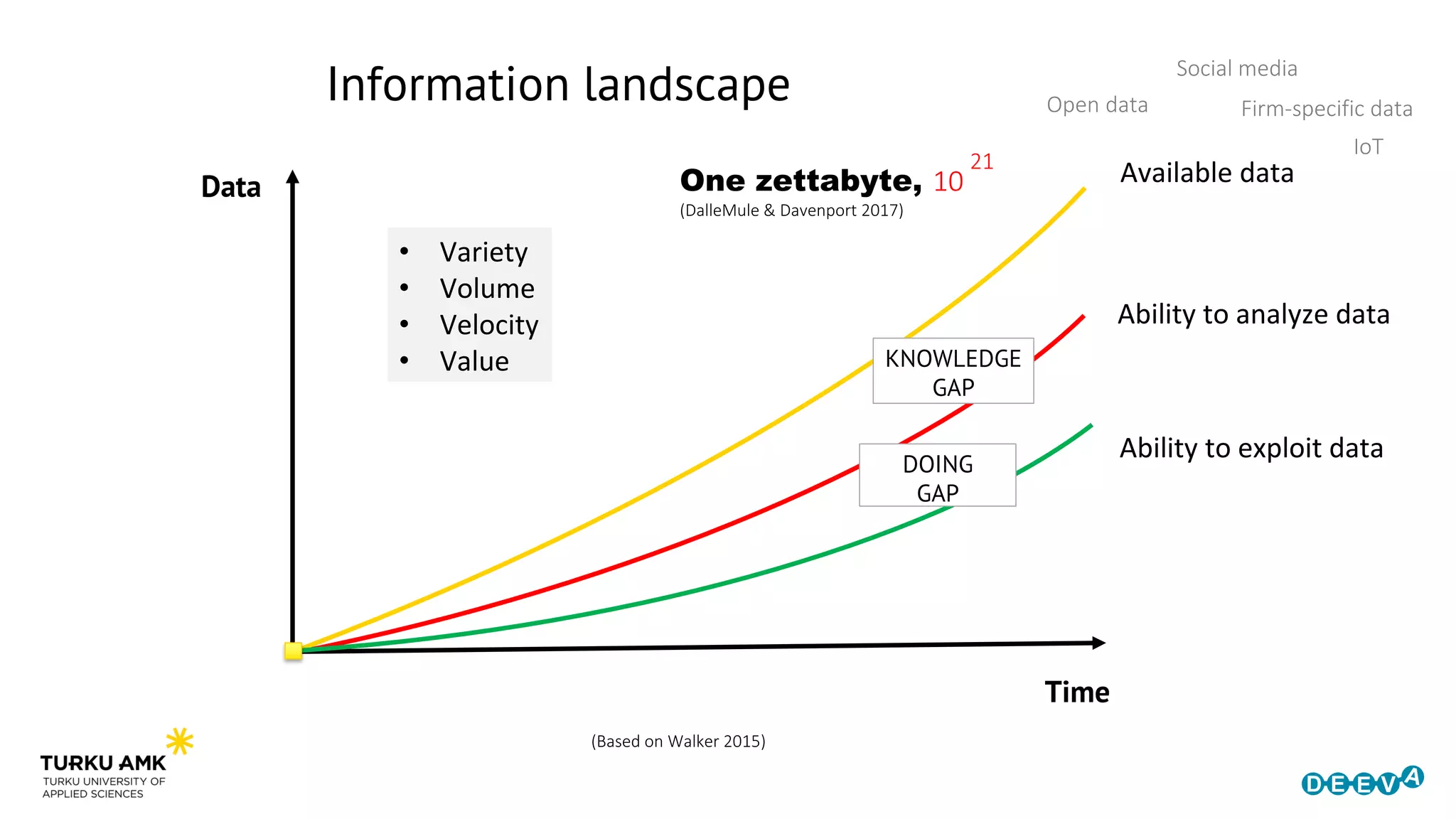
Time
Data Available data
Ability to analyze data
Ability to exploit data
KNOWLEDGE
GAP
DOING
GAP
• Variety
• Volume
• Velocity
• Value
Information landscape
IoT
Open data
Social media
Firm-specific data
One zettabyte, 10
(DalleMule & Davenport 2017)
21
(Based on Walker 2015)
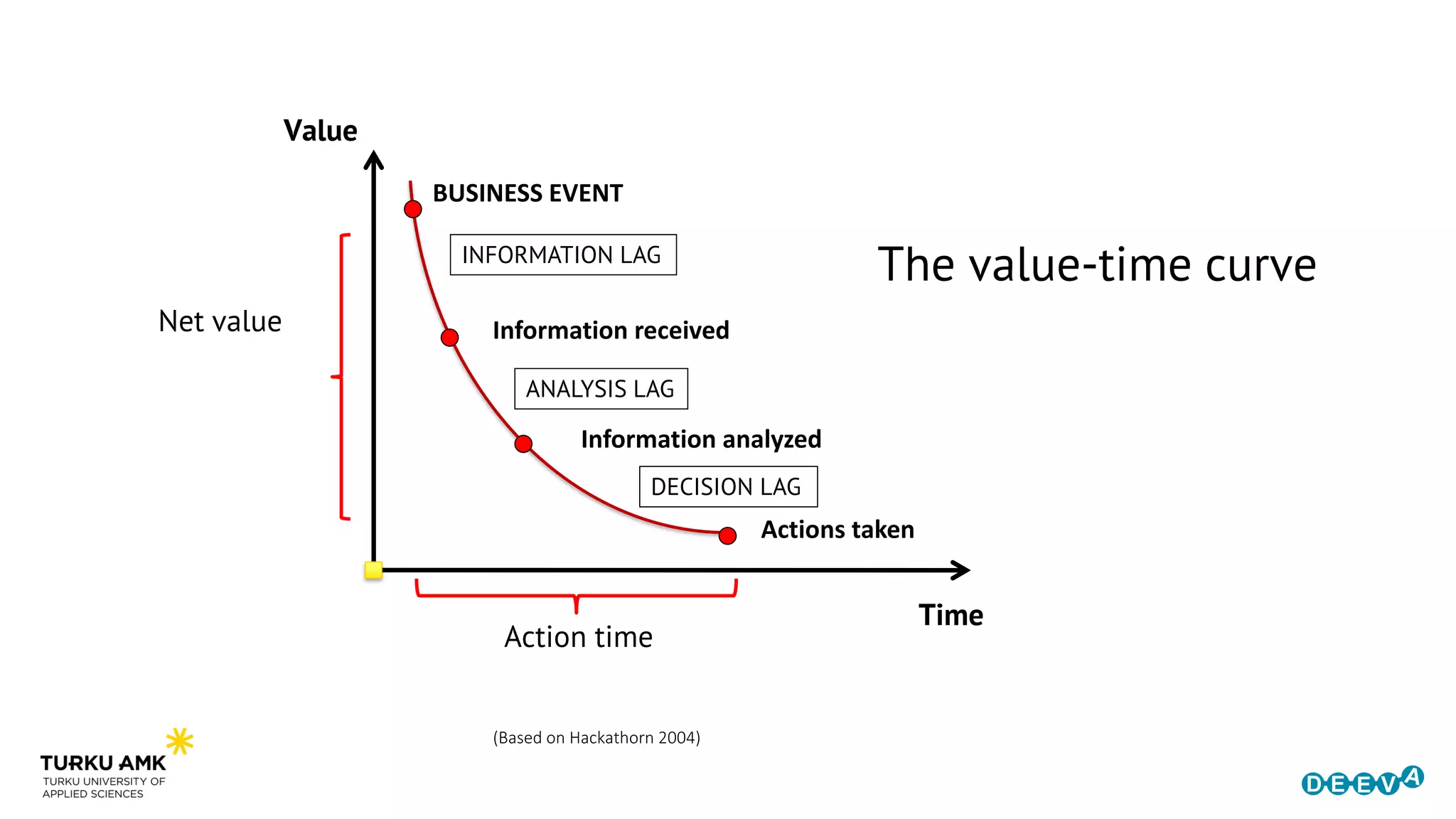
BUSINESS EVENT
Information received
Information analyzed
Actions taken
Net value
Action time
INFORMATION LAG
ANALYSIS LAG
DECISION LAG
(Based on Hackathorn 2004)
Value
Time
The value-time curve
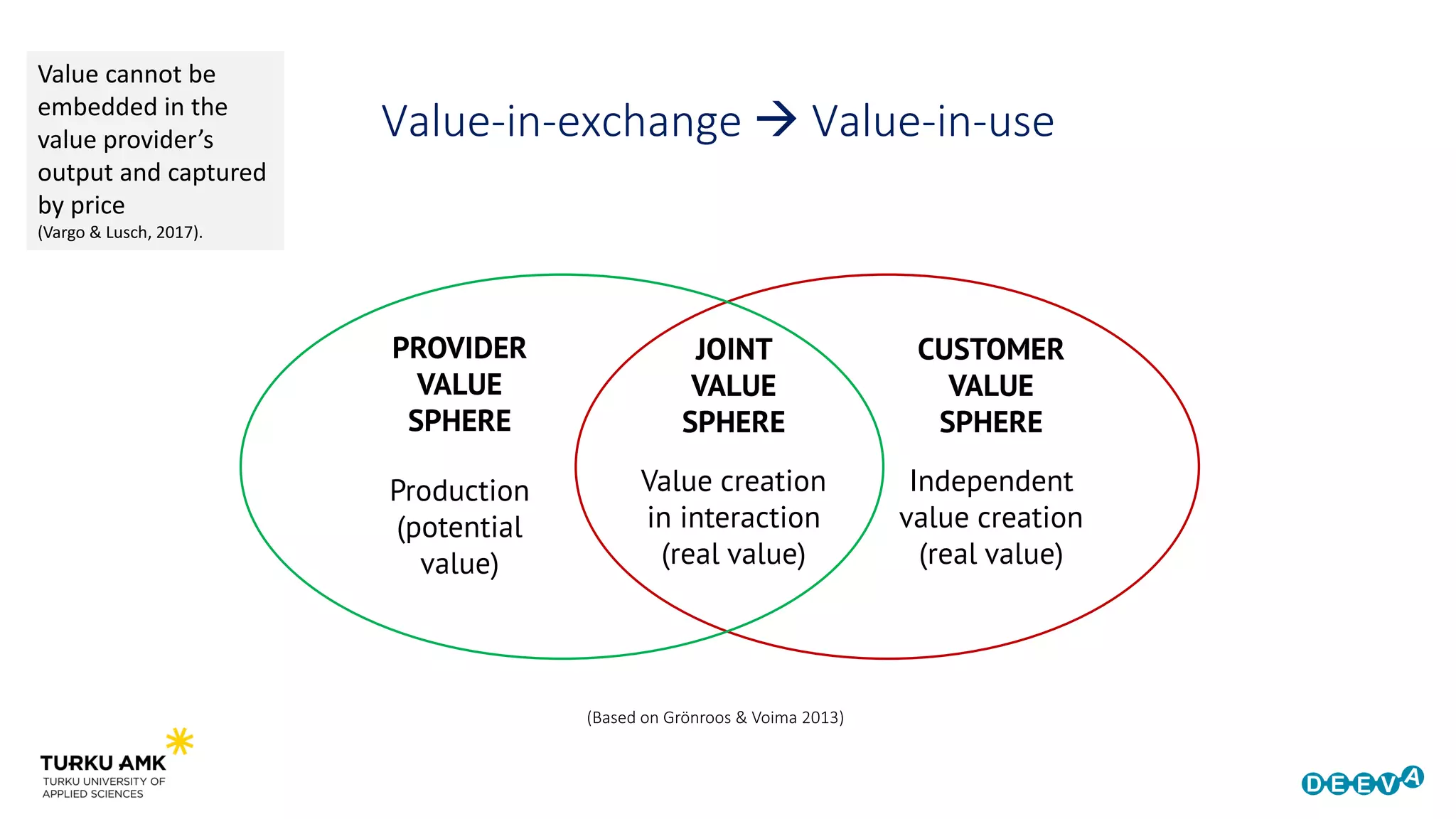
(Based on Grönroos & Voima 2013)
PROVIDER
VALUE
SPHERE
JOINT
VALUE
SPHERE
CUSTOMER
VALUE
SPHERE
Production
(potential
value)
Value creation
in interaction
(real value)
Independent
value creation
(real value)
Value-in-exchange  Value-in-use
Value cannot be
embedded in the
value provider’s
output and captured
by price
(Vargo & Lusch, 2017).
(Based on Gao & Feng 2016; Sheth et al. 1991; Swedberg 2004; van Noort et al. 2012; Powell & Roberts 2017; Vargo & Lusch 2017)
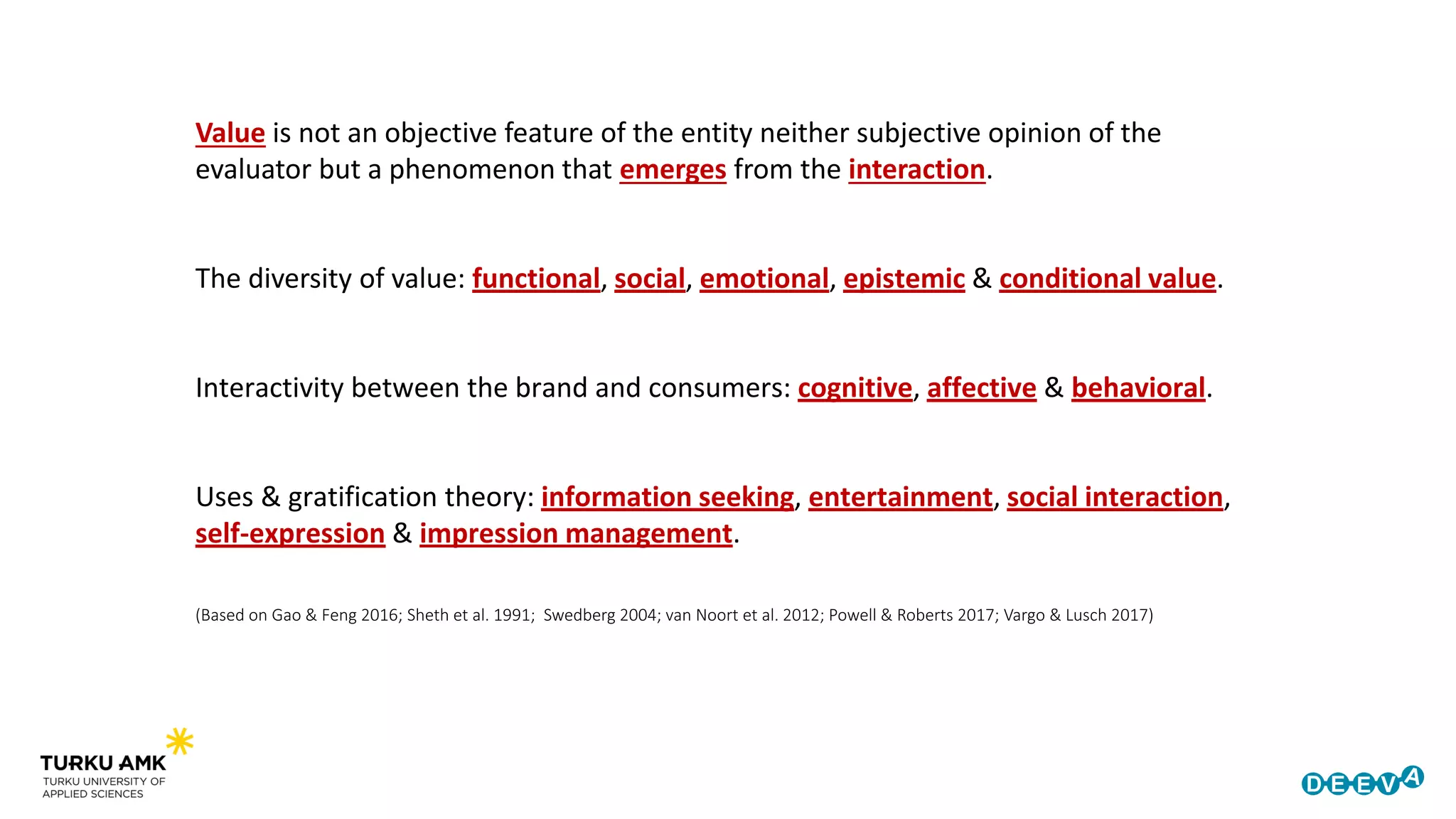
Value is not an objective feature of the entity neither subjective opinion of the
evaluator but a phenomenon that emerges from the interaction.
The diversity of value: functional, social, emotional, epistemic & conditional value.
Interactivity between the brand and consumers: cognitive, affective & behavioral.
Uses & gratification theory: information seeking, entertainment, social interaction,
self-expression & impression management.
(Based on Vargo & Lusch 2017)
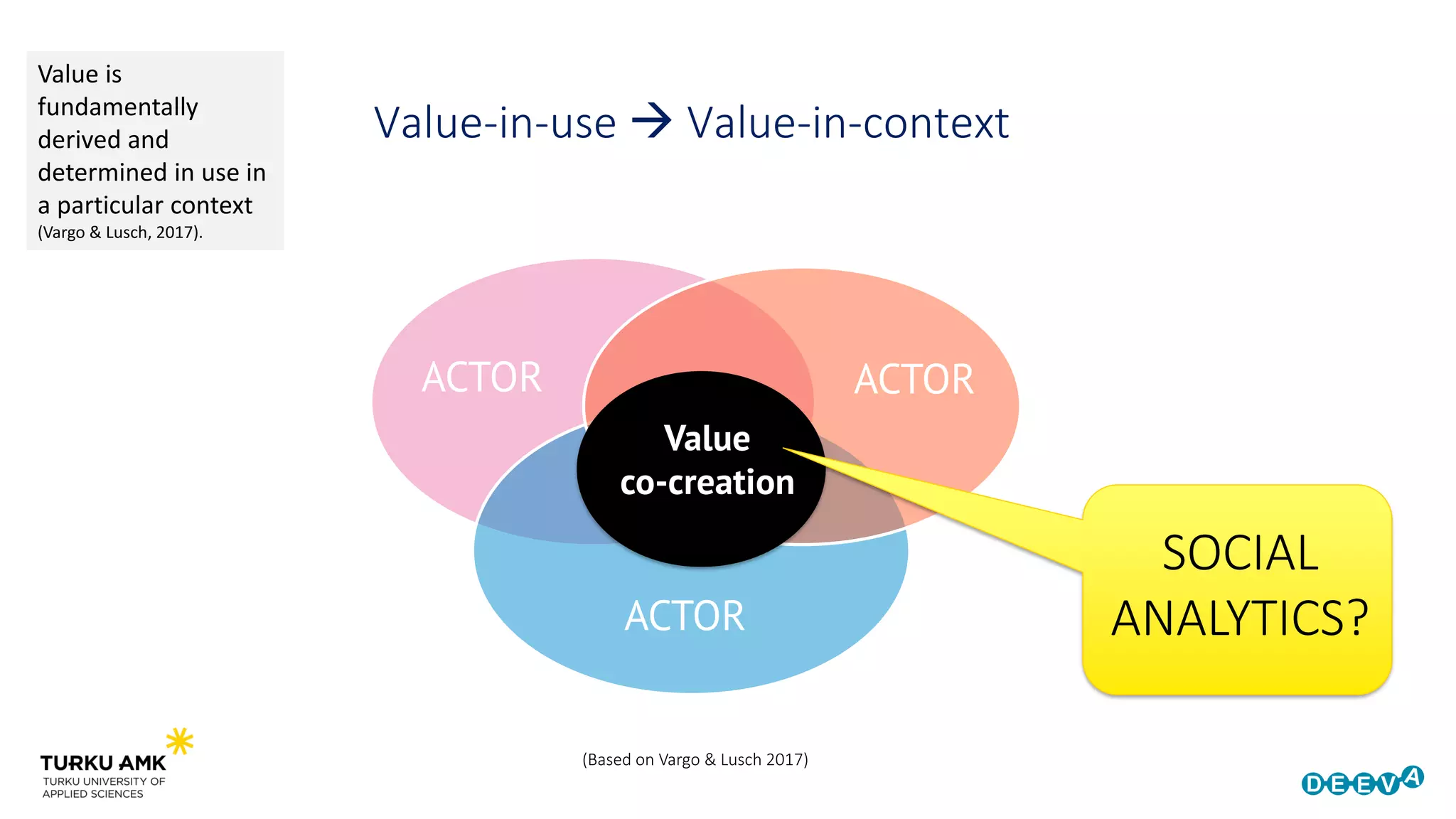
ACTOR ACTOR
ACTOR
Value
co-creation
Value-in-use  Value-in-context
SOCIAL
ANALYTICS?
Value is
fundamentally
derived and
determined in use in
a particular context
(Vargo & Lusch, 2017).
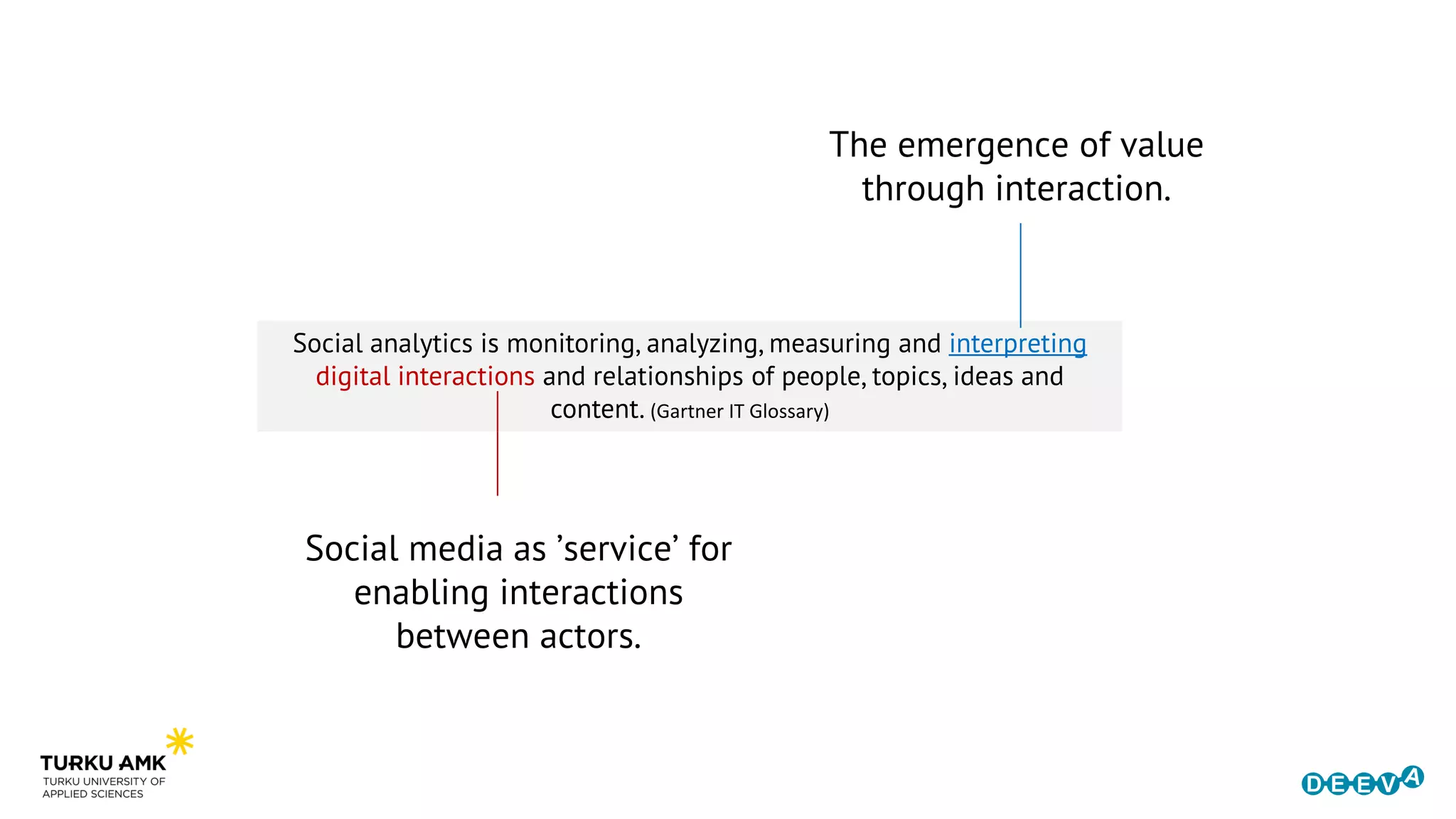
Social media as ’service’ for
enabling interactions
between actors.
Social analytics is monitoring, analyzing, measuring and interpreting
digital interactions and relationships of people, topics, ideas and
content. (Gartner IT Glossary)
The emergence of value
through interaction.
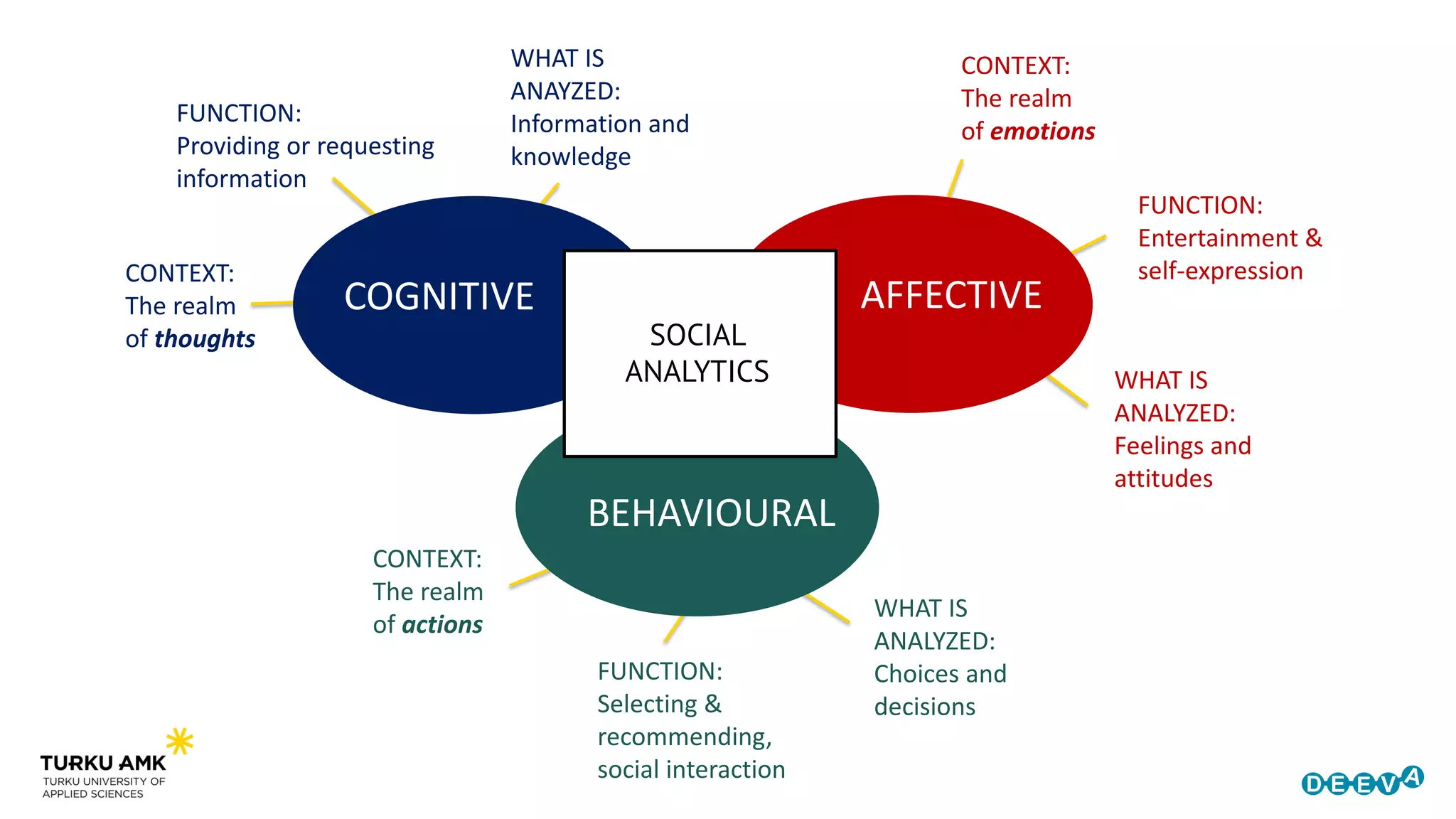
COGNITIVE
CONTEXT:
The realm
of emotions
CONTEXT:
The realm
of thoughts
CONTEXT:
The realm
of actions
FUNCTION:
Providing or requesting
information
WHAT IS
ANAYZED:
Information and
knowledge
WHAT IS
ANALYZED:
Feelings and
attitudes
FUNCTION:
Entertainment &
self-expression
FUNCTION:
Selecting &
recommending,
social interaction
WHAT IS
ANALYZED:
Choices and
decisions
AFFECTIVE
BEHAVIOURAL
SOCIAL
ANALYTICS
Thank you!
Q & A?
@Jalonen
References
DalleMule & Davenport (2017). What´s your data strategy? Harvard Business Review, 95:3, 112–121.
Gao & Feng (2016). Branding with social media: User gratifications, usage patterns, and
brand message content strategies. Computers in Human Behavior, 63, 868-890.
Hackathorn (2004). The BI watch: real-time to real-value. DM Review, January, 2004.
Powell & Roberts (2017). Situational determinants of cognitive, affective, and compassionate empathy in naturalistic digital
interactions. Computers in Human Behavior, 68, 137–148.
Sheth, Newman, & Gross (1991). Why we buy what we buy: A theory of consumption values. Journal of Business Research, 22: 159–
170.
Swedberg (2004). What has been accomplished in New Economic Sociology and where is it heading? European Journal of Sociology,
45:3, 313–330.
van Noort, Voorveld & van Reijmersdal (2012). Interactivity in brand web sites: cognitive, affective, and behavioral
responses explained by consumers' online flow experience. Journal of Interactive Marketing, 26 , 223–234.
Vargo & Lusch (2017). On service-dominant logic. International Journal of Research in Marketing, 34:1, 46–67.
Walker (2015). From Big Data to Big Profits. Success with Data and Analytics. Oxford University Press, New York, NY.

Jalonen_2017_Using Social Analytics for Value Co-Creation in Digitalized Ecosystems

  • 1.
    Using Social Analyticsfor Value Co-Creation in Digitalized Ecosystems 13th International conference on Technology, Knowledge & Society May 26–27, 2017, Toronto http://techandsoc.com/ Dr. Harri Jalonen www.harrijalonen.fi harri.jalonen@turkuamk.fi www.deeva.fi@Jalonen
  • 2.
    Time Data Available data Abilityto analyze data Ability to exploit data KNOWLEDGE GAP DOING GAP • Variety • Volume • Velocity • Value Information landscape IoT Open data Social media Firm-specific data One zettabyte, 10 (DalleMule & Davenport 2017) 21 (Based on Walker 2015)
  • 3.
    BUSINESS EVENT Information received Informationanalyzed Actions taken Net value Action time INFORMATION LAG ANALYSIS LAG DECISION LAG (Based on Hackathorn 2004) Value Time The value-time curve
  • 4.
    (Based on Grönroos& Voima 2013) PROVIDER VALUE SPHERE JOINT VALUE SPHERE CUSTOMER VALUE SPHERE Production (potential value) Value creation in interaction (real value) Independent value creation (real value) Value-in-exchange  Value-in-use Value cannot be embedded in the value provider’s output and captured by price (Vargo & Lusch, 2017).
  • 5.
    (Based on Gao& Feng 2016; Sheth et al. 1991; Swedberg 2004; van Noort et al. 2012; Powell & Roberts 2017; Vargo & Lusch 2017) Value is not an objective feature of the entity neither subjective opinion of the evaluator but a phenomenon that emerges from the interaction. The diversity of value: functional, social, emotional, epistemic & conditional value. Interactivity between the brand and consumers: cognitive, affective & behavioral. Uses & gratification theory: information seeking, entertainment, social interaction, self-expression & impression management.
  • 6.
    (Based on Vargo& Lusch 2017) ACTOR ACTOR ACTOR Value co-creation Value-in-use  Value-in-context SOCIAL ANALYTICS? Value is fundamentally derived and determined in use in a particular context (Vargo & Lusch, 2017).
  • 7.
    Social media as’service’ for enabling interactions between actors. Social analytics is monitoring, analyzing, measuring and interpreting digital interactions and relationships of people, topics, ideas and content. (Gartner IT Glossary) The emergence of value through interaction.
  • 8.
    COGNITIVE CONTEXT: The realm of emotions CONTEXT: Therealm of thoughts CONTEXT: The realm of actions FUNCTION: Providing or requesting information WHAT IS ANAYZED: Information and knowledge WHAT IS ANALYZED: Feelings and attitudes FUNCTION: Entertainment & self-expression FUNCTION: Selecting & recommending, social interaction WHAT IS ANALYZED: Choices and decisions AFFECTIVE BEHAVIOURAL SOCIAL ANALYTICS
  • 9.
    Thank you! Q &A? @Jalonen
  • 10.
    References DalleMule & Davenport(2017). What´s your data strategy? Harvard Business Review, 95:3, 112–121. Gao & Feng (2016). Branding with social media: User gratifications, usage patterns, and brand message content strategies. Computers in Human Behavior, 63, 868-890. Hackathorn (2004). The BI watch: real-time to real-value. DM Review, January, 2004. Powell & Roberts (2017). Situational determinants of cognitive, affective, and compassionate empathy in naturalistic digital interactions. Computers in Human Behavior, 68, 137–148. Sheth, Newman, & Gross (1991). Why we buy what we buy: A theory of consumption values. Journal of Business Research, 22: 159– 170. Swedberg (2004). What has been accomplished in New Economic Sociology and where is it heading? European Journal of Sociology, 45:3, 313–330. van Noort, Voorveld & van Reijmersdal (2012). Interactivity in brand web sites: cognitive, affective, and behavioral responses explained by consumers' online flow experience. Journal of Interactive Marketing, 26 , 223–234. Vargo & Lusch (2017). On service-dominant logic. International Journal of Research in Marketing, 34:1, 46–67. Walker (2015). From Big Data to Big Profits. Success with Data and Analytics. Oxford University Press, New York, NY.