Fluid and Electrolyte Balance
Duhok Polytechnic University
1st
stage/1st
Semester
Fundamental Of Nursing
Prepared By
Nursing Team
Type of IV fluid
1.Normal Saline (NS)
2.Glucose Saline (GS)
3.Ringer Lactate (RL)
4.Glucose Water (GW)
5.MANITOL
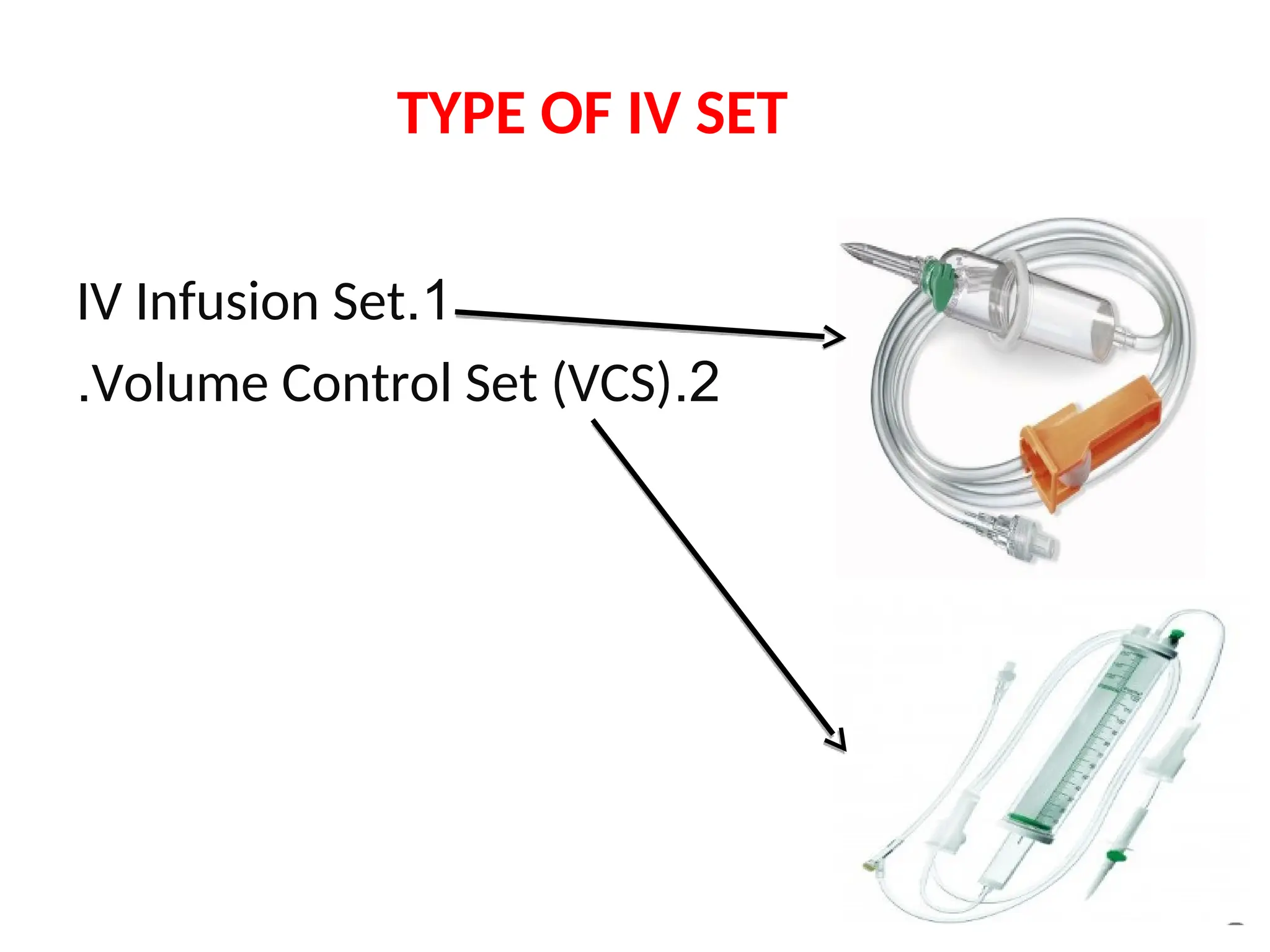
TYPE OF IV SET
1
.
IV Infusion Set
2
.
Volume Control Set (VCS)
.
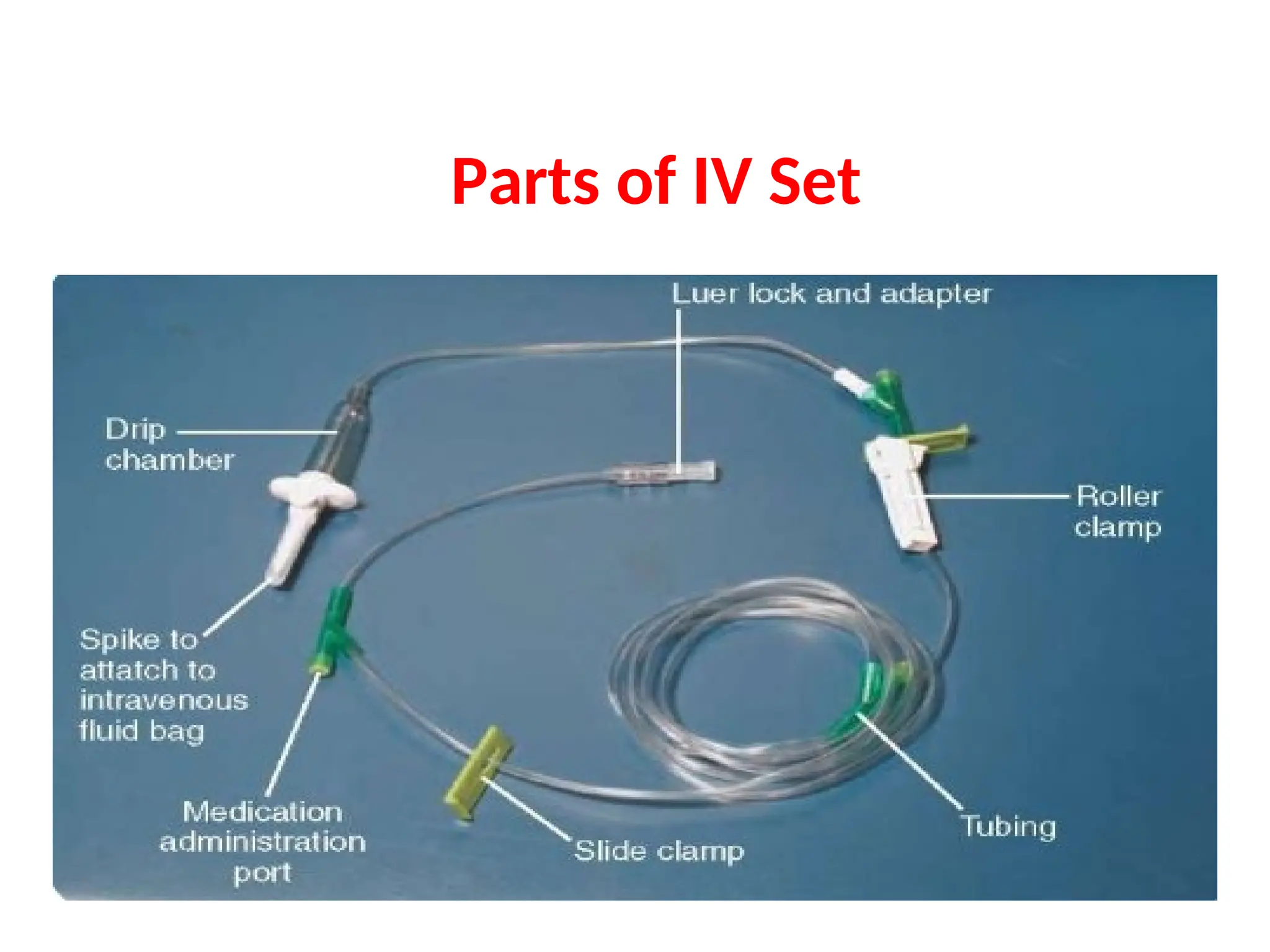
Parts of IV Set
Administration of intravenous solutions
EQUIPMENT
1.IV solution, as prescribed
2.Non allergenic tape (if patient has tape allergy,
use paper tape)
3. Electronic infusion device (if appropriate)
4. Alcohol swabs
6. Clean gloves (optional)
7. IV pole
8. IV tubing (vented or nonvented).
9. Prefilled 2-mL syringe with sterile normal saline for injection
Procedure
Implementation
1
-
Check the medical order for the type, volume, and length of fluid
therapy
.
2
-
prepare the fluid and ensure from expiration date ,discoloration
and puncture of package of the bag or bottle
.
3
.
Wash hands or perform hand antisepsis with an alcohol rub
.
4
.
Label the time of giving IV fluid and attach it to the side of container
.
5. Select the appropriate tubing and stretch it once it has been removed
from the package, and close the roller clamp.
6- Remove the insertion spike and insert IV tube by using a pushing and
twisting motion puncturing the seal on the container.
7- Hang the solution container to an IV pole.
8. Squeeze the drip chamber until it is half full.
9- Open the roller clamp
slowly and release the air from tubing if there
is air bubble.
10- Tighten roller clamp when all air has
been removed and apply cover or needle
to avoid contamination.
13- Apply pressure over the internal tip of the cannula and remove the
protective cap covering the end of cannula.
14- Connect the tube of IV solution to the end of cannula. Inject 1 to 2
mL of normal saline to flush the cannula.
15- Release the roller clamp and regulate the rate of fluid infusion.
16- Secure the tube by apply small piece of tape just above the cannula.
17. Remove the gloves
18.Discard the equipment into sharps box.
19. Perform Handwashing.
20. Documentation , type of fluid, amount , time.
Calculations
Drop factor*amount
Time*minute
20*500 = 10,000 = 20 drops/minute
8*60 480
60 = 3 second ,each 3second infusion 1 drop
20
Note
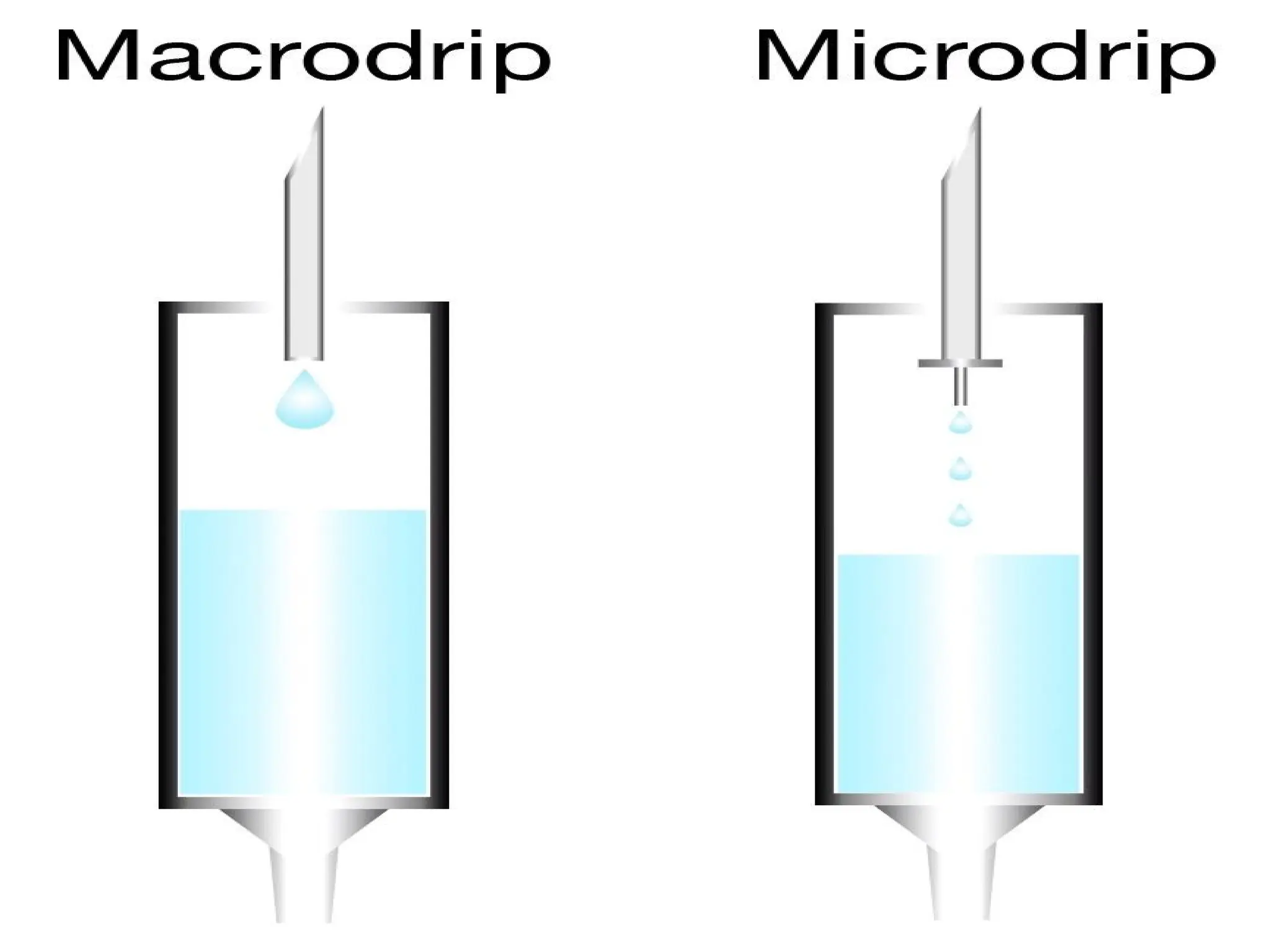
•In macro drip
•Each C.C equal (20 drops)
•1 C.C = 20 Drops
•In micro drip (60)(VCS) drop factor
•Each C.C equal (60) drops
•1 C.C = 60 Drops
•FOR BLOOD=20 & TIME= 4 HOURS
Potential Complication Of IV Fluid Infusion:
Occlusion: Slowing or stop of fluid infusion
Causes:
1.Cannula not flushed
2.Kinking of the cannula
3.Back flow
4.Fibrin formation in or around the tip of the cannula.
Signs & Symptoms
• I.V. not running
• Blood in the line
Intervention
1. Check for kinks in cannula especially in elbow and near joints and try
to straight the cannula.
2. Raise IV bottle higher.
3. Massage the tip of cannula
4. Pump the elastic portion in the tube 3 times
5. Inject 2 ml normal saline to flush cannula
6. If these measures are not successful, Remove and replace the
cannula by another site .
IV fluid infusion (2) (3).ppt......................

IV fluid infusion (2) (3).ppt......................

  • 1.
    Fluid and ElectrolyteBalance Duhok Polytechnic University 1st stage/1st Semester Fundamental Of Nursing Prepared By Nursing Team
  • 2.
    Type of IVfluid 1.Normal Saline (NS) 2.Glucose Saline (GS) 3.Ringer Lactate (RL) 4.Glucose Water (GW) 5.MANITOL
  • 3.
    TYPE OF IVSET 1 . IV Infusion Set 2 . Volume Control Set (VCS) .
  • 4.
  • 6.
    Administration of intravenoussolutions EQUIPMENT 1.IV solution, as prescribed 2.Non allergenic tape (if patient has tape allergy, use paper tape) 3. Electronic infusion device (if appropriate) 4. Alcohol swabs
  • 7.
    6. Clean gloves(optional) 7. IV pole 8. IV tubing (vented or nonvented). 9. Prefilled 2-mL syringe with sterile normal saline for injection
  • 8.
    Procedure Implementation 1 - Check the medicalorder for the type, volume, and length of fluid therapy . 2 - prepare the fluid and ensure from expiration date ,discoloration and puncture of package of the bag or bottle . 3 . Wash hands or perform hand antisepsis with an alcohol rub . 4 . Label the time of giving IV fluid and attach it to the side of container .
  • 9.
    5. Select theappropriate tubing and stretch it once it has been removed from the package, and close the roller clamp. 6- Remove the insertion spike and insert IV tube by using a pushing and twisting motion puncturing the seal on the container. 7- Hang the solution container to an IV pole.
  • 10.
    8. Squeeze thedrip chamber until it is half full. 9- Open the roller clamp slowly and release the air from tubing if there is air bubble.
  • 11.
    10- Tighten rollerclamp when all air has been removed and apply cover or needle to avoid contamination. 13- Apply pressure over the internal tip of the cannula and remove the protective cap covering the end of cannula.
  • 12.
    14- Connect thetube of IV solution to the end of cannula. Inject 1 to 2 mL of normal saline to flush the cannula. 15- Release the roller clamp and regulate the rate of fluid infusion. 16- Secure the tube by apply small piece of tape just above the cannula. 17. Remove the gloves 18.Discard the equipment into sharps box. 19. Perform Handwashing. 20. Documentation , type of fluid, amount , time.
  • 13.
    Calculations Drop factor*amount Time*minute 20*500 =10,000 = 20 drops/minute 8*60 480 60 = 3 second ,each 3second infusion 1 drop 20
  • 14.
    Note •In macro drip •EachC.C equal (20 drops) •1 C.C = 20 Drops •In micro drip (60)(VCS) drop factor •Each C.C equal (60) drops •1 C.C = 60 Drops •FOR BLOOD=20 & TIME= 4 HOURS
  • 16.
    Potential Complication OfIV Fluid Infusion: Occlusion: Slowing or stop of fluid infusion Causes: 1.Cannula not flushed 2.Kinking of the cannula 3.Back flow 4.Fibrin formation in or around the tip of the cannula. Signs & Symptoms • I.V. not running • Blood in the line
  • 17.
    Intervention 1. Check forkinks in cannula especially in elbow and near joints and try to straight the cannula. 2. Raise IV bottle higher. 3. Massage the tip of cannula 4. Pump the elastic portion in the tube 3 times 5. Inject 2 ml normal saline to flush cannula 6. If these measures are not successful, Remove and replace the cannula by another site .