

El presente y futuro del
desarrollo web y APIs REST
Flisol, ITToluca, Abril 2013
Web development
PHP
Ruby
Python
.NET
Java
Typical web
development approach
Server side framework
The framework handles all the incoming http request and
process them
Extract data from request and generates response to the user
The framework generates data representation mostly in
html
We can use the framework to generate only data (JSON,
XML)
Pros
Very simple to develop
All the app code in a single place
Unique development model
Well know patterns
Tons of libraries and framewoks out there
Cons
The server needs to handle several things
database connection
Failure and recovery
User session
render all the time the response to the users
frameworks limitations (user interface, scaling,
adopting new technologies, support lacking)
Modern features
Mobile support
Asynchronous processing (server side & client side)
Content negotiation (JSON, XML, html, SOAP?)
View technologies independence (JavaScript, Template engines)
NoSql support (MongoDB, Redis, Cassandra, etc)
Development
Full stack
Specific stack
Cloud deployment
Is your framework friendly?
Beware
‘Full stack frameworks’
Do you really need a ‘full stack’ framework?
Are you using all the features provided by the full
stack framework?
Sometimes we don’t need a full stack framework
ex. Simple app or service (REST)
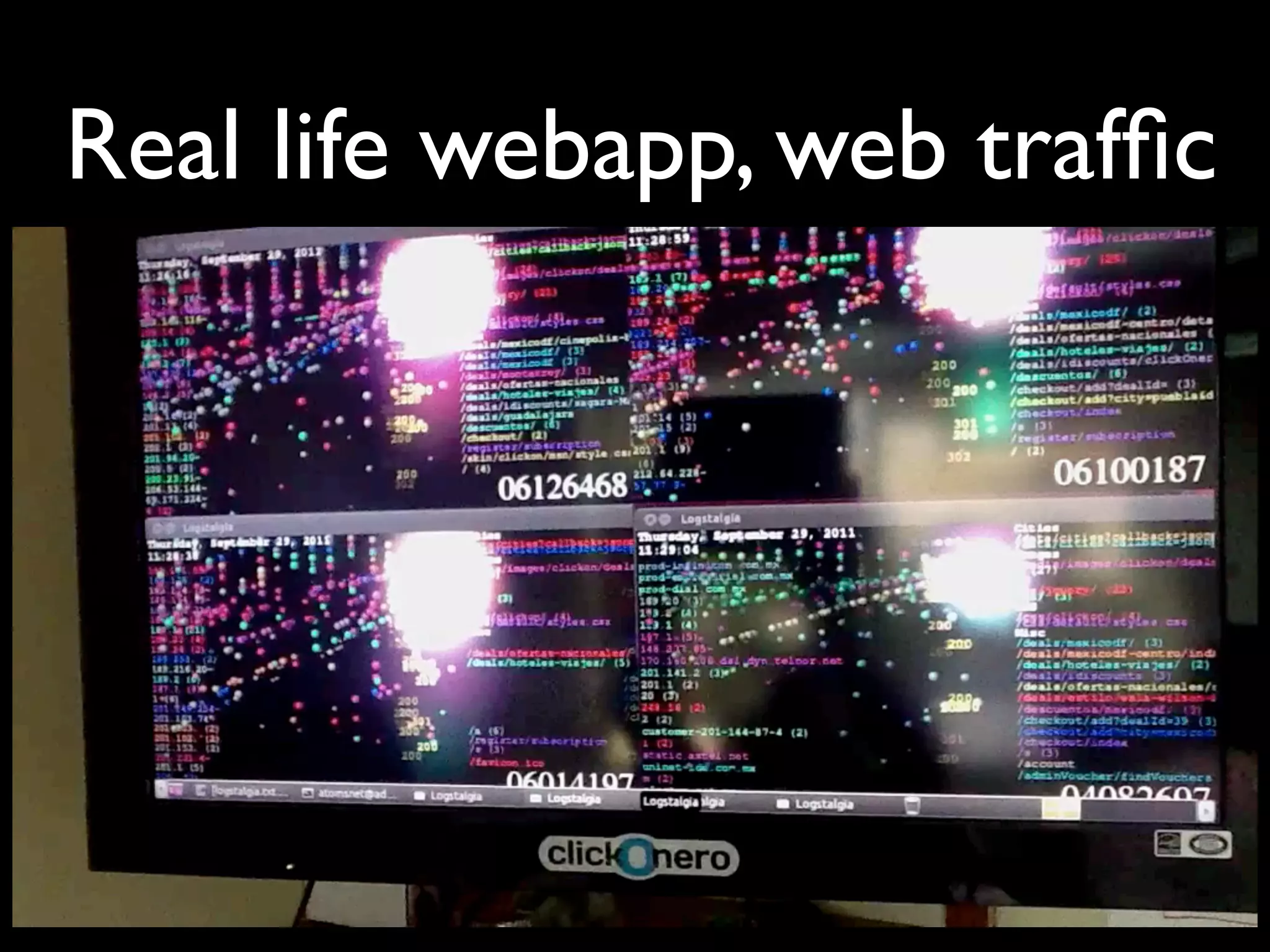
Real life webapp, web traffic
Real life web system
• API:WebServices REST for information
exchange
• Admin.Web application for internal use
• WebSite.A totally static HTML application built
with Chaplin and several JavaScript
microframewoks
WebApps architecture
Built your complete solution using several logical
components
Each component has a single responsability
Built each component with the right tech stack
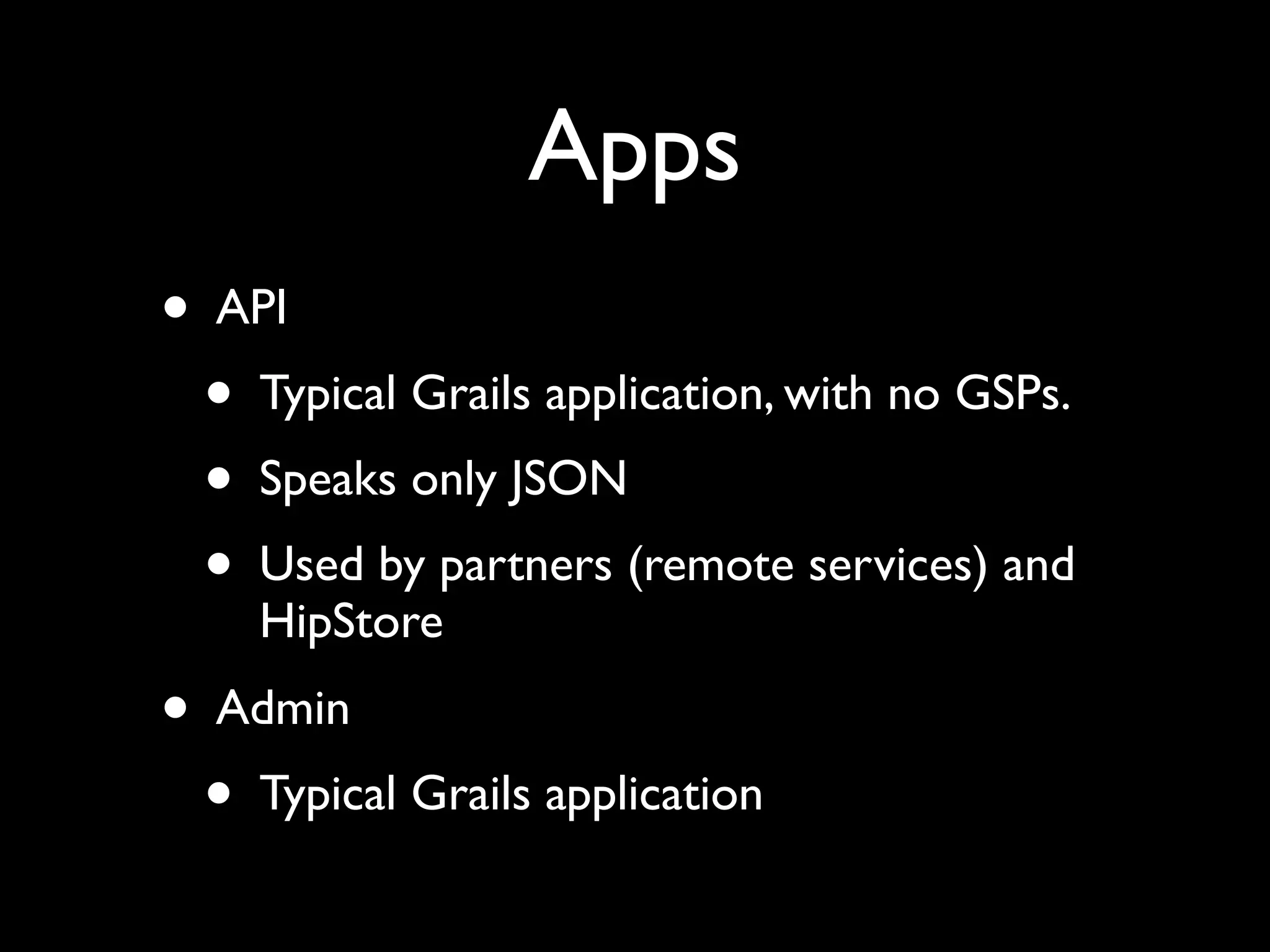
Apps
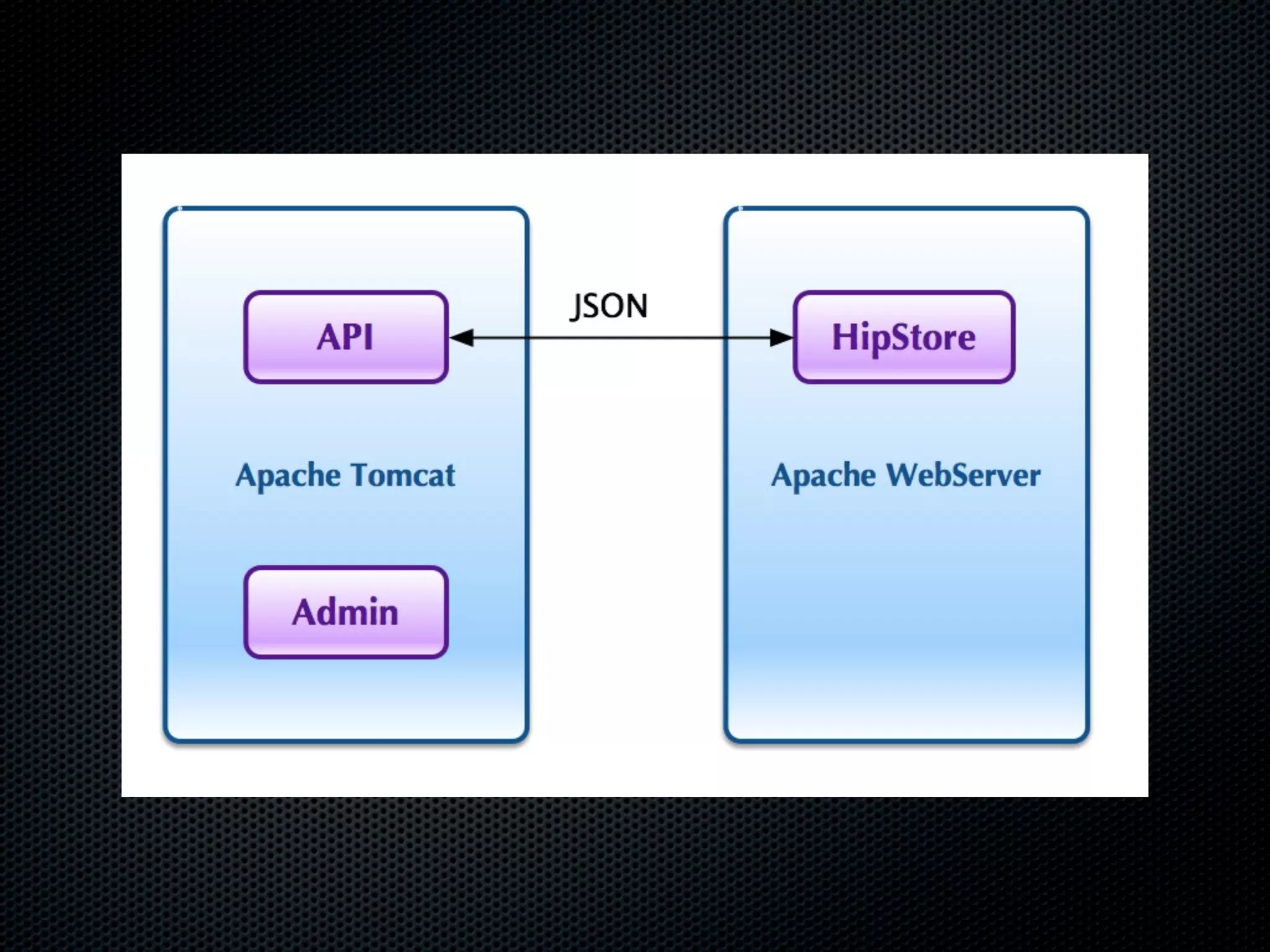
• API
• Typical Grails application, with no GSPs.
• Speaks only JSON
• Used by partners (remote services) and
HipStore
• Admin
• Typical Grails application
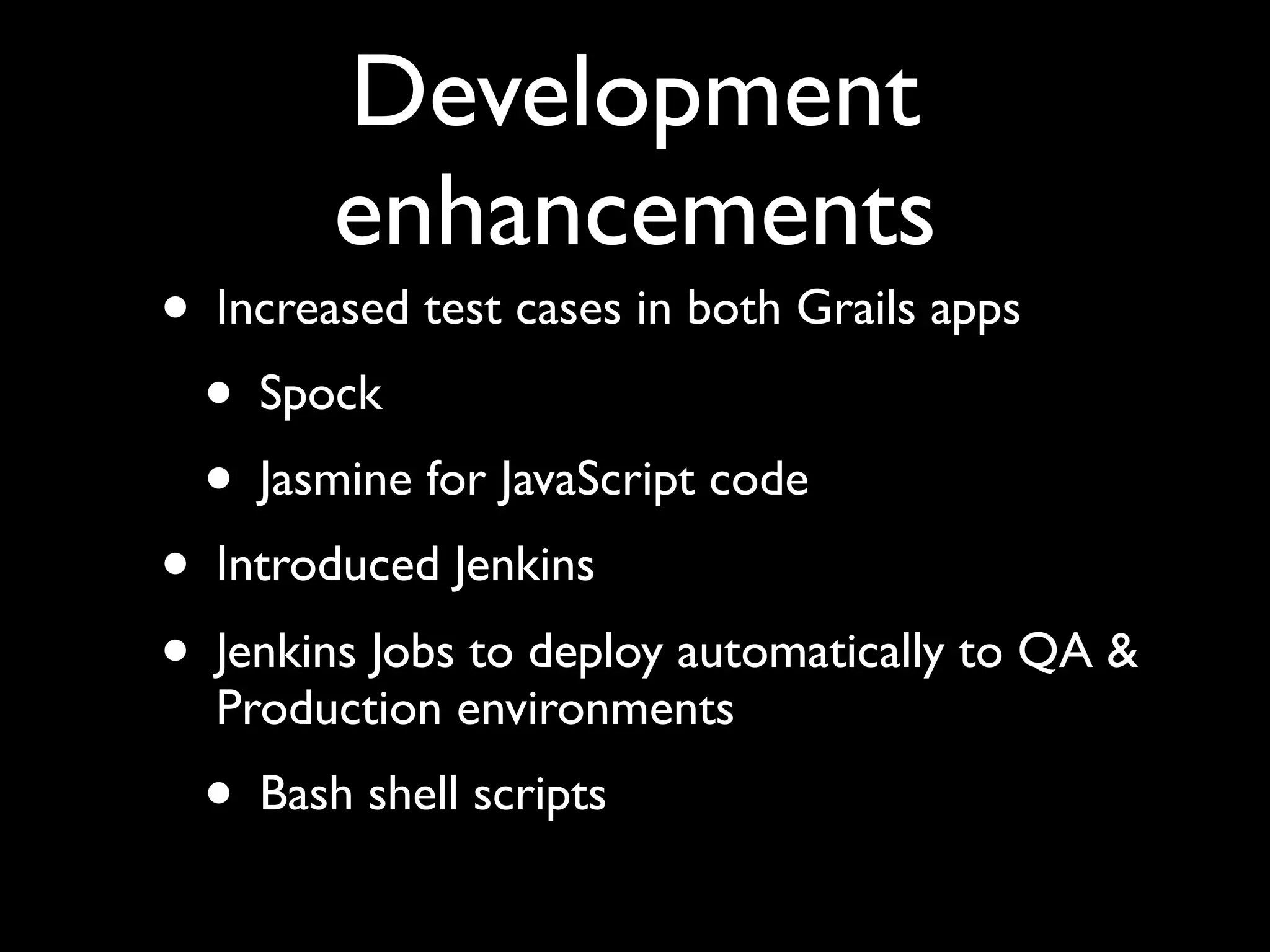
Development
enhancements
• Increased test cases in both Grails apps
• Spock
• Jasmine for JavaScript code
• Introduced Jenkins
• Jenkins Jobs to deploy automatically to QA &
Production environments
• Bash shell scripts
HipStore
• Static HTML application built with Chaplin
• Chaplin is an architecture for JavaScript
applications using the Backbone.js library
HipStore
• Developed in CoffeeScript
• Uses PushState
• RequireJS (AMD Support)
• HandleBars (Template Engine)
• JQuery
• Underscore
• Twitter Bootstrap
• Build and packaged with Jake
HipStore
• Single Page Application
• Chaplin consumes JSON from the API to
render the store items.
• Uses PushState to update the URL in the
browser.Very useful for bookmarking and
social media sharing, even for SEO.
Our approach
• Write to disk all the possible links in
HipStore. Crazy?
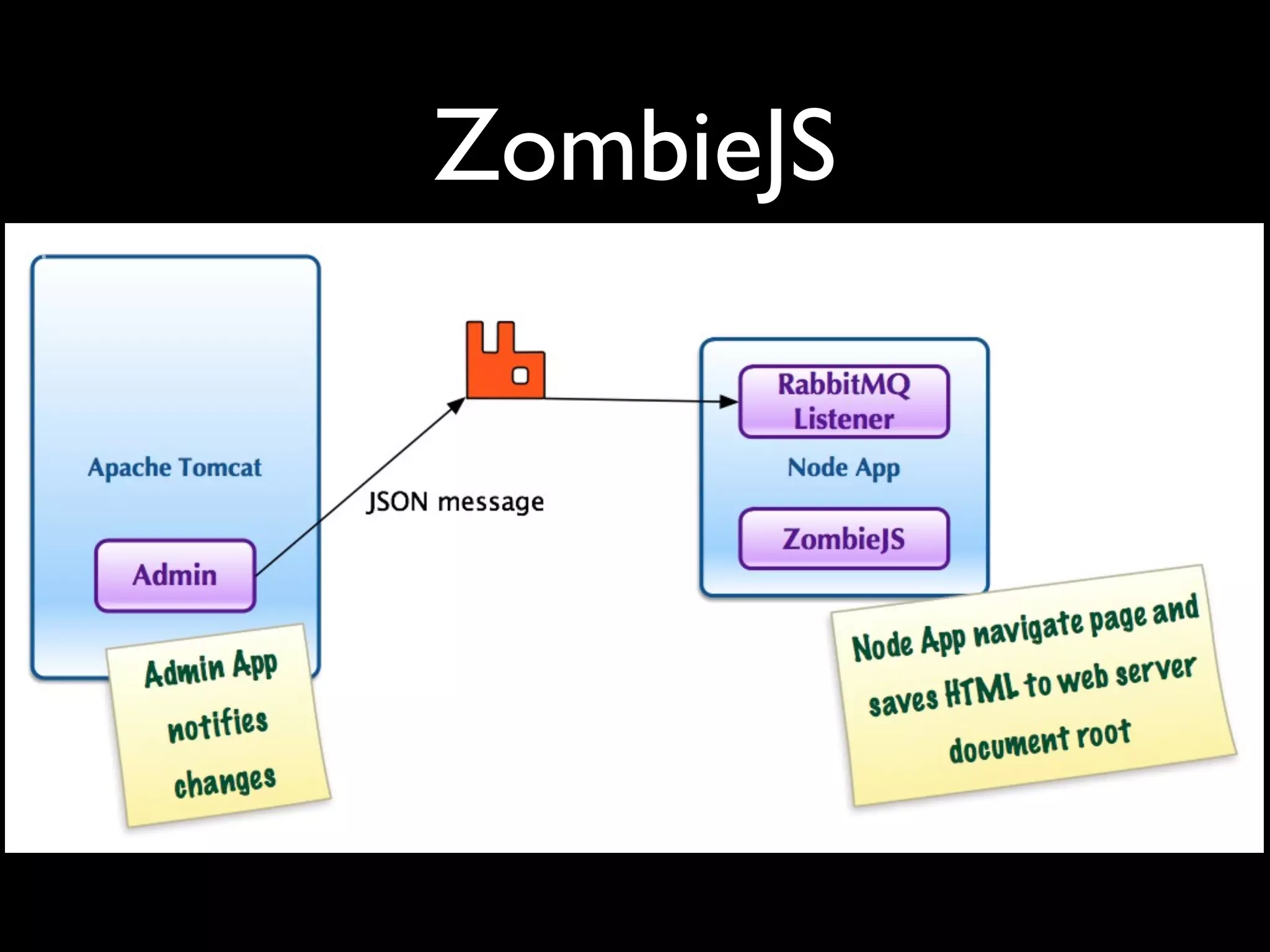
• We use ZombieJS to navigate the website
and then write to disk the generated HTML
• Put those static files (HTML) in the
webserver document root
• The best cache ever
Why do this?
• When the user visit our website, the
webserver will respond with completely
static HTML, CSS, JavaScript files
• Very fast
• The user never hits the Tomcats, we reduce
the load in the app servers.
• The webserver always responds very fast
ZombieJS
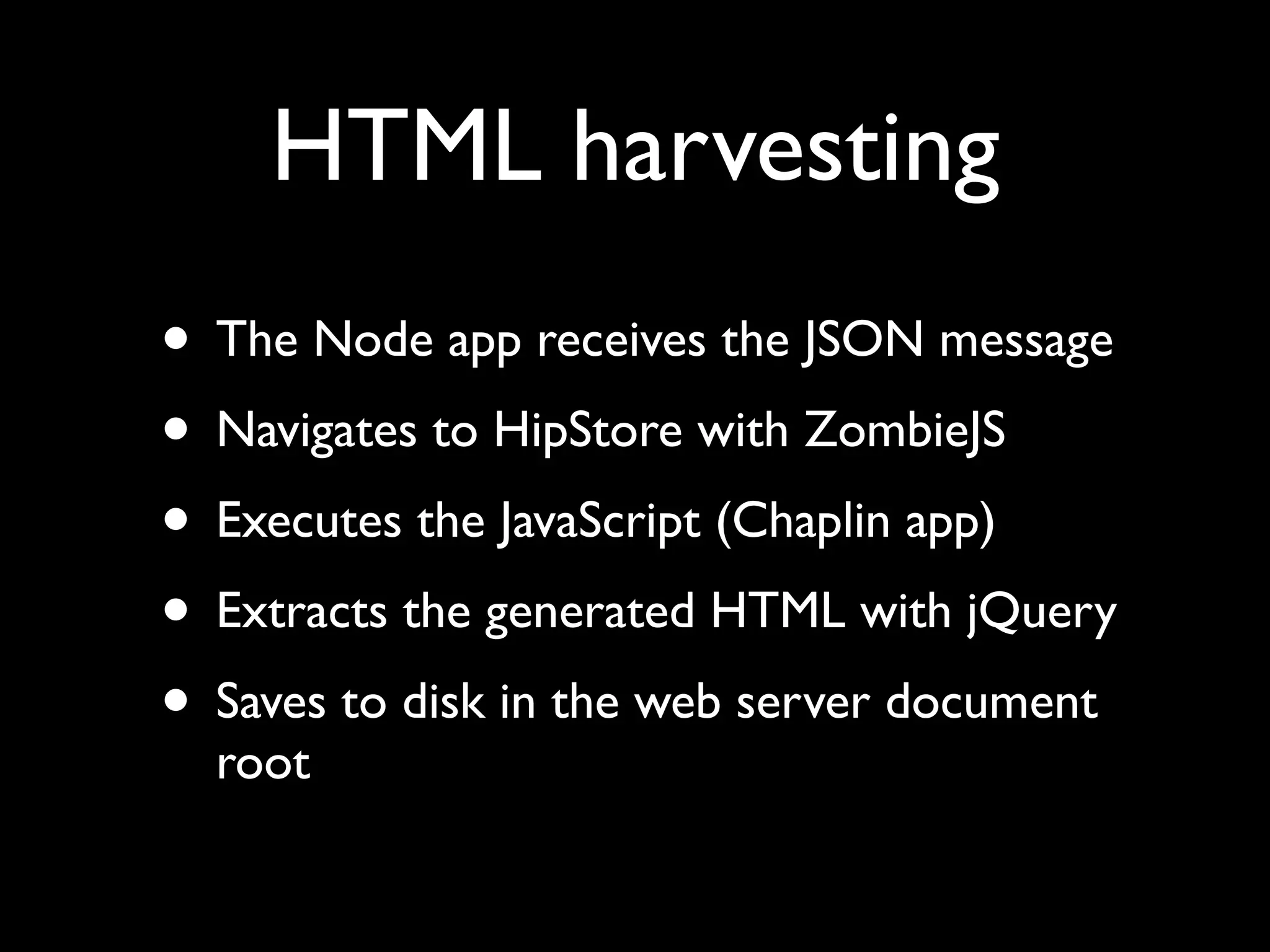
HTML harvesting
• The Node app receives the JSON message
• Navigates to HipStore with ZombieJS
• Executes the JavaScript (Chaplin app)
• Extracts the generated HTML with jQuery
• Saves to disk in the web server document
root
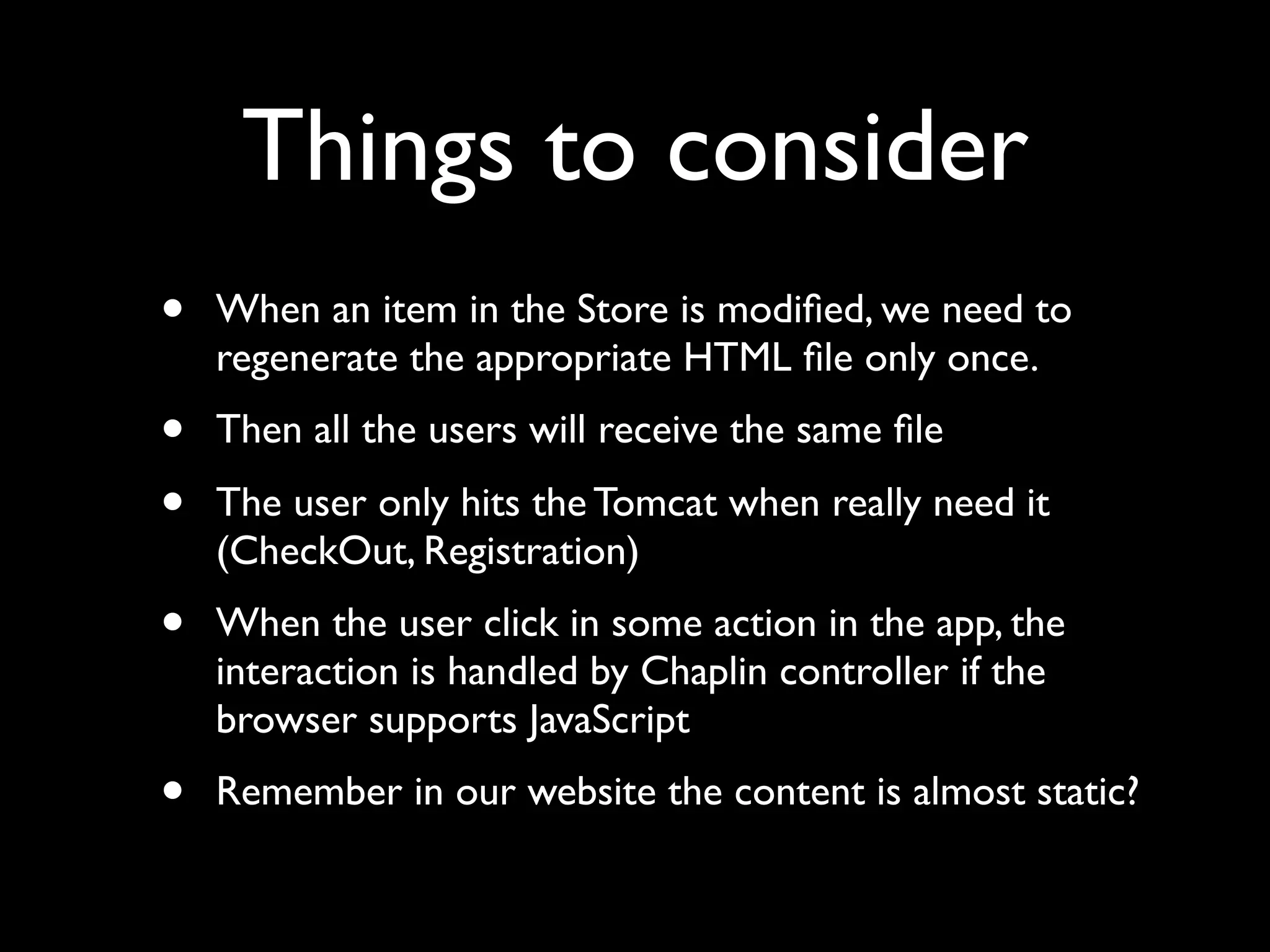
Things to consider
• When an item in the Store is modified, we need to
regenerate the appropriate HTML file only once.
• Then all the users will receive the same file
• The user only hits the Tomcat when really need it
(CheckOut, Registration)
• When the user click in some action in the app, the
interaction is handled by Chaplin controller if the
browser supports JavaScript
• Remember in our website the content is almost static?
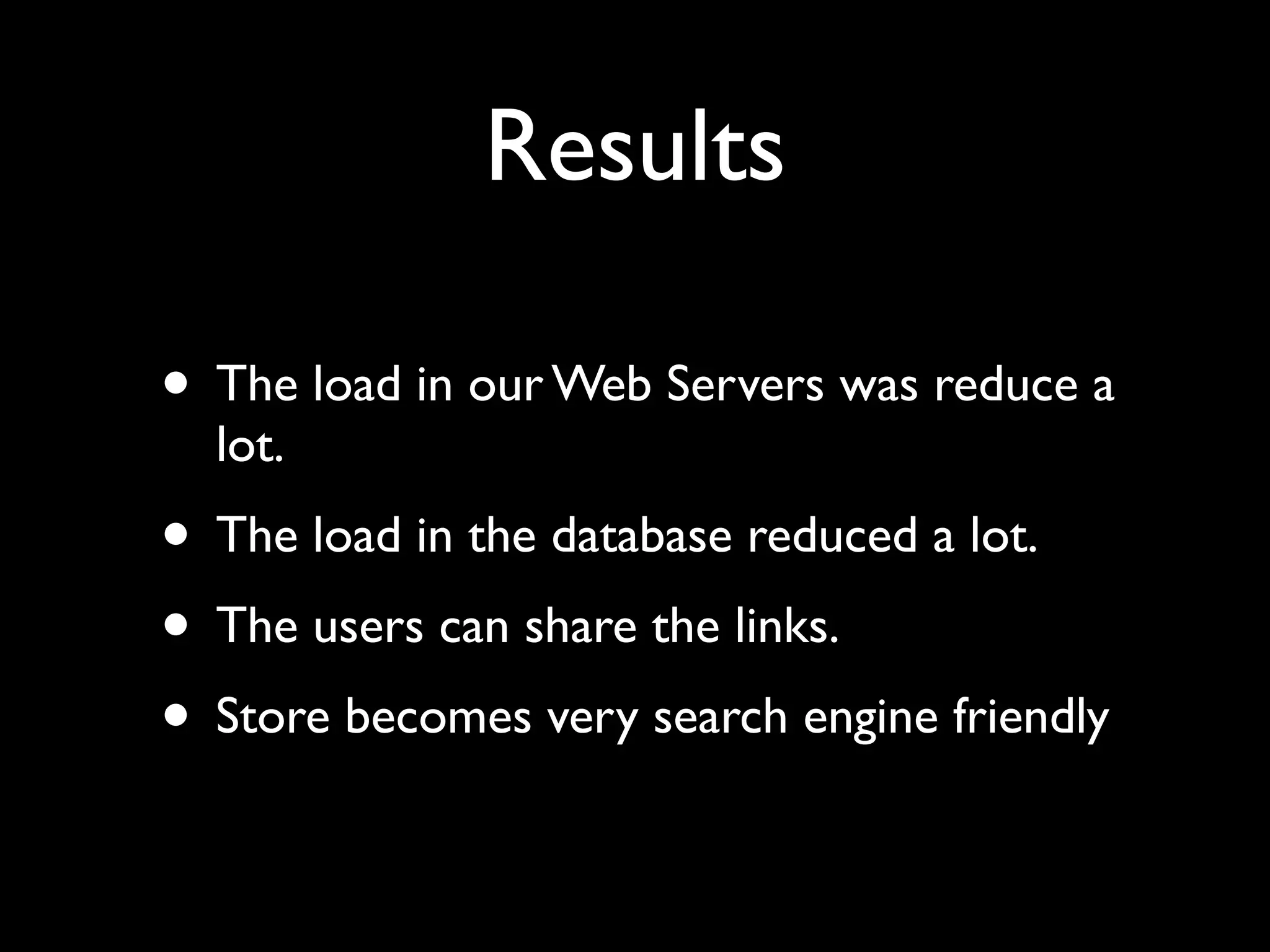
Results
• The load in our Web Servers was reduce a
lot.
• The load in the database reduced a lot.
• The users can share the links.
• Store becomes very search engine friendly
Photo credits
http://flic.kr/p/7gerV8
http://flic.kr/p/5yZGvb

ITT Flisol 2013

  • 1.
    El presente yfuturo del desarrollo web y APIs REST Flisol, ITToluca, Abril 2013
  • 2.
  • 3.
    Typical web development approach Serverside framework The framework handles all the incoming http request and process them Extract data from request and generates response to the user The framework generates data representation mostly in html We can use the framework to generate only data (JSON, XML)
  • 4.
    Pros Very simple todevelop All the app code in a single place Unique development model Well know patterns Tons of libraries and framewoks out there
  • 5.
    Cons The server needsto handle several things database connection Failure and recovery User session render all the time the response to the users frameworks limitations (user interface, scaling, adopting new technologies, support lacking)
  • 6.
    Modern features Mobile support Asynchronousprocessing (server side & client side) Content negotiation (JSON, XML, html, SOAP?) View technologies independence (JavaScript, Template engines) NoSql support (MongoDB, Redis, Cassandra, etc) Development Full stack Specific stack Cloud deployment
  • 7.
  • 8.
    Beware ‘Full stack frameworks’ Doyou really need a ‘full stack’ framework? Are you using all the features provided by the full stack framework? Sometimes we don’t need a full stack framework ex. Simple app or service (REST)
  • 9.
    Real life webapp,web traffic
  • 10.
    Real life websystem • API:WebServices REST for information exchange • Admin.Web application for internal use • WebSite.A totally static HTML application built with Chaplin and several JavaScript microframewoks
  • 11.
    WebApps architecture Built yourcomplete solution using several logical components Each component has a single responsability Built each component with the right tech stack
  • 12.
    Apps • API • TypicalGrails application, with no GSPs. • Speaks only JSON • Used by partners (remote services) and HipStore • Admin • Typical Grails application
  • 13.
    Development enhancements • Increased testcases in both Grails apps • Spock • Jasmine for JavaScript code • Introduced Jenkins • Jenkins Jobs to deploy automatically to QA & Production environments • Bash shell scripts
  • 15.
    HipStore • Static HTMLapplication built with Chaplin • Chaplin is an architecture for JavaScript applications using the Backbone.js library
  • 16.
    HipStore • Developed inCoffeeScript • Uses PushState • RequireJS (AMD Support) • HandleBars (Template Engine) • JQuery • Underscore • Twitter Bootstrap • Build and packaged with Jake
  • 17.
    HipStore • Single PageApplication • Chaplin consumes JSON from the API to render the store items. • Uses PushState to update the URL in the browser.Very useful for bookmarking and social media sharing, even for SEO.
  • 18.
    Our approach • Writeto disk all the possible links in HipStore. Crazy? • We use ZombieJS to navigate the website and then write to disk the generated HTML • Put those static files (HTML) in the webserver document root • The best cache ever
  • 19.
    Why do this? •When the user visit our website, the webserver will respond with completely static HTML, CSS, JavaScript files • Very fast • The user never hits the Tomcats, we reduce the load in the app servers. • The webserver always responds very fast
  • 20.
  • 21.
    HTML harvesting • TheNode app receives the JSON message • Navigates to HipStore with ZombieJS • Executes the JavaScript (Chaplin app) • Extracts the generated HTML with jQuery • Saves to disk in the web server document root
  • 22.
    Things to consider •When an item in the Store is modified, we need to regenerate the appropriate HTML file only once. • Then all the users will receive the same file • The user only hits the Tomcat when really need it (CheckOut, Registration) • When the user click in some action in the app, the interaction is handled by Chaplin controller if the browser supports JavaScript • Remember in our website the content is almost static?
  • 23.
    Results • The loadin our Web Servers was reduce a lot. • The load in the database reduced a lot. • The users can share the links. • Store becomes very search engine friendly
  • 24.