Climate and Transportation: Pulling Out the StopsDeron LovaasFederal Transportation Policy DirectorNatural Resources Defense CouncilITS AmericaHouston, TexasMay 4, 2010
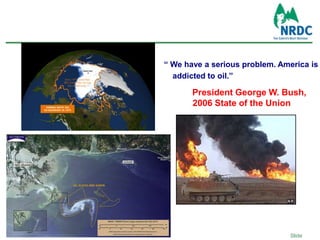
Moving America Beyond Oil“ We have a serious problem. America is addicted to oil.”             President George W. Bush,             	2006 State of the Union
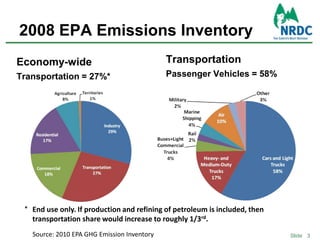
2008 EPA Emissions InventoryTransportationPassenger Vehicles = 58%Economy-wideTransportation = 27%*3* 	End use only. If production and refining of petroleum is included, then transportation share would increase to roughly 1/3rd.Source: 2010 EPA GHG Emission Inventory
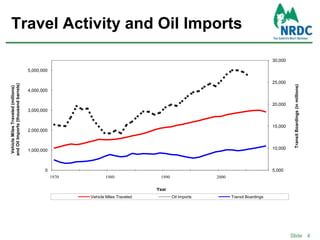
Travel Activity and Oil Imports4
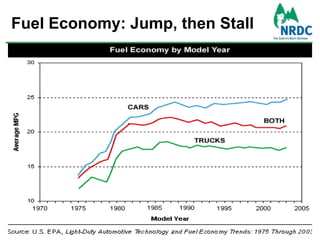
Fuel Economy: Jump, then Stall5
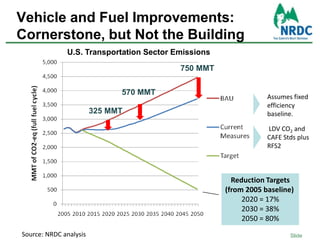
Vehicle and Fuel Improvements:Cornerstone, but Not the BuildingU.S. Transportation Sector Emissions750 MMT570 MMTAssumes fixed efficiency baseline.325 MMT LDV CO2 and CAFE Stds plus RFS2Reduction Targets(from 2005 baseline) 2020 = 17%2030 = 38%2050 = 80%Source: NRDC analysis6
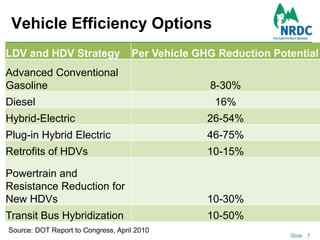
Vehicle Efficiency Options7Source: DOT Report to Congress, April 2010
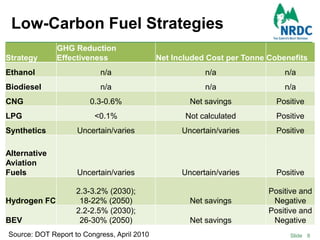
Low-Carbon Fuel Strategies8Source: DOT Report to Congress, April 2010
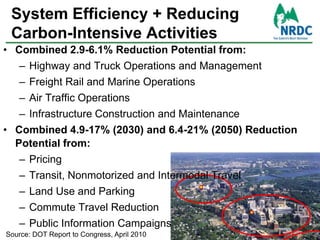
System Efficiency + Reducing Carbon-Intensive ActivitiesCombined 2.9-6.1% Reduction Potential from:Highway and Truck Operations and ManagementFreight Rail and Marine OperationsAir Traffic OperationsInfrastructure Construction and MaintenanceCombined 4.9-17% (2030) and 6.4-21% (2050) Reduction Potential from:PricingTransit, Nonmotorized and Intermodal TravelLand Use and ParkingCommute Travel ReductionPublic Information Campaigns9Source: DOT Report to Congress, April 2010
Sea Change for CAFE, What Next?And now, AAM says: “The national [fuel economy and GHG] program announced today makes sense for consumers, for government policymakers and for automakers.”10
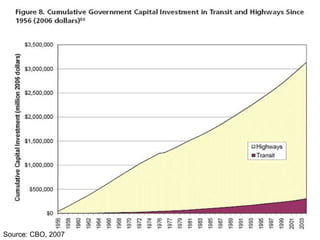
11Source: CBO, 2007
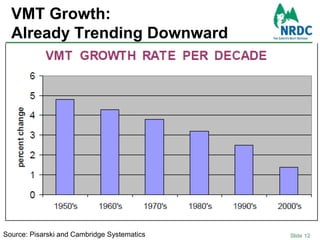
VMT Growth: Already Trending Downward12Source: Pisarski and Cambridge Systematics
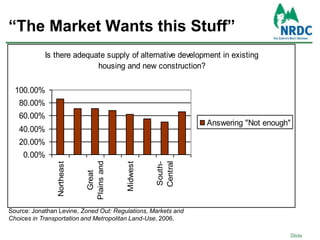
“The Market Wants this Stuff”Source: Jonathan Levine, Zoned Out: Regulations, Markets and Choices in Transportation and Metropolitan Land-Use, 2006.
14Thank You!dlovaas@nrdc.org202-289-2384For more information regarding NRDC’s Energy Programhttp://www.nrdc.org/energy/

Its america climate panel

  • 1.
    Climate and Transportation:Pulling Out the StopsDeron LovaasFederal Transportation Policy DirectorNatural Resources Defense CouncilITS AmericaHouston, TexasMay 4, 2010
  • 2.
    Moving America BeyondOil“ We have a serious problem. America is addicted to oil.” President George W. Bush, 2006 State of the Union
  • 3.
    2008 EPA EmissionsInventoryTransportationPassenger Vehicles = 58%Economy-wideTransportation = 27%*3* End use only. If production and refining of petroleum is included, then transportation share would increase to roughly 1/3rd.Source: 2010 EPA GHG Emission Inventory
  • 4.
  • 5.
  • 6.
    Vehicle and FuelImprovements:Cornerstone, but Not the BuildingU.S. Transportation Sector Emissions750 MMT570 MMTAssumes fixed efficiency baseline.325 MMT LDV CO2 and CAFE Stds plus RFS2Reduction Targets(from 2005 baseline) 2020 = 17%2030 = 38%2050 = 80%Source: NRDC analysis6
  • 7.
    Vehicle Efficiency Options7Source:DOT Report to Congress, April 2010
  • 8.
    Low-Carbon Fuel Strategies8Source:DOT Report to Congress, April 2010
  • 9.
    System Efficiency +Reducing Carbon-Intensive ActivitiesCombined 2.9-6.1% Reduction Potential from:Highway and Truck Operations and ManagementFreight Rail and Marine OperationsAir Traffic OperationsInfrastructure Construction and MaintenanceCombined 4.9-17% (2030) and 6.4-21% (2050) Reduction Potential from:PricingTransit, Nonmotorized and Intermodal TravelLand Use and ParkingCommute Travel ReductionPublic Information Campaigns9Source: DOT Report to Congress, April 2010
  • 10.
    Sea Change forCAFE, What Next?And now, AAM says: “The national [fuel economy and GHG] program announced today makes sense for consumers, for government policymakers and for automakers.”10
  • 11.
  • 12.
    VMT Growth: AlreadyTrending Downward12Source: Pisarski and Cambridge Systematics
  • 13.
    “The Market Wantsthis Stuff”Source: Jonathan Levine, Zoned Out: Regulations, Markets and Choices in Transportation and Metropolitan Land-Use, 2006.
  • 14.
    14Thank You!dlovaas@nrdc.org202-289-2384For moreinformation regarding NRDC’s Energy Programhttp://www.nrdc.org/energy/