ITIL Mind Map v1.0
ITIL Service Strategy

Author: Danny Wong
http://www.linkedin.com/in/chinwhei
ITIL Service Strategy

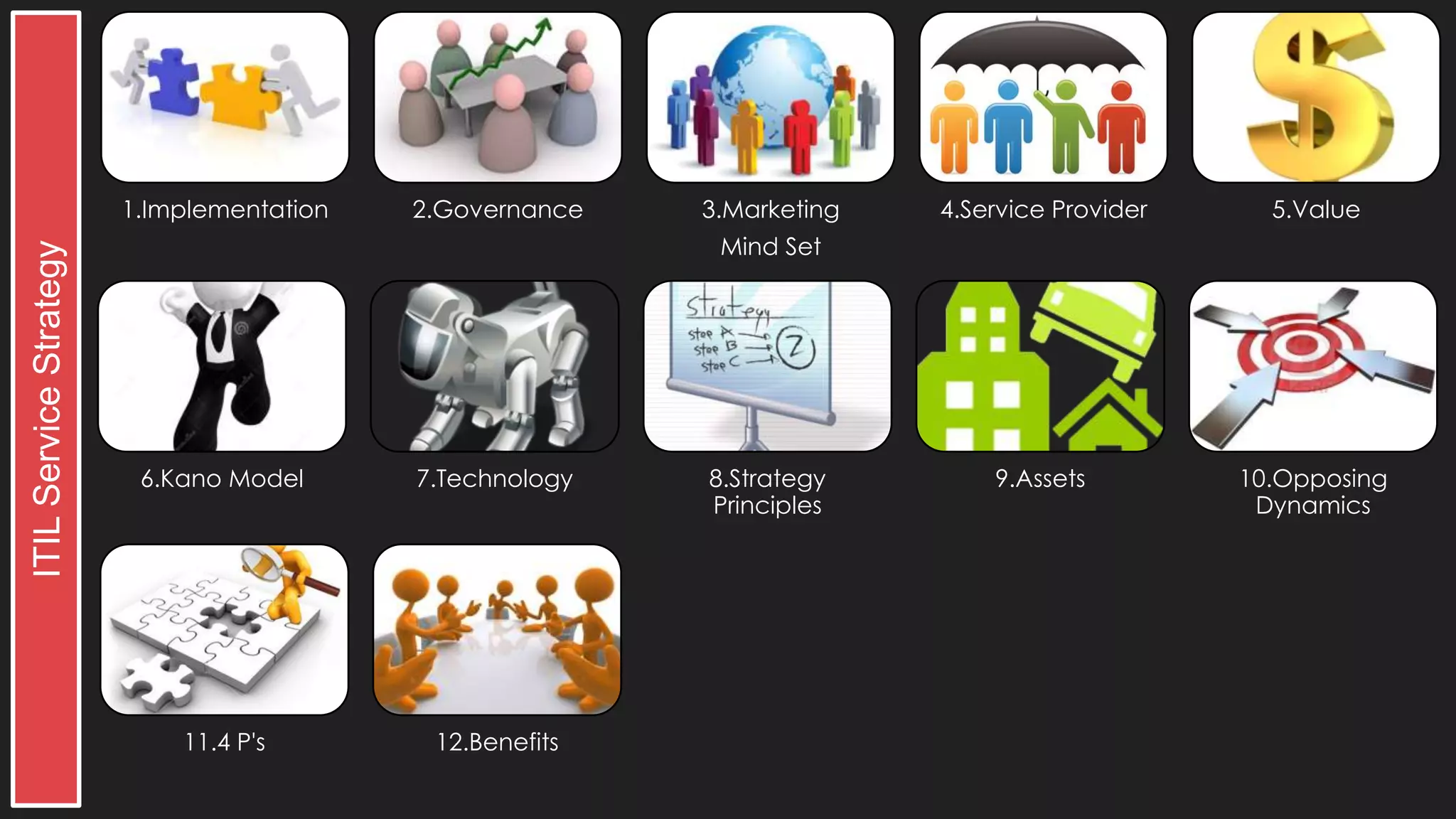
1.Implementation

2.Governance

3.Marketing

4.Service Provider

5.Value

9.Assets

10.Opposing
Dynamics

Mind Set

6.Kano Model

7.Technology

11.4 P's

12.Benefits

8.Strategy
Principles
ITIL Service Strategy

1.
1.1
1.2
1.3
1.4
1.5
1.6
1.7

IMPLEMENTATION
Current State Assessment
Target State Definition
Gap Analysis
Project Estimation
Project Consolidation
Roadmap
Designing the strategy
1.7.1
Definition of Roles
1.7.2
Service Portfolio, Customer Portfolio, Customer Agreement Portfolio
1.7.3
Demand Management Procedures, Techniques and Tools
1.7.4
Interfaces between all Service Strategy Processes and other Processes
ITIL Service Strategy

2.

GOVERNANCE

2.1 Rules, Policies, Processes by which Businesses are Operated, Regulated, Controlled
2.1.1
Establish and Maintain Business Relationships
2.1.2
Ensure Service Provider can meet Needs of the Business
2.1.3
Assists Business in Articulating Value of Service
2.2 Evaluates, Directs, Monitors the Strategy, Policies and Plans
2.3 Activities
2.3.1
Evaluate
2.3.2
Direct
2.3.3
Monitor
2.4 Framework
2.4.1
Establish Responsibilities
2.4.2
Strategy to Set and Meet Objectives
2.4.3
Acquire for Valid Reasons
2.4.4
Ensure Performance when Required
2.4.5
Ensure Conformance with Rules
2.4.6
Ensure Respect for Human Factors
2.5 Stages
2.5.1
Service through Collaboration
2.5.2
Service through Coordination
2.5.3
Services through Delegation
2.5.4
Services through Direction
2.5.5
Services through Network
ITIL Service Strategy

3.
3.1
3.2
3.3
3.4
3.5
3.6

MARKETING MIND SET
What Is our Business?
Who Are our Customers?
What Does the Customer Value?
Who Depends on Our Services?
How Do They Use Our Services?
Why Are They Valuable to Them?
ITIL Service Strategy

4.
4.1
4.2
4.3
4.4
4.5

SERVICE PROVIDER

Internal (Type I)
Shared Service Unit (SSU) (Type II)
External (Type III)
Supplies Service to one or more Customers
Disaggregation
4.5.1
Outsourcing
4.6 Aggregation
4.6.1
Insourcing
ITIL Service Strategy

5.
5.1
5.2
5.3
5.4
5.5

VALUE
Defined by Customers
Affordable Mix of Features
Achievement of Objectives
Changes over Time and Circumstance
Creating Value
5.5.1
Business Outcome Achieved
5.5.2
Customer's Preferences
5.5.3
Customer's Perception of what was Delivered
6.

KANO MODEL

ITIL Service Strategy

6.1 Basic Factors
6.2 Excitement Factors
6.3 Performance Factors
7.

ITIL Service Strategy

7.1
7.2
7.3
7.4

TECHNOLOGY
Automation can Affect Performance
Simplify Processes
Understand Flow of Activities
Minimize Interactions
ITIL Service Strategy

8.
8.1
8.2
8.3
8.4
8.5
8.6
8.7
8.8

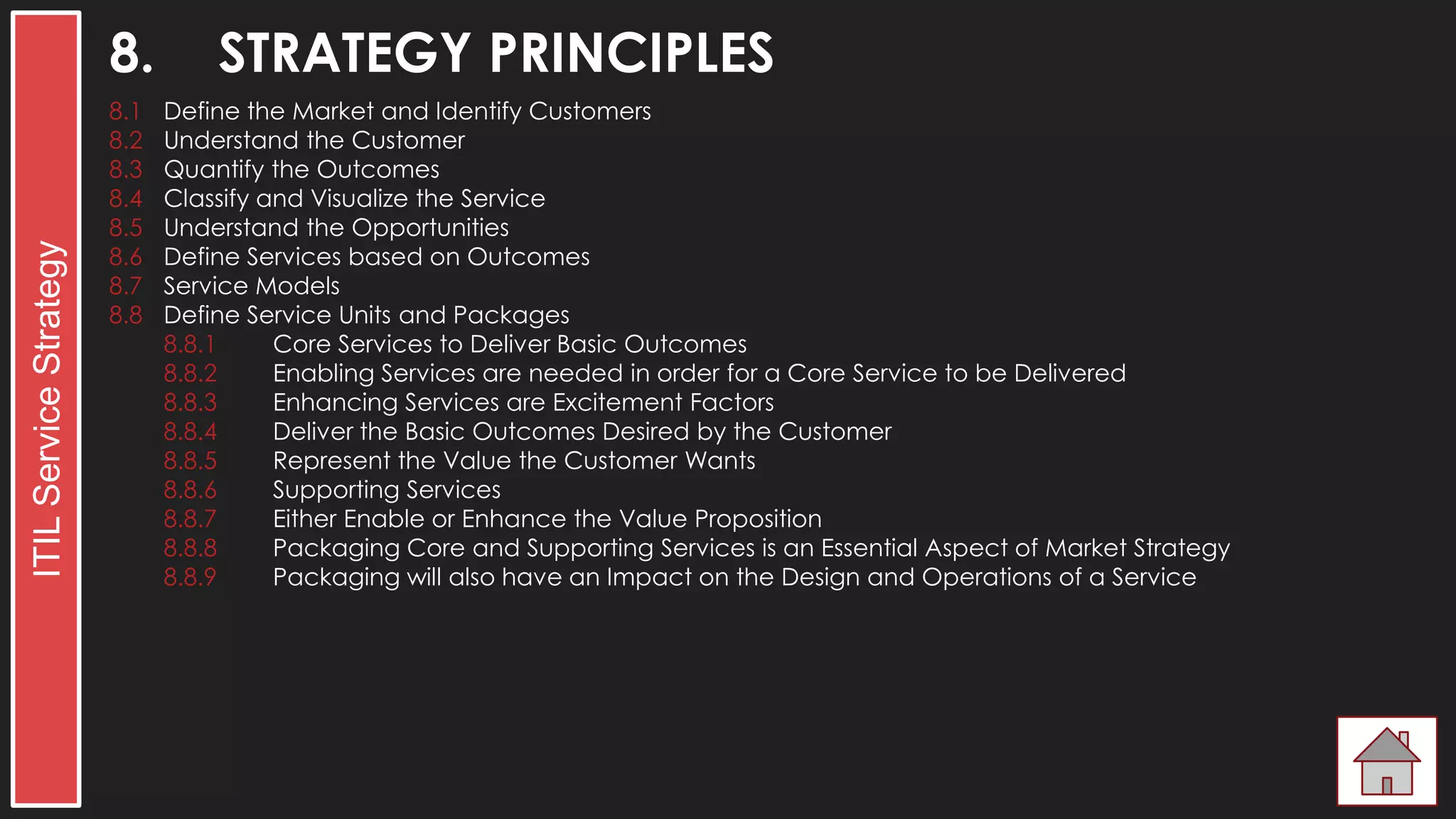
STRATEGY PRINCIPLES
Define the Market and Identify Customers
Understand the Customer
Quantify the Outcomes
Classify and Visualize the Service
Understand the Opportunities
Define Services based on Outcomes
Service Models
Define Service Units and Packages
8.8.1
Core Services to Deliver Basic Outcomes
8.8.2
Enabling Services are needed in order for a Core Service to be Delivered
8.8.3
Enhancing Services are Excitement Factors
8.8.4
Deliver the Basic Outcomes Desired by the Customer
8.8.5
Represent the Value the Customer Wants
8.8.6
Supporting Services
8.8.7
Either Enable or Enhance the Value Proposition
8.8.8
Packaging Core and Supporting Services is an Essential Aspect of Market Strategy
8.8.9
Packaging will also have an Impact on the Design and Operations of a Service
ITIL Service Strategy

9.

ASSETS

9.1 Strategic Asset
9.1.1
Service Management
9.2 Service Assets
9.2.1
Resources
9.2.1.1 Finances
9.2.1.2 Infrastructure
9.2.1.3 Applications
9.2.1.4 People
9.2.1.5 Information
9.2.2
Capabilities
9.2.2.1 Management
9.2.2.2 Organization
9.2.2.3 Processes
9.2.2.4 Knowledge
9.2.2.5 People
10. OPPOSING DYNAMICS

ITIL Service Strategy

10.1 Future versus Present
10.2 Operational Effectiveness vs Improvements in Functionality
10.3 Value Capture
11. 4 P’s

ITIL Service Strategy

11.1
11.2
11.3
11.4

Perspective Vision
Positions Business Portrayal
Plans How to Achieve Vision
Patterns Ongoing Actions
ITIL Service Strategy

12. BENEFITS
12.1
12.2
12.3
12.4
12.5

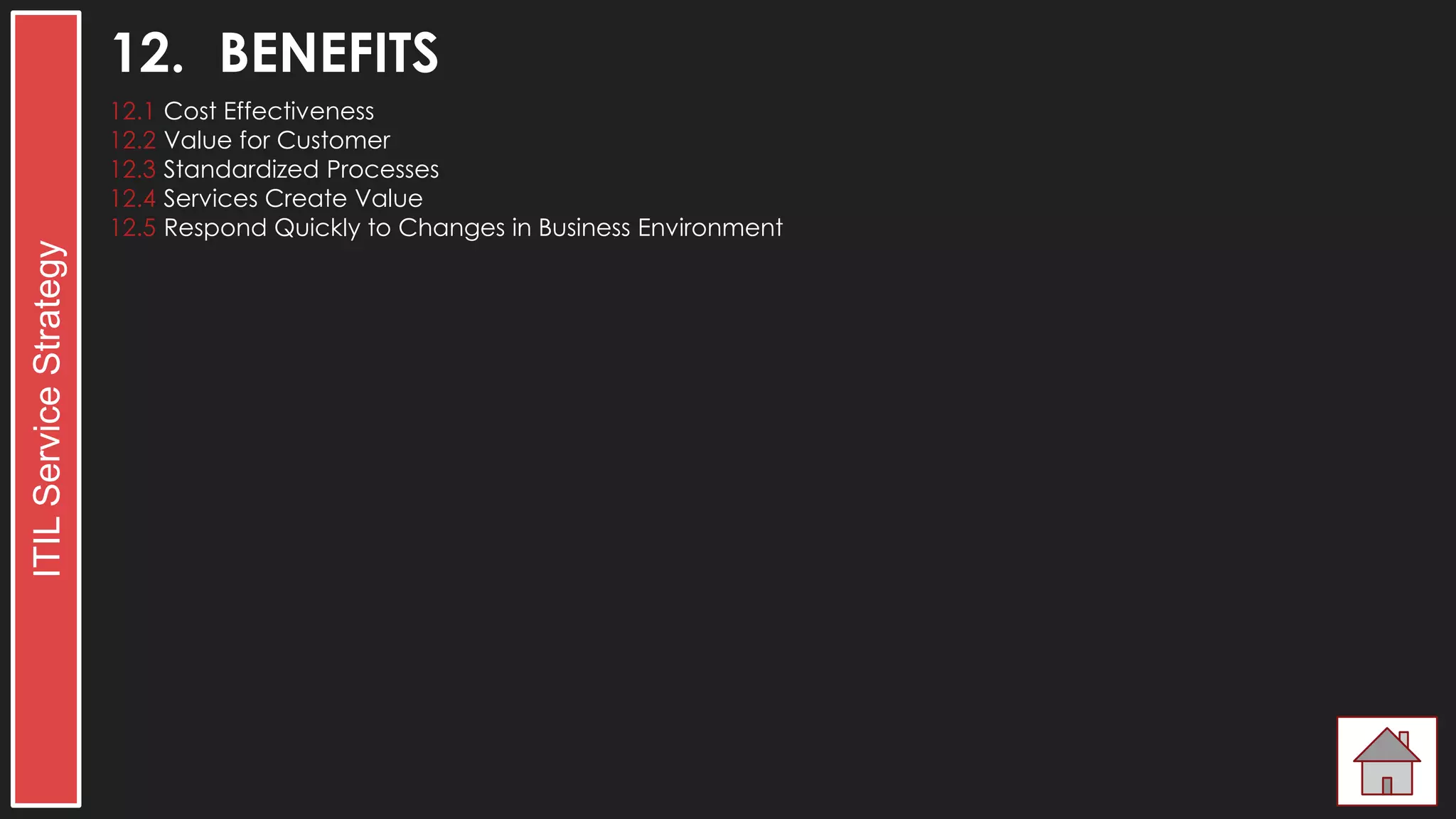
Cost Effectiveness
Value for Customer
Standardized Processes
Services Create Value
Respond Quickly to Changes in Business Environment

ITIL Mind Map v1.0 - ITIL Service Strategy

  • 1.
    ITIL Mind Mapv1.0 ITIL Service Strategy Author: Danny Wong http://www.linkedin.com/in/chinwhei
  • 2.
    ITIL Service Strategy 1.Implementation 2.Governance 3.Marketing 4.ServiceProvider 5.Value 9.Assets 10.Opposing Dynamics Mind Set 6.Kano Model 7.Technology 11.4 P's 12.Benefits 8.Strategy Principles
  • 3.
    ITIL Service Strategy 1. 1.1 1.2 1.3 1.4 1.5 1.6 1.7 IMPLEMENTATION CurrentState Assessment Target State Definition Gap Analysis Project Estimation Project Consolidation Roadmap Designing the strategy 1.7.1 Definition of Roles 1.7.2 Service Portfolio, Customer Portfolio, Customer Agreement Portfolio 1.7.3 Demand Management Procedures, Techniques and Tools 1.7.4 Interfaces between all Service Strategy Processes and other Processes
  • 4.
    ITIL Service Strategy 2. GOVERNANCE 2.1Rules, Policies, Processes by which Businesses are Operated, Regulated, Controlled 2.1.1 Establish and Maintain Business Relationships 2.1.2 Ensure Service Provider can meet Needs of the Business 2.1.3 Assists Business in Articulating Value of Service 2.2 Evaluates, Directs, Monitors the Strategy, Policies and Plans 2.3 Activities 2.3.1 Evaluate 2.3.2 Direct 2.3.3 Monitor 2.4 Framework 2.4.1 Establish Responsibilities 2.4.2 Strategy to Set and Meet Objectives 2.4.3 Acquire for Valid Reasons 2.4.4 Ensure Performance when Required 2.4.5 Ensure Conformance with Rules 2.4.6 Ensure Respect for Human Factors 2.5 Stages 2.5.1 Service through Collaboration 2.5.2 Service through Coordination 2.5.3 Services through Delegation 2.5.4 Services through Direction 2.5.5 Services through Network
  • 5.
    ITIL Service Strategy 3. 3.1 3.2 3.3 3.4 3.5 3.6 MARKETINGMIND SET What Is our Business? Who Are our Customers? What Does the Customer Value? Who Depends on Our Services? How Do They Use Our Services? Why Are They Valuable to Them?
  • 6.
    ITIL Service Strategy 4. 4.1 4.2 4.3 4.4 4.5 SERVICEPROVIDER Internal (Type I) Shared Service Unit (SSU) (Type II) External (Type III) Supplies Service to one or more Customers Disaggregation 4.5.1 Outsourcing 4.6 Aggregation 4.6.1 Insourcing
  • 7.
    ITIL Service Strategy 5. 5.1 5.2 5.3 5.4 5.5 VALUE Definedby Customers Affordable Mix of Features Achievement of Objectives Changes over Time and Circumstance Creating Value 5.5.1 Business Outcome Achieved 5.5.2 Customer's Preferences 5.5.3 Customer's Perception of what was Delivered
  • 8.
    6. KANO MODEL ITIL ServiceStrategy 6.1 Basic Factors 6.2 Excitement Factors 6.3 Performance Factors
  • 9.
    7. ITIL Service Strategy 7.1 7.2 7.3 7.4 TECHNOLOGY Automationcan Affect Performance Simplify Processes Understand Flow of Activities Minimize Interactions
  • 10.
    ITIL Service Strategy 8. 8.1 8.2 8.3 8.4 8.5 8.6 8.7 8.8 STRATEGYPRINCIPLES Define the Market and Identify Customers Understand the Customer Quantify the Outcomes Classify and Visualize the Service Understand the Opportunities Define Services based on Outcomes Service Models Define Service Units and Packages 8.8.1 Core Services to Deliver Basic Outcomes 8.8.2 Enabling Services are needed in order for a Core Service to be Delivered 8.8.3 Enhancing Services are Excitement Factors 8.8.4 Deliver the Basic Outcomes Desired by the Customer 8.8.5 Represent the Value the Customer Wants 8.8.6 Supporting Services 8.8.7 Either Enable or Enhance the Value Proposition 8.8.8 Packaging Core and Supporting Services is an Essential Aspect of Market Strategy 8.8.9 Packaging will also have an Impact on the Design and Operations of a Service
  • 11.
    ITIL Service Strategy 9. ASSETS 9.1Strategic Asset 9.1.1 Service Management 9.2 Service Assets 9.2.1 Resources 9.2.1.1 Finances 9.2.1.2 Infrastructure 9.2.1.3 Applications 9.2.1.4 People 9.2.1.5 Information 9.2.2 Capabilities 9.2.2.1 Management 9.2.2.2 Organization 9.2.2.3 Processes 9.2.2.4 Knowledge 9.2.2.5 People
  • 12.
    10. OPPOSING DYNAMICS ITILService Strategy 10.1 Future versus Present 10.2 Operational Effectiveness vs Improvements in Functionality 10.3 Value Capture
  • 13.
    11. 4 P’s ITILService Strategy 11.1 11.2 11.3 11.4 Perspective Vision Positions Business Portrayal Plans How to Achieve Vision Patterns Ongoing Actions
  • 14.
    ITIL Service Strategy 12.BENEFITS 12.1 12.2 12.3 12.4 12.5 Cost Effectiveness Value for Customer Standardized Processes Services Create Value Respond Quickly to Changes in Business Environment