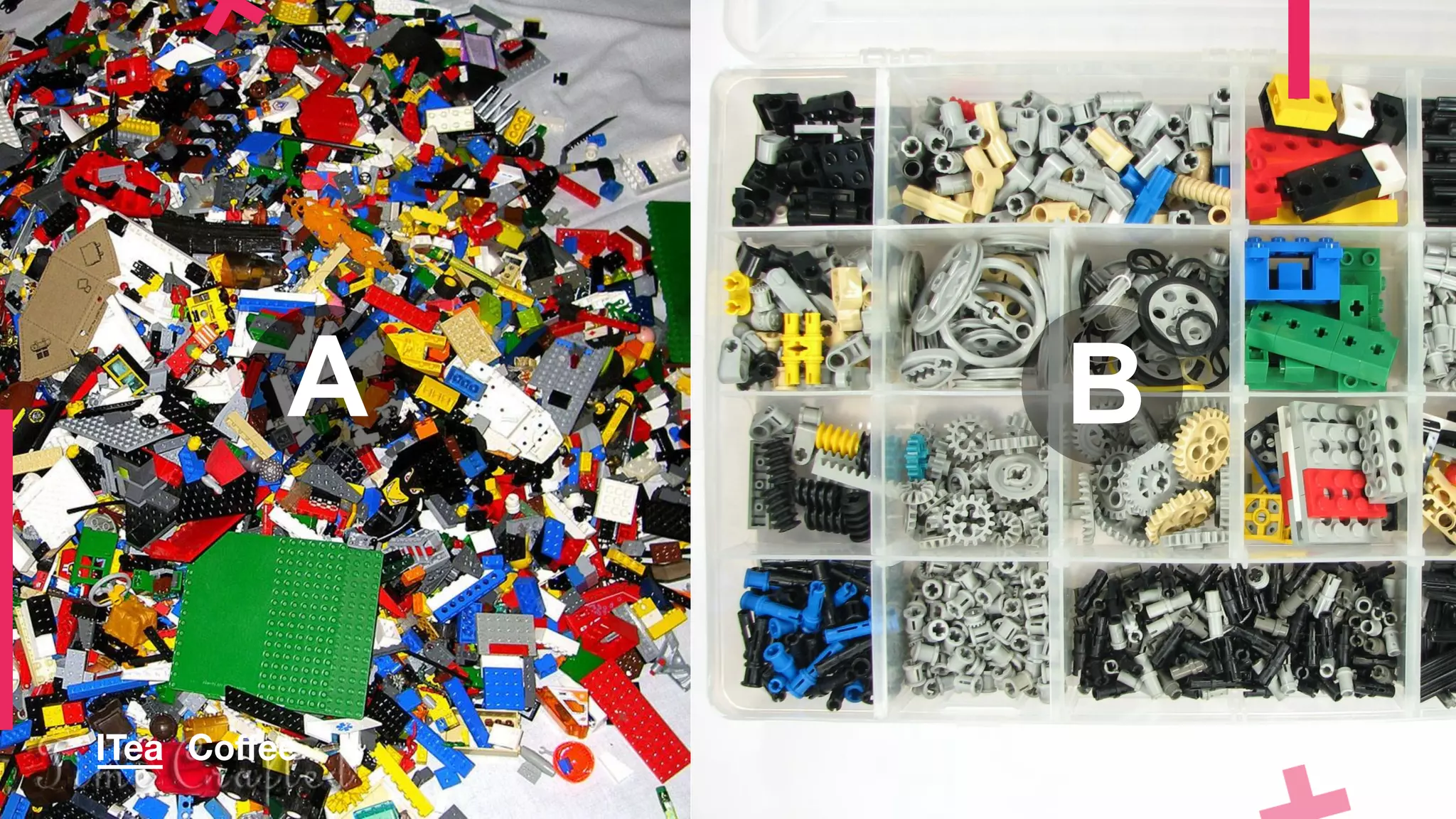
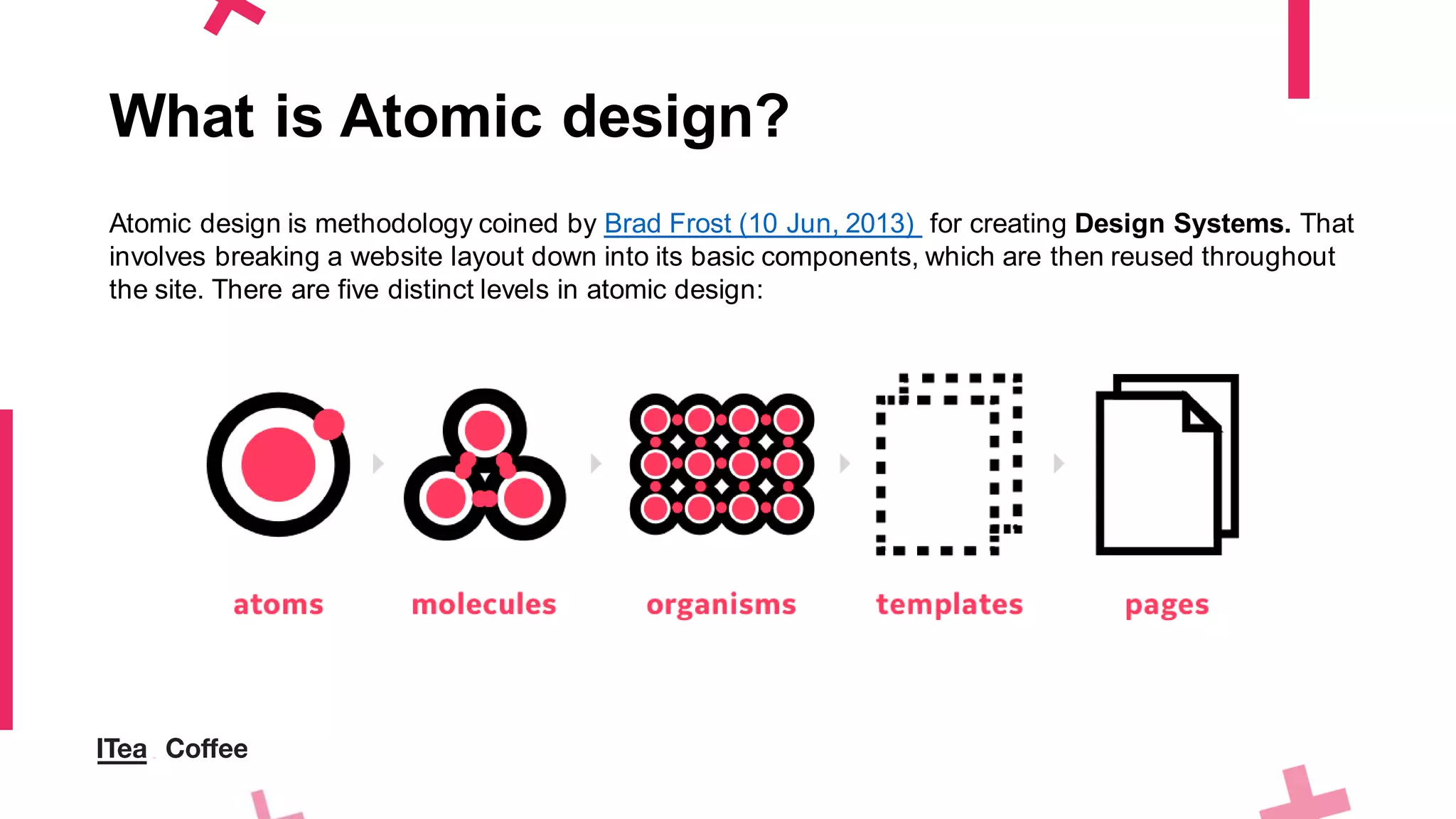
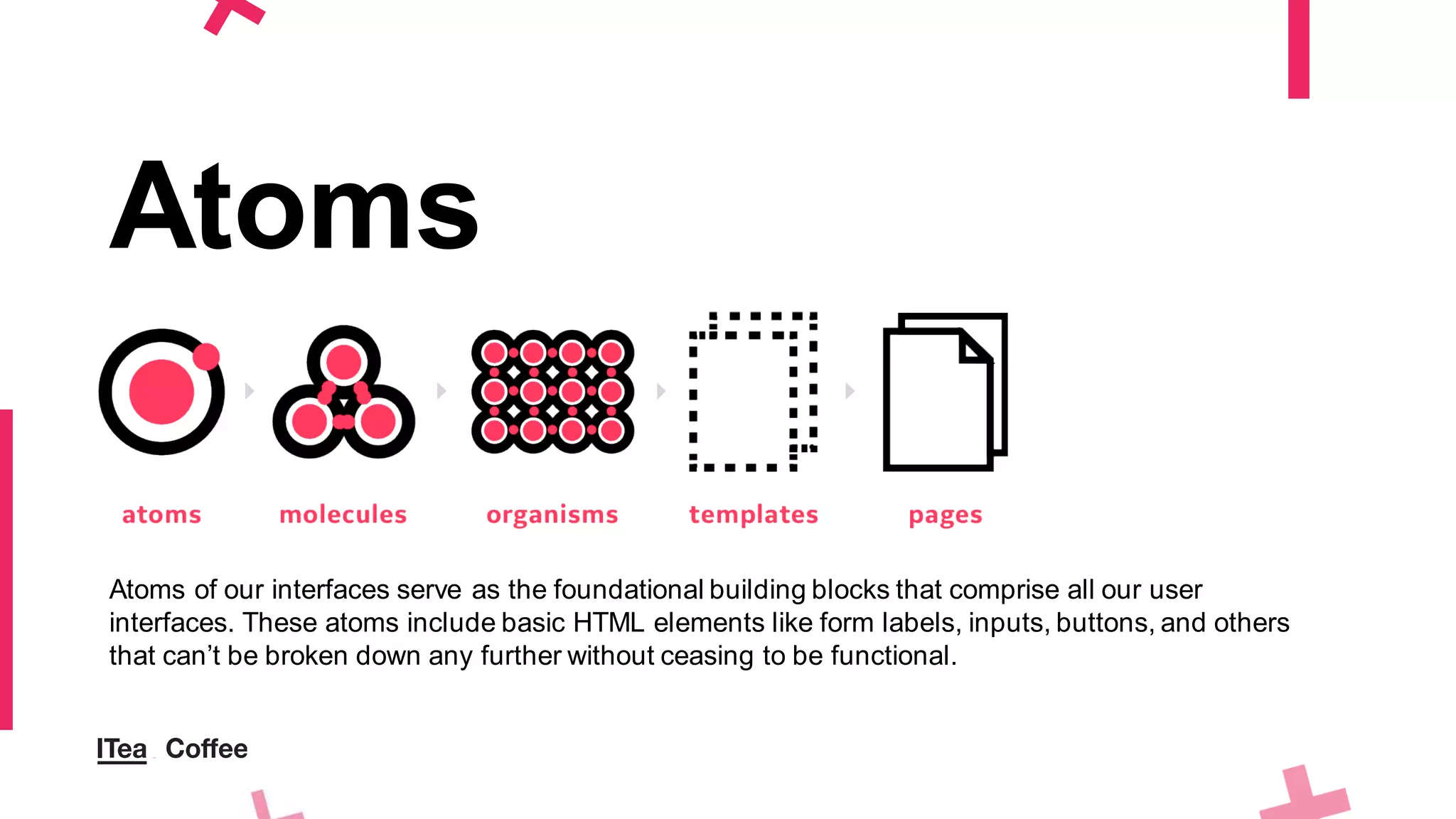
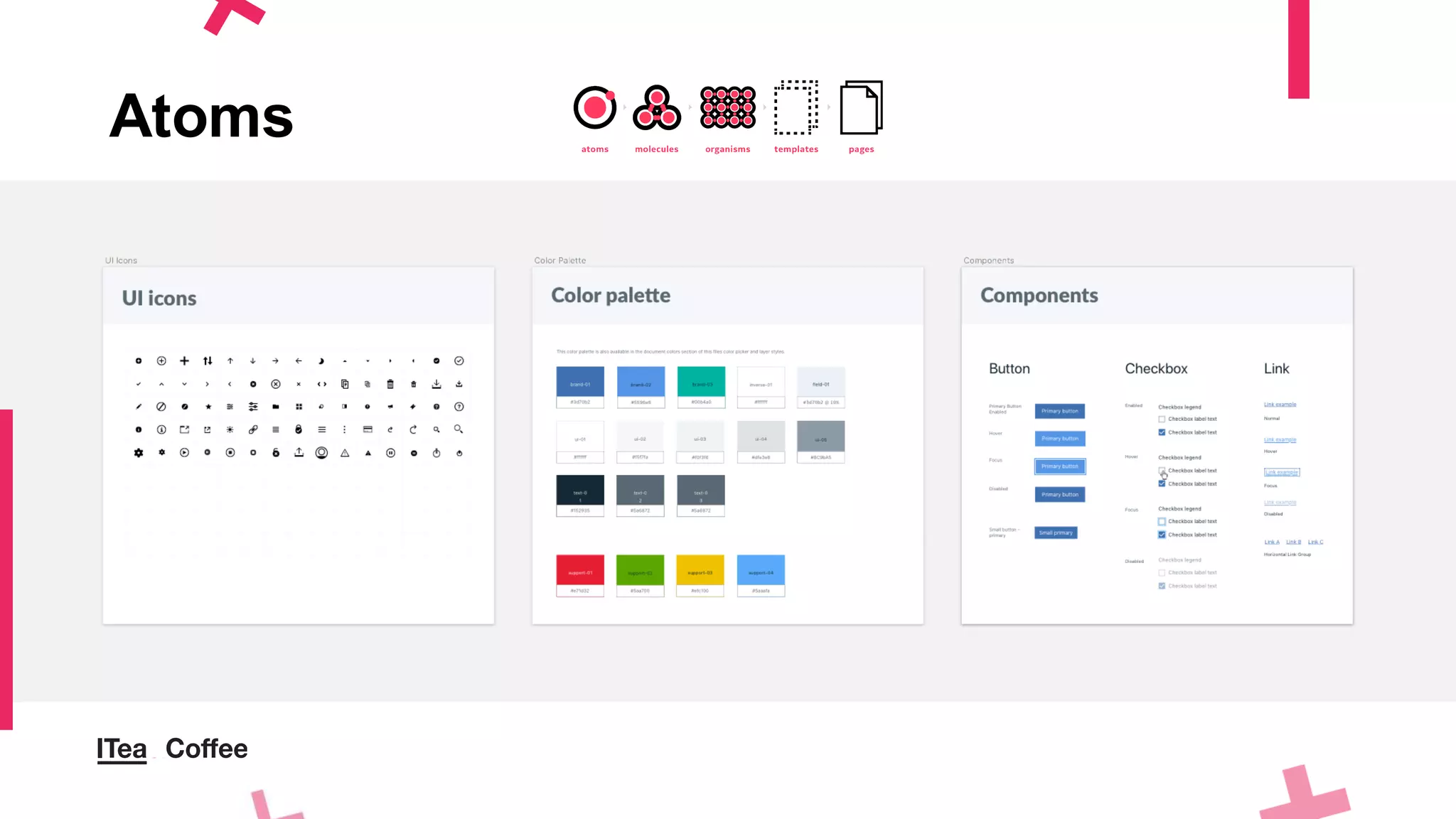
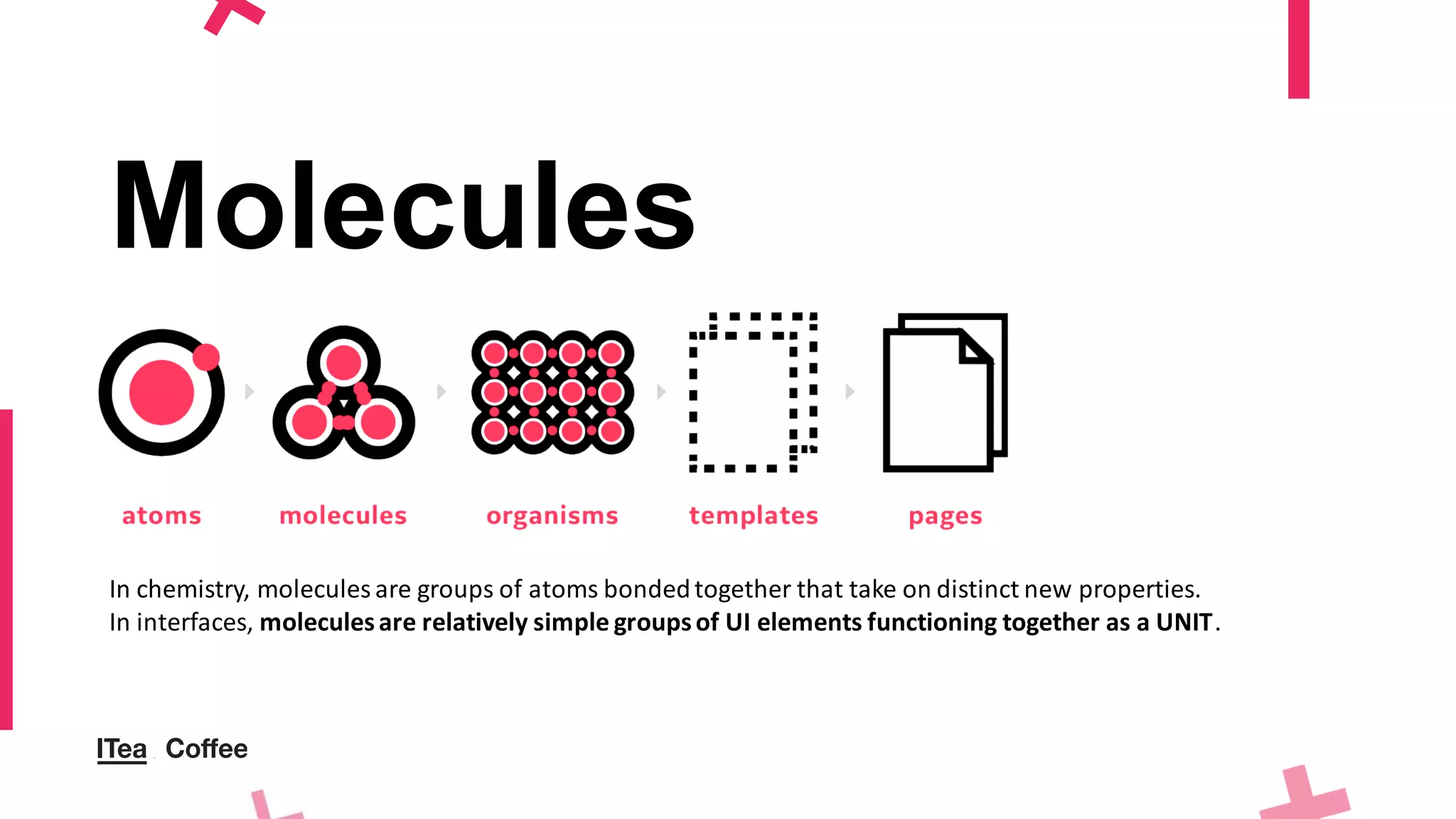
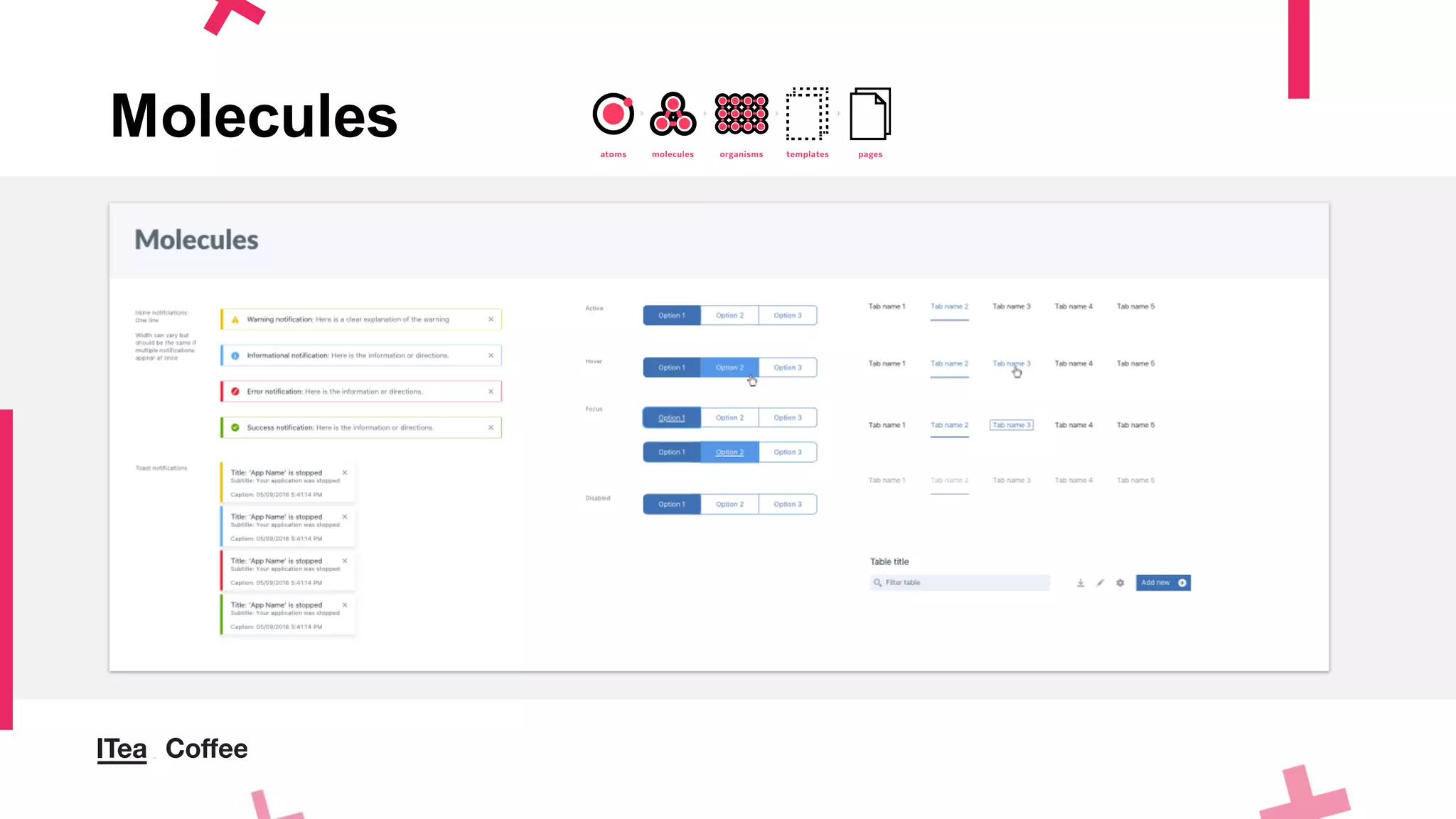
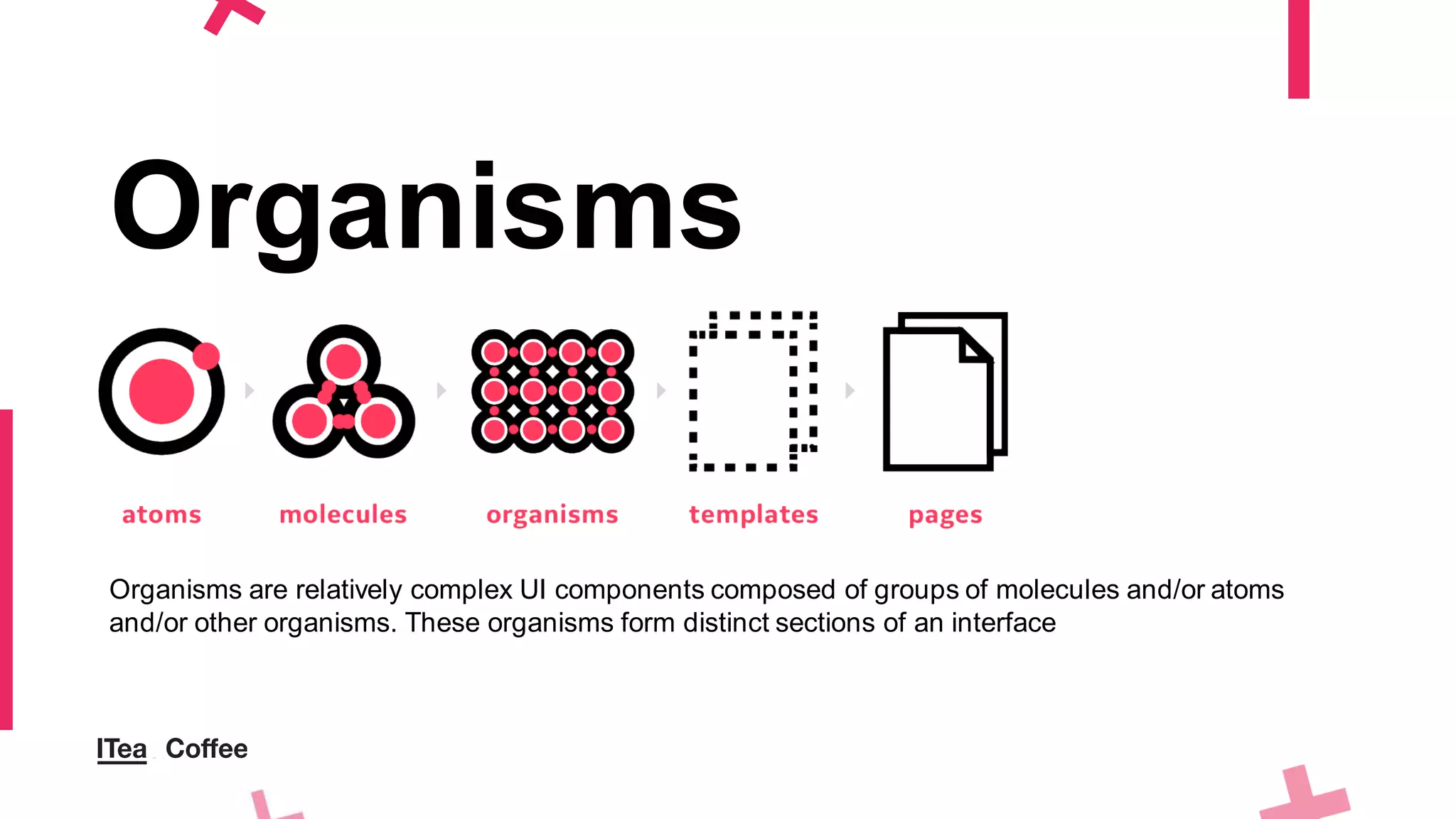
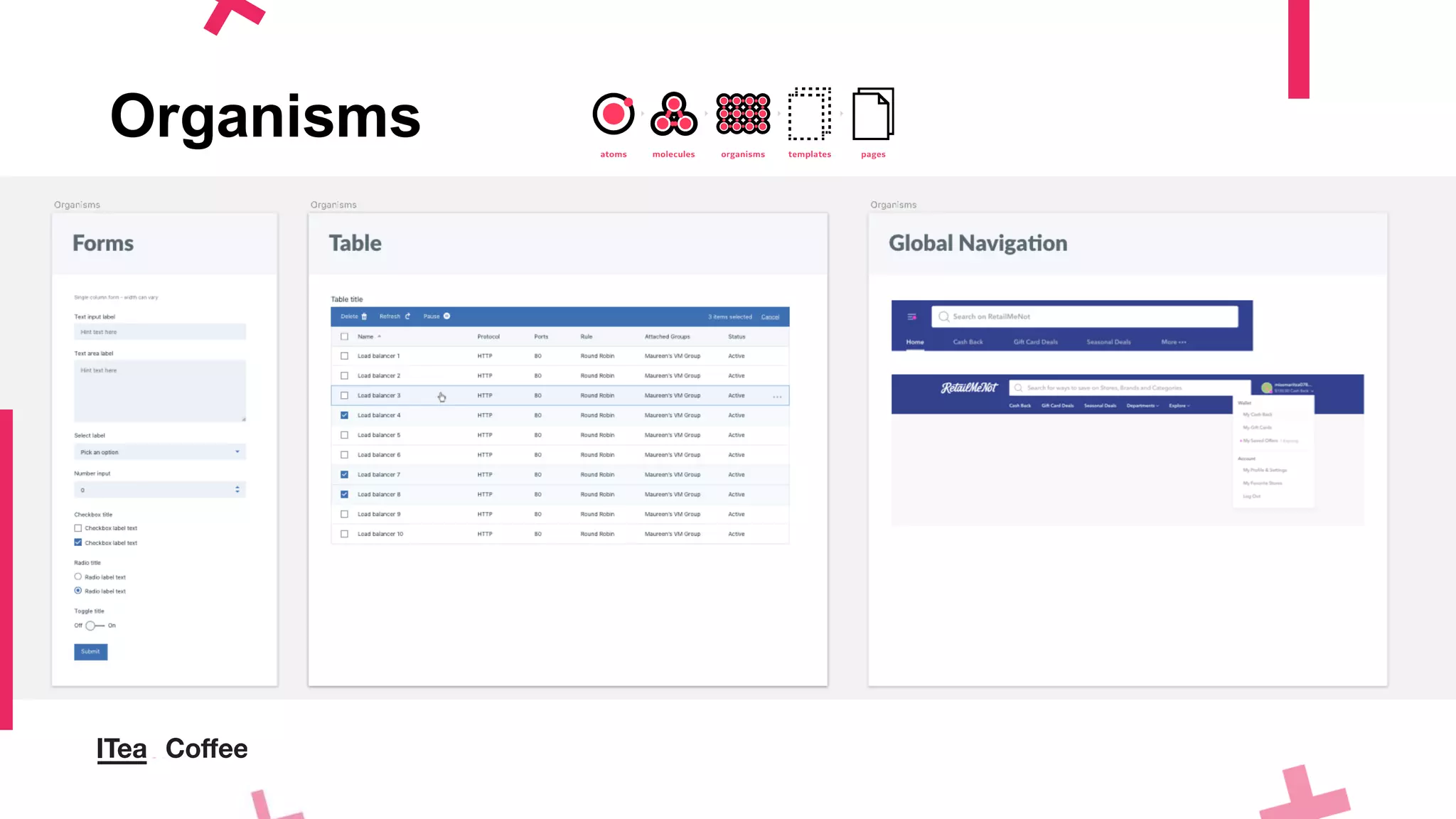
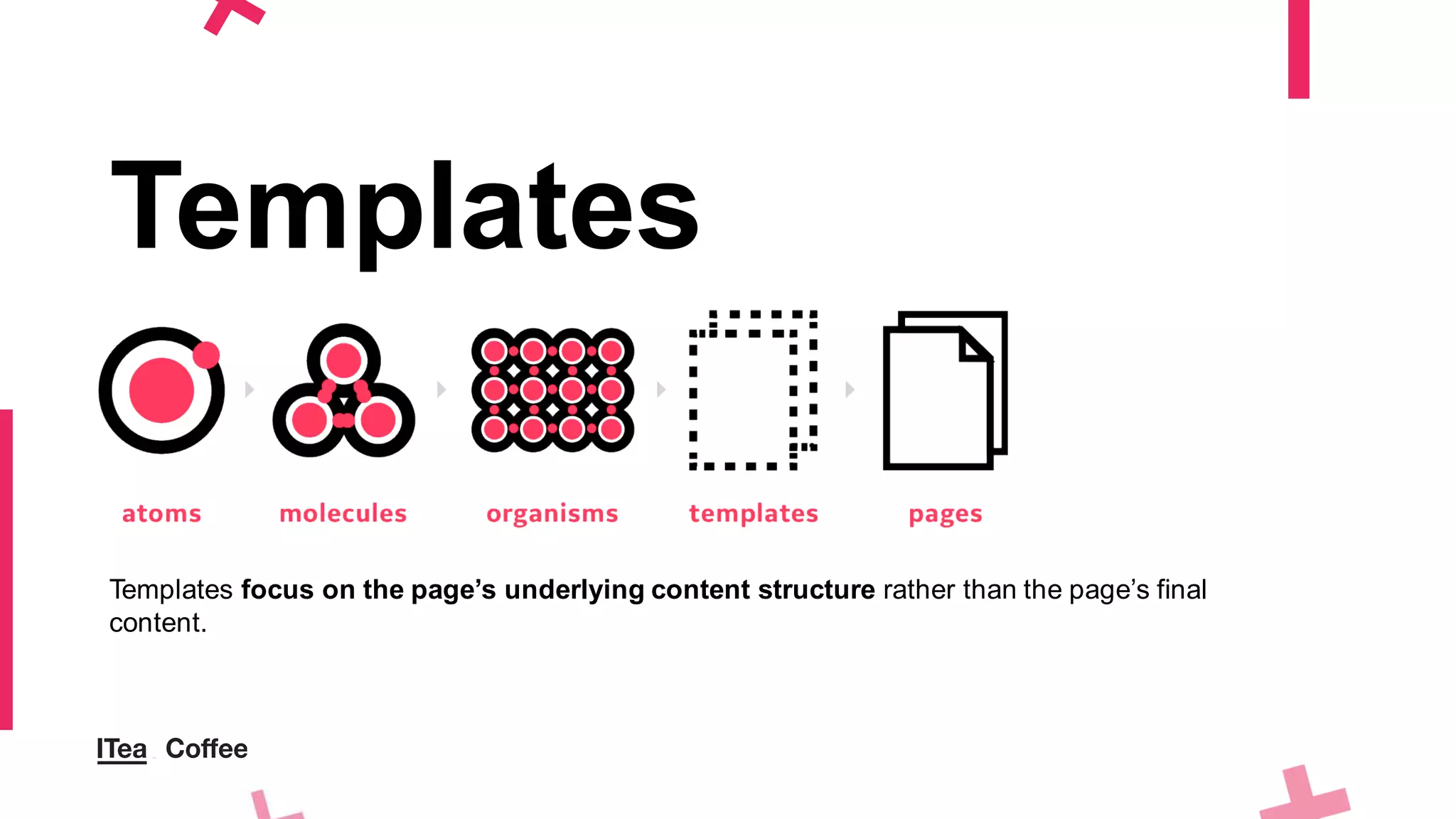
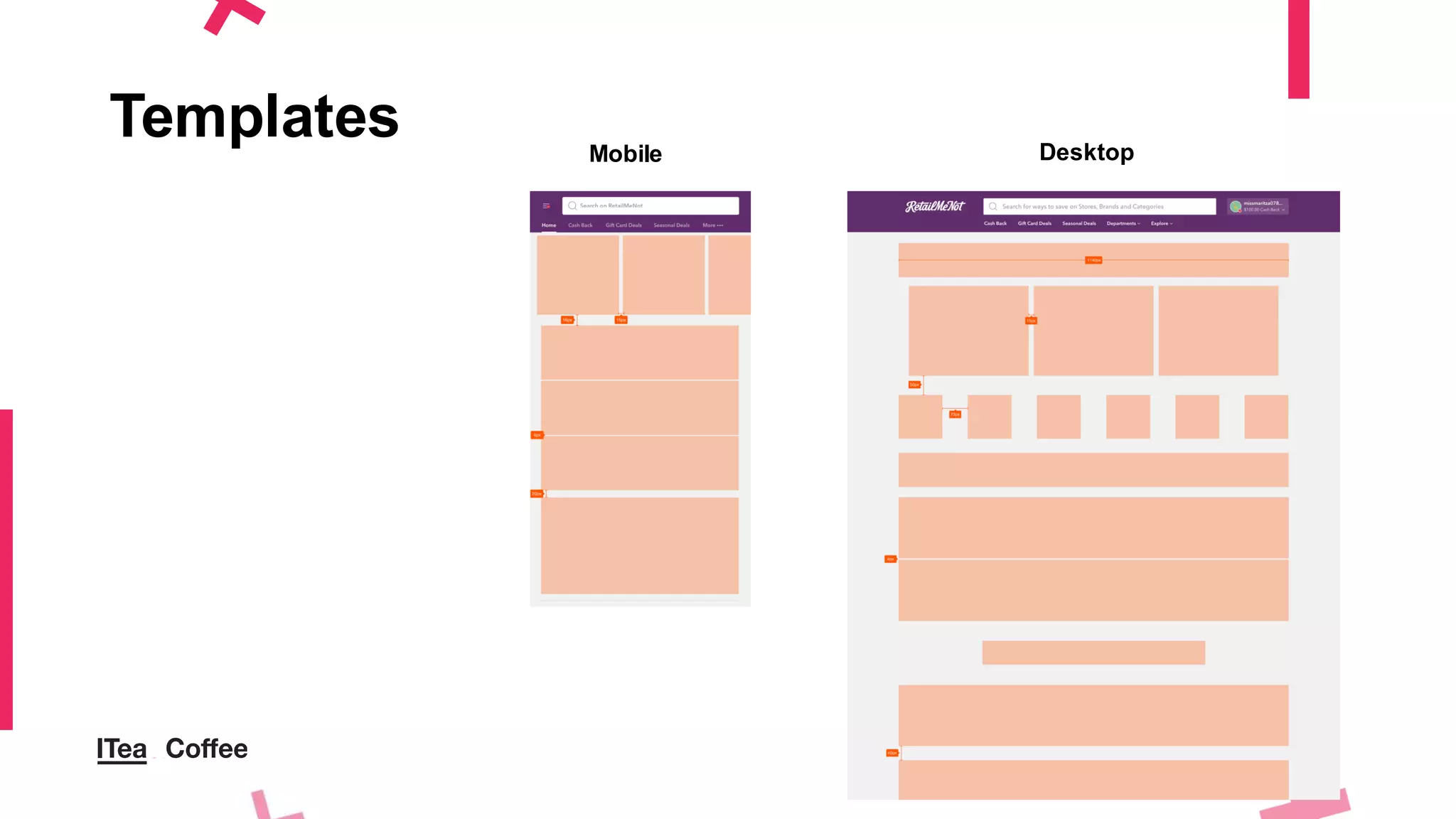
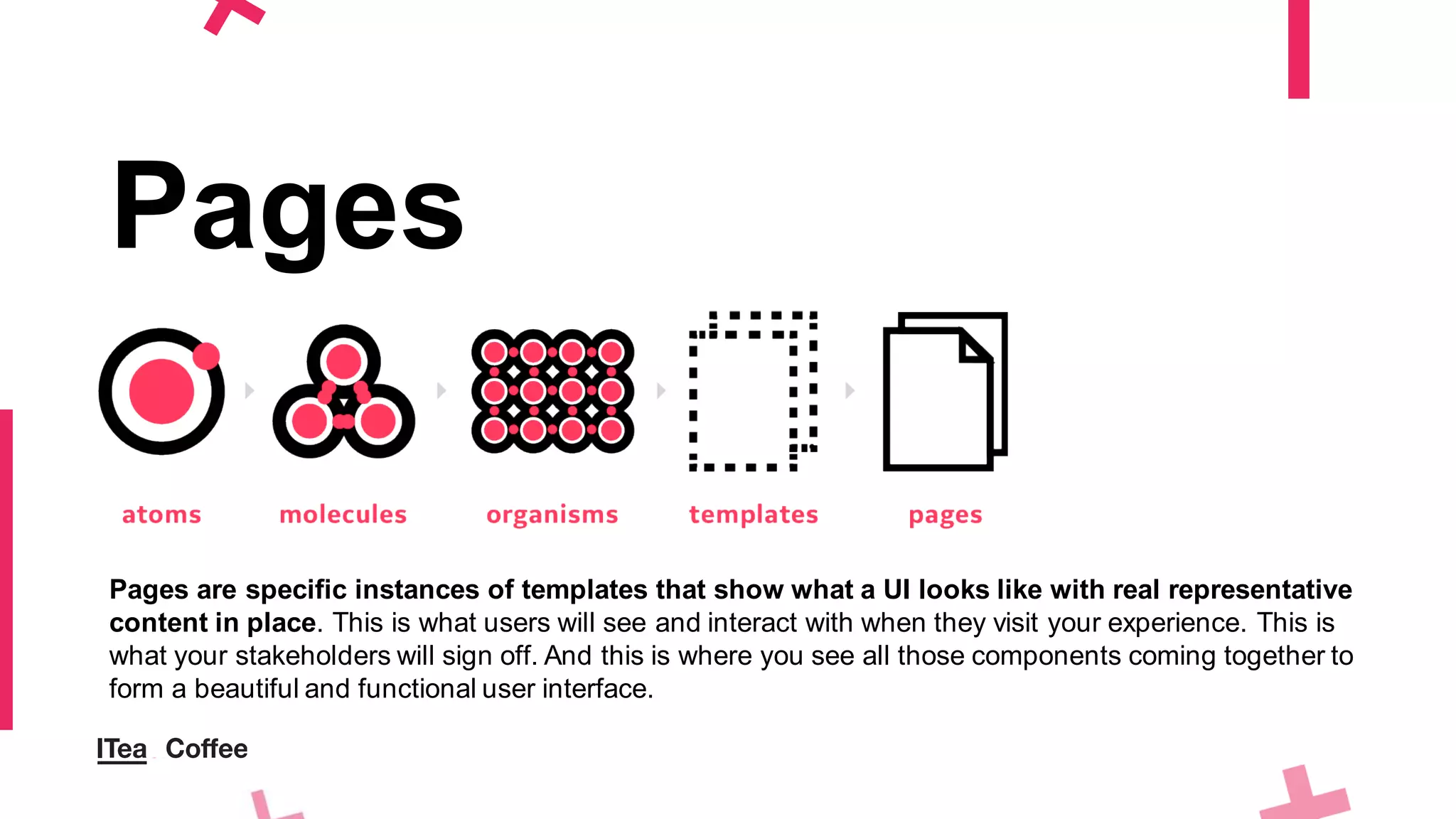
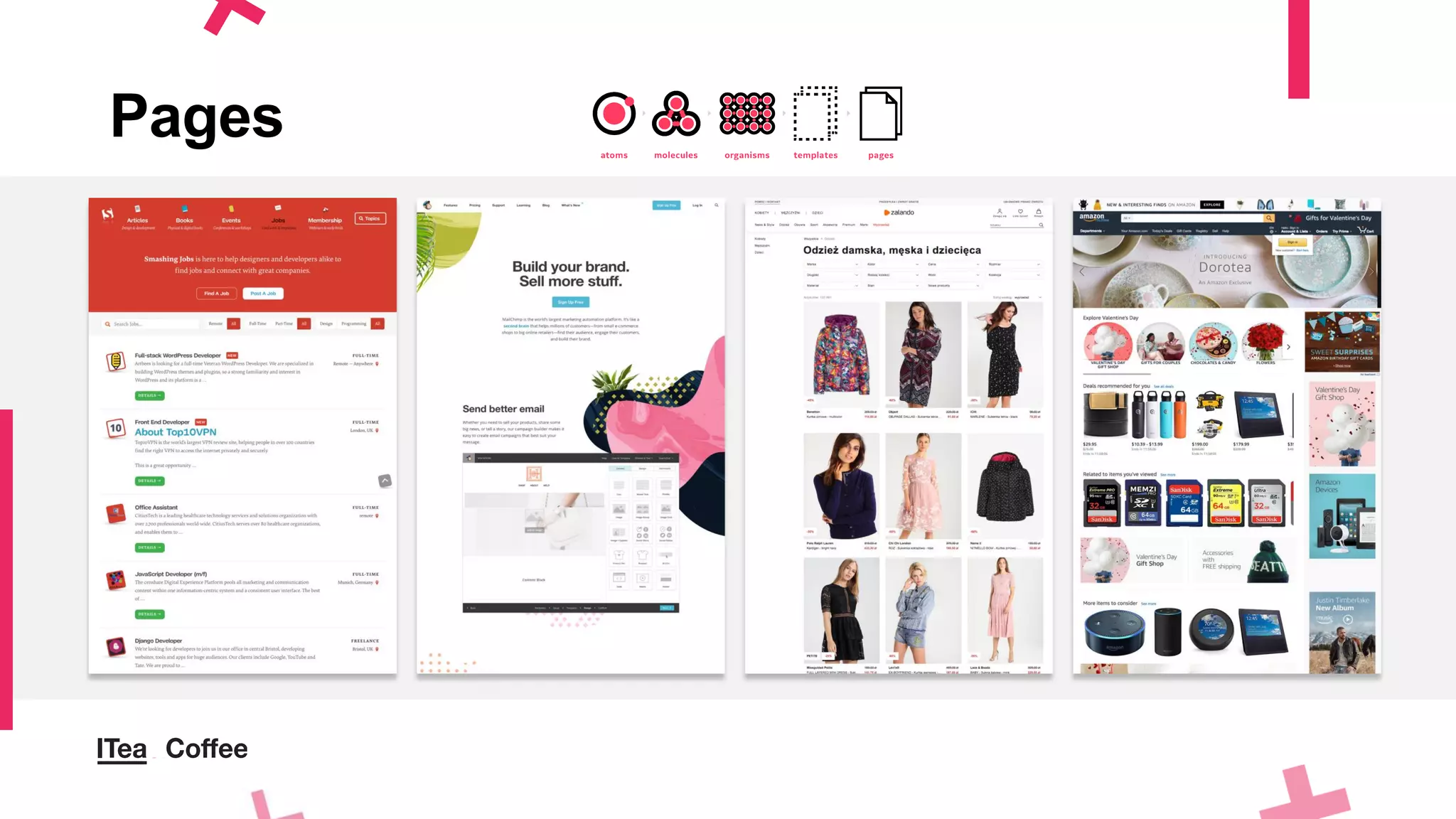
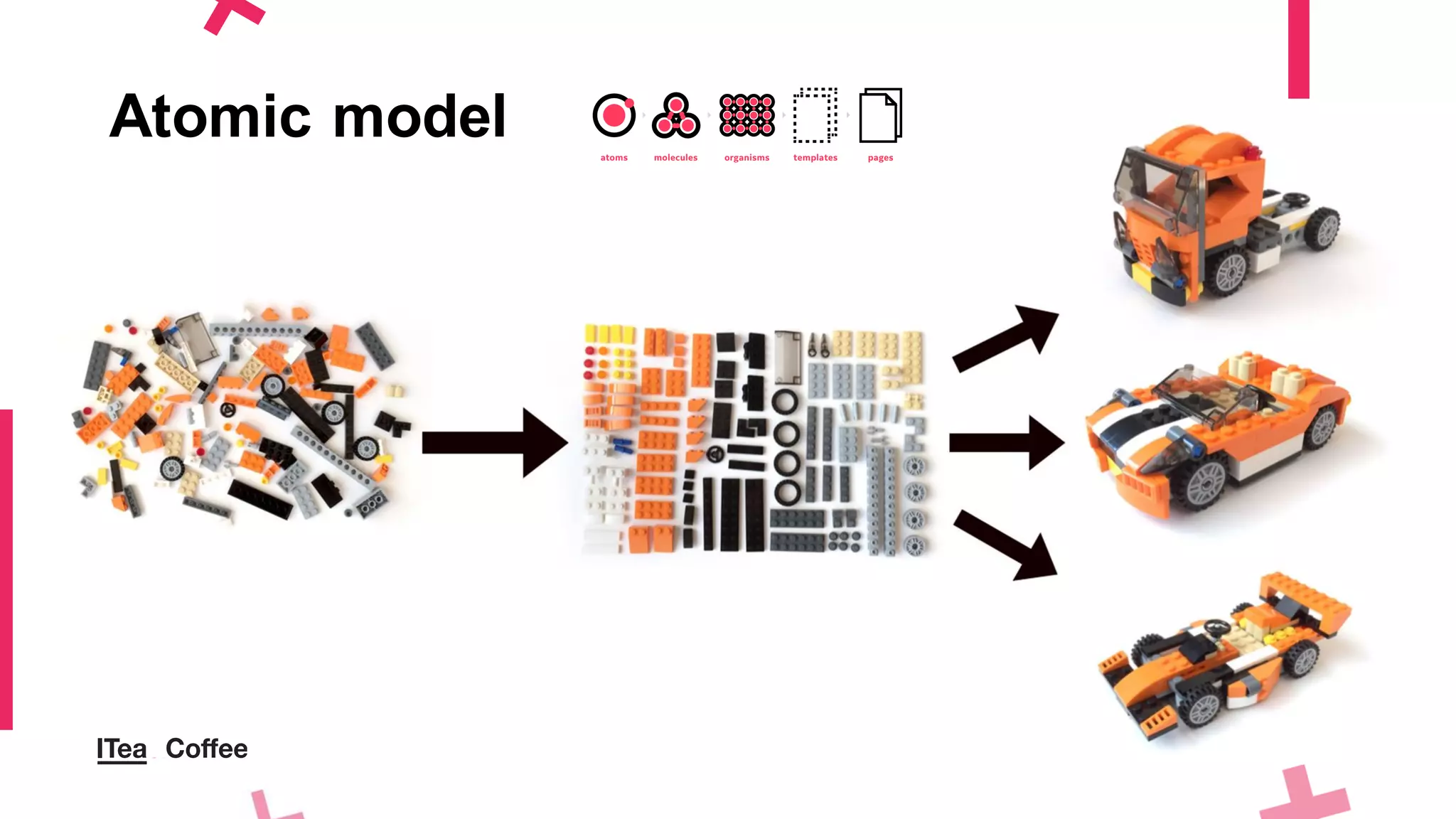
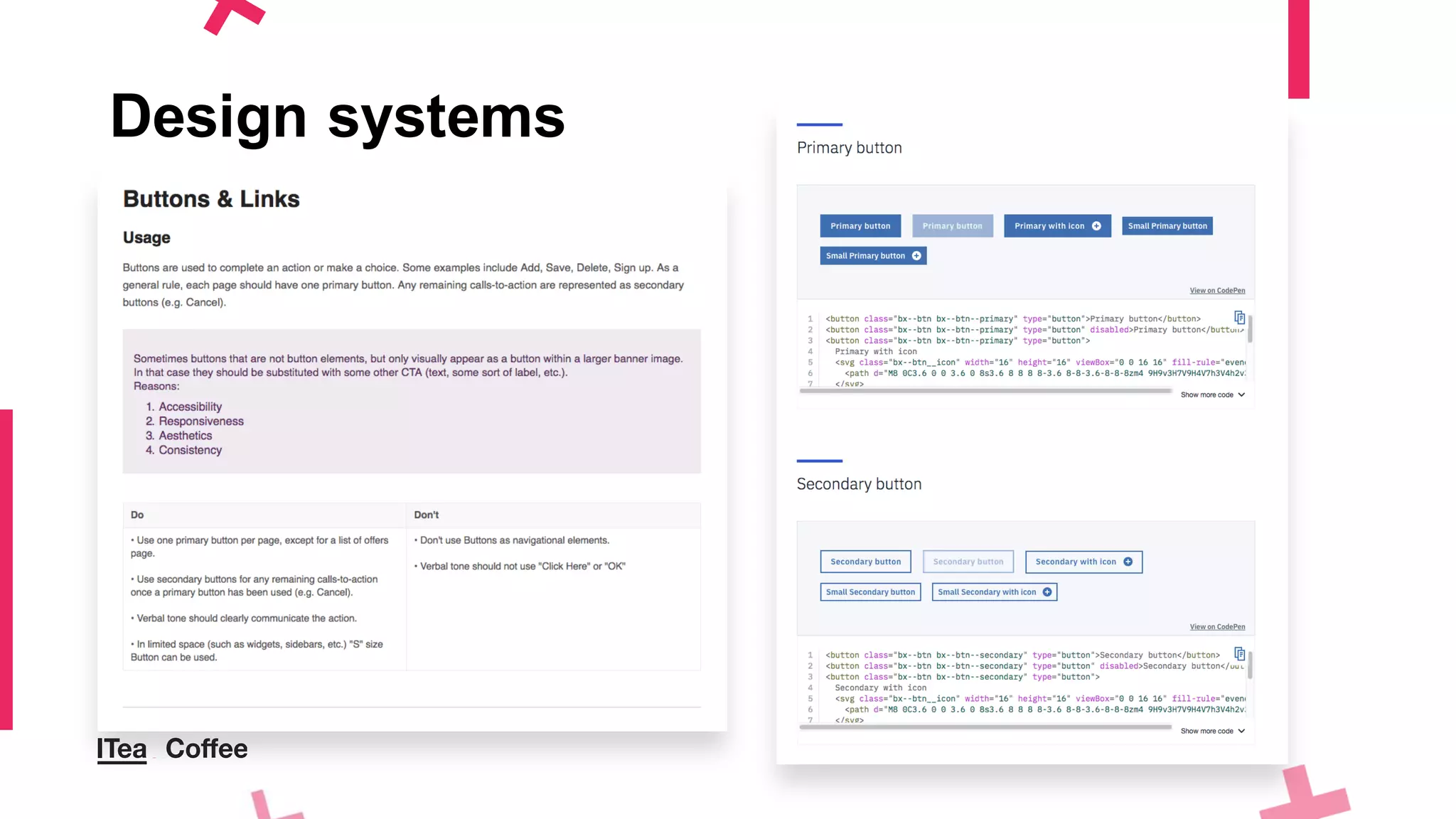
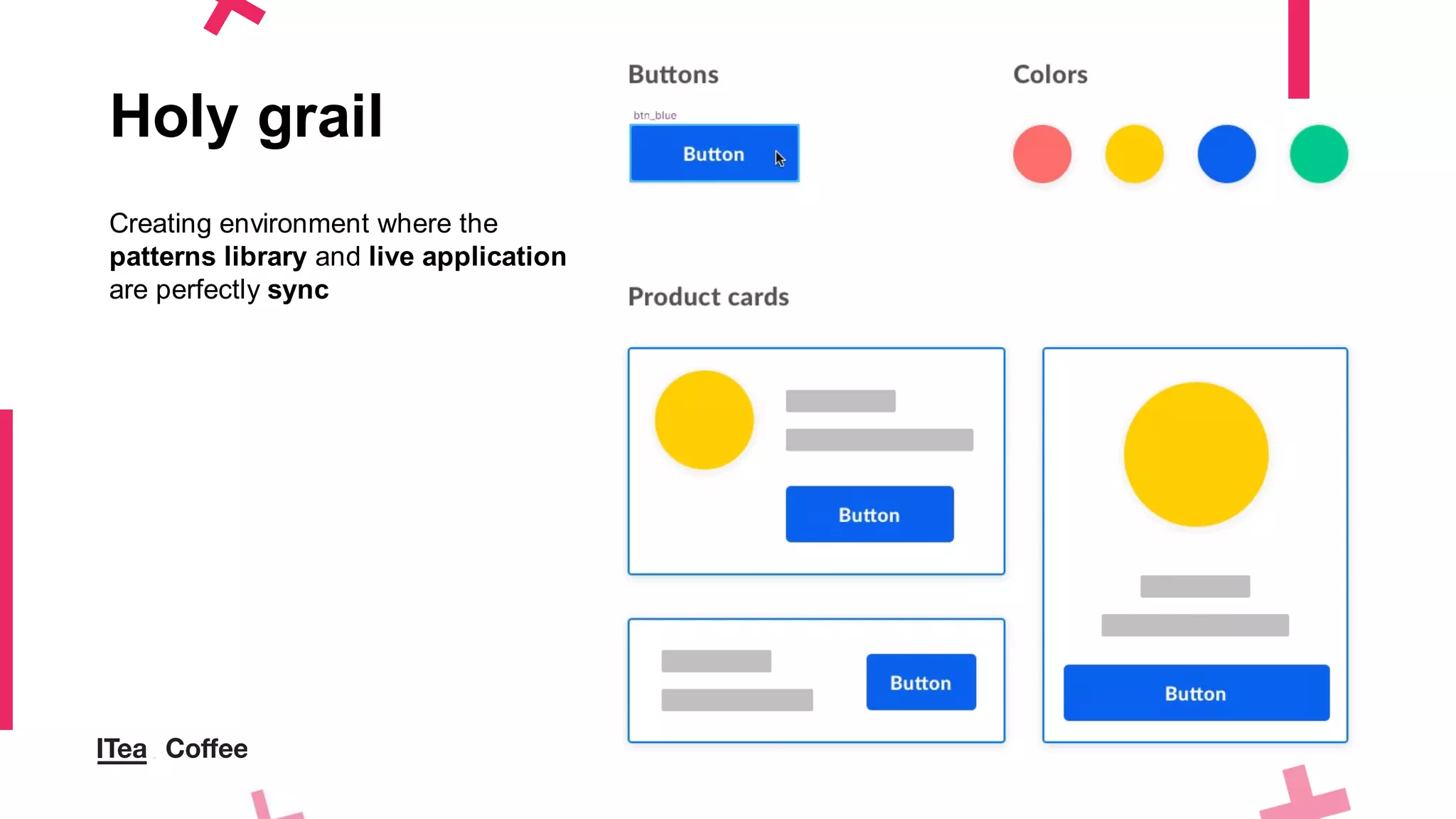
Atomic design is a methodology for creating design systems that involves breaking down interfaces into basic reusable components. There are five levels in atomic design: atoms, molecules, organisms, templates, and pages. Atoms are the smallest elements like buttons and inputs. Molecules are groups of atoms that work together. Organisms combine molecules and other organisms into more complex components. Templates define the content structure without real content. Pages show templates with actual content for users to interact with. The methodology helps create reusable interfaces and maintainable design systems.










![[BROCHURE] Italy Tour Project | @SlideON](https://cdn.slidesharecdn.com/ss_thumbnails/brochure8-251215152319-2805af68-thumbnail.jpg?width=640&height=640&fit=bounds)


