PRESENTATION
ON
THE INFORMATION TECHNOLOGY
ACT,2000
MADE BY:-
SAHIL SHARMA
VIDHU ARORA
SUBMITTED TO:-
SALONI DEVI
CONTENT
1. INTRODUCTION
2. OBJECTIVE OF THE IT ACT
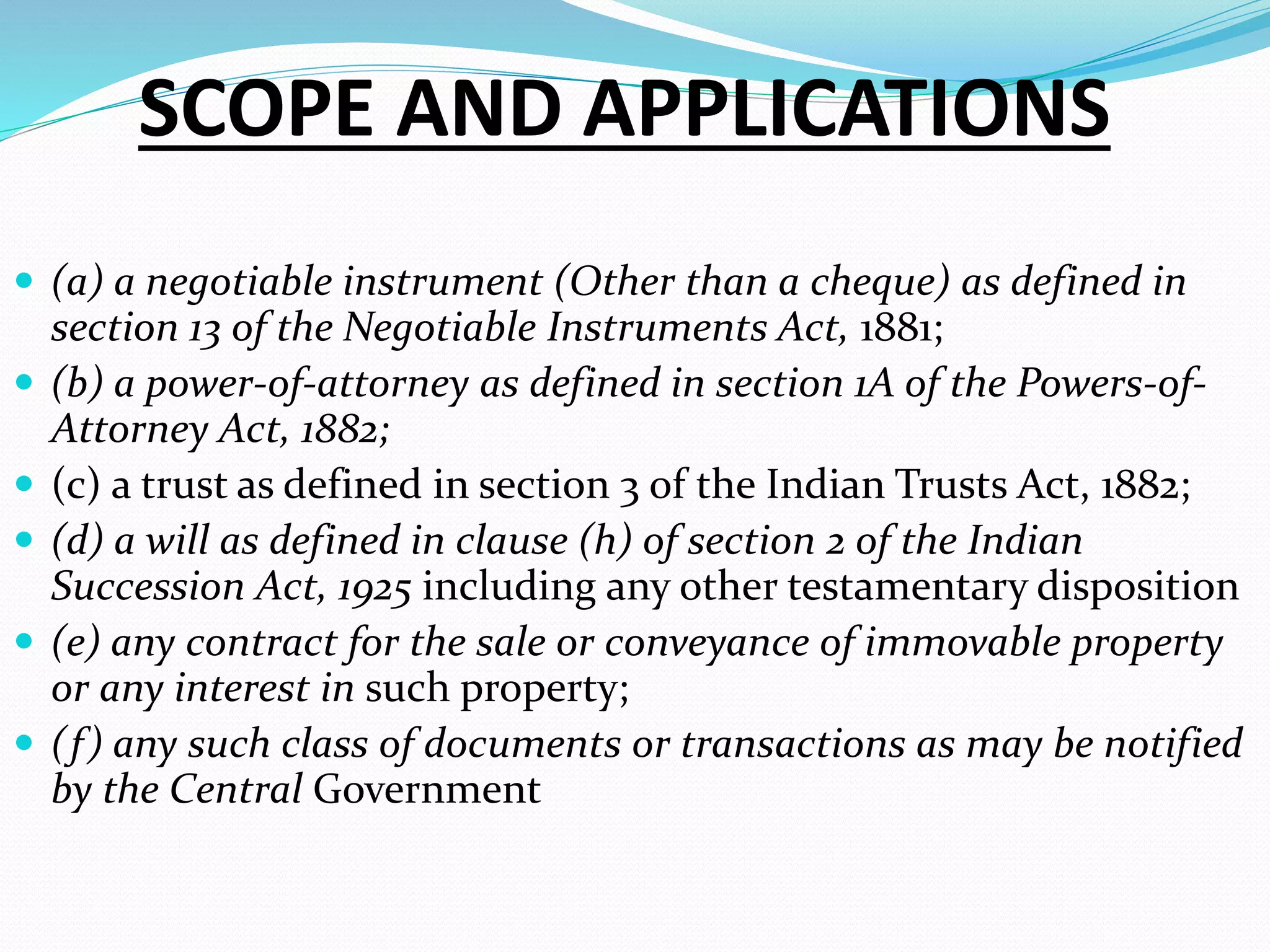
3. SCOPE AND APPLICATIONS
4. AMENDMENTS
5. DIGITAL SIGNATURE
 The Information Technology Act, 2000 is an Act of
the Indian Parliament notified on 17 October 2000.
 It is the primary law in India dealing with cybercrime
and electronic commerce.
 It is based on the United Nations Model Law on
Electronic Commerce 1996 (UNCITRAL Model)
recommended by the General Assembly of United
Nations by a resolution dated 30 January 1997.
Objectives of the IT Act
To provide legal recognition for transactions:-
 Carried out by means of electronic data interchange, and
other means of electronic communication, commonly
referred to as “electronic commerce”
 To facilitate electronic filing of documents with
Government agencies and E-Payments
 To amend the Indian Penal Code, Indian Evidence
Act,1872, the Banker’s Books Evidence Act 1891,Reserve
Bank of India Act ,1934
SCOPE AND APPLICATIONS
 (a) a negotiable instrument (Other than a cheque) as defined in
section 13 of the Negotiable Instruments Act, 1881;
 (b) a power-of-attorney as defined in section 1A of the Powers-of-
Attorney Act, 1882;
 (c) a trust as defined in section 3 of the Indian Trusts Act, 1882;
 (d) a will as defined in clause (h) of section 2 of the Indian
Succession Act, 1925 including any other testamentary disposition
 (e) any contract for the sale or conveyance of immovable property
or any interest in such property;
 (f) any such class of documents or transactions as may be notified
by the Central Government
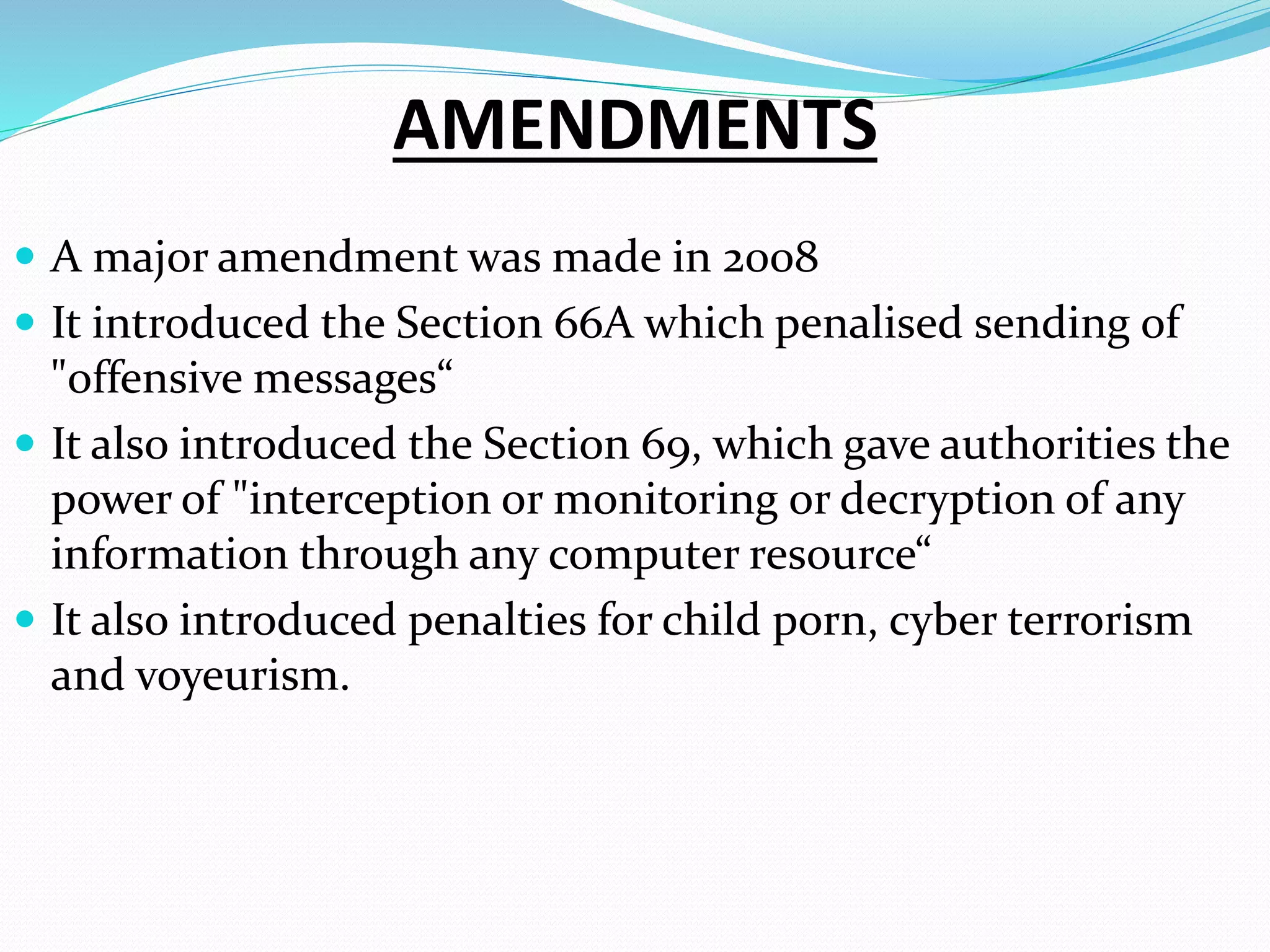
AMENDMENTS
 A major amendment was made in 2008
 It introduced the Section 66A which penalised sending of
"offensive messages“
 It also introduced the Section 69, which gave authorities the
power of "interception or monitoring or decryption of any
information through any computer resource“
 It also introduced penalties for child porn, cyber terrorism
and voyeurism.
Digital Signatures
 The authentication to be affected by use of asymmetric
crypto system and hash function
 The private key and the public key are unique to the
subscriber and constitute functioning key pair
 Verification of electronic record possible
ELECTRONIC GOVERNANCE
 LEGAL RECOGNITION OF ELECTRONIC
RECORDS(SEC4)
 LEGAL RECOGNITION OF DIGITAL SIGNATURE(SEC 5)
 USE OF ELECTRONIC RECODS AND DIGITAL
SIGNATURE (SEC 6)
 RETNTION OF ELECTRONIC RECORDS(SEC 7)
 PUBLICATION OF RULES AND REGULATION (SEC 8)
 POWER TO MAKE RULES BY CENTRAL
GOVERNMENT(SEC10)
ATTRIBUTION, ACKNOWLEDGMENT
AND DISPATCH OF ELECTRONIC
RECORDS
 ATTRIBUTION OF ELECTRONIC RECORDS(SEC 11)
 ACKNOWLEDGEMENT OF RECEIPT(SEC 12)
 TIME AND PLACE OF DESPATCH AND RECEIPT OF
ELECTRONIC RECORD(SEC 13)
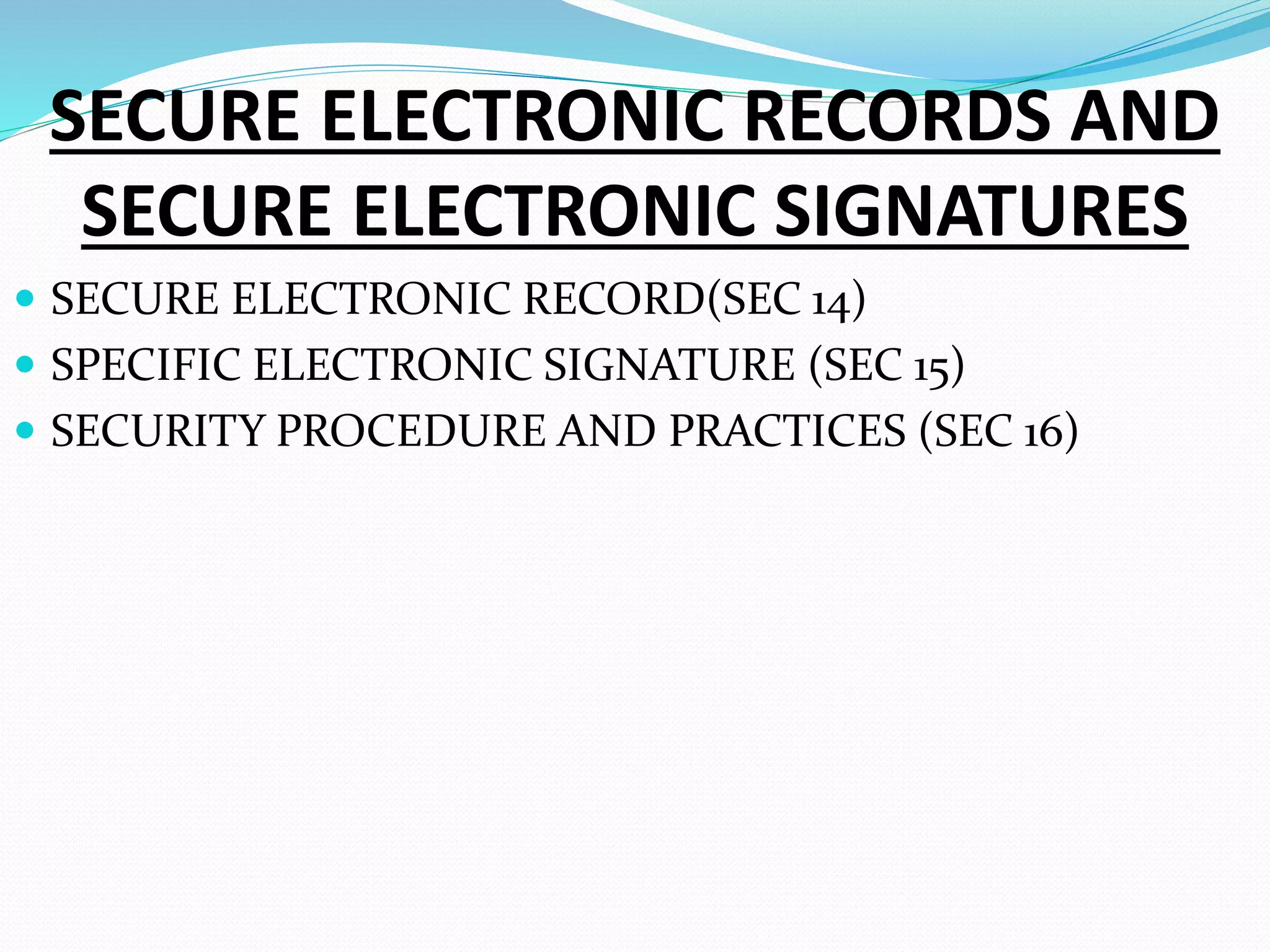
SECURE ELECTRONIC RECORDS AND
SECURE ELECTRONIC SIGNATURES
 SECURE ELECTRONIC RECORD(SEC 14)
 SPECIFIC ELECTRONIC SIGNATURE (SEC 15)
 SECURITY PROCEDURE AND PRACTICES (SEC 16)
REGULATION OF CERTIFYING AUTHORITIES
 APPOINTMENT OF CONTROLLER AND OTHER
OFFICERS (SEC 17)
 FUNCTIONS OF CONTROLLER(SEC 18)
 RECOGNITION OF FOREIGN CERTIFYING AUTHORITIES
(SEC 19)
 POWER TO DELEGATE(SEC27)
 POWER TO INVSTIGATE CONTRAVENTIONS(SEC28)
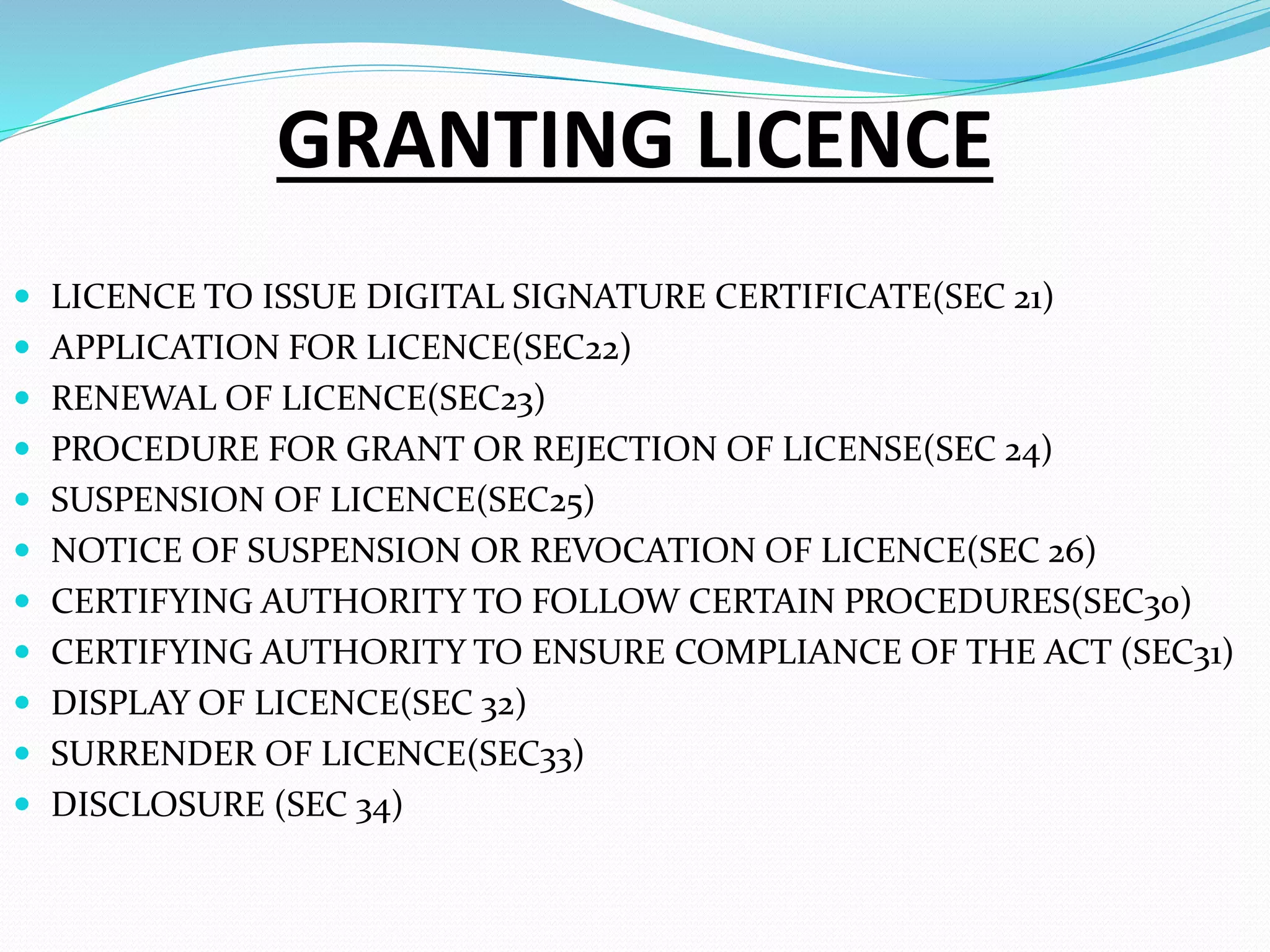
GRANTING LICENCE
 LICENCE TO ISSUE DIGITAL SIGNATURE CERTIFICATE(SEC 21)
 APPLICATION FOR LICENCE(SEC22)
 RENEWAL OF LICENCE(SEC23)
 PROCEDURE FOR GRANT OR REJECTION OF LICENSE(SEC 24)
 SUSPENSION OF LICENCE(SEC25)
 NOTICE OF SUSPENSION OR REVOCATION OF LICENCE(SEC 26)
 CERTIFYING AUTHORITY TO FOLLOW CERTAIN PROCEDURES(SEC30)
 CERTIFYING AUTHORITY TO ENSURE COMPLIANCE OF THE ACT (SEC31)
 DISPLAY OF LICENCE(SEC 32)
 SURRENDER OF LICENCE(SEC33)
 DISCLOSURE (SEC 34)
ELECTRONIC SIGNATURE
CERTIFICATES
 CERTIFYING TO ISSUE ELECTRONIC SIGNATURE
CERTIFICATE(SEC35)
 REPRESENTATIONS UPON ISSUANCE OF DIGITAL
SIGNATURE CERTIFICATE(SEC 36)
 SUSPENSION OF DIGITAL SIGNATURE CERTIFICATE (SEC
37)
 REVOCATION OF ELECTRONIC SIGNATURE
CERTIFICATE(SEC 38)
 NOTICE OF SUSPENSION OR REVOCATION(SEC 39)
DUTIES OF SUBSCRIBERS
 GENERATING KEY PAIRS (SEC 40)
 ACCEPTANCE OF DIGITAL SIGNATURE CERTIFICATE
(SEC41)
 CONTROL OF PRIVATE KEY(SEC 42)
PENALITIES COMPENSATION AND
ADJUDICATION
 PENALITY AND COMPENSATION FOR DAMAGE TO
COMPUTER, COMPUTER SYSTEM(SEC 43)
 PENALITY FOR FAILURE TO FURNISH
INFORMATION,RETURN(SEC 44)
 RESIDUARY PENALITY(SEC45)
 POWER TO ADJUDICATE(SEC 46)
 FACTORS TO BE TAKEN INTO ACCOUNT BY THE
ADJUDICATING OFFICER
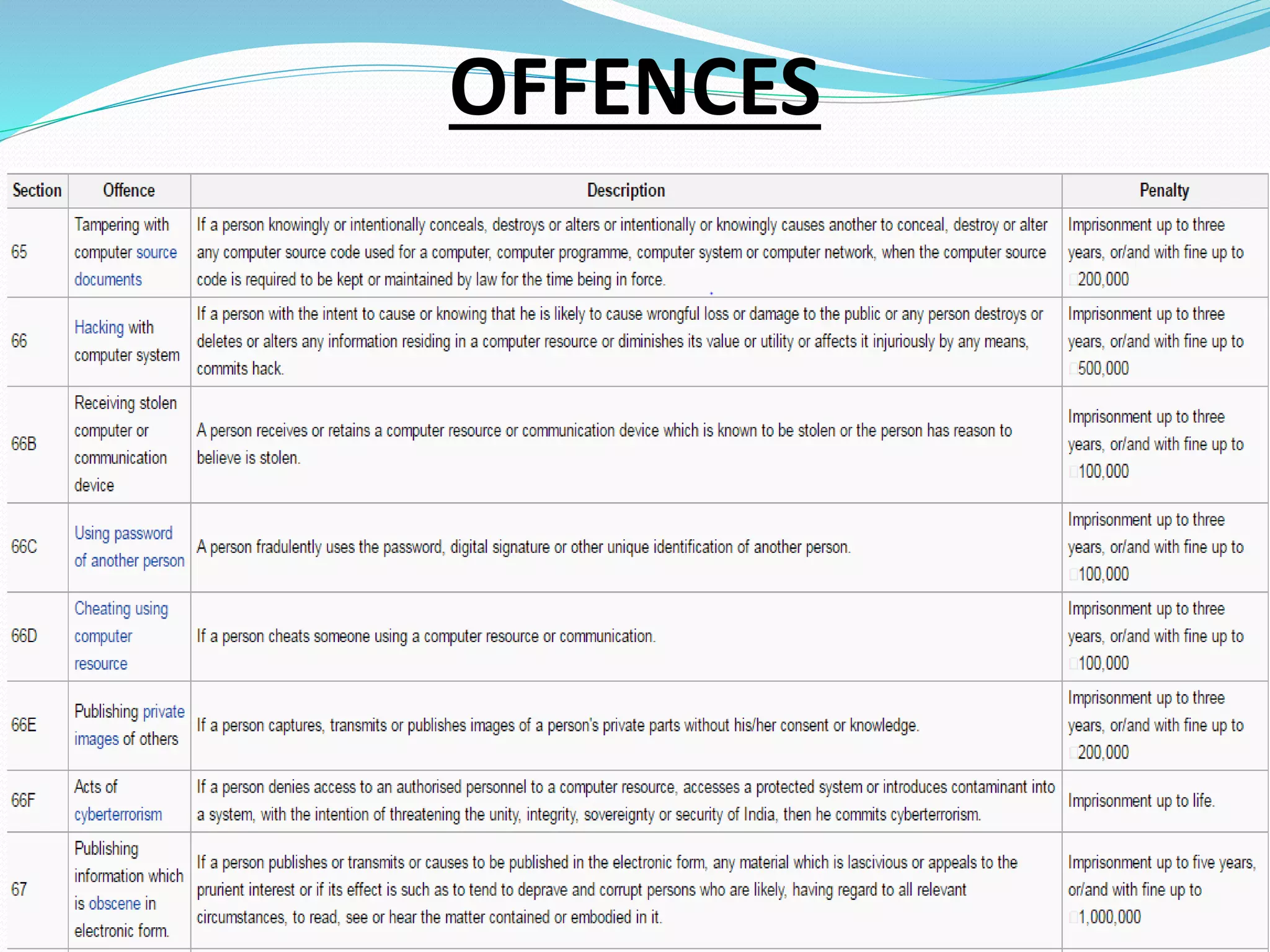
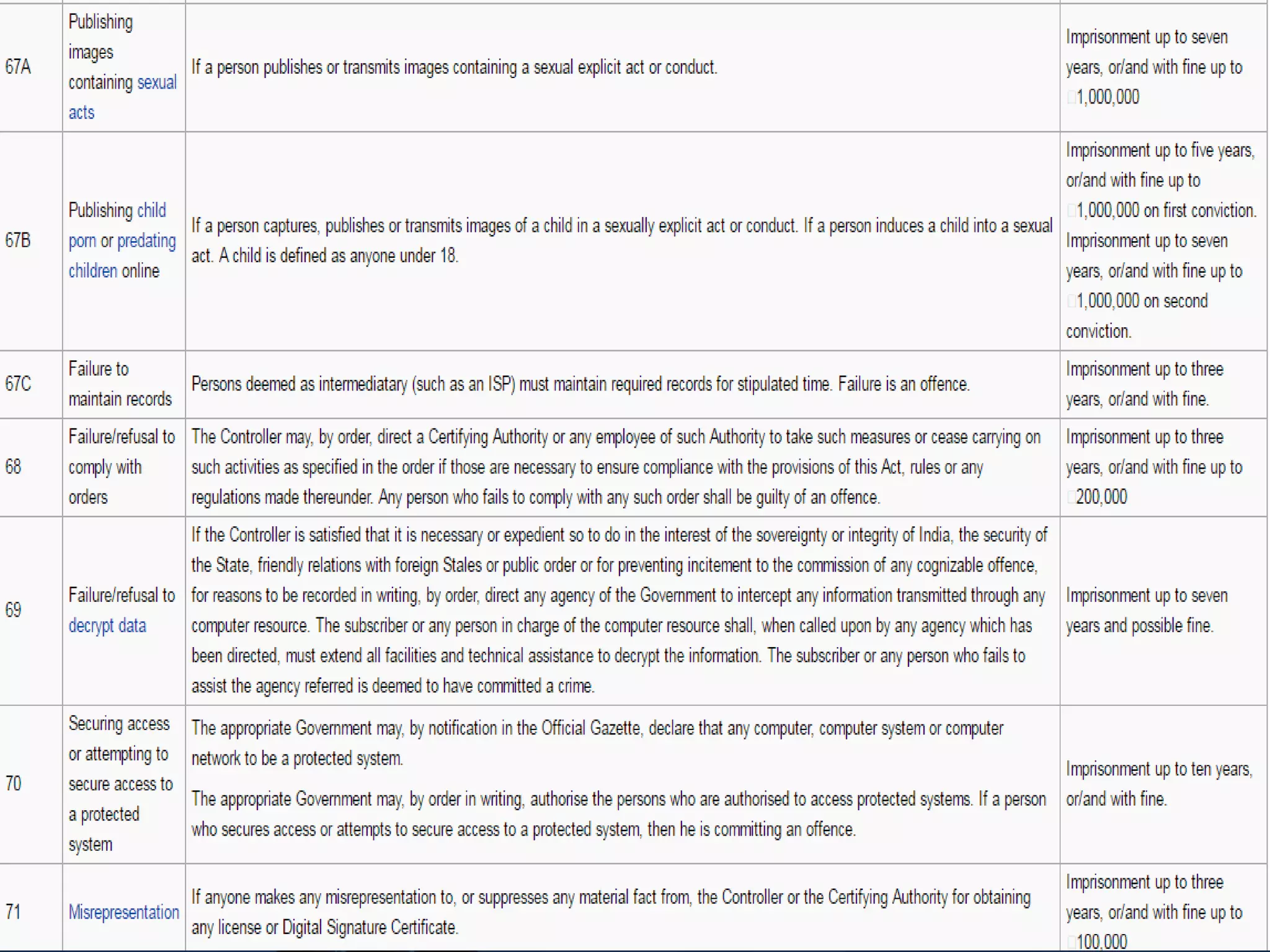
OFFENCES
It act 2000
It act 2000

It act 2000

  • 1.
    PRESENTATION ON THE INFORMATION TECHNOLOGY ACT,2000 MADEBY:- SAHIL SHARMA VIDHU ARORA SUBMITTED TO:- SALONI DEVI
  • 2.
    CONTENT 1. INTRODUCTION 2. OBJECTIVEOF THE IT ACT 3. SCOPE AND APPLICATIONS 4. AMENDMENTS 5. DIGITAL SIGNATURE
  • 3.
     The InformationTechnology Act, 2000 is an Act of the Indian Parliament notified on 17 October 2000.  It is the primary law in India dealing with cybercrime and electronic commerce.  It is based on the United Nations Model Law on Electronic Commerce 1996 (UNCITRAL Model) recommended by the General Assembly of United Nations by a resolution dated 30 January 1997.
  • 4.
    Objectives of theIT Act To provide legal recognition for transactions:-  Carried out by means of electronic data interchange, and other means of electronic communication, commonly referred to as “electronic commerce”  To facilitate electronic filing of documents with Government agencies and E-Payments  To amend the Indian Penal Code, Indian Evidence Act,1872, the Banker’s Books Evidence Act 1891,Reserve Bank of India Act ,1934
  • 5.
    SCOPE AND APPLICATIONS (a) a negotiable instrument (Other than a cheque) as defined in section 13 of the Negotiable Instruments Act, 1881;  (b) a power-of-attorney as defined in section 1A of the Powers-of- Attorney Act, 1882;  (c) a trust as defined in section 3 of the Indian Trusts Act, 1882;  (d) a will as defined in clause (h) of section 2 of the Indian Succession Act, 1925 including any other testamentary disposition  (e) any contract for the sale or conveyance of immovable property or any interest in such property;  (f) any such class of documents or transactions as may be notified by the Central Government
  • 6.
    AMENDMENTS  A majoramendment was made in 2008  It introduced the Section 66A which penalised sending of "offensive messages“  It also introduced the Section 69, which gave authorities the power of "interception or monitoring or decryption of any information through any computer resource“  It also introduced penalties for child porn, cyber terrorism and voyeurism.
  • 7.
    Digital Signatures  Theauthentication to be affected by use of asymmetric crypto system and hash function  The private key and the public key are unique to the subscriber and constitute functioning key pair  Verification of electronic record possible
  • 8.
    ELECTRONIC GOVERNANCE  LEGALRECOGNITION OF ELECTRONIC RECORDS(SEC4)  LEGAL RECOGNITION OF DIGITAL SIGNATURE(SEC 5)  USE OF ELECTRONIC RECODS AND DIGITAL SIGNATURE (SEC 6)  RETNTION OF ELECTRONIC RECORDS(SEC 7)  PUBLICATION OF RULES AND REGULATION (SEC 8)  POWER TO MAKE RULES BY CENTRAL GOVERNMENT(SEC10)
  • 9.
    ATTRIBUTION, ACKNOWLEDGMENT AND DISPATCHOF ELECTRONIC RECORDS  ATTRIBUTION OF ELECTRONIC RECORDS(SEC 11)  ACKNOWLEDGEMENT OF RECEIPT(SEC 12)  TIME AND PLACE OF DESPATCH AND RECEIPT OF ELECTRONIC RECORD(SEC 13)
  • 10.
    SECURE ELECTRONIC RECORDSAND SECURE ELECTRONIC SIGNATURES  SECURE ELECTRONIC RECORD(SEC 14)  SPECIFIC ELECTRONIC SIGNATURE (SEC 15)  SECURITY PROCEDURE AND PRACTICES (SEC 16)
  • 11.
    REGULATION OF CERTIFYINGAUTHORITIES  APPOINTMENT OF CONTROLLER AND OTHER OFFICERS (SEC 17)  FUNCTIONS OF CONTROLLER(SEC 18)  RECOGNITION OF FOREIGN CERTIFYING AUTHORITIES (SEC 19)  POWER TO DELEGATE(SEC27)  POWER TO INVSTIGATE CONTRAVENTIONS(SEC28)
  • 12.
    GRANTING LICENCE  LICENCETO ISSUE DIGITAL SIGNATURE CERTIFICATE(SEC 21)  APPLICATION FOR LICENCE(SEC22)  RENEWAL OF LICENCE(SEC23)  PROCEDURE FOR GRANT OR REJECTION OF LICENSE(SEC 24)  SUSPENSION OF LICENCE(SEC25)  NOTICE OF SUSPENSION OR REVOCATION OF LICENCE(SEC 26)  CERTIFYING AUTHORITY TO FOLLOW CERTAIN PROCEDURES(SEC30)  CERTIFYING AUTHORITY TO ENSURE COMPLIANCE OF THE ACT (SEC31)  DISPLAY OF LICENCE(SEC 32)  SURRENDER OF LICENCE(SEC33)  DISCLOSURE (SEC 34)
  • 13.
    ELECTRONIC SIGNATURE CERTIFICATES  CERTIFYINGTO ISSUE ELECTRONIC SIGNATURE CERTIFICATE(SEC35)  REPRESENTATIONS UPON ISSUANCE OF DIGITAL SIGNATURE CERTIFICATE(SEC 36)  SUSPENSION OF DIGITAL SIGNATURE CERTIFICATE (SEC 37)  REVOCATION OF ELECTRONIC SIGNATURE CERTIFICATE(SEC 38)  NOTICE OF SUSPENSION OR REVOCATION(SEC 39)
  • 14.
    DUTIES OF SUBSCRIBERS GENERATING KEY PAIRS (SEC 40)  ACCEPTANCE OF DIGITAL SIGNATURE CERTIFICATE (SEC41)  CONTROL OF PRIVATE KEY(SEC 42)
  • 15.
    PENALITIES COMPENSATION AND ADJUDICATION PENALITY AND COMPENSATION FOR DAMAGE TO COMPUTER, COMPUTER SYSTEM(SEC 43)  PENALITY FOR FAILURE TO FURNISH INFORMATION,RETURN(SEC 44)  RESIDUARY PENALITY(SEC45)  POWER TO ADJUDICATE(SEC 46)  FACTORS TO BE TAKEN INTO ACCOUNT BY THE ADJUDICATING OFFICER
  • 16.