ORPHAN
DRUG
101
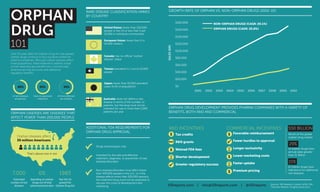
Over 30 years after the Orphan Drug Act was passed,
orphan drugs continue to be a lucrative market for
pharma companies. Although orphan diseases affect
small populations, these treatments address a high
unmet need and also benefit from commercially
attractive pricing structures and additional
regulatory benefits.
ORPHAN DISEASES ARE DISEASES THAT
AFFECT FEWER THAN 200,000 PEOPLE
RARE DISEASE CLASSIFICATION VARIES
BY COUNTRY
ADDITIONAL FDA REQUIREMENTS FOR
ORPHAN DRUG APPROVAL
ORPHAN DRUG DEVELOPMENT PROVIDES PHARMA COMPANIES WITH A VARIETY OF
BENEFITS, BOTH R&D AND COMMERCIAL
GROWTH RATE OF ORPHAN VS. NON-ORPHAN DRUGS (2001-10)
2001
$0
$20,000
$40,000
$60,000
$80,000
$100,000
$120,000
$140,000
$160,000
$180,000
SALES($M)
2002 2003 2004 2005 2006 2007 2008 2009 2010
ORPHAN DRUGS (CAGR: 25.8%)
NON-ORPHAN DRUGS (CAGR: 20.1%)
50%80%
of rare diseases
are genetic
95%
have no approved
treatment
of those affected
are children
That’s about one in ten
.
Orphan diseases affect
30 million Americans
7,000 6% 1983
Estimated
number of rare
diseases
Year the US
passed the
Orphan Drug Act
Spending on orphan
drugs out of total
pharmaceutical sales
United States: fewer than 200,000
people in the US or less than 5 per
10,000 in individual communities
European Union: fewer than 5 in
10,000 citizens
Japan: fewer than 50,000 prevalent
cases (0.4% of population)
Australia: does not define a rare
disease in terms of the number of
patients, but the drug must not be
intended for use in more than 2,000
patients per year
Canada: has no official “orphan
disease” status
Taiwan: prevalent in 1 out of 10,000
people
Drugs and biologics only
Intended for the safe and effective
treatment, diagnosis, or prevention of rare
diseases/disorders
Rare diseases/disorders must affect fewer
than 200,000 people in the U.S., or if the
disease affects more than 200,000 persons,
the treatment drug must not be expected to
recover the costs of development and
marketing.
Tax credits
R&D grants
Waived FDA fees
Shorter development
Greater regulatory success
Favorable reimbursement
Fewer hurdles to approval
Longer exclusivity
Lower marketing costs
Faster uptake
Premium pricing
R&D INCENTIVES COMMERCIAL INCENTIVES
R&D
ISRreports.com | info@ISRreports.com | @ISRreports Sources: ISR Research, Forbes, NCBI, FDA,
Thomson Reuters, DrugDiscovery.com,
$50 BILLION
Worth of the global
orphan drug market
29%
of orphan drugs have
annual sales greater
than $1 Billion
15%
of orphan drugs have
indications for additional
rare diseases

Orphan Drug 101

  • 1.
    ORPHAN DRUG 101 Over 30 yearsafter the Orphan Drug Act was passed, orphan drugs continue to be a lucrative market for pharma companies. Although orphan diseases affect small populations, these treatments address a high unmet need and also benefit from commercially attractive pricing structures and additional regulatory benefits. ORPHAN DISEASES ARE DISEASES THAT AFFECT FEWER THAN 200,000 PEOPLE RARE DISEASE CLASSIFICATION VARIES BY COUNTRY ADDITIONAL FDA REQUIREMENTS FOR ORPHAN DRUG APPROVAL ORPHAN DRUG DEVELOPMENT PROVIDES PHARMA COMPANIES WITH A VARIETY OF BENEFITS, BOTH R&D AND COMMERCIAL GROWTH RATE OF ORPHAN VS. NON-ORPHAN DRUGS (2001-10) 2001 $0 $20,000 $40,000 $60,000 $80,000 $100,000 $120,000 $140,000 $160,000 $180,000 SALES($M) 2002 2003 2004 2005 2006 2007 2008 2009 2010 ORPHAN DRUGS (CAGR: 25.8%) NON-ORPHAN DRUGS (CAGR: 20.1%) 50%80% of rare diseases are genetic 95% have no approved treatment of those affected are children That’s about one in ten . Orphan diseases affect 30 million Americans 7,000 6% 1983 Estimated number of rare diseases Year the US passed the Orphan Drug Act Spending on orphan drugs out of total pharmaceutical sales United States: fewer than 200,000 people in the US or less than 5 per 10,000 in individual communities European Union: fewer than 5 in 10,000 citizens Japan: fewer than 50,000 prevalent cases (0.4% of population) Australia: does not define a rare disease in terms of the number of patients, but the drug must not be intended for use in more than 2,000 patients per year Canada: has no official “orphan disease” status Taiwan: prevalent in 1 out of 10,000 people Drugs and biologics only Intended for the safe and effective treatment, diagnosis, or prevention of rare diseases/disorders Rare diseases/disorders must affect fewer than 200,000 people in the U.S., or if the disease affects more than 200,000 persons, the treatment drug must not be expected to recover the costs of development and marketing. Tax credits R&D grants Waived FDA fees Shorter development Greater regulatory success Favorable reimbursement Fewer hurdles to approval Longer exclusivity Lower marketing costs Faster uptake Premium pricing R&D INCENTIVES COMMERCIAL INCENTIVES R&D ISRreports.com | info@ISRreports.com | @ISRreports Sources: ISR Research, Forbes, NCBI, FDA, Thomson Reuters, DrugDiscovery.com, $50 BILLION Worth of the global orphan drug market 29% of orphan drugs have annual sales greater than $1 Billion 15% of orphan drugs have indications for additional rare diseases