
Orphan Drugs
By Sumaiya Banu
S.Y.B.Pharmacy
Orphan disease
• Orphan diseases : rare; have no definite cure;
affects small percentage of population.
• Why is it called orphan disease?
• Because most are genetic they impact children at
a high rate or develop as the body begins to age.
• Diagnosis is difficult.
– 30% of Patients Take 3 to 5 Years to Diagnosis
– 15% of Patients Wait 7 Year or More for Diagnosis
– And those are the lucky ones, some, never get
diagnosed
Statistics
• Approx. 10% of the human diseases are
classed as rare.
• Of this, 10 % have genetic origin.
• About 250 new discovered every year
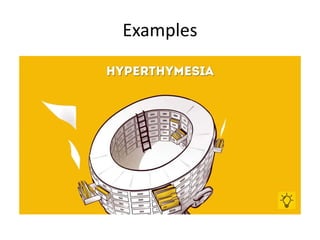
Examples
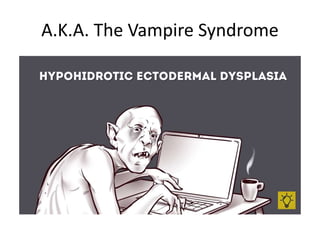
A.K.A. The Vampire Syndrome
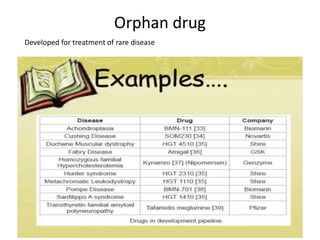
Orphan drug
Developed for treatment of rare disease
ODA
• Orphan drugs act
• USA first to propose a legal framework
• Followed by Singapore, US, Japan, Europe.
Problems
• In some cases there is not even a medical
specialty that ‘owns’ the disease.
• These diseases affect so few people that it is
not profitable to develop treatments and
therefore they get little or no money or
attention from the medical system.
• Lack of economic feasibility leads to a lack of
even preliminary research into these disorders
Disadvantage in OD development
• High prices of OD
• Small patient population
• Delay in diagnosis and deficient diagnostic
system
• Limited treatment availability
• Lack of knowledge and training
• Poor understanding of the disease
• Limited public awareness
Indian scenario
• Rare disease day in New Delhi on February
28th, 2010.
• 2nd and 3rd rare disease days in Chennai and
Mumbai in 2011 and 2012
Drug store Survey
• All D.Pharmacy graduate.
• Most have no idea what orphan drugs or
orphan disease exactly is.
• “Epilepsy is a rare disease for which people
ask medicine for from us mostly”
• “Medical stores don’t hold orphan drugs as
they do not have much market value.”
• “Orphan drugs are compounded in the
hospital it self and distributed. “
THANK-YOU

Orphan drugs

  • 1.
    Orphan Drugs By SumaiyaBanu S.Y.B.Pharmacy
  • 2.
    Orphan disease • Orphandiseases : rare; have no definite cure; affects small percentage of population. • Why is it called orphan disease? • Because most are genetic they impact children at a high rate or develop as the body begins to age. • Diagnosis is difficult. – 30% of Patients Take 3 to 5 Years to Diagnosis – 15% of Patients Wait 7 Year or More for Diagnosis – And those are the lucky ones, some, never get diagnosed
  • 3.
    Statistics • Approx. 10%of the human diseases are classed as rare. • Of this, 10 % have genetic origin. • About 250 new discovered every year
  • 4.
  • 6.
  • 9.
    Orphan drug Developed fortreatment of rare disease
  • 10.
    ODA • Orphan drugsact • USA first to propose a legal framework • Followed by Singapore, US, Japan, Europe.
  • 13.
    Problems • In somecases there is not even a medical specialty that ‘owns’ the disease. • These diseases affect so few people that it is not profitable to develop treatments and therefore they get little or no money or attention from the medical system. • Lack of economic feasibility leads to a lack of even preliminary research into these disorders
  • 14.
    Disadvantage in ODdevelopment • High prices of OD • Small patient population • Delay in diagnosis and deficient diagnostic system • Limited treatment availability • Lack of knowledge and training • Poor understanding of the disease • Limited public awareness
  • 15.
    Indian scenario • Raredisease day in New Delhi on February 28th, 2010. • 2nd and 3rd rare disease days in Chennai and Mumbai in 2011 and 2012
  • 16.
    Drug store Survey •All D.Pharmacy graduate. • Most have no idea what orphan drugs or orphan disease exactly is. • “Epilepsy is a rare disease for which people ask medicine for from us mostly” • “Medical stores don’t hold orphan drugs as they do not have much market value.” • “Orphan drugs are compounded in the hospital it self and distributed. “
  • 17.