ISLAMIC CAPITAL
MARKETS
Presented By: Maliha Zahid
Intazar Ali Shah
Rabia Shami
TABLE OF CONTENT
1. Islamic Finance
2. Global Prospective
3. Capital Markets
4. Islamic Capital Markets (ICM)
5. History of Islamic Capital Markets
6. Function of Islamic Capital Markets
7. Components of Islamic Capital Markets
8. Development of Islamic Capital Markets
9. Standardizing and Regulatory Authorities
10. Key Issues
11. How to address these issues
ISLAMIC FINANCE
• Islamic finance is a term that reflects financial business that is
not contradictory to the principles of Shariah.
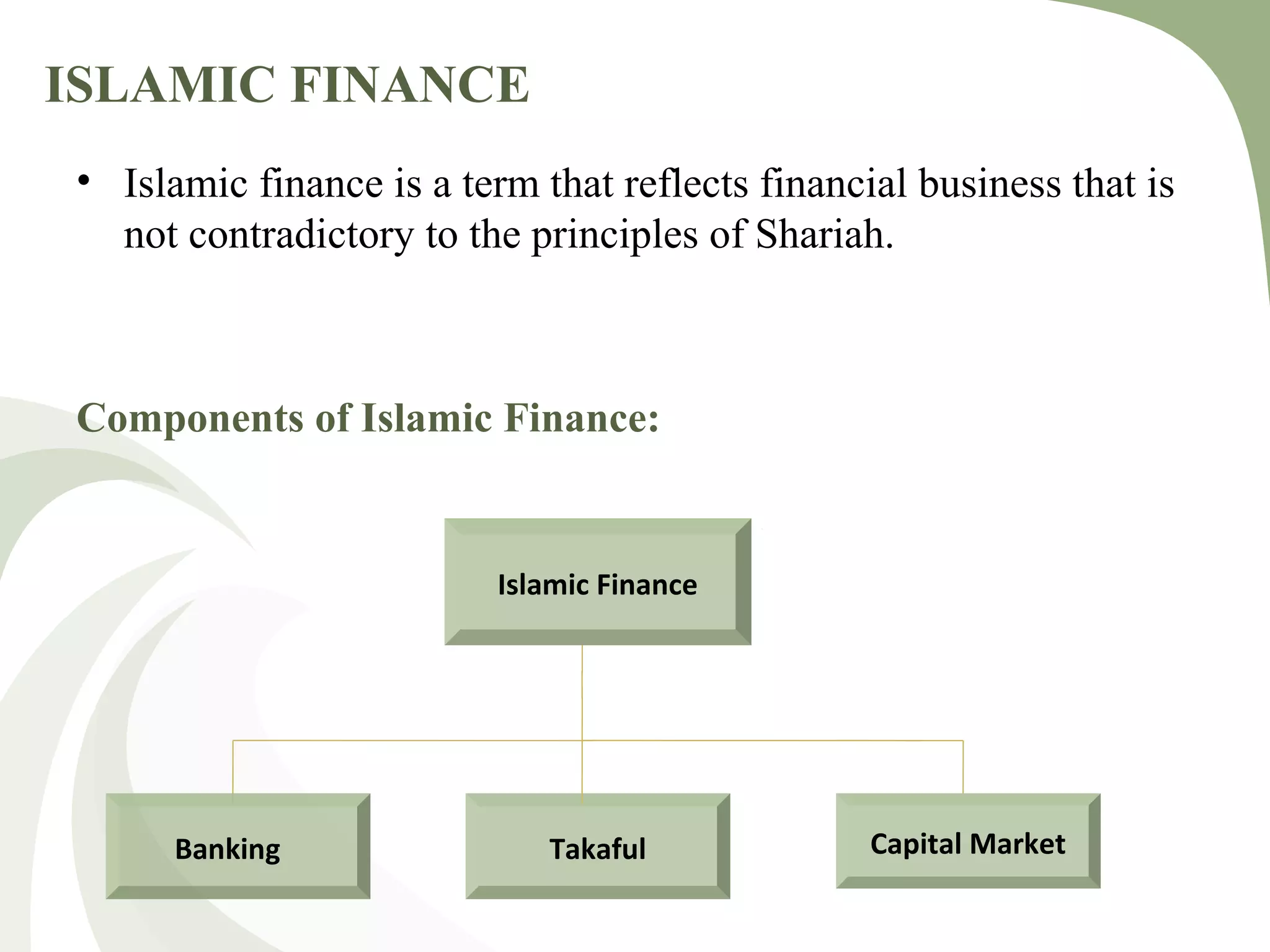
Components of Islamic Finance:
Islamic Finance
Banking Takaful Capital Market
GLOBAL PROSPECTIVE
• Number of countries of Presence: 75
• Number of Islamic Financial Institutions: 275
• Global Islamic Assets (Billion): 1,000
• Expected Growth Rate: 15-20%
• Potential Market Size (Billion) 4,000
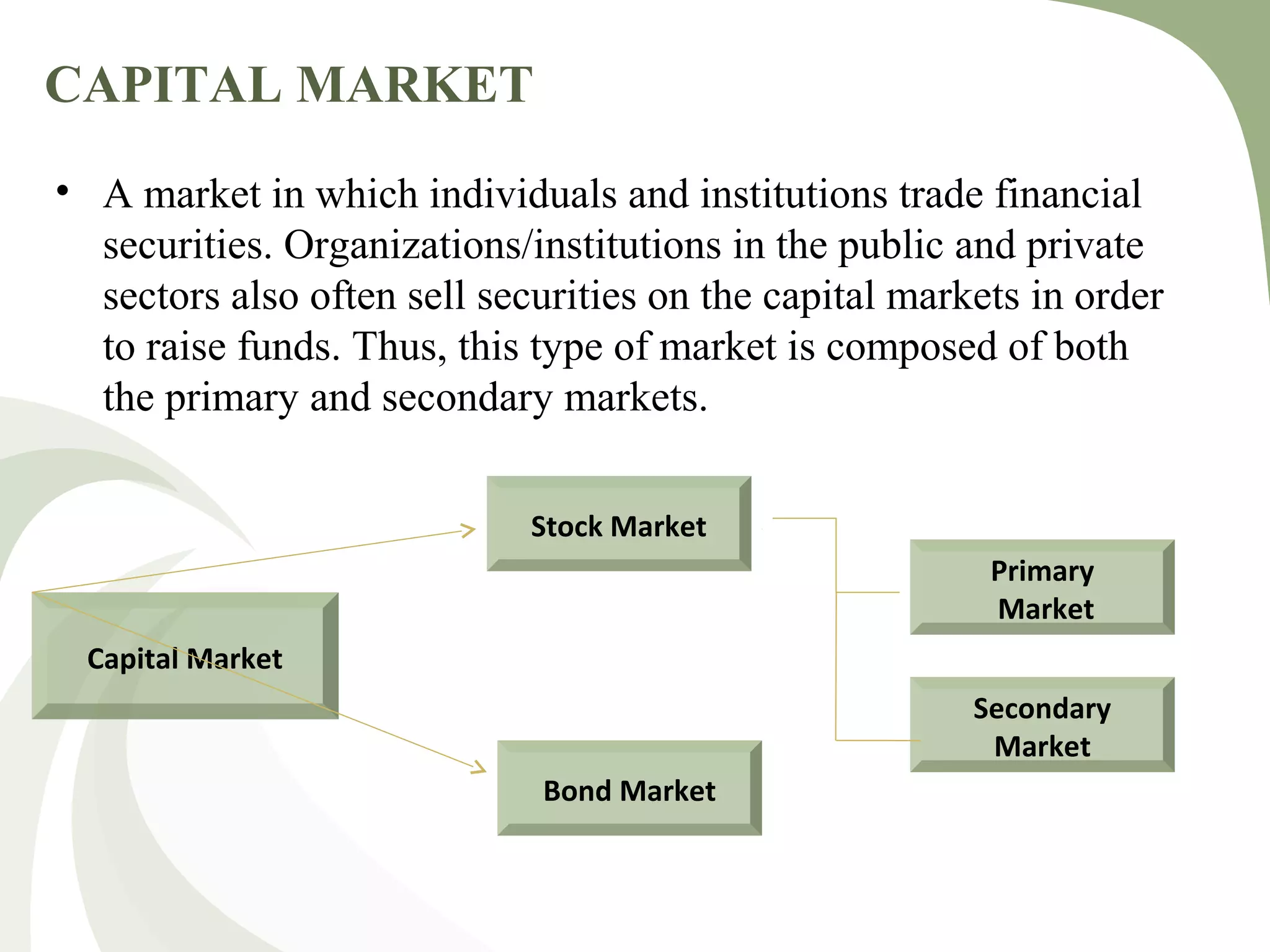
• A market in which individuals and institutions trade financial
securities. Organizations/institutions in the public and private
sectors also often sell securities on the capital markets in order
to raise funds. Thus, this type of market is composed of both
the primary and secondary markets.
CAPITAL MARKET
Capital Market
Stock Market
Bond Market
Primary
Market
Secondary
Market
ISLAMIC CAPITAL MARKET
• According to Islamic Capital Market Task Force report
“Islamic capital market is a market where investment ,
financing activities and products are structured in accordance
with shariah principles”.
• Bursa Malaysia's
“The Islamic Capital Market (ICM) refers to the market where
activities are carried out in ways which doesn’t conflict with
the principles of Islam”.
The importance of capital markets in Islamic financial
system also stems from the fact that Islam prohibits
interest and encourages trade.
HISTORY OF ICM
 Islamic Finance starts in 1961 in Egypt by establishing the
earliest Islamic Bank [Mit Ghimar Bank]
 Structured Involvement of Islamic Finance in Financial
Markets started in the decades of 1970 and 1980’s by
establishing many Islamic Banks, Takaful and Investment
companies.
 Boost in Islamic Capital Markets came after financial
liberalization. ICM started in 1980s in Malaysia while in
Bahrain, Pakistan and some other countries in early 1990s
FUNCTION OF ICM
• Islamic Capital Markets are supposed to perform all the useful
functions of conventional capital markets with justice and
equitable distribution of benefits.
COMPONENT OF ICM
Markets: Products:
 Sukuk Market Mudarbaha Sukuk
 Equity Market Ijarah Sukuk
 Derivative Partnership Sukuk
 Commodity Market Ordinary Stocks
 Forex and Money Market Preferred Stocks/Warrants
Mutual Funds
Single Stock Futures
DEVELOPMENT OF ICM
 State of regulatory system and possible approaches for further
development
 Product range and product development;
 Nature and preferences of market players
 Identification and development of support institutions
 Nature and role of Islamic capital markets in the overall Islamic
financial system
 Corporate governance system
STANDARDISING And REGULATORY
AUTHORITIES
 International Islamic Financial Market (IIFM) [2002]
Its primary focus lies in the standardization of Islamic financial
products, documentation and related processes at the global level.
 The Islamic Financial Services Board (IFSB) [2003]
It is an international standard-setting organization that promotes
and enhances the soundness and stability of the Islamic financial
services industry by issuing global prudential standards and
guiding principles for the industry, broadly defined to include
banking, capital markets and insurance sectors.
STANDARDISING And REGULATORY
AUTHORITIES Cont…….
 The Shariah board [2003]
It has the responsibility for ensuring that all products and services
offered by that institution are compliant with the principles of
Shariah law
 The Accounting and Auditing Organization for Islamic
Financial Institution. (AAOIFI) [1990]
It sets compliance standards for institutions that wish to gain
access to the Islamic banking market.
STANDARDISING And REGULATORY
AUTHORITIES Cont…….
 The Islamic capital markets Task Force of the International
Organization of Securities Commission (IOSCO)
It assist relevant regulators in assessing the extent of the
development and potential regulatory issues relating to Islamic
Capital Market, as well as to gather information on Islamic
financial products.
 The International Islamic Rating Agency (IIRA) [2002]
evaluate and provide independent assessments and opinions on
the likelihood of any future loss by Islamic Financial Institutions,
KEY ISSUES
 The regulatory framework governing Islamic capital markets
 Shariah compliance and convergence
 The range of products in this market segment
 Cost factors involved in transactions (including tax-related issues
affecting Islamic capital market transactions
 Development of market professionals
 Investor education
 Knowledge sharing
HOW TO ADDRESS THE ISSUES
 Harmonizing the Shariah interpretation and strengthen the
operating structure of capital market.
 Setup task forces for capacity building, market development,
Islamic finance and financial literacy.
 Structuring of Sukuk for new markets
 Training the personal on awareness of fundamental of Islamic
finance
 Introducing exchange trading funds in Islamic Capital Market,
these funds could be used as an option to diversify risk of an
individual
 regional collaboration to further spur economic growth
 Conduct Seminars and held workshops to eliminate the issues.
Islamic Capital Markets

Islamic Capital Markets

  • 1.
    ISLAMIC CAPITAL MARKETS Presented By:Maliha Zahid Intazar Ali Shah Rabia Shami
  • 2.
    TABLE OF CONTENT 1.Islamic Finance 2. Global Prospective 3. Capital Markets 4. Islamic Capital Markets (ICM) 5. History of Islamic Capital Markets 6. Function of Islamic Capital Markets 7. Components of Islamic Capital Markets 8. Development of Islamic Capital Markets 9. Standardizing and Regulatory Authorities 10. Key Issues 11. How to address these issues
  • 3.
    ISLAMIC FINANCE • Islamicfinance is a term that reflects financial business that is not contradictory to the principles of Shariah. Components of Islamic Finance: Islamic Finance Banking Takaful Capital Market
  • 4.
    GLOBAL PROSPECTIVE • Numberof countries of Presence: 75 • Number of Islamic Financial Institutions: 275 • Global Islamic Assets (Billion): 1,000 • Expected Growth Rate: 15-20% • Potential Market Size (Billion) 4,000
  • 5.
    • A marketin which individuals and institutions trade financial securities. Organizations/institutions in the public and private sectors also often sell securities on the capital markets in order to raise funds. Thus, this type of market is composed of both the primary and secondary markets. CAPITAL MARKET Capital Market Stock Market Bond Market Primary Market Secondary Market
  • 6.
    ISLAMIC CAPITAL MARKET •According to Islamic Capital Market Task Force report “Islamic capital market is a market where investment , financing activities and products are structured in accordance with shariah principles”. • Bursa Malaysia's “The Islamic Capital Market (ICM) refers to the market where activities are carried out in ways which doesn’t conflict with the principles of Islam”. The importance of capital markets in Islamic financial system also stems from the fact that Islam prohibits interest and encourages trade.
  • 7.
    HISTORY OF ICM Islamic Finance starts in 1961 in Egypt by establishing the earliest Islamic Bank [Mit Ghimar Bank]  Structured Involvement of Islamic Finance in Financial Markets started in the decades of 1970 and 1980’s by establishing many Islamic Banks, Takaful and Investment companies.  Boost in Islamic Capital Markets came after financial liberalization. ICM started in 1980s in Malaysia while in Bahrain, Pakistan and some other countries in early 1990s
  • 8.
    FUNCTION OF ICM •Islamic Capital Markets are supposed to perform all the useful functions of conventional capital markets with justice and equitable distribution of benefits.
  • 9.
    COMPONENT OF ICM Markets:Products:  Sukuk Market Mudarbaha Sukuk  Equity Market Ijarah Sukuk  Derivative Partnership Sukuk  Commodity Market Ordinary Stocks  Forex and Money Market Preferred Stocks/Warrants Mutual Funds Single Stock Futures
  • 10.
    DEVELOPMENT OF ICM State of regulatory system and possible approaches for further development  Product range and product development;  Nature and preferences of market players  Identification and development of support institutions  Nature and role of Islamic capital markets in the overall Islamic financial system  Corporate governance system
  • 11.
    STANDARDISING And REGULATORY AUTHORITIES International Islamic Financial Market (IIFM) [2002] Its primary focus lies in the standardization of Islamic financial products, documentation and related processes at the global level.  The Islamic Financial Services Board (IFSB) [2003] It is an international standard-setting organization that promotes and enhances the soundness and stability of the Islamic financial services industry by issuing global prudential standards and guiding principles for the industry, broadly defined to include banking, capital markets and insurance sectors.
  • 12.
    STANDARDISING And REGULATORY AUTHORITIESCont…….  The Shariah board [2003] It has the responsibility for ensuring that all products and services offered by that institution are compliant with the principles of Shariah law  The Accounting and Auditing Organization for Islamic Financial Institution. (AAOIFI) [1990] It sets compliance standards for institutions that wish to gain access to the Islamic banking market.
  • 13.
    STANDARDISING And REGULATORY AUTHORITIESCont…….  The Islamic capital markets Task Force of the International Organization of Securities Commission (IOSCO) It assist relevant regulators in assessing the extent of the development and potential regulatory issues relating to Islamic Capital Market, as well as to gather information on Islamic financial products.  The International Islamic Rating Agency (IIRA) [2002] evaluate and provide independent assessments and opinions on the likelihood of any future loss by Islamic Financial Institutions,
  • 14.
    KEY ISSUES  Theregulatory framework governing Islamic capital markets  Shariah compliance and convergence  The range of products in this market segment  Cost factors involved in transactions (including tax-related issues affecting Islamic capital market transactions  Development of market professionals  Investor education  Knowledge sharing
  • 15.
    HOW TO ADDRESSTHE ISSUES  Harmonizing the Shariah interpretation and strengthen the operating structure of capital market.  Setup task forces for capacity building, market development, Islamic finance and financial literacy.  Structuring of Sukuk for new markets  Training the personal on awareness of fundamental of Islamic finance  Introducing exchange trading funds in Islamic Capital Market, these funds could be used as an option to diversify risk of an individual  regional collaboration to further spur economic growth  Conduct Seminars and held workshops to eliminate the issues.