International Research Journal of Engineering and Technology (IRJET) e-ISSN: 2395-0056
Volume: 06 Issue: 10 | Oct 2019 www.irjet.net p-ISSN: 2395-0072
© 2019, IRJET | Impact Factor value: 7.34 | ISO 9001:2008 Certified Journal | Page 3498
IoT Enabled Smart Parking System
Rohit Misra1, Shekhar Jain2, Mihir Bonde3, Prof. Harish Motekar4
1,2,3Student, Dept. of Information Technology, Shah and Anchor Kutchhi Engineering College. (India)
4Professor, Dept. of Information Technology, Shah and Anchor Kutchhi Engineering College. (India)
---------------------------------------------------------------------***----------------------------------------------------------------------
Abstract - Nowadays, an increase in population and as its
direct result an increase in pollution is one of the major
concerns of modern society. One such inevitable aspect of
population explosion is that of increased vehicular traffic. As
more and more people acquire vehicles, the need for available
parking spaces increases drastically as well. Due to this, in
urban areas, people end up burning a huge amount of
unrenewable fossil fuels in search of parking spaces in
designated parking lots (i.e. for malls, expos, carnivals, fairs,
etc.) sometimes even driving around a parking lot for a while
until they find a vacant parking spot. Using IoT we can easily
target and tackle this issue. Using a combination of
obstruction detecting IR sensors and Distance measuring
Ultrasonic sensors (SONAR), we can design a Smart Parking
System that lets users know about vacant spots in parkinglots
and display a visually represented data of the same forinstant
monitoring.
Key Words: NodeMCU, ESP8266, Ultrasonic Sensor, IR
Transceiver, WiFi Module.
1. INTRODUCTION
The existing manual method of vehicle parking requires an
assigned individual who monitors the parking lotfrequently
and reverts back the status to the gatekeeper who then
keeps a tab of vacant and occupied spaces and allows a
specific number of vehicles (correspondingtothe numberof
vacant parking spaces available) into the parking lot. Not
only is this process lengthy and tedious but it even leaves a
huge possibility of human errors at almost every step. For
example: A mistake made by the patrolling officer in
counting the number of vacant spaces may lead to either
vacant spaces not being occupied by agitatedvehicleowners
waiting for vacancy or having all the spaces occupied and
having the vehicle owner wait even after being allowed into
the lot. Another flaw inthecurrentsysteminvolvesassigning
incompetent individuals for patrolling duties, as such
individuals won't work properly and according to the rules
and create chaos making their presence as good as their
absence.
However, information exchange has now been made fast,
reliable and secure due to the recent advancements in the
field of information transfer and communication. Such
advancement coupled with reduced cost of electronic and
telecommunication devices has subsequently given rise to
low cost communication and computing devices like
NodeMCU and ESP8266WiFiconnectionmodule.Computing
devices like NodeMCU are now available readily throughout
the world.
We aim to create an automated Smart Parking System using
NodeMCU which enables a gatekeeper to keep a track of the
status of all parking spaces in a lot and provide a visual
representation of the real timedata acquired.Ifthereare any
vacant spaces the gatekeeper gets alerted of the exact
location of the vacant space so he/she can guide the vehicle
to the vacant location without any hassle.
1.1 COMPONENTS USED:
(Note: The components mentioned below are for designing
and running a prototype and not the final system. The final
system will use more advanced and powerful sensors and
components.)
NodeMCU: The NodeMCU is an open source firmware
development board designed to incorporate the ESP8266
WiFi chip. It consists of:
1. 16 General Purpose input/output pins (of which 4 can be
used as PWM outputs).
2. 1 analog input.
3. USB connection (USB A to micro-B).
4. A FLASH button.
5. And a RESET button.
It can be powered with a USB cable directly connected to a
device or a battery pack. It can accept7V-12Vofinputvoltage
and can operate on a maximum voltage of 3.3V. It is a cheap,
WiFi enabled and education-oriented board which can be
implemented for prototype IoT systems and/or projects.
ESP8266: The Espressif ESP8266 chip is a highly integrated
WiFi chip with a highly compact design,reliableperformance
and overall efficient power usage. It supports Wifi Protocols
at 802.11 b/n/e/i bands clocked at 2.4 GHz. It featuresanon-
chip SRAM and a Tensilica L106 Diamond series 32-bit
processor. It functions at a supply voltage of 2.5V to 3.6V.
Ultrasonic Sensor (HC-SR04): The Ultrasonic Sensor is a
sensor that measures distances from a point usingultrasonic
waves. Here the trigger head of the sensor emits ultrasonic
waves that travel a path and get reflected when they hit a
target. The distance betweenthesensorandtheobjectisthen
calculated by measuring the time difference between
emission and reception of the waves. It functions on an
International Research Journal of Engineering and Technology (IRJET) e-ISSN: 2395-0056
Volume: 06 Issue: 10 | Oct 2019 www.irjet.net p-ISSN: 2395-0072
© 2019, IRJET | Impact Factor value: 7.34 | ISO 9001:2008 Certified Journal | Page 3499
operating voltageof+5Vandcanmeasureapracticaldistance
of 2cm to 80cm.
IR Transciever (FC-51): The IR Transciever is an Infrared
based proximity sensor; it is mainly used to detect and avoid
obstaclesand forline following bots. It consistsofaninfrared
transmitter and a receiver soldered onto a compact PCB
design along with two indicator LEDs and a regulator to
controldistancemeasurementofthemodule.Thetransmitter
emits infrared beam and the receiver (i.e. photo-transistor)
receives that IR beam postreflection.Themodulecanbeused
to identify an obstacle.
-One onboard LED indicates if the module is connected
properly.
-Another onboard LED indicates detection of an obstacle.
2. RELATED WORK
The proposed system aims tooperate asanautomatedSmart
Parking System which enables a gatekeepertokeepatrackof
the status of all parking spaces in a lot and provide a visual
representation of the real time data acquired. If thereareany
vacant spaces, the gatekeeper gets alerted of the exact
location of it so he/she can guide the vehicle to the vacant
location without any hassle. If there happen to be no more
vacant parking spaces left, the system alerts the gatekeeper
to not let any more vehicles into the lot until a vacancy is
reported/detected.
2.1 Problem Formulation
The proposed system, although convenient and advanced,
gives rise to a few problems and challenges such as:
 Cost of implementation of such a system for usage
over a short duration of time (such as for fairs or a
temporary outdoor exhibition) will be
comparatively higher than hiring a manual labor
since the system will require a power supply and a
constant wireless connectivity along with cost of
installation and maintenance.
 Training individuals to utilize such a system will
become a necessity since any aspect of the
functioning of the system left unexplained to the
operator will lead to a great deal of confusion and
might cause chaos or irritability to the end receiver
(i.e. the vehicle driver). This in turn will make
employment of eligible individuals for the post of
operator tedious and time consuming.
3. Proposed System
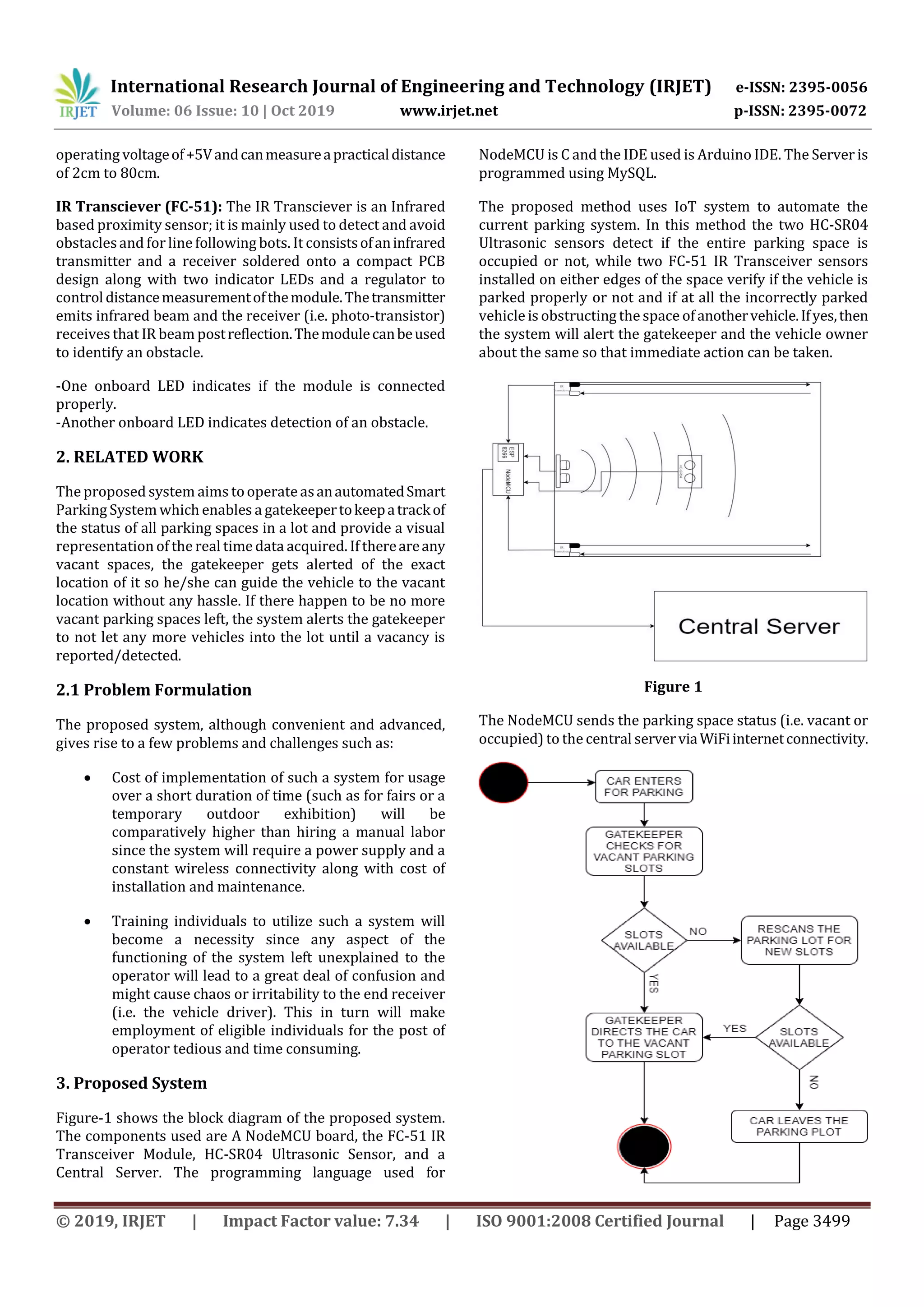
Figure-1 shows the block diagram of the proposed system.
The components used are A NodeMCU board, the FC-51 IR
Transceiver Module, HC-SR04 Ultrasonic Sensor, and a
Central Server. The programming language used for
NodeMCU is C and the IDE used is Arduino IDE. The Server is
programmed using MySQL.
The proposed method uses IoT system to automate the
current parking system. In this method the two HC-SR04
Ultrasonic sensors detect if the entire parking space is
occupied or not, while two FC-51 IR Transceiver sensors
installed on either edges of the space verify if the vehicle is
parked properly or not and if at all the incorrectly parked
vehicle is obstructing the space ofanothervehicle.Ifyes,then
the system will alert the gatekeeper and the vehicle owner
about the same so that immediate action can be taken.
Figure 1
The NodeMCU sends the parking space status (i.e. vacant or
occupied) to the central serverviaWiFiinternetconnectivity.
International Research Journal of Engineering and Technology (IRJET) e-ISSN: 2395-0056
Volume: 06 Issue: 10 | Oct 2019 www.irjet.net p-ISSN: 2395-0072
© 2019, IRJET | Impact Factor value: 7.34 | ISO 9001:2008 Certified Journal | Page 3500
There are three scenarios that can occur for the current
system:
 Spot Vacant: The spot in consideration is vacant i.e.
there are no vehicles parked in that spot. Inthiscase
the system will display that the space as vacant and
ready for accommodation.
 Spot Occupied: In this case the spot in
consideration is occupied so the system will display
the space as occupied and hence not available for
accommodation until vacated.
 Spot Obstructed: In this case either the parking
space is obstructed by an incorrectly parked vehicle
or by an individual who knowingly or unknowingly
is obstructing a vacant parking space. In such cases
the system detects the parking space as obstructed
and alertsthegatekeeperorconcernedpersonabout
the situation andadvisestotakeimmediateactionas
necessary.
3.1. Advantages of our Proposed System:
 Live Monitoring: Since the system utilizes sensors
and online data transfer, the situation can be
monitored in real time by the gatekeeper or any
concerned individual. This helps in reducing time
and effort by automating the system rather than
manually inspecting the situation or status.
 Reduced chances oferrors:Thissystemmakesuse
of electronically generated values and sensor data.
This reduces the chances of user error and
misinformation from individuals.
 Reduced Fuel Wastage: Since the system detects
vacant spaces and informs the end user of the same,
they don’t have to keep driving through the entire
parking lot in search of a parking space. This not
only reduces time and effort but also saves precious
fossil fuels.
4. Future Scope:
 Online Payment Portal: We can include an online
payment system using QR Code, NFC or RFID to let
users pay parking fares at pay and park sites. This
eliminates the issue of excess fare being charged by
corrupt individuals by making the process
transparent and foolproof.
 Online Pre-booking: A provision can be made to
book a parking space online, i.e. reserve a parking
space online for a particular time slot. The
concerned person has to arrive at/occupy the
parking space by the speculated time or the space
will be allotted to whoever is present andseekingit.
 Alerts and AssistanceusingAI:Wecancompletely
eliminate the need for human involvement in this
system by programming an AI that functions as a
gatekeeper and directs vehicleownerstothevacant
parking spaces if available and to other parkinglots
if the current parking lot is filled. Furthermore, it
can also alert the vehicle owner in case of an
incorrect parking.
5. CONCLUSIONS
Multiple steps have been taken to curb the nuisance of
pollution and our system is one of them. Using this system,
we can help reduce pollution by eradicating the need for
roaming around a parking lot in search of an empty parking
space.
This system makes use of IoT technology for real-time
parking space monitoring. This system can greatly increase
end user satisfaction and contribute to reduction in wastage
in fossil fuels and time. This system is highly efficient and
scalable. Since efficient sensors and a low powered
NodeMCU are used, it uses less energy. This system can
automate the current manual Parking System.
REFERENCES
[1] https://www.hackster.io/abhushanadhikarijoshi/smart
-parking-system-7baf4d
[2] https://www.hackster.io/taifur/smart-parking-system-
b3f5a0
[3] https://www.hackster.io/hoozi/smart-parking-system-
144012
[4] P. Sadhukhan, "An IoT-based E-parking system for
smart cities," 2017InternationalConferenceonAdvances
in Computing,CommunicationsandInformatics(ICACCI),
Udupi, 2017, pp. 1062-1066.
doi: 10.1109/ICACCI.2017.8125982
[5] B. M. Mahendra, S. Sonoli, N. Bhat, Raju and T. Raghu,
"IoT based sensor enabled smart car parking for
advanced driver assistance system," 2017 2nd IEEE
International Conference onRecentTrendsinElectronics,
Information & Communication Technology (RTEICT),
Bangalore, 2017, pp. 2188-2193.
doi: 10.1109/RTEICT.2017.8256988
[6] P. Ramaswamy, "IoT smartparkingsystemforreducing
green house gas emission," 2016 International
Conference on Recent Trends in Information Technology
(ICRTIT), Chennai, 2016, pp. 1-6.
doi: 10.1109/ICRTIT.2016.7569513

IRJET- IoT Enabled Smart Parking System

  • 1.
    International Research Journalof Engineering and Technology (IRJET) e-ISSN: 2395-0056 Volume: 06 Issue: 10 | Oct 2019 www.irjet.net p-ISSN: 2395-0072 © 2019, IRJET | Impact Factor value: 7.34 | ISO 9001:2008 Certified Journal | Page 3498 IoT Enabled Smart Parking System Rohit Misra1, Shekhar Jain2, Mihir Bonde3, Prof. Harish Motekar4 1,2,3Student, Dept. of Information Technology, Shah and Anchor Kutchhi Engineering College. (India) 4Professor, Dept. of Information Technology, Shah and Anchor Kutchhi Engineering College. (India) ---------------------------------------------------------------------***---------------------------------------------------------------------- Abstract - Nowadays, an increase in population and as its direct result an increase in pollution is one of the major concerns of modern society. One such inevitable aspect of population explosion is that of increased vehicular traffic. As more and more people acquire vehicles, the need for available parking spaces increases drastically as well. Due to this, in urban areas, people end up burning a huge amount of unrenewable fossil fuels in search of parking spaces in designated parking lots (i.e. for malls, expos, carnivals, fairs, etc.) sometimes even driving around a parking lot for a while until they find a vacant parking spot. Using IoT we can easily target and tackle this issue. Using a combination of obstruction detecting IR sensors and Distance measuring Ultrasonic sensors (SONAR), we can design a Smart Parking System that lets users know about vacant spots in parkinglots and display a visually represented data of the same forinstant monitoring. Key Words: NodeMCU, ESP8266, Ultrasonic Sensor, IR Transceiver, WiFi Module. 1. INTRODUCTION The existing manual method of vehicle parking requires an assigned individual who monitors the parking lotfrequently and reverts back the status to the gatekeeper who then keeps a tab of vacant and occupied spaces and allows a specific number of vehicles (correspondingtothe numberof vacant parking spaces available) into the parking lot. Not only is this process lengthy and tedious but it even leaves a huge possibility of human errors at almost every step. For example: A mistake made by the patrolling officer in counting the number of vacant spaces may lead to either vacant spaces not being occupied by agitatedvehicleowners waiting for vacancy or having all the spaces occupied and having the vehicle owner wait even after being allowed into the lot. Another flaw inthecurrentsysteminvolvesassigning incompetent individuals for patrolling duties, as such individuals won't work properly and according to the rules and create chaos making their presence as good as their absence. However, information exchange has now been made fast, reliable and secure due to the recent advancements in the field of information transfer and communication. Such advancement coupled with reduced cost of electronic and telecommunication devices has subsequently given rise to low cost communication and computing devices like NodeMCU and ESP8266WiFiconnectionmodule.Computing devices like NodeMCU are now available readily throughout the world. We aim to create an automated Smart Parking System using NodeMCU which enables a gatekeeper to keep a track of the status of all parking spaces in a lot and provide a visual representation of the real timedata acquired.Ifthereare any vacant spaces the gatekeeper gets alerted of the exact location of the vacant space so he/she can guide the vehicle to the vacant location without any hassle. 1.1 COMPONENTS USED: (Note: The components mentioned below are for designing and running a prototype and not the final system. The final system will use more advanced and powerful sensors and components.) NodeMCU: The NodeMCU is an open source firmware development board designed to incorporate the ESP8266 WiFi chip. It consists of: 1. 16 General Purpose input/output pins (of which 4 can be used as PWM outputs). 2. 1 analog input. 3. USB connection (USB A to micro-B). 4. A FLASH button. 5. And a RESET button. It can be powered with a USB cable directly connected to a device or a battery pack. It can accept7V-12Vofinputvoltage and can operate on a maximum voltage of 3.3V. It is a cheap, WiFi enabled and education-oriented board which can be implemented for prototype IoT systems and/or projects. ESP8266: The Espressif ESP8266 chip is a highly integrated WiFi chip with a highly compact design,reliableperformance and overall efficient power usage. It supports Wifi Protocols at 802.11 b/n/e/i bands clocked at 2.4 GHz. It featuresanon- chip SRAM and a Tensilica L106 Diamond series 32-bit processor. It functions at a supply voltage of 2.5V to 3.6V. Ultrasonic Sensor (HC-SR04): The Ultrasonic Sensor is a sensor that measures distances from a point usingultrasonic waves. Here the trigger head of the sensor emits ultrasonic waves that travel a path and get reflected when they hit a target. The distance betweenthesensorandtheobjectisthen calculated by measuring the time difference between emission and reception of the waves. It functions on an
  • 2.
    International Research Journalof Engineering and Technology (IRJET) e-ISSN: 2395-0056 Volume: 06 Issue: 10 | Oct 2019 www.irjet.net p-ISSN: 2395-0072 © 2019, IRJET | Impact Factor value: 7.34 | ISO 9001:2008 Certified Journal | Page 3499 operating voltageof+5Vandcanmeasureapracticaldistance of 2cm to 80cm. IR Transciever (FC-51): The IR Transciever is an Infrared based proximity sensor; it is mainly used to detect and avoid obstaclesand forline following bots. It consistsofaninfrared transmitter and a receiver soldered onto a compact PCB design along with two indicator LEDs and a regulator to controldistancemeasurementofthemodule.Thetransmitter emits infrared beam and the receiver (i.e. photo-transistor) receives that IR beam postreflection.Themodulecanbeused to identify an obstacle. -One onboard LED indicates if the module is connected properly. -Another onboard LED indicates detection of an obstacle. 2. RELATED WORK The proposed system aims tooperate asanautomatedSmart Parking System which enables a gatekeepertokeepatrackof the status of all parking spaces in a lot and provide a visual representation of the real time data acquired. If thereareany vacant spaces, the gatekeeper gets alerted of the exact location of it so he/she can guide the vehicle to the vacant location without any hassle. If there happen to be no more vacant parking spaces left, the system alerts the gatekeeper to not let any more vehicles into the lot until a vacancy is reported/detected. 2.1 Problem Formulation The proposed system, although convenient and advanced, gives rise to a few problems and challenges such as:  Cost of implementation of such a system for usage over a short duration of time (such as for fairs or a temporary outdoor exhibition) will be comparatively higher than hiring a manual labor since the system will require a power supply and a constant wireless connectivity along with cost of installation and maintenance.  Training individuals to utilize such a system will become a necessity since any aspect of the functioning of the system left unexplained to the operator will lead to a great deal of confusion and might cause chaos or irritability to the end receiver (i.e. the vehicle driver). This in turn will make employment of eligible individuals for the post of operator tedious and time consuming. 3. Proposed System Figure-1 shows the block diagram of the proposed system. The components used are A NodeMCU board, the FC-51 IR Transceiver Module, HC-SR04 Ultrasonic Sensor, and a Central Server. The programming language used for NodeMCU is C and the IDE used is Arduino IDE. The Server is programmed using MySQL. The proposed method uses IoT system to automate the current parking system. In this method the two HC-SR04 Ultrasonic sensors detect if the entire parking space is occupied or not, while two FC-51 IR Transceiver sensors installed on either edges of the space verify if the vehicle is parked properly or not and if at all the incorrectly parked vehicle is obstructing the space ofanothervehicle.Ifyes,then the system will alert the gatekeeper and the vehicle owner about the same so that immediate action can be taken. Figure 1 The NodeMCU sends the parking space status (i.e. vacant or occupied) to the central serverviaWiFiinternetconnectivity.
  • 3.
    International Research Journalof Engineering and Technology (IRJET) e-ISSN: 2395-0056 Volume: 06 Issue: 10 | Oct 2019 www.irjet.net p-ISSN: 2395-0072 © 2019, IRJET | Impact Factor value: 7.34 | ISO 9001:2008 Certified Journal | Page 3500 There are three scenarios that can occur for the current system:  Spot Vacant: The spot in consideration is vacant i.e. there are no vehicles parked in that spot. Inthiscase the system will display that the space as vacant and ready for accommodation.  Spot Occupied: In this case the spot in consideration is occupied so the system will display the space as occupied and hence not available for accommodation until vacated.  Spot Obstructed: In this case either the parking space is obstructed by an incorrectly parked vehicle or by an individual who knowingly or unknowingly is obstructing a vacant parking space. In such cases the system detects the parking space as obstructed and alertsthegatekeeperorconcernedpersonabout the situation andadvisestotakeimmediateactionas necessary. 3.1. Advantages of our Proposed System:  Live Monitoring: Since the system utilizes sensors and online data transfer, the situation can be monitored in real time by the gatekeeper or any concerned individual. This helps in reducing time and effort by automating the system rather than manually inspecting the situation or status.  Reduced chances oferrors:Thissystemmakesuse of electronically generated values and sensor data. This reduces the chances of user error and misinformation from individuals.  Reduced Fuel Wastage: Since the system detects vacant spaces and informs the end user of the same, they don’t have to keep driving through the entire parking lot in search of a parking space. This not only reduces time and effort but also saves precious fossil fuels. 4. Future Scope:  Online Payment Portal: We can include an online payment system using QR Code, NFC or RFID to let users pay parking fares at pay and park sites. This eliminates the issue of excess fare being charged by corrupt individuals by making the process transparent and foolproof.  Online Pre-booking: A provision can be made to book a parking space online, i.e. reserve a parking space online for a particular time slot. The concerned person has to arrive at/occupy the parking space by the speculated time or the space will be allotted to whoever is present andseekingit.  Alerts and AssistanceusingAI:Wecancompletely eliminate the need for human involvement in this system by programming an AI that functions as a gatekeeper and directs vehicleownerstothevacant parking spaces if available and to other parkinglots if the current parking lot is filled. Furthermore, it can also alert the vehicle owner in case of an incorrect parking. 5. CONCLUSIONS Multiple steps have been taken to curb the nuisance of pollution and our system is one of them. Using this system, we can help reduce pollution by eradicating the need for roaming around a parking lot in search of an empty parking space. This system makes use of IoT technology for real-time parking space monitoring. This system can greatly increase end user satisfaction and contribute to reduction in wastage in fossil fuels and time. This system is highly efficient and scalable. Since efficient sensors and a low powered NodeMCU are used, it uses less energy. This system can automate the current manual Parking System. REFERENCES [1] https://www.hackster.io/abhushanadhikarijoshi/smart -parking-system-7baf4d [2] https://www.hackster.io/taifur/smart-parking-system- b3f5a0 [3] https://www.hackster.io/hoozi/smart-parking-system- 144012 [4] P. Sadhukhan, "An IoT-based E-parking system for smart cities," 2017InternationalConferenceonAdvances in Computing,CommunicationsandInformatics(ICACCI), Udupi, 2017, pp. 1062-1066. doi: 10.1109/ICACCI.2017.8125982 [5] B. M. Mahendra, S. Sonoli, N. Bhat, Raju and T. Raghu, "IoT based sensor enabled smart car parking for advanced driver assistance system," 2017 2nd IEEE International Conference onRecentTrendsinElectronics, Information & Communication Technology (RTEICT), Bangalore, 2017, pp. 2188-2193. doi: 10.1109/RTEICT.2017.8256988 [6] P. Ramaswamy, "IoT smartparkingsystemforreducing green house gas emission," 2016 International Conference on Recent Trends in Information Technology (ICRTIT), Chennai, 2016, pp. 1-6. doi: 10.1109/ICRTIT.2016.7569513