AS A TOOL FOR DEVELOPMENT
SUJITA MISHRA
PI/289
IPR
Table of contents
Introduction
National Development Goals
1st,2nd,3rd,stage of IP development
Success story of
BIOCON,NIRMA,and,PLIVA
Conclusion 2
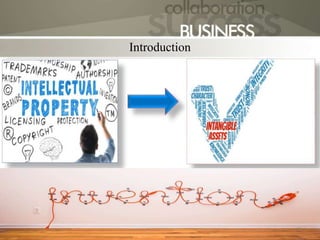
Introduction
3
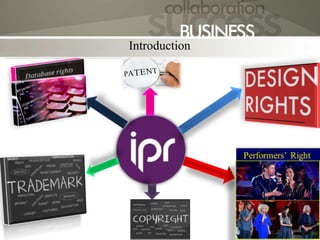
Introduction
4
What is ‘development’?
Is IP a tool for development?
How can IP address development goals?
Is IP solution of our problems?
Introduction
5
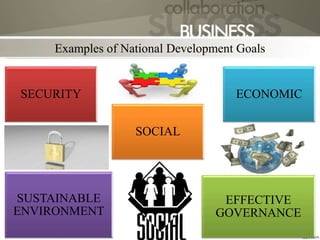
Examples of National Development Goals
SECURITY
EFFECTIVE
GOVERNANCE
SUSTAINABLE
ENVIRONMENT
ECONOMIC
SOCIAL
6
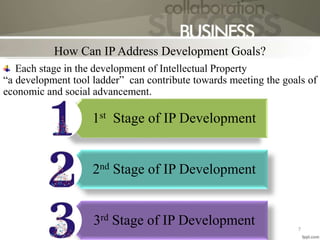
How Can IP Address Development Goals?
Each stage in the development of Intellectual Property
“a development tool ladder” can contribute towards meeting the goals of
economic and social advancement.
1st Stage of IP Development
2nd Stage of IP Development
3rd Stage of IP Development 7
1st Stage of IP Development
Conception and expression of ideas,experimenting
in innovation.
Allows for self-expression and building of
esteem,talent and unique identity.
Individual and National level.
Results in vibrant culture, progressive society.
8
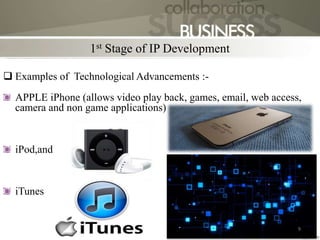
 Examples of Technological Advancements :-
APPLE iPhone (allows video play back, games, email, web access,
camera and non game applications)
iPod,and
iTunes
1st Stage of IP Development
9
2nd Stage of IP development
IP product/ process applied in the various domains of human activity
and enhance daily life.
Examples :-
Education – digital white boards, literary and cultural books.
Health – new procedures.
Government and Business: e-commerce, e -banking, e-voting.
Technology: used in law enforcement - Wireless Crime
Fighting Measures,etc.
Employing Eco-efficient approaches to industry and
manufacturing.
10
3rd Stage of IP Development
Economic exploitation of IP.
Provides business opportunities for micro to large business.
Proper marketing of products and services are crucial to the success or
failure of a product/process and its parent company.
11
12
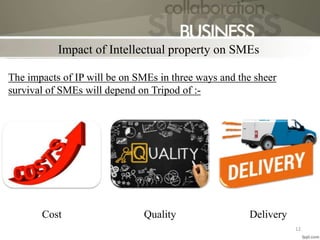
Impact of Intellectual property on SMEs
The impacts of IP will be on SMEs in three ways and the sheer
survival of SMEs will depend on Tripod of :-
Cost Quality Delivery
The Challenges for SMEs
13
1. Achieve Cost Efficiency.
2. Produce quality comparable to the best.
3. Efficient delivery of the "goods & services"; to the consumer.
4. Become world class, this does not necessarily mean world scale.
Enhancing Competitiveness of SMEs through Innovation
14
Creating new products or services.
Re-engineering products or services.
New processes to improve productivity.
Developing new maketing techniques to expand sales.
New forms of management systems and techniques to improve
operational efficiency
IP as a Valuable Asset
IP is now recognized as one of the most valuable assets in business
transactions in the form of ;
Licensing Agreements – patents, copyright, trade marks.
Manufacturing.
Purchase or Distribution Agreements.
Mergers or acquisitions.
15
16
Founded as an brewing enzyme extraction company 1978.
Next in 1984 tried to get an alternative to ‘Koji enzymes’.
In 1989, acquired by Unilever.
By 1990’s Koji enzymes were a success, and got an added advantage
in fermentation drugs.
Now produces everything from insulin to antibodies.
Has been leading the biotech industry for 20+ years.
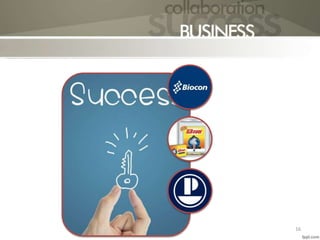
Success story of BIOCON
17
Biocon's initial operation was to extract an enzyme from papaya.
Under Kiran Mazumdar Shaw's stewardship Biocon transformed from
an industrial enzymes company to an integrated biopharmaceutical
company with strategic research initiatives.
Today Biocon is recognized as India's pioneering biotech enterprise.
BIOCON INDIA:
Biocon was founded on November 29, 1978 as a joint venture between
Biocon Biochemicals Ltd. of Ireland and an Indian entrepreneur, Kiran
Mazumdar Shaw.
In 1979, Biocon became the first Indian company to manufacture and
export enzymes to USA and Europe. Unilever plc. acquired Biocon
Biochemicals Ltd.
In 1989, Biocon became the first Indian biotech company to receive US
funding for proprietary technologies.
Success Story of BIOCON
18
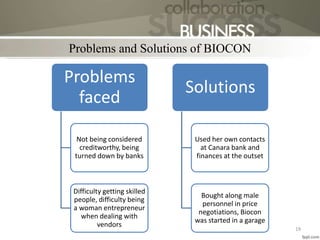
Problems
faced
Not being considered
creditworthy, being
turned down by banks
Difficulty getting skilled
people, difficulty being
a woman entrepreneur
when dealing with
vendors
Solutions
Used her own contacts
at Canara bank and
finances at the outset
Bought along male
personnel in price
negotiations, Biocon
was started in a garage
Problems and Solutions of BIOCON
19
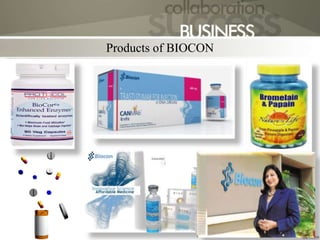
Products of BIOCON
20
INTRODUCTION:-
Founder of Nirma is Dr. Karsanbhai Patel.
In the early 1970s, when Nirma washing powder was introduced in
the low-income market.
Starting as a one-product one-man outfit in 1969, Nirma became a Rs
17 billion company within three decades.
The brand name became almost synonymous with low-priced
detergents and toilet soaps.
In 2000, Nirma had a 15% share in the toilet soap segment and more
than 30% share in the detergent market.
Success Story of NIRMA
21
Nirma Ltd:-
Nirma is one of the most recognizable Indian brands.
Nirma has about 14, 000 employee-base and annual turnover of more
than Rs. 25,000 crores.
Nirma rewrote the marking rules and its success story became one of
the widely discussed case studies in the B-schools across the world.
Today Nirma has one of the largest volume sales with a single brand
name in the world.
In 2004, Nirma's annual sales touched 800,000 tones.
Success Story of NIRMA
22
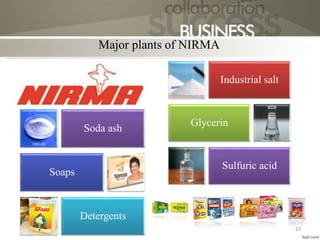
Industrial salt
Glycerin
Sulfuric acid
Soda ash
Soaps
Detergents
Major plants of NIRMA
23
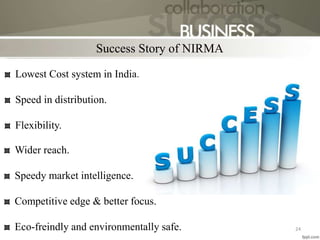
Lowest Cost system in India.
Speed in distribution.
Flexibility.
Wider reach.
Speedy market intelligence.
Competitive edge & better focus.
Eco-freindly and environmentally safe.
Success Story of NIRMA
24
Pliva operates in over 30 countries worldwide and is the leading
pharmaceutical company based in Central and Eastern Europe. It
specializes in the development, production and distribution of
generic pharmaceutical products, including biologicals, and other
generics, as well as active pharmaceutical ingredients.
A team of Pliva's researchers, Gabrijela Kobrehel et.al. led by Dr.
Slobodan Đokić, discovered Azithromycin in 1980. Azithromycin is
marketed in Eastern Europe under the name Sumamed and was
licensed to Pfizer, who market it in Western Europe and the USA
under the name Zithromax, where it is one of the top-selling
antibiotics. Royalties from Pfizer provided PLIVA's main income
stream until the expiry of the Azithromycin patent in 2005.
Success story of PLIVA
25
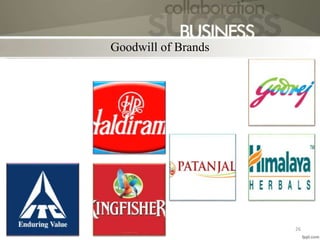
Goodwill of Brands
26
Conclusion
IP is good for
economic
development.
IP is solution
of our
problem.
IP creates
competition
in market.
27
28

ipr_3rd_sem

  • 1.
    AS A TOOLFOR DEVELOPMENT SUJITA MISHRA PI/289 IPR
  • 2.
    Table of contents Introduction NationalDevelopment Goals 1st,2nd,3rd,stage of IP development Success story of BIOCON,NIRMA,and,PLIVA Conclusion 2
  • 3.
  • 4.
  • 5.
    What is ‘development’? IsIP a tool for development? How can IP address development goals? Is IP solution of our problems? Introduction 5
  • 6.
    Examples of NationalDevelopment Goals SECURITY EFFECTIVE GOVERNANCE SUSTAINABLE ENVIRONMENT ECONOMIC SOCIAL 6
  • 7.
    How Can IPAddress Development Goals? Each stage in the development of Intellectual Property “a development tool ladder” can contribute towards meeting the goals of economic and social advancement. 1st Stage of IP Development 2nd Stage of IP Development 3rd Stage of IP Development 7
  • 8.
    1st Stage ofIP Development Conception and expression of ideas,experimenting in innovation. Allows for self-expression and building of esteem,talent and unique identity. Individual and National level. Results in vibrant culture, progressive society. 8
  • 9.
     Examples ofTechnological Advancements :- APPLE iPhone (allows video play back, games, email, web access, camera and non game applications) iPod,and iTunes 1st Stage of IP Development 9
  • 10.
    2nd Stage ofIP development IP product/ process applied in the various domains of human activity and enhance daily life. Examples :- Education – digital white boards, literary and cultural books. Health – new procedures. Government and Business: e-commerce, e -banking, e-voting. Technology: used in law enforcement - Wireless Crime Fighting Measures,etc. Employing Eco-efficient approaches to industry and manufacturing. 10
  • 11.
    3rd Stage ofIP Development Economic exploitation of IP. Provides business opportunities for micro to large business. Proper marketing of products and services are crucial to the success or failure of a product/process and its parent company. 11
  • 12.
    12 Impact of Intellectualproperty on SMEs The impacts of IP will be on SMEs in three ways and the sheer survival of SMEs will depend on Tripod of :- Cost Quality Delivery
  • 13.
    The Challenges forSMEs 13 1. Achieve Cost Efficiency. 2. Produce quality comparable to the best. 3. Efficient delivery of the "goods & services"; to the consumer. 4. Become world class, this does not necessarily mean world scale.
  • 14.
    Enhancing Competitiveness ofSMEs through Innovation 14 Creating new products or services. Re-engineering products or services. New processes to improve productivity. Developing new maketing techniques to expand sales. New forms of management systems and techniques to improve operational efficiency
  • 15.
    IP as aValuable Asset IP is now recognized as one of the most valuable assets in business transactions in the form of ; Licensing Agreements – patents, copyright, trade marks. Manufacturing. Purchase or Distribution Agreements. Mergers or acquisitions. 15
  • 16.
  • 17.
    Founded as anbrewing enzyme extraction company 1978. Next in 1984 tried to get an alternative to ‘Koji enzymes’. In 1989, acquired by Unilever. By 1990’s Koji enzymes were a success, and got an added advantage in fermentation drugs. Now produces everything from insulin to antibodies. Has been leading the biotech industry for 20+ years. Success story of BIOCON 17
  • 18.
    Biocon's initial operationwas to extract an enzyme from papaya. Under Kiran Mazumdar Shaw's stewardship Biocon transformed from an industrial enzymes company to an integrated biopharmaceutical company with strategic research initiatives. Today Biocon is recognized as India's pioneering biotech enterprise. BIOCON INDIA: Biocon was founded on November 29, 1978 as a joint venture between Biocon Biochemicals Ltd. of Ireland and an Indian entrepreneur, Kiran Mazumdar Shaw. In 1979, Biocon became the first Indian company to manufacture and export enzymes to USA and Europe. Unilever plc. acquired Biocon Biochemicals Ltd. In 1989, Biocon became the first Indian biotech company to receive US funding for proprietary technologies. Success Story of BIOCON 18
  • 19.
    Problems faced Not being considered creditworthy,being turned down by banks Difficulty getting skilled people, difficulty being a woman entrepreneur when dealing with vendors Solutions Used her own contacts at Canara bank and finances at the outset Bought along male personnel in price negotiations, Biocon was started in a garage Problems and Solutions of BIOCON 19
  • 20.
  • 21.
    INTRODUCTION:- Founder of Nirmais Dr. Karsanbhai Patel. In the early 1970s, when Nirma washing powder was introduced in the low-income market. Starting as a one-product one-man outfit in 1969, Nirma became a Rs 17 billion company within three decades. The brand name became almost synonymous with low-priced detergents and toilet soaps. In 2000, Nirma had a 15% share in the toilet soap segment and more than 30% share in the detergent market. Success Story of NIRMA 21
  • 22.
    Nirma Ltd:- Nirma isone of the most recognizable Indian brands. Nirma has about 14, 000 employee-base and annual turnover of more than Rs. 25,000 crores. Nirma rewrote the marking rules and its success story became one of the widely discussed case studies in the B-schools across the world. Today Nirma has one of the largest volume sales with a single brand name in the world. In 2004, Nirma's annual sales touched 800,000 tones. Success Story of NIRMA 22
  • 23.
    Industrial salt Glycerin Sulfuric acid Sodaash Soaps Detergents Major plants of NIRMA 23
  • 24.
    Lowest Cost systemin India. Speed in distribution. Flexibility. Wider reach. Speedy market intelligence. Competitive edge & better focus. Eco-freindly and environmentally safe. Success Story of NIRMA 24
  • 25.
    Pliva operates inover 30 countries worldwide and is the leading pharmaceutical company based in Central and Eastern Europe. It specializes in the development, production and distribution of generic pharmaceutical products, including biologicals, and other generics, as well as active pharmaceutical ingredients. A team of Pliva's researchers, Gabrijela Kobrehel et.al. led by Dr. Slobodan Đokić, discovered Azithromycin in 1980. Azithromycin is marketed in Eastern Europe under the name Sumamed and was licensed to Pfizer, who market it in Western Europe and the USA under the name Zithromax, where it is one of the top-selling antibiotics. Royalties from Pfizer provided PLIVA's main income stream until the expiry of the Azithromycin patent in 2005. Success story of PLIVA 25
  • 26.
  • 27.
    Conclusion IP is goodfor economic development. IP is solution of our problem. IP creates competition in market. 27
  • 28.