ANIMALS: CHARACTERISTICS
OF INVERTEBRATES
Determine the distinguishing characteristics of vertebrates and invertebrates.
(S6MT-Iie-f-3)
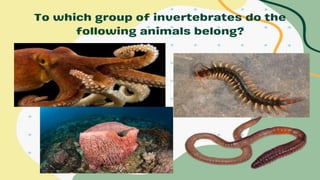
GROUPS OF INVERTEBRATES
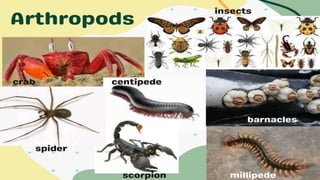
1. Arthropods
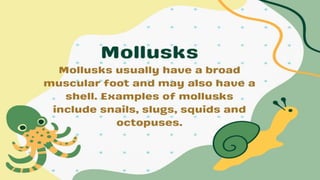
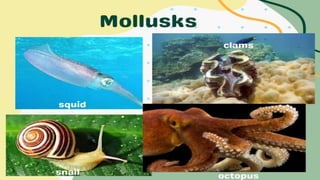
2. Mollusks
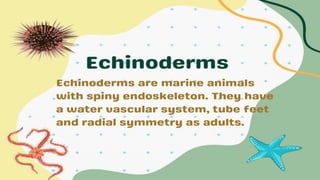
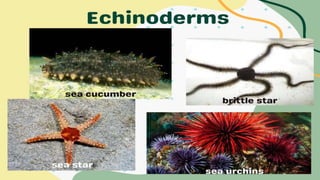
3. Echinoderms
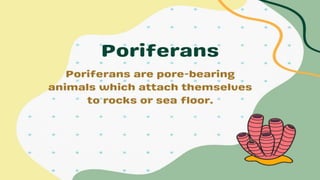
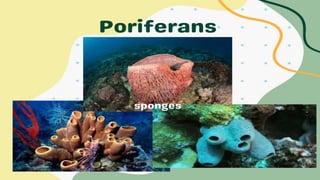
4. Poriferans
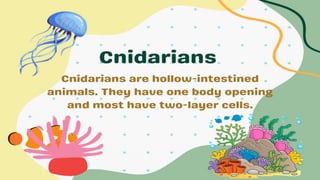
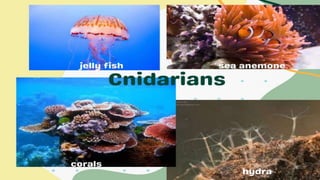
5. Cnidarians
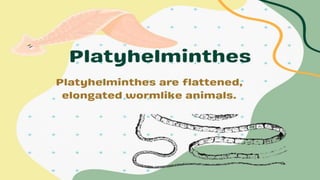
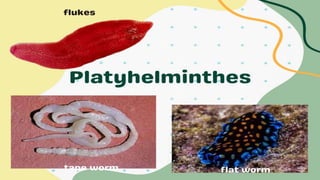
6. Platyhelminthes
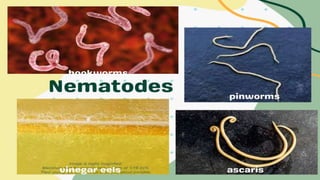
7. Nematodes
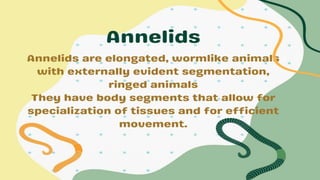
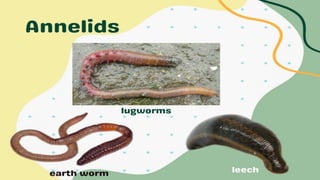
8. Annelids
Directions: Give at least two examples of
the following invertebrates.
1. Arthropods
2. Mollusks
3. Echinoderms
4. Sponges
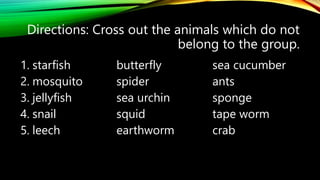
Directions: Cross out the animals which do not
belong to the group.
1. starfish butterfly sea cucumber
2. mosquito spider ants
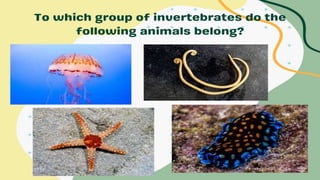
3. jellyfish sea urchin sponge
4. snail squid tape worm
5. leech earthworm crab
Directions: List down at least 5 examples of
invertebrate animals that can be found in your
locality. Write the distinguishing characteristics of
each animal and ways of protecting and caring for it.
Animals
Distinguishing
Characteristics
Ways of Caring and
Protecting
1.
2.
3.
4.
5.
Directions: Choose the letter of the best
answer.
1. The largest group of invertebrates is the
arthropod group. What do all arthropods have in
common?
A. They live on land and have an exoskeleton.
B. They can fly and have jointed legs.
C. They have segmented bodies and jointed legs.
D. They have skeleton and segmented bodies.
2. Why do some mollusks have shells?
A. So they can live both on land and water.
B. To make it easier to find food.
C. This as a reason why mollusks have shell.
D. To protect their soft bodies.
3. All of the following are hollow-bodied
animals except
A. corals
B. oyster
C. jellyfish
D. sea anemones
4. All invertebrates are animals that
A. have hard shells
B. have no backbone
C. have hollow bodies
D. live in the ocean
5. Which of these groups of animals belong to
echinoderms?
A. bees, butterfly and mantis
B. sand dollar, starfish and sea urchins
C. earthworm, leeches and tapeworm
D. spider, ticks and scorpion
6. To what subgroup of arthropods do invertebrates
with four pairs of legs belong?
A. echinoderms B. crustaceans
C. arachnids D. insect
7. They are characterized as marine animals with
spiny endoskeleton. They have water vascular
system, tube feet and radial symmetry as adult.
Which group of invertebrates is being described?
A. mollusks B. echinoderms
C. cnidarians D. annelids
8. They have no tissue, no organ, and most have no
symmetry.
A. sponges B. echinoderms
C. cnidarians D. annelids
9. Which group of invertebrates is divided into
segments with a ringed appearance?
A. sponges B. echinoderms
C. cnidarians D. annelids
10. Animals such as vertebrates and invertebrates
have economic importance. They are sources of
food, medicine and scientific investigations. How will
you show that you care and protect these animals in
their environment?
A. We don’t need to strictly implement wildlife
regulations.
B. We must have them lived in our houses.
C. We have to establish reserve wildlife refuge areas
where birds and animals may breed without
being killed by man.
D. Hunting activities must be practiced.
INVERTEBRATES.pptx

INVERTEBRATES.pptx

  • 1.
    ANIMALS: CHARACTERISTICS OF INVERTEBRATES Determinethe distinguishing characteristics of vertebrates and invertebrates. (S6MT-Iie-f-3)
  • 5.
    GROUPS OF INVERTEBRATES 1.Arthropods 2. Mollusks 3. Echinoderms 4. Poriferans 5. Cnidarians 6. Platyhelminthes 7. Nematodes 8. Annelids
  • 22.
    Directions: Give atleast two examples of the following invertebrates. 1. Arthropods 2. Mollusks 3. Echinoderms 4. Sponges
  • 25.
    Directions: Cross outthe animals which do not belong to the group. 1. starfish butterfly sea cucumber 2. mosquito spider ants 3. jellyfish sea urchin sponge 4. snail squid tape worm 5. leech earthworm crab
  • 26.
    Directions: List downat least 5 examples of invertebrate animals that can be found in your locality. Write the distinguishing characteristics of each animal and ways of protecting and caring for it. Animals Distinguishing Characteristics Ways of Caring and Protecting 1. 2. 3. 4. 5.
  • 27.
    Directions: Choose theletter of the best answer. 1. The largest group of invertebrates is the arthropod group. What do all arthropods have in common? A. They live on land and have an exoskeleton. B. They can fly and have jointed legs. C. They have segmented bodies and jointed legs. D. They have skeleton and segmented bodies.
  • 28.
    2. Why dosome mollusks have shells? A. So they can live both on land and water. B. To make it easier to find food. C. This as a reason why mollusks have shell. D. To protect their soft bodies. 3. All of the following are hollow-bodied animals except A. corals B. oyster C. jellyfish D. sea anemones
  • 29.
    4. All invertebratesare animals that A. have hard shells B. have no backbone C. have hollow bodies D. live in the ocean 5. Which of these groups of animals belong to echinoderms? A. bees, butterfly and mantis B. sand dollar, starfish and sea urchins C. earthworm, leeches and tapeworm D. spider, ticks and scorpion
  • 30.
    6. To whatsubgroup of arthropods do invertebrates with four pairs of legs belong? A. echinoderms B. crustaceans C. arachnids D. insect 7. They are characterized as marine animals with spiny endoskeleton. They have water vascular system, tube feet and radial symmetry as adult. Which group of invertebrates is being described? A. mollusks B. echinoderms C. cnidarians D. annelids
  • 31.
    8. They haveno tissue, no organ, and most have no symmetry. A. sponges B. echinoderms C. cnidarians D. annelids 9. Which group of invertebrates is divided into segments with a ringed appearance? A. sponges B. echinoderms C. cnidarians D. annelids
  • 32.
    10. Animals suchas vertebrates and invertebrates have economic importance. They are sources of food, medicine and scientific investigations. How will you show that you care and protect these animals in their environment? A. We don’t need to strictly implement wildlife regulations. B. We must have them lived in our houses. C. We have to establish reserve wildlife refuge areas where birds and animals may breed without being killed by man. D. Hunting activities must be practiced.