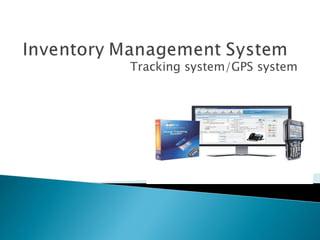
Tracking system/GPS system
Introduction :
An inventory management system is the combination of technology
(hardware and software) and processes and procedures that oversee
the monitoring and maintenance of stocked products, whether those
products are company assets, raw materials and supplies , or finished
products ready to be sent to vendors or end consumers.
Inventory management software, which provides a central database
and point of reference for all inventory, coupled with the ability to
analyze data, generate reports, forecast future demand, and more.
Inventory management software features
 Barcoding
 Reporting tools
 Inventory forecasting
 Inventory alerts
 Accounting tools or tie-ins
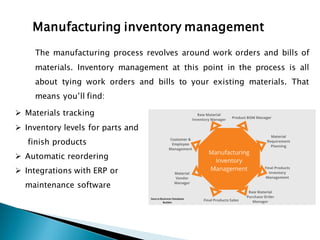
Manufacturing inventory management
The manufacturing process revolves around work orders and bills of
materials. Inventory management at this point in the process is all
about tying work orders and bills to your existing materials. That
means you’ll find:
 Materials tracking
 Inventory levels for parts and
finish products
 Automatic reordering
 Integrations with ERP or
maintenance software
Warehouse inventory management
Managing a warehouse is a different beast and requires different system
features. Warehouses are most interested in where an item is. Of course,
having the right number on hand is important, but the real value in
inventory management in a warehouse setting is being able to find
something quickly
 Advanced barcode systems
supporting QR and other standards
 Multiple location support
 Shelf and bin tracking systems
 Order picking support
Retail inventory management software
A good inventory system can keep shelves as full as they need to be. At
its extreme, this is called “just-in-time” inventory management, which
prioritizes minimizing cash tied up in product over maximizing
inventory buffer.
 Order picking support
 Automatic reorder
 Inventory forecasting tools
 Barcoding support
Benefits of Inventory Management Systems
 Improved cash flow
 Better reporting and forecasting
capabilities
 Reduction in storage costs
(overhead)
 Reduced labor costs
 Reduction in dead stock
 Better organization
 Enhanced transparency
 Improved supplier, vendor, and
partner relationships
Best Practices for Inventory Management Systems
 Location names
 Easy-to-read location labels
 Unique item identification numbers
 Units of measure
 A starting count
 A software solution that effectively
monitors and tracks activity
 Clear, company-wide policies and
processes
 People who know how to support
these policies and processes
www.agaraminfotech.com For Support (+91) 978 983 3607
For Sales (+91) 893 922 9995

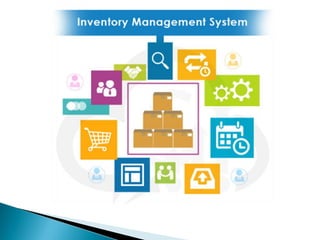
Inventory management system

  • 1.
  • 2.
    Introduction : An inventorymanagement system is the combination of technology (hardware and software) and processes and procedures that oversee the monitoring and maintenance of stocked products, whether those products are company assets, raw materials and supplies , or finished products ready to be sent to vendors or end consumers. Inventory management software, which provides a central database and point of reference for all inventory, coupled with the ability to analyze data, generate reports, forecast future demand, and more.
  • 4.
    Inventory management softwarefeatures  Barcoding  Reporting tools  Inventory forecasting  Inventory alerts  Accounting tools or tie-ins
  • 5.
    Manufacturing inventory management Themanufacturing process revolves around work orders and bills of materials. Inventory management at this point in the process is all about tying work orders and bills to your existing materials. That means you’ll find:  Materials tracking  Inventory levels for parts and finish products  Automatic reordering  Integrations with ERP or maintenance software
  • 6.
    Warehouse inventory management Managinga warehouse is a different beast and requires different system features. Warehouses are most interested in where an item is. Of course, having the right number on hand is important, but the real value in inventory management in a warehouse setting is being able to find something quickly  Advanced barcode systems supporting QR and other standards  Multiple location support  Shelf and bin tracking systems  Order picking support
  • 7.
    Retail inventory managementsoftware A good inventory system can keep shelves as full as they need to be. At its extreme, this is called “just-in-time” inventory management, which prioritizes minimizing cash tied up in product over maximizing inventory buffer.  Order picking support  Automatic reorder  Inventory forecasting tools  Barcoding support
  • 8.
    Benefits of InventoryManagement Systems  Improved cash flow  Better reporting and forecasting capabilities  Reduction in storage costs (overhead)  Reduced labor costs  Reduction in dead stock  Better organization  Enhanced transparency  Improved supplier, vendor, and partner relationships
  • 9.
    Best Practices forInventory Management Systems  Location names  Easy-to-read location labels  Unique item identification numbers  Units of measure  A starting count  A software solution that effectively monitors and tracks activity  Clear, company-wide policies and processes  People who know how to support these policies and processes
  • 10.
    www.agaraminfotech.com For Support(+91) 978 983 3607 For Sales (+91) 893 922 9995