SMART MATERIAL MANAGEMENT
• No longer a product purchasing
function
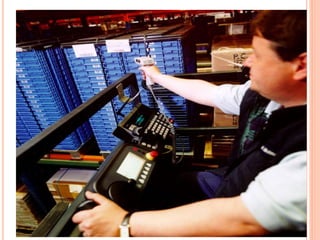
Ex: Development of the Agile Trac RTLS System at
Ellis
• Different ways:
1. IT in Materials Management
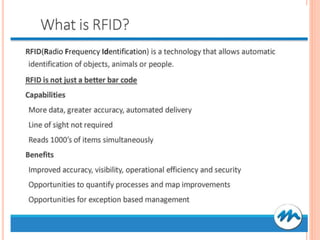
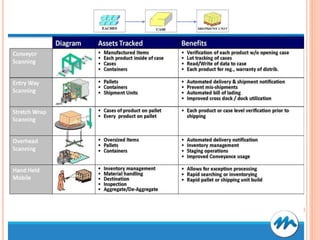
2. Use of RFID Warehouse
Management
3. Automated Purchasing
4. WCS VS WMS
USE OF IT IN MATERIALS MANAGEMENT
Use of IT can generate various types of information / reports to be used in
materials department.
1) Long-term production schedule.
2) Short-term schedule.
3) Materials manual.
4) Requirement of non-stock items from user departments.
5) Information regarding lead time, supply position (shortages), price
trends, anticipated price changes, etc.
6) Production Schedule handed over to production department.
7) Materials requisition from the production to stores.
8) Materials supplied from stores to production.
9) To and fro information between stores and inspection.
10) Information regarding receipts from the stores.
11) Date regarding issues from stores.
12) Due dates of supply from purchase department.
13) Information to purchase department for follow up of supplies.
14) Purchase requisition to purchase department.
15) Purchase order.
16) Materials from suppliers to stores.
17) Previous year’s consumption data.
PURCHASE REQUISITION
 A purchase requisition is a process of requesting and authorizing
procurement of goods and services by a department in the
organization.
 It contains a description and quantity of the goods or services to be
purchased.
 These requests are documented and routed for approval
within the organization and then delivered to the accounting
group.
CHALLENGES FACED IN IMPLEMENTING
A PURCHASE REQUISITION PROCESS
 A manual paper-based process is laborious as the requests are
manually typed, rekeyed, logged, validated, routed, and stored.
 It results in
 Inefficient
 Error prone processing
 Data scattered
 Waste time for user
 Slow requisition cycles.
 Manual notification, tracking, and reporting contribute to
inefficiency and prevent effective control of the procurement
cycle.
ADVANTAGE OF AUTOMATING
PURCHASE REQUISITION PROCESS
 By automating the purchase requisition process an organization can
minimize risk and keep audit trails in the purchase requisition
process but automation can only solve few tasks of manual entry
errors, misuse, physical loss and can be done by any system.
BPM SOFTWARE
 Business process management software(BPM) is a systematic
approach to making an organization's workflow more effective,
more efficient and more capable of adapting to an ever-changing
environment.
 A business process is an activity or set of activities that will
accomplish a specific organizational goal.
 The BPM solution can get real time data and bring all stakeholders
on the same platform for effective collaboration.
BPM SOFTWARE BENEFITS
 Organizations’ can automate purchase requisition processes to
reduce administrative costs and better manage vendor payouts.
 If the requisition process is built on a BPM SOFTWARE platform,
organizations can easily integrate their ERP and other core business
systems with automated purchase requisition processes.
 As a result, organizations can shorten approval cycles, reduce
administrative overheads with effective control
 Increase resource efficiency and productivity by streamlining
purchase process
 Eliminate human intervention and increase accuracy of data
 Permission based access to users
WMS & WCS
Role of the WMS
16
 WMS made their debut in the mid 1980s
 The WMS acts as a business planning system focusing on planning the "business
needs" of the warehouse (POs, Orders, Inventory Locations, Labor)
 As the “System of Record” the WMS maintains and manages a vast amount of
information such as inventory data, purchase orders, customer orders, and
historical data.
 The WMS processes large amounts of data in a non real-time mode to arrive at
the daily workload of what is to be processed by the material handling systems
and labor resources on a day-to-day basis
 The WMS manages the non-automated operations in a DC
 Manages information across multiple facilities and the system can physically
reside offsite
 WMS employs highly standardized software products that provide well defined
services. Customized modifications to WMS can be extremely costly and threaten
future upgrades and support.
Role of WCS
17
 Warehouse Control Systems emerged 20 years ago to bridge the gap between
higher level information systems, such as Warehouse Management Systems, and
the warehouse floor by allocating, balancing, managing , and monitoring tasks
executed by disparate automated material handling equipment and subsystems in
real time
 Using business rules, and real time data, a WCS synchronizes the activities of
multiple automated equipment subsystems, human resources, and material flow,
and drives control decisions and exceptions.
 A WCS provides a uniform interface for a variety of equipment to the upper level
management systems such as WMS
 A WCS optimizes asset utilization
 A WCS operates within the four walls of the facility and the system is resident in
the facility
 Modular in nature. Employs easily configurable and customizable software to
meet the unique, and ever-changing business process requirements of an
industry or company
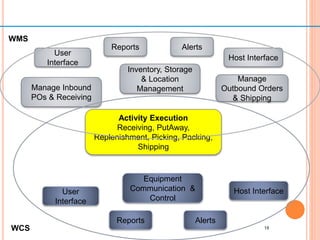
18
User
Interface
Reports Alerts
Host Interface
Manage Inbound
POs & Receiving
Manage
Outbound Orders
& Shipping
Inventory, Storage
& Location
Management
User
Interface
Reports Alerts
Host Interface
Equipment
Communication &
Control
Activity Execution
Receiving, PutAway,
Replenishment, Picking, Packing,
Shipping
WMS
WCS
19
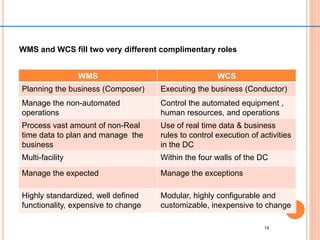
WMS and WCS fill two very different complimentary roles
WMS WCS
Planning the business (Composer) Executing the business (Conductor)
Manage the non-automated
operations
Control the automated equipment ,
human resources, and operations
Process vast amount of non-Real
time data to plan and manage the
business
Use of real time data & business
rules to control execution of activities
in the DC
Multi-facility Within the four walls of the DC
Manage the expected Manage the exceptions
Highly standardized, well defined
functionality, expensive to change
Modular, highly configurable and
customizable, inexpensive to change
WCS Today
20
WCS Today….
 Information flow drives Material flow in the DC
 Managing execution of tasks by disparate automated material handling
equipment and subsystems in real time
 Directing Human Task/Activity Control Such As:
 Receiving
 Put Away
 Replenishment
 Order Picking
 Consolidation
 Sortation
 Providing Human Interface Control at point of Action
Workstation Displays
RF Terminals & Displays
Light Directed Communication
Voice Directed Communication
 Provide enterprise visibility of real-time operational conditions
 Managing exceptions and control decisions in real time
 Providing historical performance data and resource productivity metrics
Smart material management

Smart material management

  • 1.
    SMART MATERIAL MANAGEMENT •No longer a product purchasing function Ex: Development of the Agile Trac RTLS System at Ellis • Different ways: 1. IT in Materials Management 2. Use of RFID Warehouse Management 3. Automated Purchasing 4. WCS VS WMS
  • 2.
    USE OF ITIN MATERIALS MANAGEMENT Use of IT can generate various types of information / reports to be used in materials department. 1) Long-term production schedule. 2) Short-term schedule. 3) Materials manual. 4) Requirement of non-stock items from user departments. 5) Information regarding lead time, supply position (shortages), price trends, anticipated price changes, etc. 6) Production Schedule handed over to production department. 7) Materials requisition from the production to stores. 8) Materials supplied from stores to production. 9) To and fro information between stores and inspection. 10) Information regarding receipts from the stores. 11) Date regarding issues from stores. 12) Due dates of supply from purchase department. 13) Information to purchase department for follow up of supplies. 14) Purchase requisition to purchase department. 15) Purchase order. 16) Materials from suppliers to stores. 17) Previous year’s consumption data.
  • 10.
    PURCHASE REQUISITION  Apurchase requisition is a process of requesting and authorizing procurement of goods and services by a department in the organization.  It contains a description and quantity of the goods or services to be purchased.  These requests are documented and routed for approval within the organization and then delivered to the accounting group.
  • 11.
    CHALLENGES FACED INIMPLEMENTING A PURCHASE REQUISITION PROCESS  A manual paper-based process is laborious as the requests are manually typed, rekeyed, logged, validated, routed, and stored.  It results in  Inefficient  Error prone processing  Data scattered  Waste time for user  Slow requisition cycles.  Manual notification, tracking, and reporting contribute to inefficiency and prevent effective control of the procurement cycle.
  • 12.
    ADVANTAGE OF AUTOMATING PURCHASEREQUISITION PROCESS  By automating the purchase requisition process an organization can minimize risk and keep audit trails in the purchase requisition process but automation can only solve few tasks of manual entry errors, misuse, physical loss and can be done by any system.
  • 13.
    BPM SOFTWARE  Businessprocess management software(BPM) is a systematic approach to making an organization's workflow more effective, more efficient and more capable of adapting to an ever-changing environment.  A business process is an activity or set of activities that will accomplish a specific organizational goal.  The BPM solution can get real time data and bring all stakeholders on the same platform for effective collaboration.
  • 14.
    BPM SOFTWARE BENEFITS Organizations’ can automate purchase requisition processes to reduce administrative costs and better manage vendor payouts.  If the requisition process is built on a BPM SOFTWARE platform, organizations can easily integrate their ERP and other core business systems with automated purchase requisition processes.  As a result, organizations can shorten approval cycles, reduce administrative overheads with effective control  Increase resource efficiency and productivity by streamlining purchase process  Eliminate human intervention and increase accuracy of data  Permission based access to users
  • 15.
  • 16.
    Role of theWMS 16  WMS made their debut in the mid 1980s  The WMS acts as a business planning system focusing on planning the "business needs" of the warehouse (POs, Orders, Inventory Locations, Labor)  As the “System of Record” the WMS maintains and manages a vast amount of information such as inventory data, purchase orders, customer orders, and historical data.  The WMS processes large amounts of data in a non real-time mode to arrive at the daily workload of what is to be processed by the material handling systems and labor resources on a day-to-day basis  The WMS manages the non-automated operations in a DC  Manages information across multiple facilities and the system can physically reside offsite  WMS employs highly standardized software products that provide well defined services. Customized modifications to WMS can be extremely costly and threaten future upgrades and support.
  • 17.
    Role of WCS 17 Warehouse Control Systems emerged 20 years ago to bridge the gap between higher level information systems, such as Warehouse Management Systems, and the warehouse floor by allocating, balancing, managing , and monitoring tasks executed by disparate automated material handling equipment and subsystems in real time  Using business rules, and real time data, a WCS synchronizes the activities of multiple automated equipment subsystems, human resources, and material flow, and drives control decisions and exceptions.  A WCS provides a uniform interface for a variety of equipment to the upper level management systems such as WMS  A WCS optimizes asset utilization  A WCS operates within the four walls of the facility and the system is resident in the facility  Modular in nature. Employs easily configurable and customizable software to meet the unique, and ever-changing business process requirements of an industry or company
  • 18.
    18 User Interface Reports Alerts Host Interface ManageInbound POs & Receiving Manage Outbound Orders & Shipping Inventory, Storage & Location Management User Interface Reports Alerts Host Interface Equipment Communication & Control Activity Execution Receiving, PutAway, Replenishment, Picking, Packing, Shipping WMS WCS
  • 19.
    19 WMS and WCSfill two very different complimentary roles WMS WCS Planning the business (Composer) Executing the business (Conductor) Manage the non-automated operations Control the automated equipment , human resources, and operations Process vast amount of non-Real time data to plan and manage the business Use of real time data & business rules to control execution of activities in the DC Multi-facility Within the four walls of the DC Manage the expected Manage the exceptions Highly standardized, well defined functionality, expensive to change Modular, highly configurable and customizable, inexpensive to change
  • 20.
    WCS Today 20 WCS Today…. Information flow drives Material flow in the DC  Managing execution of tasks by disparate automated material handling equipment and subsystems in real time  Directing Human Task/Activity Control Such As:  Receiving  Put Away  Replenishment  Order Picking  Consolidation  Sortation  Providing Human Interface Control at point of Action Workstation Displays RF Terminals & Displays Light Directed Communication Voice Directed Communication  Provide enterprise visibility of real-time operational conditions  Managing exceptions and control decisions in real time  Providing historical performance data and resource productivity metrics

Editor's Notes

  • #17 Once you start down the path of customizing a WMS, it is hard to get the benefit of new standard functionality due to cost of upgrades
  • #20 Cost – Advice is get fixed price from WMS & WCS vendors. Do not accept T&M
  • #21 Information Flow – A stock out at pick location results in no further cartons going to that location for picks until replenished. Managing execution…an example is applying a shipping label via P&A and then reading the label on the shipping conveyor to divert to correct lane Enterprise visibility – example would be the out of stock condition described above or a round robin feed of cartons based on pick line traffic Productivity – capturing individual performance and combining with workload to optimize resource usage