INVENTORY
MANAGEMENT
AGENDA
• INTRO
• DEFINATION, OBJECTIVES AND
IMPORTANCE
• TYPES OF INVENTORY
• INVENTORY CONTROL SYSTEM
• STRATEGIES
• INVENTORY MANAGEMENT
SOFTWARES
• RECAP POINTS, IMPORTANCE, Q&A
INTRODUCTION
Inventory Management is crucial for businesses to optimize resources and
meet customer demands efficiently. This presentation explores key
strategies for effective inventory control, including JIT, EOQ, and inventory
forecasting methods. Discover how implementing these strategies can
enhance operational efficiency, reduce costs, and improve overall business
performance.
01 - DEFINITION
02 - IMPORTANCE
03 - OBJECTIVE OF
THE PRESENTATION
it involves overseeing and controlling the flow of goods
from procurement to consumption, aiming to ensure the
right quantity of products is available at the right time while
minimizing costs.
Vital for streamlining production, ensuring timely deliveries,
reducing stockouts, and maximizing profitability in supply
chain management.
To elucidate strategies for optimizing inventory, enhancing
operational efficiency, and achieving cost-effective
inventory management solutions for business success.
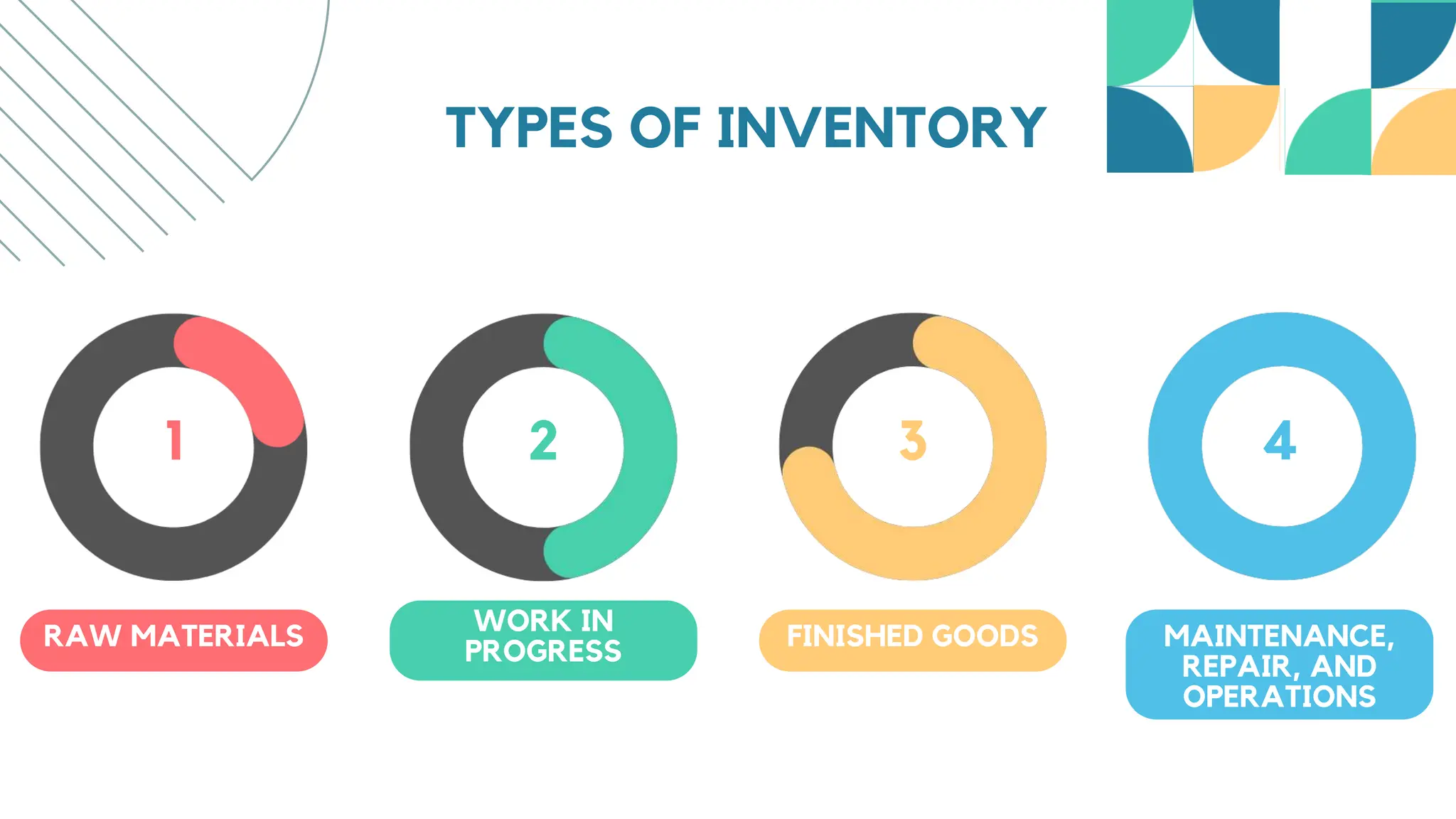
TYPES OF INVENTORY
RAW MATERIALS
WORK IN
PROGRESS
FINISHED GOODS MAINTENANCE,
REPAIR, AND
OPERATIONS
1 2 3 4
INVENTORY CONTROL SYSTEMS
PERIODIC
INVENTORY SYSTEM
PERPETUAL
INVENTORY SYSTEM
BARCODE SYSTEMS
These systems, like perpetual and periodic inventory methods, utilize technology such as RFID and
barcodes to monitor stock levels, track movements, and facilitate efficient inventory management across
operations.
Manual method where inventory counts occur at specific intervals
rather than continuously, suitable for smaller businesses.
Real-time tracking of inventory levels through continuous updates,
enabling accurate stock monitoring, sales tracking, and timely
replenishment.
Utilize unique codes to track and manage inventory, improving
accuracy, efficiency, and inventory control in various business
operations.
RFID TECHNOLOGY
RFID (Radio Frequency Identification) enables automated tracking of
inventory items, enhancing accuracy, efficiency, and visibility
throughout the supply chain.
1
2
3
STRATEGIES FOR EFFECTIVE
INVENTORY MANAGEMENT
CROSS-FUNCTIONAL COLLABORATION
Cooperation among departments to align inventory management
with production, sales, and procurement, ensuring seamless
operations and customer satisfaction.
CONTINUOUS IMPROVEMENT
PERFORMANCE METRICS
Quantitative measures like inventory turnover, fill rate, and days
sales outstanding used to evaluate inventory management
effectiveness.
Iterative process of enhancing operations by consistently
identifying, analyzing, and implementing incremental changes to
achieve excellence and efficiency.
INVENTORY
MANAGEMENT
SOFTWARE
RECAP OF KEY POINTS
• Defined inventory management as optimizing stock levels to meet demand while
minimizing costs.
• Explored inventory management software catering to diverse user needs.
IMPORTANCE OF EFFECTIVE
INVENTORY MANAGEMENT
Q&A
• Crucial for streamlining operations, reducing costs, and meeting customer demands.
• Enhances efficiency, minimizes stockouts, and improves profitability.
• Address any queries on inventory management strategies, software selection, or
implementation challenges.
• Encourage further discussion on optimizing inventory control for business success.
THANK YOU

Streamlining Operations: The Essentials of Inventory Management

  • 1.
  • 2.
    AGENDA • INTRO • DEFINATION,OBJECTIVES AND IMPORTANCE • TYPES OF INVENTORY • INVENTORY CONTROL SYSTEM • STRATEGIES • INVENTORY MANAGEMENT SOFTWARES • RECAP POINTS, IMPORTANCE, Q&A
  • 3.
    INTRODUCTION Inventory Management iscrucial for businesses to optimize resources and meet customer demands efficiently. This presentation explores key strategies for effective inventory control, including JIT, EOQ, and inventory forecasting methods. Discover how implementing these strategies can enhance operational efficiency, reduce costs, and improve overall business performance.
  • 4.
    01 - DEFINITION 02- IMPORTANCE 03 - OBJECTIVE OF THE PRESENTATION it involves overseeing and controlling the flow of goods from procurement to consumption, aiming to ensure the right quantity of products is available at the right time while minimizing costs. Vital for streamlining production, ensuring timely deliveries, reducing stockouts, and maximizing profitability in supply chain management. To elucidate strategies for optimizing inventory, enhancing operational efficiency, and achieving cost-effective inventory management solutions for business success.
  • 5.
    TYPES OF INVENTORY RAWMATERIALS WORK IN PROGRESS FINISHED GOODS MAINTENANCE, REPAIR, AND OPERATIONS 1 2 3 4
  • 6.
    INVENTORY CONTROL SYSTEMS PERIODIC INVENTORYSYSTEM PERPETUAL INVENTORY SYSTEM BARCODE SYSTEMS These systems, like perpetual and periodic inventory methods, utilize technology such as RFID and barcodes to monitor stock levels, track movements, and facilitate efficient inventory management across operations. Manual method where inventory counts occur at specific intervals rather than continuously, suitable for smaller businesses. Real-time tracking of inventory levels through continuous updates, enabling accurate stock monitoring, sales tracking, and timely replenishment. Utilize unique codes to track and manage inventory, improving accuracy, efficiency, and inventory control in various business operations. RFID TECHNOLOGY RFID (Radio Frequency Identification) enables automated tracking of inventory items, enhancing accuracy, efficiency, and visibility throughout the supply chain.
  • 7.
    1 2 3 STRATEGIES FOR EFFECTIVE INVENTORYMANAGEMENT CROSS-FUNCTIONAL COLLABORATION Cooperation among departments to align inventory management with production, sales, and procurement, ensuring seamless operations and customer satisfaction. CONTINUOUS IMPROVEMENT PERFORMANCE METRICS Quantitative measures like inventory turnover, fill rate, and days sales outstanding used to evaluate inventory management effectiveness. Iterative process of enhancing operations by consistently identifying, analyzing, and implementing incremental changes to achieve excellence and efficiency.
  • 8.
  • 9.
    RECAP OF KEYPOINTS • Defined inventory management as optimizing stock levels to meet demand while minimizing costs. • Explored inventory management software catering to diverse user needs. IMPORTANCE OF EFFECTIVE INVENTORY MANAGEMENT Q&A • Crucial for streamlining operations, reducing costs, and meeting customer demands. • Enhances efficiency, minimizes stockouts, and improves profitability. • Address any queries on inventory management strategies, software selection, or implementation challenges. • Encourage further discussion on optimizing inventory control for business success.
  • 10.