HUMAN RESOURCES
MANAGEMENT SOFTWARE
Modern approach to HRMS
INTRODUCTION
 Human Resource Management System (HRMS) refers to an array
of software including Human Capital Management (HCM) and
Human Resource Information system(HRIS)that help HR staff
take care of an organization’s most valuable assets, people.
 HR tasks are too complex and time-consuming when
performed manually. Leveraging the help of a technological
solution like an HRMS can help you save time, cut costs, and manage
your staff better
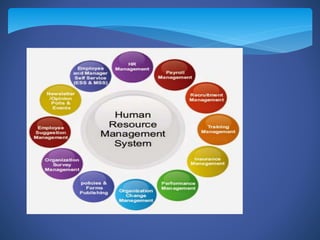
Components of HRMS
 Application Management
 Employee Management
 Organizational Management
 Benefits Management
 Payroll Management
 Workplace Management
 Compensation Management
 Performance Management
 Timesheet Management
Application Management
A holistic module to track and monitor applicants across job
boards, recruitment portals, and websites throughout all phases (find,
shortlist, interview and hire) seamlessly in a single interface to
collaborate with recruiters and streamline the hiring process.
Employee Management
Store and retrieve all up-to-date, employee-related information (basic
profile, employment history, performance, role, etc.) on a centralized
database that can be accessed anywhere, anytime to take workforce or
organization-related decisions.
Organizational Management
Accurately build an organizational structure with pre-defined industry-
relevant templates, business processes, related reports, and compliance
obligations to support global employee relocation and all other global
workforce management tasks in a flexible way.
Benefits Management
Include multiple plans and assorted options to auto-define, manage, and
tailor a full spectrum of employee-specific benefits in a single interface to easily
govern the eligibility/costs associated with it.
Payroll Management
Workplace Management
Tone down the complexities in payroll processing with a complete array
of payroll services by offering inbuilt accounting module, automated tax
computations, frequent audit & reporting tool, tabular data storage, and
configurable rule-based engine.
Optimize daily headcount using trends forecast and pre-defined
templates for planning and managing workforce properly between
processes like recruitment, employee onboarding, learning &
development, etc.
Compensation Management
Performance Management
Design and manage comprehensive employee compensation plans
across multiple teams, departments, and geographies uniformly. Link
compensation with performance and organizational objectives,
aggregate compensation data to view/edit it anytime.
Set individual goals, assign weightage, collaborate, create a
development plan, and align it with organizational values to evaluate the
performance of each employee in an organization with comprehensive
reviews (quarterly, half-yearly or annual).
Timesheet Management
Automate timesheet process of employees to analyses performance,
estimate costs incurred across the organization under several parameters
(employee, department, client, role, project or activity) and integrate
seamlessly with payroll and other modules
Benefits of HRMS :
 Alleviate process bottlenecks
 Minimize manual paperwork
 Decrease employee stress
 Reduce time lag in tasks
 Lower operational costs
Features of HRMS
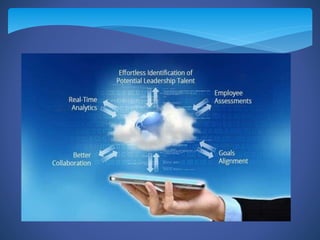
 Centralized Admin System
 Cloud-based Documentation
 Sophisticated Mobile Functionalities
 Employee Self-Service Option
 Real-Time Analytics
 Data Security and Audit Log
 Role-Based Access and Collaboration
 Agile Integrations
www.agaraminfotech.com For Support (+91) 978 983 3607
Sales (+91) 893 922 9995

Human Resources Management Software

  • 1.
  • 2.
    INTRODUCTION  Human ResourceManagement System (HRMS) refers to an array of software including Human Capital Management (HCM) and Human Resource Information system(HRIS)that help HR staff take care of an organization’s most valuable assets, people.  HR tasks are too complex and time-consuming when performed manually. Leveraging the help of a technological solution like an HRMS can help you save time, cut costs, and manage your staff better
  • 3.
    Components of HRMS Application Management  Employee Management  Organizational Management  Benefits Management  Payroll Management  Workplace Management  Compensation Management  Performance Management  Timesheet Management
  • 6.
    Application Management A holisticmodule to track and monitor applicants across job boards, recruitment portals, and websites throughout all phases (find, shortlist, interview and hire) seamlessly in a single interface to collaborate with recruiters and streamline the hiring process. Employee Management Store and retrieve all up-to-date, employee-related information (basic profile, employment history, performance, role, etc.) on a centralized database that can be accessed anywhere, anytime to take workforce or organization-related decisions.
  • 7.
    Organizational Management Accurately buildan organizational structure with pre-defined industry- relevant templates, business processes, related reports, and compliance obligations to support global employee relocation and all other global workforce management tasks in a flexible way. Benefits Management Include multiple plans and assorted options to auto-define, manage, and tailor a full spectrum of employee-specific benefits in a single interface to easily govern the eligibility/costs associated with it.
  • 8.
    Payroll Management Workplace Management Tonedown the complexities in payroll processing with a complete array of payroll services by offering inbuilt accounting module, automated tax computations, frequent audit & reporting tool, tabular data storage, and configurable rule-based engine. Optimize daily headcount using trends forecast and pre-defined templates for planning and managing workforce properly between processes like recruitment, employee onboarding, learning & development, etc.
  • 9.
    Compensation Management Performance Management Designand manage comprehensive employee compensation plans across multiple teams, departments, and geographies uniformly. Link compensation with performance and organizational objectives, aggregate compensation data to view/edit it anytime. Set individual goals, assign weightage, collaborate, create a development plan, and align it with organizational values to evaluate the performance of each employee in an organization with comprehensive reviews (quarterly, half-yearly or annual).
  • 10.
    Timesheet Management Automate timesheetprocess of employees to analyses performance, estimate costs incurred across the organization under several parameters (employee, department, client, role, project or activity) and integrate seamlessly with payroll and other modules Benefits of HRMS :  Alleviate process bottlenecks  Minimize manual paperwork  Decrease employee stress  Reduce time lag in tasks  Lower operational costs
  • 11.
    Features of HRMS Centralized Admin System  Cloud-based Documentation  Sophisticated Mobile Functionalities  Employee Self-Service Option  Real-Time Analytics  Data Security and Audit Log  Role-Based Access and Collaboration  Agile Integrations
  • 12.
    www.agaraminfotech.com For Support(+91) 978 983 3607 Sales (+91) 893 922 9995