Meaning and Definition
 The term inventory originates from the french
word ‘Inventaire’ and Latin word ‘Inventariom’
which implies a list of things found.
 The term inventory includes materials- raw, in
process, finished packaging, spares and others
stocked in order to meet an unexpected demand
or distribution in the future.
Inventory includes the following
categories
 Production inventories- Raw materials, parts and
components which enter the firm’s product in the
production process.
 MRO Inventories – Maintenance, repair, and
operating supplies which are consumed in the
production process but which do not become part of
the product.
 In process inventories- Semi finished products
found at various stages in the production operation.
 Finished goods inventories- Completed products
ready for shipment.
Objectives
 Supplies inventories do not directly go into the
product. But they exist to facilitate smooth
operation of the manufacturing process.
 Inventories facilitate transit and handling.
Materials may be transported thousands of
kilometers before they are incorporated into an
end product.
 Inventories serve to isolate the supplier, the
producer and the consumer.
Objectives
 Raw material inventories isolate the supplier of
raw materials from the user of these raw
materials.
 Finished goods inventories isolate the user from
the producer of the goods. And in process the
inventories isolate the departments within the
plant.
 Inventories reduces material handling costs.
 Inventories are held to facilitate product display
and service to the customers.
Functions of Inventory
 To meet anticipated customer demand
 To smooth production requirements
 To decouple operations
 To protect against stock outs
 To take advantage of order cycles
 To hedge against price increases
 To permit operations
 To take advantage of quantity discounts
Types Of Inventory Costs
 Ordering Costs
 Carrying Cost
 Out-of-stock / Shortage Cost
 Capacity Cost
Ordering Costs
1) Cost of placing an order with a vendor of
materials
 Preparing a purchase order
 Processing payments
 Receiving and inspecting the material
2) Ordering from the plant
 Machine set-up
 Start-up scrap generated from getting a production
run started
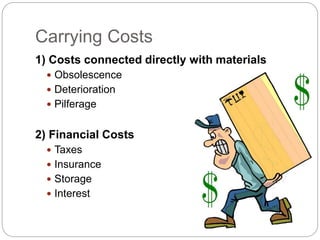
Carrying Costs
1) Costs connected directly with materials
 Obsolescence
 Deterioration
 Pilferage
2) Financial Costs
 Taxes
 Insurance
 Storage
 Interest
Out-of-stock Costs
1. Back Ordering
2. Lost Sales
Thank You :)

Inventory management

  • 2.
    Meaning and Definition The term inventory originates from the french word ‘Inventaire’ and Latin word ‘Inventariom’ which implies a list of things found.  The term inventory includes materials- raw, in process, finished packaging, spares and others stocked in order to meet an unexpected demand or distribution in the future.
  • 3.
    Inventory includes thefollowing categories  Production inventories- Raw materials, parts and components which enter the firm’s product in the production process.  MRO Inventories – Maintenance, repair, and operating supplies which are consumed in the production process but which do not become part of the product.  In process inventories- Semi finished products found at various stages in the production operation.  Finished goods inventories- Completed products ready for shipment.
  • 4.
    Objectives  Supplies inventoriesdo not directly go into the product. But they exist to facilitate smooth operation of the manufacturing process.  Inventories facilitate transit and handling. Materials may be transported thousands of kilometers before they are incorporated into an end product.  Inventories serve to isolate the supplier, the producer and the consumer.
  • 5.
    Objectives  Raw materialinventories isolate the supplier of raw materials from the user of these raw materials.  Finished goods inventories isolate the user from the producer of the goods. And in process the inventories isolate the departments within the plant.  Inventories reduces material handling costs.  Inventories are held to facilitate product display and service to the customers.
  • 6.
    Functions of Inventory To meet anticipated customer demand  To smooth production requirements  To decouple operations  To protect against stock outs  To take advantage of order cycles  To hedge against price increases  To permit operations  To take advantage of quantity discounts
  • 7.
    Types Of InventoryCosts  Ordering Costs  Carrying Cost  Out-of-stock / Shortage Cost  Capacity Cost
  • 8.
    Ordering Costs 1) Costof placing an order with a vendor of materials  Preparing a purchase order  Processing payments  Receiving and inspecting the material 2) Ordering from the plant  Machine set-up  Start-up scrap generated from getting a production run started
  • 9.
    Carrying Costs 1) Costsconnected directly with materials  Obsolescence  Deterioration  Pilferage 2) Financial Costs  Taxes  Insurance  Storage  Interest
  • 10.
    Out-of-stock Costs 1. BackOrdering 2. Lost Sales
  • 11.