MUNEEB AHMAD
INVASION OF PRIVACY
Invasion of privacy is the intrusion of an unwanted
individual or business into the private affairs of a
person without consent.
EXAMPLES
 misusing a person's statements for marketing
purposes
 publishing someone's likeness without permission
 making email or telephone communications without
the opportunity for the recipient to opt out.
TYPES OF INVASION OF
PRIVACY
 Misappropriating a person’s name or likeness
 Intruding on someone’s seclusion
 Portraying someone in a false light
 Publicly disclosing private facts
Misappropriating a person’s name
or likeness
 This occurs when a business uses a person’s name or
image in marketing materials without consent.
 Celebrities typically have legal teams to address this
issue, but it can apply to anyone.
 By publishing the celebrity’s name or photo without
permission, a business is invading that person’s
privacy.
Intruding on someone’s seclusion
 Intentionally violating someone’s privacy when
they’re in solitude or seclusion could be grounds for
a lawsuit.
 For example, if you tape a private customer
conversation without approval and use the remarks
on your website, you could face an invasion of
privacy lawsuit.
Portraying someone in a false light.
 This occurs if something you say or publish puts a
person in a negative light.
 Even true statements can sometimes fall into this
category if they are damaging to the person’s
reputation.
Publicly disclosing private facts
Whenever you disclose sensitive, embarrassing, or
private information about a person, you could be at
risk of invasion of privacy. Generally speaking, you
can get sued whenever you:
 Disclose information about a person’s private life.
 Say or write something that is offensive to a
reasonable person.
 Make revelations that do not legitimately concern
the public.
Why privacy is important for
business
Privacy is important for business for three reasons:
 Privacy matters to your customers
 Privacy matters to your brand.
 Privacy matters to the growth of your business
Privacy matters to your customers
 According to a recent survey conducted by my
company, AnchorFree, a staggering majority of
Americans 95 percent are concerned about
businesses collecting and selling personal
information without permission. Additionally, over
80 percent are more concerned about their online
privacy and security today than a year ago.
 This means that your customers are thinking about
privacy when they visit your website, use your app,
and purchase your products and services.
Privacy matters to your brand
 Privacy is embedded in everyday interactions with
customers. Privacy is something that can impact a
brand, disrupt the customer experience and
potentially damage a company’s reputation.
 According to a Harvard Business Review study, 72
percent of Americans are reluctant to share
information with businesses because they “just want
to maintain [their] privacy.”
 Protecting user privacy will enable you to drive more
revenue and gain more customers.
Privacy matters to the growth of
your business
 Safeguarding customer privacy is more than a
protective measure; it is also a strategic opportunity
for brand growth and a potential business
opportunity for startups and entrepreneurs, as well
as large companies.
How violations of privacy affect
business reputation
 A data privacy breach can quickly cause
immeasurable damage to a company's reputation.
 It can affect a company's brand, public perception,
customer trust, future communications strategies
and advertising, regulatory record, bottom line,
share price and even destroy a company entirely.
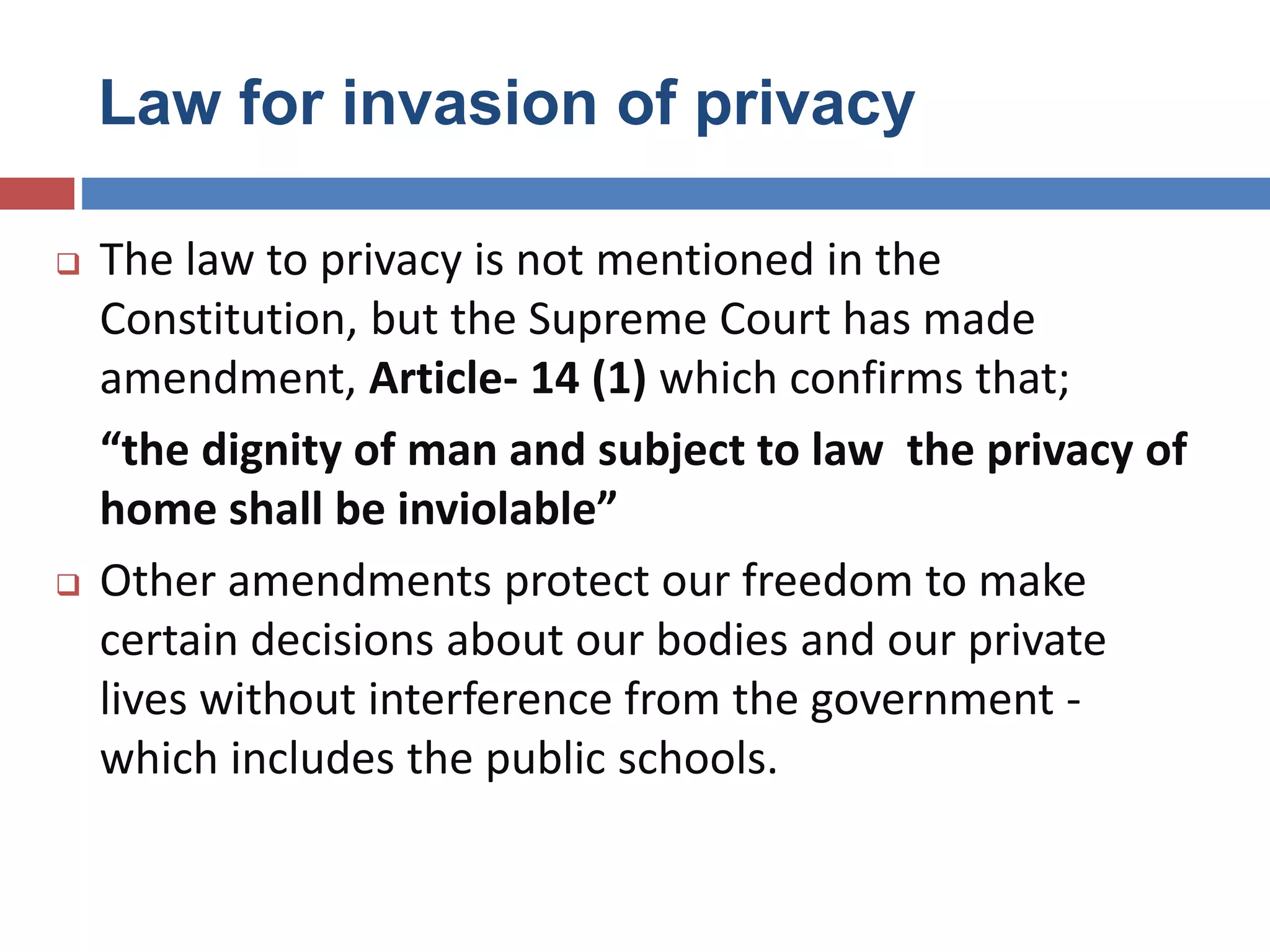
Law for invasion of privacy
 The law to privacy is not mentioned in the
Constitution, but the Supreme Court has made
amendment, Article- 14 (1) which confirms that;
“the dignity of man and subject to law the privacy of
home shall be inviolable”
 Other amendments protect our freedom to make
certain decisions about our bodies and our private
lives without interference from the government -
which includes the public schools.

Invasion of privacy

  • 1.
  • 2.
    INVASION OF PRIVACY Invasionof privacy is the intrusion of an unwanted individual or business into the private affairs of a person without consent.
  • 3.
    EXAMPLES  misusing aperson's statements for marketing purposes  publishing someone's likeness without permission  making email or telephone communications without the opportunity for the recipient to opt out.
  • 4.
    TYPES OF INVASIONOF PRIVACY  Misappropriating a person’s name or likeness  Intruding on someone’s seclusion  Portraying someone in a false light  Publicly disclosing private facts
  • 5.
    Misappropriating a person’sname or likeness  This occurs when a business uses a person’s name or image in marketing materials without consent.  Celebrities typically have legal teams to address this issue, but it can apply to anyone.  By publishing the celebrity’s name or photo without permission, a business is invading that person’s privacy.
  • 6.
    Intruding on someone’sseclusion  Intentionally violating someone’s privacy when they’re in solitude or seclusion could be grounds for a lawsuit.  For example, if you tape a private customer conversation without approval and use the remarks on your website, you could face an invasion of privacy lawsuit.
  • 7.
    Portraying someone ina false light.  This occurs if something you say or publish puts a person in a negative light.  Even true statements can sometimes fall into this category if they are damaging to the person’s reputation.
  • 8.
    Publicly disclosing privatefacts Whenever you disclose sensitive, embarrassing, or private information about a person, you could be at risk of invasion of privacy. Generally speaking, you can get sued whenever you:  Disclose information about a person’s private life.  Say or write something that is offensive to a reasonable person.  Make revelations that do not legitimately concern the public.
  • 9.
    Why privacy isimportant for business Privacy is important for business for three reasons:  Privacy matters to your customers  Privacy matters to your brand.  Privacy matters to the growth of your business
  • 10.
    Privacy matters toyour customers  According to a recent survey conducted by my company, AnchorFree, a staggering majority of Americans 95 percent are concerned about businesses collecting and selling personal information without permission. Additionally, over 80 percent are more concerned about their online privacy and security today than a year ago.  This means that your customers are thinking about privacy when they visit your website, use your app, and purchase your products and services.
  • 11.
    Privacy matters toyour brand  Privacy is embedded in everyday interactions with customers. Privacy is something that can impact a brand, disrupt the customer experience and potentially damage a company’s reputation.  According to a Harvard Business Review study, 72 percent of Americans are reluctant to share information with businesses because they “just want to maintain [their] privacy.”  Protecting user privacy will enable you to drive more revenue and gain more customers.
  • 12.
    Privacy matters tothe growth of your business  Safeguarding customer privacy is more than a protective measure; it is also a strategic opportunity for brand growth and a potential business opportunity for startups and entrepreneurs, as well as large companies.
  • 13.
    How violations ofprivacy affect business reputation  A data privacy breach can quickly cause immeasurable damage to a company's reputation.  It can affect a company's brand, public perception, customer trust, future communications strategies and advertising, regulatory record, bottom line, share price and even destroy a company entirely.
  • 14.
    Law for invasionof privacy  The law to privacy is not mentioned in the Constitution, but the Supreme Court has made amendment, Article- 14 (1) which confirms that; “the dignity of man and subject to law the privacy of home shall be inviolable”  Other amendments protect our freedom to make certain decisions about our bodies and our private lives without interference from the government - which includes the public schools.