Introduction to Relay
Protection
Understanding the fundamentals of relay protection is crucial for ensuring
the safety and reliability of electrical systems. Relay protection serves as
a critical component in safeguarding equipment and preventing
catastrophic failures.
by Dr. Nirmalya Mallick
Sanaka Educational Trust’s Group of Institutions
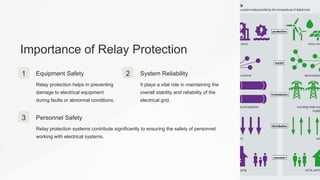
Importance of Relay Protection
1 Equipment Safety
Relay protection helps in preventing
damage to electrical equipment
during faults or abnormal conditions.
2 System Reliability
It plays a vital role in maintaining the
overall stability and reliability of the
electrical grid.
3 Personnel Safety
Relay protection systems contribute significantly to ensuring the safety of personnel
working with electrical systems.
Overview of Transformer Protection
Relays
Application
Transformer protection relays
are specifically designed to
monitor and protect the
transformer against faults.
Operation
They operate by quickly
detecting abnormal conditions
and isolating the transformer
from the system to prevent
damage.
Types
These relays come in various
types, each serving specific
purposes such as differential,
overcurrent, and temperature
relays.
Purpose and Function of
Transformer Protection Relays
1 Overcurrent Protection
They provide protection by tripping
the circuit when an overcurrent
condition is detected.
2 Differential Protection
These relays are designed to sense
and respond to internal faults within
the transformer windings.
3 Temperature Monitoring
They monitor the temperature of the transformer to prevent overheating and potential
damage.
Types of Transformer Protection Relays
Differential
Senses and reacts to current
imbalances in the transformer
windings.
Overcurrent
Trips the circuit when
excessive current flows
through the transformer.
Temperature
Monitors the temperature to
prevent overheating and
damage.
Key Features and Specifications of
Transformer Protection Relays
Remote Monitoring Allows real-time monitoring and control of the
relay system from a distance.
Self-Testing Capabilities Capable of conducting self-tests to ensure
proper functionality and reliability.
Adaptive Protection Ability to dynamically adjust protection settings
based on system conditions.
Benefits of Using Transformer
Protection Relays
1 Enhanced Safety
Minimizes the risk of equipment
damage and ensures the safety of
personnel and surrounding assets.
2 Reduced Downtime
Provides rapid fault detection and
isolation, reducing downtime and
equipment damage.
3 Improved Reliability
Enhances the overall reliability and efficiency of the electrical system, reducing the
frequency of system failures.
Challenges and Limitations of
Transformer Protection Relays
False Tripping
Relays may erroneously trip
due to transient conditions,
potentially disrupting system
operations.
Complexity
Configuring and calibrating
relay settings can be
complex, requiring
specialized knowledge and
expertise.
Adaptability
Relays may not always be
adaptable to rapidly
changing system
configurations and
conditions.
Best Practices for Installing and
Configuring Transformer Protection
Relays
1 Thorough Testing
Conduct comprehensive testing to verify accurate functionality before putting relays
into service.
2 Regular Maintenance
Establish a maintenance schedule to ensure relays are properly calibrated and
functioning at all times.
3 Training
Provide specialized training to personnel involved in installation and maintenance of
relay systems.
Conclusion and Next Steps
1 Continuous Improvement
Strive for continual enhancement of
relay protection systems based on
evolving industry standards and best
practices.
2 Technological Advancements
Stay updated with advancements in
relay technology to maximize system
performance and safety.

Introduction-to-Relay-Protection: Transformer Protection

  • 1.
    Introduction to Relay Protection Understandingthe fundamentals of relay protection is crucial for ensuring the safety and reliability of electrical systems. Relay protection serves as a critical component in safeguarding equipment and preventing catastrophic failures. by Dr. Nirmalya Mallick Sanaka Educational Trust’s Group of Institutions
  • 2.
    Importance of RelayProtection 1 Equipment Safety Relay protection helps in preventing damage to electrical equipment during faults or abnormal conditions. 2 System Reliability It plays a vital role in maintaining the overall stability and reliability of the electrical grid. 3 Personnel Safety Relay protection systems contribute significantly to ensuring the safety of personnel working with electrical systems.
  • 3.
    Overview of TransformerProtection Relays Application Transformer protection relays are specifically designed to monitor and protect the transformer against faults. Operation They operate by quickly detecting abnormal conditions and isolating the transformer from the system to prevent damage. Types These relays come in various types, each serving specific purposes such as differential, overcurrent, and temperature relays.
  • 4.
    Purpose and Functionof Transformer Protection Relays 1 Overcurrent Protection They provide protection by tripping the circuit when an overcurrent condition is detected. 2 Differential Protection These relays are designed to sense and respond to internal faults within the transformer windings. 3 Temperature Monitoring They monitor the temperature of the transformer to prevent overheating and potential damage.
  • 5.
    Types of TransformerProtection Relays Differential Senses and reacts to current imbalances in the transformer windings. Overcurrent Trips the circuit when excessive current flows through the transformer. Temperature Monitors the temperature to prevent overheating and damage.
  • 6.
    Key Features andSpecifications of Transformer Protection Relays Remote Monitoring Allows real-time monitoring and control of the relay system from a distance. Self-Testing Capabilities Capable of conducting self-tests to ensure proper functionality and reliability. Adaptive Protection Ability to dynamically adjust protection settings based on system conditions.
  • 7.
    Benefits of UsingTransformer Protection Relays 1 Enhanced Safety Minimizes the risk of equipment damage and ensures the safety of personnel and surrounding assets. 2 Reduced Downtime Provides rapid fault detection and isolation, reducing downtime and equipment damage. 3 Improved Reliability Enhances the overall reliability and efficiency of the electrical system, reducing the frequency of system failures.
  • 8.
    Challenges and Limitationsof Transformer Protection Relays False Tripping Relays may erroneously trip due to transient conditions, potentially disrupting system operations. Complexity Configuring and calibrating relay settings can be complex, requiring specialized knowledge and expertise. Adaptability Relays may not always be adaptable to rapidly changing system configurations and conditions.
  • 9.
    Best Practices forInstalling and Configuring Transformer Protection Relays 1 Thorough Testing Conduct comprehensive testing to verify accurate functionality before putting relays into service. 2 Regular Maintenance Establish a maintenance schedule to ensure relays are properly calibrated and functioning at all times. 3 Training Provide specialized training to personnel involved in installation and maintenance of relay systems.
  • 10.
    Conclusion and NextSteps 1 Continuous Improvement Strive for continual enhancement of relay protection systems based on evolving industry standards and best practices. 2 Technological Advancements Stay updated with advancements in relay technology to maximize system performance and safety.