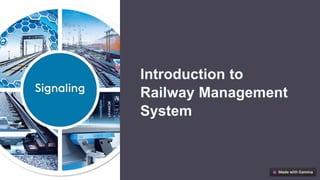
Introduction to
Railway Management
System
Objectives
Proper Managment
To ensure have an QR CODE
scanning mechanism that allows only
ticket user to enter into stations.
Enhanced Safety Measures
To implement advanced safety
protocols and technologies for
passenger and staff well-being.
Improved Customer Experience
To focus on providing a seamless and comfortable travel experience for passengers.
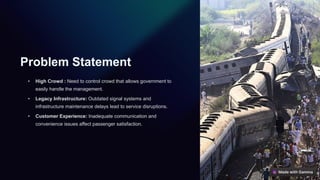
Problem Statement
• High Crowd : Need to control crowd that allows government to
easily handle the management.
• Legacy Infrastructure: Outdated signal systems and
infrastructure maintenance delays lead to service disruptions.
• Customer Experience: Inadequate communication and
convenience issues affect passenger satisfaction.
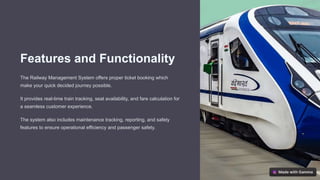
Features and Functionality
The Railway Management System offers proper ticket booking which
make your quick decided journey possible.
It provides real-time train tracking, seat availability, and fare calculation for
a seamless customer experience.
The system also includes maintenance tracking, reporting, and safety
features to ensure operational efficiency and passenger safety.
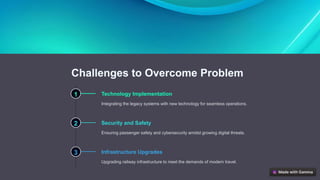
Challenges to Overcome Problem
1 Technology Implementation
Integrating the legacy systems with new technology for seamless operations.
2 Security and Safety
Ensuring passenger safety and cybersecurity amidst growing digital threats.
3 Infrastructure Upgrades
Upgrading railway infrastructure to meet the demands of modern travel.
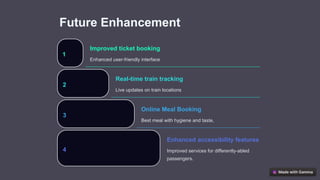
Future Enhancement
1
Improved ticket booking
Enhanced user-friendly interface
2
Real-time train tracking
Live updates on train locations
3
Online Meal Booking
Best meal with hygiene and taste,
4
Enhanced accessibility features
Improved services for differently-abled
passengers.
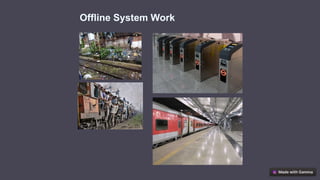
Offline System Work
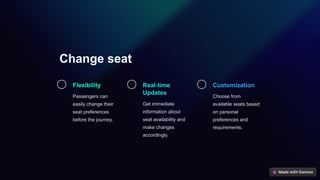
Change seat
Flexibility
Passengers can
easily change their
seat preferences
before the journey.
Real-time
Updates
Get immediate
information about
seat availability and
make changes
accordingly.
Customization
Choose from
available seats based
on personal
preferences and
requirements.
Customer Feedback
Survey
Obtain feedback through
well-structured surveys to
gather valuable insights
from customers'
perspectives.
Reviews
Encourage customers to
leave reviews to
understand their
experience and areas for
improvement.
Feedback
Collect feedback through
multiple channels to gain a
comprehensive
understanding of customer
needs and satisfaction.
Conclusion
In conclusion, the Railway Management System offers a modern, efficient
solution for seamless operations and enhanced passenger experience.
By addressing key challenges and incorporating innovative features, the
system is poised to revolutionize railway management. The future
enhancements will further elevate its capabilities and adaptability.
With a focus on customer feedback and continuous improvement, the
system ensures ongoing satisfaction and reliability. Overall, the
implementation of the Railway Management System represents a
significant step forward in railway operations and customer service.

Introduction-to-Railway-Management-System (2) (1).pptx

  • 1.
  • 2.
    Objectives Proper Managment To ensurehave an QR CODE scanning mechanism that allows only ticket user to enter into stations. Enhanced Safety Measures To implement advanced safety protocols and technologies for passenger and staff well-being. Improved Customer Experience To focus on providing a seamless and comfortable travel experience for passengers.
  • 3.
    Problem Statement • HighCrowd : Need to control crowd that allows government to easily handle the management. • Legacy Infrastructure: Outdated signal systems and infrastructure maintenance delays lead to service disruptions. • Customer Experience: Inadequate communication and convenience issues affect passenger satisfaction.
  • 4.
    Features and Functionality TheRailway Management System offers proper ticket booking which make your quick decided journey possible. It provides real-time train tracking, seat availability, and fare calculation for a seamless customer experience. The system also includes maintenance tracking, reporting, and safety features to ensure operational efficiency and passenger safety.
  • 5.
    Challenges to OvercomeProblem 1 Technology Implementation Integrating the legacy systems with new technology for seamless operations. 2 Security and Safety Ensuring passenger safety and cybersecurity amidst growing digital threats. 3 Infrastructure Upgrades Upgrading railway infrastructure to meet the demands of modern travel.
  • 6.
    Future Enhancement 1 Improved ticketbooking Enhanced user-friendly interface 2 Real-time train tracking Live updates on train locations 3 Online Meal Booking Best meal with hygiene and taste, 4 Enhanced accessibility features Improved services for differently-abled passengers.
  • 7.
  • 8.
    Change seat Flexibility Passengers can easilychange their seat preferences before the journey. Real-time Updates Get immediate information about seat availability and make changes accordingly. Customization Choose from available seats based on personal preferences and requirements.
  • 9.
    Customer Feedback Survey Obtain feedbackthrough well-structured surveys to gather valuable insights from customers' perspectives. Reviews Encourage customers to leave reviews to understand their experience and areas for improvement. Feedback Collect feedback through multiple channels to gain a comprehensive understanding of customer needs and satisfaction.
  • 10.
    Conclusion In conclusion, theRailway Management System offers a modern, efficient solution for seamless operations and enhanced passenger experience. By addressing key challenges and incorporating innovative features, the system is poised to revolutionize railway management. The future enhancements will further elevate its capabilities and adaptability. With a focus on customer feedback and continuous improvement, the system ensures ongoing satisfaction and reliability. Overall, the implementation of the Railway Management System represents a significant step forward in railway operations and customer service.