Introduction to
Chartered Accountancy
Chartered accountancy is a prestigious profession that involves accounting,
auditing, and taxation. It requires a high level of expertise in financial
management, making it a critical aspect of every business and organization.
Chartered accountants play a vital role in ensuring financial compliance,
providing strategic financial advice, and contributing to the overall growth and
success of their clients. Their work involves analyzing financial records,
preparing tax returns, and conducting audits to ensure the accuracy and
transparency of financial information.
KS by kanchan sharma
What is a Chartered Accountant?
1 Financial Expertise
Chartered accountants
are highly skilled
professionals with
expertise in financial
management,
budgeting, and
investment planning.
2 Regulatory
Compliance
They ensure that
organizations comply
with financial
regulations and
standards, providing
assurance to
stakeholders and
3 Strategic Advisors
They offer valuable
insights and strategic
financial advice to help
businesses make
informed decisions and
achieve their goals.
Roles and Responsibilities of a
Chartered Accountant
Financial Reporting
Preparing financial
statements, including
balance sheets, income
statements, and cash flow
statements, to provide a
clear picture of an
organization’s financial
health.
Auditing
Conducting systematic
examinations of financial
records, processes, and
internal controls to ensure
accuracy and compliance
with regulations.
Taxation
Advising clients on tax
planning, preparing tax
returns, and representing
them in dealings with tax
authorities.
Benefits of Hiring a Chartered Accountant
1 Financial Accuracy
They ensure precise
financial record-
keeping, minimizing
errors and reducing the
risk of financial
discrepancies.
2 Strategic Guidance
Their expertise
provides valuable
insights and strategic
financial advice,
contributing to the
growth and success of
businesses.
3 Regulatory
Compliance
They help businesses
adhere to financial
regulations, ensuring
transparency and trust
among stakeholders.
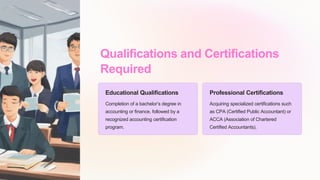
Qualifications and Certifications
Required
Educational Qualifications
Completion of a bachelor’s degree in
accounting or finance, followed by a
recognized accounting certification
program.
Professional Certifications
Acquiring specialized certifications such
as CPA (Certified Public Accountant) or
ACCA (Association of Chartered
Certified Accountants).
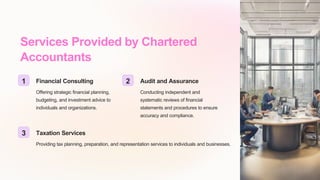
Services Provided by Chartered
Accountants
1 Financial Consulting
Offering strategic financial planning,
budgeting, and investment advice to
individuals and organizations.
2 Audit and Assurance
Conducting independent and
systematic reviews of financial
statements and procedures to ensure
accuracy and compliance.
3 Taxation Services
Providing tax planning, preparation, and representation services to individuals and businesses.
Industries that Require
Chartered Accountants
Industries
Finance and Banking, Healthcare, Information Technology, Government,
Manufacturing, Retail, and Non-Profit Organizations.
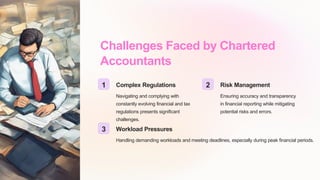
Challenges Faced by Chartered
Accountants
1 Complex Regulations
Navigating and complying with
constantly evolving financial and tax
regulations presents significant
challenges.
2 Risk Management
Ensuring accuracy and transparency
in financial reporting while mitigating
potential risks and errors.
3 Workload Pressures
Handling demanding workloads and meeting deadlines, especially during peak financial periods.
Future Prospects in the Field of
Chartered Accountancy
Technological Advancements
Integration of AI and automation is expected to streamline financial processes,
leading to new opportunities for growth and specialization.
Global Expansion
Increasing global business activities will create high demand for chartered
accountants with international expertise and cross-border knowledge.
Strategic Leadership
Opportunities to take on more strategic roles, providing vital financial leadership
and contributing to organizational growth and sustainability.
Conclusion
Chartered accountancy is a dynamic and rewarding profession, offering
opportunities for professional growth and significant contributions to
businesses and the global economy. By staying updated with emerging
technologies, trends, and industry developments, chartered accountants can
continue to play a pivotal role in financial management, strategic planning,
and regulatory compliance, ensuring the success and sustainability of
organizations in diverse sectors.
Thank
you

Introduction-to-Chartered-Accountancy ppt.pptx

  • 1.
    Introduction to Chartered Accountancy Charteredaccountancy is a prestigious profession that involves accounting, auditing, and taxation. It requires a high level of expertise in financial management, making it a critical aspect of every business and organization. Chartered accountants play a vital role in ensuring financial compliance, providing strategic financial advice, and contributing to the overall growth and success of their clients. Their work involves analyzing financial records, preparing tax returns, and conducting audits to ensure the accuracy and transparency of financial information. KS by kanchan sharma
  • 2.
    What is aChartered Accountant? 1 Financial Expertise Chartered accountants are highly skilled professionals with expertise in financial management, budgeting, and investment planning. 2 Regulatory Compliance They ensure that organizations comply with financial regulations and standards, providing assurance to stakeholders and 3 Strategic Advisors They offer valuable insights and strategic financial advice to help businesses make informed decisions and achieve their goals.
  • 3.
    Roles and Responsibilitiesof a Chartered Accountant Financial Reporting Preparing financial statements, including balance sheets, income statements, and cash flow statements, to provide a clear picture of an organization’s financial health. Auditing Conducting systematic examinations of financial records, processes, and internal controls to ensure accuracy and compliance with regulations. Taxation Advising clients on tax planning, preparing tax returns, and representing them in dealings with tax authorities.
  • 4.
    Benefits of Hiringa Chartered Accountant 1 Financial Accuracy They ensure precise financial record- keeping, minimizing errors and reducing the risk of financial discrepancies. 2 Strategic Guidance Their expertise provides valuable insights and strategic financial advice, contributing to the growth and success of businesses. 3 Regulatory Compliance They help businesses adhere to financial regulations, ensuring transparency and trust among stakeholders.
  • 5.
    Qualifications and Certifications Required EducationalQualifications Completion of a bachelor’s degree in accounting or finance, followed by a recognized accounting certification program. Professional Certifications Acquiring specialized certifications such as CPA (Certified Public Accountant) or ACCA (Association of Chartered Certified Accountants).
  • 6.
    Services Provided byChartered Accountants 1 Financial Consulting Offering strategic financial planning, budgeting, and investment advice to individuals and organizations. 2 Audit and Assurance Conducting independent and systematic reviews of financial statements and procedures to ensure accuracy and compliance. 3 Taxation Services Providing tax planning, preparation, and representation services to individuals and businesses.
  • 7.
    Industries that Require CharteredAccountants Industries Finance and Banking, Healthcare, Information Technology, Government, Manufacturing, Retail, and Non-Profit Organizations.
  • 8.
    Challenges Faced byChartered Accountants 1 Complex Regulations Navigating and complying with constantly evolving financial and tax regulations presents significant challenges. 2 Risk Management Ensuring accuracy and transparency in financial reporting while mitigating potential risks and errors. 3 Workload Pressures Handling demanding workloads and meeting deadlines, especially during peak financial periods.
  • 9.
    Future Prospects inthe Field of Chartered Accountancy Technological Advancements Integration of AI and automation is expected to streamline financial processes, leading to new opportunities for growth and specialization. Global Expansion Increasing global business activities will create high demand for chartered accountants with international expertise and cross-border knowledge. Strategic Leadership Opportunities to take on more strategic roles, providing vital financial leadership and contributing to organizational growth and sustainability.
  • 10.
    Conclusion Chartered accountancy isa dynamic and rewarding profession, offering opportunities for professional growth and significant contributions to businesses and the global economy. By staying updated with emerging technologies, trends, and industry developments, chartered accountants can continue to play a pivotal role in financial management, strategic planning, and regulatory compliance, ensuring the success and sustainability of organizations in diverse sectors.
  • 11.