Introduction to Bio-
Enzyme Technology
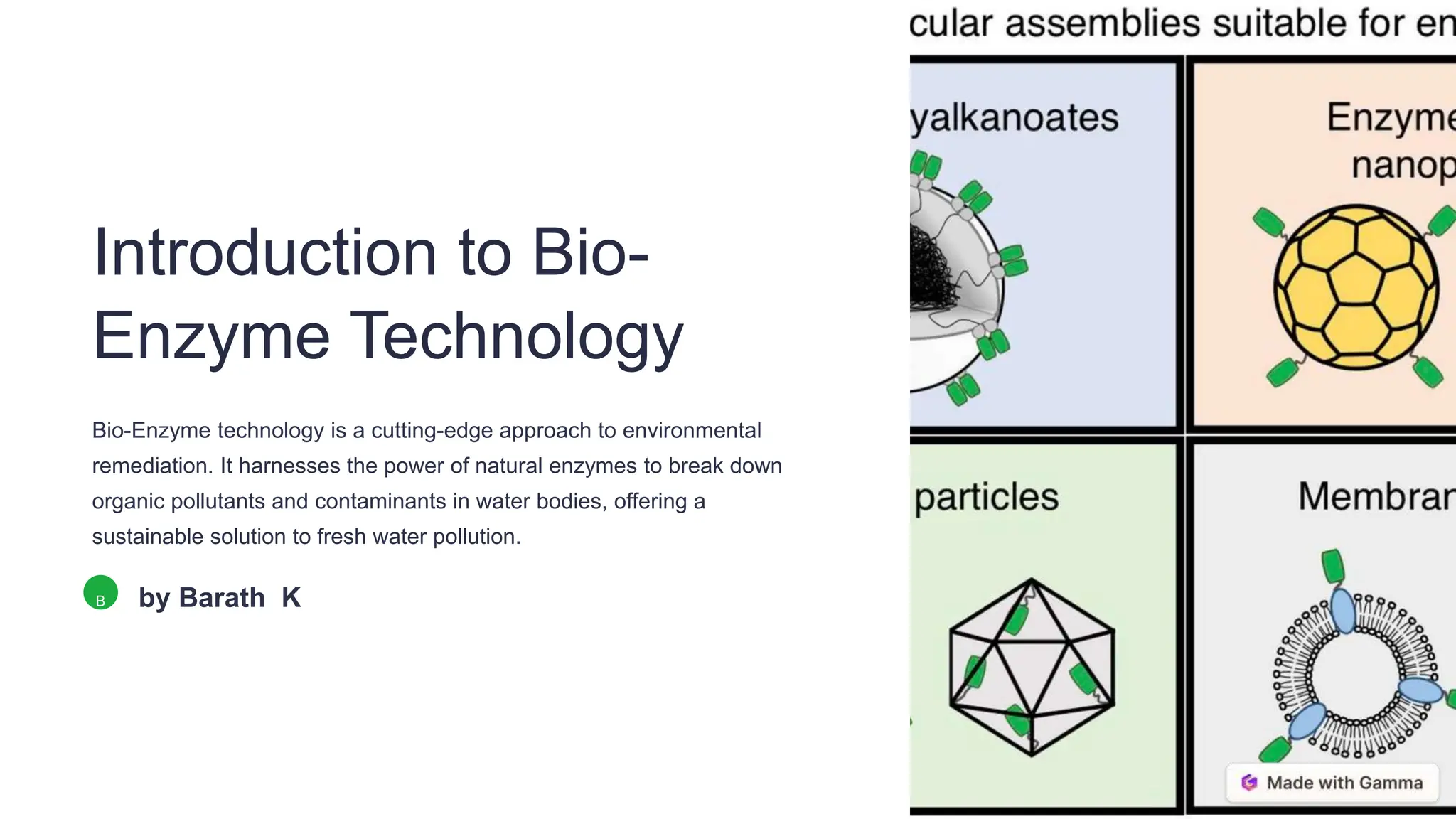
Bio-Enzyme technology is a cutting-edge approach to environmental
remediation. It harnesses the power of natural enzymes to break down
organic pollutants and contaminants in water bodies, offering a
sustainable solution to fresh water pollution.
B by Barath K
Overview of the Warangal Urban Area
Diverse Urban Landscape
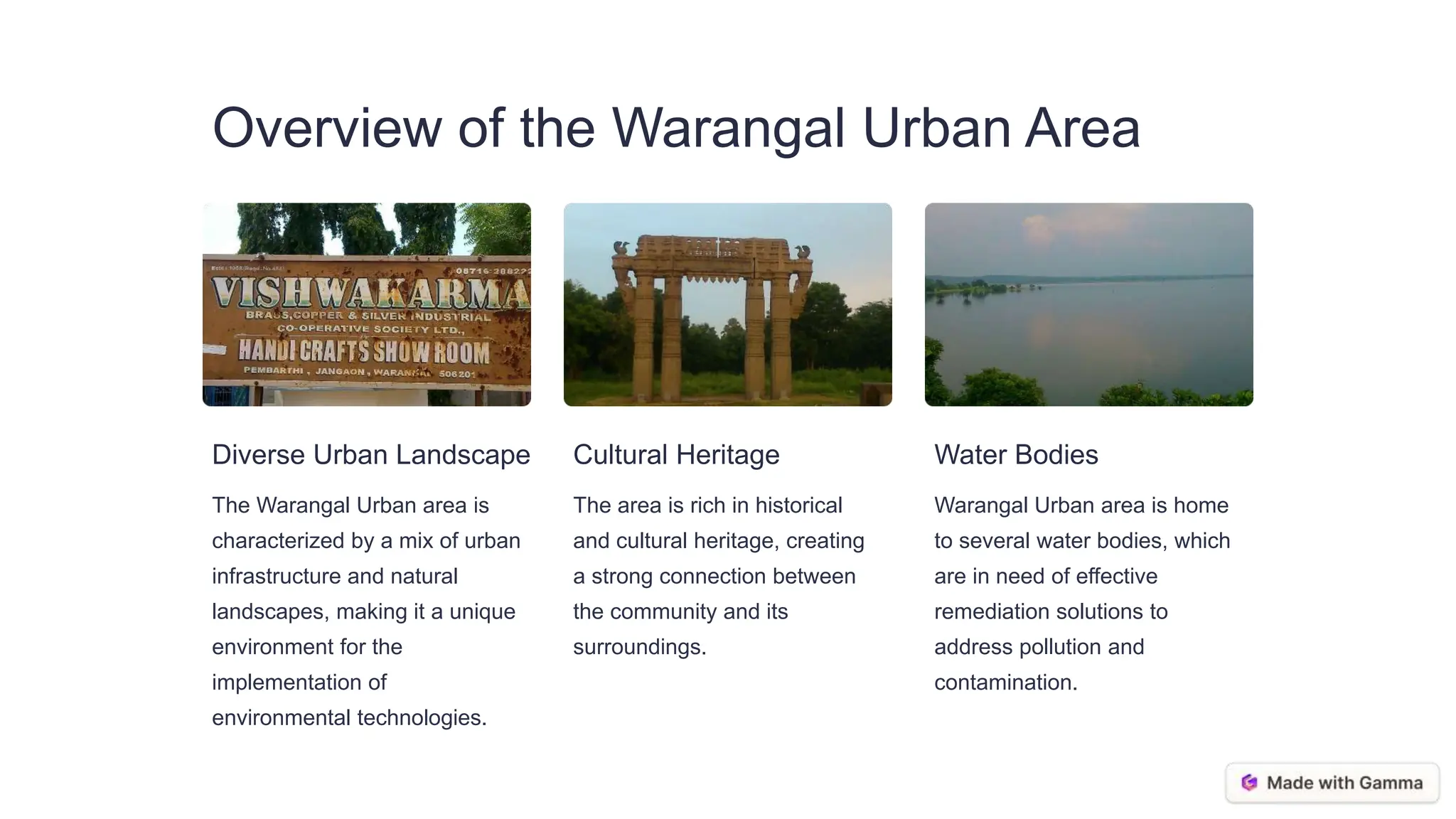
The Warangal Urban area is
characterized by a mix of urban
infrastructure and natural
landscapes, making it a unique
environment for the
implementation of
environmental technologies.
Cultural Heritage
The area is rich in historical
and cultural heritage, creating
a strong connection between
the community and its
surroundings.
Water Bodies
Warangal Urban area is home
to several water bodies, which
are in need of effective
remediation solutions to
address pollution and
contamination.
The Problem of Fresh Water
Pollution in Warangal Urban Area
Contamination Sources
Industrial discharge and urban run-off
contribute to the pollution of fresh
water sources, negatively impacting
the aquatic ecosystem and community
health.
Ecosystem Impact
The pollution in fresh water bodies
disrupts the natural balance of aquatic
life and threatens the availability of
clean water for the local population.
Community Concerns
The deteriorating water quality raises concerns about public health, agricultural use,
and the overall well-being of the local community.
The Role of Bio-Enzyme in the
Remediation of Fresh Water Bodies
1 Enzyme Breakdown
Bio-Enzymes target pollutants and break them down into harmless by-products,
improving the water quality without causing further harm to the environment.
2 Natural Process
The use of bio-enzymes replicates natural processes, ensuring that the remediation is
environmentally friendly and sustainable in the long term.
3 Efficient Treatment
Bio-enzymes provide an efficient and cost-effective solution for remediating fresh water
bodies, offering a promising alternative to traditional methods.
Case Studies of Successful Bio-Enzyme
Applications in Other Regions
1 River Remediation
Bio-Enzyme technology has successfully
restored polluted rivers, creating a positive
impact on biodiversity and water quality.
2 Lake Revitalization
Applications of bio-enzymes have
revitalized contaminated lakes, improving
water clarity and promoting the return of
aquatic life.
3 Wetland Restoration
Bio-enzymes have been instrumental in
restoring degraded wetlands,
demonstrating the versatility of the
technology in different environments.
4 Coastal Clean-Up
Successful bio-enzyme interventions have
led to the effective clean-up of coastal
areas, reducing the impact of pollution on
marine ecosystems.
Implementation of Bio-Enzyme in the
Warangal Urban Area
Assessment
Detailed assessments of the
water bodies in the Warangal
Urban area were conducted
to understand the extent of
pollution and identify target
areas for bio-enzyme
application.
Custom Formulation
Tailored bio-enzyme
formulations were developed
to address specific pollutants
and contaminants found in
the local fresh water bodies,
ensuring effective
remediation.
Application Strategy
A strategic implementation
plan was devised to apply
bio-enzymes in a controlled
manner, optimizing their
impact on the remediation
process.
Results and Impact of Bio-Enzyme
on Fresh Water Remediation in the
Area
Water Quality Improvement
Bio-Enzyme applications have led to significant improvements in the quality of
fresh water bodies, with visible reductions in pollutant levels.
Ecosystem Restoration
The remediation process has positively contributed to the restoration of
aquatic ecosystems, promoting biodiversity and ecological balance.
Community Benefits
Improved water quality has directly benefited the local community, providing
access to clean, safe, and healthy water for various uses.
Challenges Faced During Implementation
and How They Were Overcome
Adaptation and Innovation
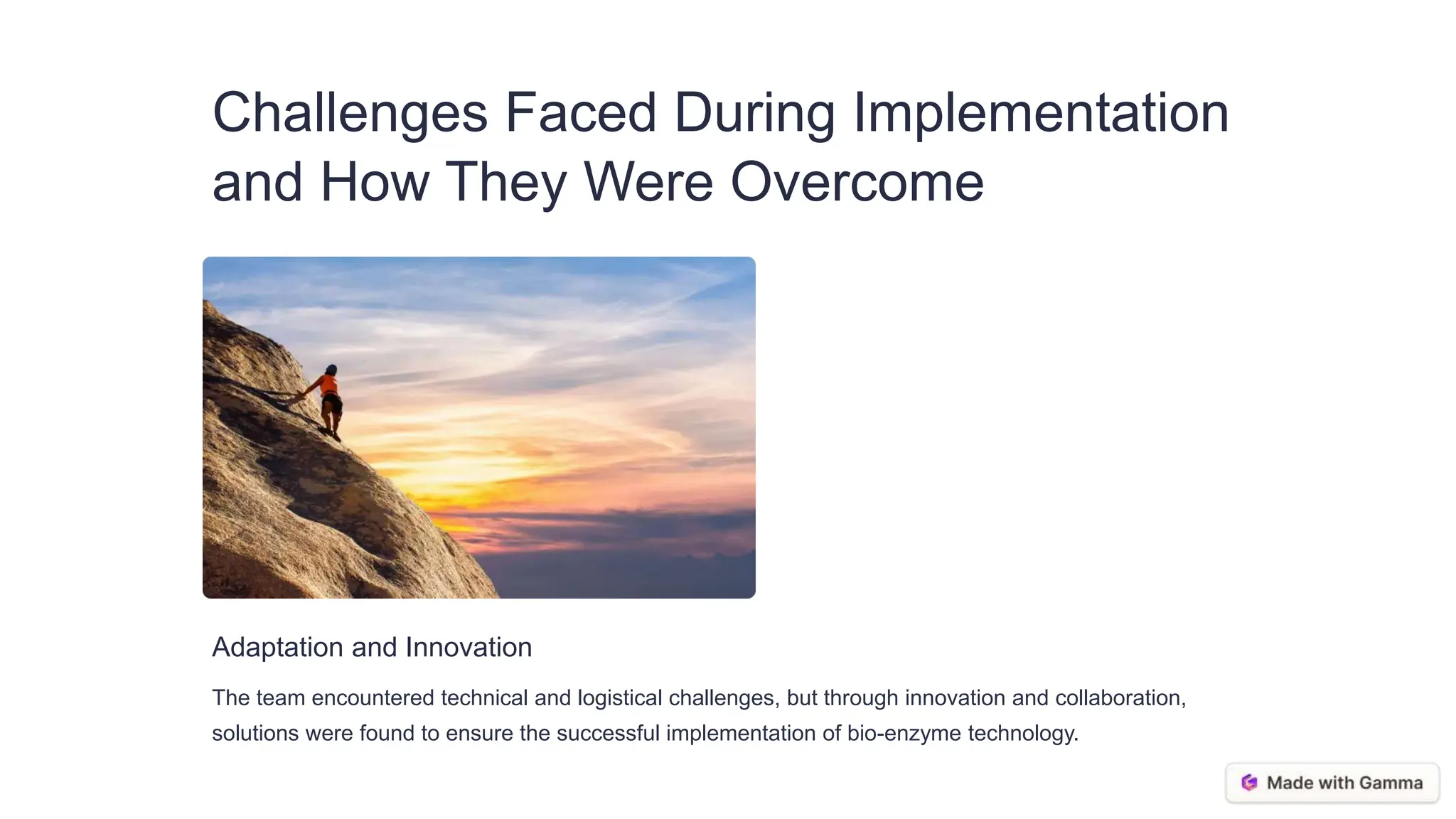
The team encountered technical and logistical challenges, but through innovation and collaboration,
solutions were found to ensure the successful implementation of bio-enzyme technology.
Future Prospects and Potential of Bio-
Enzyme in Fresh Water Remediation
Sustainable Solutions
Bio-Enzyme technology offers a sustainable
and environmentally friendly approach to
address fresh water pollution, positioning it
as a key component of future remediation
strategies.
Innovation and Research
Ongoing research and innovation in bio-
enzyme applications are unlocking new
potentials for addressing a broader range of
pollutants and environmental challenges.
Global Adoption
The successful outcomes in Warangal Urban area can serve as a model for wider adoption of bio-
enzyme technology in other regions facing similar fresh water pollution issues.
Conclusion and Call to Action for Wider
Adoption of Bio-Enzyme Technology
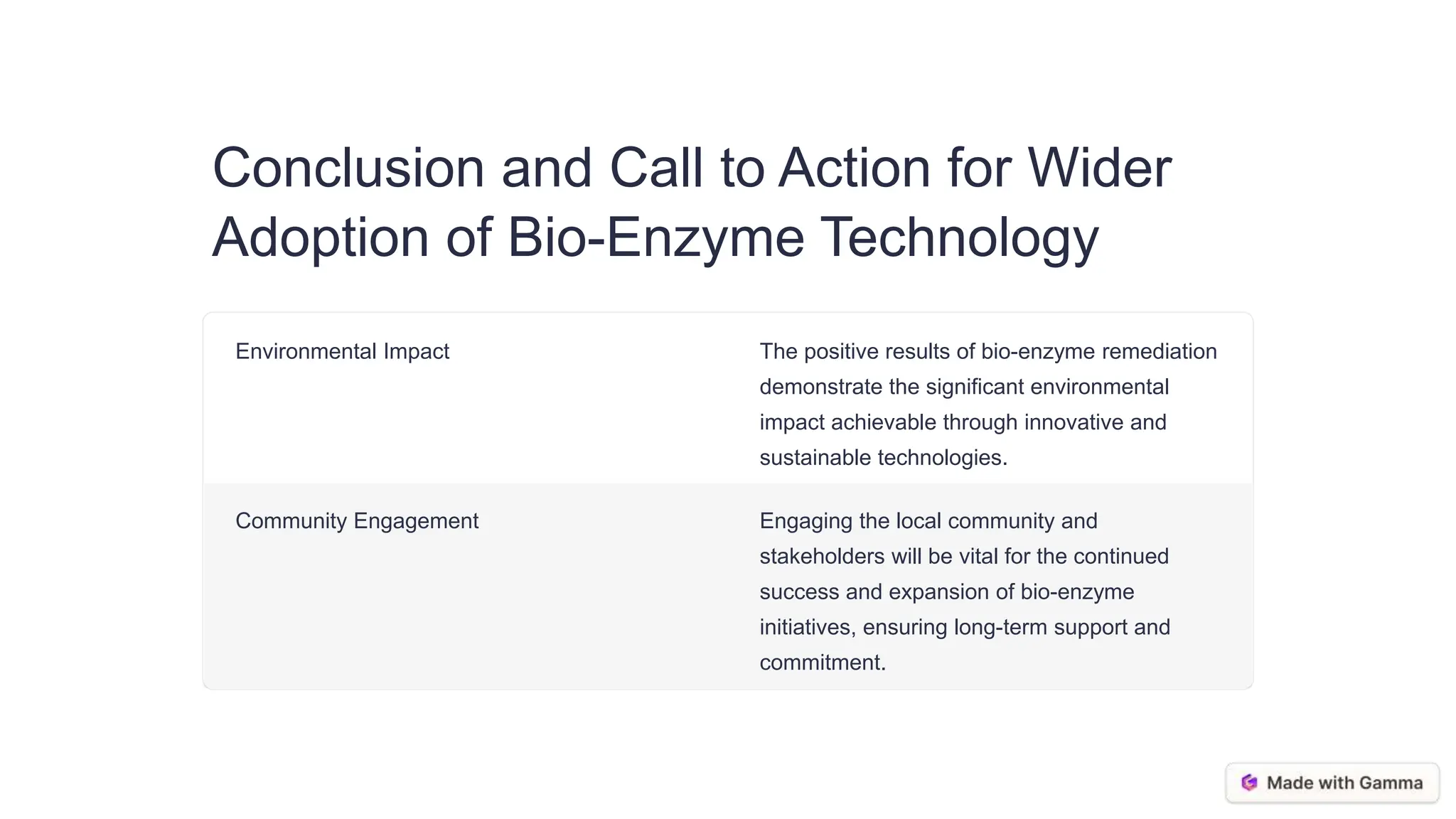
Environmental Impact The positive results of bio-enzyme remediation
demonstrate the significant environmental
impact achievable through innovative and
sustainable technologies.
Community Engagement Engaging the local community and
stakeholders will be vital for the continued
success and expansion of bio-enzyme
initiatives, ensuring long-term support and
commitment.

Introduction-to-Bio-Enzyme-Technology.pptx

  • 1.
    Introduction to Bio- EnzymeTechnology Bio-Enzyme technology is a cutting-edge approach to environmental remediation. It harnesses the power of natural enzymes to break down organic pollutants and contaminants in water bodies, offering a sustainable solution to fresh water pollution. B by Barath K
  • 2.
    Overview of theWarangal Urban Area Diverse Urban Landscape The Warangal Urban area is characterized by a mix of urban infrastructure and natural landscapes, making it a unique environment for the implementation of environmental technologies. Cultural Heritage The area is rich in historical and cultural heritage, creating a strong connection between the community and its surroundings. Water Bodies Warangal Urban area is home to several water bodies, which are in need of effective remediation solutions to address pollution and contamination.
  • 3.
    The Problem ofFresh Water Pollution in Warangal Urban Area Contamination Sources Industrial discharge and urban run-off contribute to the pollution of fresh water sources, negatively impacting the aquatic ecosystem and community health. Ecosystem Impact The pollution in fresh water bodies disrupts the natural balance of aquatic life and threatens the availability of clean water for the local population. Community Concerns The deteriorating water quality raises concerns about public health, agricultural use, and the overall well-being of the local community.
  • 4.
    The Role ofBio-Enzyme in the Remediation of Fresh Water Bodies 1 Enzyme Breakdown Bio-Enzymes target pollutants and break them down into harmless by-products, improving the water quality without causing further harm to the environment. 2 Natural Process The use of bio-enzymes replicates natural processes, ensuring that the remediation is environmentally friendly and sustainable in the long term. 3 Efficient Treatment Bio-enzymes provide an efficient and cost-effective solution for remediating fresh water bodies, offering a promising alternative to traditional methods.
  • 5.
    Case Studies ofSuccessful Bio-Enzyme Applications in Other Regions 1 River Remediation Bio-Enzyme technology has successfully restored polluted rivers, creating a positive impact on biodiversity and water quality. 2 Lake Revitalization Applications of bio-enzymes have revitalized contaminated lakes, improving water clarity and promoting the return of aquatic life. 3 Wetland Restoration Bio-enzymes have been instrumental in restoring degraded wetlands, demonstrating the versatility of the technology in different environments. 4 Coastal Clean-Up Successful bio-enzyme interventions have led to the effective clean-up of coastal areas, reducing the impact of pollution on marine ecosystems.
  • 6.
    Implementation of Bio-Enzymein the Warangal Urban Area Assessment Detailed assessments of the water bodies in the Warangal Urban area were conducted to understand the extent of pollution and identify target areas for bio-enzyme application. Custom Formulation Tailored bio-enzyme formulations were developed to address specific pollutants and contaminants found in the local fresh water bodies, ensuring effective remediation. Application Strategy A strategic implementation plan was devised to apply bio-enzymes in a controlled manner, optimizing their impact on the remediation process.
  • 7.
    Results and Impactof Bio-Enzyme on Fresh Water Remediation in the Area Water Quality Improvement Bio-Enzyme applications have led to significant improvements in the quality of fresh water bodies, with visible reductions in pollutant levels. Ecosystem Restoration The remediation process has positively contributed to the restoration of aquatic ecosystems, promoting biodiversity and ecological balance. Community Benefits Improved water quality has directly benefited the local community, providing access to clean, safe, and healthy water for various uses.
  • 8.
    Challenges Faced DuringImplementation and How They Were Overcome Adaptation and Innovation The team encountered technical and logistical challenges, but through innovation and collaboration, solutions were found to ensure the successful implementation of bio-enzyme technology.
  • 9.
    Future Prospects andPotential of Bio- Enzyme in Fresh Water Remediation Sustainable Solutions Bio-Enzyme technology offers a sustainable and environmentally friendly approach to address fresh water pollution, positioning it as a key component of future remediation strategies. Innovation and Research Ongoing research and innovation in bio- enzyme applications are unlocking new potentials for addressing a broader range of pollutants and environmental challenges. Global Adoption The successful outcomes in Warangal Urban area can serve as a model for wider adoption of bio- enzyme technology in other regions facing similar fresh water pollution issues.
  • 10.
    Conclusion and Callto Action for Wider Adoption of Bio-Enzyme Technology Environmental Impact The positive results of bio-enzyme remediation demonstrate the significant environmental impact achievable through innovative and sustainable technologies. Community Engagement Engaging the local community and stakeholders will be vital for the continued success and expansion of bio-enzyme initiatives, ensuring long-term support and commitment.