Introductio
n to Supply
Chain
Manageme
nt (SCM)
Ali Hassan
2021-ME-
521
Learning
Goals
 - Know what SCM means.
 - Learn about the three main decision phases in
SCM.
 - Understand how SCM processes work (cycle and
push/pull views).
 - Learn about the SCOR model.
 - Understand what electronic SCM (e-SCM) is.
What is
SCM?
 Supply Chain:
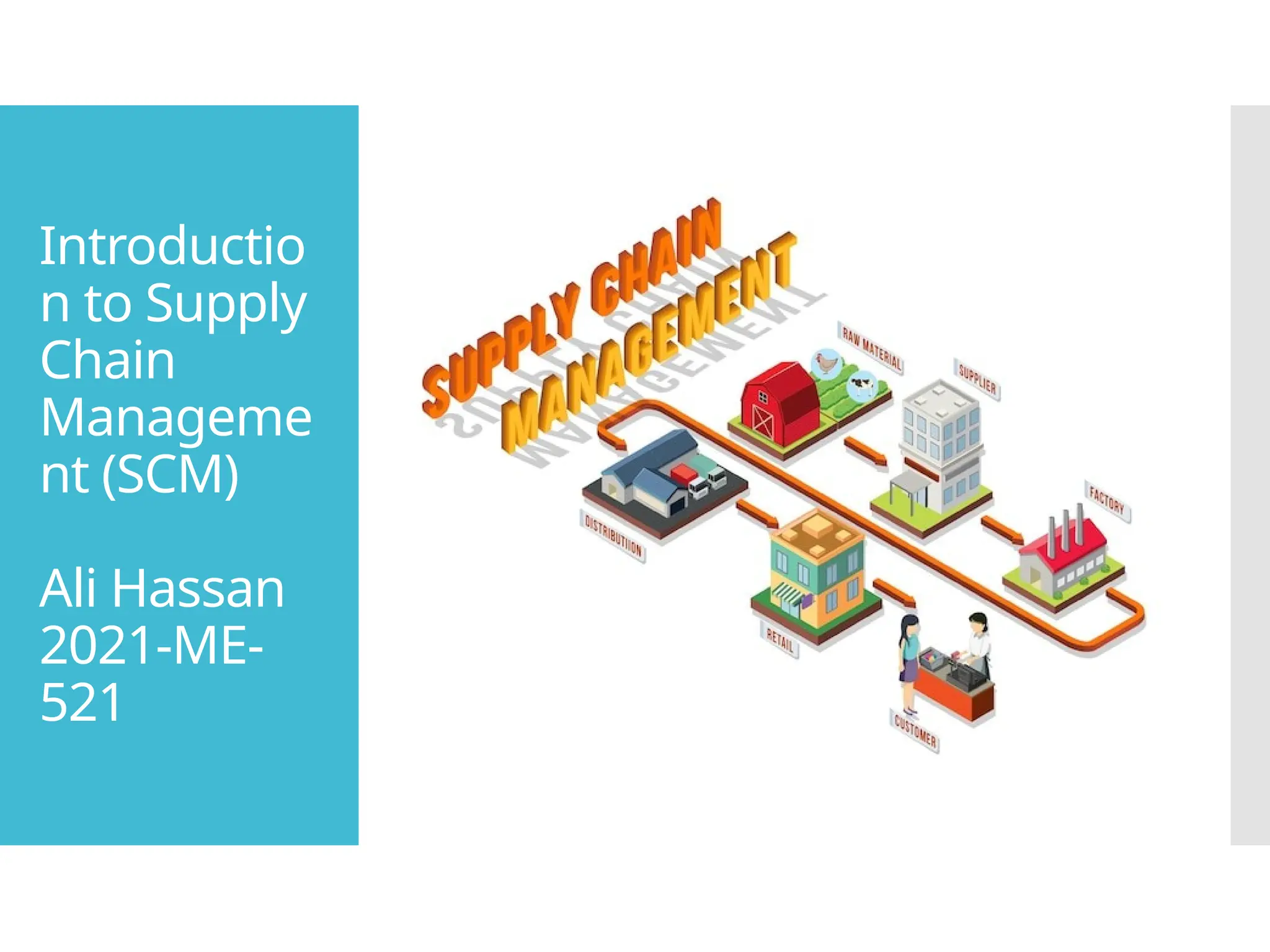
 - The process of getting products from raw materials
to customers.
 SCM:
 - Managing this process to make it smooth and
efficient.
 Why is SCM important?
 Customers expect faster delivery and better service.
 Products have shorter life cycles (e.g., new phones
every year).
 Good SCM helps businesses deliver products on
time, cut costs, and stay competitive.
Meaning of
Supply Chain
Management
 SCM involves:
 - Managing materials, information, and services to
ensure products reach customers quickly and
efficiently.
 Definitions:
 - SCM links all steps from raw materials to finished
products across suppliers, manufacturers, and
distributors.
 - It ensures value is added at every step.
Meaning of
Supply Chain
Management
Objectives of SCM
 Create value for customers:
 Meet their needs and increase satisfaction.
 Respond quickly to changes:
 Adapt to new technology or customer demands.
 Reduce risks
 Plan for unexpected problems (e.g., supplier issues
or natural disasters).
 Save costs:
 Use resources wisely to reduce expenses.
Three
Decision
Phases in
SCM
 1. Design Phase:
 - Long-term decisions about where to place factories
or warehouses and what transportation methods to
use (trucks, ships, etc.).
 - These decisions are hard to change later.
 2. Planning Phase:
 - Medium-term (quarterly or yearly) decisions like
estimating customer demand, planning production,
promotions, and inventory levels.
 3. Operational Phase:
 - Short-term (daily or weekly) decisions like
managing orders, scheduling deliveries, and
allocating stock to customers.
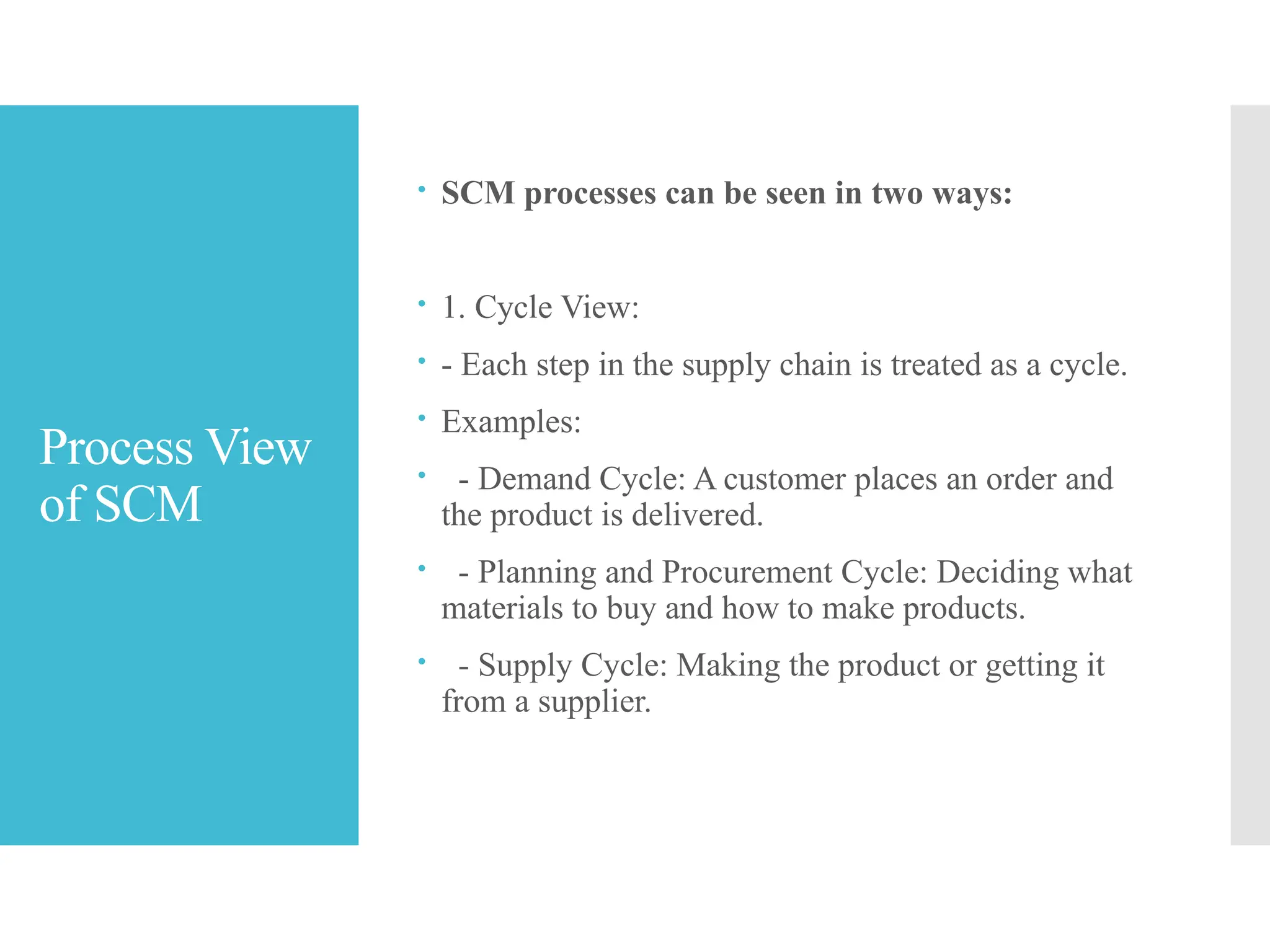
Process View
of SCM
 SCM processes can be seen in two ways:
 1. Cycle View:
 - Each step in the supply chain is treated as a cycle.
 Examples:
 - Demand Cycle: A customer places an order and
the product is delivered.
 - Planning and Procurement Cycle: Deciding what
materials to buy and how to make products.
 - Supply Cycle: Making the product or getting it
from a supplier.
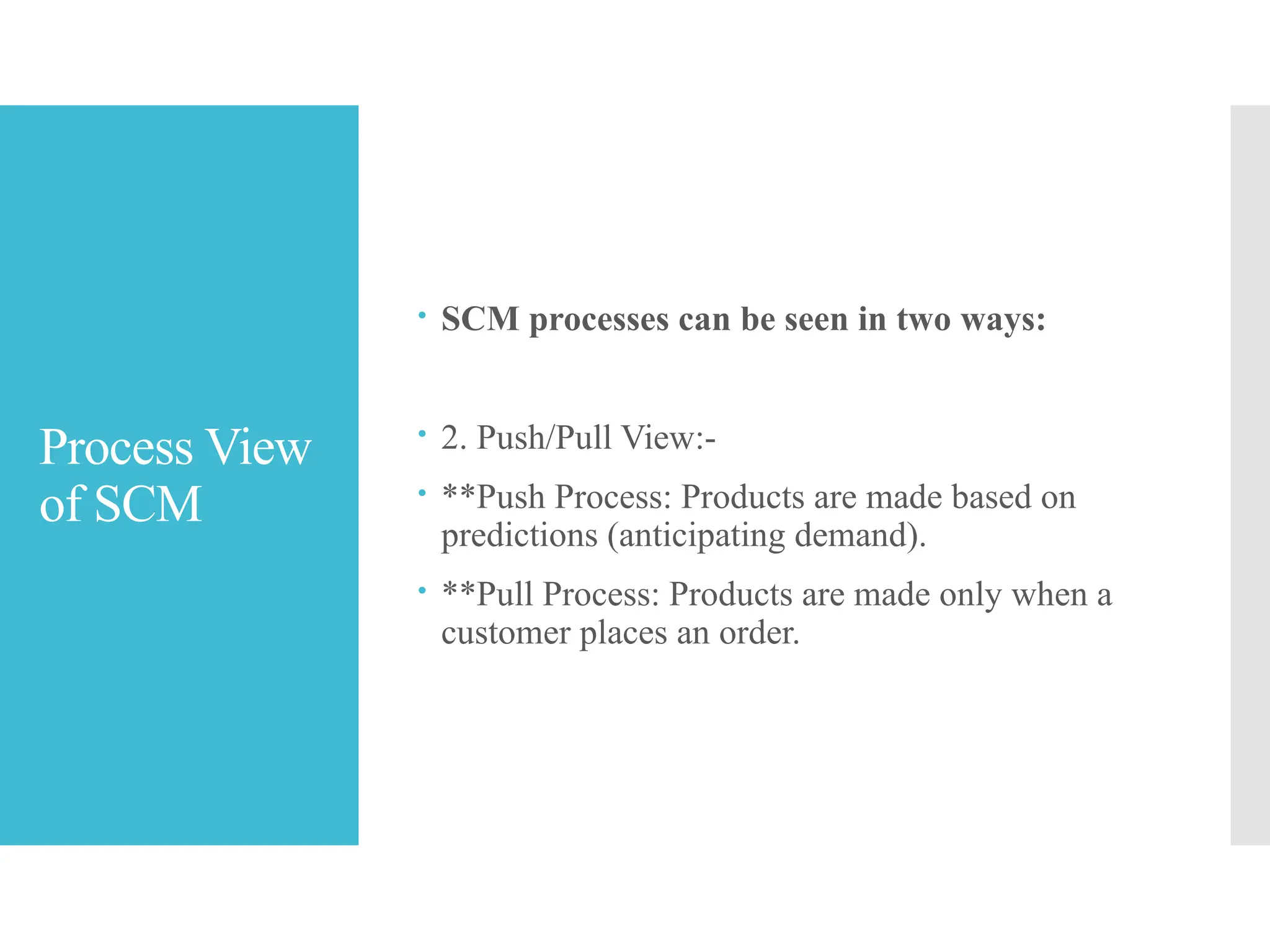
Process View
of SCM
 SCM processes can be seen in two ways:
 2. Push/Pull View:-
 **Push Process: Products are made based on
predictions (anticipating demand).
 **Pull Process: Products are made only when a
customer places an order.
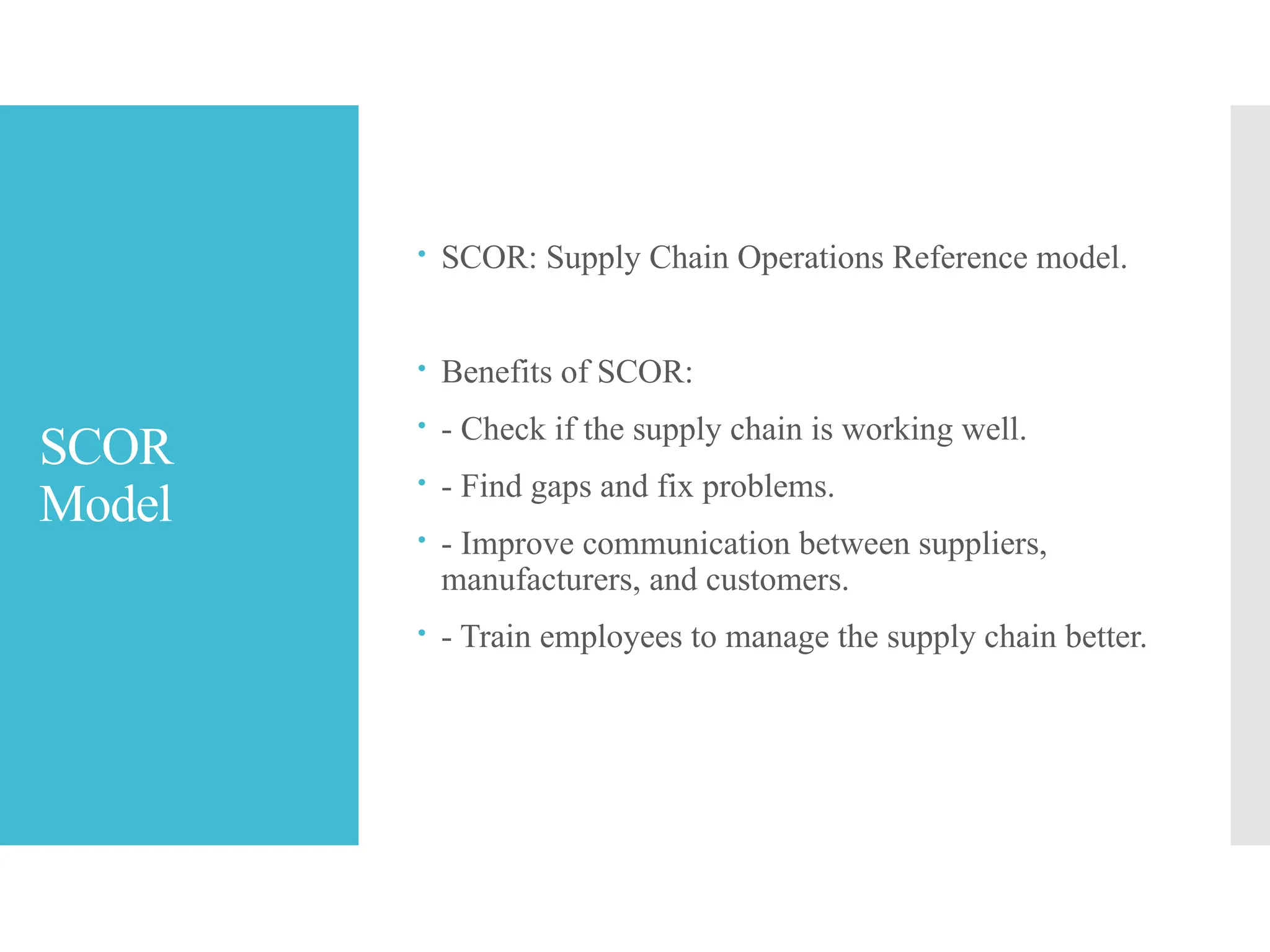
SCOR
Model
 SCOR: Supply Chain Operations Reference model.
 Benefits of SCOR:
 - Check if the supply chain is working well.
 - Find gaps and fix problems.
 - Improve communication between suppliers,
manufacturers, and customers.
 - Train employees to manage the supply chain better.
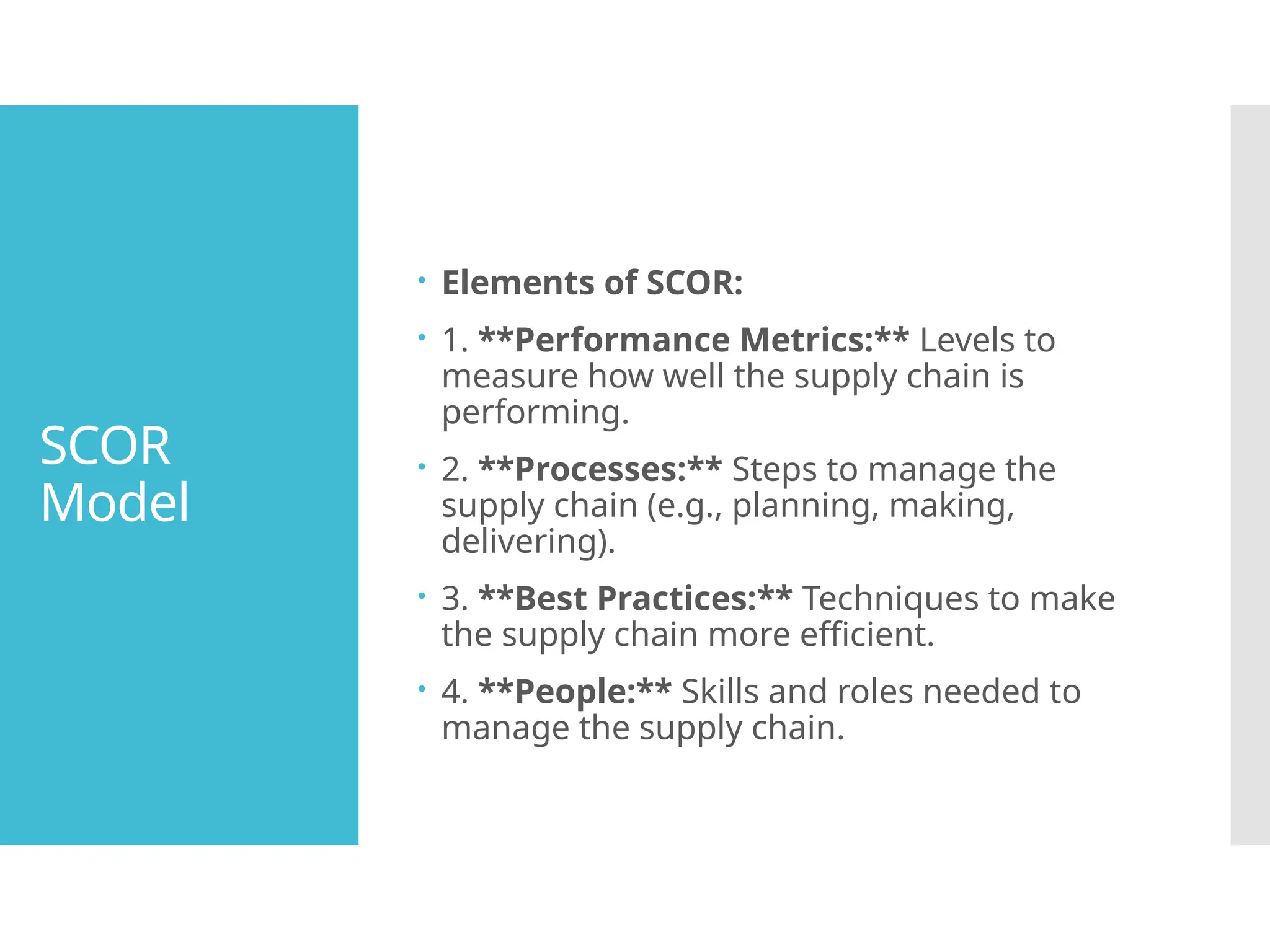
SCOR
Model
 Elements of SCOR:
 1. **Performance Metrics:** Levels to
measure how well the supply chain is
performing.
 2. **Processes:** Steps to manage the
supply chain (e.g., planning, making,
delivering).
 3. **Best Practices:** Techniques to make
the supply chain more efficient.
 4. **People:** Skills and roles needed to
manage the supply chain.
Electronic
Supply Chain
Management
(e-SCM)
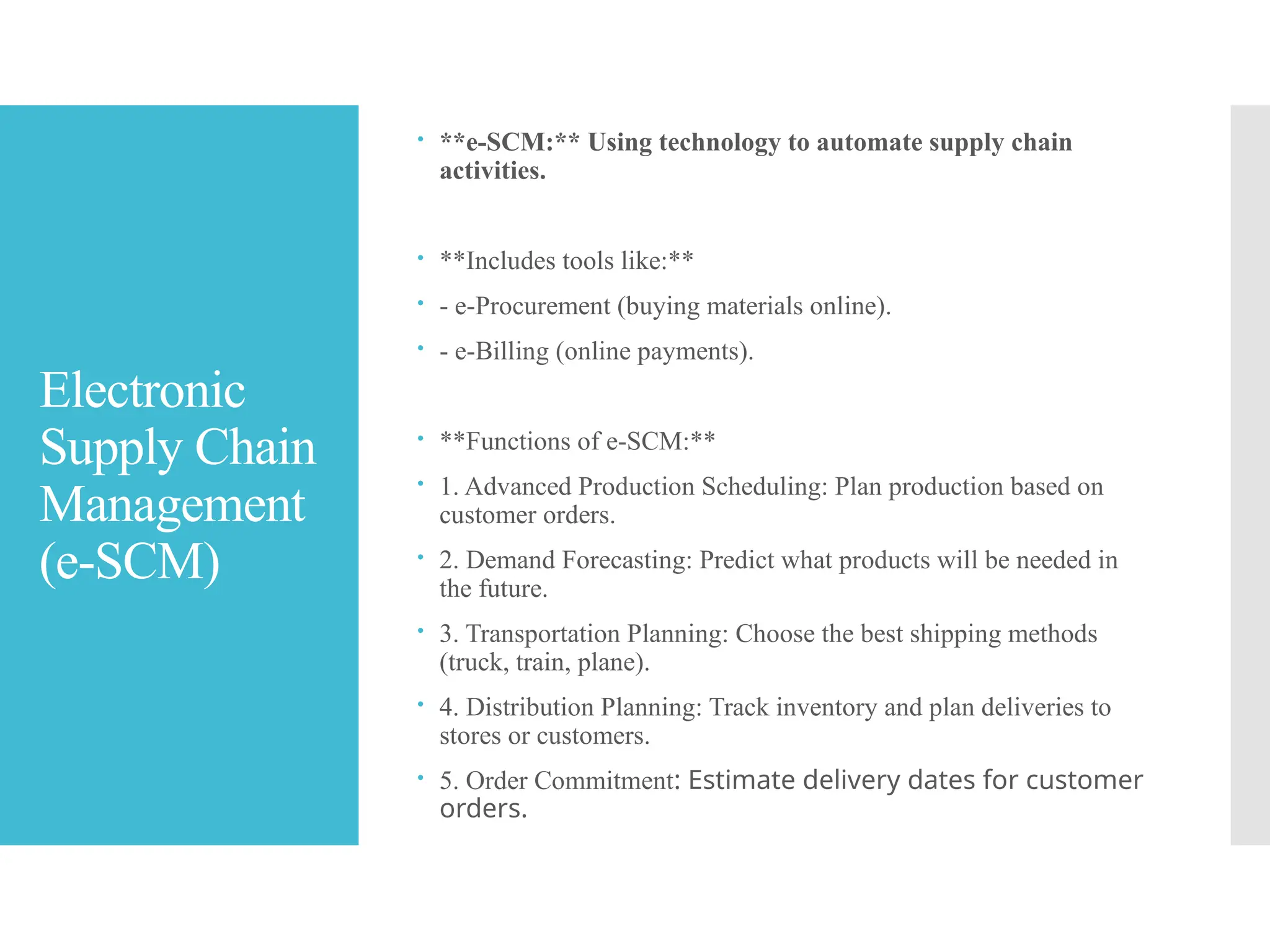
 **e-SCM:** Using technology to automate supply chain
activities.
 **Includes tools like:**
 - e-Procurement (buying materials online).
 - e-Billing (online payments).
 **Functions of e-SCM:**
 1. Advanced Production Scheduling: Plan production based on
customer orders.
 2. Demand Forecasting: Predict what products will be needed in
the future.
 3. Transportation Planning: Choose the best shipping methods
(truck, train, plane).
 4. Distribution Planning: Track inventory and plan deliveries to
stores or customers.
 5. Order Commitment: Estimate delivery dates for customer
orders.
Case Study
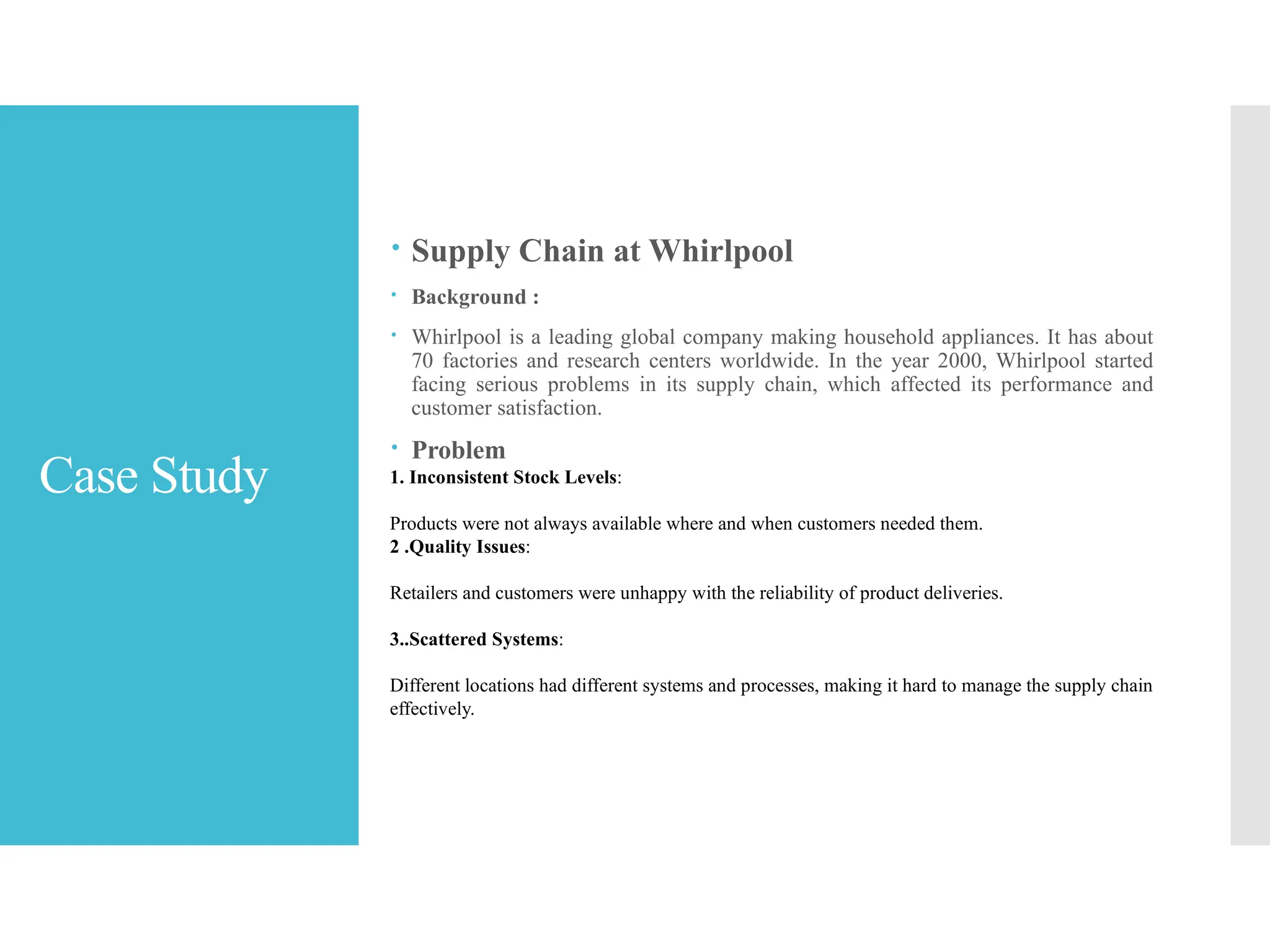
 Supply Chain at Whirlpool
 Background :
 Whirlpool is a leading global company making household appliances. It has about
70 factories and research centers worldwide. In the year 2000, Whirlpool started
facing serious problems in its supply chain, which affected its performance and
customer satisfaction.
 Problem
1. Inconsistent Stock Levels:
Products were not always available where and when customers needed them.
2 .Quality Issues:
Retailers and customers were unhappy with the reliability of product deliveries.
3..Scattered Systems:
Different locations had different systems and processes, making it hard to manage the supply chain
effectively.
Case study
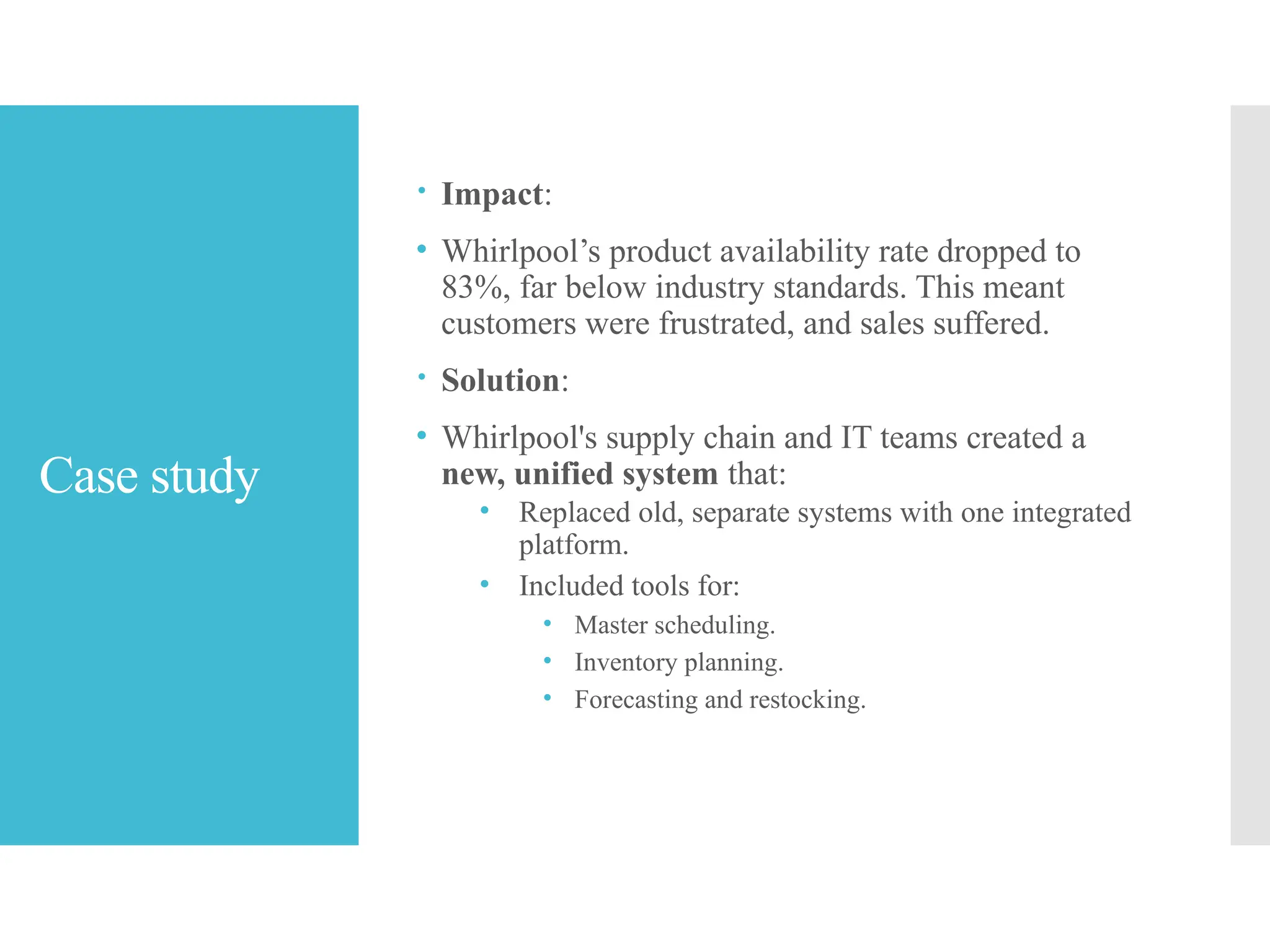
 Impact:
• Whirlpool’s product availability rate dropped to
83%, far below industry standards. This meant
customers were frustrated, and sales suffered.
 Solution:
• Whirlpool's supply chain and IT teams created a
new, unified system that:
• Replaced old, separate systems with one integrated
platform.
• Included tools for:
• Master scheduling.
• Inventory planning.
• Forecasting and restocking.
Case study
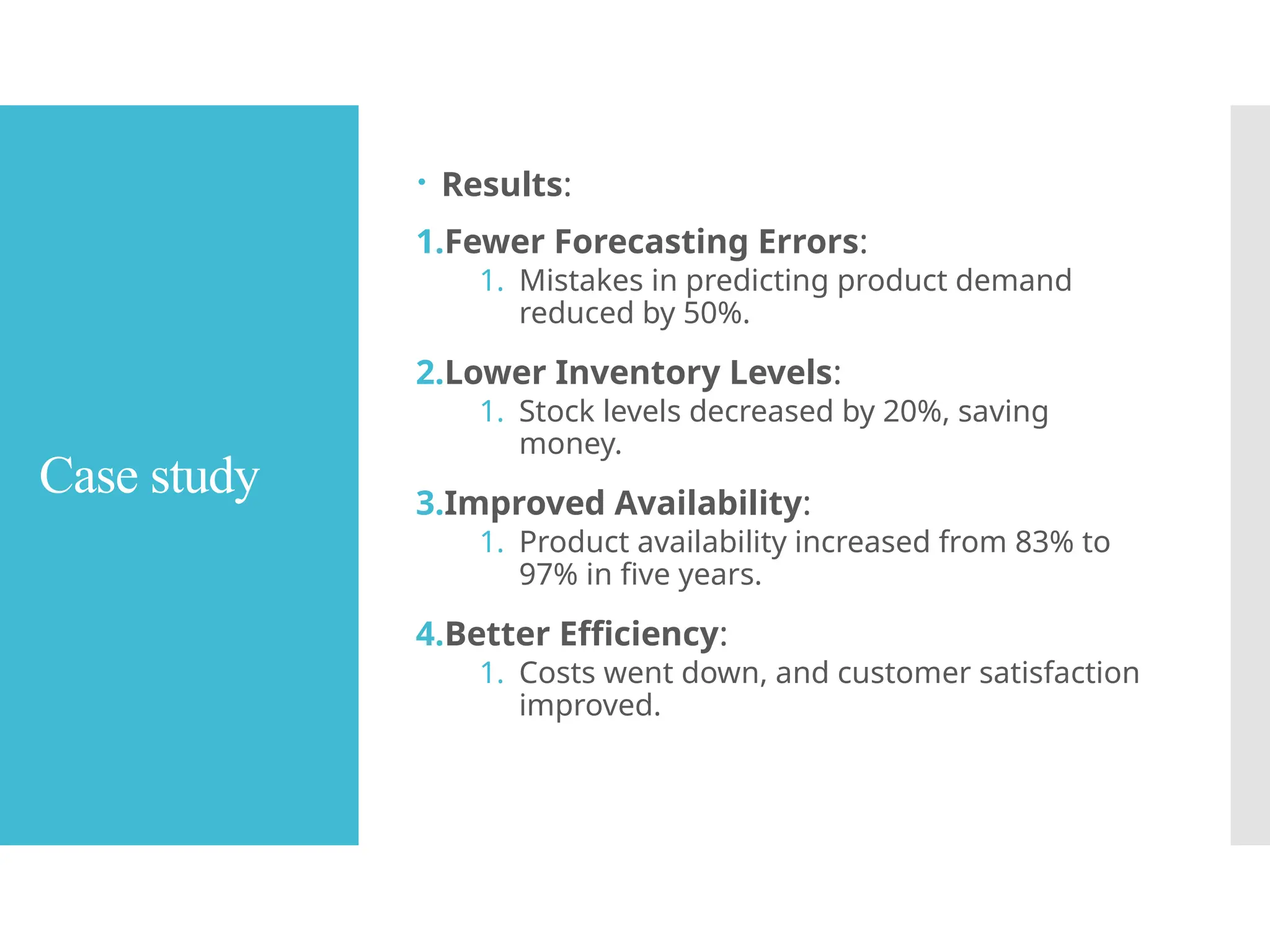
 Results:
1.Fewer Forecasting Errors:
1. Mistakes in predicting product demand
reduced by 50%.
2.Lower Inventory Levels:
1. Stock levels decreased by 20%, saving
money.
3.Improved Availability:
1. Product availability increased from 83% to
97% in five years.
4.Better Efficiency:
1. Costs went down, and customer satisfaction
improved.
Introduction_to_SCM 2 lecture SCM .pptx

  • 1.
    Introductio n to Supply Chain Manageme nt(SCM) Ali Hassan 2021-ME- 521
  • 2.
    Learning Goals  - Knowwhat SCM means.  - Learn about the three main decision phases in SCM.  - Understand how SCM processes work (cycle and push/pull views).  - Learn about the SCOR model.  - Understand what electronic SCM (e-SCM) is.
  • 3.
    What is SCM?  SupplyChain:  - The process of getting products from raw materials to customers.  SCM:  - Managing this process to make it smooth and efficient.  Why is SCM important?  Customers expect faster delivery and better service.  Products have shorter life cycles (e.g., new phones every year).  Good SCM helps businesses deliver products on time, cut costs, and stay competitive.
  • 4.
    Meaning of Supply Chain Management SCM involves:  - Managing materials, information, and services to ensure products reach customers quickly and efficiently.  Definitions:  - SCM links all steps from raw materials to finished products across suppliers, manufacturers, and distributors.  - It ensures value is added at every step.
  • 5.
    Meaning of Supply Chain Management Objectivesof SCM  Create value for customers:  Meet their needs and increase satisfaction.  Respond quickly to changes:  Adapt to new technology or customer demands.  Reduce risks  Plan for unexpected problems (e.g., supplier issues or natural disasters).  Save costs:  Use resources wisely to reduce expenses.
  • 6.
    Three Decision Phases in SCM  1.Design Phase:  - Long-term decisions about where to place factories or warehouses and what transportation methods to use (trucks, ships, etc.).  - These decisions are hard to change later.  2. Planning Phase:  - Medium-term (quarterly or yearly) decisions like estimating customer demand, planning production, promotions, and inventory levels.  3. Operational Phase:  - Short-term (daily or weekly) decisions like managing orders, scheduling deliveries, and allocating stock to customers.
  • 7.
    Process View of SCM SCM processes can be seen in two ways:  1. Cycle View:  - Each step in the supply chain is treated as a cycle.  Examples:  - Demand Cycle: A customer places an order and the product is delivered.  - Planning and Procurement Cycle: Deciding what materials to buy and how to make products.  - Supply Cycle: Making the product or getting it from a supplier.
  • 8.
    Process View of SCM SCM processes can be seen in two ways:  2. Push/Pull View:-  **Push Process: Products are made based on predictions (anticipating demand).  **Pull Process: Products are made only when a customer places an order.
  • 9.
    SCOR Model  SCOR: SupplyChain Operations Reference model.  Benefits of SCOR:  - Check if the supply chain is working well.  - Find gaps and fix problems.  - Improve communication between suppliers, manufacturers, and customers.  - Train employees to manage the supply chain better.
  • 10.
    SCOR Model  Elements ofSCOR:  1. **Performance Metrics:** Levels to measure how well the supply chain is performing.  2. **Processes:** Steps to manage the supply chain (e.g., planning, making, delivering).  3. **Best Practices:** Techniques to make the supply chain more efficient.  4. **People:** Skills and roles needed to manage the supply chain.
  • 11.
    Electronic Supply Chain Management (e-SCM)  **e-SCM:**Using technology to automate supply chain activities.  **Includes tools like:**  - e-Procurement (buying materials online).  - e-Billing (online payments).  **Functions of e-SCM:**  1. Advanced Production Scheduling: Plan production based on customer orders.  2. Demand Forecasting: Predict what products will be needed in the future.  3. Transportation Planning: Choose the best shipping methods (truck, train, plane).  4. Distribution Planning: Track inventory and plan deliveries to stores or customers.  5. Order Commitment: Estimate delivery dates for customer orders.
  • 12.
    Case Study  SupplyChain at Whirlpool  Background :  Whirlpool is a leading global company making household appliances. It has about 70 factories and research centers worldwide. In the year 2000, Whirlpool started facing serious problems in its supply chain, which affected its performance and customer satisfaction.  Problem 1. Inconsistent Stock Levels: Products were not always available where and when customers needed them. 2 .Quality Issues: Retailers and customers were unhappy with the reliability of product deliveries. 3..Scattered Systems: Different locations had different systems and processes, making it hard to manage the supply chain effectively.
  • 13.
    Case study  Impact: •Whirlpool’s product availability rate dropped to 83%, far below industry standards. This meant customers were frustrated, and sales suffered.  Solution: • Whirlpool's supply chain and IT teams created a new, unified system that: • Replaced old, separate systems with one integrated platform. • Included tools for: • Master scheduling. • Inventory planning. • Forecasting and restocking.
  • 14.
    Case study  Results: 1.FewerForecasting Errors: 1. Mistakes in predicting product demand reduced by 50%. 2.Lower Inventory Levels: 1. Stock levels decreased by 20%, saving money. 3.Improved Availability: 1. Product availability increased from 83% to 97% in five years. 4.Better Efficiency: 1. Costs went down, and customer satisfaction improved.