Introduction to
Vibration
Unit-1 (L1)
Dr Alok Khatri,
Associate Professor,
Department of Mechanical Engineering
Engineering College, Ajmer
2
What is Vibration?
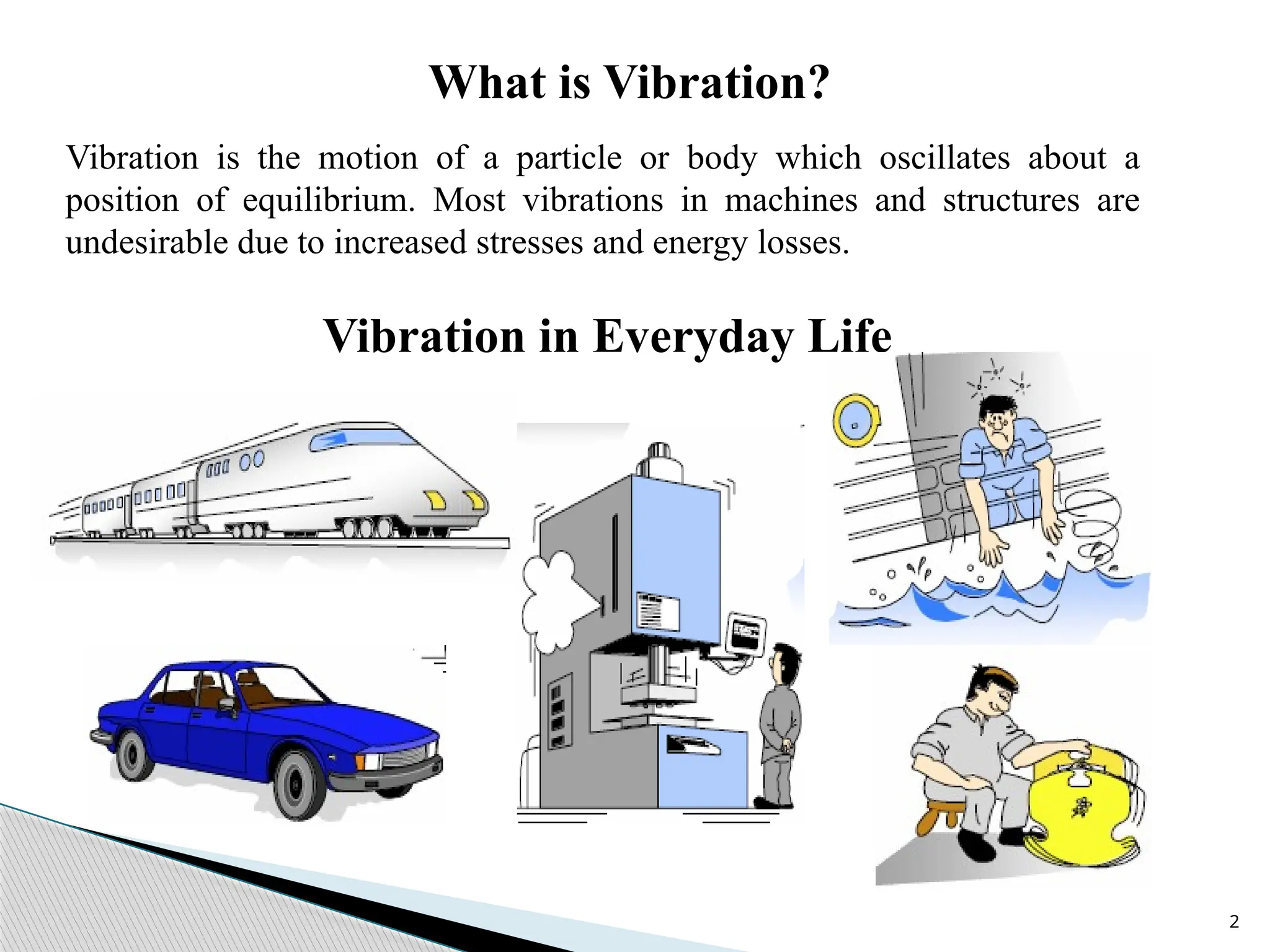
Vibration is the motion of a particle or body which oscillates about a
position of equilibrium. Most vibrations in machines and structures are
undesirable due to increased stresses and energy losses.
Vibration in Everyday Life
• Vibration is a mechanical
phenomenon whereby oscillations
occur about an equilibrium point.
•The oscillations may be periodic such as
the motion of a pendulum or random
such as the movement of a tire on a
gravel road.
•Vibration is undesirable, wasting
energy and creating unwanted sound –
noise.
Mechanical Vibrations
4
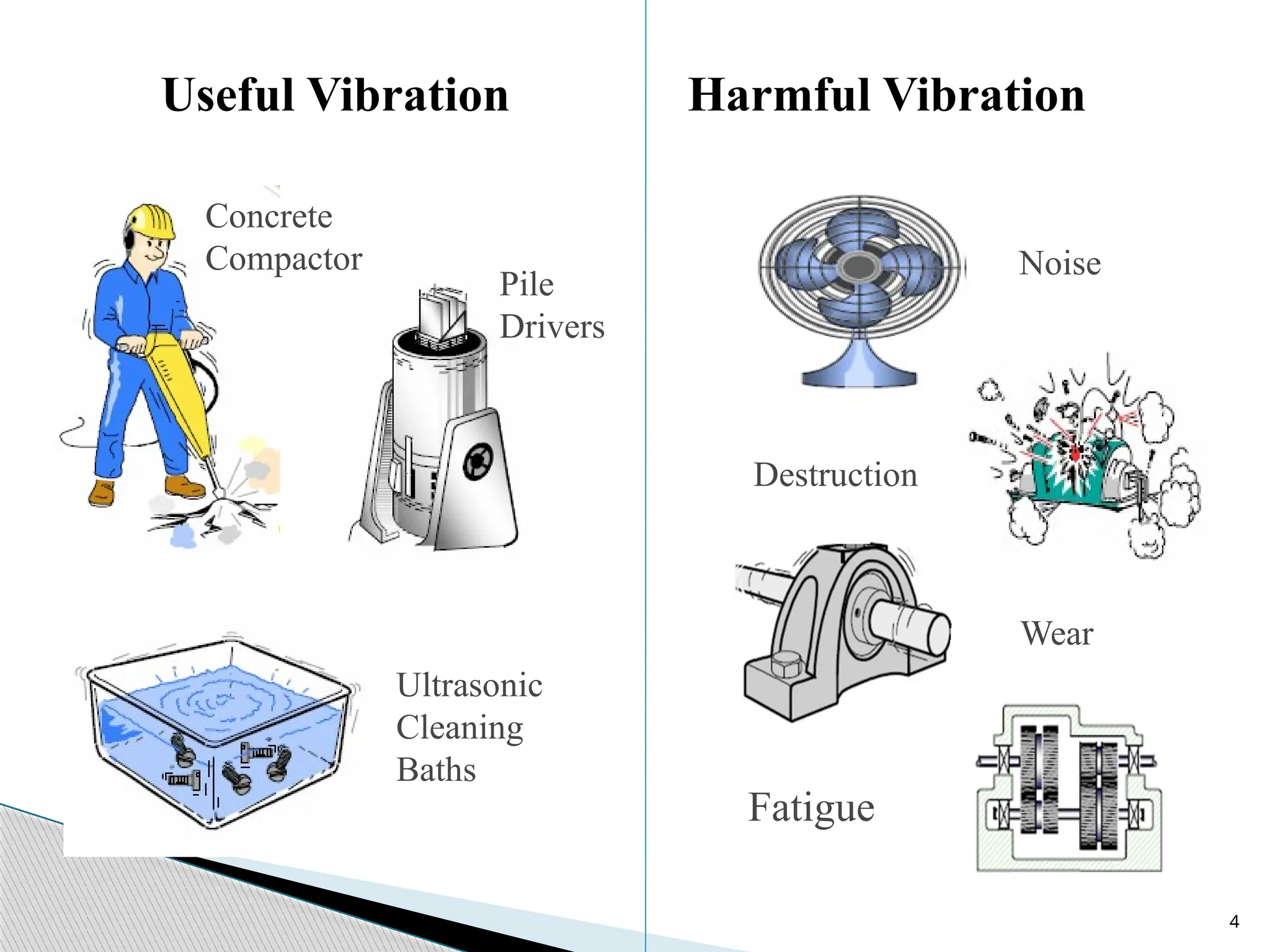
Useful Vibration
Concrete
Compactor
Ultrasonic
Cleaning
Baths
Pile
Drivers
Harmful Vibration
Noise
Destruction
Wear
Fatigue
• FREE VIBRATION occurs when a mechanical
system is set off with an initial input and then
allowed to vibrate freely.
• FORCED VIBRATION is when a time-varying
disturbance (load, displacement or velocity) is
applied to a mechanical system. The
disturbance can be a periodic, steady-state
input, a transient input, or a random input.
Types of Vibrations
Free Vibration
If the external forces is removed after giving an
initially displacement to the system, then the
system vibrates on its own due to internal elastic
forces. Such as that type vibration know as free
vibration.
Examples of free vibrations is oscillations of a
pendulum about a vertical equilibrium position.
The frequency of free vibration is known as free or
natural frequency (f n) in Hz.
Forced Vibration
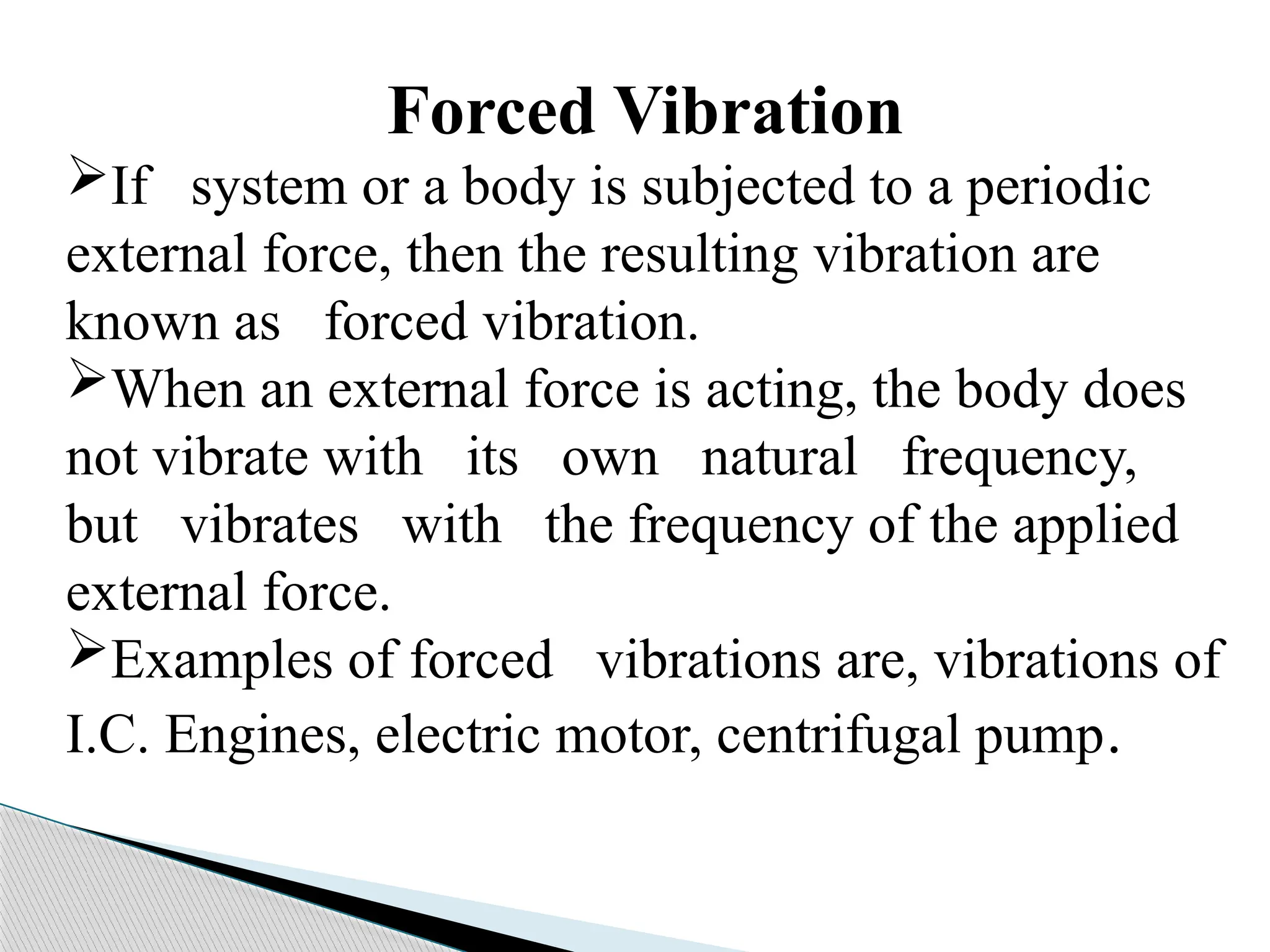
If system or a body is subjected to a periodic
external force, then the resulting vibration are
known as forced vibration.
When an external force is acting, the body does
not vibrate with its own natural frequency,
but vibrates with the frequency of the applied
external force.
Examples of forced vibrations are, vibrations of
I.C. Engines, electric motor, centrifugal pump.
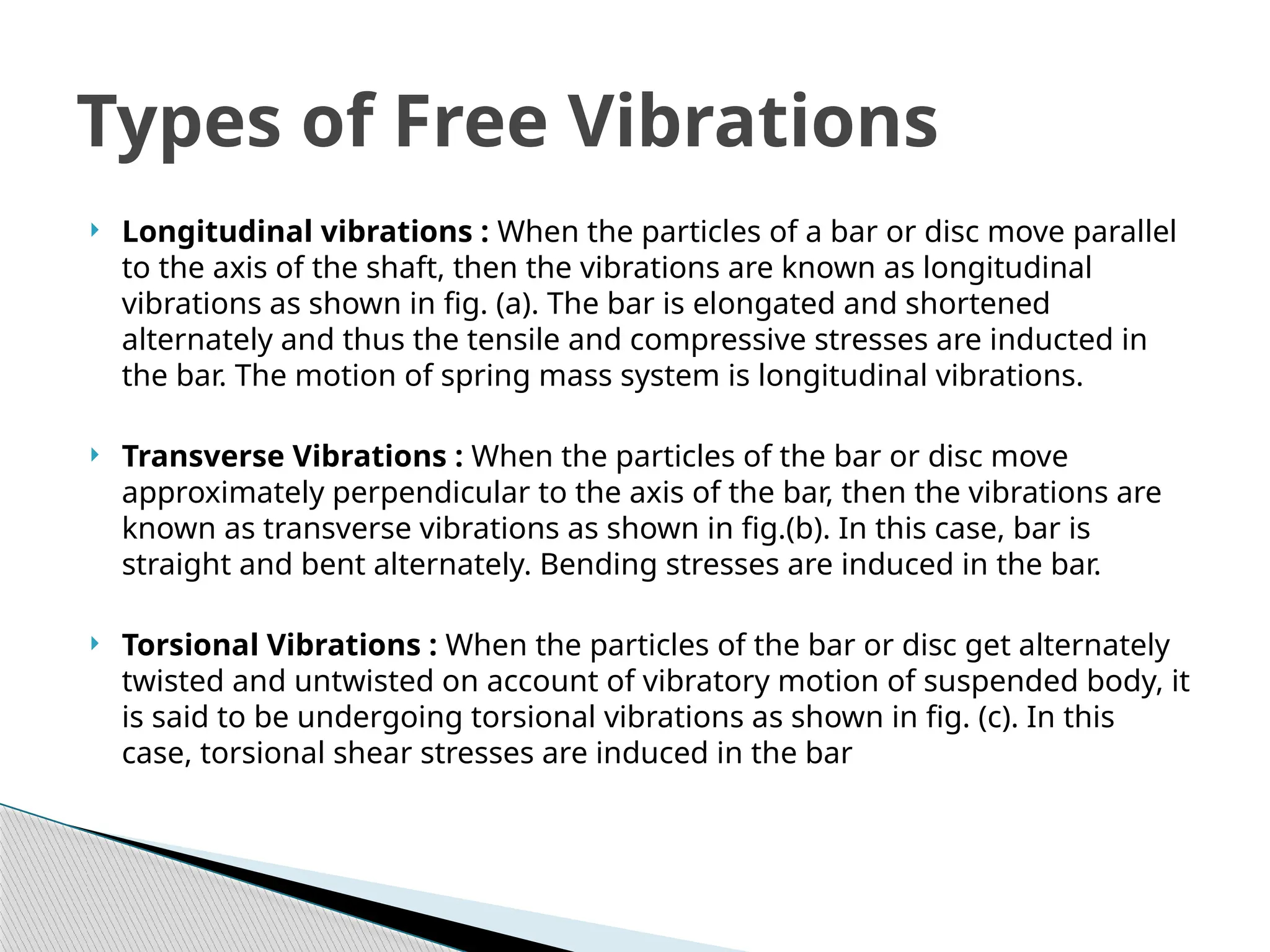
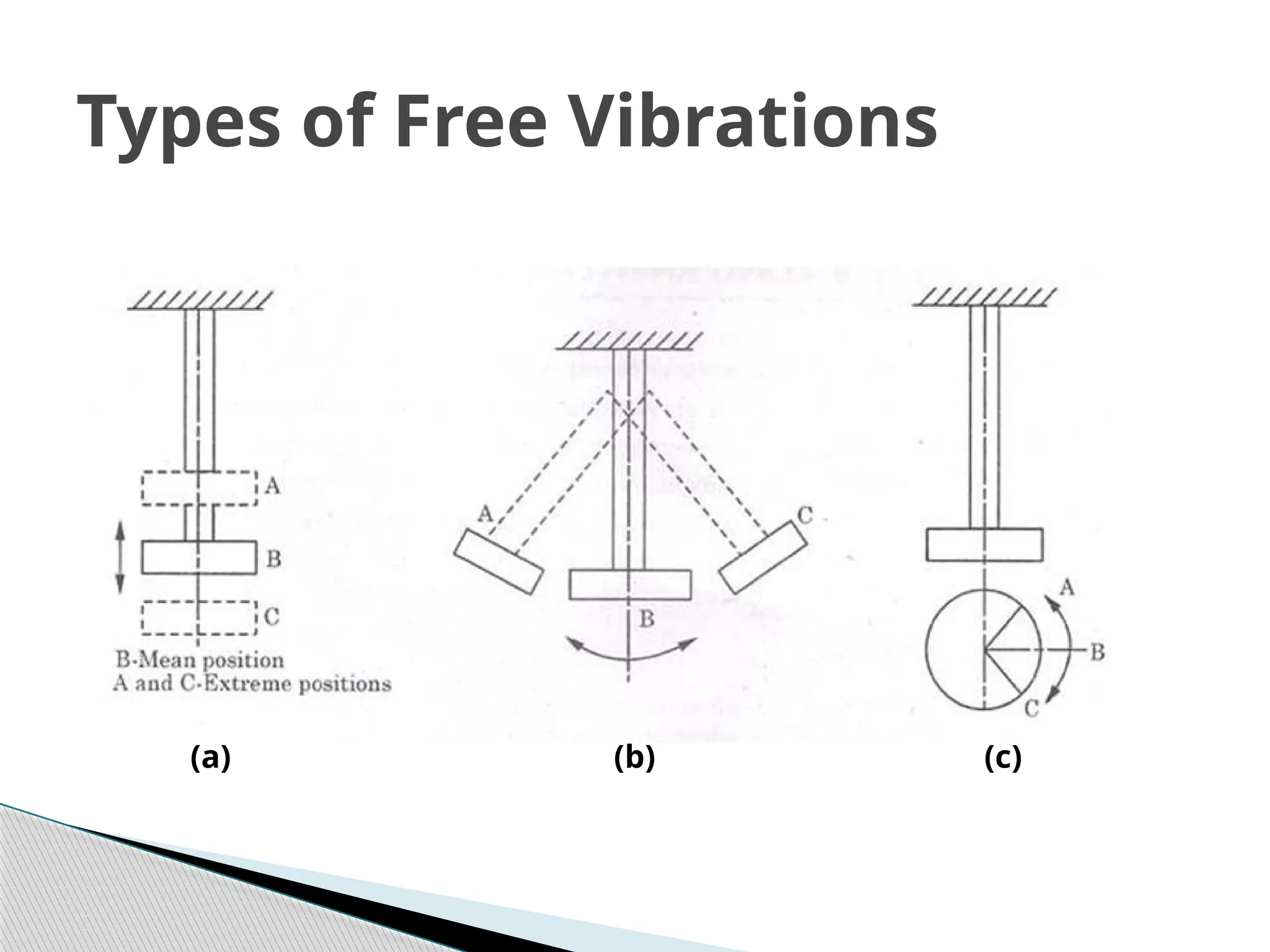
 Longitudinal vibrations : When the particles of a bar or disc move parallel
to the axis of the shaft, then the vibrations are known as longitudinal
vibrations as shown in fig. (a). The bar is elongated and shortened
alternately and thus the tensile and compressive stresses are inducted in
the bar. The motion of spring mass system is longitudinal vibrations.
 Transverse Vibrations : When the particles of the bar or disc move
approximately perpendicular to the axis of the bar, then the vibrations are
known as transverse vibrations as shown in fig.(b). In this case, bar is
straight and bent alternately. Bending stresses are induced in the bar.
 Torsional Vibrations : When the particles of the bar or disc get alternately
twisted and untwisted on account of vibratory motion of suspended body, it
is said to be undergoing torsional vibrations as shown in fig. (c). In this
case, torsional shear stresses are induced in the bar
Types of Free Vibrations
(a) (b) (c)
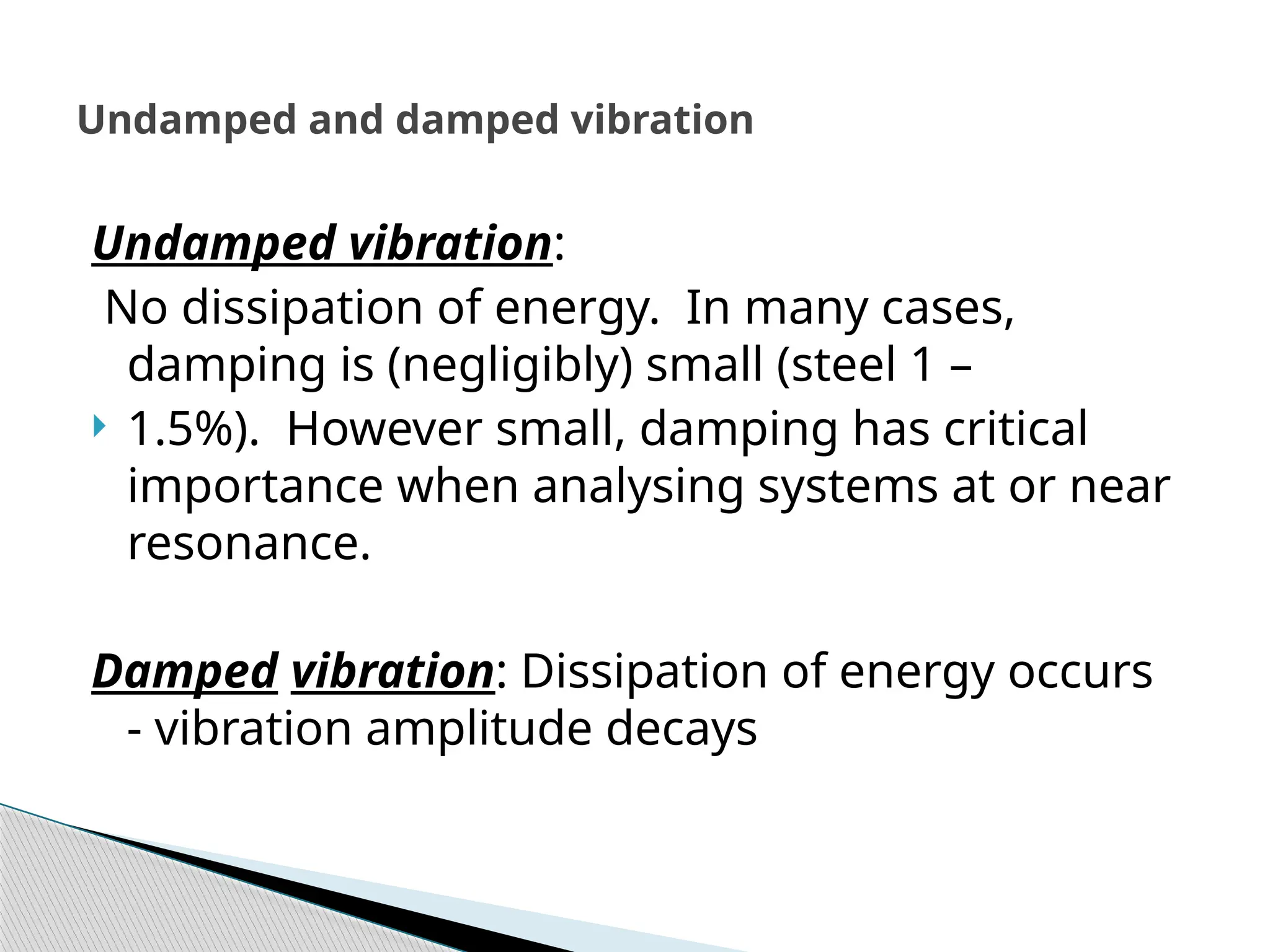
Undamped vibration:
No dissipation of energy. In many cases,
damping is (negligibly) small (steel 1 –
 1.5%). However small, damping has critical
importance when analysing systems at or near
resonance.
Damped vibration: Dissipation of energy occurs
- vibration amplitude decays
Undamped and damped vibration
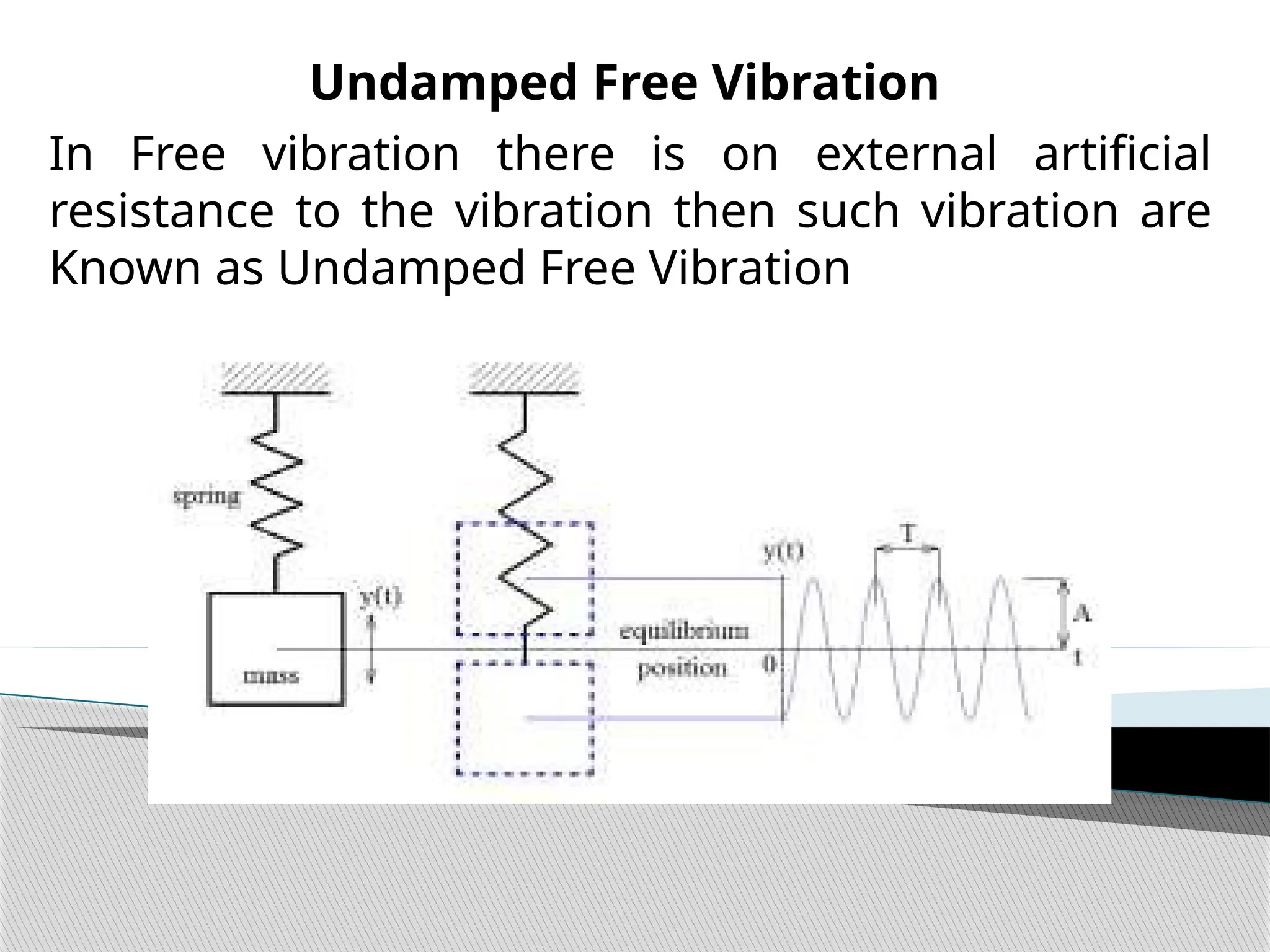
In Free vibration there is on external artificial
resistance to the vibration then such vibration are
Known as Undamped Free Vibration
Undamped Free Vibration
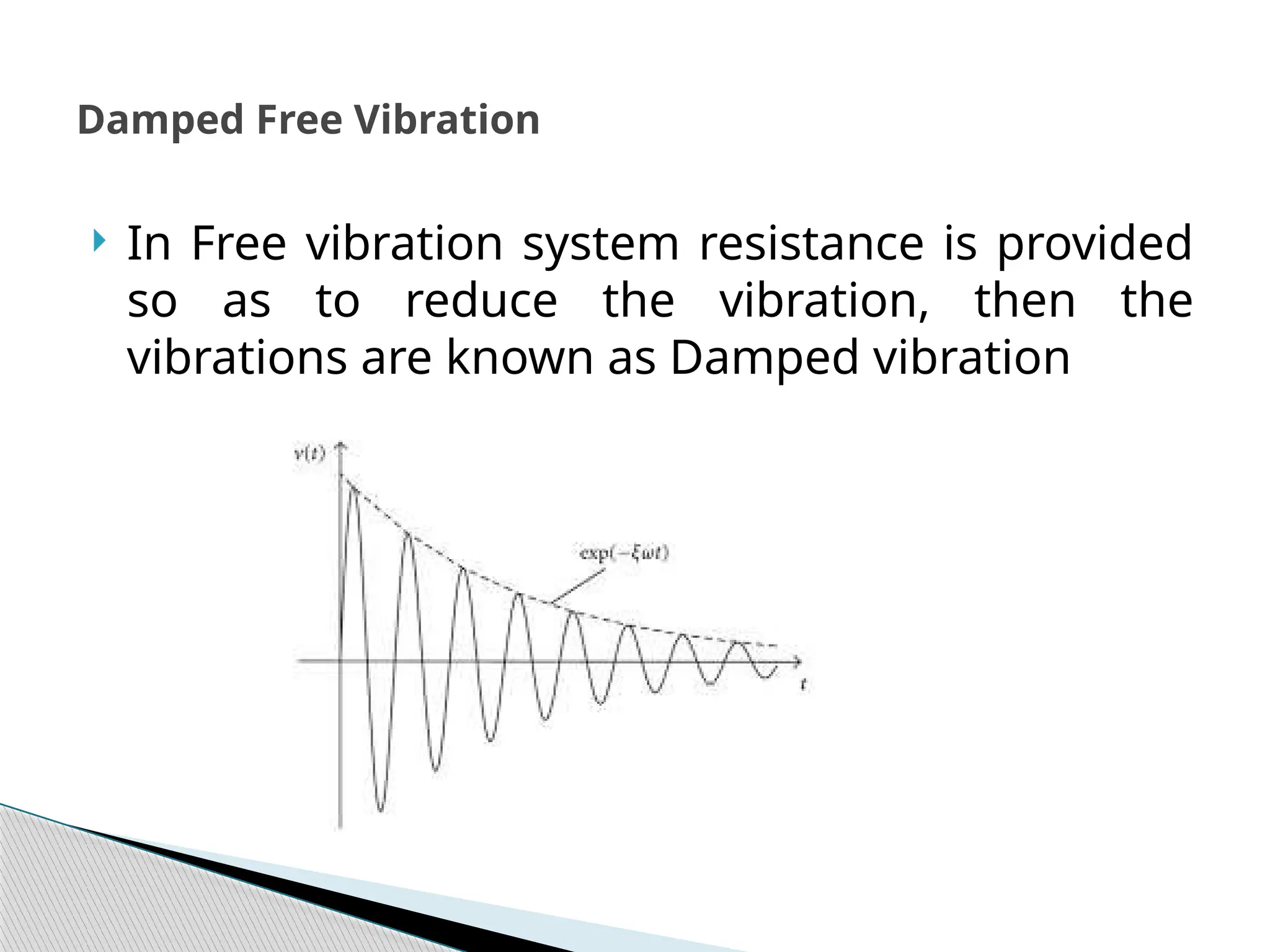
 In Free vibration system resistance is provided
so as to reduce the vibration, then the
vibrations are known as Damped vibration
Damped Free Vibration
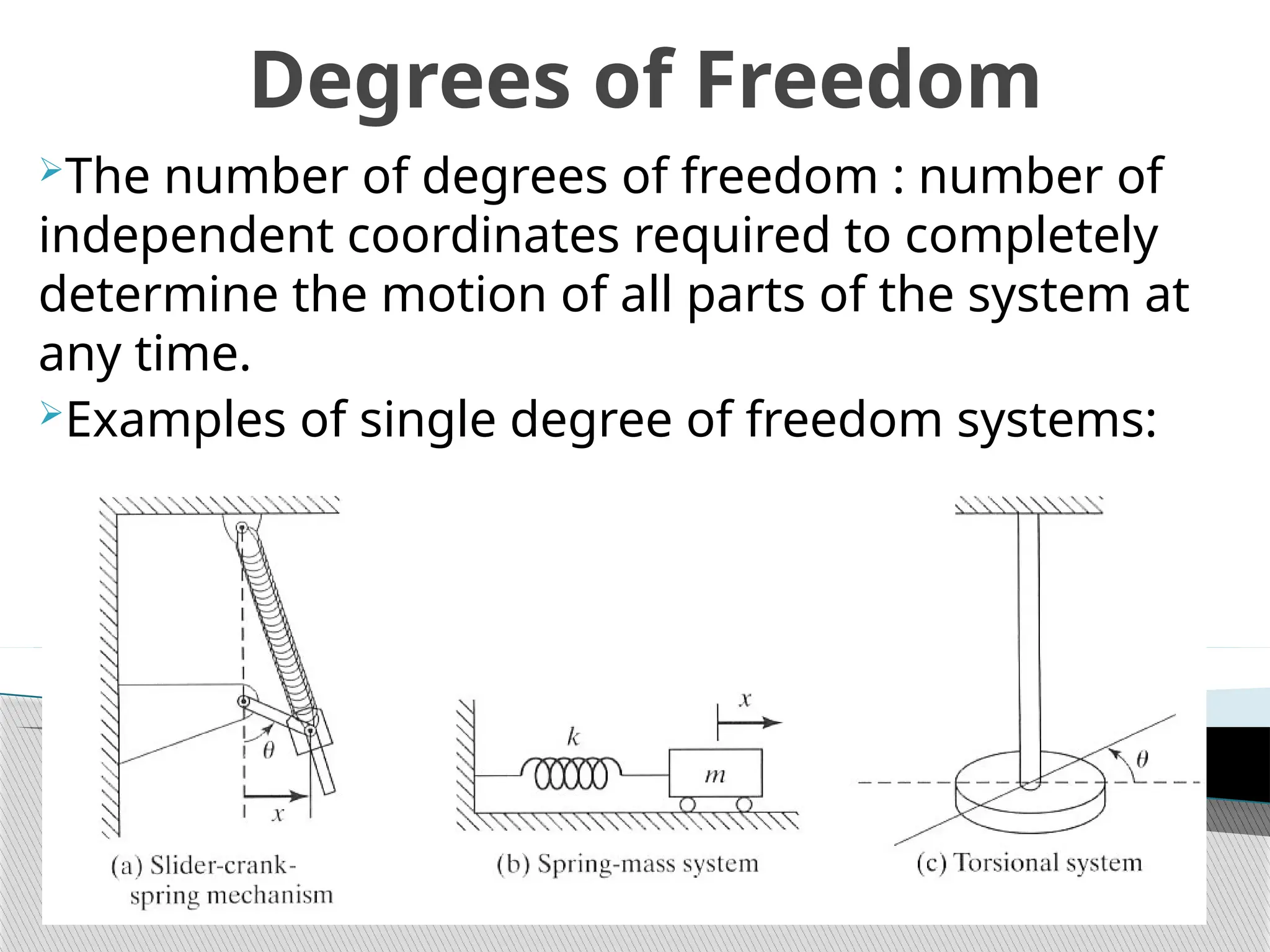
Degrees of Freedom
The number of degrees of freedom : number of
independent coordinates required to completely
determine the motion of all parts of the system at
any time.
Examples of single degree of freedom systems:
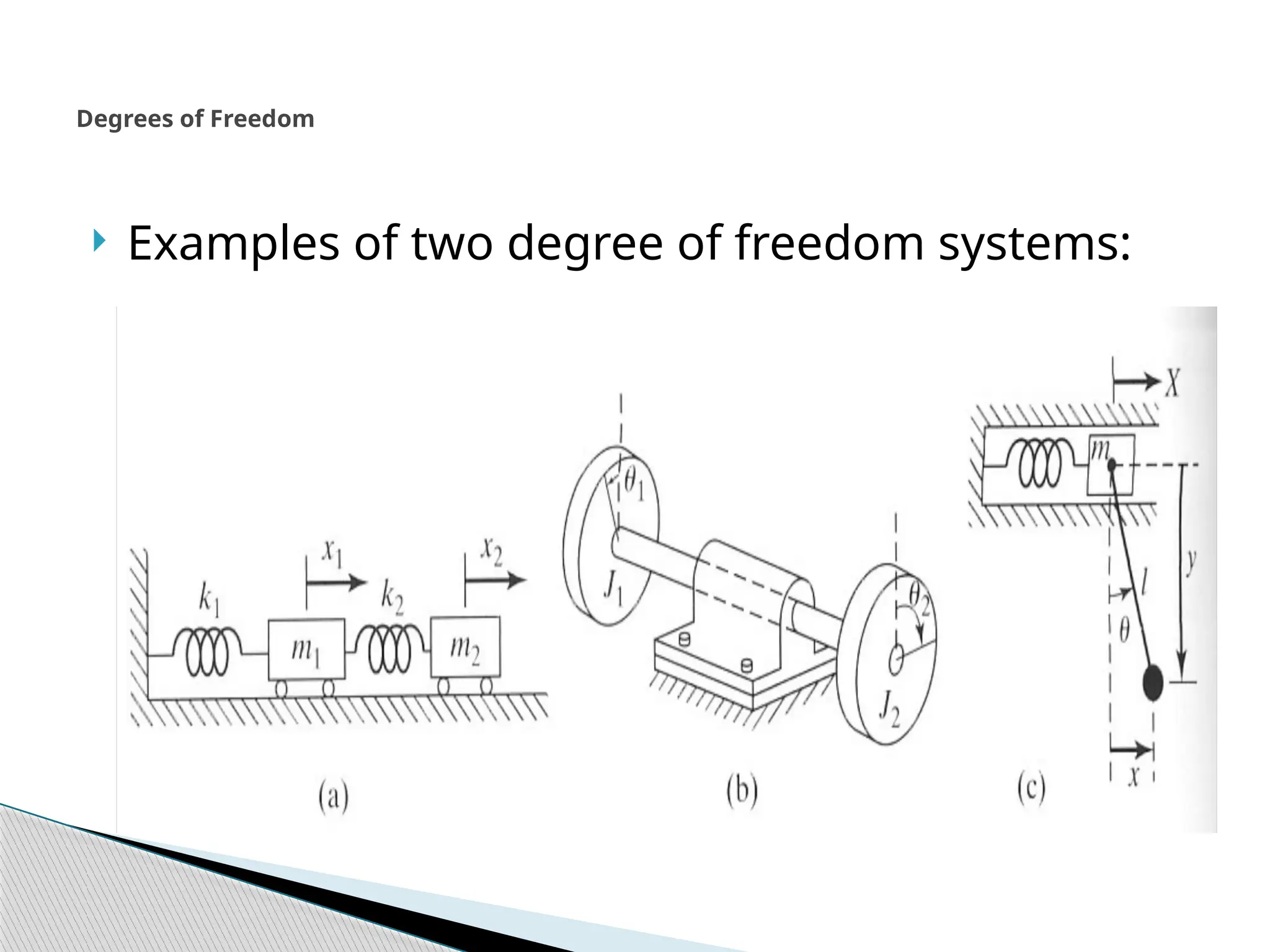
 Examples of two degree of freedom systems:
Degrees of Freedom
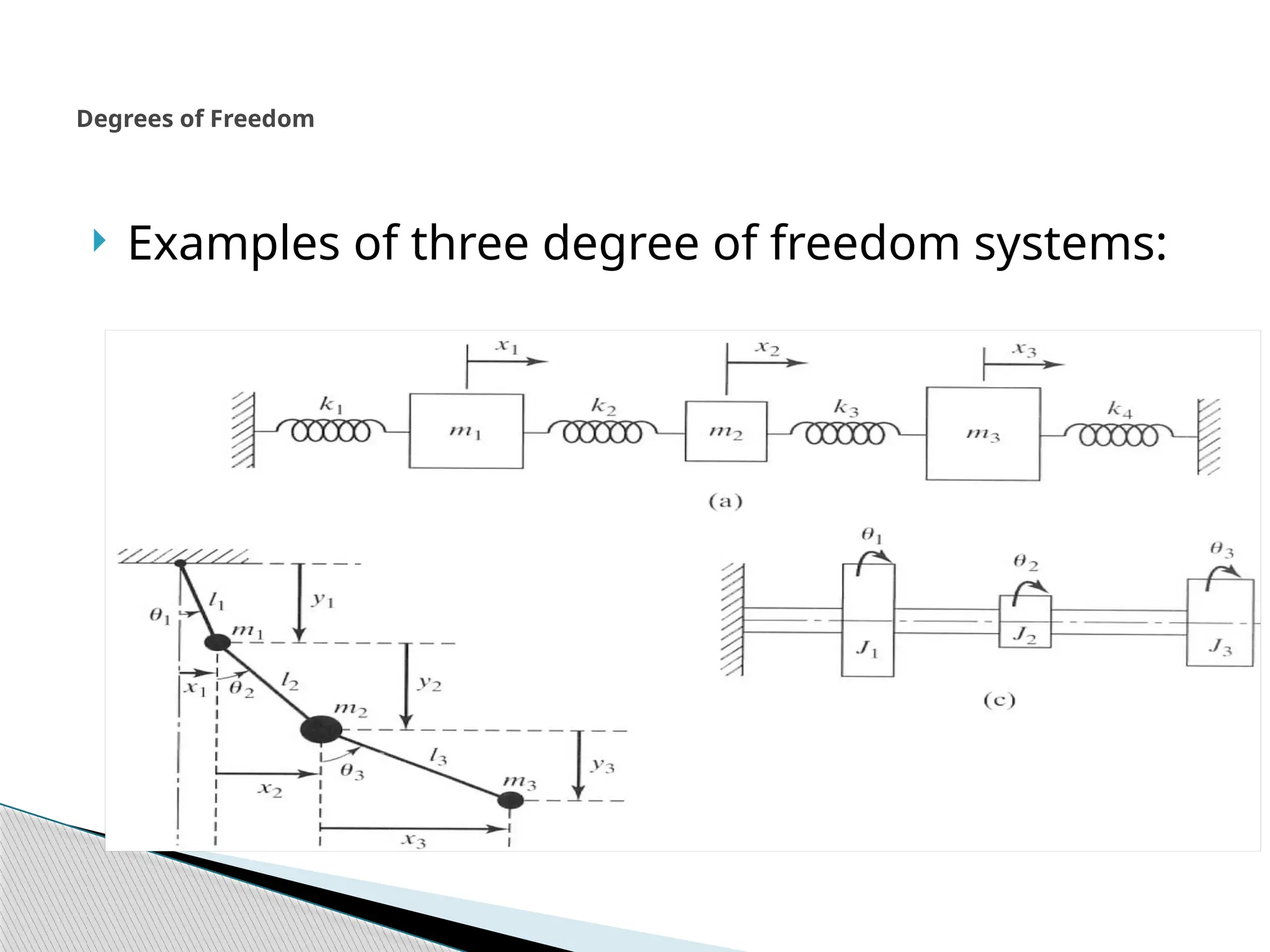
 Examples of three degree of freedom systems:
Degrees of Freedom
16
 

 
 t
X
x n
sin


n
n



2
period 




 2
1 n
n
n
f natural frequency
Amplitude
X 
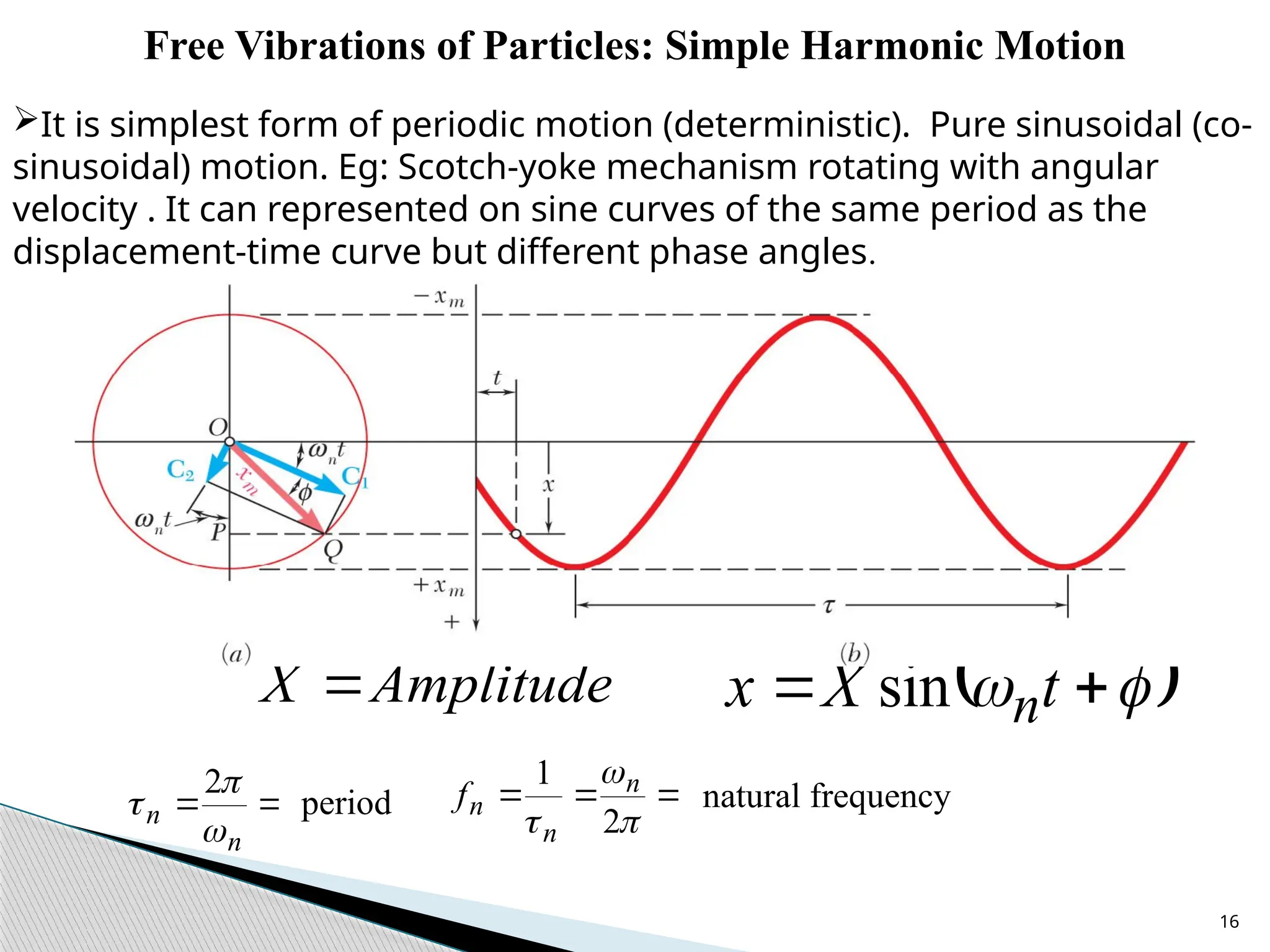
Free Vibrations of Particles: Simple Harmonic Motion
It is simplest form of periodic motion (deterministic). Pure sinusoidal (co-
sinusoidal) motion. Eg: Scotch-yoke mechanism rotating with angular
velocity . It can represented on sine curves of the same period as the
displacement-time curve but different phase angles.
17
 
 
2
sin
cos













t
x
t
x
x
v
n
n
m
n
n
m

 
 














t
x
t
x
x
a
n
n
m
n
n
m
sin
sin
2
2


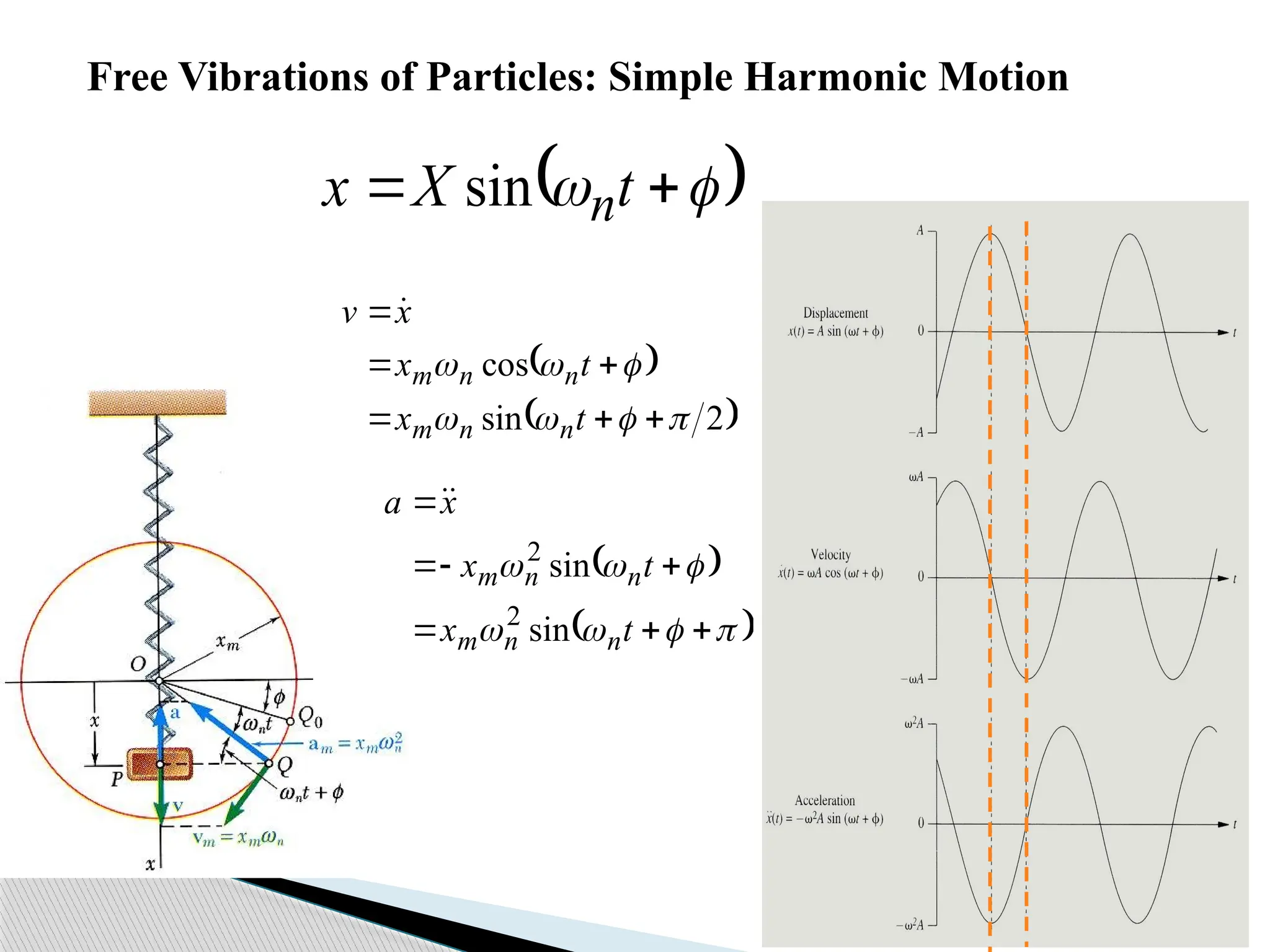
Free Vibrations of Particles: Simple Harmonic Motion
 

 
 t
X
x n
sin
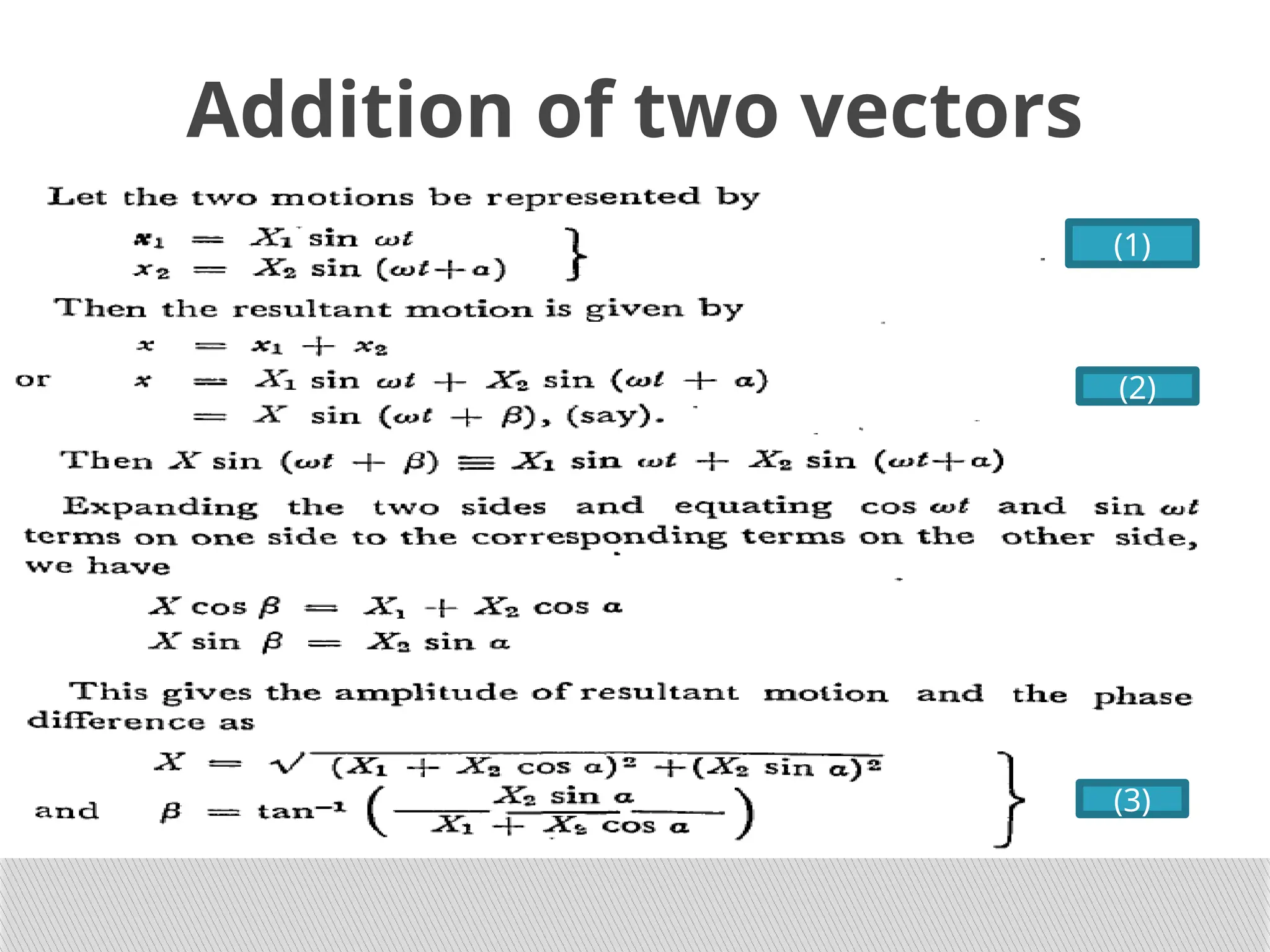
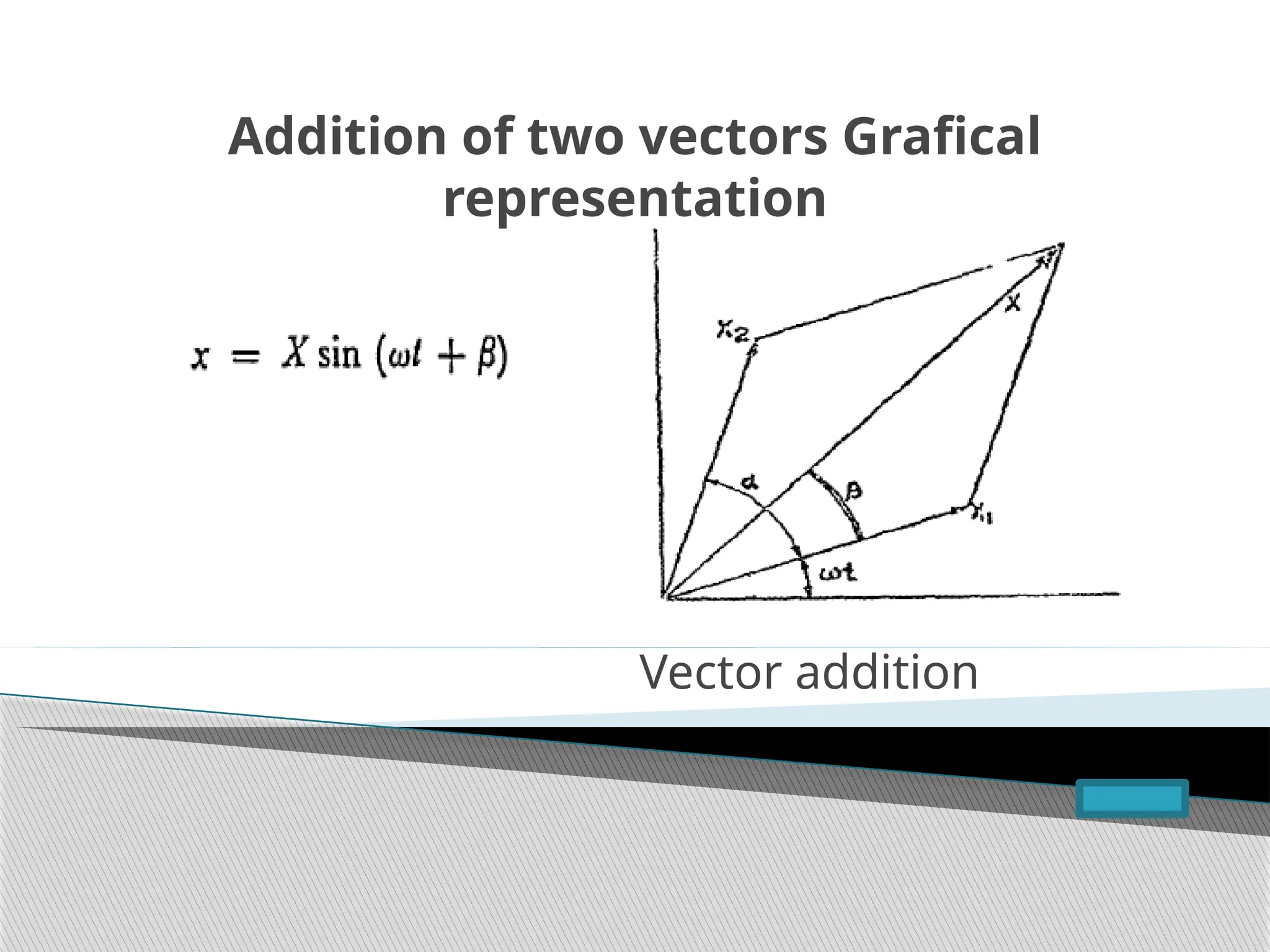
Addition of two vectors
(1)
(2)
(3)
Addition of two vectors Grafical
representation
Vector addition
THANKS

Introduction to Vibration (L1).pptx in engg

  • 1.
    Introduction to Vibration Unit-1 (L1) DrAlok Khatri, Associate Professor, Department of Mechanical Engineering Engineering College, Ajmer
  • 2.
    2 What is Vibration? Vibrationis the motion of a particle or body which oscillates about a position of equilibrium. Most vibrations in machines and structures are undesirable due to increased stresses and energy losses. Vibration in Everyday Life
  • 3.
    • Vibration isa mechanical phenomenon whereby oscillations occur about an equilibrium point. •The oscillations may be periodic such as the motion of a pendulum or random such as the movement of a tire on a gravel road. •Vibration is undesirable, wasting energy and creating unwanted sound – noise. Mechanical Vibrations
  • 4.
  • 5.
    • FREE VIBRATIONoccurs when a mechanical system is set off with an initial input and then allowed to vibrate freely. • FORCED VIBRATION is when a time-varying disturbance (load, displacement or velocity) is applied to a mechanical system. The disturbance can be a periodic, steady-state input, a transient input, or a random input. Types of Vibrations
  • 6.
    Free Vibration If theexternal forces is removed after giving an initially displacement to the system, then the system vibrates on its own due to internal elastic forces. Such as that type vibration know as free vibration. Examples of free vibrations is oscillations of a pendulum about a vertical equilibrium position. The frequency of free vibration is known as free or natural frequency (f n) in Hz.
  • 7.
    Forced Vibration If systemor a body is subjected to a periodic external force, then the resulting vibration are known as forced vibration. When an external force is acting, the body does not vibrate with its own natural frequency, but vibrates with the frequency of the applied external force. Examples of forced vibrations are, vibrations of I.C. Engines, electric motor, centrifugal pump.
  • 8.
     Longitudinal vibrations: When the particles of a bar or disc move parallel to the axis of the shaft, then the vibrations are known as longitudinal vibrations as shown in fig. (a). The bar is elongated and shortened alternately and thus the tensile and compressive stresses are inducted in the bar. The motion of spring mass system is longitudinal vibrations.  Transverse Vibrations : When the particles of the bar or disc move approximately perpendicular to the axis of the bar, then the vibrations are known as transverse vibrations as shown in fig.(b). In this case, bar is straight and bent alternately. Bending stresses are induced in the bar.  Torsional Vibrations : When the particles of the bar or disc get alternately twisted and untwisted on account of vibratory motion of suspended body, it is said to be undergoing torsional vibrations as shown in fig. (c). In this case, torsional shear stresses are induced in the bar Types of Free Vibrations
  • 9.
    Types of FreeVibrations (a) (b) (c)
  • 10.
    Undamped vibration: No dissipationof energy. In many cases, damping is (negligibly) small (steel 1 –  1.5%). However small, damping has critical importance when analysing systems at or near resonance. Damped vibration: Dissipation of energy occurs - vibration amplitude decays Undamped and damped vibration
  • 11.
    In Free vibrationthere is on external artificial resistance to the vibration then such vibration are Known as Undamped Free Vibration Undamped Free Vibration
  • 12.
     In Freevibration system resistance is provided so as to reduce the vibration, then the vibrations are known as Damped vibration Damped Free Vibration
  • 13.
    Degrees of Freedom Thenumber of degrees of freedom : number of independent coordinates required to completely determine the motion of all parts of the system at any time. Examples of single degree of freedom systems:
  • 14.
     Examples oftwo degree of freedom systems: Degrees of Freedom
  • 15.
     Examples ofthree degree of freedom systems: Degrees of Freedom
  • 16.
    16      t X x n sin   n n    2 period       2 1 n n n f natural frequency Amplitude X  Free Vibrations of Particles: Simple Harmonic Motion It is simplest form of periodic motion (deterministic). Pure sinusoidal (co- sinusoidal) motion. Eg: Scotch-yoke mechanism rotating with angular velocity . It can represented on sine curves of the same period as the displacement-time curve but different phase angles.
  • 17.
    17     2 sin cos              t x t x x v n n m n n m                   t x t x x a n n m n n m sin sin 2 2   Free Vibrations of Particles: Simple Harmonic Motion       t X x n sin
  • 18.
    Addition of twovectors (1) (2) (3)
  • 19.
    Addition of twovectors Grafical representation Vector addition
  • 20.