The journey into the centre of the atom was a
long one, and the successful splitting of the
atom by a team of scientists in the
1930’s, was the result of years of trial, error
and sheer luck by many of history's greatest
scientific minds.
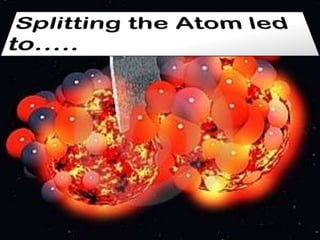
Their investigations led to the turning-
point in nuclear science - the realisation
that splitting the nucleus of an atom
created energy that could be harnessed,
for good and for ill.
`
In the 1930s, key discoveries are made about the
fissioning of atoms by:
-Enrico Fermi
-Otto Hahn
- Lise Meitner
- and Fritz Strassmann
These discoveries lay the groundwork for the
development of nuclear weapons in the next
decade.
From Leucippus in 500 BC postulating the theory
of atoms and void, to Einstein's theory of relativity.
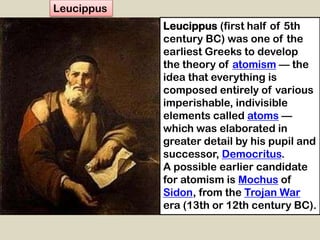
Leucippus (first half of 5th
century BC) was one of the
earliest Greeks to develop
the theory of atomism — the
idea that everything is
composed entirely of various
imperishable, indivisible
elements called atoms —
which was elaborated in
greater detail by his pupil and
successor, Democritus.
A possible earlier candidate
for atomism is Mochus of
Sidon, from the Trojan War
era (13th or 12th century BC).
Leucippus
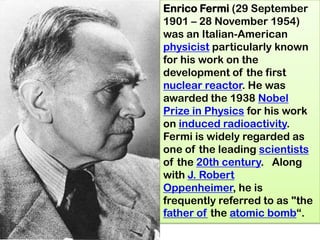
Enrico Fermi (29 September
1901 – 28 November 1954)
was an Italian-American
physicist particularly known
for his work on the
development of the first
nuclear reactor. He was
awarded the 1938 Nobel
Prize in Physics for his work
on induced radioactivity.
Fermi is widely regarded as
one of the leading scientists
of the 20th century. Along
with J. Robert
Oppenheimer, he is
frequently referred to as "the
father of the atomic bomb―.
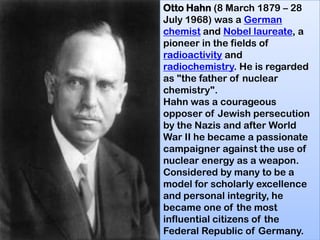
Otto Hahn (8 March 1879 – 28
July 1968) was a German
chemist and Nobel laureate, a
pioneer in the fields of
radioactivity and
radiochemistry. He is regarded
as "the father of nuclear
chemistry".
Hahn was a courageous
opposer of Jewish persecution
by the Nazis and after World
War II he became a passionate
campaigner against the use of
nuclear energy as a weapon.
Considered by many to be a
model for scholarly excellence
and personal integrity, he
became one of the most
influential citizens of the
Federal Republic of Germany.
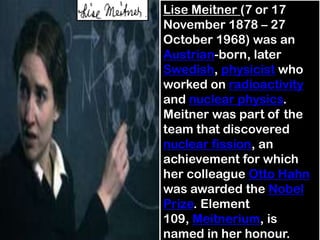
Lise Meitner (7 or 17
November 1878 – 27
October 1968) was an
Austrian-born, later
Swedish, physicist who
worked on radioactivity
and nuclear physics.
Meitner was part of the
team that discovered
nuclear fission, an
achievement for which
her colleague Otto Hahn
was awarded the Nobel
Prize. Element
109, Meitnerium, is
named in her honour.
Hahn went in search of a collaborator with whom to pursue
studies in experimental radioactivity and teamed up with Lise
Meitner. She had come to Berlin to attend Max Planck’s
lectures on theoretical physics after receiving her doctorate
in physics from the University of Vienna in 1905—the second
doctorate in science from that university granted to a woman.
In the first year of the Hahn–Meitner partnership they had to
work in a remodeled carpenter’s shop because the university
did not yet accept women on an official basis.
In 1912 their research group was relocated to the new Kaiser
Wilhelm Gesellschaft, where Fritz Haber was head of the
physical chemistry institute, Hahn was head of the
radioactivity institute, and from 1918 Meitner was head of the
radioactivity institute’s physics department.
During World War I, Hahn served in the German gas warfare
service headed by Haber, and Meitner volunteered as an X-
ray nurse for the Austrian army.
In 1938 ,Otto Hahn (1879–1968), Lise
Meitner (1878–1968), and Fritz Strassmann
(1902–1980) became the first to recognize
that the uranium atom, when bombarded by
neutrons, actually split.
News of the splitting of the atom and its awesome
possibilities was brought to scientists in the United
States and ultimately resulted in the Manhattan Project.
Hahn, Meitner, and Strassmann were not engaged in
nuclear weapons research during World War II. At the
end of the war Hahn was astonished to hear that he had
won the Nobel Prize for chemistry in 1944 and that
nuclear bombs had been developed from his basic
discovery.
1. An age dominated by nuclear warfare
2. These weapons were invented + developed
before + during WW II
3. The nuclear weapons can be referred to as
Weapons of Mass Destruction, as they have
the ability to destroy the world in minutes.
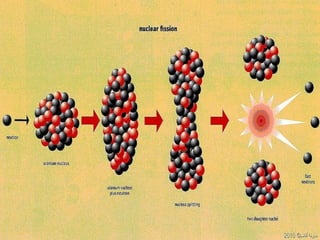
1. Introduction:
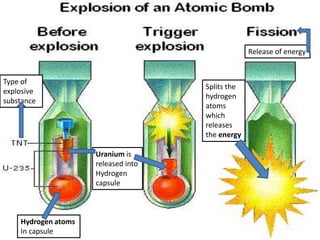
Release of energy
Hydrogen atoms
In capsule
Uranium is
released into
Hydrogen
capsule
Splits the
hydrogen
atoms
which
releases
the energy
Type of
explosive
substance
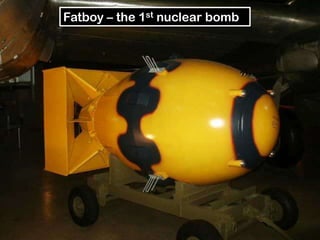
Fatboy – the 1st nuclear bomb
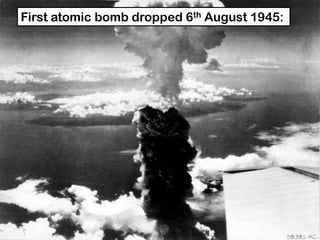
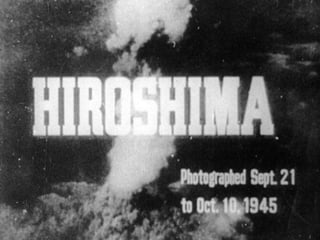
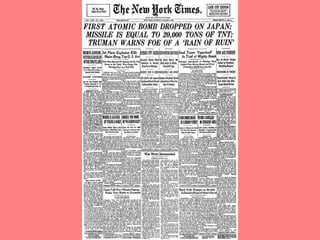
First atomic bomb dropped 6th August 1945:
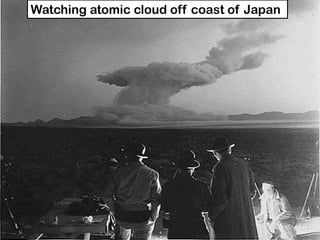
Watching atomic cloud off coast of Japan
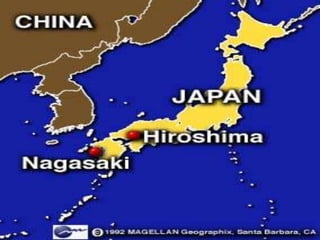
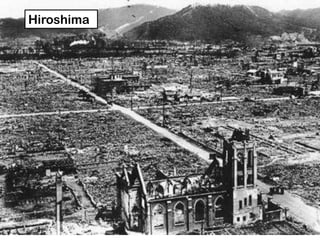
Hiroshima
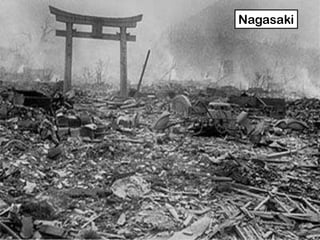
Nagasaki
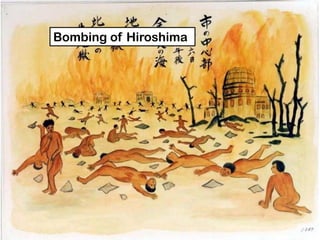
Bombing of Hiroshima
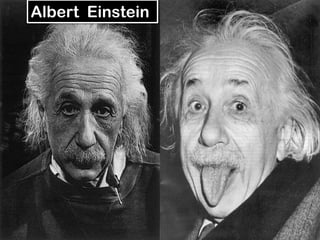
Albert Einstein
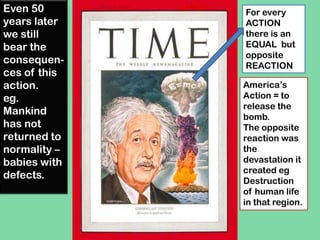
For every
ACTION
there is an
EQUAL but
opposite
REACTION
America’s
Action = to
release the
bomb.
The opposite
reaction was
the
devastation it
created eg
Destruction
of human life
in that region.
Even 50
years later
we still
bear the
consequen-
ces of this
action.
eg.
Mankind
has not
returned to
normality –
babies with
defects.
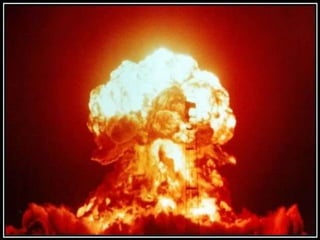
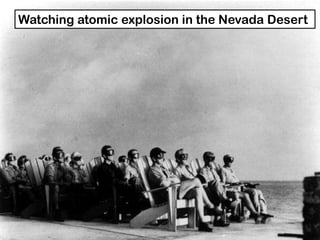
Watching atomic explosion in the Nevada Desert
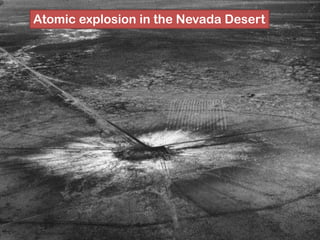
Atomic explosion in the Nevada Desert
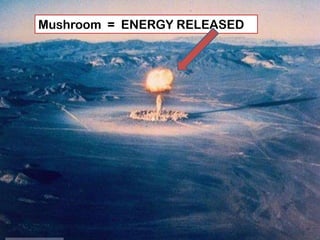
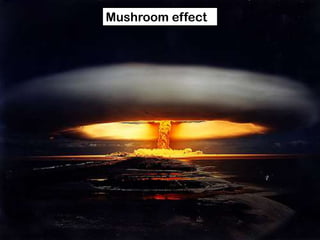
Mushroom = ENERGY RELEASED
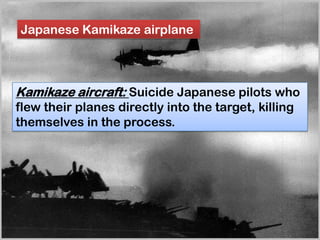
Japanese Kamikaze airplane
Kamikaze aircraft: Suicide Japanese pilots who
flew their planes directly into the target, killing
themselves in the process.
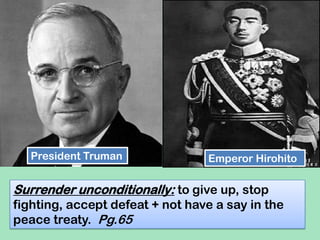
President Truman Emperor Hirohito
Surrender unconditionally: to give up, stop
fighting, accept defeat + not have a say in the
peace treaty. Pg.65
Mushroom effect
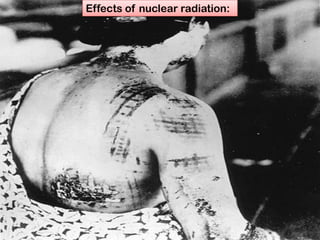
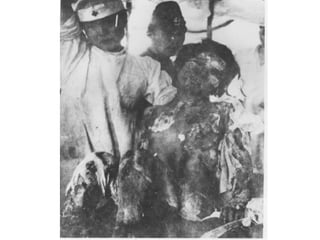
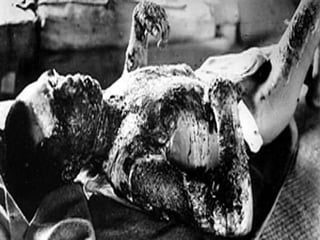
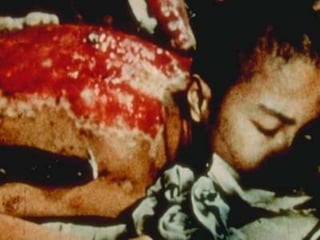
Effects of nuclear radiation:
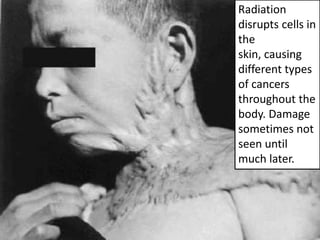
Radiation
disrupts cells in
the
skin, causing
different types
of cancers
throughout the
body. Damage
sometimes not
seen until
much later.
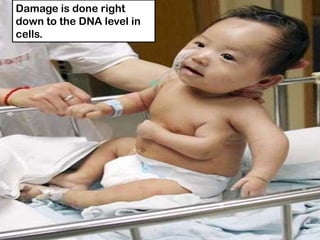
Damage is done right
down to the DNA level in
cells.
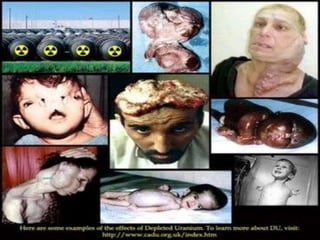
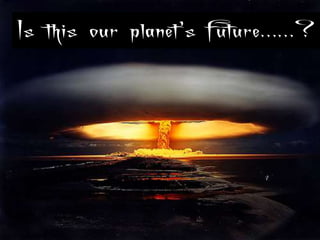
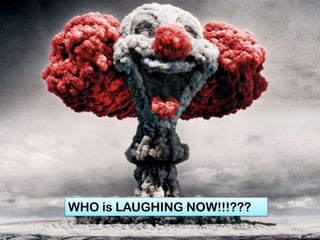
Is this our planet’s future……?
WHO is LAUGHING NOW!!!???
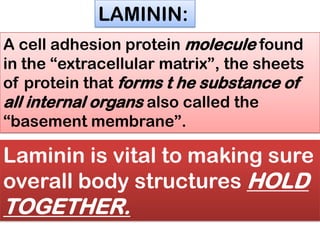
LAMININ:
A cell adhesion protein molecule found
in the ―extracellular matrix‖, the sheets
of protein that forms t he substance of
all internal organs also called the
―basement membrane‖.
Laminin is vital to making sure
overall body structures HOLD
TOGETHER.
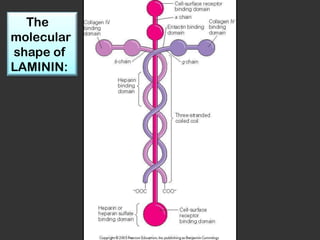
The
molecular
shape of
LAMININ:
Introduction to the cold war

Introduction to the cold war

  • 3.
    The journey intothe centre of the atom was a long one, and the successful splitting of the atom by a team of scientists in the 1930’s, was the result of years of trial, error and sheer luck by many of history's greatest scientific minds. Their investigations led to the turning- point in nuclear science - the realisation that splitting the nucleus of an atom created energy that could be harnessed, for good and for ill. `
  • 4.
    In the 1930s,key discoveries are made about the fissioning of atoms by: -Enrico Fermi -Otto Hahn - Lise Meitner - and Fritz Strassmann These discoveries lay the groundwork for the development of nuclear weapons in the next decade. From Leucippus in 500 BC postulating the theory of atoms and void, to Einstein's theory of relativity.
  • 5.
    Leucippus (first halfof 5th century BC) was one of the earliest Greeks to develop the theory of atomism — the idea that everything is composed entirely of various imperishable, indivisible elements called atoms — which was elaborated in greater detail by his pupil and successor, Democritus. A possible earlier candidate for atomism is Mochus of Sidon, from the Trojan War era (13th or 12th century BC). Leucippus
  • 6.
    Enrico Fermi (29September 1901 – 28 November 1954) was an Italian-American physicist particularly known for his work on the development of the first nuclear reactor. He was awarded the 1938 Nobel Prize in Physics for his work on induced radioactivity. Fermi is widely regarded as one of the leading scientists of the 20th century. Along with J. Robert Oppenheimer, he is frequently referred to as "the father of the atomic bomb―.
  • 7.
    Otto Hahn (8March 1879 – 28 July 1968) was a German chemist and Nobel laureate, a pioneer in the fields of radioactivity and radiochemistry. He is regarded as "the father of nuclear chemistry". Hahn was a courageous opposer of Jewish persecution by the Nazis and after World War II he became a passionate campaigner against the use of nuclear energy as a weapon. Considered by many to be a model for scholarly excellence and personal integrity, he became one of the most influential citizens of the Federal Republic of Germany.
  • 8.
    Lise Meitner (7or 17 November 1878 – 27 October 1968) was an Austrian-born, later Swedish, physicist who worked on radioactivity and nuclear physics. Meitner was part of the team that discovered nuclear fission, an achievement for which her colleague Otto Hahn was awarded the Nobel Prize. Element 109, Meitnerium, is named in her honour.
  • 9.
    Hahn went insearch of a collaborator with whom to pursue studies in experimental radioactivity and teamed up with Lise Meitner. She had come to Berlin to attend Max Planck’s lectures on theoretical physics after receiving her doctorate in physics from the University of Vienna in 1905—the second doctorate in science from that university granted to a woman. In the first year of the Hahn–Meitner partnership they had to work in a remodeled carpenter’s shop because the university did not yet accept women on an official basis. In 1912 their research group was relocated to the new Kaiser Wilhelm Gesellschaft, where Fritz Haber was head of the physical chemistry institute, Hahn was head of the radioactivity institute, and from 1918 Meitner was head of the radioactivity institute’s physics department. During World War I, Hahn served in the German gas warfare service headed by Haber, and Meitner volunteered as an X- ray nurse for the Austrian army.
  • 10.
    In 1938 ,OttoHahn (1879–1968), Lise Meitner (1878–1968), and Fritz Strassmann (1902–1980) became the first to recognize that the uranium atom, when bombarded by neutrons, actually split. News of the splitting of the atom and its awesome possibilities was brought to scientists in the United States and ultimately resulted in the Manhattan Project. Hahn, Meitner, and Strassmann were not engaged in nuclear weapons research during World War II. At the end of the war Hahn was astonished to hear that he had won the Nobel Prize for chemistry in 1944 and that nuclear bombs had been developed from his basic discovery.
  • 11.
    1. An agedominated by nuclear warfare 2. These weapons were invented + developed before + during WW II 3. The nuclear weapons can be referred to as Weapons of Mass Destruction, as they have the ability to destroy the world in minutes. 1. Introduction:
  • 12.
    Release of energy Hydrogenatoms In capsule Uranium is released into Hydrogen capsule Splits the hydrogen atoms which releases the energy Type of explosive substance
  • 14.
    Fatboy – the1st nuclear bomb
  • 16.
    First atomic bombdropped 6th August 1945:
  • 17.
    Watching atomic cloudoff coast of Japan
  • 19.
  • 20.
  • 21.
  • 22.
  • 23.
    For every ACTION there isan EQUAL but opposite REACTION America’s Action = to release the bomb. The opposite reaction was the devastation it created eg Destruction of human life in that region. Even 50 years later we still bear the consequen- ces of this action. eg. Mankind has not returned to normality – babies with defects.
  • 25.
    Watching atomic explosionin the Nevada Desert
  • 26.
    Atomic explosion inthe Nevada Desert
  • 27.
  • 31.
    Japanese Kamikaze airplane Kamikazeaircraft: Suicide Japanese pilots who flew their planes directly into the target, killing themselves in the process.
  • 32.
    President Truman EmperorHirohito Surrender unconditionally: to give up, stop fighting, accept defeat + not have a say in the peace treaty. Pg.65
  • 33.
  • 35.
  • 37.
    Radiation disrupts cells in the skin,causing different types of cancers throughout the body. Damage sometimes not seen until much later.
  • 40.
    Damage is doneright down to the DNA level in cells.
  • 46.
    Is this ourplanet’s future……?
  • 47.
    WHO is LAUGHINGNOW!!!???
  • 49.
    LAMININ: A cell adhesionprotein molecule found in the ―extracellular matrix‖, the sheets of protein that forms t he substance of all internal organs also called the ―basement membrane‖. Laminin is vital to making sure overall body structures HOLD TOGETHER.
  • 50.