Welcome Again
Learners
Soldering is defined as “ the joining
of metals by a fusion of alloys which
have relatively low melting points”.
Fusion - Fusion occurs when two light
atoms bond together, or fuse, to make a
heavier one.
Alloys - metallic substance composed of
two or more elements, as either a
compound or a solution
These two metals are tin and lead. In
the study of science, it defines the
following terms:
Metal: is a material that, when freshly
prepared, polished, or fractured, shows
a lustrous appearance, and conducts
electricity and heat relatively well.
Tin (Sn)
–Tin is a soft, pliable, silvery-white
metal. Tin is not easily oxidized
and resists corrosion because it is
protected by an oxide film. Tin
resists corrosion from distilled sea
and soft tap water, and can be
attacked by strong acids, alkalis
and acid salts.
Lead (Pb)
- Lead is a bluish-white lustrous metal.
It is very soft, highly malleable, ductile,
and a relatively poor conductor of
electricity. It is very resistant to
corrosion but tarnishes upon exposure
to air. Lead isotopes are the end
products of each of the three series of
naturally occurring radioactive
elements.
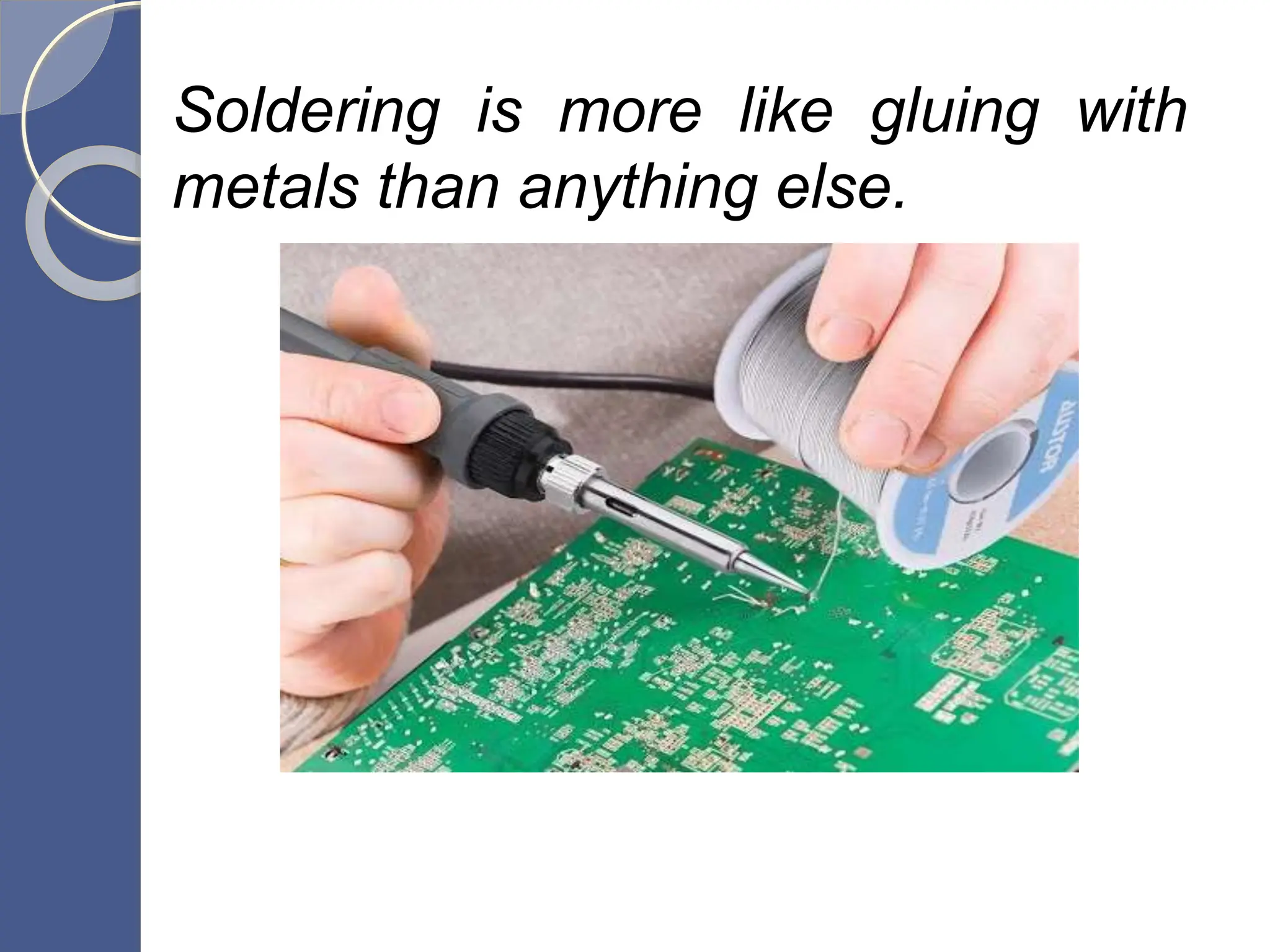
Soldering is more like gluing with
metals than anything else.
Soldering a must have skill for all
sorts of electrical and electronics
work.
It is a skill that must be taught
properly and developed with
practice.
QUALITIES OF A GOOD
SOLDER
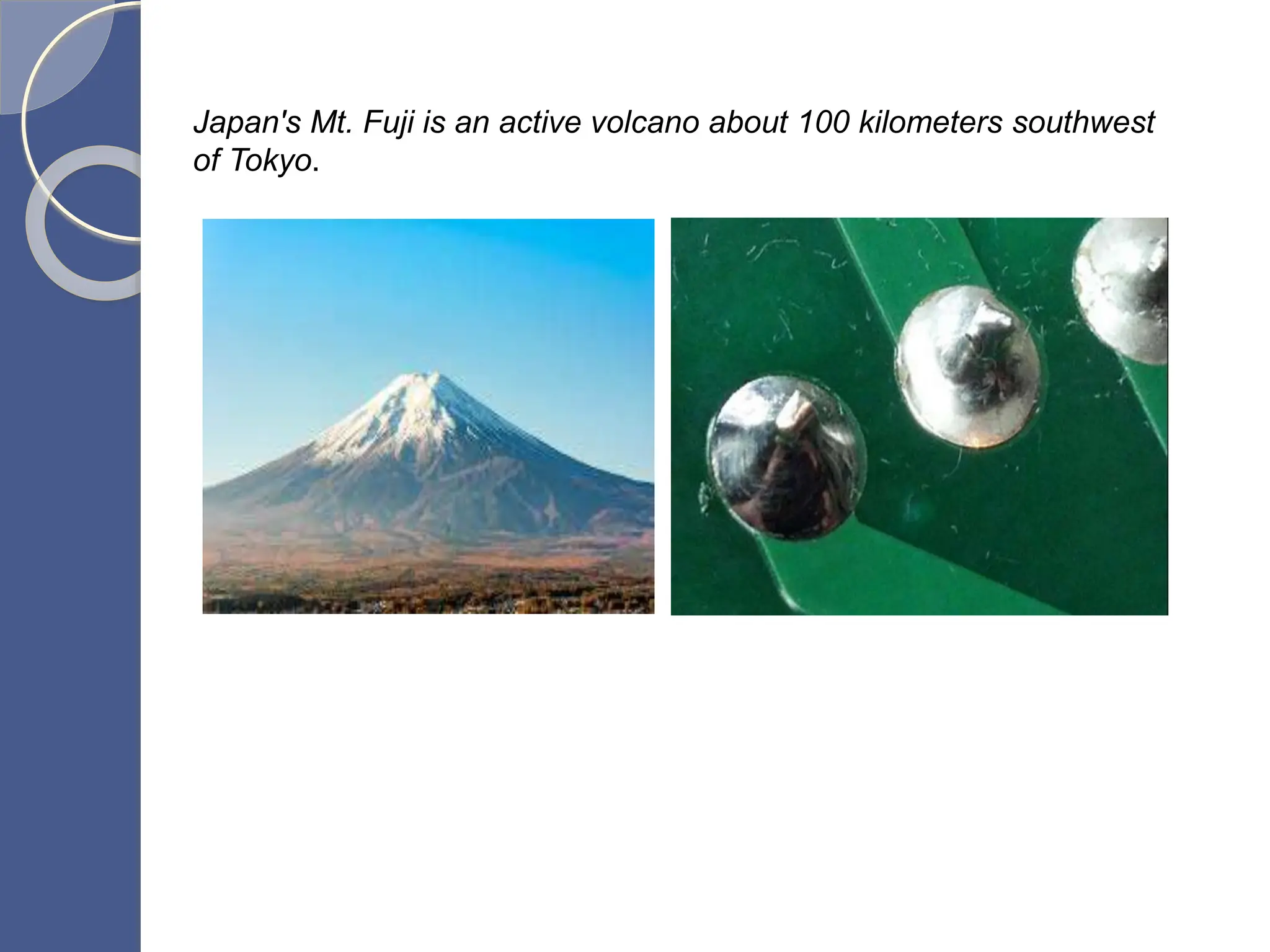
The solder connects the component
terminal with the copper side of the
PCB.
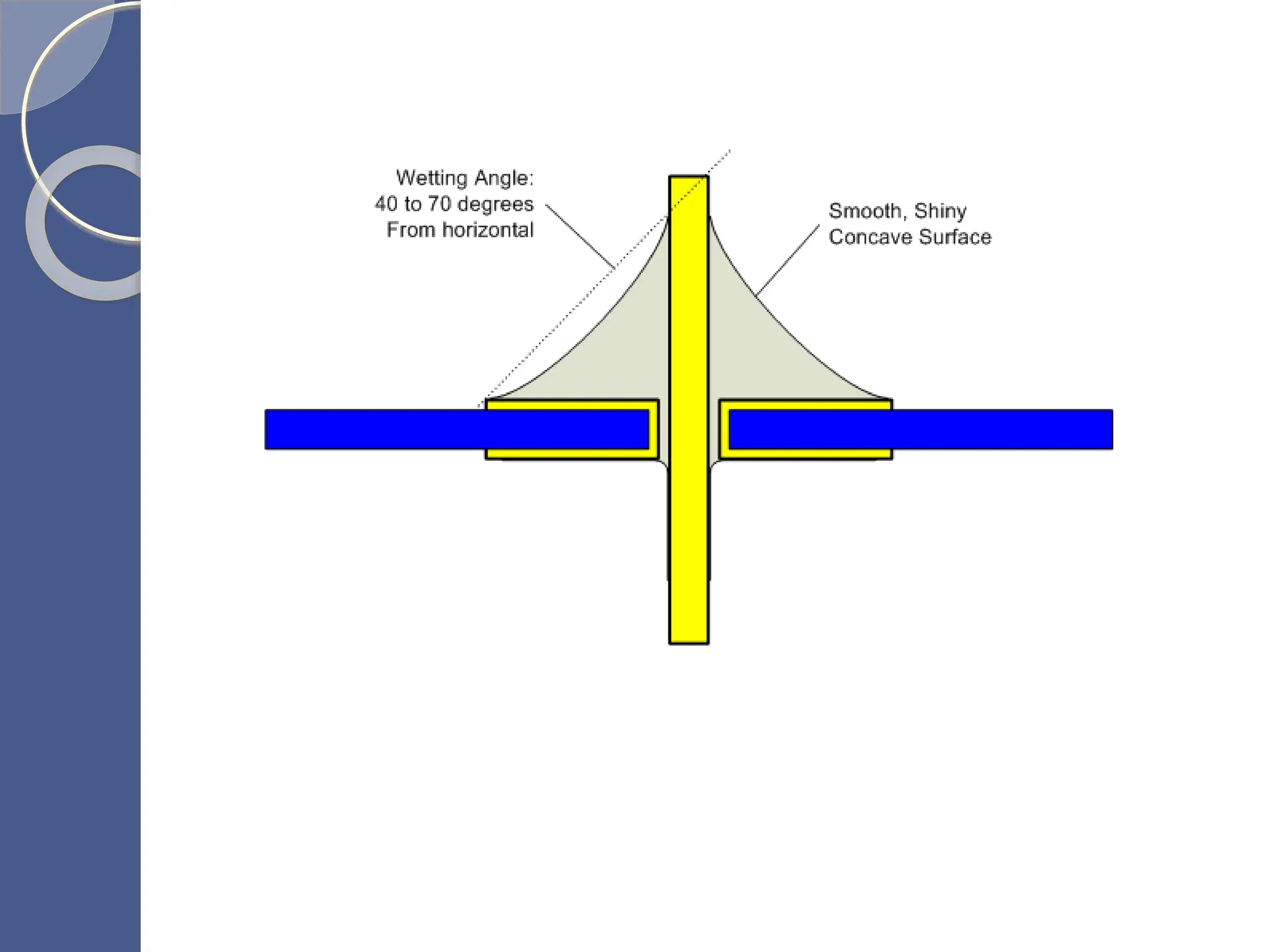
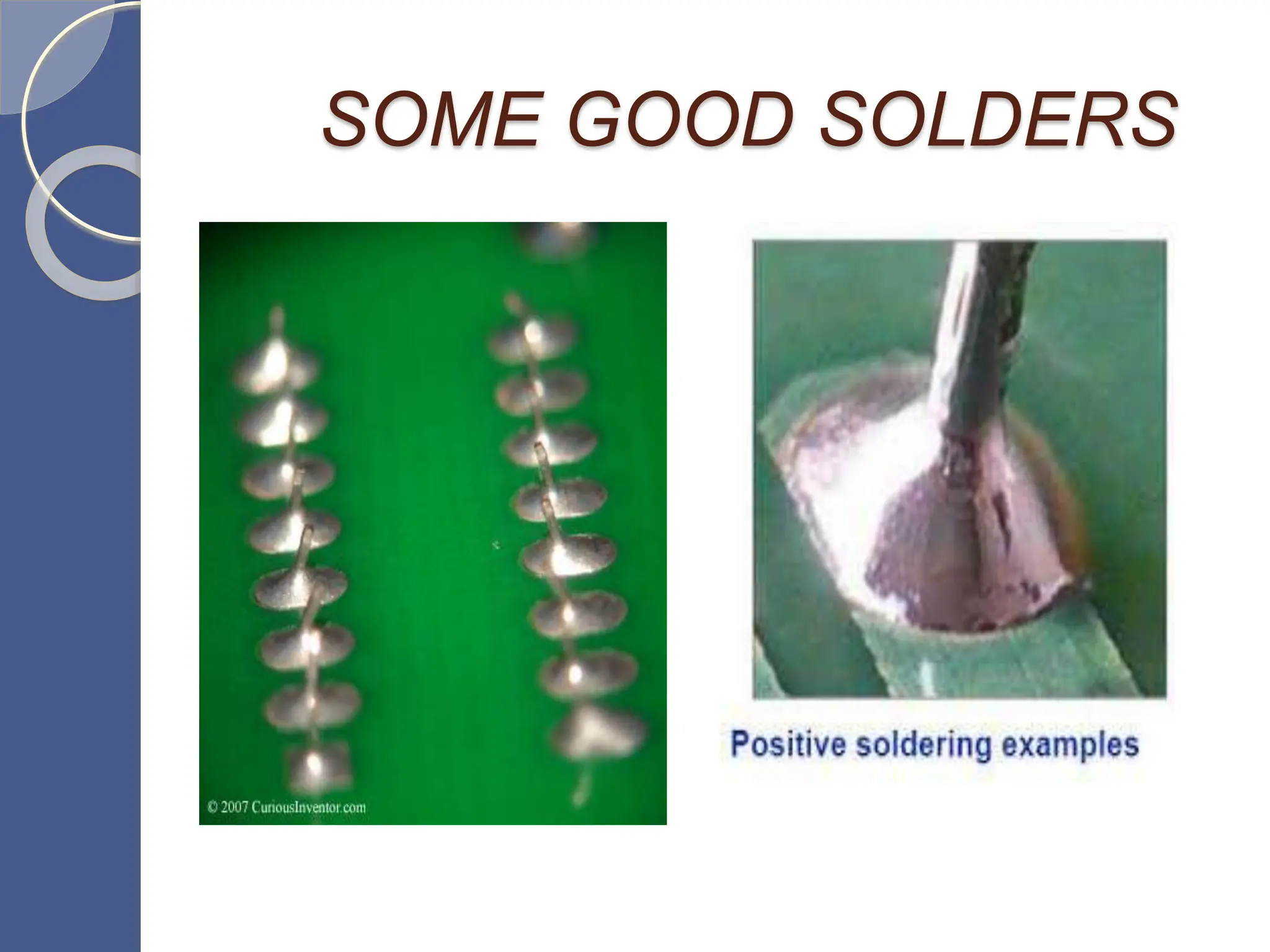
A good solder is shiny, and has a
volcano or has a cone-like shape.
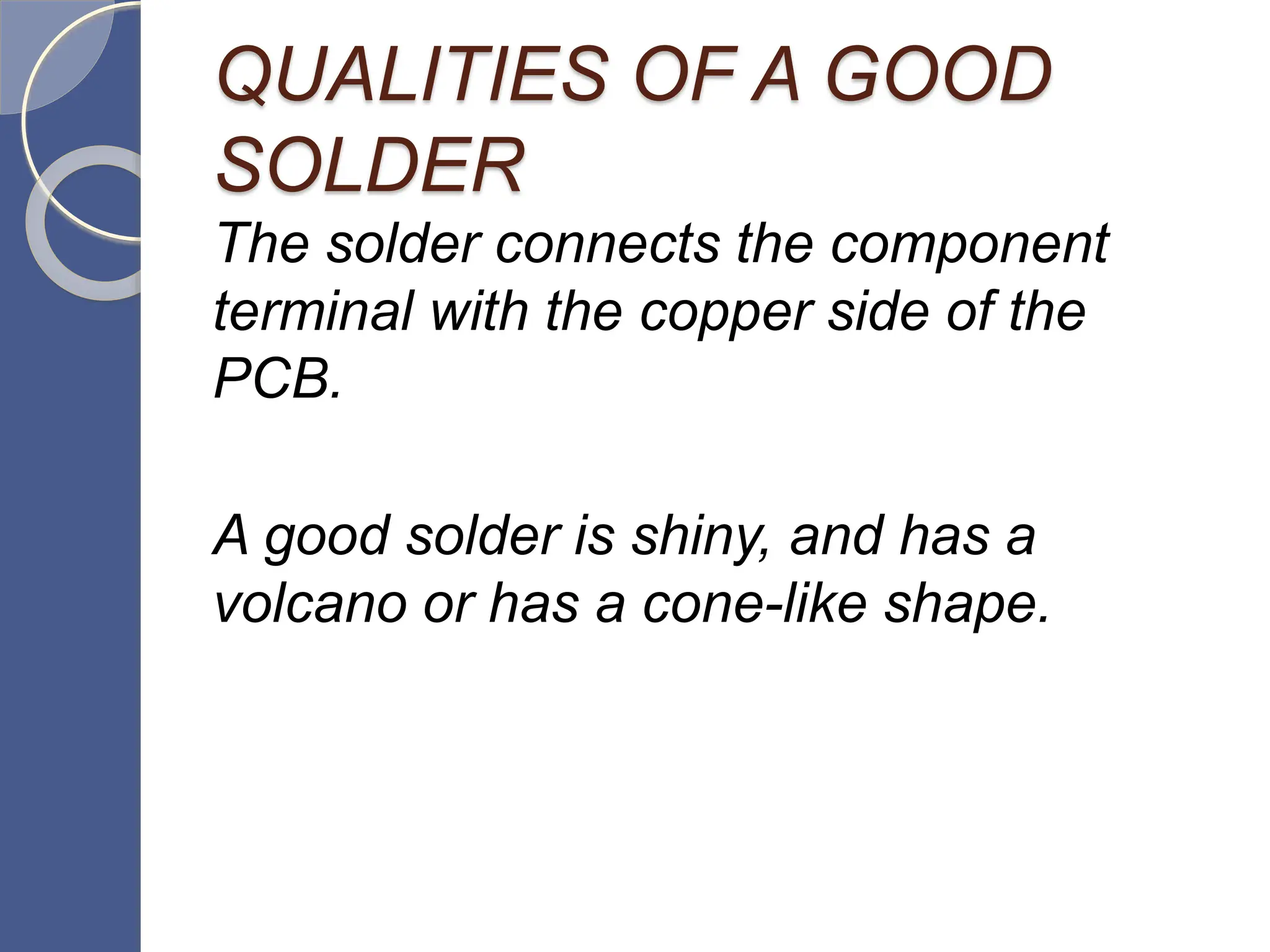
Japan's Mt. Fuji is an active volcano about 100 kilometers southwest
of Tokyo.
SOME GOOD SOLDERS
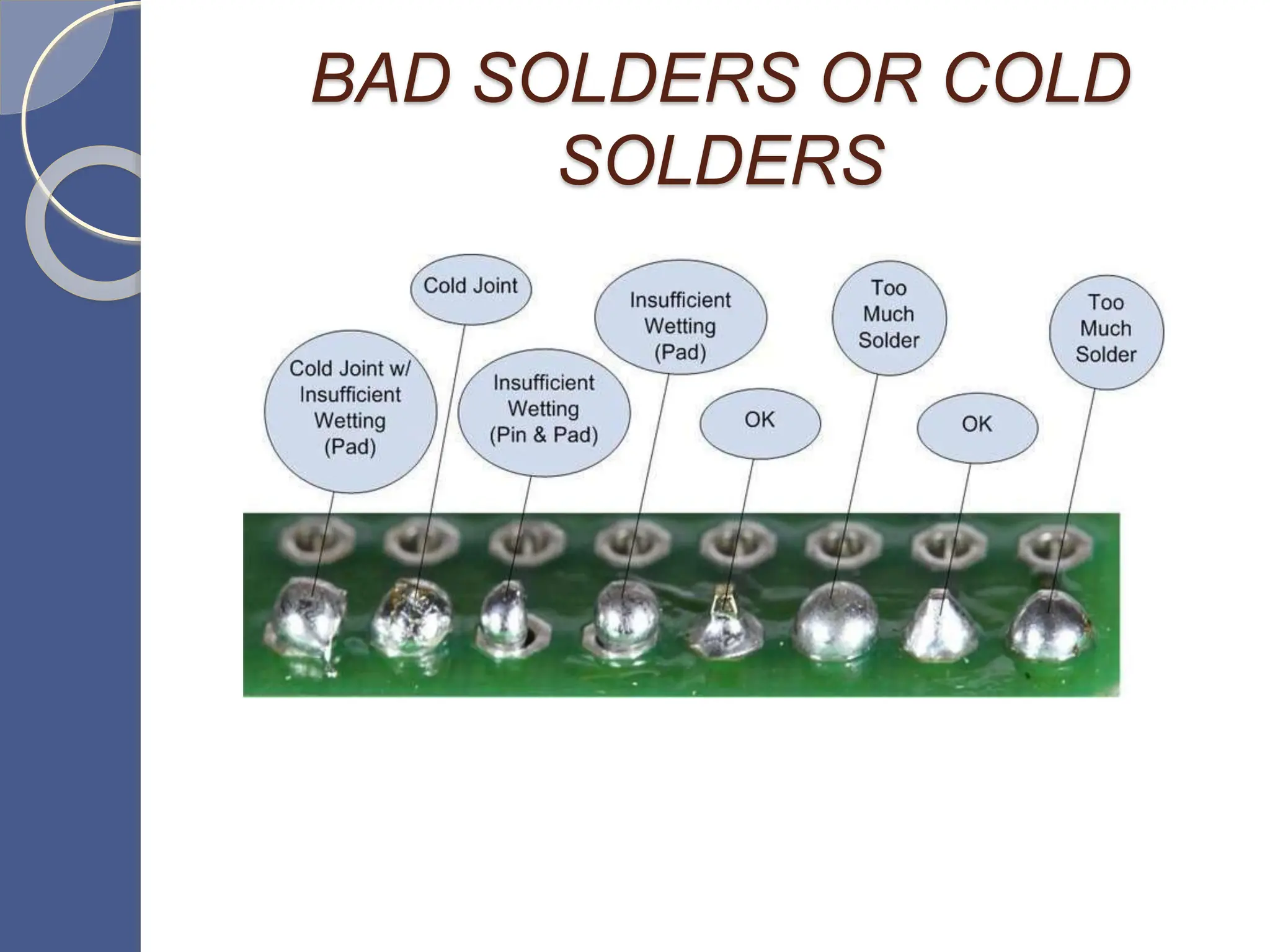
BAD SOLDERS OR COLD
SOLDERS
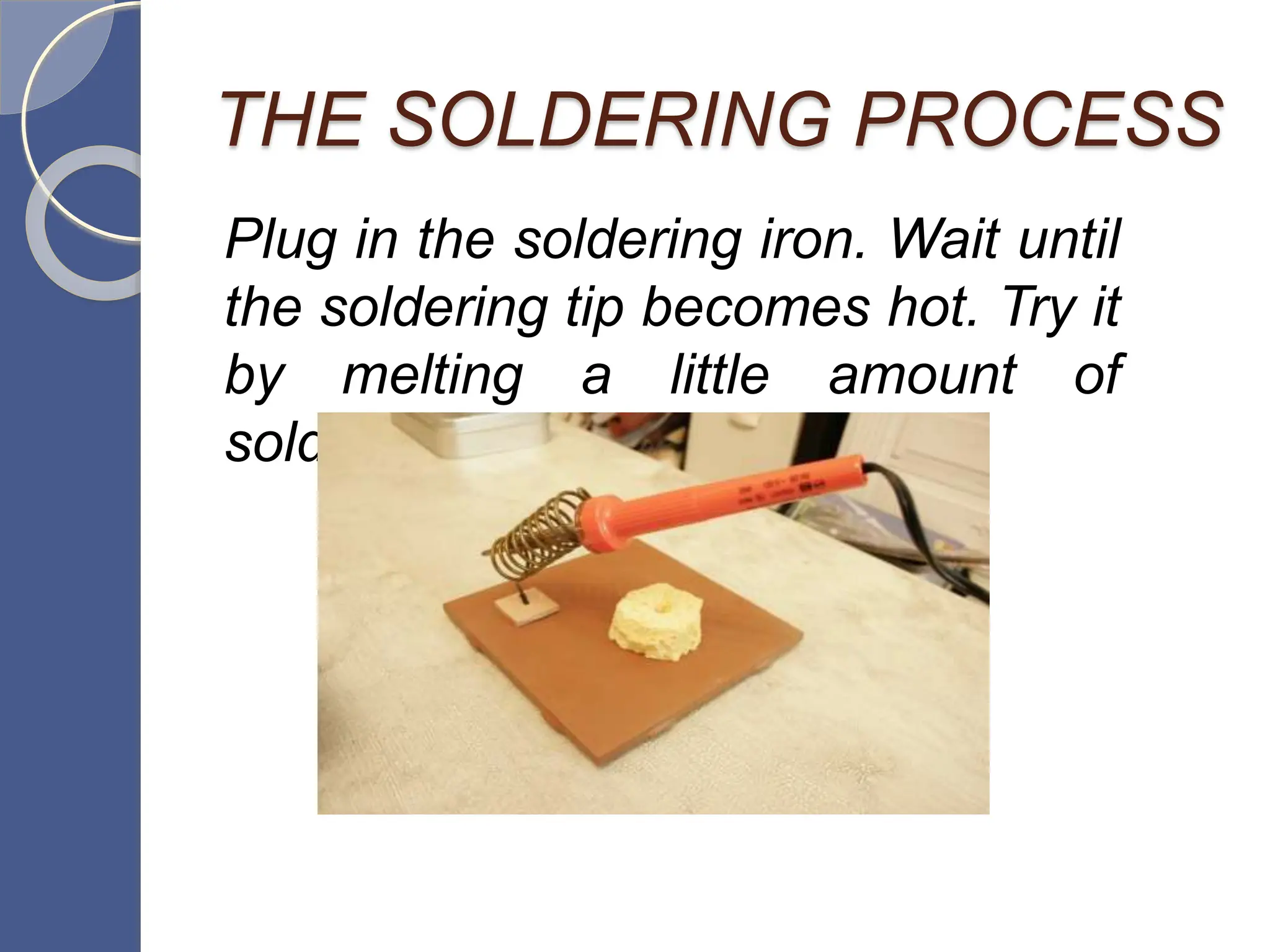
THE SOLDERING PROCESS
Plug in the soldering iron. Wait until
the soldering tip becomes hot. Try it
by melting a little amount of
solder/lead.
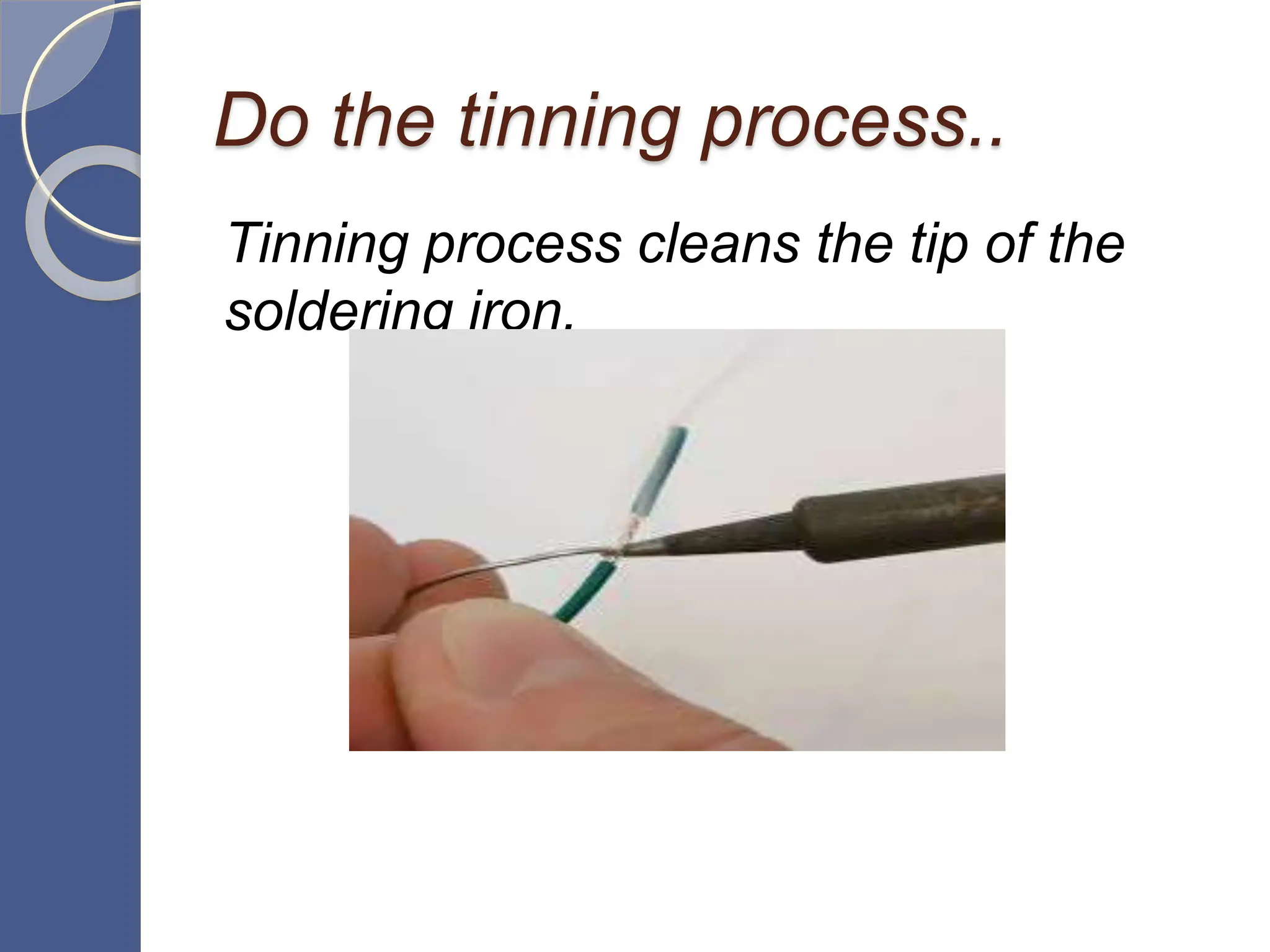
Do the tinning process..
Tinning process cleans the tip of the
soldering iron.
Objectives of the session
At the end of this session, learners will
be able to
a. define soldering,
b. mount and solder components
properly; and
c. differentiate good and bad solder
connections
Materials needed:
- Soldering Iron -
Desoldering tool
- Soldering Stand
- Lead/solder
- PCB Boards (drilled)
- Components
- Longnose
- Side Cutter
- Sanitizer
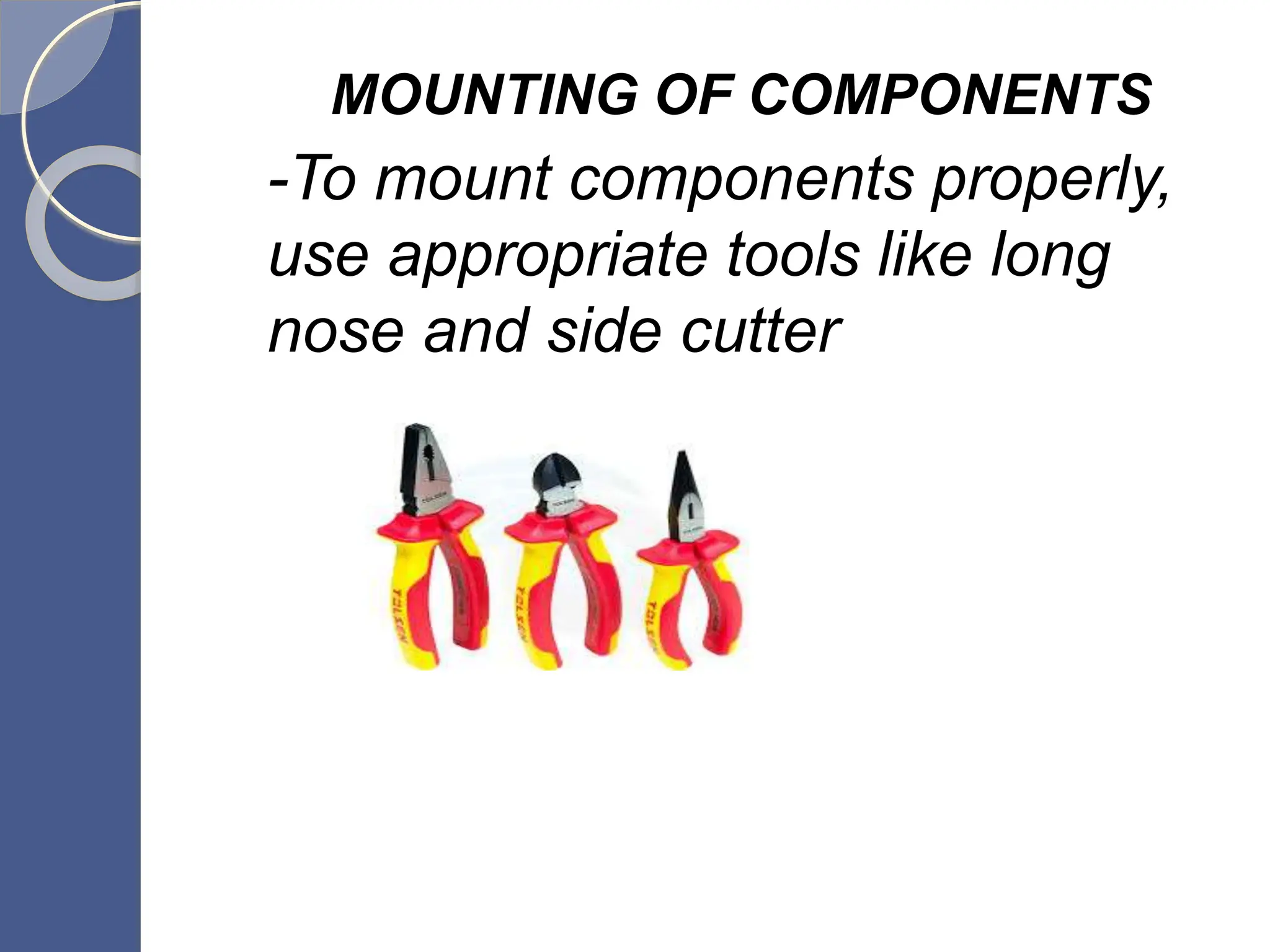
MOUNTING OF COMPONENTS
-To mount components properly,
use appropriate tools like long
nose and side cutter
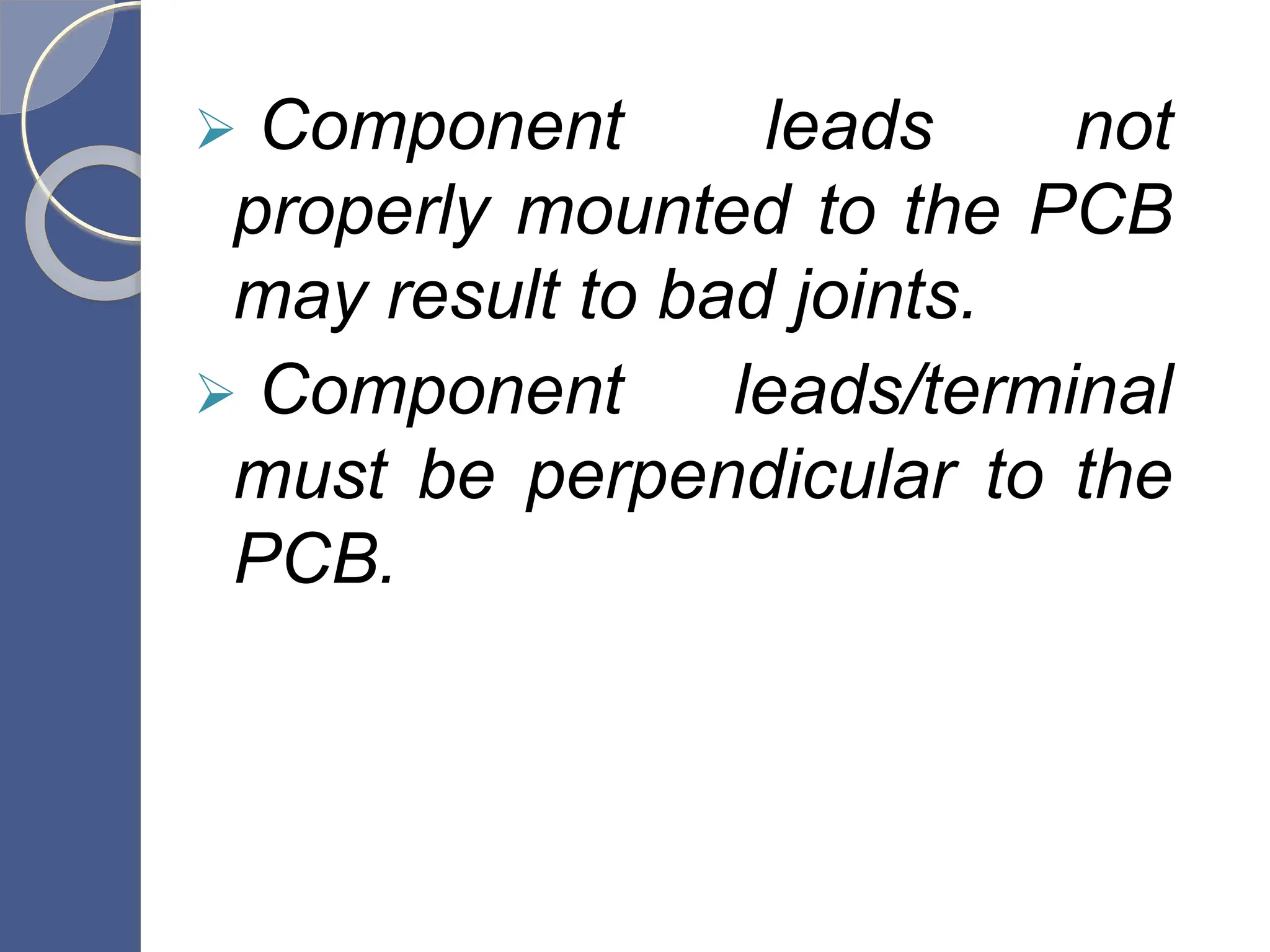
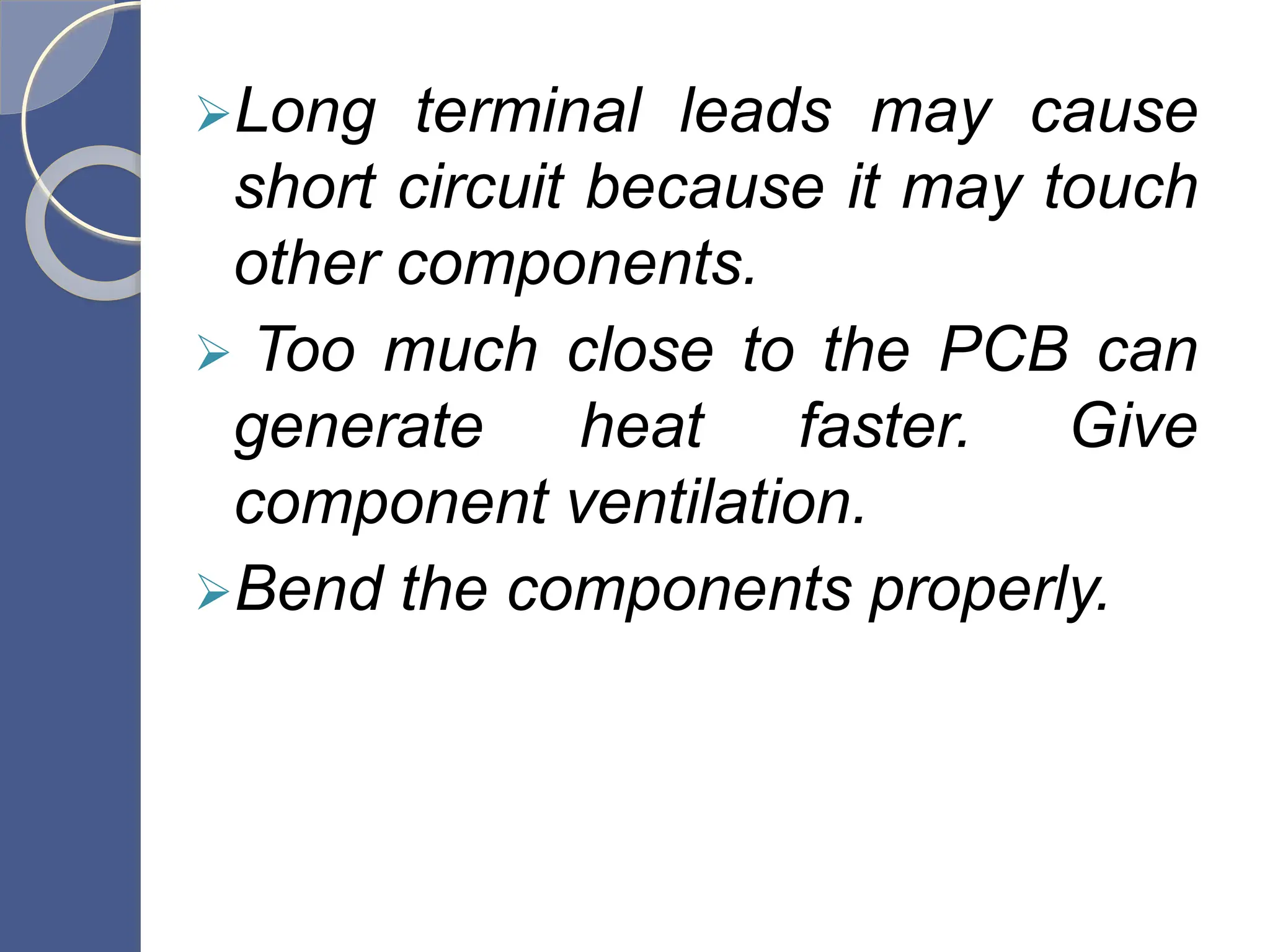
 Component leads not
properly mounted to the PCB
may result to bad joints.
 Component leads/terminal
must be perpendicular to the
PCB.
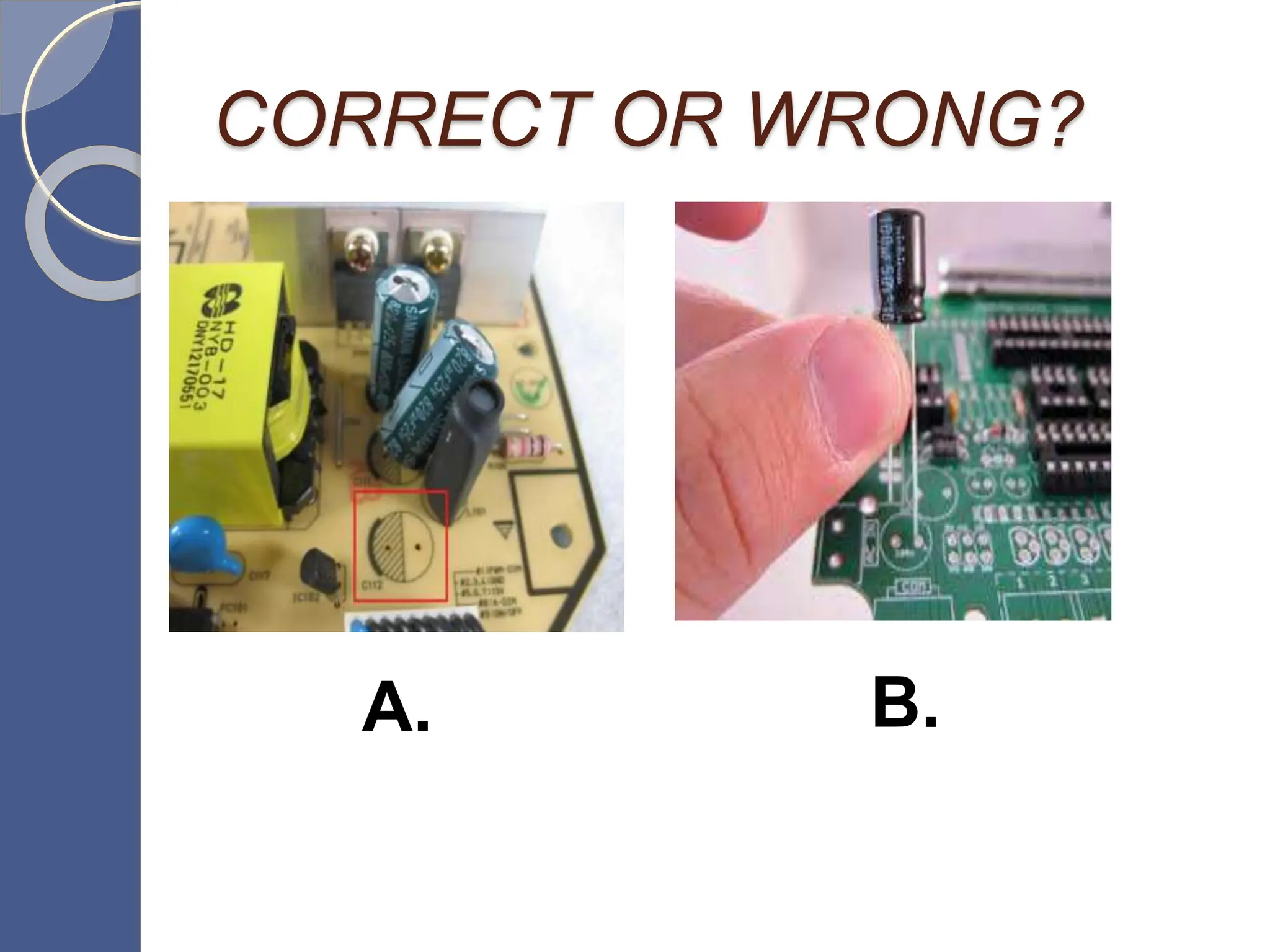
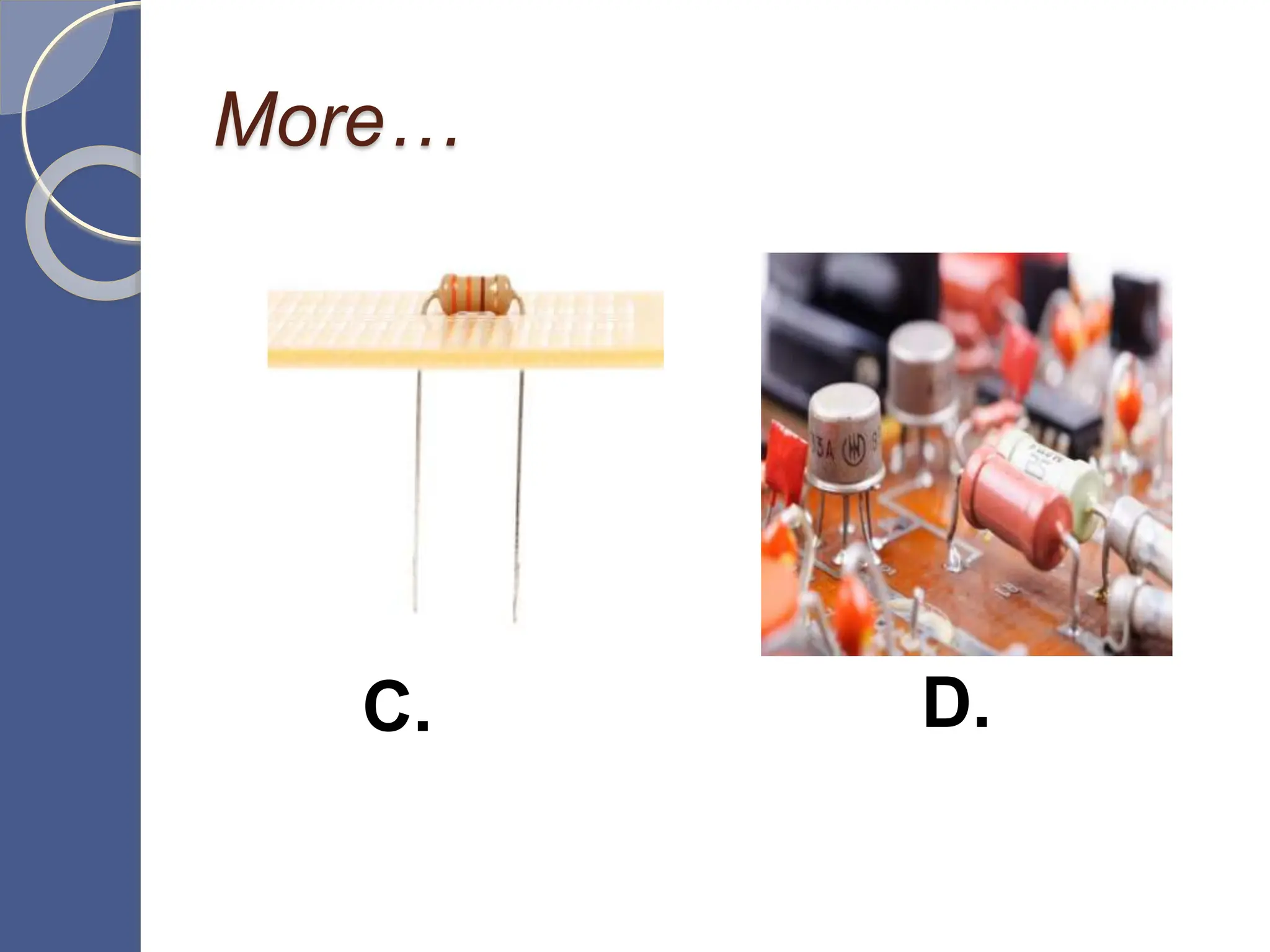
Long terminal leads may cause
short circuit because it may touch
other components.
 Too much close to the PCB can
generate heat faster. Give
component ventilation.
Bend the components properly.
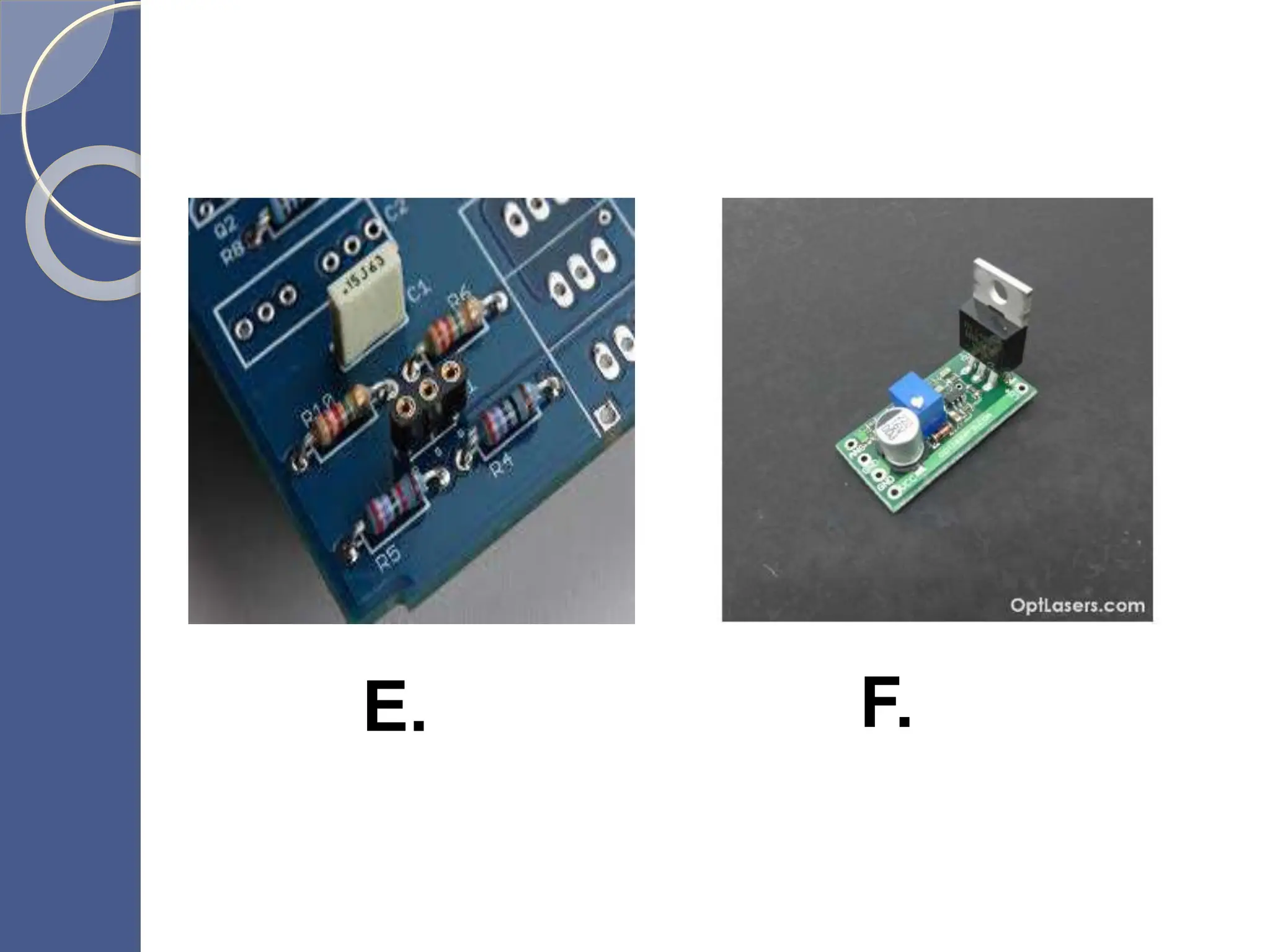
CORRECT OR WRONG?
A. B.
More…
C. D.
E. F.
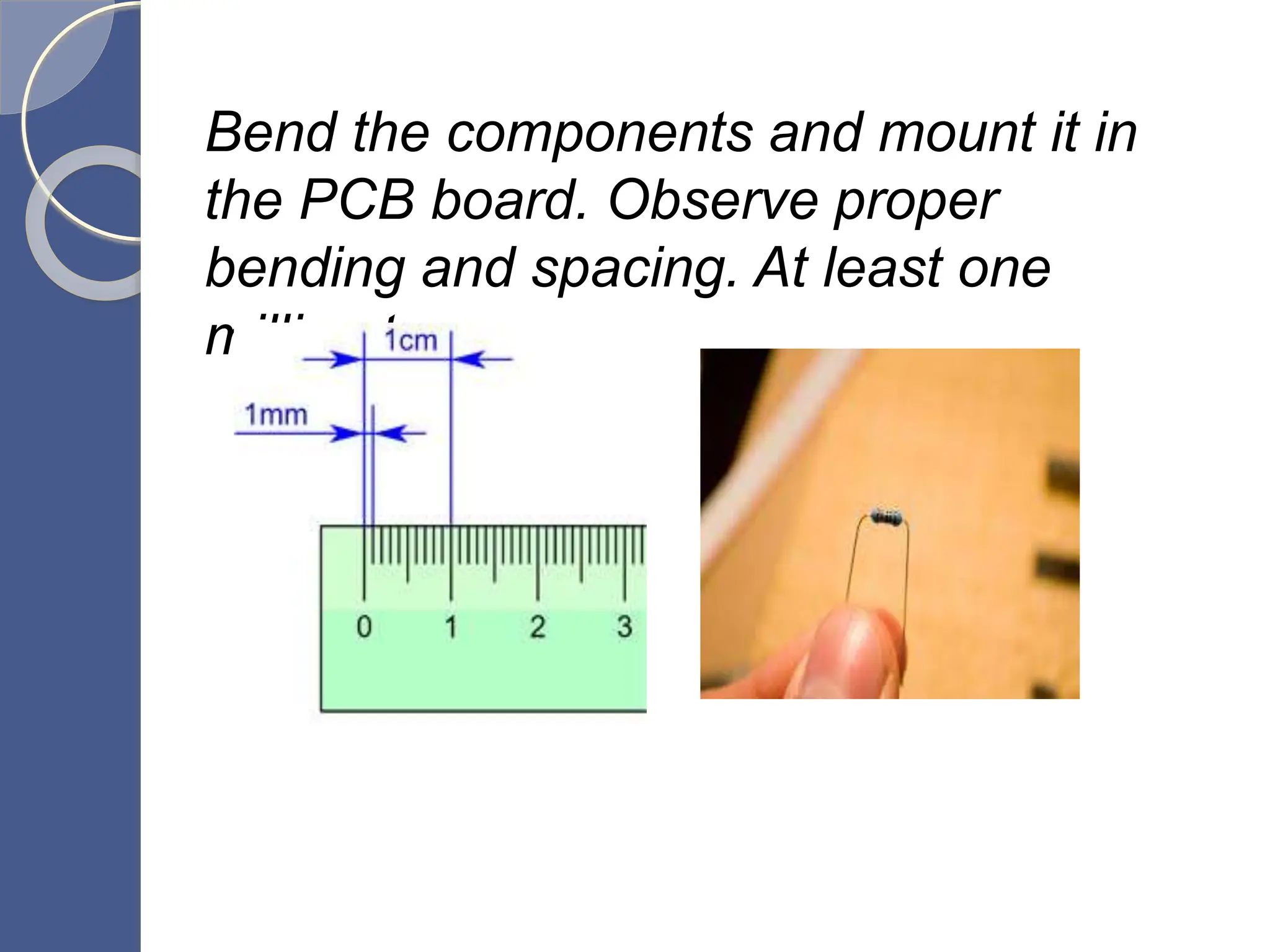
Bend the components and mount it in
the PCB board. Observe proper
bending and spacing. At least one
millimeter.
- Soldering irons were then used to the
many pieces of jewelry, tools and
weapons we know from the Bronze
Age. ( third phase in the development
of material culture among the ancient
peoples of Europe, Asia, and the
Middle East, following the Paleolithic
(Old Stone Age) and Neolithic periods
(New Stone Age).
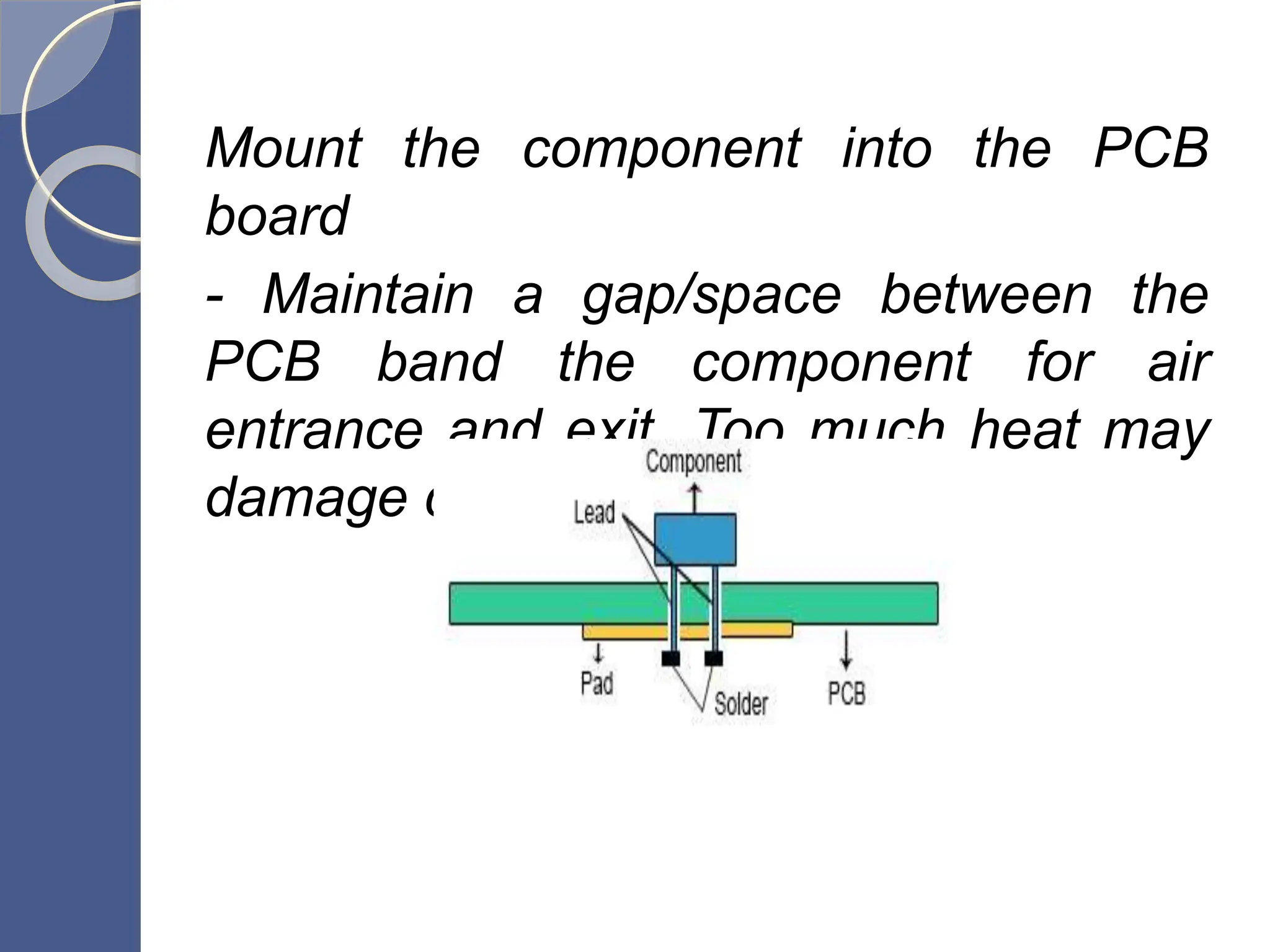
Mount the component into the PCB
board
- Maintain a gap/space between the
PCB band the component for air
entrance and exit. Too much heat may
damage components.
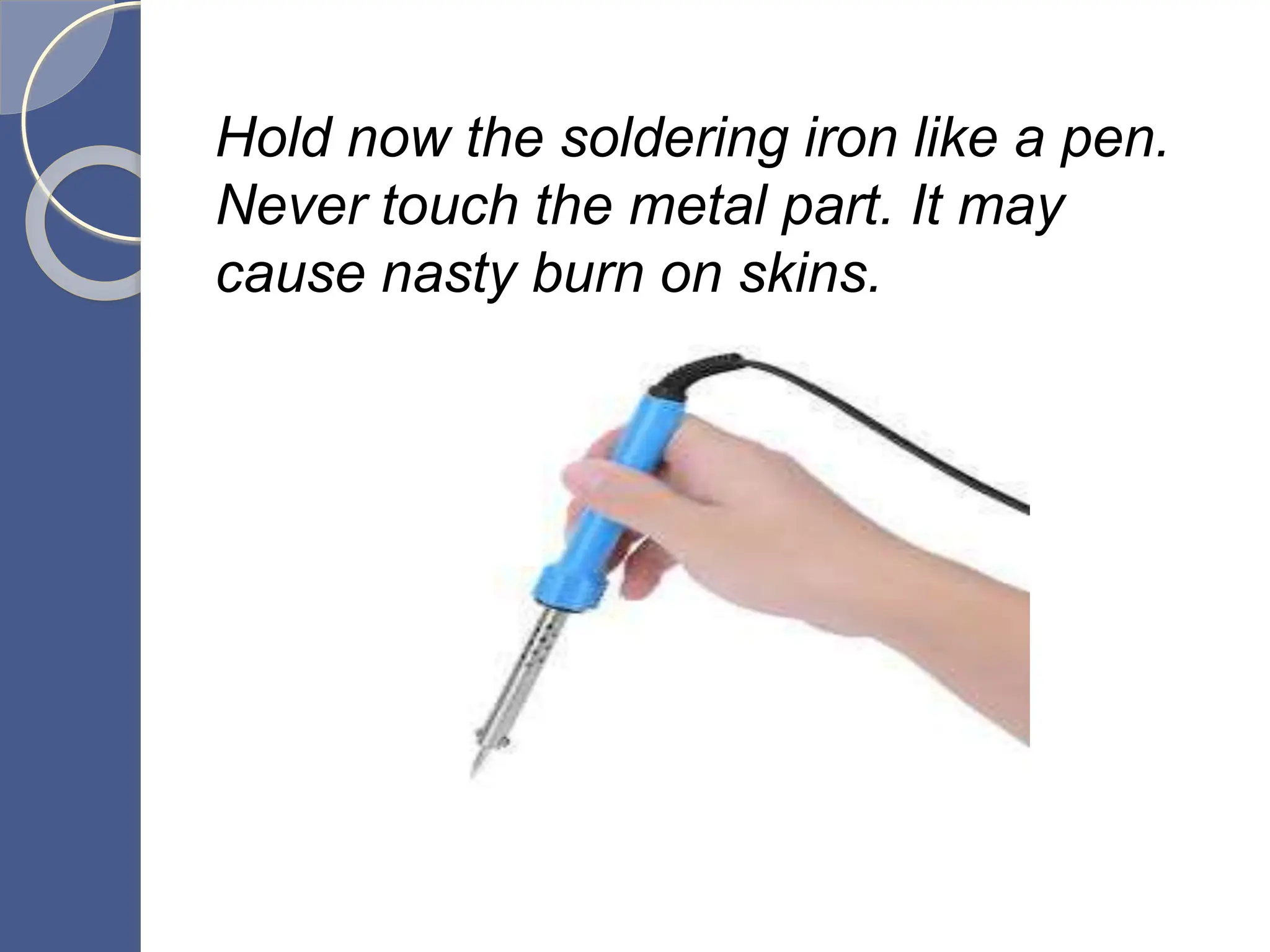
Hold now the soldering iron like a pen.
Never touch the metal part. It may
cause nasty burn on skins.
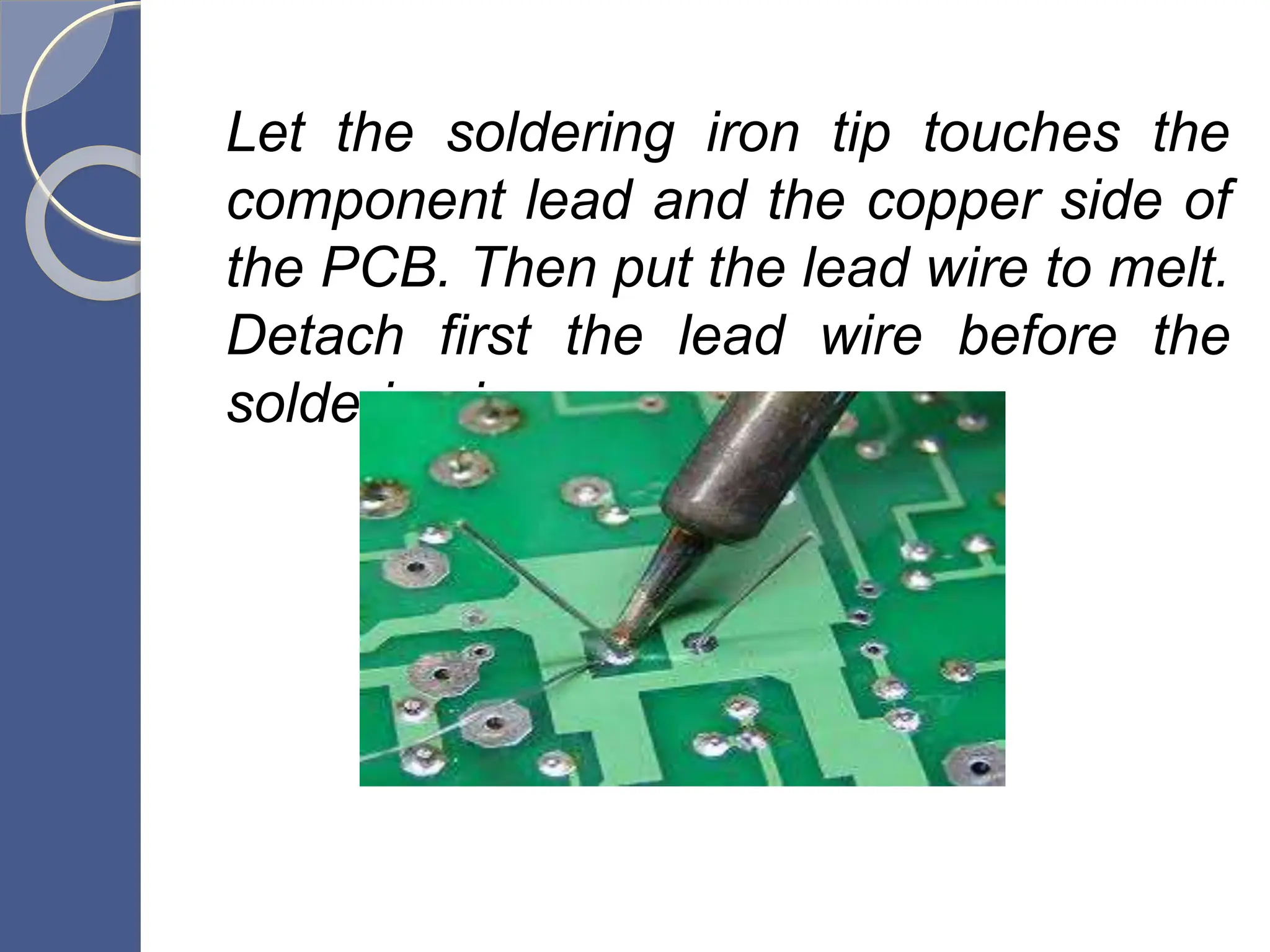
Let the soldering iron tip touches the
component lead and the copper side of
the PCB. Then put the lead wire to melt.
Detach first the lead wire before the
soldering iron.
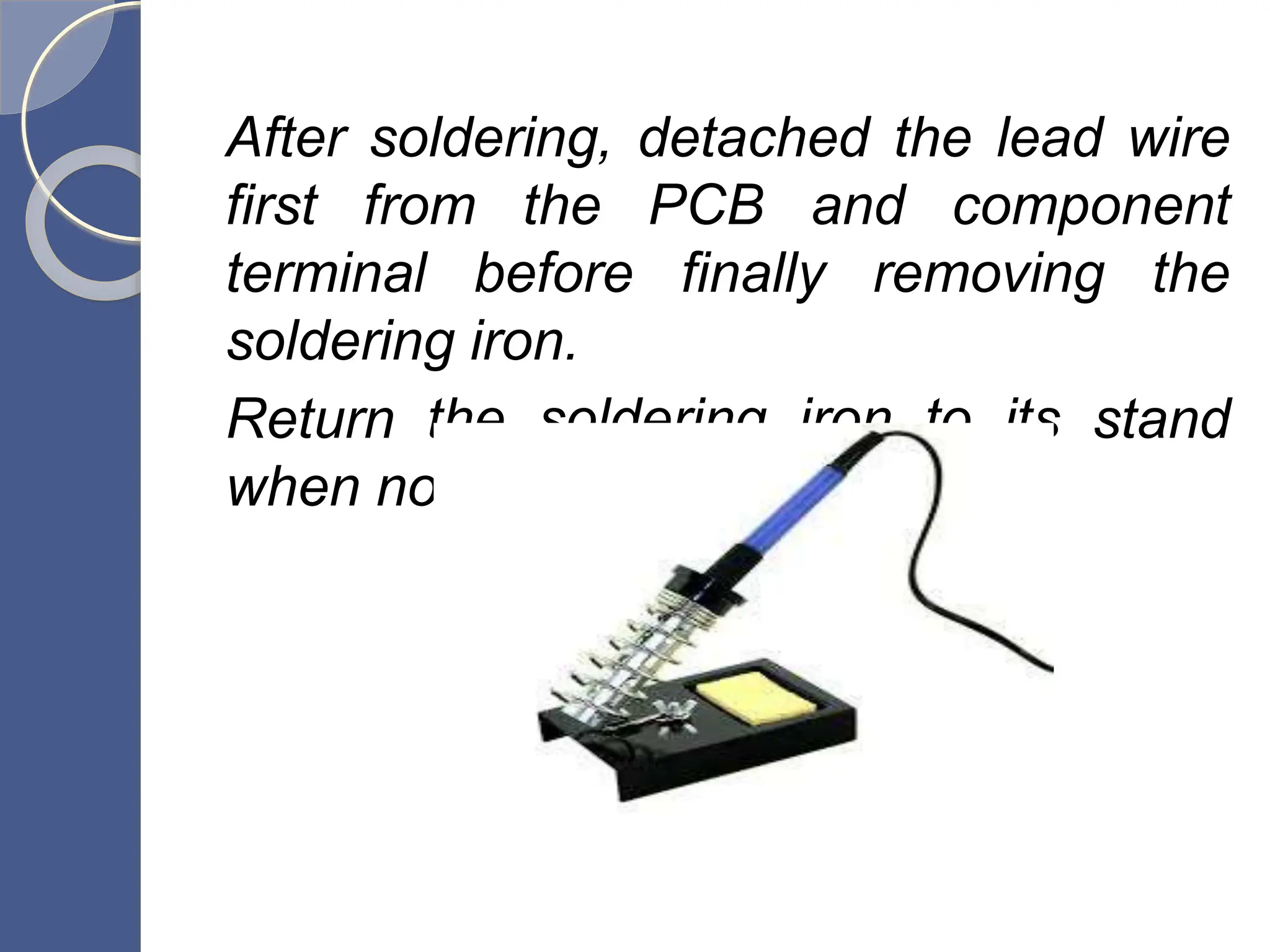
After soldering, detached the lead wire
first from the PCB and component
terminal before finally removing the
soldering iron.
Return the soldering iron to its stand
when not in use.
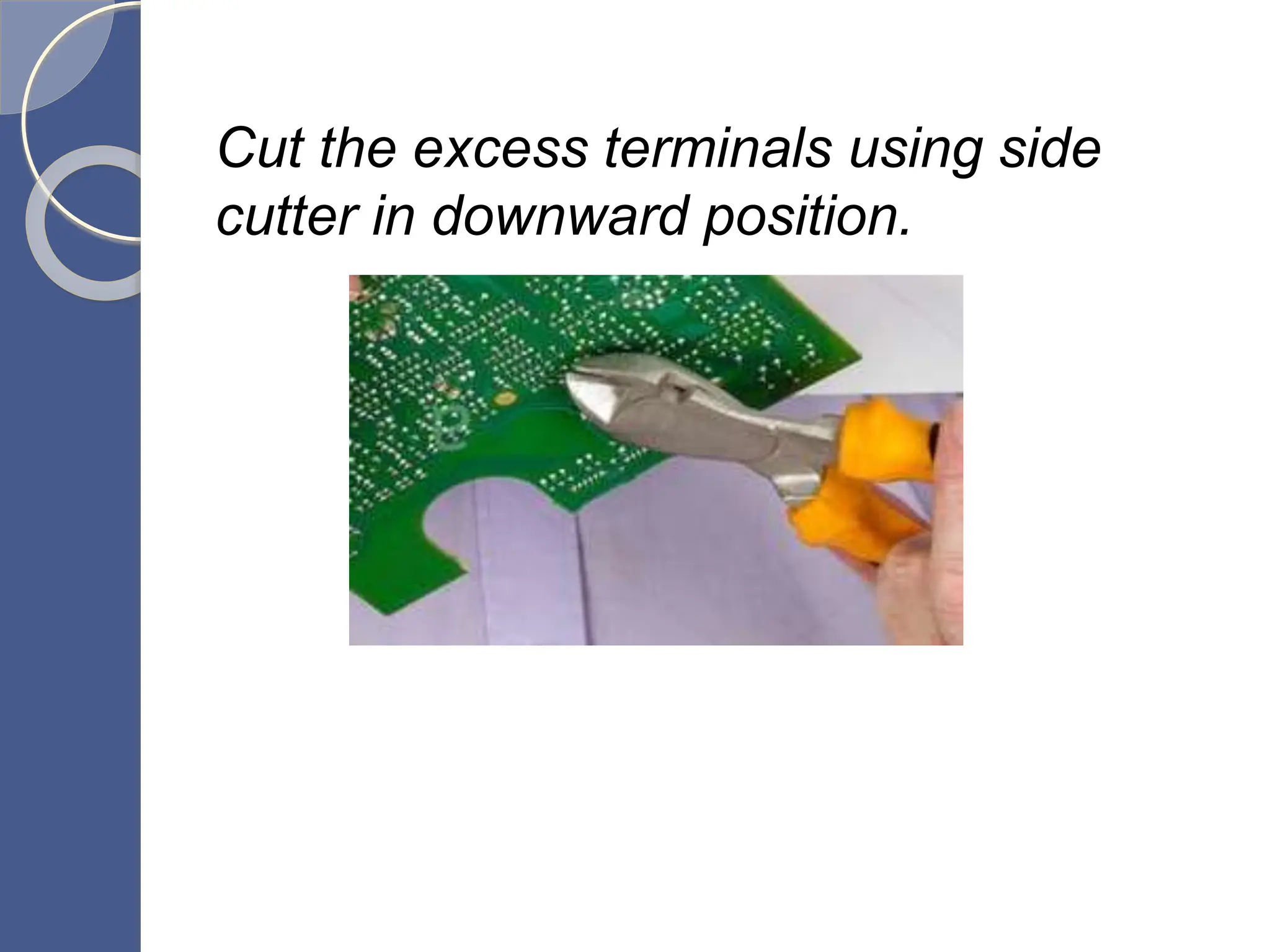
Cut the excess terminals using side
cutter in downward position.
Introduction to Soldering - Proper Soldering and Mounting

Introduction to Soldering - Proper Soldering and Mounting

  • 1.
  • 3.
    Soldering is definedas “ the joining of metals by a fusion of alloys which have relatively low melting points”. Fusion - Fusion occurs when two light atoms bond together, or fuse, to make a heavier one. Alloys - metallic substance composed of two or more elements, as either a compound or a solution
  • 4.
    These two metalsare tin and lead. In the study of science, it defines the following terms: Metal: is a material that, when freshly prepared, polished, or fractured, shows a lustrous appearance, and conducts electricity and heat relatively well.
  • 5.
    Tin (Sn) –Tin isa soft, pliable, silvery-white metal. Tin is not easily oxidized and resists corrosion because it is protected by an oxide film. Tin resists corrosion from distilled sea and soft tap water, and can be attacked by strong acids, alkalis and acid salts.
  • 6.
    Lead (Pb) - Leadis a bluish-white lustrous metal. It is very soft, highly malleable, ductile, and a relatively poor conductor of electricity. It is very resistant to corrosion but tarnishes upon exposure to air. Lead isotopes are the end products of each of the three series of naturally occurring radioactive elements.
  • 7.
    Soldering is morelike gluing with metals than anything else.
  • 8.
    Soldering a musthave skill for all sorts of electrical and electronics work. It is a skill that must be taught properly and developed with practice.
  • 9.
    QUALITIES OF AGOOD SOLDER The solder connects the component terminal with the copper side of the PCB. A good solder is shiny, and has a volcano or has a cone-like shape.
  • 10.
    Japan's Mt. Fujiis an active volcano about 100 kilometers southwest of Tokyo.
  • 12.
  • 13.
    BAD SOLDERS ORCOLD SOLDERS
  • 14.
    THE SOLDERING PROCESS Plugin the soldering iron. Wait until the soldering tip becomes hot. Try it by melting a little amount of solder/lead.
  • 15.
    Do the tinningprocess.. Tinning process cleans the tip of the soldering iron.
  • 16.
    Objectives of thesession At the end of this session, learners will be able to a. define soldering, b. mount and solder components properly; and c. differentiate good and bad solder connections
  • 17.
    Materials needed: - SolderingIron - Desoldering tool - Soldering Stand - Lead/solder - PCB Boards (drilled) - Components - Longnose - Side Cutter - Sanitizer
  • 18.
    MOUNTING OF COMPONENTS -Tomount components properly, use appropriate tools like long nose and side cutter
  • 19.
     Component leadsnot properly mounted to the PCB may result to bad joints.  Component leads/terminal must be perpendicular to the PCB.
  • 20.
    Long terminal leadsmay cause short circuit because it may touch other components.  Too much close to the PCB can generate heat faster. Give component ventilation. Bend the components properly.
  • 21.
  • 22.
  • 23.
  • 24.
    Bend the componentsand mount it in the PCB board. Observe proper bending and spacing. At least one millimeter.
  • 25.
    - Soldering ironswere then used to the many pieces of jewelry, tools and weapons we know from the Bronze Age. ( third phase in the development of material culture among the ancient peoples of Europe, Asia, and the Middle East, following the Paleolithic (Old Stone Age) and Neolithic periods (New Stone Age).
  • 26.
    Mount the componentinto the PCB board - Maintain a gap/space between the PCB band the component for air entrance and exit. Too much heat may damage components.
  • 27.
    Hold now thesoldering iron like a pen. Never touch the metal part. It may cause nasty burn on skins.
  • 28.
    Let the solderingiron tip touches the component lead and the copper side of the PCB. Then put the lead wire to melt. Detach first the lead wire before the soldering iron.
  • 29.
    After soldering, detachedthe lead wire first from the PCB and component terminal before finally removing the soldering iron. Return the soldering iron to its stand when not in use.
  • 30.
    Cut the excessterminals using side cutter in downward position.