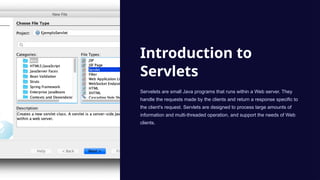
Introduction to
Servlets
Servelets are small Java programs that runs within a Web server. They
handle the requests made by the clients and return a response specific to
the client's request. Servlets are designed to process large amounts of
information and multi-threaded operation, and support the needs of Web
clients.
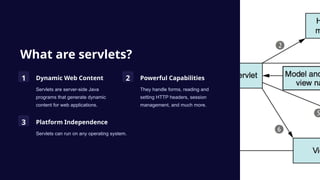
What are servlets?
1 Dynamic Web Content
Servlets are server-side Java
programs that generate dynamic
content for web applications.
2 Powerful Capabilities
They handle forms, reading and
setting HTTP headers, session
management, and much more.
3 Platform Independence
Servlets can run on any operating system.
Servlet Lifecycle
1 Initialization
Servlet is loaded into memory and initialized.
2 Service
Handles client requests and generates responses.
3 Destruction
Servlet is removed from memory.
Servlet API
javax.servlet package
Contains many classes and interfaces which
are required for servlets.
javax.servlet.http package
Extends javax.servlet package with classes
specific to HTTP requests and responses.
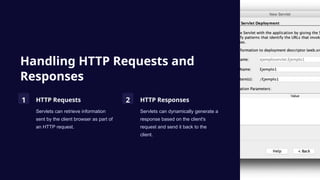
Handling HTTP Requests and
Responses
1 HTTP Requests
Servlets can retrieve information
sent by the client browser as part of
an HTTP request.
2 HTTP Responses
Servlets can dynamically generate a
response based on the client's
request and send it back to the
client.
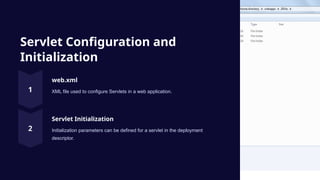
Servlet Configuration and
Initialization
web.xml
XML file used to configure Servlets in a web application.
Servlet Initialization
Initialization parameters can be defined for a servlet in the deployment
descriptor.
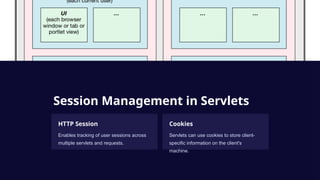
Session Management in Servlets
HTTP Session
Enables tracking of user sessions across
multiple servlets and requests.
Cookies
Servlets can use cookies to store client-
specific information on the client's
machine.
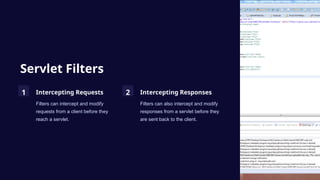
Servlet Filters
1 Intercepting Requests
Filters can intercept and modify
requests from a client before they
reach a servlet.
2 Intercepting Responses
Filters can also intercept and modify
responses from a servlet before they
are sent back to the client.
Servlet Listeners
1 Context Listeners
Used to receive notifications about changes to the servlet context.
2 Attribute Listeners
Used to receive notifications about changes to attributes in the servlet context.
Best Practices for Servlet
Development
1
Modularity
Design servlets with modular components for
better organization and maintenance.
2
Error Handling
Implement robust error handling to enhance
user experience and provide meaningful
feedback.
3
Security
Always prioritize security measures to protect
against vulnerabilities and attacks.
4
Performance Tuning
Optimize servlets for performance to ensure
efficient use of system resources.

Introduction to Servlets topic for https

  • 1.
    Introduction to Servlets Servelets aresmall Java programs that runs within a Web server. They handle the requests made by the clients and return a response specific to the client's request. Servlets are designed to process large amounts of information and multi-threaded operation, and support the needs of Web clients.
  • 2.
    What are servlets? 1Dynamic Web Content Servlets are server-side Java programs that generate dynamic content for web applications. 2 Powerful Capabilities They handle forms, reading and setting HTTP headers, session management, and much more. 3 Platform Independence Servlets can run on any operating system.
  • 3.
    Servlet Lifecycle 1 Initialization Servletis loaded into memory and initialized. 2 Service Handles client requests and generates responses. 3 Destruction Servlet is removed from memory.
  • 4.
    Servlet API javax.servlet package Containsmany classes and interfaces which are required for servlets. javax.servlet.http package Extends javax.servlet package with classes specific to HTTP requests and responses.
  • 5.
    Handling HTTP Requestsand Responses 1 HTTP Requests Servlets can retrieve information sent by the client browser as part of an HTTP request. 2 HTTP Responses Servlets can dynamically generate a response based on the client's request and send it back to the client.
  • 6.
    Servlet Configuration and Initialization web.xml XMLfile used to configure Servlets in a web application. Servlet Initialization Initialization parameters can be defined for a servlet in the deployment descriptor.
  • 7.
    Session Management inServlets HTTP Session Enables tracking of user sessions across multiple servlets and requests. Cookies Servlets can use cookies to store client- specific information on the client's machine.
  • 8.
    Servlet Filters 1 InterceptingRequests Filters can intercept and modify requests from a client before they reach a servlet. 2 Intercepting Responses Filters can also intercept and modify responses from a servlet before they are sent back to the client.
  • 9.
    Servlet Listeners 1 ContextListeners Used to receive notifications about changes to the servlet context. 2 Attribute Listeners Used to receive notifications about changes to attributes in the servlet context.
  • 10.
    Best Practices forServlet Development 1 Modularity Design servlets with modular components for better organization and maintenance. 2 Error Handling Implement robust error handling to enhance user experience and provide meaningful feedback. 3 Security Always prioritize security measures to protect against vulnerabilities and attacks. 4 Performance Tuning Optimize servlets for performance to ensure efficient use of system resources.