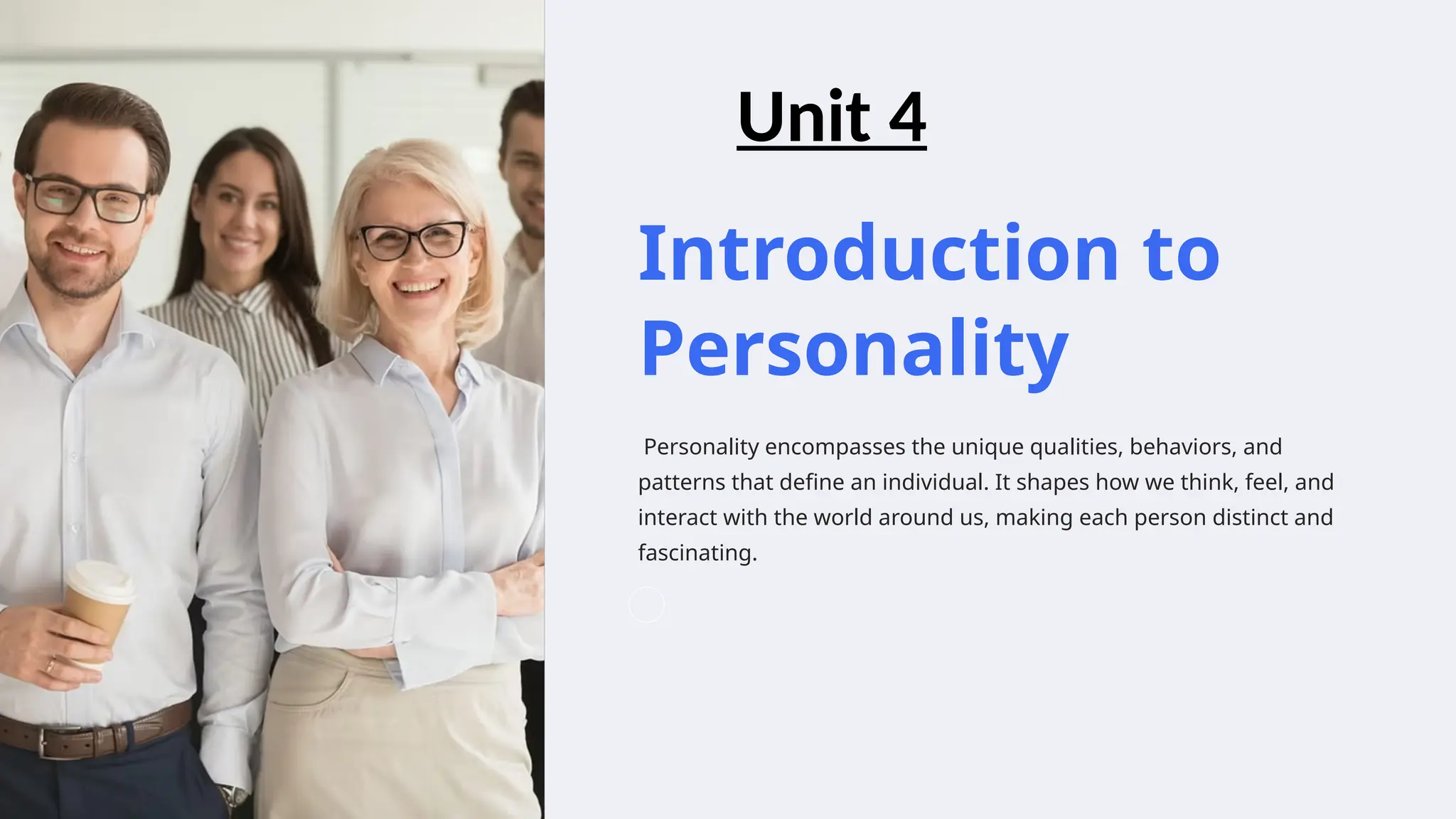
Introduction to
Personality
Personality encompasses the unique qualities, behaviors, and
patterns that define an individual. It shapes how we think, feel, and
interact with the world around us, making each person distinct and
fascinating.
Unit 4
Defining Personality
Traits
Personality traits are the
stable, enduring
characteristics that influence
our thoughts, emotions, and
actions.
Behaviors
Personality is also reflected in
our observable behaviors,
such as how we
communicate, make
decisions, and respond to
various situations.
Uniqueness
Each person's personality is a
unique blend of traits,
behaviors, and inner
experiences, making us one-
of-a-kind individuals.
Theories of Personality
1 Trait Theory
Identifies and categorizes the fundamental
personality traits that shape an individual's
behavior.
2 Psychoanalytic Theory
Explores the role of the unconscious mind
and early childhood experiences in shaping
personality.
3 Social Cognitive Theory
Emphasizes the influence of social
interactions and cognitive processes on
personality development.
4 Humanistic Theory
Focuses on the individual's innate drive for
growth, self-actualization, and fulfillment.
Personality Traits and Types
The Big Five
Openness, Conscientiousness, Extraversion,
Agreeableness, and Neuroticism are the five
broad personality traits.
Myers-Briggs Types
The Myers-Briggs Type Indicator categorizes
individuals into 16 distinct personality types
based on their preferences.
Enneagram
The Enneagram system identifies nine
different personality types, each with its own
motivations, strengths, and weaknesses.
Temperaments
Personality types can also be described in
terms of four basic temperaments: sanguine,
choleric, melancholic, and phlegmatic.
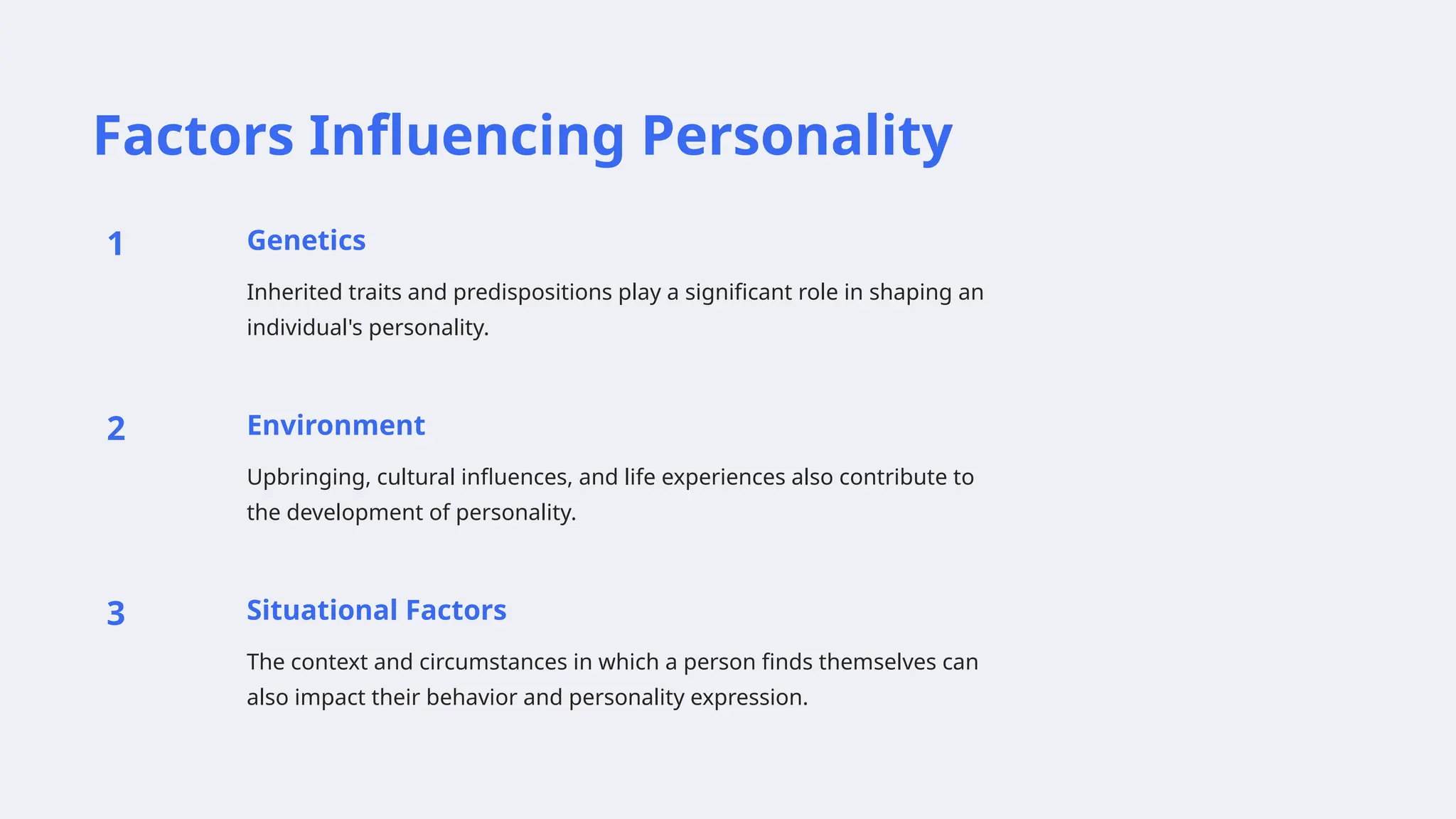
Factors Influencing Personality
1 Genetics
Inherited traits and predispositions play a significant role in shaping an
individual's personality.
2 Environment
Upbringing, cultural influences, and life experiences also contribute to
the development of personality.
3 Situational Factors
The context and circumstances in which a person finds themselves can
also impact their behavior and personality expression.
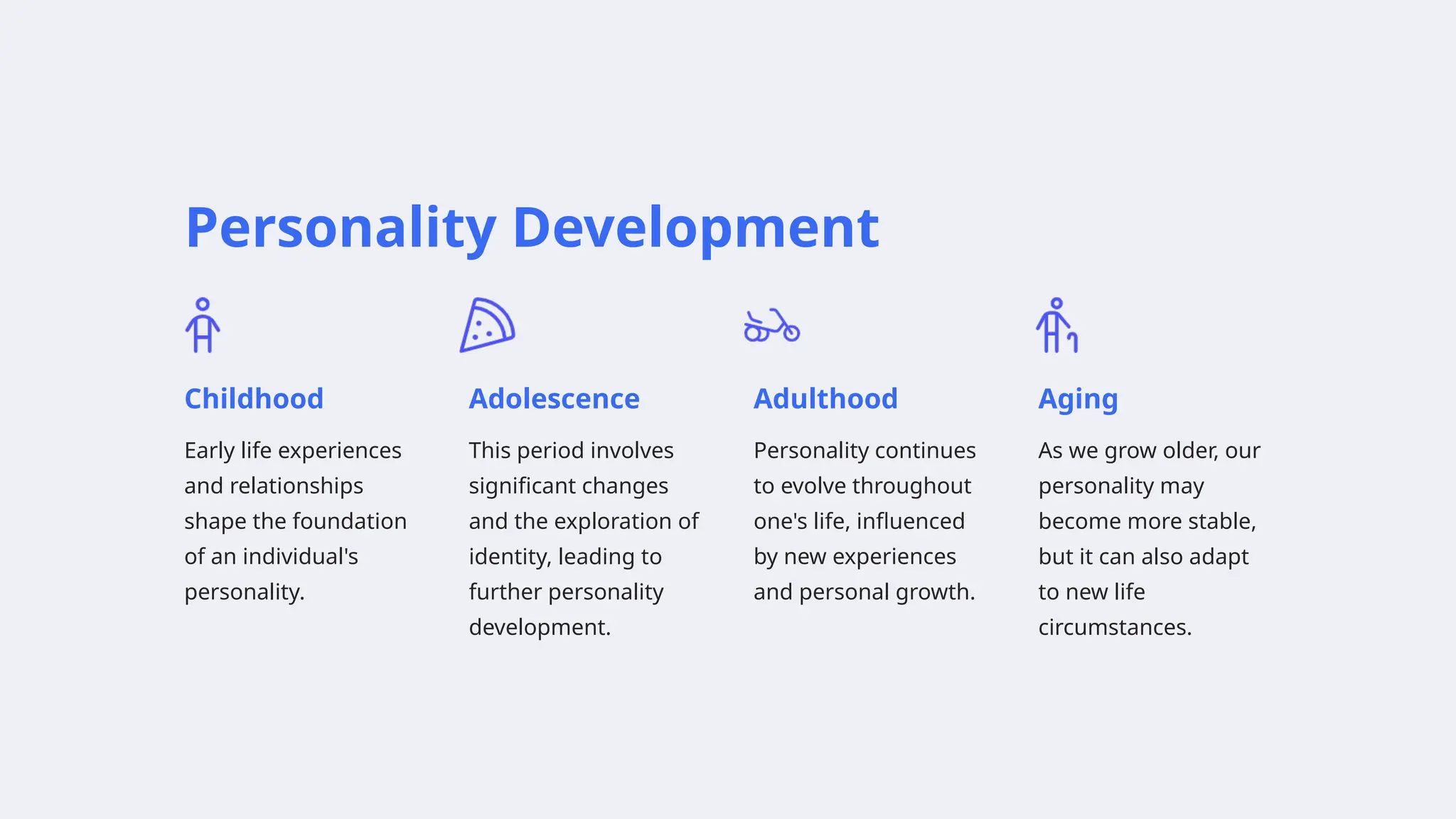
Personality Development
Childhood
Early life experiences
and relationships
shape the foundation
of an individual's
personality.
Adolescence
This period involves
significant changes
and the exploration of
identity, leading to
further personality
development.
Adulthood
Personality continues
to evolve throughout
one's life, influenced
by new experiences
and personal growth.
Aging
As we grow older, our
personality may
become more stable,
but it can also adapt
to new life
circumstances.
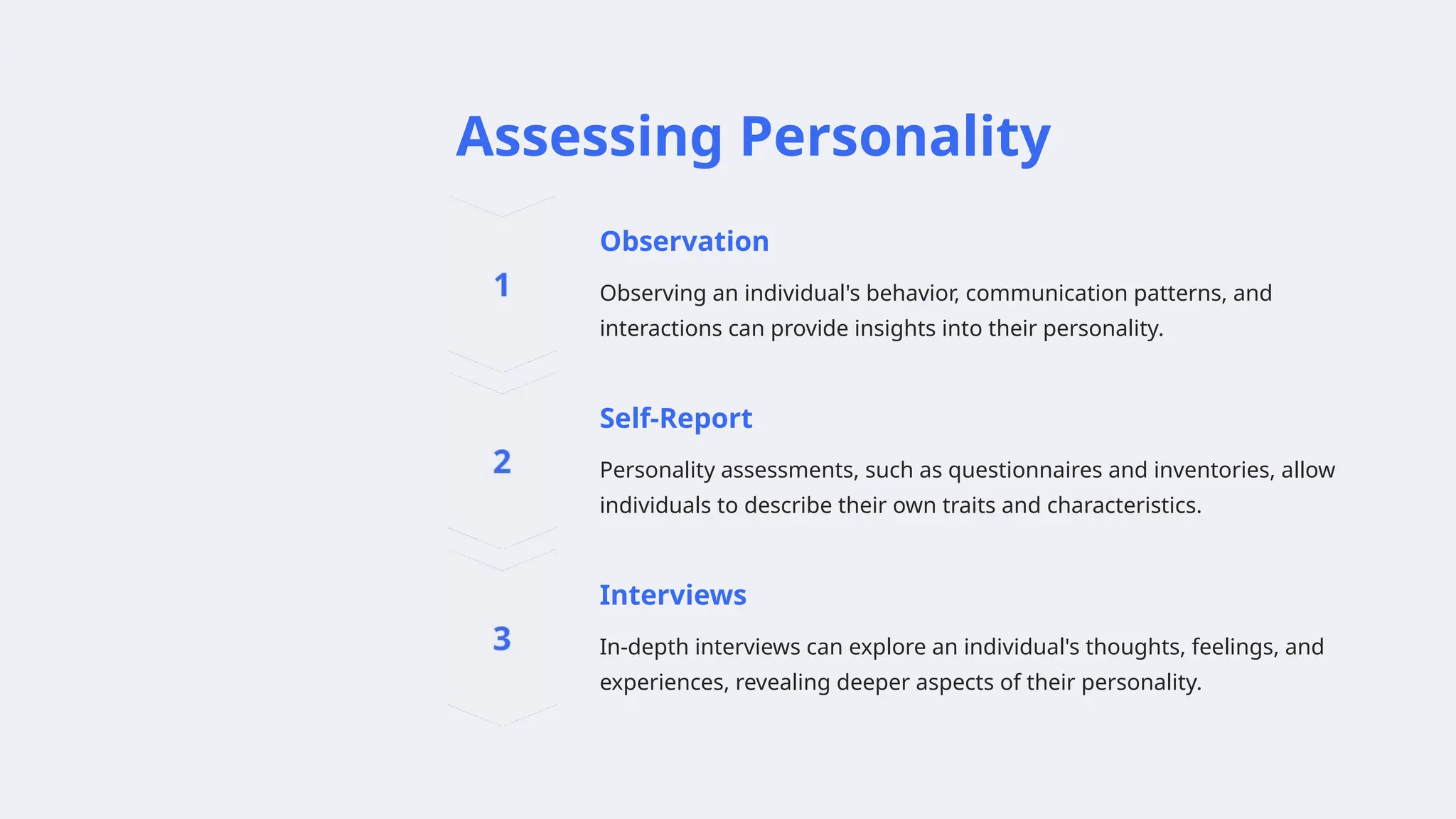
Assessing Personality
Observation
Observing an individual's behavior, communication patterns, and
interactions can provide insights into their personality.
Self-Report
Personality assessments, such as questionnaires and inventories, allow
individuals to describe their own traits and characteristics.
Interviews
In-depth interviews can explore an individual's thoughts, feelings, and
experiences, revealing deeper aspects of their personality.
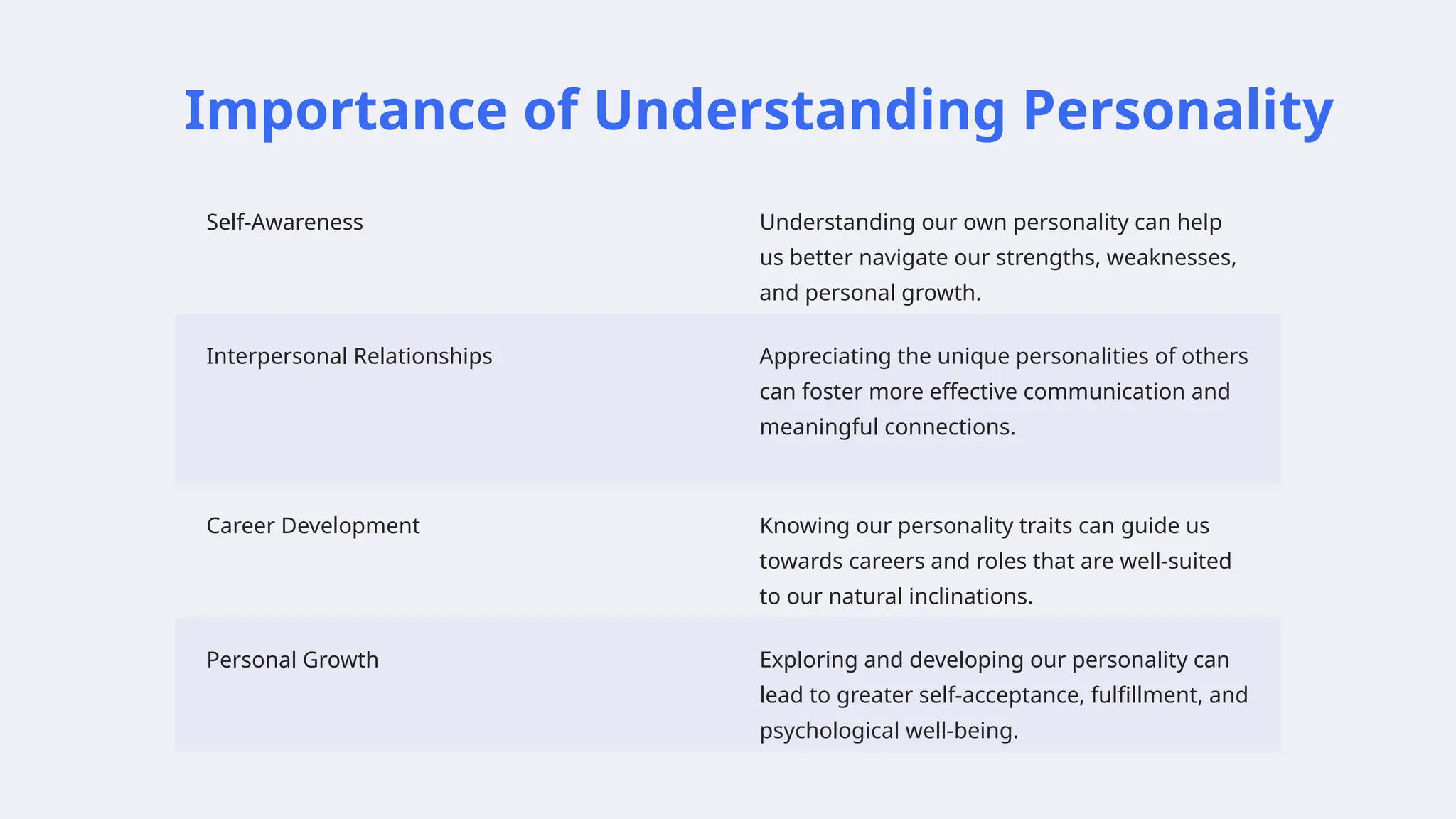
Importance of Understanding Personality
Self-Awareness Understanding our own personality can help
us better navigate our strengths, weaknesses,
and personal growth.
Interpersonal Relationships Appreciating the unique personalities of others
can foster more effective communication and
meaningful connections.
Career Development Knowing our personality traits can guide us
towards careers and roles that are well-suited
to our natural inclinations.
Personal Growth Exploring and developing our personality can
lead to greater self-acceptance, fulfillment, and
psychological well-being.

Introduction-to-Personality behaviour types.pptx

  • 1.
    Introduction to Personality Personality encompassesthe unique qualities, behaviors, and patterns that define an individual. It shapes how we think, feel, and interact with the world around us, making each person distinct and fascinating. Unit 4
  • 2.
    Defining Personality Traits Personality traitsare the stable, enduring characteristics that influence our thoughts, emotions, and actions. Behaviors Personality is also reflected in our observable behaviors, such as how we communicate, make decisions, and respond to various situations. Uniqueness Each person's personality is a unique blend of traits, behaviors, and inner experiences, making us one- of-a-kind individuals.
  • 3.
    Theories of Personality 1Trait Theory Identifies and categorizes the fundamental personality traits that shape an individual's behavior. 2 Psychoanalytic Theory Explores the role of the unconscious mind and early childhood experiences in shaping personality. 3 Social Cognitive Theory Emphasizes the influence of social interactions and cognitive processes on personality development. 4 Humanistic Theory Focuses on the individual's innate drive for growth, self-actualization, and fulfillment.
  • 4.
    Personality Traits andTypes The Big Five Openness, Conscientiousness, Extraversion, Agreeableness, and Neuroticism are the five broad personality traits. Myers-Briggs Types The Myers-Briggs Type Indicator categorizes individuals into 16 distinct personality types based on their preferences. Enneagram The Enneagram system identifies nine different personality types, each with its own motivations, strengths, and weaknesses. Temperaments Personality types can also be described in terms of four basic temperaments: sanguine, choleric, melancholic, and phlegmatic.
  • 5.
    Factors Influencing Personality 1Genetics Inherited traits and predispositions play a significant role in shaping an individual's personality. 2 Environment Upbringing, cultural influences, and life experiences also contribute to the development of personality. 3 Situational Factors The context and circumstances in which a person finds themselves can also impact their behavior and personality expression.
  • 6.
    Personality Development Childhood Early lifeexperiences and relationships shape the foundation of an individual's personality. Adolescence This period involves significant changes and the exploration of identity, leading to further personality development. Adulthood Personality continues to evolve throughout one's life, influenced by new experiences and personal growth. Aging As we grow older, our personality may become more stable, but it can also adapt to new life circumstances.
  • 7.
    Assessing Personality Observation Observing anindividual's behavior, communication patterns, and interactions can provide insights into their personality. Self-Report Personality assessments, such as questionnaires and inventories, allow individuals to describe their own traits and characteristics. Interviews In-depth interviews can explore an individual's thoughts, feelings, and experiences, revealing deeper aspects of their personality.
  • 8.
    Importance of UnderstandingPersonality Self-Awareness Understanding our own personality can help us better navigate our strengths, weaknesses, and personal growth. Interpersonal Relationships Appreciating the unique personalities of others can foster more effective communication and meaningful connections. Career Development Knowing our personality traits can guide us towards careers and roles that are well-suited to our natural inclinations. Personal Growth Exploring and developing our personality can lead to greater self-acceptance, fulfillment, and psychological well-being.