Introduction to Nouns – part 3 Singular vs. Plural Nouns
SINGULAR vs. PLURAL NOUNS In English plurals are formed by adding –s to the singular noun: one pen two pen s one bulb   two bulb s one lesson  two lesson s
SINGULAR vs. PLURAL NOUNS If the singular noun ends in:  -s  -sh  -tch  -x  -o,  the plural is formed by adding –es: one bu s two bus es one bru sh two brush es one kis s two kiss es one no tch two notch es one bo x two box es one tomat o two tomato es
REMEMBER! Words of foreign origin or abbreviated (shortened) words ending in -o,   take ‘s’ only: one kilo two kilo s   (shortened from ‘kilogram’) one kimono two kimono s   (foreign word) one photo two photo s   (shortened from ‘photograph’) one piano two piano s   (foreign word) one soprano two soprano s   (foreign word)
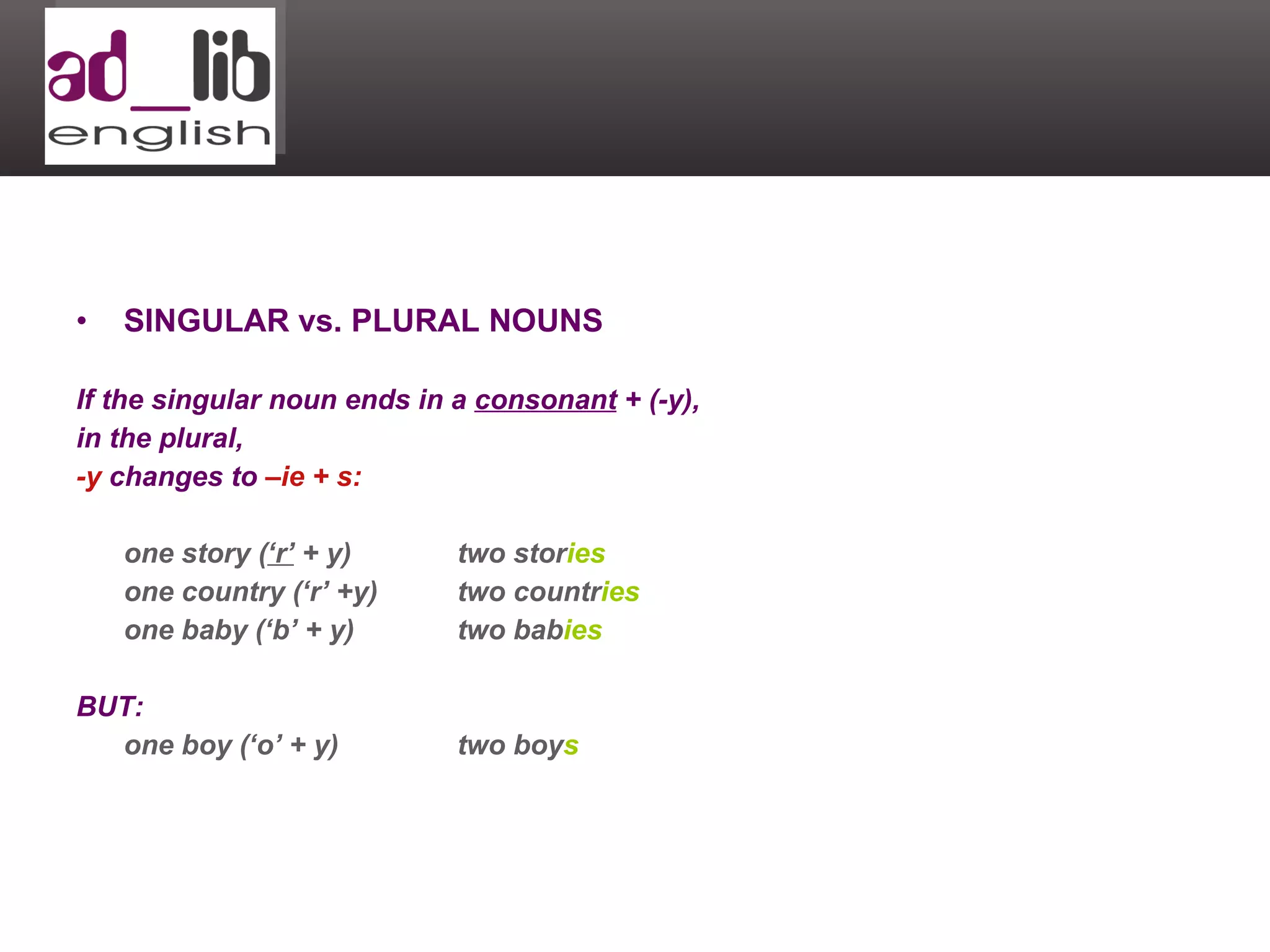
SINGULAR vs. PLURAL NOUNS If the singular noun ends in a  consonant  + (-y),  in the plural,  -y  changes to  –ie + s: one story ( ‘r’  + y) two stor ies one country (‘r’ +y) two countr ies one baby (‘b’ + y) two bab ies BUT: one boy (‘o’ + y) two boy s
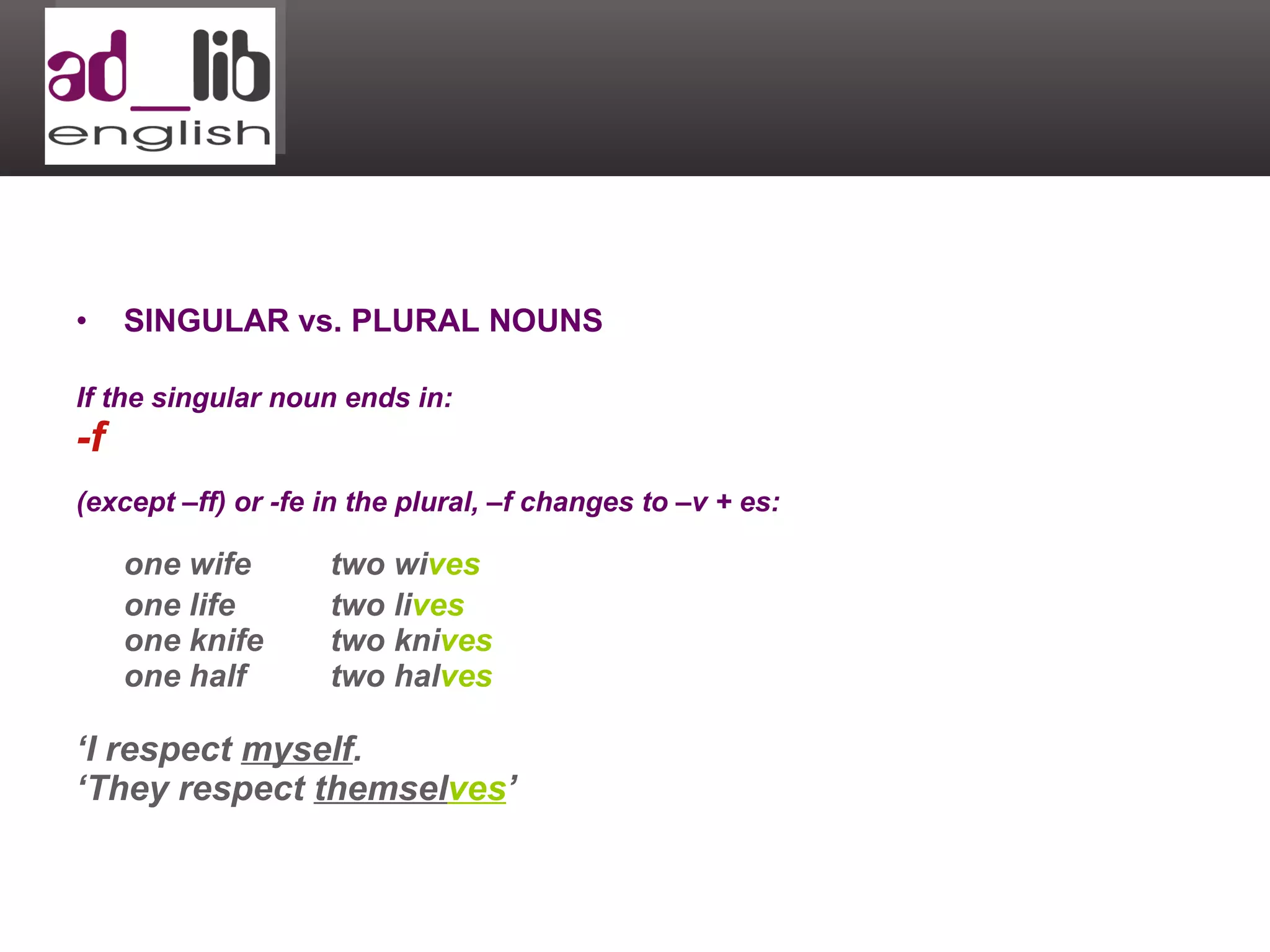
SINGULAR vs. PLURAL NOUNS If the singular noun ends in: -f   (except –ff) or -fe in the plural, –f changes to –v + es:   one wife two wi ves one life two li ves one knife two kni ves one half two hal ves ‘ I respect  myself . ‘ They respect  themsel ves ’
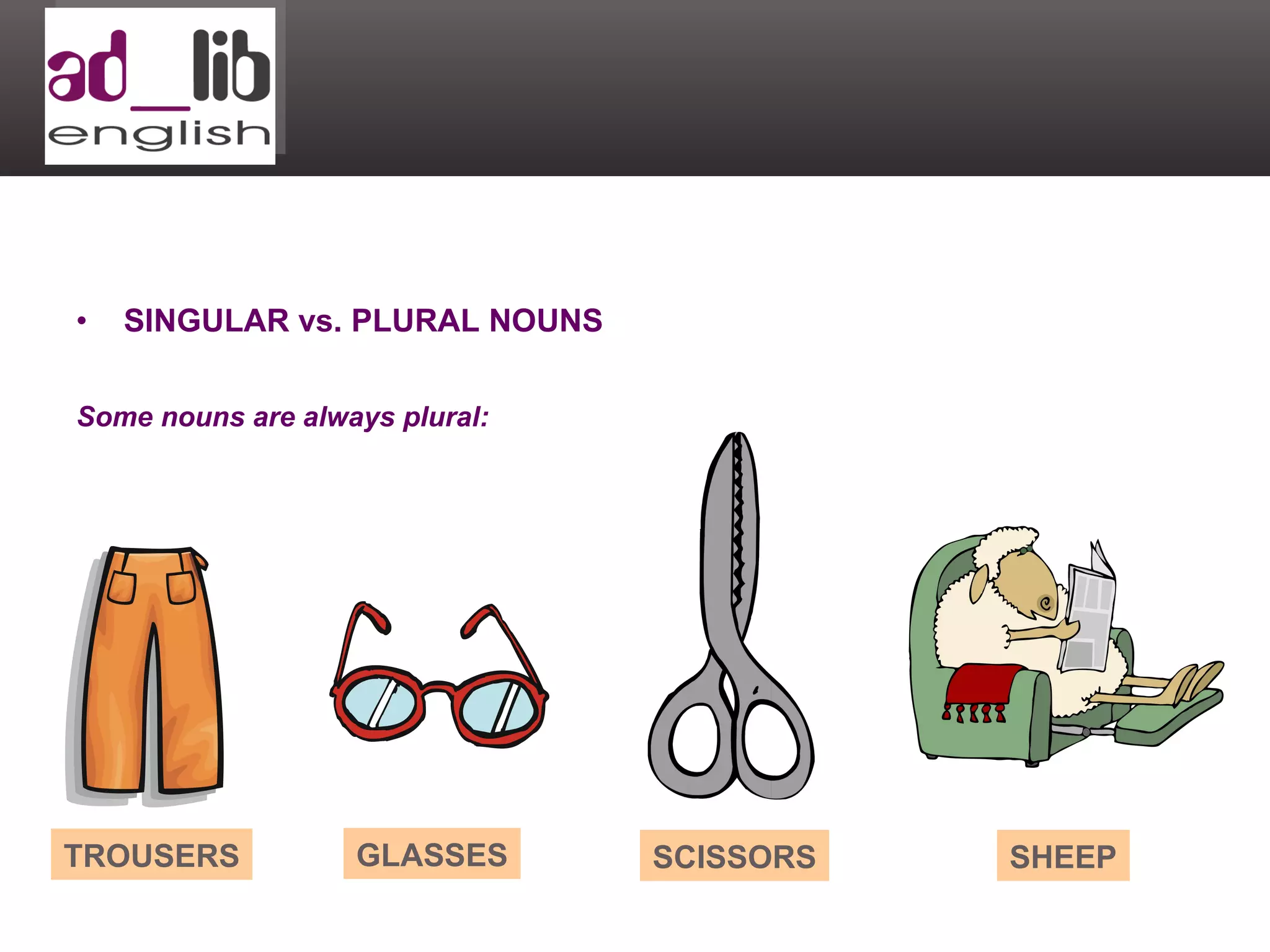
SINGULAR vs. PLURAL NOUNS Some nouns are always plural:   TROUSERS GLASSES SCISSORS SHEEP
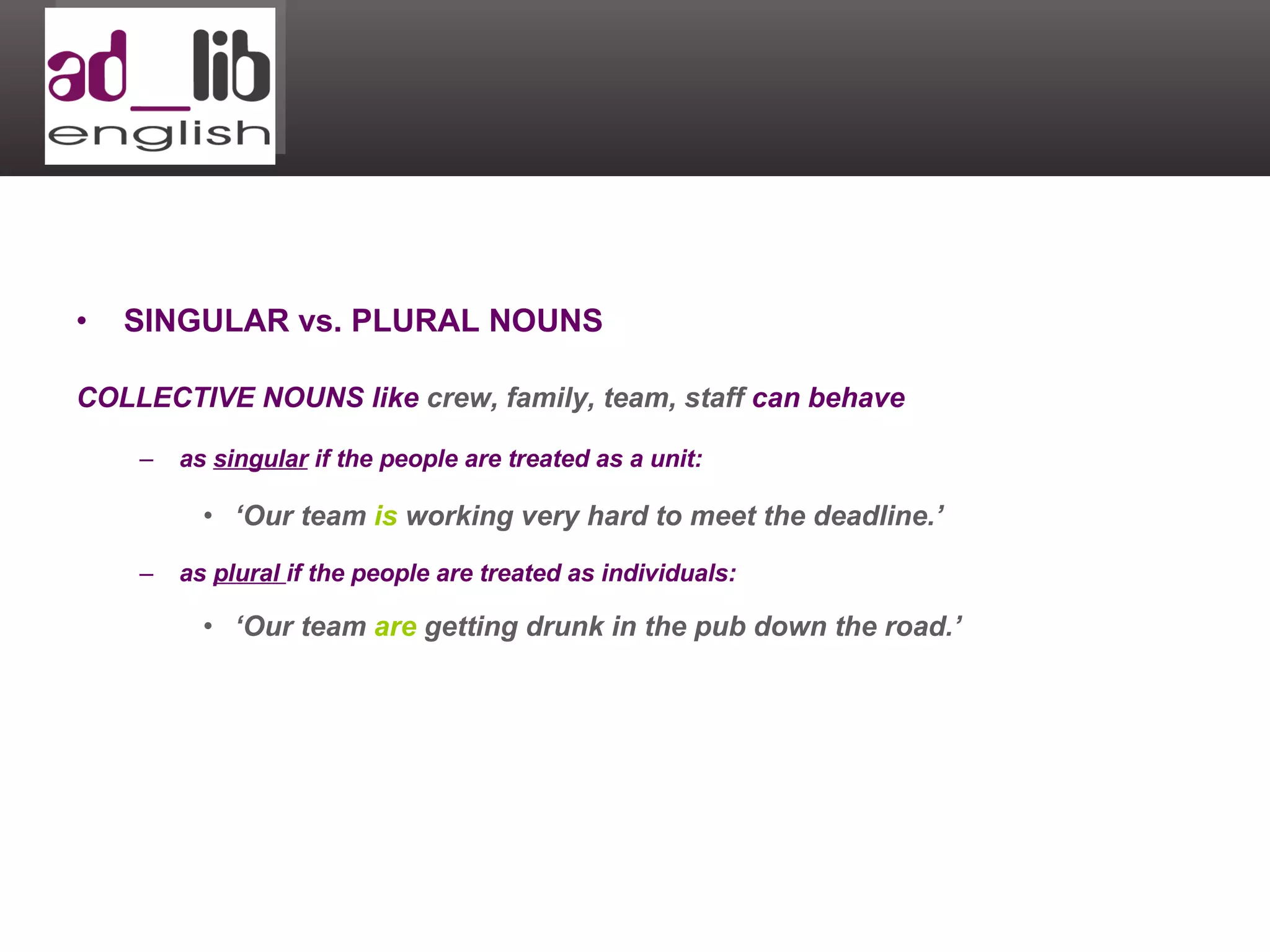
SINGULAR vs. PLURAL NOUNS COLLECTIVE NOUNS like  crew, family, team, staff  can behave  as  singular  if the people are treated as a unit: ‘ Our team  is  working very hard to meet the deadline.’ as  plural  if the people are treated as individuals: ‘ Our team  are  getting drunk in the pub down the road.’
REMEMBER! The word  ‘police’  is always plural and always takes a plural verb: ‘ The police  are  investigating a series of allegations of fraud against Mr Archer.’
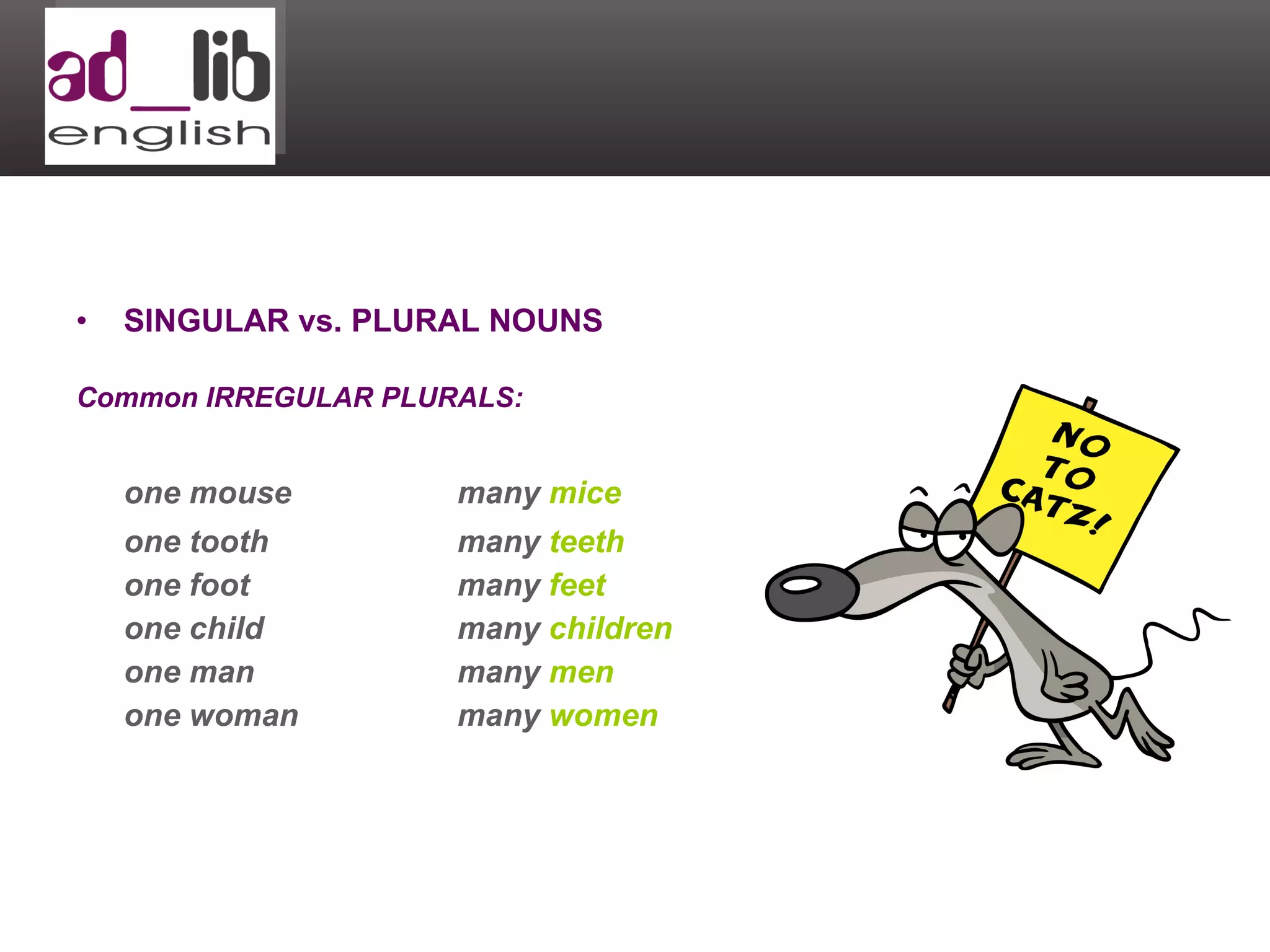
SINGULAR vs. PLURAL NOUNS Common IRREGULAR PLURALS:  one mouse many  mice one tooth  many  teeth one foot many  feet one child many  children one man many  men one woman many  women
Introduction To English Nouns - part 3

Introduction To English Nouns - part 3

  • 1.
    Introduction to Nouns– part 3 Singular vs. Plural Nouns
  • 2.
    SINGULAR vs. PLURALNOUNS In English plurals are formed by adding –s to the singular noun: one pen two pen s one bulb two bulb s one lesson two lesson s
  • 3.
    SINGULAR vs. PLURALNOUNS If the singular noun ends in: -s -sh -tch -x -o, the plural is formed by adding –es: one bu s two bus es one bru sh two brush es one kis s two kiss es one no tch two notch es one bo x two box es one tomat o two tomato es
  • 4.
    REMEMBER! Words offoreign origin or abbreviated (shortened) words ending in -o, take ‘s’ only: one kilo two kilo s (shortened from ‘kilogram’) one kimono two kimono s (foreign word) one photo two photo s (shortened from ‘photograph’) one piano two piano s (foreign word) one soprano two soprano s (foreign word)
  • 5.
    SINGULAR vs. PLURALNOUNS If the singular noun ends in a consonant + (-y), in the plural, -y changes to –ie + s: one story ( ‘r’ + y) two stor ies one country (‘r’ +y) two countr ies one baby (‘b’ + y) two bab ies BUT: one boy (‘o’ + y) two boy s
  • 6.
    SINGULAR vs. PLURALNOUNS If the singular noun ends in: -f (except –ff) or -fe in the plural, –f changes to –v + es: one wife two wi ves one life two li ves one knife two kni ves one half two hal ves ‘ I respect myself . ‘ They respect themsel ves ’
  • 7.
    SINGULAR vs. PLURALNOUNS Some nouns are always plural: TROUSERS GLASSES SCISSORS SHEEP
  • 8.
    SINGULAR vs. PLURALNOUNS COLLECTIVE NOUNS like crew, family, team, staff can behave as singular if the people are treated as a unit: ‘ Our team is working very hard to meet the deadline.’ as plural if the people are treated as individuals: ‘ Our team are getting drunk in the pub down the road.’
  • 9.
    REMEMBER! The word ‘police’ is always plural and always takes a plural verb: ‘ The police are investigating a series of allegations of fraud against Mr Archer.’
  • 10.
    SINGULAR vs. PLURALNOUNS Common IRREGULAR PLURALS: one mouse many mice one tooth many teeth one foot many feet one child many children one man many men one woman many women