BASIC FEATURES OF JAPAN

Official Name:        Historical Title:


 Japan                Nihon or Nippon
                        means “Origin of the
                        Sun”

                       Japan – “Land of the
                        Rising Sun”
A. Land

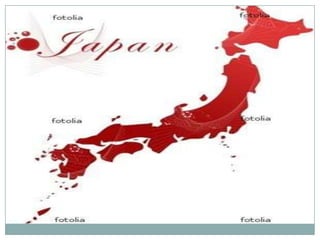
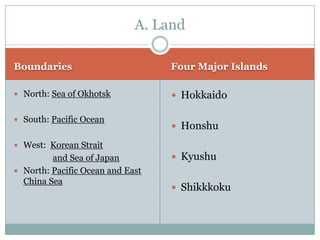
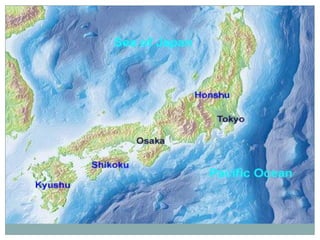
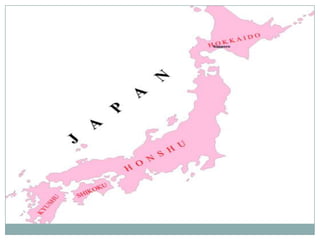
Boundaries                        Four Major Islands
 North: Sea of Okhotsk            Hokkaido

 South: Pacific Ocean
                                   Honshu

 West: Korean Strait
         and Sea of Japan          Kyushu
 North: Pacific Ocean and East
  China Sea
                                   Shikkkoku
A. Land

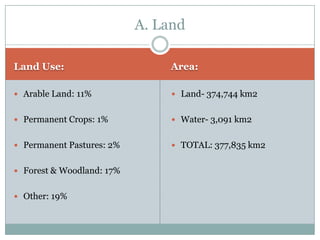
Land Use:                       Area:

 Arable Land: 11%               Land- 374,744 km2


 Permanent Crops: 1%            Water- 3,091 km2


 Permanent Pastures: 2%         TOTAL: 377,835 km2


 Forest & Woodland: 17%


 Other: 19%
Principal Cities

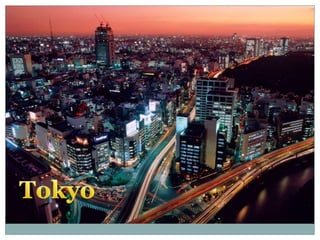
T O K Y O - F i n a n c i a l a n d c o m m e r c i a l c e n t e r ; J a p a n ’ s c a p i t a l a n d l a r g e s t
city.

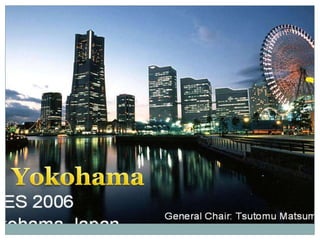
Y O K O H A M A - L e a d i n g s e a p o r t a n d s h i p b u i l d i n g ; i n d u s t r i a l c e n t e r o f
chemicals, machinery, metal and petroleum products.

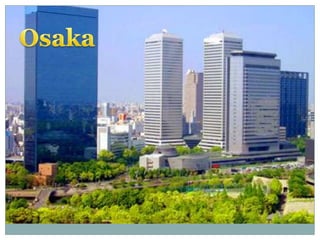
O S A K A - I m p o r a n t s e a p o r t a n d a i r l i n e t e r m i n u s ; O n e o f J a p a n ’ s
largest financial centers.

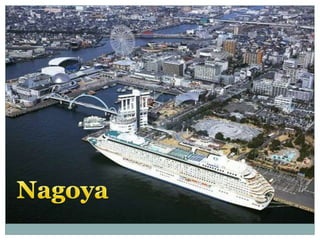
N A G O Y A - M a n u f a c t u r i n g c e n t e r o f l a c q u e r w a e , t e x t i l e s a n d p o e t r y .


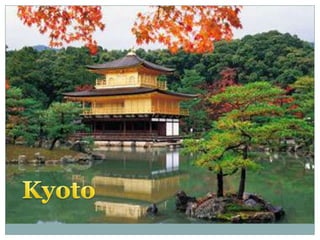
K Y O T O - H i s t o r i c a l c a p i t a l ,
                              famous manufacturing center of art goods
includingsilk brocades and textiles Center of heavy industries.

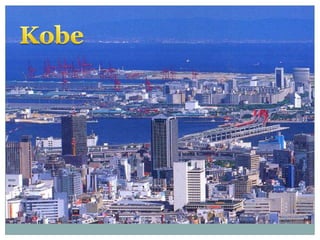
K O B E - L e a d i n g s e a p o r t a n d s h i p b u i l d i n g .
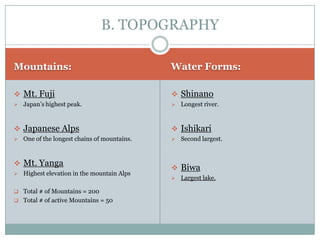
B. TOPOGRAPHY

Mountains:                                    Water Forms:

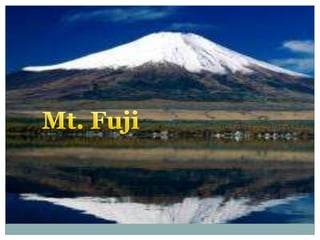
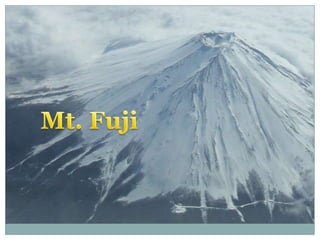
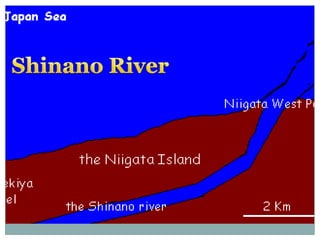
 Mt. Fuji                                     Shinano
   Japan’s highest peak.                        Longest river.


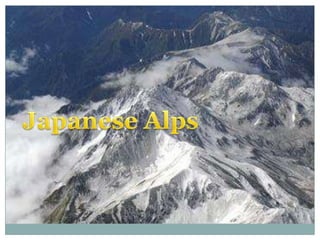
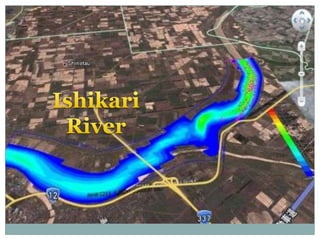
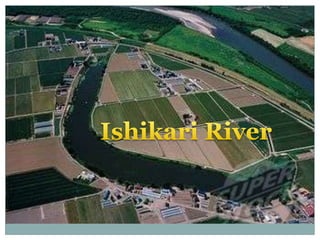
 Japanese Alps                                Ishikari
   One of the longest chains of mountains.      Second largest.


 Mt. Yanga
                                               Biwa
   Highest elevation in the mountain Alps
                                                 Largest lake.

 Total # of Mountains = 200
 Total # of active Mountains = 50
Plains


KantoPlain


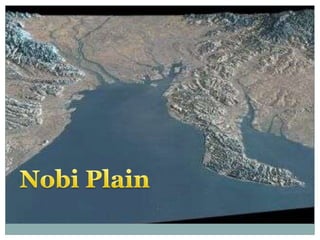
Nobi Plain


Kinai Plain
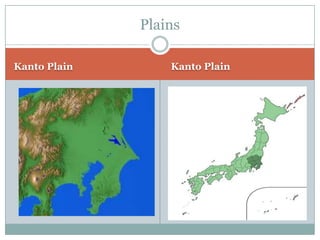
Plains

Kanto Plain       Kanto Plain
CLIMATE


J a p a n b e l o n g s t o a t e m p e r a t e z o n e w i t h f o u r d i s t i n c t s e a s o n s ,
but its climate varies from cool to temperate in the north to
subtropical in the south.

N O R T H J A P A N h a s w a r m s u m m e r s b u t l o n g c o l d w i n t e r s w i t h
heavy snow.

C E N T R A L J A P A N h a s h o t , h u m i d s u m m e r s a n d s h o r t w i n t e r s .


S O U T H W E S T E R N J A P A N h a s l o n g , h o t h u m i d s u m m e r a n d
mild winters.
TWO PRIMARY FACTORS THAT INFLUENCE JAPAN’S
CLIMATE:

A. MONSOONS
B. MAJOR OCEANIC CURRENT


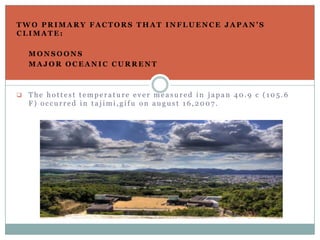
   The hottest temperature ever measured in japan 40.9 c (105.6
    F) occurred in tajimi,gifu on august 16,2007.
THE JAPANESE PEOPLE


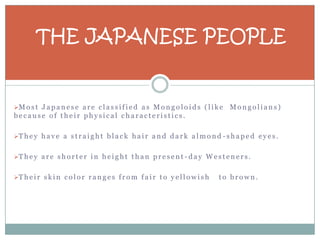
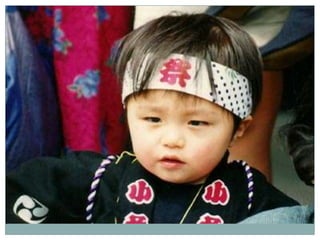
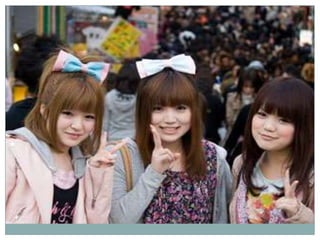
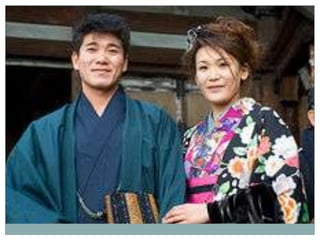
M o s t J a p a n e s e a r e c l a s s i f i e d a s M o n g o l o i d s ( l i k e   Mongolians)
because of their physical characteristics.

T h e y h a v e a s t r a i g h t b l a c k h a i r a n d d a r k a l m o n d - s h a p e d e y e s .


T h e y a r e s h o r t e r i n h e i g h t t h a n p r e s e n t - d a y W e s t e n e r s .


T h e i r s k i n c o l o r r a n g e s f r o m f a i r t o y e l l o w i s h    to brown.
LANGUAGE


JAPANESE
A r e u n i t e d b y a c o m m o n s p o k e n l a n g u a g e . T h i s h a s m a d e i t
easier for the Japanese to achieve political and cultural unity
more quickly than other Asian nation.

T h e J a p a n e s e l a n g u a g e i s m a i n l y P O L Y S Y L L A B I C ( m o s t w o r d s
are composed of several syllables.)

J a p a n e s e i s n o t d i f f i c u l t t o s p e a k a n d p r o n o u n c e a n d s p e l l i n g
is simpler than English or French.
LIFE IN JAPAN

T h e m o s t i m p o r t a n t a s p e c t i n J a p a n a s t h e b l e n d i n g o f t h e o l d a n d
the new. Although willing to adopt better ways of doing things from
other cultures, the Japanese retain much of that is traditional.

A p p r e c i a t i o n o f t h e b e a u t y a n d g r e a t n e s s o f n a t u r e h a s b e e n a p a r t
of Japanese life since earliest time.
RELIGION


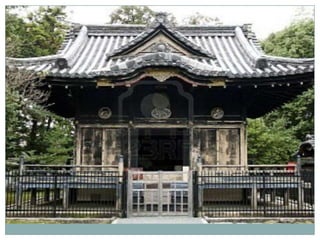
A. SHINTOISM
  -”Shinto” means “the way”

  -is based on the worship of nature and good spirits called KAMI.

  -they had NO bible.

  -about 93% of Japanese people practiced Shintoism.

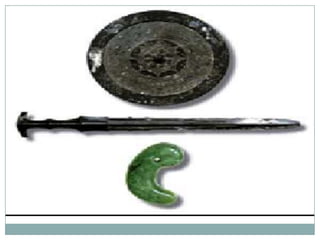
  -Shinto represents 3 symbols: SWORD, STRING OF JEWEL,
  MIRROR.
RELIGION


B. BUDDHISM AND ZEN BUDDHISM

     -It was brought to Japan by the Chinese about 1500 years
     ago, and spread rapidly among nobles and the upper
     classes.

     -Zen Buddhism believes that prayer and religious worship
     are a waste of time. Personal character and discipline are
     more important. Meditation (thinking) is the main form of
     worship.
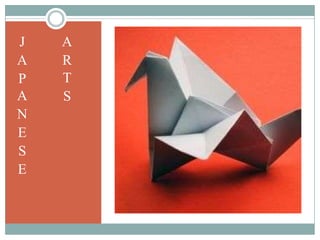
J   A
A   R
P   T
A   S
N
E
S
E
JAPANESE ARTS

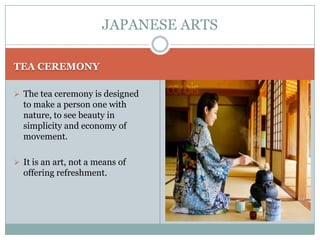
TEA CEREMONY

 The tea ceremony is designed
  to make a person one with
  nature, to see beauty in
  simplicity and economy of
  movement.

 It is an art, not a means of
  offering refreshment.
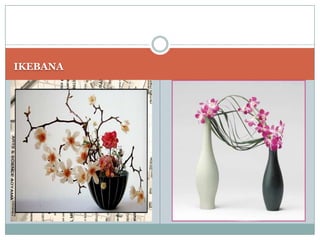
IKEBANA
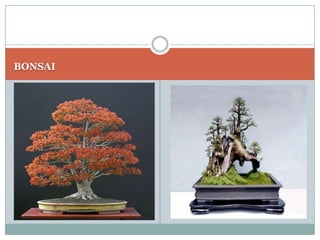
BONSAI
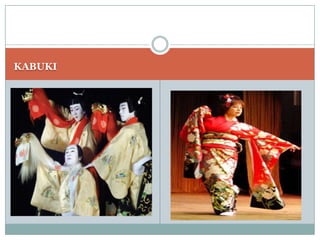
KABUKI
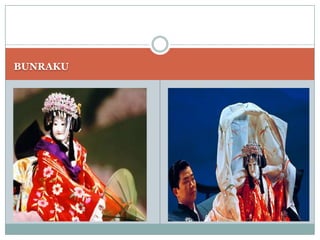
BUNRAKU
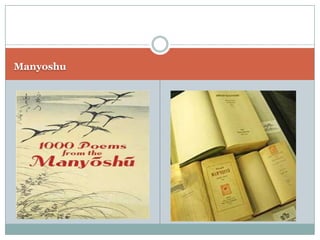
Manyoshu
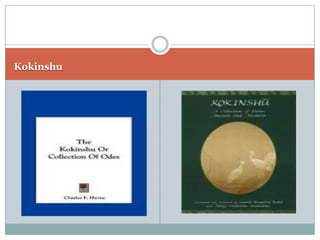
Kokinshu
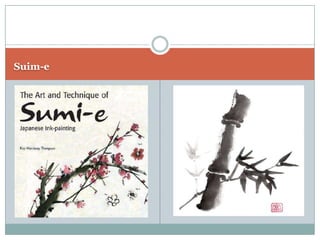
Suim-e
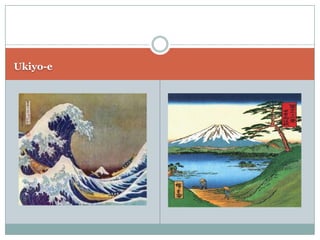
Ukiyo-e
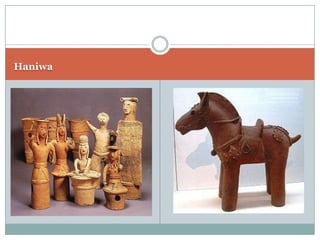
Haniwa
Introduction to Japan

Introduction to Japan

  • 3.
    BASIC FEATURES OFJAPAN Official Name: Historical Title:  Japan  Nihon or Nippon means “Origin of the Sun”  Japan – “Land of the Rising Sun”
  • 4.
    A. Land Boundaries Four Major Islands  North: Sea of Okhotsk  Hokkaido  South: Pacific Ocean  Honshu  West: Korean Strait and Sea of Japan  Kyushu  North: Pacific Ocean and East China Sea  Shikkkoku
  • 7.
    A. Land Land Use: Area:  Arable Land: 11%  Land- 374,744 km2  Permanent Crops: 1%  Water- 3,091 km2  Permanent Pastures: 2%  TOTAL: 377,835 km2  Forest & Woodland: 17%  Other: 19%
  • 8.
    Principal Cities T OK Y O - F i n a n c i a l a n d c o m m e r c i a l c e n t e r ; J a p a n ’ s c a p i t a l a n d l a r g e s t city. Y O K O H A M A - L e a d i n g s e a p o r t a n d s h i p b u i l d i n g ; i n d u s t r i a l c e n t e r o f chemicals, machinery, metal and petroleum products. O S A K A - I m p o r a n t s e a p o r t a n d a i r l i n e t e r m i n u s ; O n e o f J a p a n ’ s largest financial centers. N A G O Y A - M a n u f a c t u r i n g c e n t e r o f l a c q u e r w a e , t e x t i l e s a n d p o e t r y . K Y O T O - H i s t o r i c a l c a p i t a l , famous manufacturing center of art goods includingsilk brocades and textiles Center of heavy industries. K O B E - L e a d i n g s e a p o r t a n d s h i p b u i l d i n g .
  • 15.
    B. TOPOGRAPHY Mountains: Water Forms:  Mt. Fuji  Shinano  Japan’s highest peak.  Longest river.  Japanese Alps  Ishikari  One of the longest chains of mountains.  Second largest.  Mt. Yanga  Biwa  Highest elevation in the mountain Alps  Largest lake.  Total # of Mountains = 200  Total # of active Mountains = 50
  • 22.
  • 23.
  • 26.
    CLIMATE J a pa n b e l o n g s t o a t e m p e r a t e z o n e w i t h f o u r d i s t i n c t s e a s o n s , but its climate varies from cool to temperate in the north to subtropical in the south. N O R T H J A P A N h a s w a r m s u m m e r s b u t l o n g c o l d w i n t e r s w i t h heavy snow. C E N T R A L J A P A N h a s h o t , h u m i d s u m m e r s a n d s h o r t w i n t e r s . S O U T H W E S T E R N J A P A N h a s l o n g , h o t h u m i d s u m m e r a n d mild winters.
  • 27.
    TWO PRIMARY FACTORSTHAT INFLUENCE JAPAN’S CLIMATE: A. MONSOONS B. MAJOR OCEANIC CURRENT  The hottest temperature ever measured in japan 40.9 c (105.6 F) occurred in tajimi,gifu on august 16,2007.
  • 28.
    THE JAPANESE PEOPLE Mo s t J a p a n e s e a r e c l a s s i f i e d a s M o n g o l o i d s ( l i k e Mongolians) because of their physical characteristics. T h e y h a v e a s t r a i g h t b l a c k h a i r a n d d a r k a l m o n d - s h a p e d e y e s . T h e y a r e s h o r t e r i n h e i g h t t h a n p r e s e n t - d a y W e s t e n e r s . T h e i r s k i n c o l o r r a n g e s f r o m f a i r t o y e l l o w i s h to brown.
  • 32.
    LANGUAGE JAPANESE A r eu n i t e d b y a c o m m o n s p o k e n l a n g u a g e . T h i s h a s m a d e i t easier for the Japanese to achieve political and cultural unity more quickly than other Asian nation. T h e J a p a n e s e l a n g u a g e i s m a i n l y P O L Y S Y L L A B I C ( m o s t w o r d s are composed of several syllables.) J a p a n e s e i s n o t d i f f i c u l t t o s p e a k a n d p r o n o u n c e a n d s p e l l i n g is simpler than English or French.
  • 33.
    LIFE IN JAPAN Th e m o s t i m p o r t a n t a s p e c t i n J a p a n a s t h e b l e n d i n g o f t h e o l d a n d the new. Although willing to adopt better ways of doing things from other cultures, the Japanese retain much of that is traditional. A p p r e c i a t i o n o f t h e b e a u t y a n d g r e a t n e s s o f n a t u r e h a s b e e n a p a r t of Japanese life since earliest time.
  • 34.
    RELIGION A. SHINTOISM -”Shinto” means “the way” -is based on the worship of nature and good spirits called KAMI. -they had NO bible. -about 93% of Japanese people practiced Shintoism. -Shinto represents 3 symbols: SWORD, STRING OF JEWEL, MIRROR.
  • 38.
    RELIGION B. BUDDHISM ANDZEN BUDDHISM -It was brought to Japan by the Chinese about 1500 years ago, and spread rapidly among nobles and the upper classes. -Zen Buddhism believes that prayer and religious worship are a waste of time. Personal character and discipline are more important. Meditation (thinking) is the main form of worship.
  • 42.
    J A A R P T A S N E S E
  • 43.
    JAPANESE ARTS TEA CEREMONY The tea ceremony is designed to make a person one with nature, to see beauty in simplicity and economy of movement.  It is an art, not a means of offering refreshment.
  • 44.
  • 45.
  • 46.
  • 47.
  • 48.
  • 49.
  • 50.
  • 51.
  • 52.