Japan The Land of the Rising Sun Joseph Muna ED 282 Cultural Presentation October 11, 2007 日本国  日本国
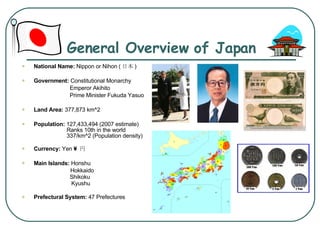
General Overview of Japan National Name:  Nippon or Nihon ( 日本 )  Government:  Constitutional Monarchy Emperor Akihito Prime Minister Fukuda Yasuo Land Area:  377,873 km^2 Population:  127,433,494 (2007 estimate) Ranks 10th in the world 337/km^2 (Population density) Currency:  Yen  ¥  円   Main Islands:  Honshu Hokkaido Shikoku Kyushu Prefectural System:  47 Prefectures
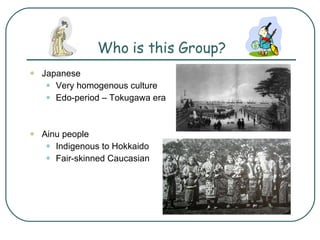
Who is this Group? Japanese Very homogenous culture Edo-period – Tokugawa era Ainu people Indigenous to Hokkaido Fair-skinned Caucasian
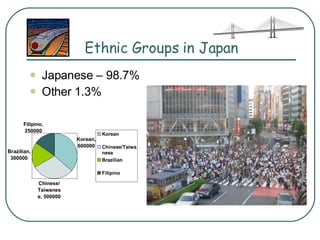
Ethnic Groups in Japan Japanese – 98.7% Other 1.3%
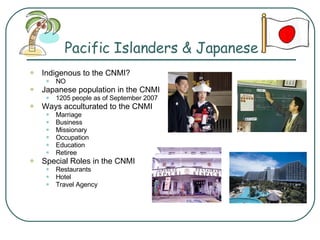
Pacific Islanders & Japanese Indigenous to the CNMI? NO Japanese population in the CNMI 1205 people as of September 2007 Ways acculturated to the CNMI Marriage Business Missionary Occupation Education Retiree Special Roles in the CNMI Restaurants Hotel Travel Agency
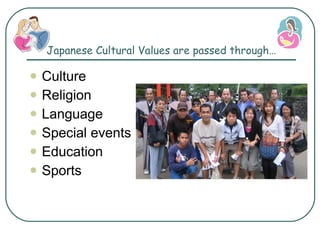
Japanese Cultural Values are passed through… Culture Religion Language Special events Education Sports
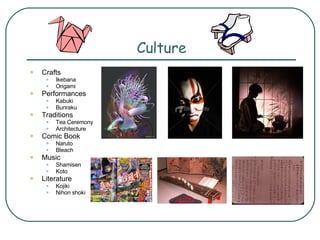
Culture Crafts Ikebana Origami Performances Kabuki Bunraku Traditions Tea Ceremony Architecture Comic Book Naruto Bleach Music Shamisen Koto Literature Kojiki Nihon shoki
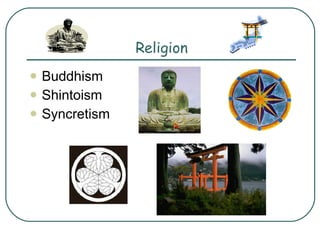
Religion Buddhism Shintoism Syncretism
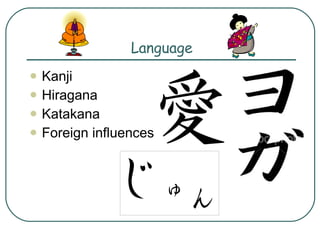
Language Kanji Hiragana Katakana Foreign influences
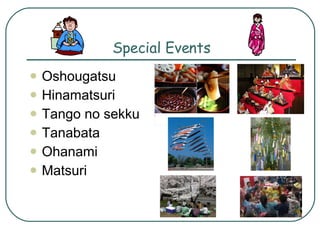
Special Events Oshougatsu Hinamatsuri Tango no sekku Tanabata Ohanami Matsuri
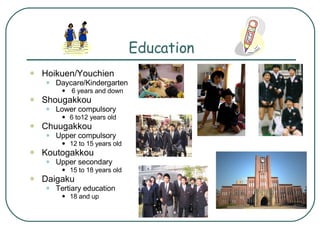
Education Hoikuen/Youchien Daycare/Kindergarten 6 years and down Shougakkou Lower compulsory 6 to12 years old Chuugakkou Upper compulsory 12 to 15 years old Koutogakkou Upper secondary 15 to 18 years old Daigaku Tertiary education 18 and up
Education continued Transition from chuugaku to koukou Transition from koukou to daigaku Education and Society View of education Prerequisite to success Diligence, self-criticism, well-organized study habits Hard work + Perseverance = Success in life Teach attitude, moral values, develop character
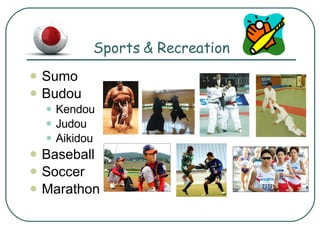
Sports & Recreation Sumo Budou Kendou Judou Aikidou Baseball Soccer Marathon
Gender role – Past vs Present Past Men did all the work outside the house Men attained high positions Political leaders were all men Women cannot vote Women basically cooks, cleans, and raise kids Some women worked in silk factory (Labor intensive) Women were not able to be educated thoroughly Present Men more involved in child raising Women can vote Women can work outside the house Women can attain high ranks Women can enter the political world
Family Structure – Past vs Present Past Patriarchal  Father works outside house Mothers works inside house Kids do chores also Strict discipline Customs/Etiquette exercised strongly Average six kids per household Present Patriarchal, but the gap has lessen Both parents work outside the house Kids are often out of the house Discipline – more laid back Customs/Etiquette minimal Below replacement level – 1.2
Role of children – Past vs Present Past Kids help mother with house chores Sons grows up to be the successor of fathers business Oldest son takes ownership of the house Oldest son takes care of parents Daughters encouraged to find husband and leave Present Kids rarely do house chores Current trend is daughter takes care of parents Current trend is sons goes into wife’s family Guys are generally more kind Not many people own house, rent apartment or mansion
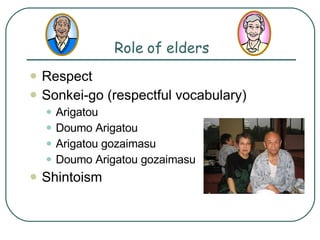
Role of elders Respect Sonkei-go (respectful vocabulary) Arigatou  Doumo Arigatou Arigatou gozaimasu Doumo Arigatou gozaimasu Shintoism
As a culture how do they think, feel, or deal about the following: Possessions Minimal borrowing Clothing Traditional clothing diminished Westernized People with Disability Law based
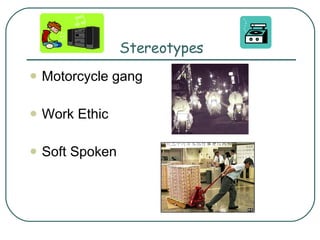
Stereotypes Motorcycle gang  Work Ethic Soft Spoken
Food Typical cuisine Combination of rice/noodles, soup, and 3 okazu Okazu – fish, meat, vegetables, tofu Dashi, miso, and soy sauce Low in fat, high in salt
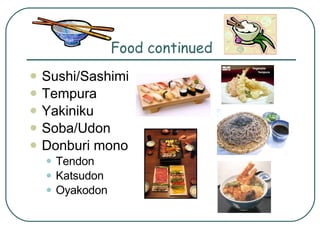
Food continued Sushi/Sashimi Tempura Yakiniku Soba/Udon Donburi mono Tendon Katsudon Oyakodon
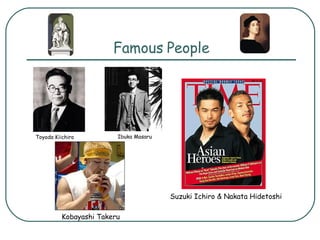
Famous People Ibuka Masaru Toyoda Kiichiro Kobayashi Takeru Suzuki Ichiro & Nakata Hidetoshi
Open Discussion for…. Questions Comments Thoughts
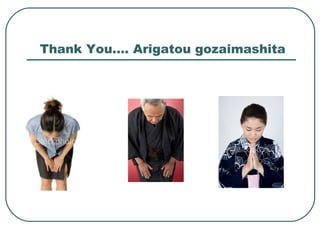
Thank You…. Arigatou gozaimashita
Bibliography “ The Japan Book” Bunkyo-ku, Tokyo: Kodansha International, 2002 Interview with Noriko Muna (My Mom) http://en.wikipedia.org/wiki/Japan  History    Government and politics    Foreign relations and military    Administrative divisions    Geography and climate    Economy    Science and technology    Demographics    Education and health    Culture and recreation    Sports

ED 282 - Cultural Presentation (Japan)

  • 1.
    Japan The Landof the Rising Sun Joseph Muna ED 282 Cultural Presentation October 11, 2007 日本国 日本国
  • 2.
    General Overview ofJapan National Name: Nippon or Nihon ( 日本 ) Government: Constitutional Monarchy Emperor Akihito Prime Minister Fukuda Yasuo Land Area: 377,873 km^2 Population: 127,433,494 (2007 estimate) Ranks 10th in the world 337/km^2 (Population density) Currency: Yen ¥ 円 Main Islands: Honshu Hokkaido Shikoku Kyushu Prefectural System: 47 Prefectures
  • 3.
    Who is thisGroup? Japanese Very homogenous culture Edo-period – Tokugawa era Ainu people Indigenous to Hokkaido Fair-skinned Caucasian
  • 4.
    Ethnic Groups inJapan Japanese – 98.7% Other 1.3%
  • 5.
    Pacific Islanders &Japanese Indigenous to the CNMI? NO Japanese population in the CNMI 1205 people as of September 2007 Ways acculturated to the CNMI Marriage Business Missionary Occupation Education Retiree Special Roles in the CNMI Restaurants Hotel Travel Agency
  • 6.
    Japanese Cultural Valuesare passed through… Culture Religion Language Special events Education Sports
  • 7.
    Culture Crafts IkebanaOrigami Performances Kabuki Bunraku Traditions Tea Ceremony Architecture Comic Book Naruto Bleach Music Shamisen Koto Literature Kojiki Nihon shoki
  • 8.
  • 9.
    Language Kanji HiraganaKatakana Foreign influences
  • 10.
    Special Events OshougatsuHinamatsuri Tango no sekku Tanabata Ohanami Matsuri
  • 11.
    Education Hoikuen/Youchien Daycare/Kindergarten6 years and down Shougakkou Lower compulsory 6 to12 years old Chuugakkou Upper compulsory 12 to 15 years old Koutogakkou Upper secondary 15 to 18 years old Daigaku Tertiary education 18 and up
  • 12.
    Education continued Transitionfrom chuugaku to koukou Transition from koukou to daigaku Education and Society View of education Prerequisite to success Diligence, self-criticism, well-organized study habits Hard work + Perseverance = Success in life Teach attitude, moral values, develop character
  • 13.
    Sports & RecreationSumo Budou Kendou Judou Aikidou Baseball Soccer Marathon
  • 14.
    Gender role –Past vs Present Past Men did all the work outside the house Men attained high positions Political leaders were all men Women cannot vote Women basically cooks, cleans, and raise kids Some women worked in silk factory (Labor intensive) Women were not able to be educated thoroughly Present Men more involved in child raising Women can vote Women can work outside the house Women can attain high ranks Women can enter the political world
  • 15.
    Family Structure –Past vs Present Past Patriarchal Father works outside house Mothers works inside house Kids do chores also Strict discipline Customs/Etiquette exercised strongly Average six kids per household Present Patriarchal, but the gap has lessen Both parents work outside the house Kids are often out of the house Discipline – more laid back Customs/Etiquette minimal Below replacement level – 1.2
  • 16.
    Role of children– Past vs Present Past Kids help mother with house chores Sons grows up to be the successor of fathers business Oldest son takes ownership of the house Oldest son takes care of parents Daughters encouraged to find husband and leave Present Kids rarely do house chores Current trend is daughter takes care of parents Current trend is sons goes into wife’s family Guys are generally more kind Not many people own house, rent apartment or mansion
  • 17.
    Role of eldersRespect Sonkei-go (respectful vocabulary) Arigatou Doumo Arigatou Arigatou gozaimasu Doumo Arigatou gozaimasu Shintoism
  • 18.
    As a culturehow do they think, feel, or deal about the following: Possessions Minimal borrowing Clothing Traditional clothing diminished Westernized People with Disability Law based
  • 19.
    Stereotypes Motorcycle gang Work Ethic Soft Spoken
  • 20.
    Food Typical cuisineCombination of rice/noodles, soup, and 3 okazu Okazu – fish, meat, vegetables, tofu Dashi, miso, and soy sauce Low in fat, high in salt
  • 21.
    Food continued Sushi/SashimiTempura Yakiniku Soba/Udon Donburi mono Tendon Katsudon Oyakodon
  • 22.
    Famous People IbukaMasaru Toyoda Kiichiro Kobayashi Takeru Suzuki Ichiro & Nakata Hidetoshi
  • 23.
    Open Discussion for….Questions Comments Thoughts
  • 24.
  • 25.
    Bibliography “ TheJapan Book” Bunkyo-ku, Tokyo: Kodansha International, 2002 Interview with Noriko Muna (My Mom) http://en.wikipedia.org/wiki/Japan History Government and politics Foreign relations and military Administrative divisions Geography and climate Economy Science and technology Demographics Education and health Culture and recreation Sports