Baro Gambella College
Course Title; Physiology I
Year;2nd
public health1st
semester
Instructor; Biel Riek (BSc, Nurse)
UNIT-ONE
INTRODUCTION TO PHYSIOLOGY
Outlines
• Overview
• Definitions
• Historical background
• Homeostasis
• Feedback control mechanisms
• The Cell
• Body fluid and Electrolytes
3
Objectives
By the end of this topic, you will be ble to:
 Have topic overview
 Explain homeostasis.
 Discuss cell physiology.
 Enumerate the cell organelles with their
function.
 Discuss negative & positive feed back
mechanism.
5. List the types of cellular transport
4
Overview
• The human organism consists of trillions of
cells all working together for the maintenance of
the entire organism.
• While cells may perform very different functions,
all the cells are quite similar in their metabolic
requirements:
– oxygen, glucose, mineral ions, waste removal
• Maintaining a constant internal environment is
necessary for the well-being of individual cells &
the well-being of the entire body.
5
Extracellular Fluid (ECF)
• Cell is the basic structural & functional unit of
life.
• Each organ in our body is an aggregate of 100
trillions of different cells held together by inter
cellular supporting structures.
• These cells are bathed with the fluid that is
called ECF (fluid that fills the space between
cells) which contains an optimum amount of:
– nutrients, gases, hormones, enzymes, water &
electrolytes.
6
What is Homeostasis?
• Maintenance of static or constant conditions in the
internal environment (ECF).
• Essentially all organs of the body perform their
functions that help to maintain constant conditions
in the ECF. For example:
 Lungs maintain the normal concentration of respiratory
gases in blood.
 CVS transports required substances & removes waste
products.
 Kidneys maintain constant ionic concentration
 GIS provides nutrients.
7
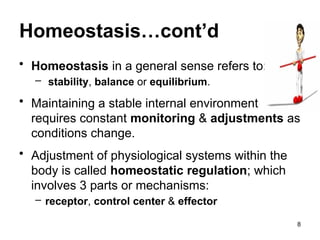
Homeostasis…cont’d
• Homeostasis in a general sense refers to:
– stability, balance or equilibrium.
• Maintaining a stable internal environment
requires constant monitoring & adjustments as
conditions change.
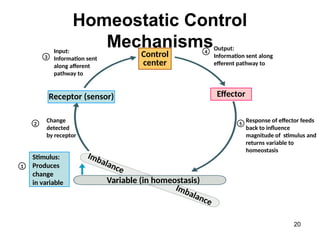
• Adjustment of physiological systems within the
body is called homeostatic regulation; which
involves 3 parts or mechanisms:
– receptor, control center & effector
8
Homeostasis…cont’d
1. Receptor
– receives information that something in the
environment is changing.
2. Control center or integration center
– receives & processes information from the
receptor.
3. Effector
– responds to the commands of the control
center by either opposing or enhancing the
stimulus.
9
Homeostasis…cont’d
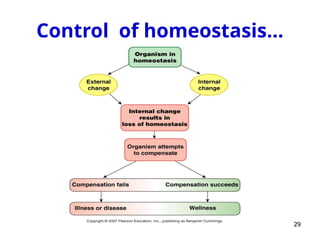
Homeostatic regulation is an ongoing process
that continually works to restore & maintain
homeostasis.
For example
In regulating body temperature there are temperature
receptors in the skin,
Which communicate information to the brain, which is
the control center, and
The effector is our blood vessels and sweat glands.
10
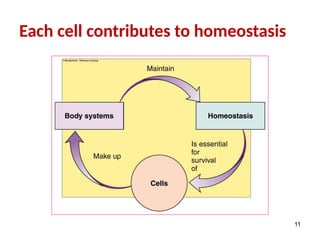
Each cell contributes to homeostasis
11
Homeostasis…cont’d
Homeostatically regulated variables
• Body Temperature
• Blood Composition
– ions, sugars, proteins, water, O2 and CO2 ,
PH & Osmolality
• Blood Pressure, Cardiac Output, Cardiac Rate
• Respiratory Rate and depth
• Secretions of Endocrine Glands
• Rate of intracellular chemical reactions
12
Homeostasis…cont’d
Factor disrupting homeostasis:
 External stimuli
heat, cold,
lack of 02,
pathogens & toxins
 Internal stimuli
 abnormalities in visceral organs
13
Homeostasis…cont’d
Function of homeostasis
1) The underlying principle of physiology
 Physiology is concerned with how body
systems contribute to homeostasis and
benefit from homeostasis.
2) Means of survival
 It allows an organism to function
effectively in a broad range of
environmental conditions.
14
Physiology
• Is the study of the normal function of human
body.
• It also deals with the integrated activities of
different organs & organ systems, and the
conditions which determine normal functions of
body parts.
• Almost all physiological parameters are
measurable and expressed quantitatively.
Ex: Blood pressure (BP) … 120/80 mmHg
Blood glucose level (BGL) … 80-120 mg/dl
15
Fields of physiology
o Range from simple viral physiology, bacterial
physiology, cellular physiology to the most
complex human physiology.
o Physiology is closely related to several other
branches of science such as anatomy,
pharmacology, biochemistry, pathology etc
 Therefore, Physiology is not an isolated science
but highly associated with other sciences.
16
Historical Background
William Harvey (1628)
Laid the foundation of physiology by describing
correctly about the “circulation of blood” in
human body.
– Described that the heart pumps blood, arteries
transport oxygenated blood, exchange of substances
occur at the systemic capillaries and veins return
deoxygenated blood.
For this reason he is known to be the father of
physiology. 17
Historical Background...cont’d
Claude Bernard
 The great French physiologist in the 19th
century,
introduced our modern physiology thought called ECF
that surrounds the cell.
 He called ECF is the internal environment (Milieu
interieur) of the body which remains remarkably constant
despite changing conditions in the external environment.
18
19
Walter Cannon
 Another great physiologist of the 1st
half of 19th
century
 Termed the maintenance of constant conditions in the
ECF as homeostasis.
Homeostatic Control
Mechanisms
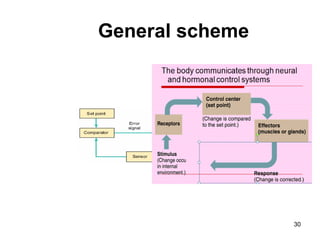
20
Stimulus:
Produces
change
in variable
1
2
3
Change
detected
by receptor
Input:
Information sent
along afferent
pathway to
5
Response of effector feeds
back to influence
magnitude of stimulus and
returns variable to
homeostasis
Variable (in homeostasis)
Imbalance
Imbalance
Receptor (sensor)
Control
center
4
Output:
Information sent along
efferent pathway to
Effector
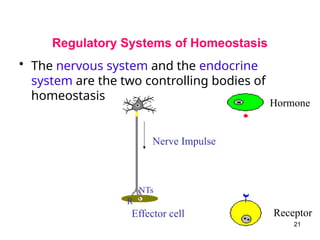
Regulatory Systems of Homeostasis
• The nervous system and the endocrine
system are the two controlling bodies of
homeostasis
21
Effector cell
NTs
R
Nerve Impulse
Hormone
Receptor
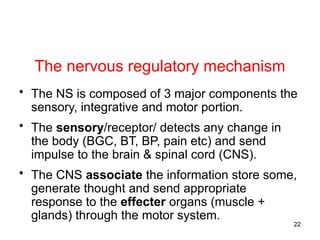
The nervous regulatory mechanism
• The NS is composed of 3 major components the
sensory, integrative and motor portion.
• The sensory/receptor/ detects any change in
the body (BGC, BT, BP, pain etc) and send
impulse to the brain & spinal cord (CNS).
• The CNS associate the information store some,
generate thought and send appropriate
response to the effecter organs (muscle +
glands) through the motor system.
22
The hormonal regulatory mechanism
• Hormones are chemical messengers secreted by
endocrine glands, & transported in blood to the
target organs (gland).
E.g. If ↓[Ca2+
] PTH kidney, bone & intestine to[Ca2+
]
If ↓[Na+
] Aldosterone  kidney & intestine to[Na+
]
• An organism is said to be in homeostasis when its
internal environment contains an optimum amount
of:
– nutrients, gases, electrolytes,
– water, hormones, enzymes & temperature.
23
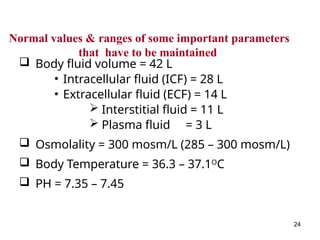
Normal values & ranges of some important parameters
that have to be maintained
 Body fluid volume = 42 L
• Intracellular fluid (ICF) = 28 L
• Extracellular fluid (ECF) = 14 L
 Interstitial fluid = 11 L
 Plasma fluid = 3 L
 Osmolality = 300 mosm/L (285 – 300 mosm/L)
 Body Temperature = 36.3 – 37.1O
C
 PH = 7.35 – 7.45
24
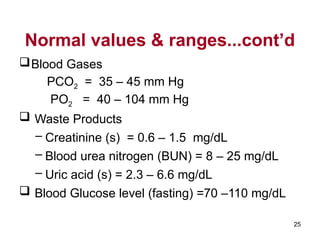
Normal values & ranges...cont’d
Blood Gases
PCO2 = 35 – 45 mm Hg
PO2 = 40 – 104 mm Hg
 Waste Products
– Creatinine (s) = 0.6 – 1.5 mg/dL
– Blood urea nitrogen (BUN) = 8 – 25 mg/dL
– Uric acid (s) = 2.3 – 6.6 mg/dL
 Blood Glucose level (fasting) =70 –110 mg/dL
25
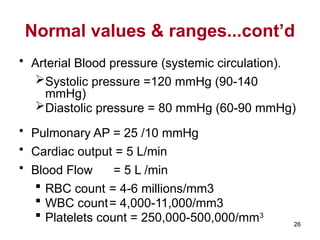
Normal values & ranges...cont’d
• Arterial Blood pressure (systemic circulation).
Systolic pressure =120 mmHg (90-140
mmHg)
Diastolic pressure = 80 mmHg (60-90 mmHg)
• Pulmonary AP = 25 /10 mmHg
• Cardiac output = 5 L/min
• Blood Flow = 5 L /min
 RBC count = 4-6 millions/mm3
 WBC count= 4,000-11,000/mm3
 Platelets count = 250,000-500,000/mm3
26
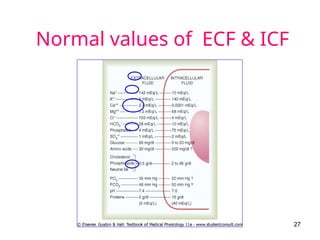
Normal values of ECF & ICF
27
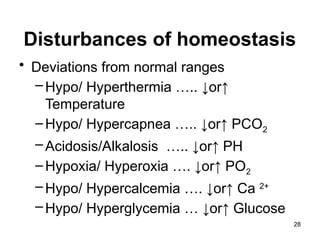
Disturbances of homeostasis
• Deviations from normal ranges
–Hypo/ Hyperthermia ….. ↓or↑
Temperature
–Hypo/ Hypercapnea ….. ↓or↑ PCO2
–Acidosis/Alkalosis ….. ↓or↑ PH
–Hypoxia/ Hyperoxia …. ↓or↑ PO2
–Hypo/ Hypercalcemia …. ↓or↑ Ca 2+
–Hypo/ Hyperglycemia … ↓or↑ Glucose
28
Control of homeostasis…
29
General scheme
30
Homeostatic control systems…
1.Intrinsic controls
• Inherent in an organ
• The changes are automatically regulated
by the organ
• Examples
• Reduction of 02 makes tissue release dilators
• Vascular autoregulation in exercising skeletal
muscle, or
• Frank-Starling mechanism in the heart 31
Homeostatic control systems…
2. Extrinsic controls
• External stimuli initiate the regulation process
• The most common type of controls
• Nervous or endocrine system
• The control mechanism initiated outside the
organ & alter the organ activities via
coordinators
• Maintain most of the factors in the internal
environment.
32
Homeostatic control systems…
I. Feedback control
• Change in the controlled variable brings a
corrective response.
• The regulatory processes established after
the change is developed.
33
Homeostatic control systems…
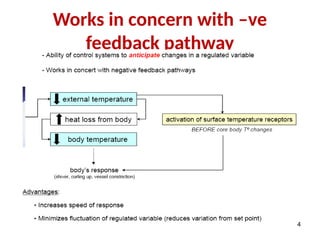
II. Feed-forward control
• Anticipation of a change in the controlled
variable brings an anticipatory response.
• The regulatory processes established
before the change is developed.
34
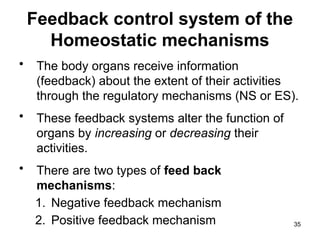
Feedback control system of the
Homeostatic mechanisms
• The body organs receive information
(feedback) about the extent of their activities
through the regulatory mechanisms (NS or ES).
• These feedback systems alter the function of
organs by increasing or decreasing their
activities.
• There are two types of feed back
mechanisms:
1. Negative feedback mechanism
2. Positive feedback mechanism 35
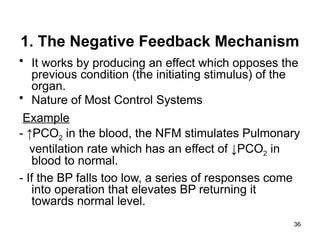
1. The Negative Feedback Mechanism
• It works by producing an effect which opposes the
previous condition (the initiating stimulus) of the
organ.
• Nature of Most Control Systems
Example
- ↑PCO2 in the blood, the NFM stimulates Pulmonary
ventilation rate which has an effect of ↓PCO2 in
blood to normal.
- If the BP falls too low, a series of responses come
into operation that elevates BP returning it
towards normal level.
36
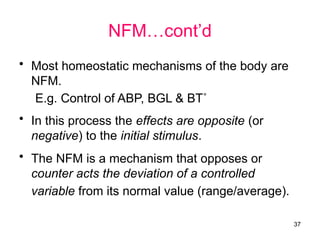
NFM…cont’d
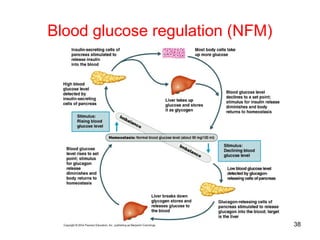
• Most homeostatic mechanisms of the body are
NFM.
E.g. Control of ABP, BGL & BT˚
• In this process the effects are opposite (or
negative) to the initial stimulus.
• The NFM is a mechanism that opposes or
counter acts the deviation of a controlled
variable from its normal value (range/average).
37
Blood glucose regulation (NFM)
38
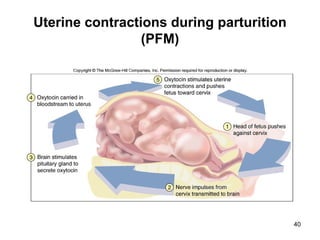
2. The Positive Feedback Mechanism
• It works by producing an effect which enhances
or repeats the same action like that of the
starting stimulus.
• Can Sometimes Cause Vicious Cycles and Death
• PFM can sometimes be useful. Such as:
– LH surge during ovulation, Blood clotting
– During child birth (labor), uterine contraction
is enhanced as the head of the baby stretches
the cervix.
– Generation & propagation of the action
potential.
39
Uterine contractions during parturition
(PFM)
40
Feed-forward
• In physiology, feed-forward control
e.g. normal anticipatory regulation
of heartbeat in advance of actual physical
exertion.
• Feed-forward control can be likened to;
learned anticipatory responses to known
stimulus.
41
Feed-forward…
Some activities needed be rapid that no
enough time for the brain to bring change
after actual change occurred.
The brain anticipates the change that will
be developed.
 Help for adaptation of the organ where
correction will be occurred.
42
Feed-forward…
 Correction is by anticipation
Example
-  HR and RR before actual exercise
-  Digestive juice before food inter
into GIT
• Used to adapt and rapid rate of response
to the change.
43
Works in concern with –ve
feedback pathway
44
What is a Cell?
• Cells are the microscopic fundamental
units of all living things.
• Every living thing has cells: bacteria,
protozoans, fungi, plants, and animals are the
main groups (Kingdoms) of living things.
• Some organisms are made up of just one cell
(e.g. bacteria and protozoans), but animals,
including human beings, are multicellular.
45
Cell…cont’d
• An adult human body is composed of about
100,000,000,000,000 cells!.
• Each cell has basic requirements to sustain
it, and the body's organ systems are largely
built around providing the many trillions of
cells with those basic needs such as:
• Oxygen
• Food and
• Waste removal
46
Cell…cont’d
• There are about 200 different kinds of
specialized cells in the human body.
• When many identical cells are organized
together it is called a tissue such as:
• muscle tissue , nervous tissue etc
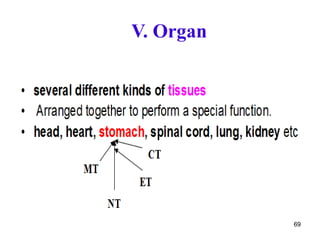
• Various tissues organized together for a
common purpose are called organs such as:
• stomach , skin, brain and, uterus
47
Cell…cont’d
• Ideas about cell structure have changed
considerably over the years.
– Early biologists saw cells as simple
membranous sacs containing fluid and a few
floating particles.
– Today's biologists know that cells are
inconceivably more complex than this.
48
Cell…cont’d
• If a person's cells are healthy, then that person
is healthy.
– All physiological processes, disease, growth and
development can be described at the cellular level.
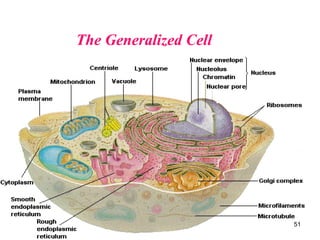
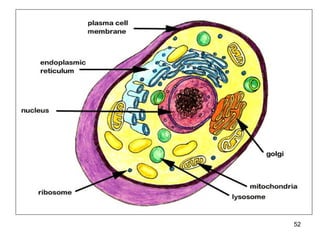
• A typical cell has two parts: nucleus and
cytoplasm.
• The nucleus is separated from the cytoplasm by
a nuclear membrane and the cytoplasm is
separated from the surrounding fluid (ECF) by
the plasma membrane
49
Cell…cont’d
• Different substances that make up the cell are
collectively called protoplasm.
• The protoplasm composed mainly of five basic
substances; water, electrolytes, proteins, lipids
and carbohydrates.
• The very specialized structures in the cell
suspended in the cytoplasm are organelles.
50
51
The Generalized Cell
52
Important Organelles
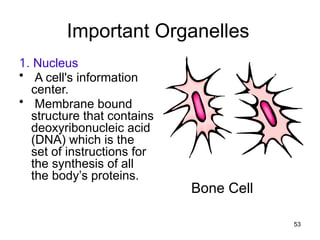
1. Nucleus
• A cell's information
center.
• Membrane bound
structure that contains
deoxyribonucleic acid
(DNA) which is the
set of instructions for
the synthesis of all
the body’s proteins.
53
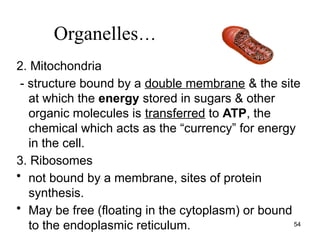
2. Mitochondria
- structure bound by a double membrane & the site
at which the energy stored in sugars & other
organic molecules is transferred to ATP, the
chemical which acts as the “currency” for energy
in the cell.
3. Ribosomes
• not bound by a membrane, sites of protein
synthesis.
• May be free (floating in the cytoplasm) or bound
to the endoplasmic reticulum. 54
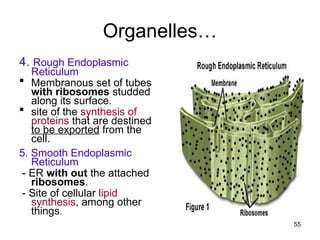
Organelles…
Organelles…
4. Rough Endoplasmic
Reticulum
 Membranous set of tubes
with ribosomes studded
along its surface.
 site of the synthesis of
proteins that are destined
to be exported from the
cell.
5. Smooth Endoplasmic
Reticulum
- ER with out the attached
ribosomes.
- Site of cellular lipid
synthesis, among other
things.
55
6. Golgi Apparatus
- membrane bound organelle responsible for
determining the direction of proteins
synthesized
in the rough ER.
7. Lysosomes
- membrane bound organelle that houses
digestive
enzymes that can be used to break down
ingested
toxins or worn out cell parts.
56
Organelles…
The Plasma Membrane
• It is a sheet-like structure that surround
(enclose) the cell, separating the cellular
contents from the ECF.
• It is entirely composed of :
– Proteins = 55%
– Lipids = 43% and
– Carbohydrates = 2% .
57
Functions of the plasma membrane
1. Separates cellular contents from the ECF
2. Regulates the passage of substances in and
out.
o It is semi- permeable allowing some
substances to pass through it excluding
others.
o This creates unequal distribution of ions
on both sides of the membrane.
58
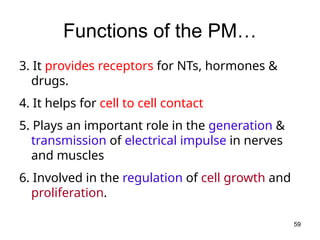
Functions of the PM…
3. It provides receptors for NTs, hormones &
drugs.
4. It helps for cell to cell contact
5. Plays an important role in the generation &
transmission of electrical impulse in nerves
and muscles
6. Involved in the regulation of cell growth and
proliferation.
59
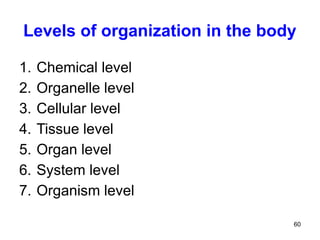
Levels of organization in the body
1. Chemical level
2. Organelle level
3. Cellular level
4. Tissue level
5. Organ level
6. System level
7. Organism level
60
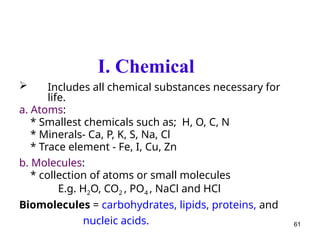
I. Chemical
 Includes all chemical substances necessary for
life.
a. Atoms:
* Smallest chemicals such as; H, O, C, N
* Minerals- Ca, P, K, S, Na, Cl
* Trace element - Fe, I, Cu, Zn
b. Molecules:
* collection of atoms or small molecules
E.g. H2O, CO2 , PO4 , NaCl and HCl
Biomolecules = carbohydrates, lipids, proteins, and
nucleic acids. 61
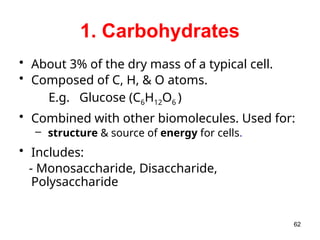
1. Carbohydrates
• About 3% of the dry mass of a typical cell.
• Composed of C, H, & O atoms.
E.g. Glucose (C6H12O6 )
• Combined with other biomolecules. Used for:
– structure & source of energy for cells.
• Includes:
- Monosaccharide, Disaccharide,
Polysaccharide
62
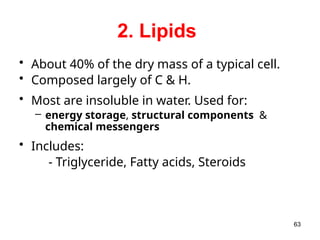
2. Lipids
• About 40% of the dry mass of a typical cell.
• Composed largely of C & H.
• Most are insoluble in water. Used for:
– energy storage, structural components &
chemical messengers
• Includes:
- Triglyceride, Fatty acids, Steroids
63
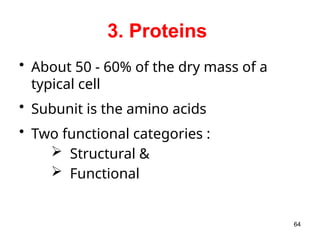
3. Proteins
• About 50 - 60% of the dry mass of a
typical cell
• Subunit is the amino acids
• Two functional categories :
 Structural &
 Functional
64
4. Nucleic Acids
• Biological molecules essential for life,
and include:
– DNA (deoxyribonucleic acid) and
– RNA (ribonucleic acid)
• Function in encoding, transmitting and
expressing genetic information.
65
II. Organelle
• Specialized subunit within a cell that has a
specific function, and is usually separately
enclosed within its own lipid bilayer.
• Combination of biological macromolecules.
• Structures in the cytoplasm.
• Machineries of the given cell
E.g. Mitochondria … energy production
Lysosomes …… break down ingested toxins
or
worn out cell parts.
66
III. Cell
• The smallest, structural & functional unit of
life.
• Contain basic characteristics of given
organism.
• Numerous in number & estimates being 75 -
100 trillion cells in the average adult human.
• The red blood cells, numbering 25 trillion in
each human being, transport oxygen from
the lungs to the tissues.
67
IV. Tissue
 Group of cells and surrounded
materials that perform a specific
function.
 Four main types:
 Muscle tissue
 Nerve tissue
 Epithelial tissue
 Connective tissue
68
V. Organ
69
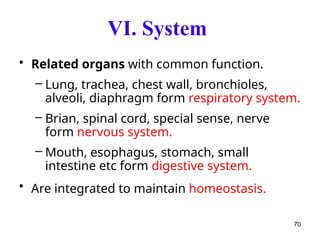
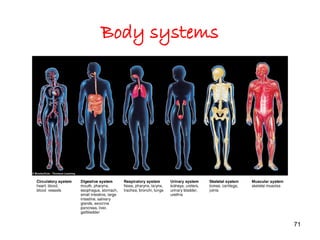
VI. System
• Related organs with common function.
– Lung, trachea, chest wall, bronchioles,
alveoli, diaphragm form respiratory system.
– Brian, spinal cord, special sense, nerve
form nervous system.
– Mouth, esophagus, stomach, small
intestine etc form digestive system.
• Are integrated to maintain homeostasis.
70
Body systems
71
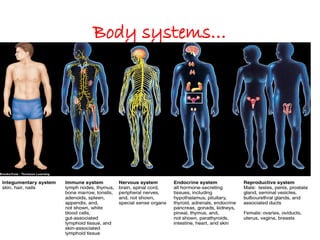
Body systems…
72
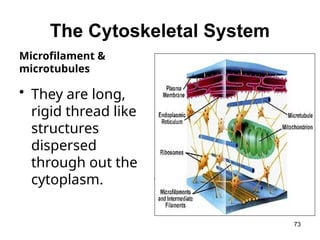
The Cytoskeletal System
• They are long,
rigid thread like
structures
dispersed
through out the
cytoplasm.
73
Microfilament &
microtubules
Functions of cytoskeletal system
1) Maintain shape of the cells.
E.g. Axon
2) Serve as a transport system for the
movement of compounds and organelles
within the cell.
3) Construct the mitotic spindle.
E.g. Centrioles
74
Functions of cytoskeletal system…
4) Provide for the support & movement of
cilia & flagella
5) Cell to cell contact: to fasten cell
membranes together
6) Essential for appropriate leukocyte
migration.
75
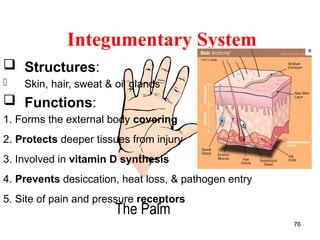
Integumentary System
76
 Structures:
- Skin, hair, sweat & oil glands
 Functions:
1. Forms the external body covering
2. Protects deeper tissues from injury
3. Involved in vitamin D synthesis
4. Prevents desiccation, heat loss, & pathogen entry
5. Site of pain and pressure receptors
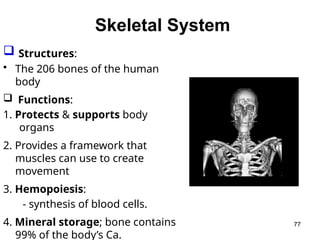
Skeletal System
77
 Structures:
• The 206 bones of the human
body
 Functions:
1. Protects & supports body
organs
2. Provides a framework that
muscles can use to create
movement
3. Hemopoiesis:
- synthesis of blood cells.
4. Mineral storage; bone contains
99% of the body’s Ca.
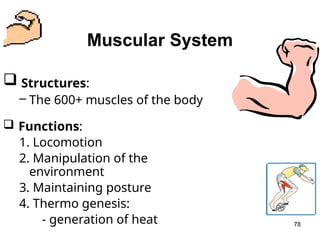
Muscular System
78
 Structures:
– The 600+ muscles of the body
 Functions:
1. Locomotion
2. Manipulation of the
environment
3. Maintaining posture
4. Thermo genesis:
- generation of heat
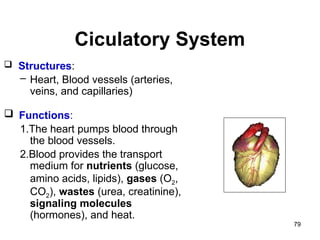
Ciculatory System
79
 Structures:
– Heart, Blood vessels (arteries,
veins, and capillaries)
 Functions:
1.The heart pumps blood through
the blood vessels.
2.Blood provides the transport
medium for nutrients (glucose,
amino acids, lipids), gases (O2,
CO2), wastes (urea, creatinine),
signaling molecules
(hormones), and heat.
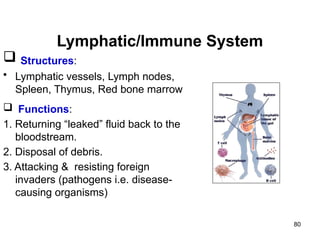
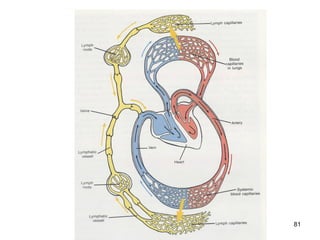
Lymphatic/Immune System
80
 Structures:
• Lymphatic vessels, Lymph nodes,
Spleen, Thymus, Red bone marrow
 Functions:
1. Returning “leaked” fluid back to the
bloodstream.
2. Disposal of debris.
3. Attacking & resisting foreign
invaders (pathogens i.e. disease-
causing organisms)
81
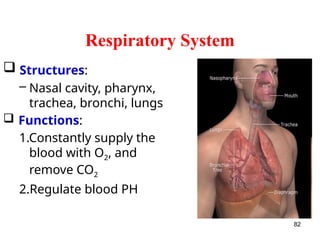
Respiratory System
82
 Structures:
– Nasal cavity, pharynx,
trachea, bronchi, lungs
 Functions:
1.Constantly supply the
blood with O2, and
remove CO2
2.Regulate blood PH
Digestive System
 Structures:
~ Oral cavity, esophagus, stomach, small intestine, large
intestine, rectum, salivary glands, pancreas, liver,
gallbladder.
 Functions:
~ Ingestion and subsequent breakdown of food into
absorbable units that will enter the blood for
distribution to the body’s cells.
83
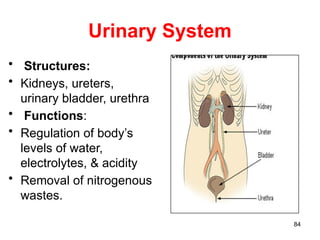
Urinary System
• Structures:
• Kidneys, ureters,
urinary bladder, urethra
• Functions:
• Regulation of body’s
levels of water,
electrolytes, & acidity
• Removal of nitrogenous
wastes.
84
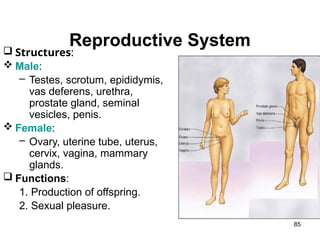
Reproductive System
85
 Structures:
 Male:
– Testes, scrotum, epididymis,
vas deferens, urethra,
prostate gland, seminal
vesicles, penis.
 Female:
– Ovary, uterine tube, uterus,
cervix, vagina, mammary
glands.
 Functions:
1. Production of offspring.
2. Sexual pleasure.
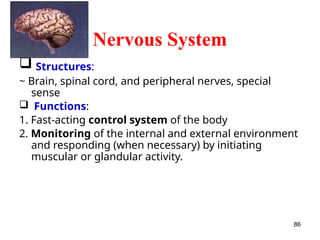
Nervous System
 Structures:
~ Brain, spinal cord, and peripheral nerves, special
sense
 Functions:
1. Fast-acting control system of the body
2. Monitoring of the internal and external environment
and responding (when necessary) by initiating
muscular or glandular activity.
86
Endocrine System
 Structures:
 Hormone-secreting glands
– Pituitary, Thyroid, Thymus, Pineal, Parathyroid,
Adrenal, Pancreas, Small Intestine, Stomach,
Testes, Ovaries, Kidneys, Heart
 Functions:
1.Long-term control system of the body
2.Regulates growth, reproduction, and nutrient use
among other things.
87
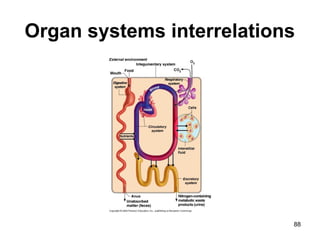
Organ systems interrelations
88
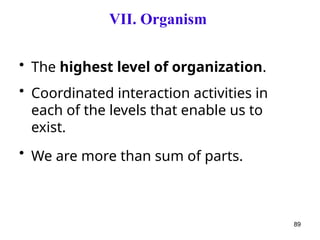
VII. Organism
• The highest level of organization.
• Coordinated interaction activities in
each of the levels that enable us to
exist.
• We are more than sum of parts.
89
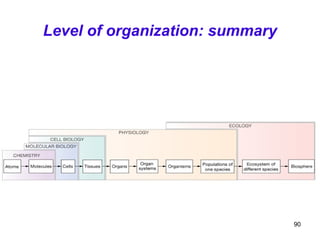
Level of organization: summary
90
10Q!!!!!!!!!!!!!
91

Introduction to Human physiology over 90 slide

  • 1.
    Baro Gambella College CourseTitle; Physiology I Year;2nd public health1st semester Instructor; Biel Riek (BSc, Nurse)
  • 2.
  • 3.
    Outlines • Overview • Definitions •Historical background • Homeostasis • Feedback control mechanisms • The Cell • Body fluid and Electrolytes 3
  • 4.
    Objectives By the endof this topic, you will be ble to:  Have topic overview  Explain homeostasis.  Discuss cell physiology.  Enumerate the cell organelles with their function.  Discuss negative & positive feed back mechanism. 5. List the types of cellular transport 4
  • 5.
    Overview • The humanorganism consists of trillions of cells all working together for the maintenance of the entire organism. • While cells may perform very different functions, all the cells are quite similar in their metabolic requirements: – oxygen, glucose, mineral ions, waste removal • Maintaining a constant internal environment is necessary for the well-being of individual cells & the well-being of the entire body. 5
  • 6.
    Extracellular Fluid (ECF) •Cell is the basic structural & functional unit of life. • Each organ in our body is an aggregate of 100 trillions of different cells held together by inter cellular supporting structures. • These cells are bathed with the fluid that is called ECF (fluid that fills the space between cells) which contains an optimum amount of: – nutrients, gases, hormones, enzymes, water & electrolytes. 6
  • 7.
    What is Homeostasis? •Maintenance of static or constant conditions in the internal environment (ECF). • Essentially all organs of the body perform their functions that help to maintain constant conditions in the ECF. For example:  Lungs maintain the normal concentration of respiratory gases in blood.  CVS transports required substances & removes waste products.  Kidneys maintain constant ionic concentration  GIS provides nutrients. 7
  • 8.
    Homeostasis…cont’d • Homeostasis ina general sense refers to: – stability, balance or equilibrium. • Maintaining a stable internal environment requires constant monitoring & adjustments as conditions change. • Adjustment of physiological systems within the body is called homeostatic regulation; which involves 3 parts or mechanisms: – receptor, control center & effector 8
  • 9.
    Homeostasis…cont’d 1. Receptor – receivesinformation that something in the environment is changing. 2. Control center or integration center – receives & processes information from the receptor. 3. Effector – responds to the commands of the control center by either opposing or enhancing the stimulus. 9
  • 10.
    Homeostasis…cont’d Homeostatic regulation isan ongoing process that continually works to restore & maintain homeostasis. For example In regulating body temperature there are temperature receptors in the skin, Which communicate information to the brain, which is the control center, and The effector is our blood vessels and sweat glands. 10
  • 11.
    Each cell contributesto homeostasis 11
  • 12.
    Homeostasis…cont’d Homeostatically regulated variables •Body Temperature • Blood Composition – ions, sugars, proteins, water, O2 and CO2 , PH & Osmolality • Blood Pressure, Cardiac Output, Cardiac Rate • Respiratory Rate and depth • Secretions of Endocrine Glands • Rate of intracellular chemical reactions 12
  • 13.
    Homeostasis…cont’d Factor disrupting homeostasis: External stimuli heat, cold, lack of 02, pathogens & toxins  Internal stimuli  abnormalities in visceral organs 13
  • 14.
    Homeostasis…cont’d Function of homeostasis 1)The underlying principle of physiology  Physiology is concerned with how body systems contribute to homeostasis and benefit from homeostasis. 2) Means of survival  It allows an organism to function effectively in a broad range of environmental conditions. 14
  • 15.
    Physiology • Is thestudy of the normal function of human body. • It also deals with the integrated activities of different organs & organ systems, and the conditions which determine normal functions of body parts. • Almost all physiological parameters are measurable and expressed quantitatively. Ex: Blood pressure (BP) … 120/80 mmHg Blood glucose level (BGL) … 80-120 mg/dl 15
  • 16.
    Fields of physiology oRange from simple viral physiology, bacterial physiology, cellular physiology to the most complex human physiology. o Physiology is closely related to several other branches of science such as anatomy, pharmacology, biochemistry, pathology etc  Therefore, Physiology is not an isolated science but highly associated with other sciences. 16
  • 17.
    Historical Background William Harvey(1628) Laid the foundation of physiology by describing correctly about the “circulation of blood” in human body. – Described that the heart pumps blood, arteries transport oxygenated blood, exchange of substances occur at the systemic capillaries and veins return deoxygenated blood. For this reason he is known to be the father of physiology. 17
  • 18.
    Historical Background...cont’d Claude Bernard The great French physiologist in the 19th century, introduced our modern physiology thought called ECF that surrounds the cell.  He called ECF is the internal environment (Milieu interieur) of the body which remains remarkably constant despite changing conditions in the external environment. 18
  • 19.
    19 Walter Cannon  Anothergreat physiologist of the 1st half of 19th century  Termed the maintenance of constant conditions in the ECF as homeostasis.
  • 20.
    Homeostatic Control Mechanisms 20 Stimulus: Produces change in variable 1 2 3 Change detected byreceptor Input: Information sent along afferent pathway to 5 Response of effector feeds back to influence magnitude of stimulus and returns variable to homeostasis Variable (in homeostasis) Imbalance Imbalance Receptor (sensor) Control center 4 Output: Information sent along efferent pathway to Effector
  • 21.
    Regulatory Systems ofHomeostasis • The nervous system and the endocrine system are the two controlling bodies of homeostasis 21 Effector cell NTs R Nerve Impulse Hormone Receptor
  • 22.
    The nervous regulatorymechanism • The NS is composed of 3 major components the sensory, integrative and motor portion. • The sensory/receptor/ detects any change in the body (BGC, BT, BP, pain etc) and send impulse to the brain & spinal cord (CNS). • The CNS associate the information store some, generate thought and send appropriate response to the effecter organs (muscle + glands) through the motor system. 22
  • 23.
    The hormonal regulatorymechanism • Hormones are chemical messengers secreted by endocrine glands, & transported in blood to the target organs (gland). E.g. If ↓[Ca2+ ] PTH kidney, bone & intestine to[Ca2+ ] If ↓[Na+ ] Aldosterone  kidney & intestine to[Na+ ] • An organism is said to be in homeostasis when its internal environment contains an optimum amount of: – nutrients, gases, electrolytes, – water, hormones, enzymes & temperature. 23
  • 24.
    Normal values &ranges of some important parameters that have to be maintained  Body fluid volume = 42 L • Intracellular fluid (ICF) = 28 L • Extracellular fluid (ECF) = 14 L  Interstitial fluid = 11 L  Plasma fluid = 3 L  Osmolality = 300 mosm/L (285 – 300 mosm/L)  Body Temperature = 36.3 – 37.1O C  PH = 7.35 – 7.45 24
  • 25.
    Normal values &ranges...cont’d Blood Gases PCO2 = 35 – 45 mm Hg PO2 = 40 – 104 mm Hg  Waste Products – Creatinine (s) = 0.6 – 1.5 mg/dL – Blood urea nitrogen (BUN) = 8 – 25 mg/dL – Uric acid (s) = 2.3 – 6.6 mg/dL  Blood Glucose level (fasting) =70 –110 mg/dL 25
  • 26.
    Normal values &ranges...cont’d • Arterial Blood pressure (systemic circulation). Systolic pressure =120 mmHg (90-140 mmHg) Diastolic pressure = 80 mmHg (60-90 mmHg) • Pulmonary AP = 25 /10 mmHg • Cardiac output = 5 L/min • Blood Flow = 5 L /min  RBC count = 4-6 millions/mm3  WBC count= 4,000-11,000/mm3  Platelets count = 250,000-500,000/mm3 26
  • 27.
    Normal values ofECF & ICF 27
  • 28.
    Disturbances of homeostasis •Deviations from normal ranges –Hypo/ Hyperthermia ….. ↓or↑ Temperature –Hypo/ Hypercapnea ….. ↓or↑ PCO2 –Acidosis/Alkalosis ….. ↓or↑ PH –Hypoxia/ Hyperoxia …. ↓or↑ PO2 –Hypo/ Hypercalcemia …. ↓or↑ Ca 2+ –Hypo/ Hyperglycemia … ↓or↑ Glucose 28
  • 29.
  • 30.
  • 31.
    Homeostatic control systems… 1.Intrinsiccontrols • Inherent in an organ • The changes are automatically regulated by the organ • Examples • Reduction of 02 makes tissue release dilators • Vascular autoregulation in exercising skeletal muscle, or • Frank-Starling mechanism in the heart 31
  • 32.
    Homeostatic control systems… 2.Extrinsic controls • External stimuli initiate the regulation process • The most common type of controls • Nervous or endocrine system • The control mechanism initiated outside the organ & alter the organ activities via coordinators • Maintain most of the factors in the internal environment. 32
  • 33.
    Homeostatic control systems… I.Feedback control • Change in the controlled variable brings a corrective response. • The regulatory processes established after the change is developed. 33
  • 34.
    Homeostatic control systems… II.Feed-forward control • Anticipation of a change in the controlled variable brings an anticipatory response. • The regulatory processes established before the change is developed. 34
  • 35.
    Feedback control systemof the Homeostatic mechanisms • The body organs receive information (feedback) about the extent of their activities through the regulatory mechanisms (NS or ES). • These feedback systems alter the function of organs by increasing or decreasing their activities. • There are two types of feed back mechanisms: 1. Negative feedback mechanism 2. Positive feedback mechanism 35
  • 36.
    1. The NegativeFeedback Mechanism • It works by producing an effect which opposes the previous condition (the initiating stimulus) of the organ. • Nature of Most Control Systems Example - ↑PCO2 in the blood, the NFM stimulates Pulmonary ventilation rate which has an effect of ↓PCO2 in blood to normal. - If the BP falls too low, a series of responses come into operation that elevates BP returning it towards normal level. 36
  • 37.
    NFM…cont’d • Most homeostaticmechanisms of the body are NFM. E.g. Control of ABP, BGL & BT˚ • In this process the effects are opposite (or negative) to the initial stimulus. • The NFM is a mechanism that opposes or counter acts the deviation of a controlled variable from its normal value (range/average). 37
  • 38.
  • 39.
    2. The PositiveFeedback Mechanism • It works by producing an effect which enhances or repeats the same action like that of the starting stimulus. • Can Sometimes Cause Vicious Cycles and Death • PFM can sometimes be useful. Such as: – LH surge during ovulation, Blood clotting – During child birth (labor), uterine contraction is enhanced as the head of the baby stretches the cervix. – Generation & propagation of the action potential. 39
  • 40.
    Uterine contractions duringparturition (PFM) 40
  • 41.
    Feed-forward • In physiology,feed-forward control e.g. normal anticipatory regulation of heartbeat in advance of actual physical exertion. • Feed-forward control can be likened to; learned anticipatory responses to known stimulus. 41
  • 42.
    Feed-forward… Some activities neededbe rapid that no enough time for the brain to bring change after actual change occurred. The brain anticipates the change that will be developed.  Help for adaptation of the organ where correction will be occurred. 42
  • 43.
    Feed-forward…  Correction isby anticipation Example -  HR and RR before actual exercise -  Digestive juice before food inter into GIT • Used to adapt and rapid rate of response to the change. 43
  • 44.
    Works in concernwith –ve feedback pathway 44
  • 45.
    What is aCell? • Cells are the microscopic fundamental units of all living things. • Every living thing has cells: bacteria, protozoans, fungi, plants, and animals are the main groups (Kingdoms) of living things. • Some organisms are made up of just one cell (e.g. bacteria and protozoans), but animals, including human beings, are multicellular. 45
  • 46.
    Cell…cont’d • An adulthuman body is composed of about 100,000,000,000,000 cells!. • Each cell has basic requirements to sustain it, and the body's organ systems are largely built around providing the many trillions of cells with those basic needs such as: • Oxygen • Food and • Waste removal 46
  • 47.
    Cell…cont’d • There areabout 200 different kinds of specialized cells in the human body. • When many identical cells are organized together it is called a tissue such as: • muscle tissue , nervous tissue etc • Various tissues organized together for a common purpose are called organs such as: • stomach , skin, brain and, uterus 47
  • 48.
    Cell…cont’d • Ideas aboutcell structure have changed considerably over the years. – Early biologists saw cells as simple membranous sacs containing fluid and a few floating particles. – Today's biologists know that cells are inconceivably more complex than this. 48
  • 49.
    Cell…cont’d • If aperson's cells are healthy, then that person is healthy. – All physiological processes, disease, growth and development can be described at the cellular level. • A typical cell has two parts: nucleus and cytoplasm. • The nucleus is separated from the cytoplasm by a nuclear membrane and the cytoplasm is separated from the surrounding fluid (ECF) by the plasma membrane 49
  • 50.
    Cell…cont’d • Different substancesthat make up the cell are collectively called protoplasm. • The protoplasm composed mainly of five basic substances; water, electrolytes, proteins, lipids and carbohydrates. • The very specialized structures in the cell suspended in the cytoplasm are organelles. 50
  • 51.
  • 52.
  • 53.
    Important Organelles 1. Nucleus •A cell's information center. • Membrane bound structure that contains deoxyribonucleic acid (DNA) which is the set of instructions for the synthesis of all the body’s proteins. 53
  • 54.
    2. Mitochondria - structurebound by a double membrane & the site at which the energy stored in sugars & other organic molecules is transferred to ATP, the chemical which acts as the “currency” for energy in the cell. 3. Ribosomes • not bound by a membrane, sites of protein synthesis. • May be free (floating in the cytoplasm) or bound to the endoplasmic reticulum. 54 Organelles…
  • 55.
    Organelles… 4. Rough Endoplasmic Reticulum Membranous set of tubes with ribosomes studded along its surface.  site of the synthesis of proteins that are destined to be exported from the cell. 5. Smooth Endoplasmic Reticulum - ER with out the attached ribosomes. - Site of cellular lipid synthesis, among other things. 55
  • 56.
    6. Golgi Apparatus -membrane bound organelle responsible for determining the direction of proteins synthesized in the rough ER. 7. Lysosomes - membrane bound organelle that houses digestive enzymes that can be used to break down ingested toxins or worn out cell parts. 56 Organelles…
  • 57.
    The Plasma Membrane •It is a sheet-like structure that surround (enclose) the cell, separating the cellular contents from the ECF. • It is entirely composed of : – Proteins = 55% – Lipids = 43% and – Carbohydrates = 2% . 57
  • 58.
    Functions of theplasma membrane 1. Separates cellular contents from the ECF 2. Regulates the passage of substances in and out. o It is semi- permeable allowing some substances to pass through it excluding others. o This creates unequal distribution of ions on both sides of the membrane. 58
  • 59.
    Functions of thePM… 3. It provides receptors for NTs, hormones & drugs. 4. It helps for cell to cell contact 5. Plays an important role in the generation & transmission of electrical impulse in nerves and muscles 6. Involved in the regulation of cell growth and proliferation. 59
  • 60.
    Levels of organizationin the body 1. Chemical level 2. Organelle level 3. Cellular level 4. Tissue level 5. Organ level 6. System level 7. Organism level 60
  • 61.
    I. Chemical  Includesall chemical substances necessary for life. a. Atoms: * Smallest chemicals such as; H, O, C, N * Minerals- Ca, P, K, S, Na, Cl * Trace element - Fe, I, Cu, Zn b. Molecules: * collection of atoms or small molecules E.g. H2O, CO2 , PO4 , NaCl and HCl Biomolecules = carbohydrates, lipids, proteins, and nucleic acids. 61
  • 62.
    1. Carbohydrates • About3% of the dry mass of a typical cell. • Composed of C, H, & O atoms. E.g. Glucose (C6H12O6 ) • Combined with other biomolecules. Used for: – structure & source of energy for cells. • Includes: - Monosaccharide, Disaccharide, Polysaccharide 62
  • 63.
    2. Lipids • About40% of the dry mass of a typical cell. • Composed largely of C & H. • Most are insoluble in water. Used for: – energy storage, structural components & chemical messengers • Includes: - Triglyceride, Fatty acids, Steroids 63
  • 64.
    3. Proteins • About50 - 60% of the dry mass of a typical cell • Subunit is the amino acids • Two functional categories :  Structural &  Functional 64
  • 65.
    4. Nucleic Acids •Biological molecules essential for life, and include: – DNA (deoxyribonucleic acid) and – RNA (ribonucleic acid) • Function in encoding, transmitting and expressing genetic information. 65
  • 66.
    II. Organelle • Specializedsubunit within a cell that has a specific function, and is usually separately enclosed within its own lipid bilayer. • Combination of biological macromolecules. • Structures in the cytoplasm. • Machineries of the given cell E.g. Mitochondria … energy production Lysosomes …… break down ingested toxins or worn out cell parts. 66
  • 67.
    III. Cell • Thesmallest, structural & functional unit of life. • Contain basic characteristics of given organism. • Numerous in number & estimates being 75 - 100 trillion cells in the average adult human. • The red blood cells, numbering 25 trillion in each human being, transport oxygen from the lungs to the tissues. 67
  • 68.
    IV. Tissue  Groupof cells and surrounded materials that perform a specific function.  Four main types:  Muscle tissue  Nerve tissue  Epithelial tissue  Connective tissue 68
  • 69.
  • 70.
    VI. System • Relatedorgans with common function. – Lung, trachea, chest wall, bronchioles, alveoli, diaphragm form respiratory system. – Brian, spinal cord, special sense, nerve form nervous system. – Mouth, esophagus, stomach, small intestine etc form digestive system. • Are integrated to maintain homeostasis. 70
  • 71.
  • 72.
  • 73.
    The Cytoskeletal System •They are long, rigid thread like structures dispersed through out the cytoplasm. 73 Microfilament & microtubules
  • 74.
    Functions of cytoskeletalsystem 1) Maintain shape of the cells. E.g. Axon 2) Serve as a transport system for the movement of compounds and organelles within the cell. 3) Construct the mitotic spindle. E.g. Centrioles 74
  • 75.
    Functions of cytoskeletalsystem… 4) Provide for the support & movement of cilia & flagella 5) Cell to cell contact: to fasten cell membranes together 6) Essential for appropriate leukocyte migration. 75
  • 76.
    Integumentary System 76  Structures: -Skin, hair, sweat & oil glands  Functions: 1. Forms the external body covering 2. Protects deeper tissues from injury 3. Involved in vitamin D synthesis 4. Prevents desiccation, heat loss, & pathogen entry 5. Site of pain and pressure receptors
  • 77.
    Skeletal System 77  Structures: •The 206 bones of the human body  Functions: 1. Protects & supports body organs 2. Provides a framework that muscles can use to create movement 3. Hemopoiesis: - synthesis of blood cells. 4. Mineral storage; bone contains 99% of the body’s Ca.
  • 78.
    Muscular System 78  Structures: –The 600+ muscles of the body  Functions: 1. Locomotion 2. Manipulation of the environment 3. Maintaining posture 4. Thermo genesis: - generation of heat
  • 79.
    Ciculatory System 79  Structures: –Heart, Blood vessels (arteries, veins, and capillaries)  Functions: 1.The heart pumps blood through the blood vessels. 2.Blood provides the transport medium for nutrients (glucose, amino acids, lipids), gases (O2, CO2), wastes (urea, creatinine), signaling molecules (hormones), and heat.
  • 80.
    Lymphatic/Immune System 80  Structures: •Lymphatic vessels, Lymph nodes, Spleen, Thymus, Red bone marrow  Functions: 1. Returning “leaked” fluid back to the bloodstream. 2. Disposal of debris. 3. Attacking & resisting foreign invaders (pathogens i.e. disease- causing organisms)
  • 81.
  • 82.
    Respiratory System 82  Structures: –Nasal cavity, pharynx, trachea, bronchi, lungs  Functions: 1.Constantly supply the blood with O2, and remove CO2 2.Regulate blood PH
  • 83.
    Digestive System  Structures: ~Oral cavity, esophagus, stomach, small intestine, large intestine, rectum, salivary glands, pancreas, liver, gallbladder.  Functions: ~ Ingestion and subsequent breakdown of food into absorbable units that will enter the blood for distribution to the body’s cells. 83
  • 84.
    Urinary System • Structures: •Kidneys, ureters, urinary bladder, urethra • Functions: • Regulation of body’s levels of water, electrolytes, & acidity • Removal of nitrogenous wastes. 84
  • 85.
    Reproductive System 85  Structures: Male: – Testes, scrotum, epididymis, vas deferens, urethra, prostate gland, seminal vesicles, penis.  Female: – Ovary, uterine tube, uterus, cervix, vagina, mammary glands.  Functions: 1. Production of offspring. 2. Sexual pleasure.
  • 86.
    Nervous System  Structures: ~Brain, spinal cord, and peripheral nerves, special sense  Functions: 1. Fast-acting control system of the body 2. Monitoring of the internal and external environment and responding (when necessary) by initiating muscular or glandular activity. 86
  • 87.
    Endocrine System  Structures: Hormone-secreting glands – Pituitary, Thyroid, Thymus, Pineal, Parathyroid, Adrenal, Pancreas, Small Intestine, Stomach, Testes, Ovaries, Kidneys, Heart  Functions: 1.Long-term control system of the body 2.Regulates growth, reproduction, and nutrient use among other things. 87
  • 88.
  • 89.
    VII. Organism • Thehighest level of organization. • Coordinated interaction activities in each of the levels that enable us to exist. • We are more than sum of parts. 89
  • 90.
  • 91.