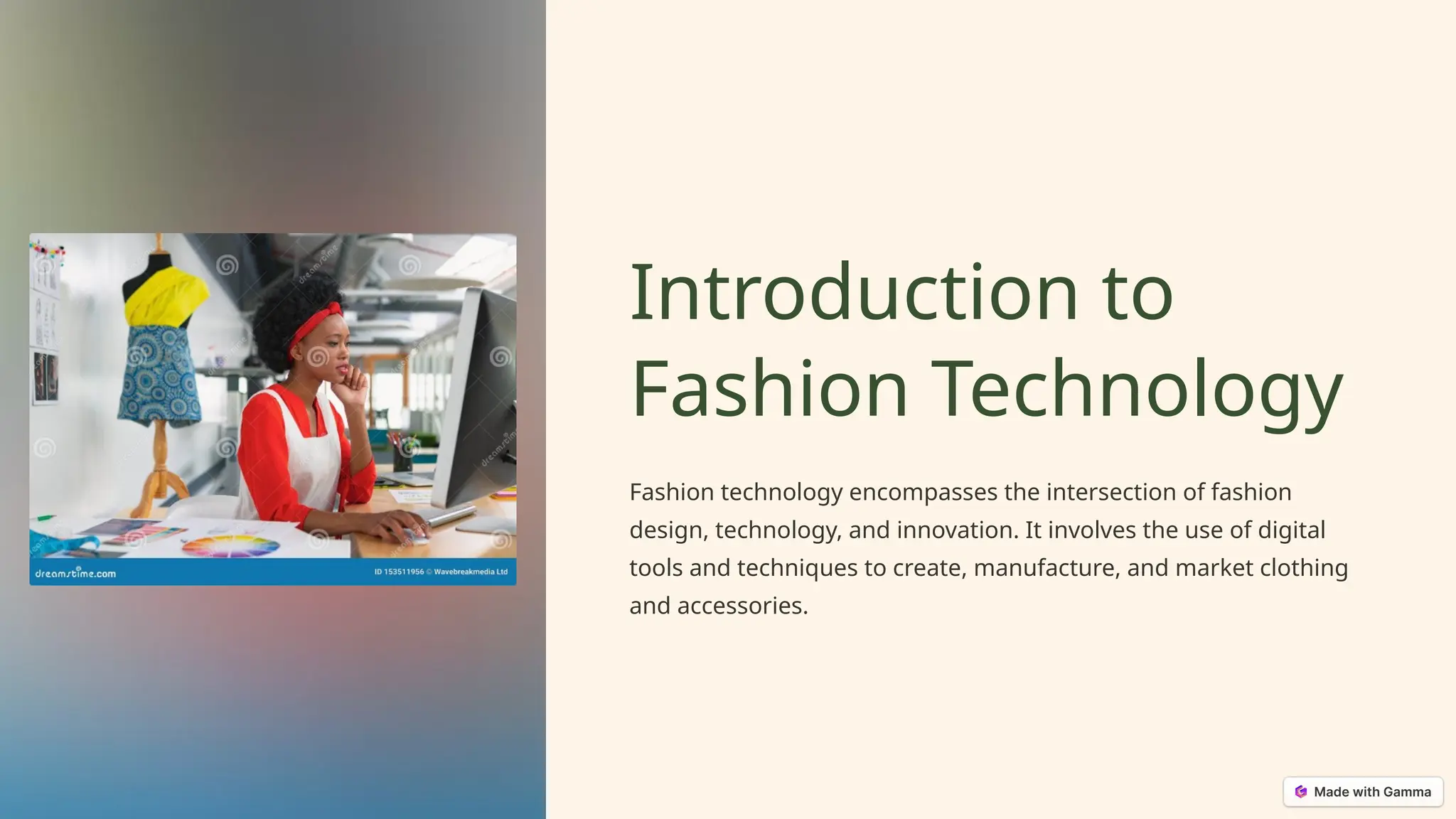
Introduction to
Fashion Technology
Fashion technology encompasses the intersection of fashion
design, technology, and innovation. It involves the use of digital
tools and techniques to create, manufacture, and market clothing
and accessories.
The Role of Design in
Fashion Technology
1 Aesthetic Expression
Design is crucial for
creating visually
appealing and desirable
garments. It defines the
overall look and feel of a
product.
2 Functionality and
Comfort
Design ensures that
garments are functional
and comfortable to wear.
It considers factors like
fit, movement, and
breathability.
3 Sustainability and Innovation
Design plays a vital role in promoting sustainable practices
and exploring innovative materials and processes.
Elements of Design: Color
Color Theory
Understanding color theory is
essential for creating visually
pleasing and harmonious designs.
This involves using color
harmonies and contrasts
effectively.
Color Psychology
Colors evoke different emotions
and associations. Designers
consider the psychological impact
of colors on consumers to create
desired perceptions.
Color Trends
Fashion trends dictate the popular
colors of each season. Designers
must stay updated on color trends
to appeal to the current market.
Elements of Design: Texture
Visual Texture
This refers to the surface
appearance of a fabric, such
as smooth, rough, or
bumpy. It adds visual
interest and depth to
designs.
Tactile Texture
This refers to the feel of a
fabric, which can be soft,
rough, silky, or stiff. Tactile
texture plays a key role in
how a garment feels to
wear.
Textural Contrasts
Combining different textures adds dimension and intrigue to
designs. This can involve mixing smooth and rough fabrics, or
incorporating textures like lace or embroidery.
Elements of Design: Line and
Shape
1 Line
Lines create the outline and structure of a garment. They can be
straight, curved, diagonal, or vertical.
2 Shape
Shapes are defined by lines and create the overall silhouette of a
garment. Common shapes include A-line, empire waist, and
hourglass.
3 Line and Shape Relationships
The interplay between lines and shapes influences the overall
aesthetic of a garment. They can create balance, movement, or
asymmetry.
Elements of Design: Space and
Balance
Visual Weight
The perceived weight of different elements in a design, such as color, texture, or pattern.
Symmetry
A balanced arrangement where both sides of a design are identical, creating a sense of
formality and stability.
Asymmetry
A balanced arrangement where both sides of a design are different, creating a sense of
dynamism and interest.
Incorporating Design Principles
in Fashion Tech
Virtual Prototyping
Design principles are applied in 3D modeling software to
create virtual prototypes.
Interactive Design Tools
Interactive tools allow designers to experiment with
different design elements in a virtual environment.
Personalized Design
Fashion technology enables customized designs, allowing
consumers to tailor garments to their individual preferences.
Trends in Fashion Technology
Design
Sustainable Materials Biodegradable fabrics, recycled
materials, and plant-based
alternatives.
Wearable Technology Smart garments with embedded
sensors, displays, and
connectivity features.
3D Printing Creating garments and
accessories through additive
manufacturing processes.
Virtual Reality (VR) and
Augmented Reality (AR)
Enhancing the fashion shopping
experience with immersive
technologies.
Challenges and Considerations in Fashion Tech
Design
Ethical Concerns
Ensuring ethical and responsible
practices throughout the design and
production processes.
Technological Advancements
Keeping up with rapidly evolving
technologies and integrating them
seamlessly into design processes.
Accessibility and Inclusivity
Designing for a diverse range of
body types, abilities, and cultural
backgrounds.
Conclusion: The Future of Design in Fashion
Technology
Fashion technology is continuously evolving, shaping the future of fashion design. Designers will continue to explore
innovative materials, processes, and technologies to create garments that are both stylish and functional. With the
rise of personalization, sustainability, and wearable technology, the future of design in fashion technology is
promising and filled with exciting possibilities.

Introduction--to-Fashion-Technology.pptx

  • 1.
    Introduction to Fashion Technology Fashiontechnology encompasses the intersection of fashion design, technology, and innovation. It involves the use of digital tools and techniques to create, manufacture, and market clothing and accessories.
  • 2.
    The Role ofDesign in Fashion Technology 1 Aesthetic Expression Design is crucial for creating visually appealing and desirable garments. It defines the overall look and feel of a product. 2 Functionality and Comfort Design ensures that garments are functional and comfortable to wear. It considers factors like fit, movement, and breathability. 3 Sustainability and Innovation Design plays a vital role in promoting sustainable practices and exploring innovative materials and processes.
  • 3.
    Elements of Design:Color Color Theory Understanding color theory is essential for creating visually pleasing and harmonious designs. This involves using color harmonies and contrasts effectively. Color Psychology Colors evoke different emotions and associations. Designers consider the psychological impact of colors on consumers to create desired perceptions. Color Trends Fashion trends dictate the popular colors of each season. Designers must stay updated on color trends to appeal to the current market.
  • 4.
    Elements of Design:Texture Visual Texture This refers to the surface appearance of a fabric, such as smooth, rough, or bumpy. It adds visual interest and depth to designs. Tactile Texture This refers to the feel of a fabric, which can be soft, rough, silky, or stiff. Tactile texture plays a key role in how a garment feels to wear. Textural Contrasts Combining different textures adds dimension and intrigue to designs. This can involve mixing smooth and rough fabrics, or incorporating textures like lace or embroidery.
  • 5.
    Elements of Design:Line and Shape 1 Line Lines create the outline and structure of a garment. They can be straight, curved, diagonal, or vertical. 2 Shape Shapes are defined by lines and create the overall silhouette of a garment. Common shapes include A-line, empire waist, and hourglass. 3 Line and Shape Relationships The interplay between lines and shapes influences the overall aesthetic of a garment. They can create balance, movement, or asymmetry.
  • 6.
    Elements of Design:Space and Balance Visual Weight The perceived weight of different elements in a design, such as color, texture, or pattern. Symmetry A balanced arrangement where both sides of a design are identical, creating a sense of formality and stability. Asymmetry A balanced arrangement where both sides of a design are different, creating a sense of dynamism and interest.
  • 7.
    Incorporating Design Principles inFashion Tech Virtual Prototyping Design principles are applied in 3D modeling software to create virtual prototypes. Interactive Design Tools Interactive tools allow designers to experiment with different design elements in a virtual environment. Personalized Design Fashion technology enables customized designs, allowing consumers to tailor garments to their individual preferences.
  • 8.
    Trends in FashionTechnology Design Sustainable Materials Biodegradable fabrics, recycled materials, and plant-based alternatives. Wearable Technology Smart garments with embedded sensors, displays, and connectivity features. 3D Printing Creating garments and accessories through additive manufacturing processes. Virtual Reality (VR) and Augmented Reality (AR) Enhancing the fashion shopping experience with immersive technologies.
  • 9.
    Challenges and Considerationsin Fashion Tech Design Ethical Concerns Ensuring ethical and responsible practices throughout the design and production processes. Technological Advancements Keeping up with rapidly evolving technologies and integrating them seamlessly into design processes. Accessibility and Inclusivity Designing for a diverse range of body types, abilities, and cultural backgrounds.
  • 10.
    Conclusion: The Futureof Design in Fashion Technology Fashion technology is continuously evolving, shaping the future of fashion design. Designers will continue to explore innovative materials, processes, and technologies to create garments that are both stylish and functional. With the rise of personalization, sustainability, and wearable technology, the future of design in fashion technology is promising and filled with exciting possibilities.