Introduction to
Ancient Greek
Fashion
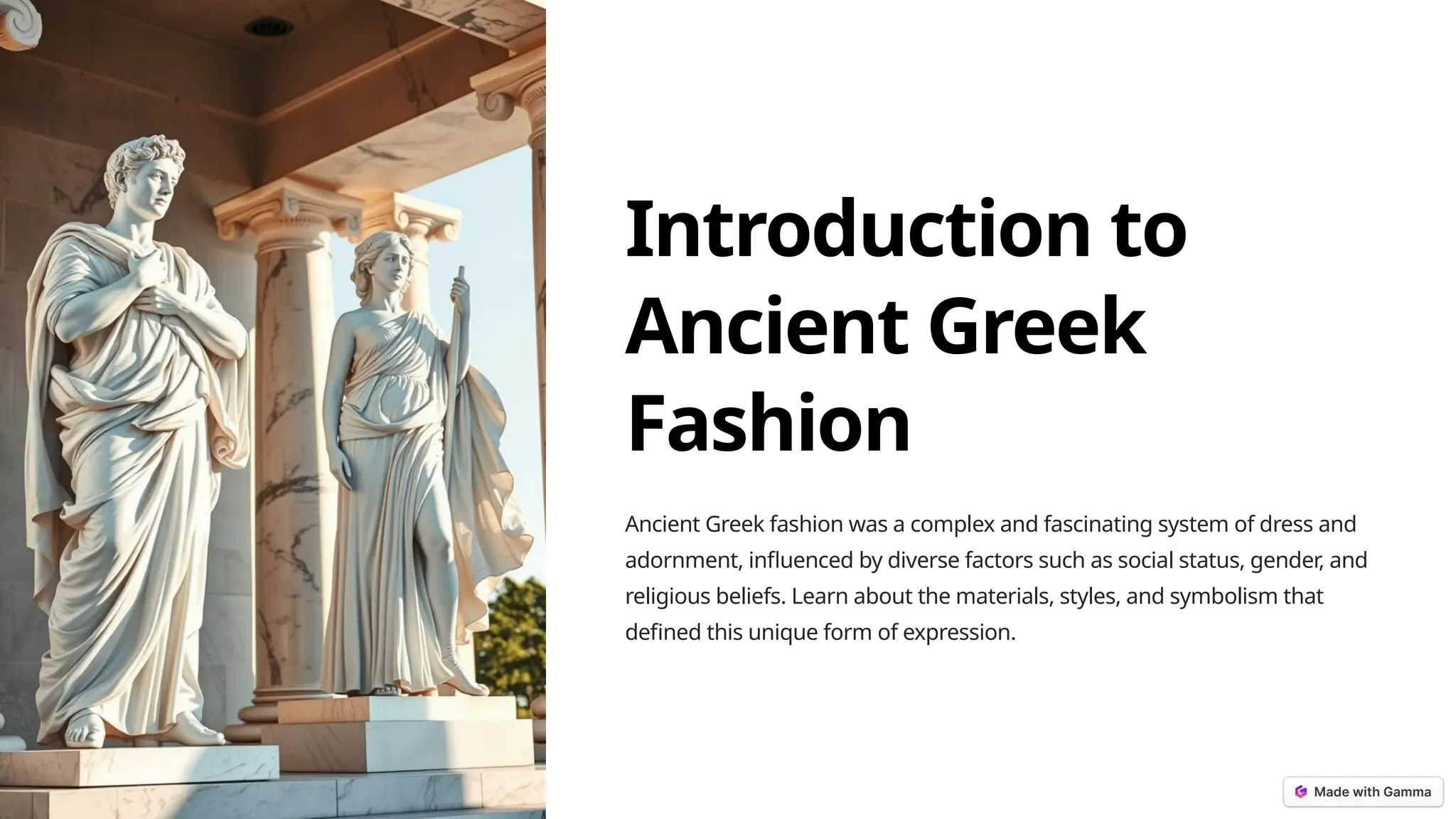
Ancient Greek fashion was a complex and fascinating system of dress and
adornment, influenced by diverse factors such as social status, gender, and
religious beliefs. Learn about the materials, styles, and symbolism that
defined this unique form of expression.
Clothing Materials and Textiles
Linen
Linen was a staple fabric, prized for its
durability, breathability, and ability to
absorb moisture. It was widely used for
tunics, wraps, and even
undergarments.
Wool
Wool was also popular, particularly for
garments worn in colder seasons. It
was used for cloaks, thick tunics, and
even shoes, offering warmth and
protection.
Silk
Silk, a luxurious fabric, was imported
from the East and was a symbol of
wealth and status. It was used for
elaborate garments and accessories
worn by the elite.
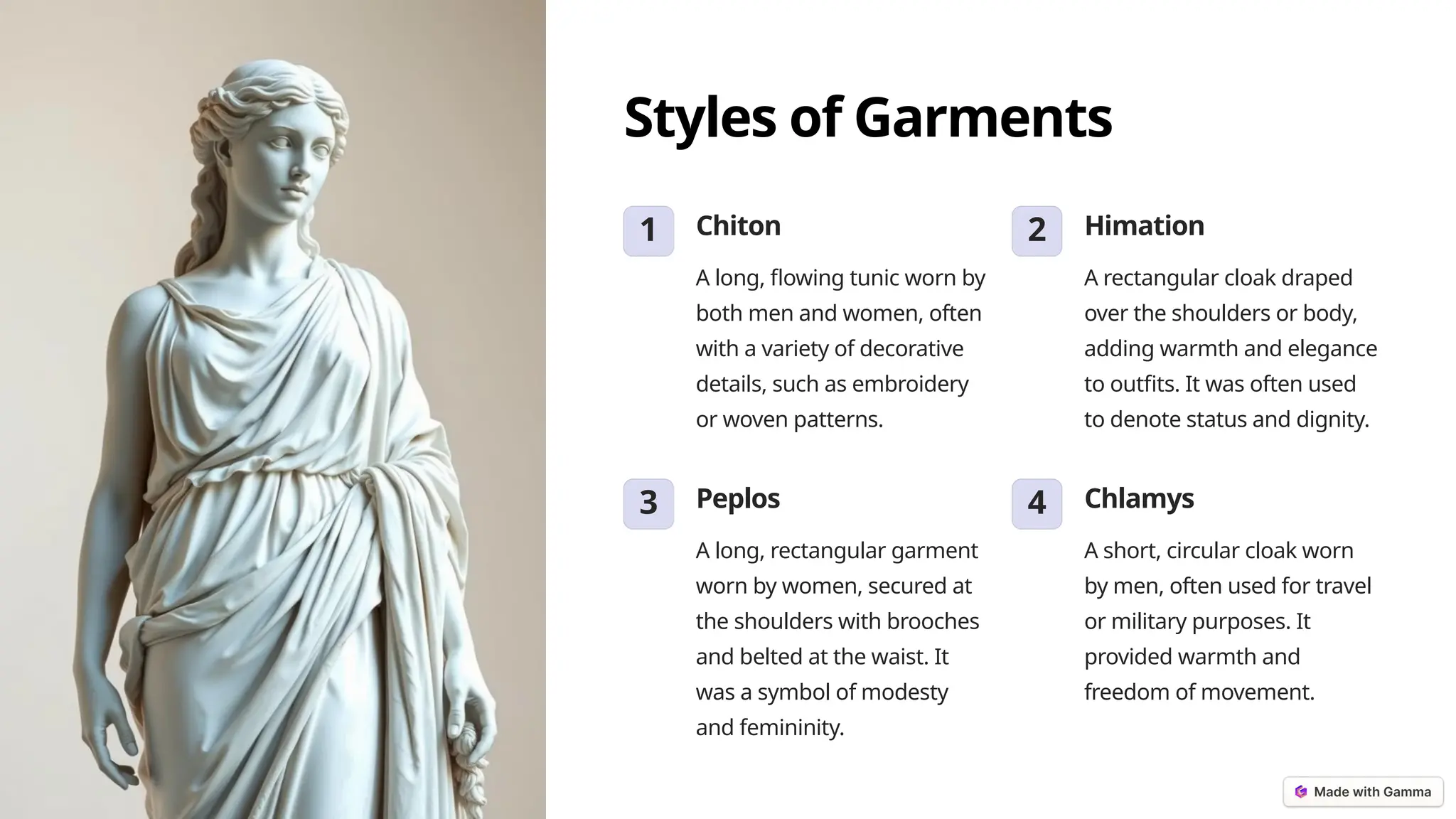
Styles of Garments
1 Chiton
A long, flowing tunic worn by
both men and women, often
with a variety of decorative
details, such as embroidery
or woven patterns.
2 Himation
A rectangular cloak draped
over the shoulders or body,
adding warmth and elegance
to outfits. It was often used
to denote status and dignity.
3 Peplos
A long, rectangular garment
worn by women, secured at
the shoulders with brooches
and belted at the waist. It
was a symbol of modesty
and femininity.
4 Chlamys
A short, circular cloak worn
by men, often used for travel
or military purposes. It
provided warmth and
freedom of movement.
Accessories and Adornments
Jewelry
Necklaces, bracelets, earrings, and rings
were popular forms of adornment, often
made of precious metals and
gemstones, signifying status and wealth.
Headbands
Headbands were used by both men and
women to secure their hair and add
decorative elements. They often featured
elaborate designs and materials.
Sandals
Sandals were the primary footwear in
ancient Greece, crafted from leather or
woven materials. They were often
decorated with details and
embellishments.
Influence of Social Status
Wealthy Elaborate
fabrics like
silk
Multiple
garments
layered for
elegance
More
adornments
and jewelry
Peasants Simple fabrics
like linen and
wool
Fewer
garments,
practical and
functional
Minimal
adornments,
limited
jewelry
Fashion and Gender Roles
Women
Women's fashion emphasized modesty
and femininity, with long, flowing
garments and modest attire.
Men
Men's fashion emphasized practicality
and functionality, with shorter tunics
and cloaks suitable for physical activity.
Exceptions
Exceptions existed for certain rituals or
occupations, such as female athletes
who wore simpler, more athletic attire.
Clothing and Religious
Practices
Sacrifices
Special garments were worn
during religious ceremonies
and sacrifices, often featuring
symbolic colors and patterns,
reflecting reverence and
devotion.
Festivals
Festivals and celebrations often
featured specific clothing styles
and accessories, reflecting the
spirit of the event and honoring
deities.
Temples
Temple priests and priestesses wore distinctive attire, symbolizing
their sacred role and authority in religious practices.
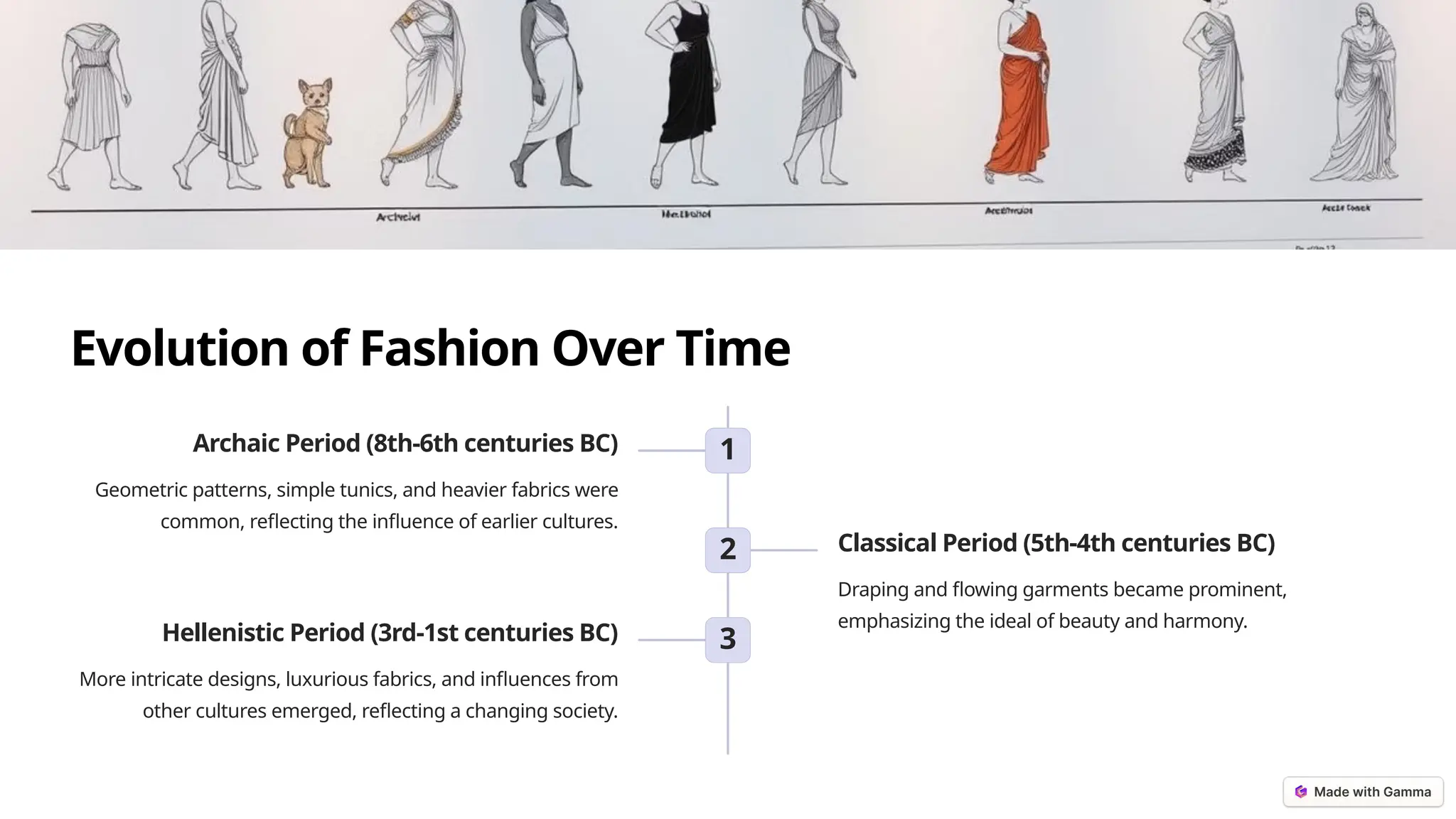
Evolution of Fashion Over Time
1
Archaic Period (8th-6th centuries BC)
Geometric patterns, simple tunics, and heavier fabrics were
common, reflecting the influence of earlier cultures.
2 Classical Period (5th-4th centuries BC)
Draping and flowing garments became prominent,
emphasizing the ideal of beauty and harmony.
3
Hellenistic Period (3rd-1st centuries BC)
More intricate designs, luxurious fabrics, and influences from
other cultures emerged, reflecting a changing society.
Impact of Ancient Greek Fashion on
Modern Style
Drapery
The flowing, draped fabrics of ancient Greek garments continue to inspire modern designers,
creating elegant and timeless silhouettes.
Classic Silhouettes
The simple yet elegant silhouettes of ancient Greek clothing have influenced modern designs,
from gowns to everyday wear.
Symmetry and Balance
The emphasis on symmetry and balance in ancient Greek fashion has had a lasting impact on
modern aesthetics and design principles.
Conclusion and Key
Takeaways
Ancient Greek fashion was not merely about clothing but reflected a
complex interplay of social, cultural, and religious values. By understanding
its nuances, we gain a deeper appreciation for the artistry, innovation, and
symbolism that defined this unique form of expression.

Introduction-to-Ancient-Greek-Fashion.pptx

  • 1.
    Introduction to Ancient Greek Fashion AncientGreek fashion was a complex and fascinating system of dress and adornment, influenced by diverse factors such as social status, gender, and religious beliefs. Learn about the materials, styles, and symbolism that defined this unique form of expression.
  • 2.
    Clothing Materials andTextiles Linen Linen was a staple fabric, prized for its durability, breathability, and ability to absorb moisture. It was widely used for tunics, wraps, and even undergarments. Wool Wool was also popular, particularly for garments worn in colder seasons. It was used for cloaks, thick tunics, and even shoes, offering warmth and protection. Silk Silk, a luxurious fabric, was imported from the East and was a symbol of wealth and status. It was used for elaborate garments and accessories worn by the elite.
  • 3.
    Styles of Garments 1Chiton A long, flowing tunic worn by both men and women, often with a variety of decorative details, such as embroidery or woven patterns. 2 Himation A rectangular cloak draped over the shoulders or body, adding warmth and elegance to outfits. It was often used to denote status and dignity. 3 Peplos A long, rectangular garment worn by women, secured at the shoulders with brooches and belted at the waist. It was a symbol of modesty and femininity. 4 Chlamys A short, circular cloak worn by men, often used for travel or military purposes. It provided warmth and freedom of movement.
  • 4.
    Accessories and Adornments Jewelry Necklaces,bracelets, earrings, and rings were popular forms of adornment, often made of precious metals and gemstones, signifying status and wealth. Headbands Headbands were used by both men and women to secure their hair and add decorative elements. They often featured elaborate designs and materials. Sandals Sandals were the primary footwear in ancient Greece, crafted from leather or woven materials. They were often decorated with details and embellishments.
  • 5.
    Influence of SocialStatus Wealthy Elaborate fabrics like silk Multiple garments layered for elegance More adornments and jewelry Peasants Simple fabrics like linen and wool Fewer garments, practical and functional Minimal adornments, limited jewelry
  • 6.
    Fashion and GenderRoles Women Women's fashion emphasized modesty and femininity, with long, flowing garments and modest attire. Men Men's fashion emphasized practicality and functionality, with shorter tunics and cloaks suitable for physical activity. Exceptions Exceptions existed for certain rituals or occupations, such as female athletes who wore simpler, more athletic attire.
  • 7.
    Clothing and Religious Practices Sacrifices Specialgarments were worn during religious ceremonies and sacrifices, often featuring symbolic colors and patterns, reflecting reverence and devotion. Festivals Festivals and celebrations often featured specific clothing styles and accessories, reflecting the spirit of the event and honoring deities. Temples Temple priests and priestesses wore distinctive attire, symbolizing their sacred role and authority in religious practices.
  • 8.
    Evolution of FashionOver Time 1 Archaic Period (8th-6th centuries BC) Geometric patterns, simple tunics, and heavier fabrics were common, reflecting the influence of earlier cultures. 2 Classical Period (5th-4th centuries BC) Draping and flowing garments became prominent, emphasizing the ideal of beauty and harmony. 3 Hellenistic Period (3rd-1st centuries BC) More intricate designs, luxurious fabrics, and influences from other cultures emerged, reflecting a changing society.
  • 9.
    Impact of AncientGreek Fashion on Modern Style Drapery The flowing, draped fabrics of ancient Greek garments continue to inspire modern designers, creating elegant and timeless silhouettes. Classic Silhouettes The simple yet elegant silhouettes of ancient Greek clothing have influenced modern designs, from gowns to everyday wear. Symmetry and Balance The emphasis on symmetry and balance in ancient Greek fashion has had a lasting impact on modern aesthetics and design principles.
  • 10.
    Conclusion and Key Takeaways AncientGreek fashion was not merely about clothing but reflected a complex interplay of social, cultural, and religious values. By understanding its nuances, we gain a deeper appreciation for the artistry, innovation, and symbolism that defined this unique form of expression.