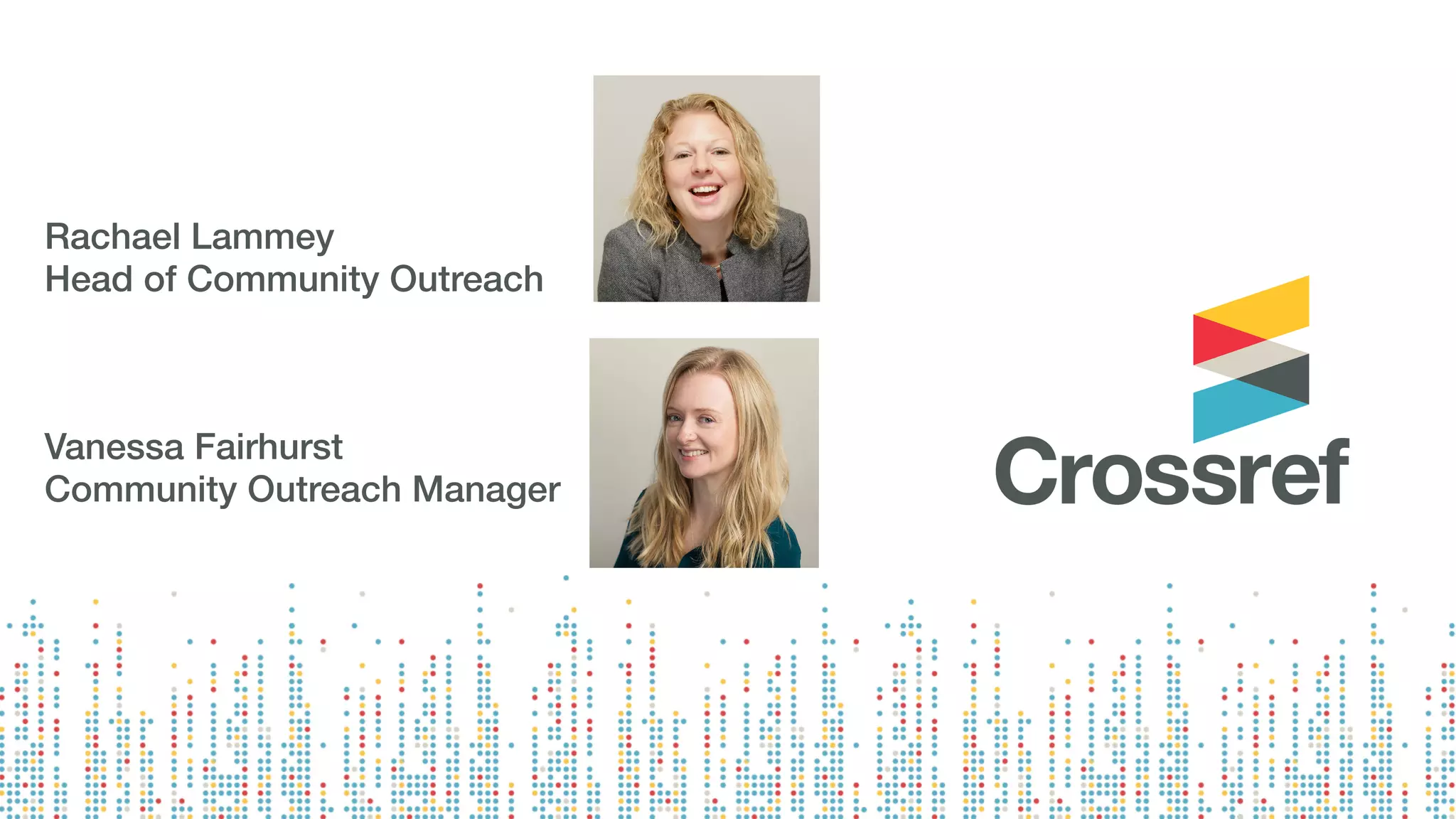
Rachael Lammey
Head of Community Outreach
Vanessa Fairhurst
Community Outreach Manager
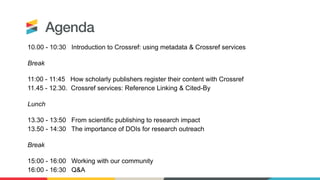
Agenda
10.00 - 10:30 Introduction to Crossref: using metadata & Crossref services
Break
11:00 - 11:45 How scholarly publishers register their content with Crossref
11.45 - 12.30. Crossref services: Reference Linking & Cited-By
Lunch
13.30 - 13:50 From scientific publishing to research impact
13.50 - 14:30 The importance of DOIs for research outreach
Break
15:00 - 16:00 Working with our community
16:00 - 16:30 Q&A
Crossref makes research outputs easy to find, cite,
link, assess, and reuse.


We’re a not-for-profit membership organization that
exists to make scholarly communications better.
Mission
Our truths
Crossref overview
• Over 12,000 member organizations

• 16 member board, cross section of international publishers

• Metadata store of over 100 million scholarly content items

• A DOI is just the start - We offer a wide array of services to
ensure that scholarly research metadata is registered, linked,
and distributed.

• We preserve the metadata we receive and make it available via
our open APIs and Search.
Why do publishers join Crossref?
• To help get their content discovered

• Show people where their content is located and
update that if/when the content moves

• Drive more traffic to publications

• Turn references into hyperlinks

• Find out who is using their content

• Participate in other collaborative services
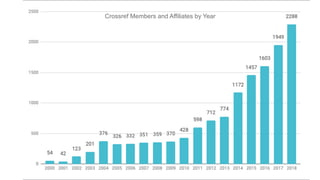
Crossref Members and Affiliates by Year
>100,000,000
content items
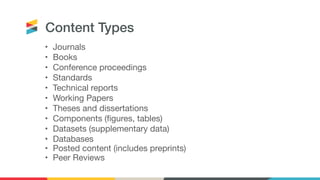
Content Types
• Journals

• Books 

• Conference proceedings

• Standards

• Technical reports

• Working Papers

• Theses and dissertations

• Components (figures, tables)

• Datasets (supplementary data)

• Databases

• Posted content (includes preprints)

• Peer Reviews
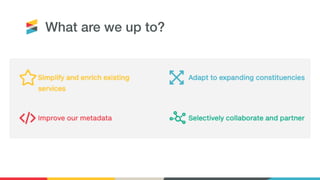
What are we up to?
Using metadata:
who, why and
how?
What do we mean when we talk about Crossref metadata?
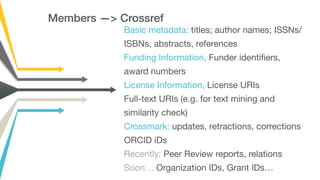
Members —> Crossref
Basic metadata: titles; author names; ISSNs/
ISBNs, abstracts, references

Funding Information, Funder identifiers,
award numbers

License Information, License URIs 

Full-text URIs (e.g. for text mining and
similarity check)

Crossmark: updates, retractions, corrections

ORCID iDs

Recently: Peer Review reports, relations

Soon… Organization IDs, Grant IDs…
Crossref metadata for
machines & humans
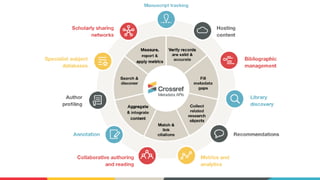
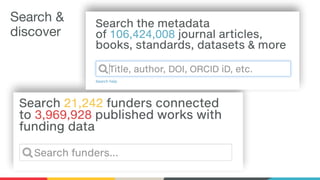
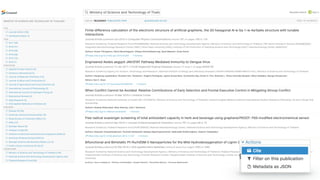
Search &
discover
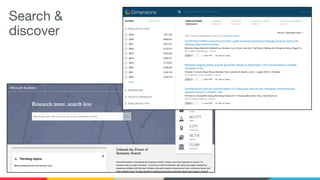
Search &
discover
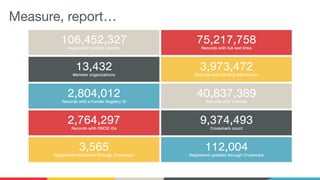
Measure, report…
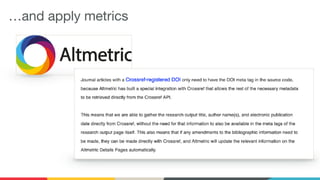
…and apply metrics
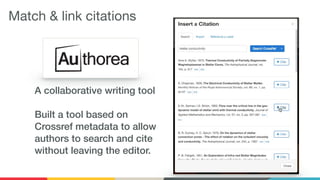
A collaborative writing tool
Built a tool based on
Crossref metadata to allow
authors to search and cite
without leaving the editor.
Match & link citations
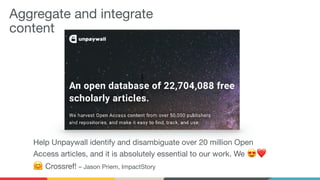
Aggregate and integrate
content
Help Unpaywall identify and disambiguate over 20 million Open
Access articles, and it is absolutely essential to our work. We 😍 ❤
🤗 Crossref! – Jason Priem, ImpactStory
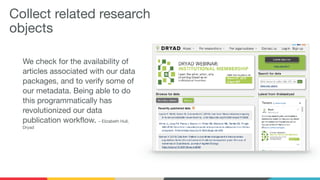
Collect related research
objects
We check for the availability of
articles associated with our data
packages, and to verify some of
our metadata. Being able to do
this programmatically has
revolutionized our data
publication workflow. – Elizabeth Hull,
Dryad
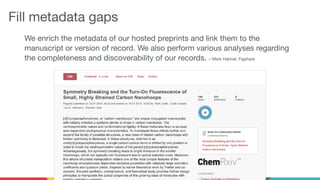
Fill metadata gaps
We enrich the metadata of our hosted preprints and link them to the
manuscript or version of record. We also perform various analyses regarding
the completeness and discoverability of our records. – Mark Hahnel, Figshare
Verify records are valid
and accurate
Identify articles unambiguously as we preserve scholarly literature in our
system. Also, in the rare instances when we ‘trigger’ journals for open access,
we want the reference-linking functionality to work, and we work with
Crossref to point the URLs to our site for resolution. – Craig van Dyck, CLOCKSS
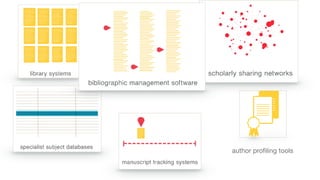
author profiling tools
over 600 million metadata
queries per month across all
interfaces
Crossref REST API overview
• Search, filter or sample metadata from thousands of members

• Returns results in JSON

• The information is continually updated

• The REST API helps unlock the value metadata; making it available to query easily
and to integrate into other tools and services

• No sign-up is required and the data can be treated as facts from members.
Therefore it is not subject to copyright and available to use for whatever purpose

• Simplifies access for researchers who want to mine and analyze research outputs
and content
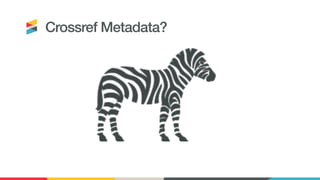
Crossref Metadata?
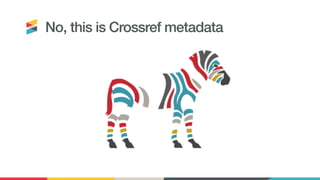
No, this is Crossref metadata
This may be your Crossref metadata
….but maybe this?
Crossref metadata helps research
to be found, cited, linked-to,
assessed, and re-used
Thank you for joining us
today!
Questions?

Introduction to Crossref - Crossref LIVE Bangkok

  • 1.
    Rachael Lammey Head ofCommunity Outreach Vanessa Fairhurst Community Outreach Manager
  • 2.
    Agenda 10.00 - 10:30Introduction to Crossref: using metadata & Crossref services Break 11:00 - 11:45 How scholarly publishers register their content with Crossref 11.45 - 12.30. Crossref services: Reference Linking & Cited-By Lunch 13.30 - 13:50 From scientific publishing to research impact 13.50 - 14:30 The importance of DOIs for research outreach Break 15:00 - 16:00 Working with our community 16:00 - 16:30 Q&A
  • 3.
    Crossref makes researchoutputs easy to find, cite, link, assess, and reuse.
 
 We’re a not-for-profit membership organization that exists to make scholarly communications better. Mission
  • 4.
  • 6.
    Crossref overview • Over12,000 member organizations • 16 member board, cross section of international publishers • Metadata store of over 100 million scholarly content items • A DOI is just the start - We offer a wide array of services to ensure that scholarly research metadata is registered, linked, and distributed. • We preserve the metadata we receive and make it available via our open APIs and Search.
  • 7.
    Why do publishersjoin Crossref? • To help get their content discovered • Show people where their content is located and update that if/when the content moves • Drive more traffic to publications • Turn references into hyperlinks • Find out who is using their content • Participate in other collaborative services
  • 8.
    Crossref Members andAffiliates by Year
  • 10.
  • 11.
    Content Types • Journals •Books • Conference proceedings • Standards • Technical reports • Working Papers • Theses and dissertations • Components (figures, tables) • Datasets (supplementary data) • Databases • Posted content (includes preprints) • Peer Reviews
  • 12.
  • 13.
  • 14.
    What do wemean when we talk about Crossref metadata?
  • 15.
    Members —> Crossref Basicmetadata: titles; author names; ISSNs/ ISBNs, abstracts, references Funding Information, Funder identifiers, award numbers License Information, License URIs Full-text URIs (e.g. for text mining and similarity check) Crossmark: updates, retractions, corrections ORCID iDs Recently: Peer Review reports, relations Soon… Organization IDs, Grant IDs…
  • 16.
  • 18.
  • 20.
  • 21.
  • 22.
  • 23.
    A collaborative writingtool Built a tool based on Crossref metadata to allow authors to search and cite without leaving the editor. Match & link citations
  • 25.
    Aggregate and integrate content HelpUnpaywall identify and disambiguate over 20 million Open Access articles, and it is absolutely essential to our work. We 😍 ❤ 🤗 Crossref! – Jason Priem, ImpactStory
  • 26.
    Collect related research objects Wecheck for the availability of articles associated with our data packages, and to verify some of our metadata. Being able to do this programmatically has revolutionized our data publication workflow. – Elizabeth Hull, Dryad
  • 27.
    Fill metadata gaps Weenrich the metadata of our hosted preprints and link them to the manuscript or version of record. We also perform various analyses regarding the completeness and discoverability of our records. – Mark Hahnel, Figshare
  • 28.
    Verify records arevalid and accurate Identify articles unambiguously as we preserve scholarly literature in our system. Also, in the rare instances when we ‘trigger’ journals for open access, we want the reference-linking functionality to work, and we work with Crossref to point the URLs to our site for resolution. – Craig van Dyck, CLOCKSS
  • 29.
  • 30.
    over 600 millionmetadata queries per month across all interfaces
  • 31.
    Crossref REST APIoverview • Search, filter or sample metadata from thousands of members • Returns results in JSON • The information is continually updated • The REST API helps unlock the value metadata; making it available to query easily and to integrate into other tools and services • No sign-up is required and the data can be treated as facts from members. Therefore it is not subject to copyright and available to use for whatever purpose • Simplifies access for researchers who want to mine and analyze research outputs and content

  • 32.
  • 33.
    No, this isCrossref metadata
  • 34.
    This may beyour Crossref metadata
  • 35.
  • 36.
    Crossref metadata helpsresearch to be found, cited, linked-to, assessed, and re-used
  • 38.
    Thank you forjoining us today! Questions?