Reload	Greece	Bootcamp	
Athens	October	3rd,	2017
Christos	Makiyama
Silicon	Planet
Today
• Design	and	communicate	your	idea	using	Business	
Model	Canvas	and Value	Proposition	Canvas
• Define	the	customer	problem	you	are	trying	to	
solve	and	your	solution
• Create	a	plan	of	how	you	will	test	your	
assumptions
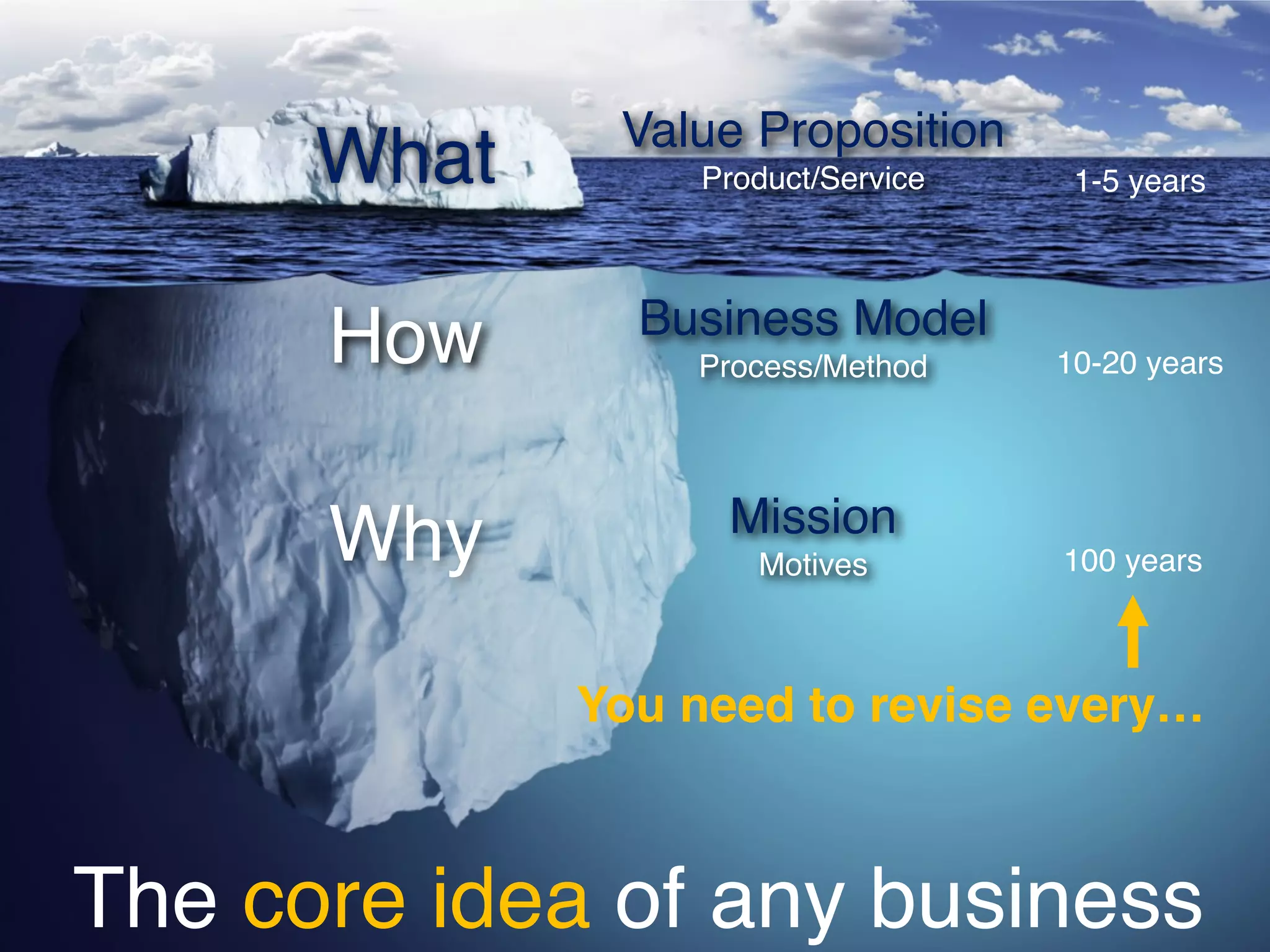
What
How
Why
The core idea of any business
Value Proposition
Product/Service
Business Model
Process/Method
Mission
Motives
1-5 years
10-20 years
100 years
You need to revise every…
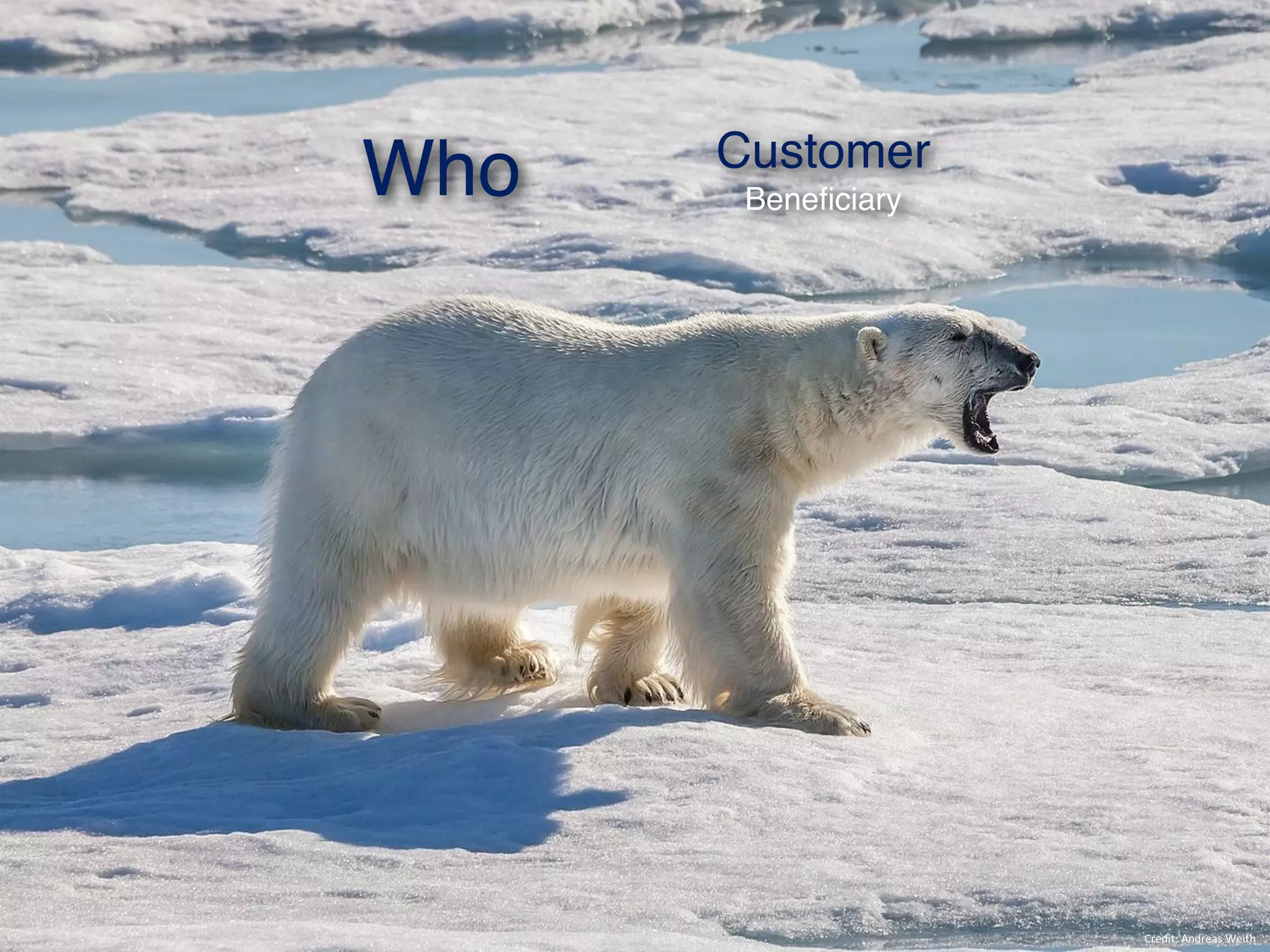
Who Customer
Beneficiary
Credit:	Andreas	Weith
What is a Business Model?
Business model is the structure of how an
enterprise creates value for a target group
of people (customers) and makes profits
from such activity
7
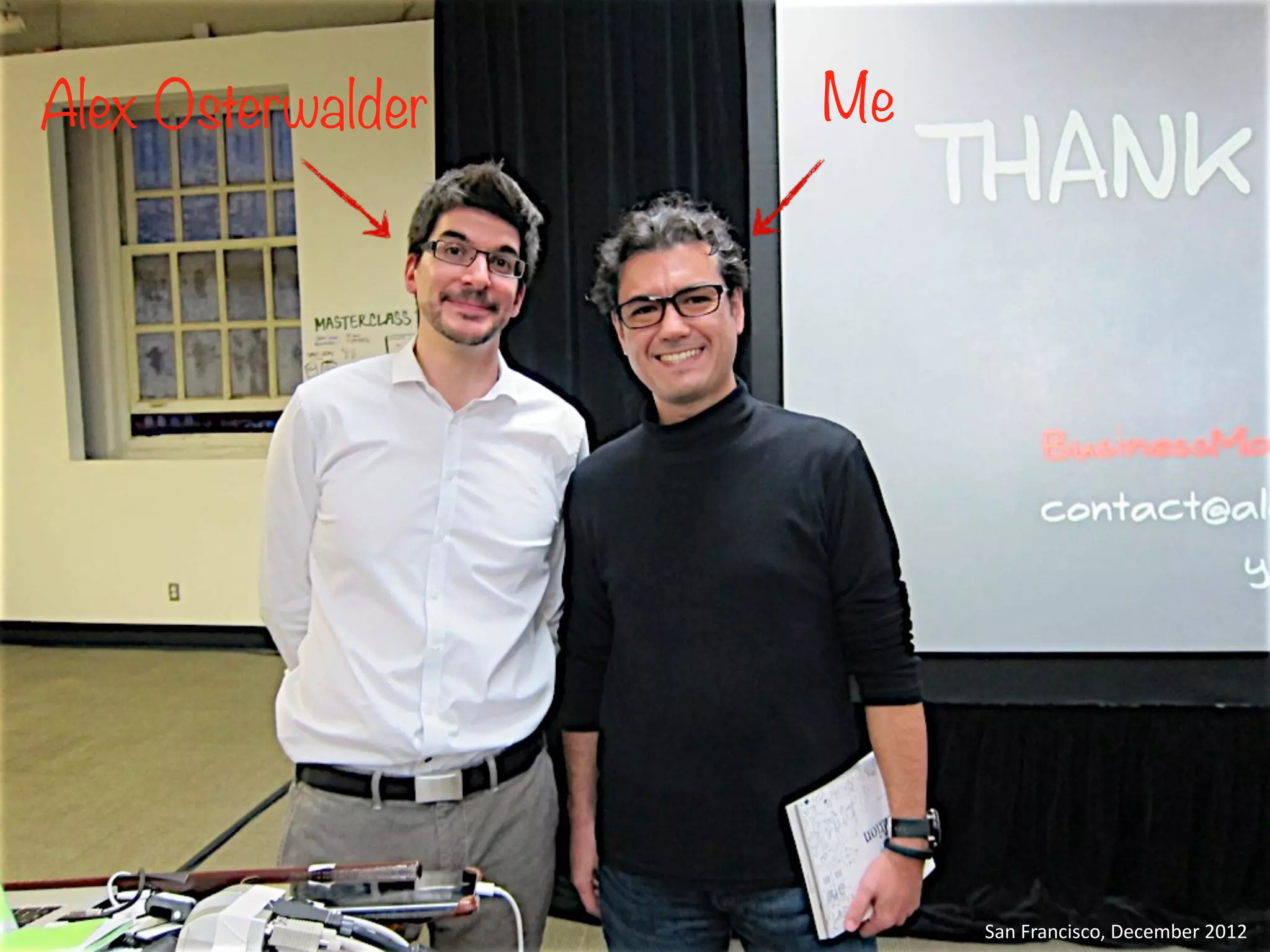
MeAlex Osterwalder
San	Francisco,	December	2012
Example:
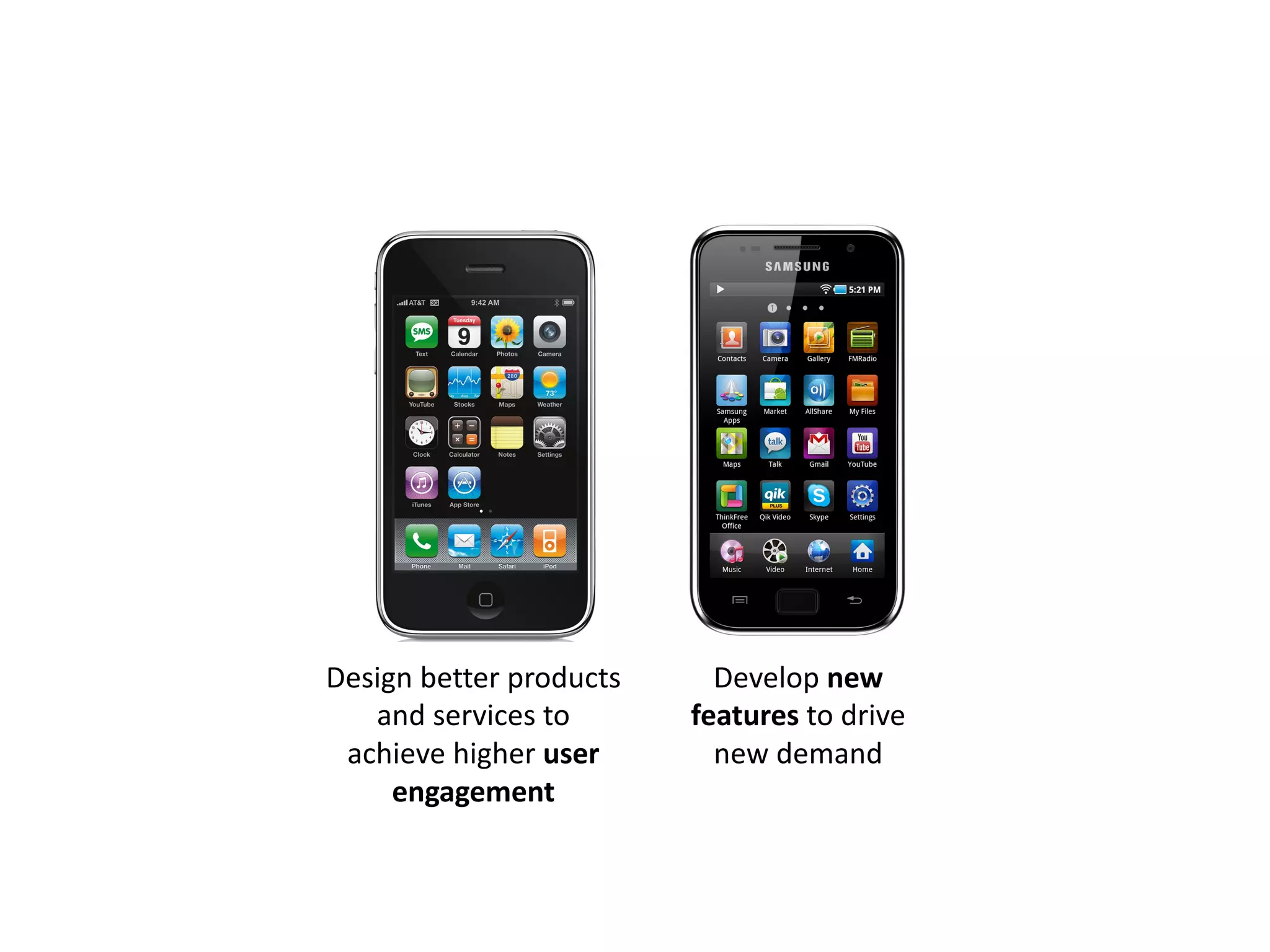
Smart Phones
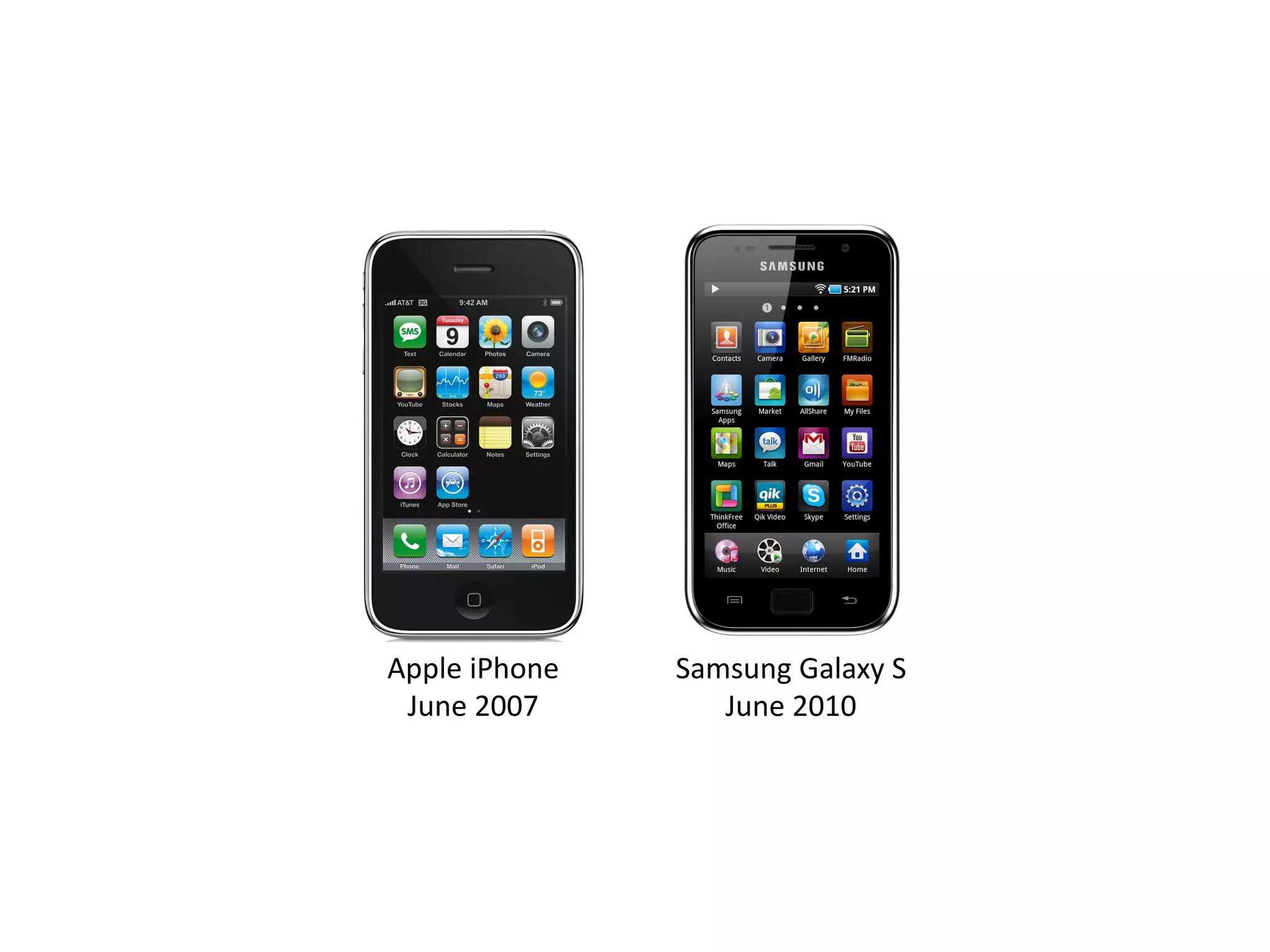
Apple	iPhone
June	2007
Samsung	Galaxy	S
June	2010
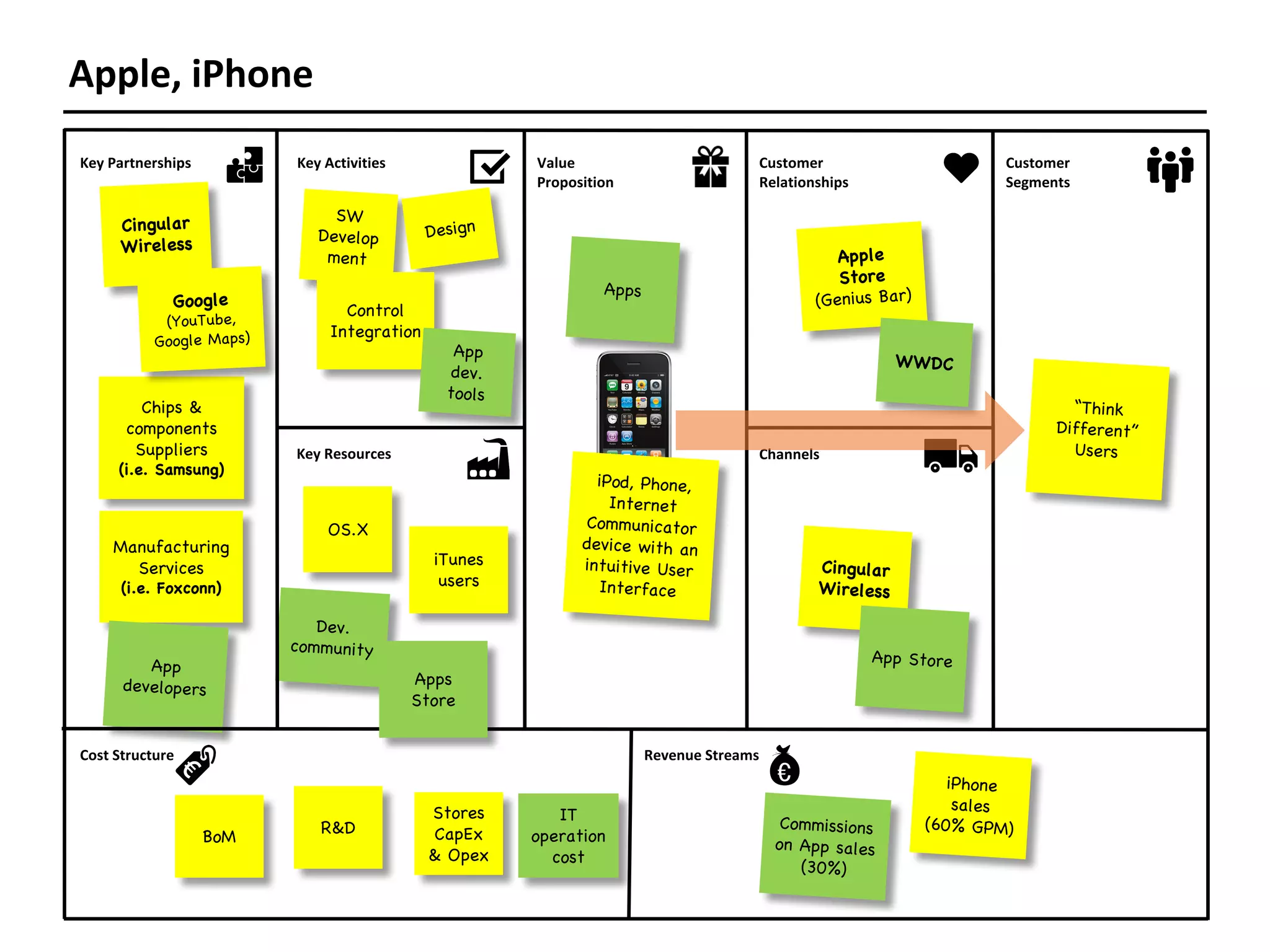
Apple,	iPhone
Control
Integration
Chips &
components
Suppliers
(i.e. Samsung)
Manufacturing
Services
(i.e. Foxconn)
iTunes
users
OS.X
BoM
R&D
Key	Partnerships Key	Activities Value	
Proposition
Customer	
Relationships
Customer	
Segments
Key	Resources Channels
Revenue	StreamsCost	Structure
Apps
Store
IT
operation
cost
Stores
CapEx
& Opex
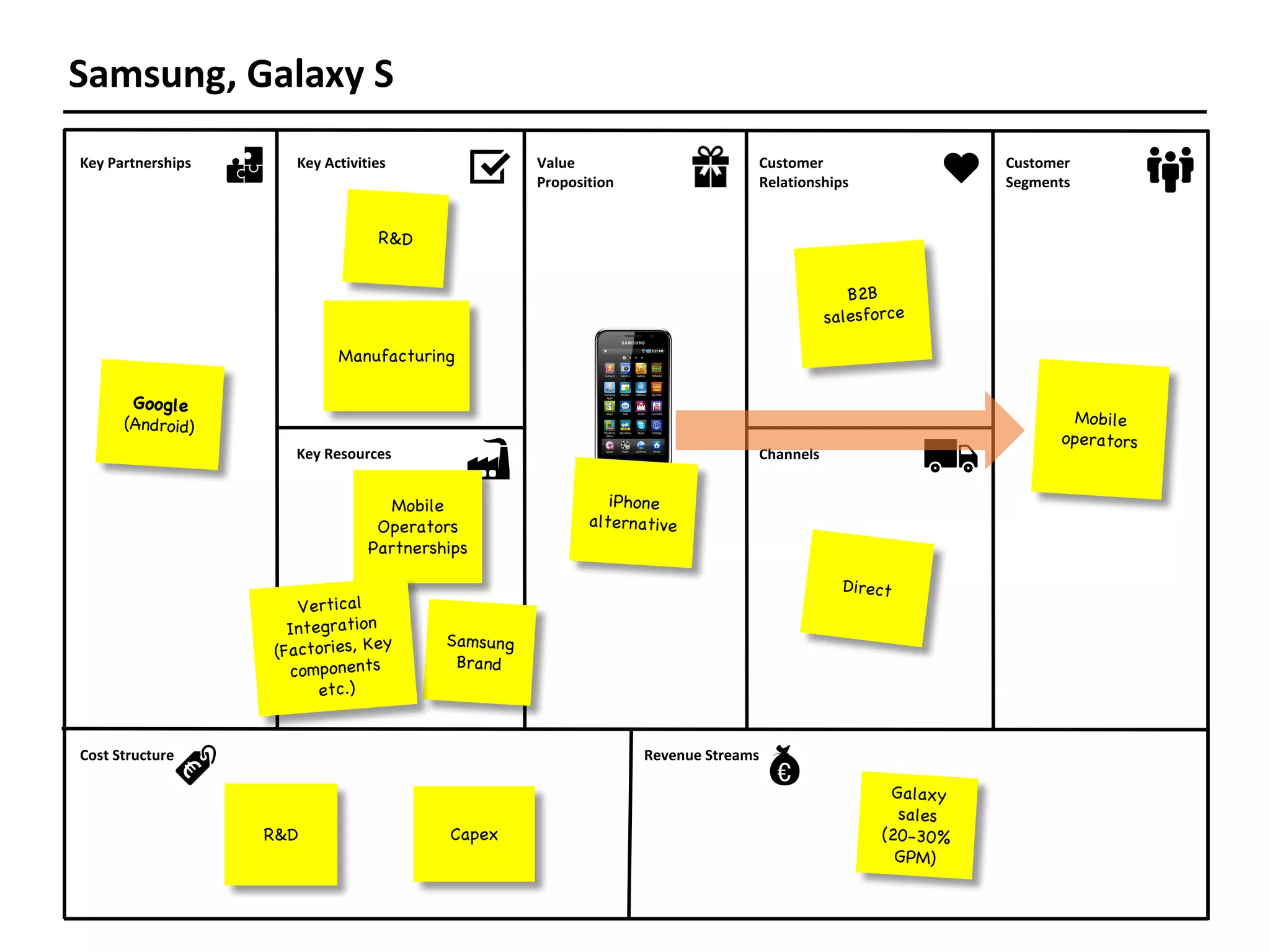
Samsung,	Galaxy	S
R&D Capex
Key	Partnerships Key	Activities Value	
Proposition
Customer	
Relationships
Customer	
Segments
Key	Resources Channels
Revenue	StreamsCost	Structure
Manufacturing
Mobile
Operators
Partnerships
Design	better	products	
and	services	to	
achieve	higher	user	
engagement
Develop	new	
features to	drive	
new	demand
Business Model
makes the difference and not the
product
Credit: Procsilas Moscas
What is Market-Product fit?
Key	Partnerships Key	Activities Value	
Proposition
Customer	
Relationships
Customer	
Segments
Key	Resources Channels
Revenue	StreamsCost	Structure
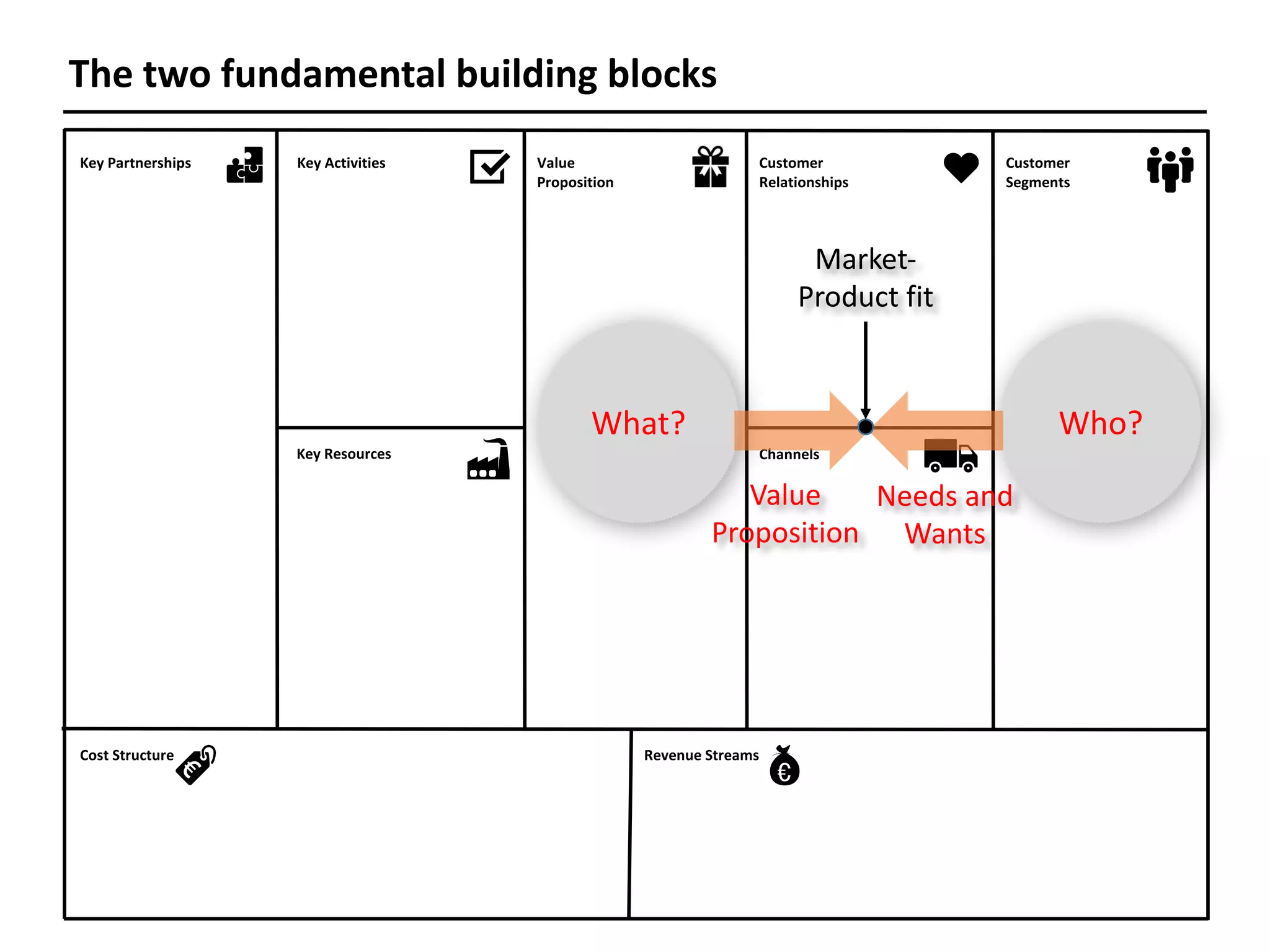
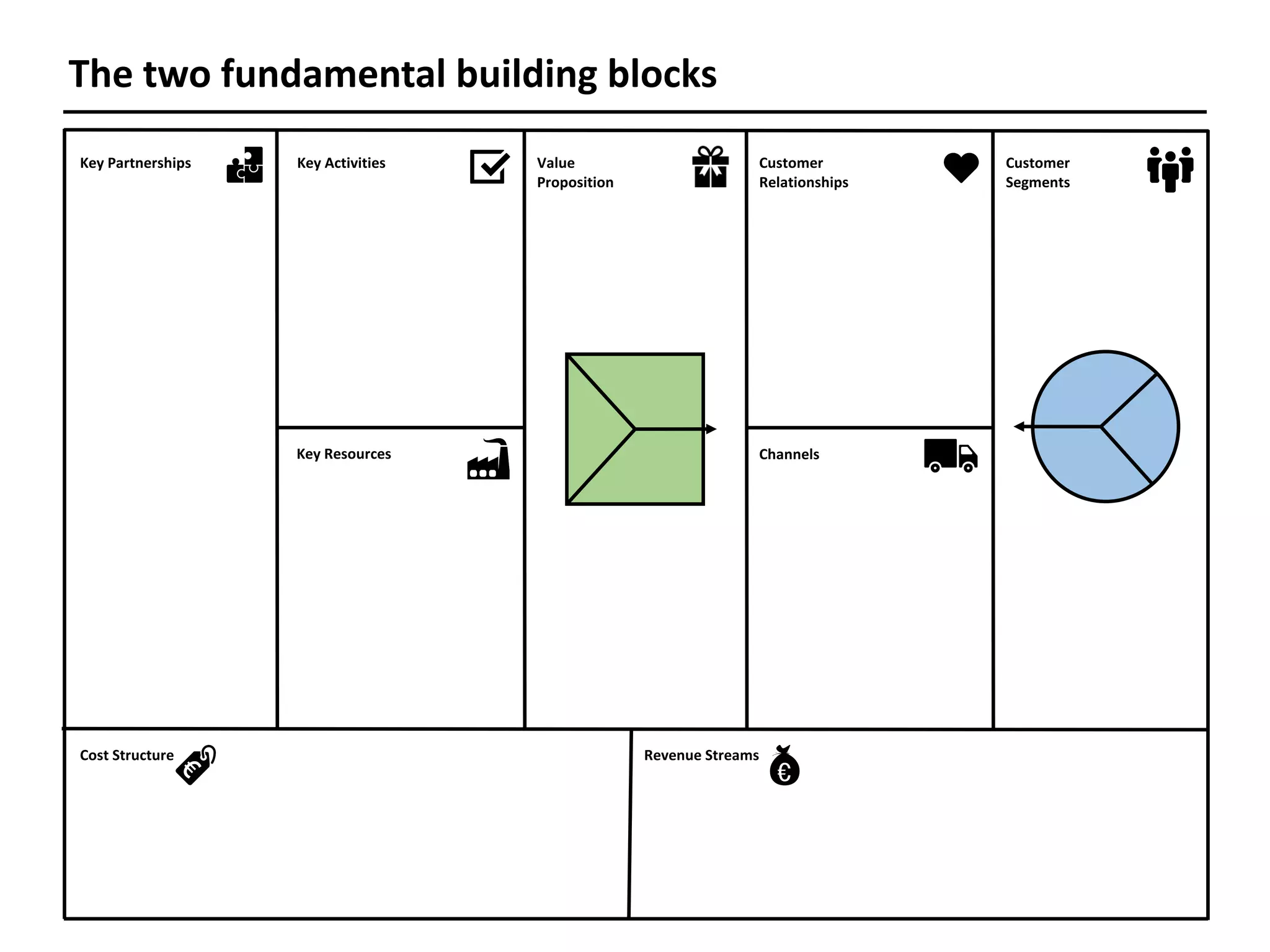
The	two	fundamental	building	blocks
Who?What?
Needs	and	
Wants
Value	
Proposition
Market-
Product	fit
Key	Partnerships Key	Activities Value	
Proposition
Customer	
Relationships
Customer	
Segments
Key	Resources Channels
Revenue	StreamsCost	Structure
The	two	fundamental	building	blocks
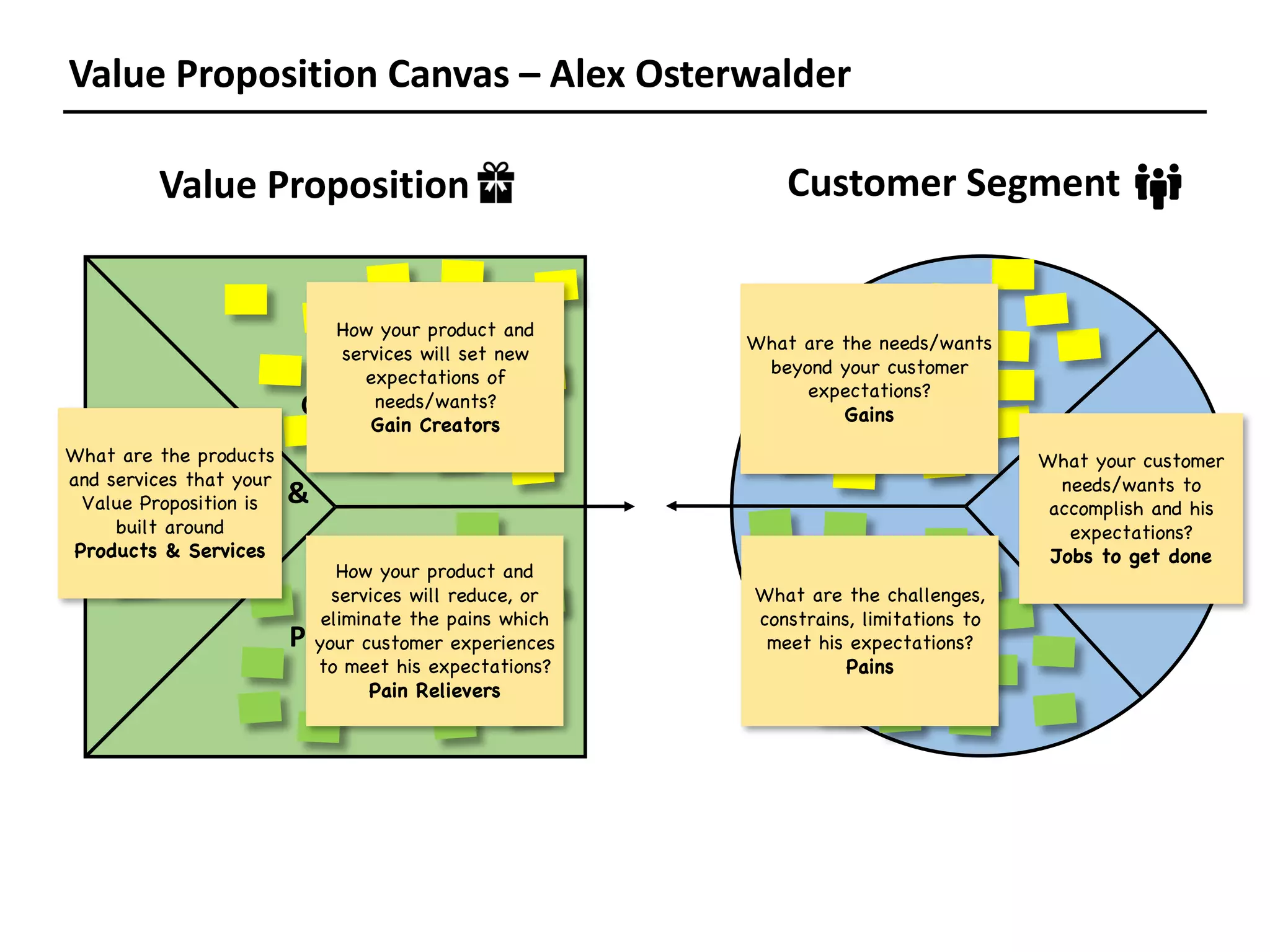
Customer	Segment
Value	Proposition	Canvas	– Alex	Osterwalder
Customer	
Jobs
Gains
Pains
Value	Proposition
Gain	Creators
Pain	Relievers
Products	&	
Services
What are the needs/wants
beyond your customer
expectations?
Gains
How your product and
services will set new
expectations of
needs/wants?
Gain Creators
How your product and
services will reduce, or
eliminate the pains which
your customer experiences
to meet his expectations?
Pain Relievers
What your customer
needs/wants to
accomplish and his
expectations?
Jobs to get done
What are the products
and services that your
Value Proposition is
built around
Products & Services
What are the challenges,
constrains, limitations to
meet his expectations?
Pains
Example:
Starbucks
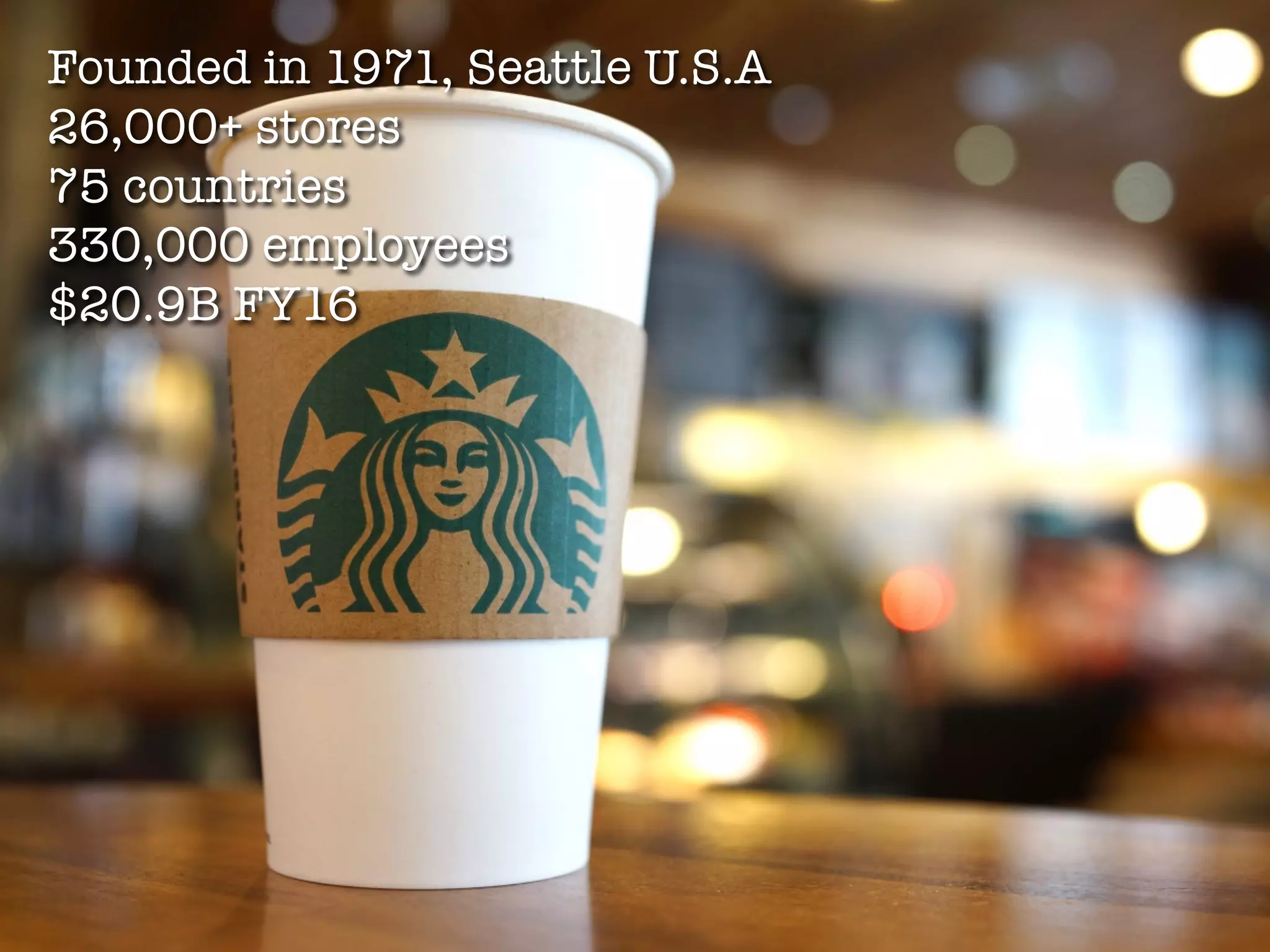
Founded in 1971, Seattle U.S.A
26,000+ stores
75 countries
330,000 employees
$20.9B FY16
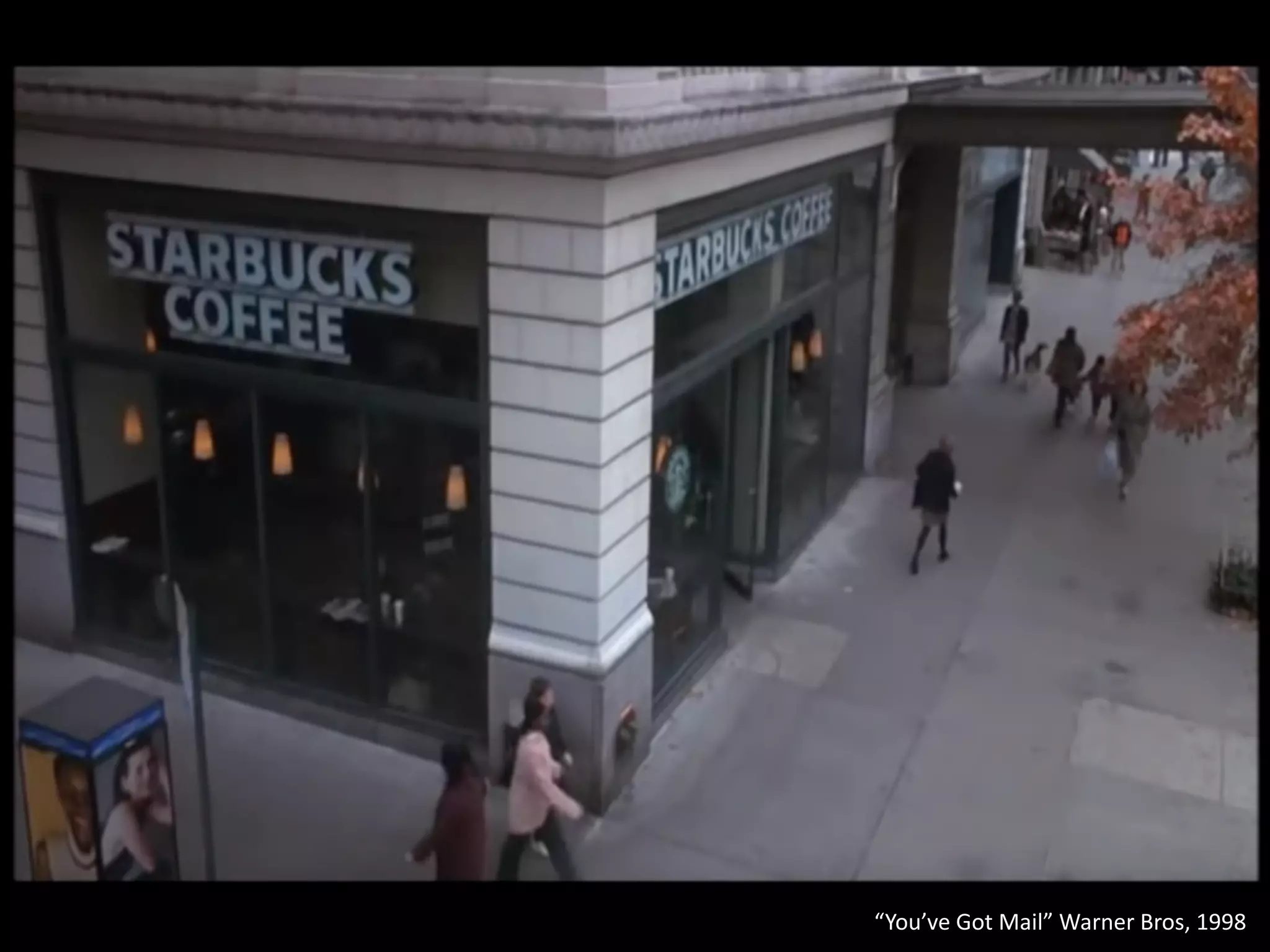
“You’ve	Got	Mail”	Warner	Bros,	1998
[Joe Fox] The whole purpose of places like
Starbucks is for people with no decision-making
ability whatsoever to make six decisions just to
buy one cup of coffee. Short, tall, light, dark,
caf, decaf, low-fat, non-fat, etc. So people who
don't know what the hell they're doing or who on
earth they are, can, for only $2.95, get not just
a cup of coffee but an absolutely defining sense
of self: Tall! Decaf! Cappuccino!
Customer Segment
Value Proposition
Credit: REUTERS/Lucas Jackson
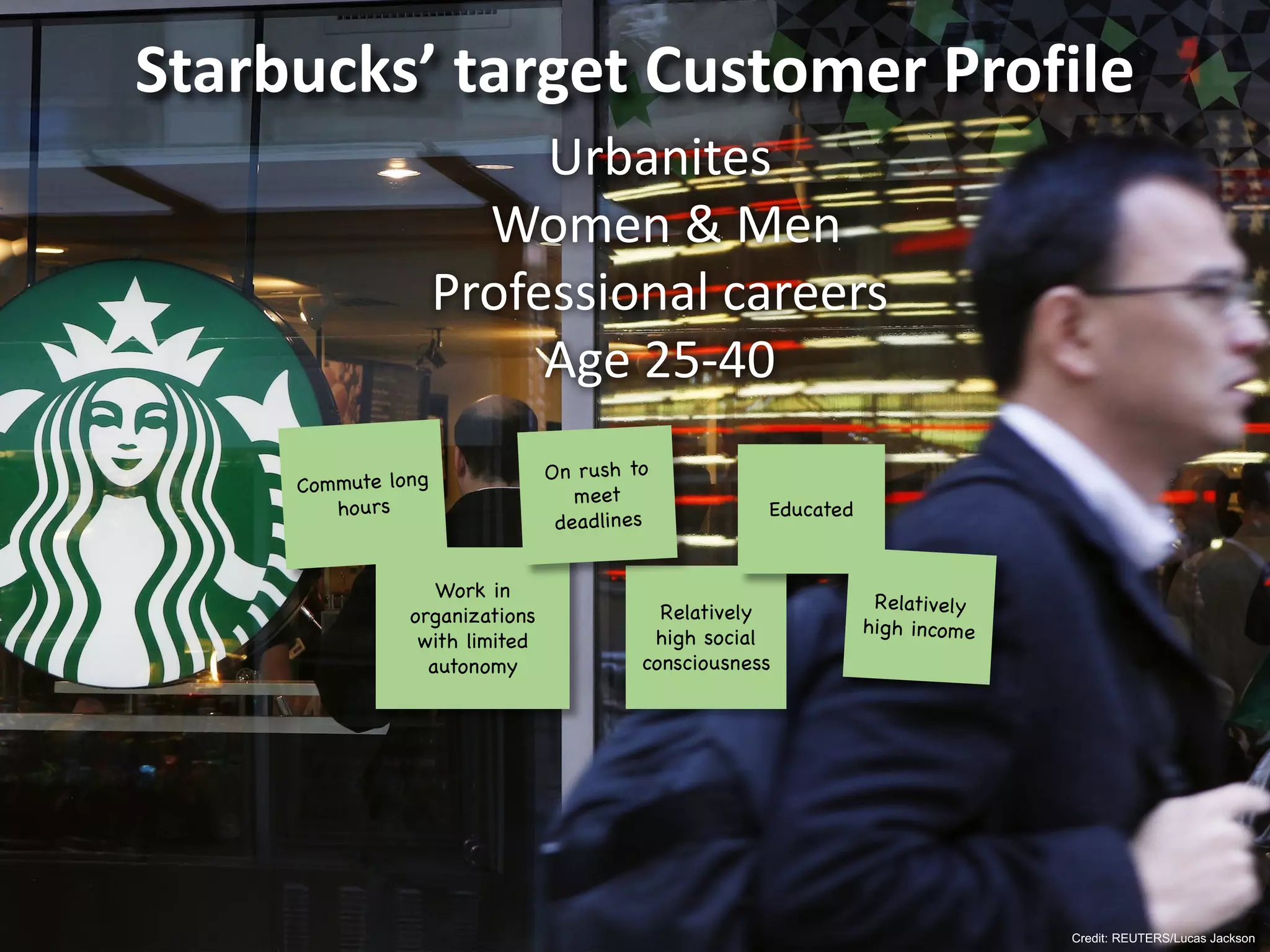
Starbucks’	target	Customer	Profile
Relatively
high social
consciousness
Work in
organizations
with limited
autonomy
Educated
Urbanites
Women	&	Men
Professional	careers
Age	25-40
Customer	Segment
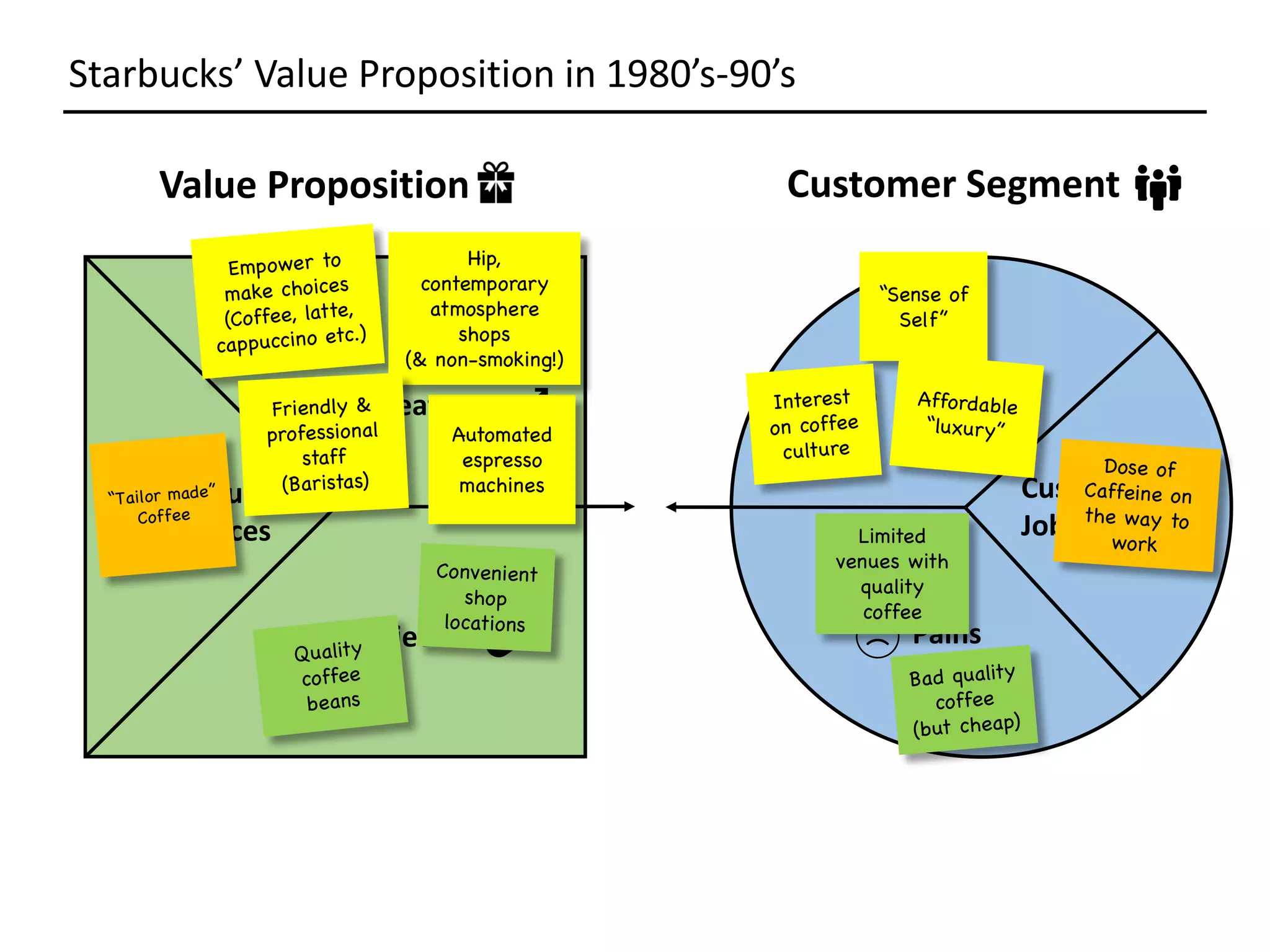
Starbucks’	Value	Proposition	in	1980’s-90’s
Customer	
Jobs
Gains
“Sense of
Self”
Pains
Value	Proposition
Gain	Creators
Pain	Relievers
Products	&	
Services
Automated
espresso
machines
Hip,
contemporary
atmosphere
shops
(& non-smoking!)
Limited
venues with
quality
coffee
Key	Partnerships Key	Activities Value	
Proposition
Customer	
Relationships
Customer	
Segments
Key	Resources Channels
Revenue	StreamsCost	Structure
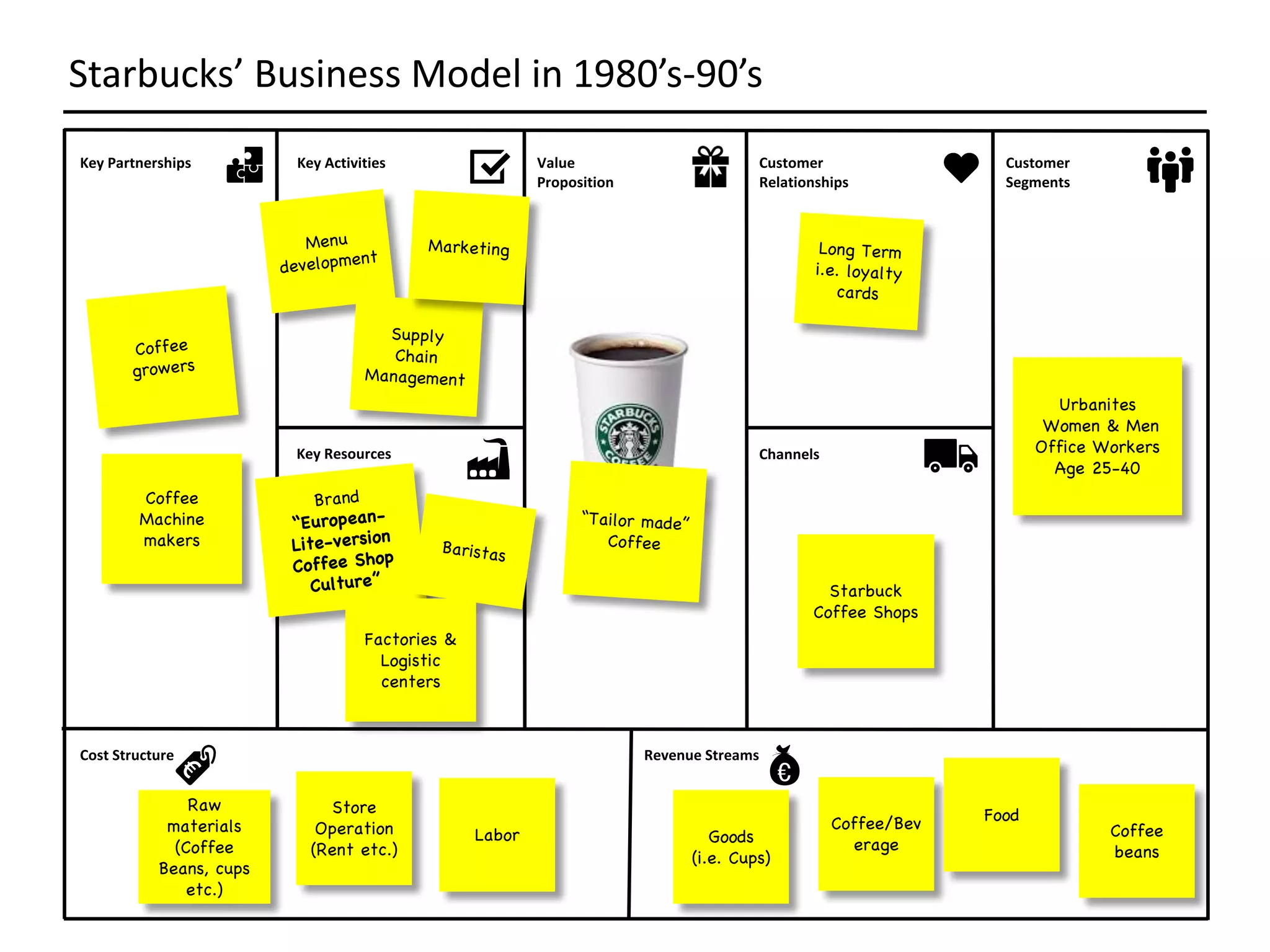
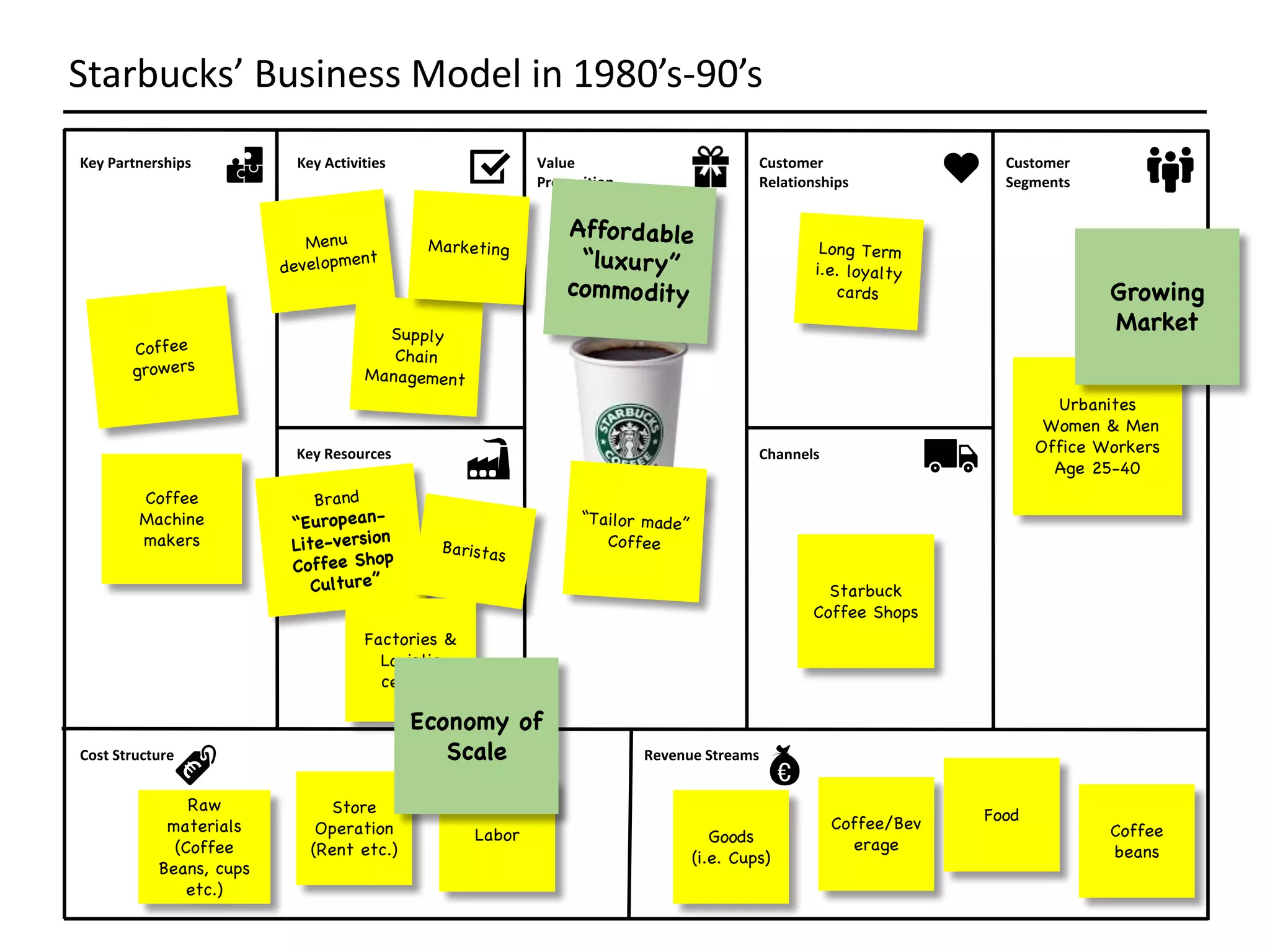
Starbucks’	Business	Model	in	1980’s-90’s
Urbanites
Women & Men
Office Workers
Age 25-40
Starbuck
Coffee Shops
Coffee
Machine
makers
Factories &
Logistic
centers
Store
Operation
(Rent etc.)
Labor
Coffee/Bev
erage
Food
Goods
(i.e. Cups)
Coffee
beans
Raw
materials
(Coffee
Beans, cups
etc.)
Key	Partnerships Key	Activities Value	
Proposition
Customer	
Relationships
Customer	
Segments
Key	Resources Channels
Revenue	StreamsCost	Structure
Starbucks’	Business	Model	in	1980’s-90’s
Urbanites
Women & Men
Office Workers
Age 25-40
Starbuck
Coffee Shops
Coffee
Machine
makers
Factories &
Logistic
centers
Store
Operation
(Rent etc.)
Labor
Coffee/Bev
erage
Food
Goods
(i.e. Cups)
Coffee
beans
Raw
materials
(Coffee
Beans, cups
etc.)
Growing
Market
Economy of
Scale
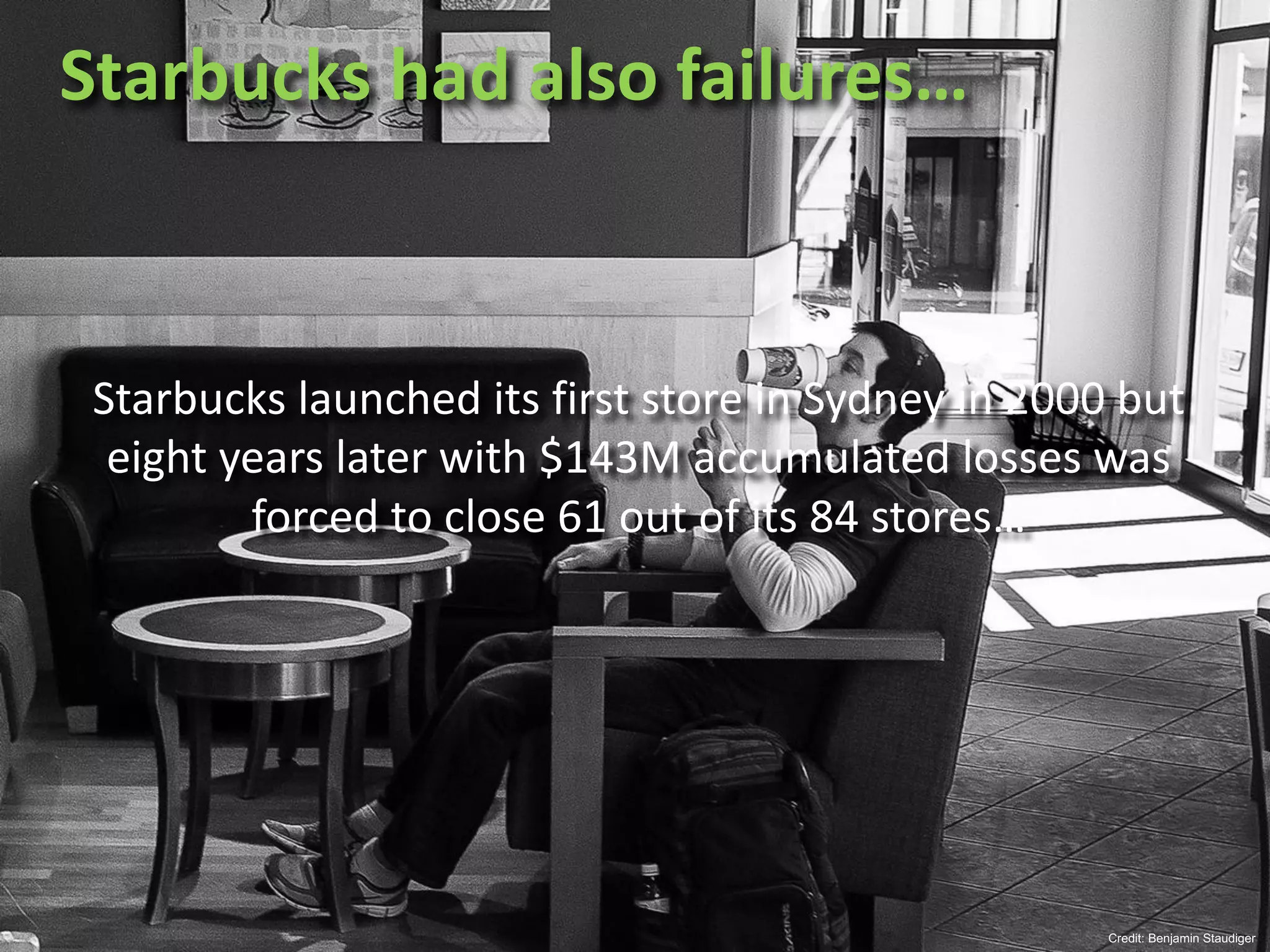
Starbucks	had	also	failures…
Credit: Benjamin Staudiger
Starbucks	launched	its	first	store	in	Sydney	in	2000	but	
eight	years	later	with	$143M	accumulated	losses	was	
forced	to	close	61	out	of	its	84	stores…
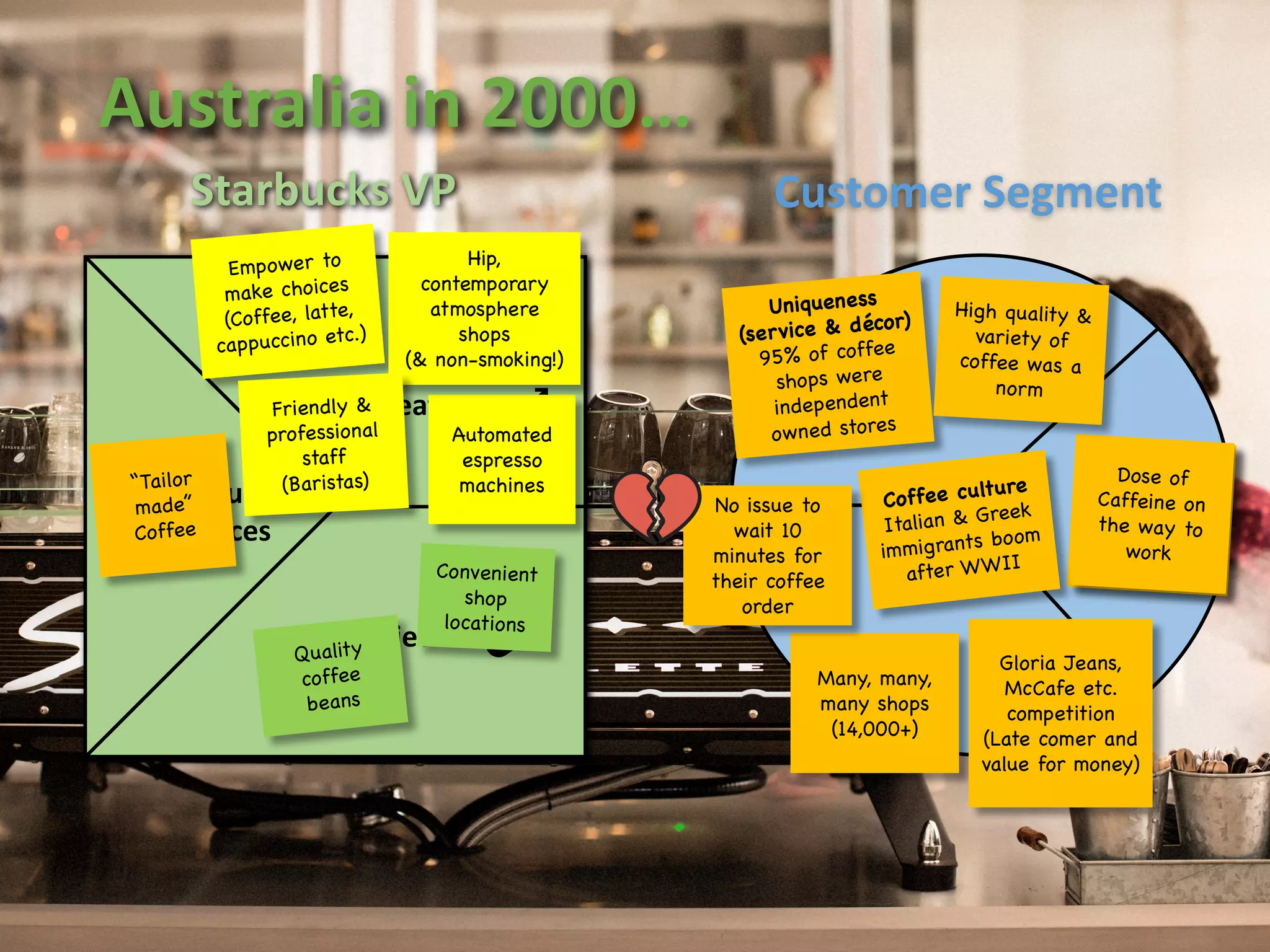
Starbucks	VP
Gain	Creators
Pain	Relievers
Products	&	
Services
Automated
espresso
machines
Hip,
contemporary
atmosphere
shops
(& non-smoking!)
Australia	in	2000…
Customer	Segment
Many, many,
many shops
(14,000+)
No issue to
wait 10
minutes for
their coffee
order
Gloria Jeans,
McCafe etc.
competition
(Late comer and
value for money)
What	is	Value	Proposition?
Example:
Super Mario
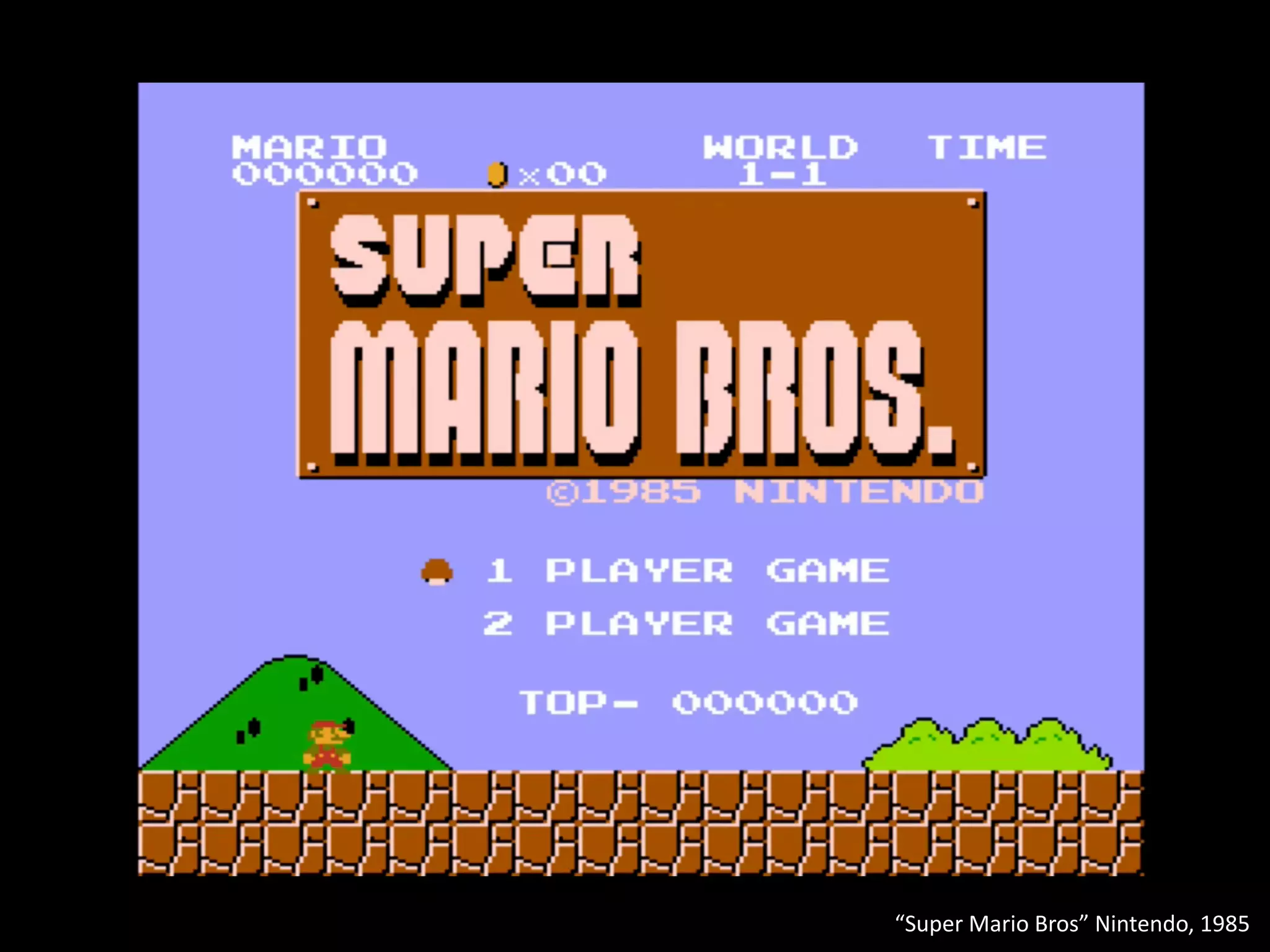
“Super	Mario	Bros”	Nintendo,	1985
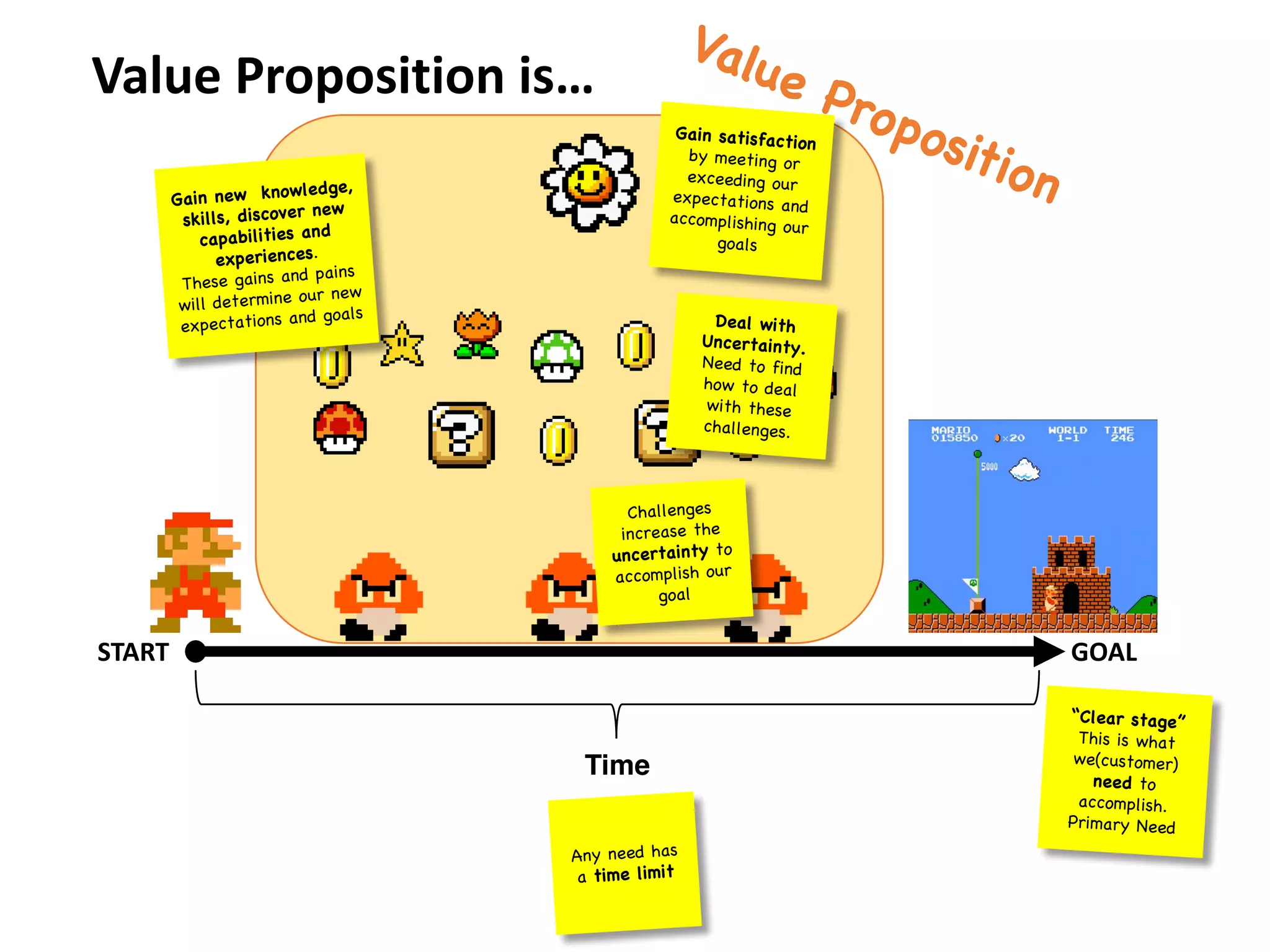
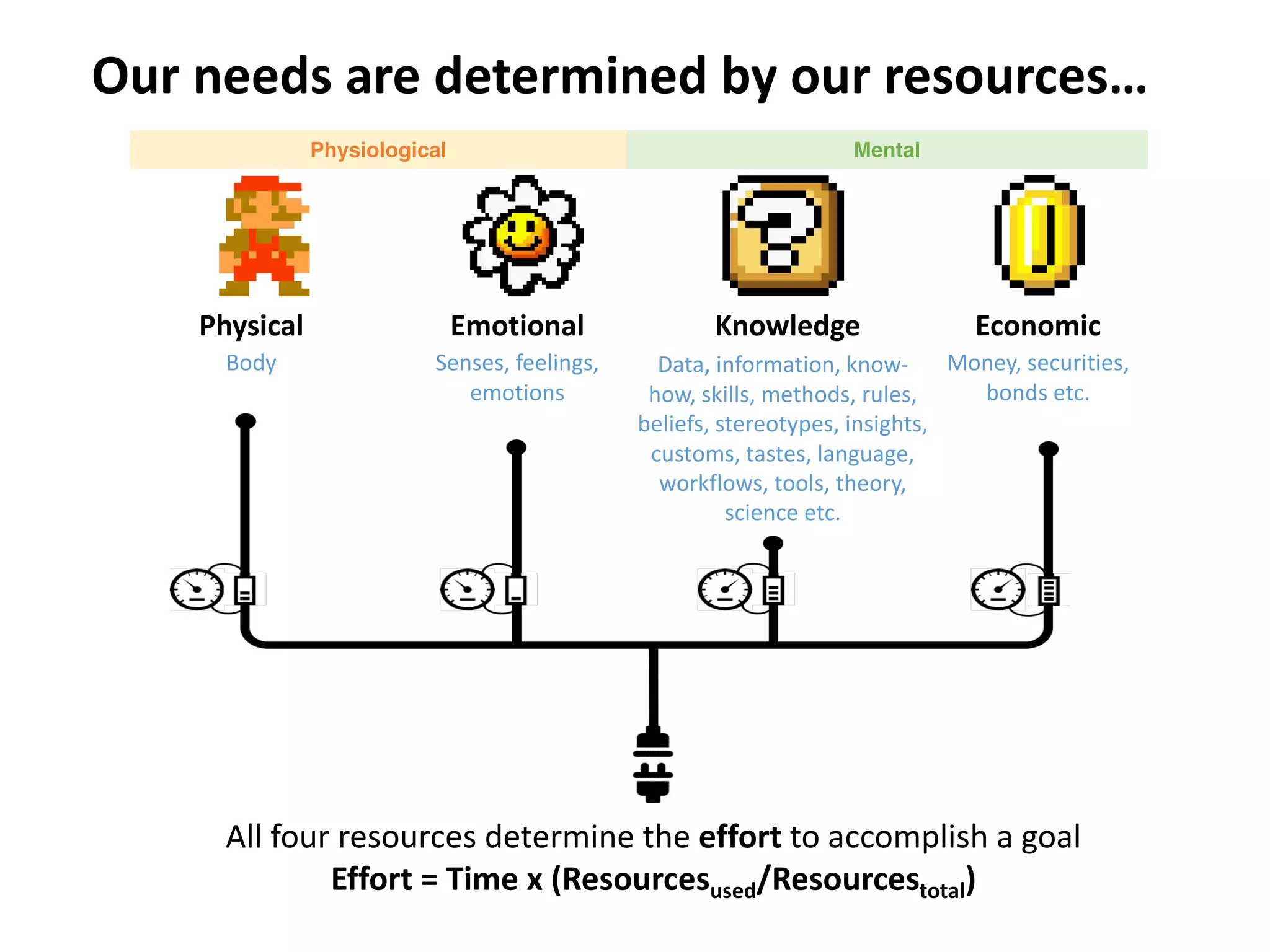
Value	Proposition	is…
START GOAL
Time
Emotional
Senses,	feelings,	
emotions
Knowledge
Data,	information,	know-
how,	skills,	methods,	rules,	
beliefs,	stereotypes,	insights,	
customs,	tastes,	language,	
workflows,	tools,	theory,	
science	etc.
Economic
Money,	securities,	
bonds	etc.
Physical
Body
Physiological Mental
All	four	resources	determine	the	effort to	accomplish	a	goal	
Effort	=	Time	x	(Resourcesused/Resourcestotal)
Our	needs	are	determined	by	our	resources…
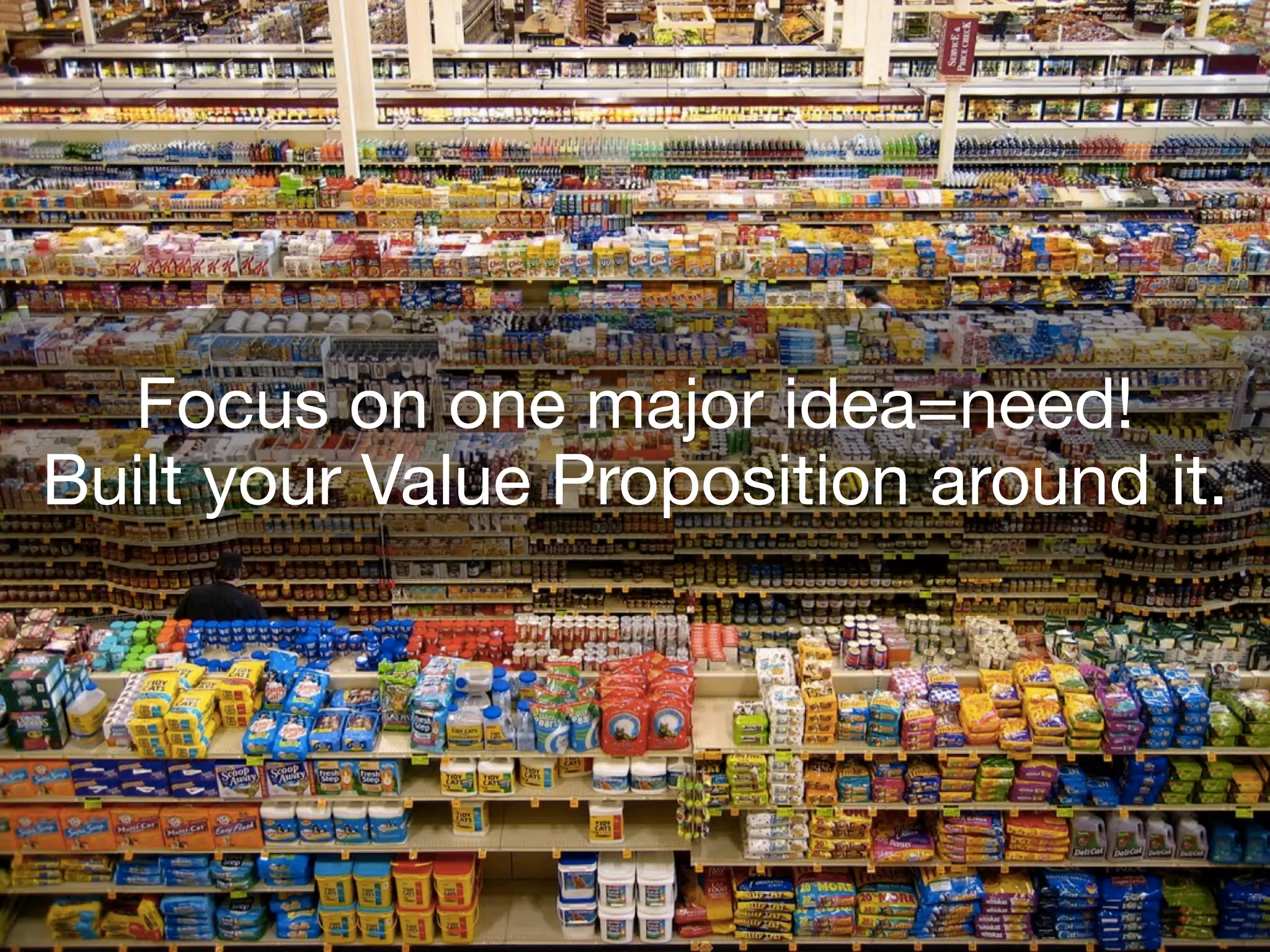
Focus on one major idea=need!
Built your Value Proposition around it.
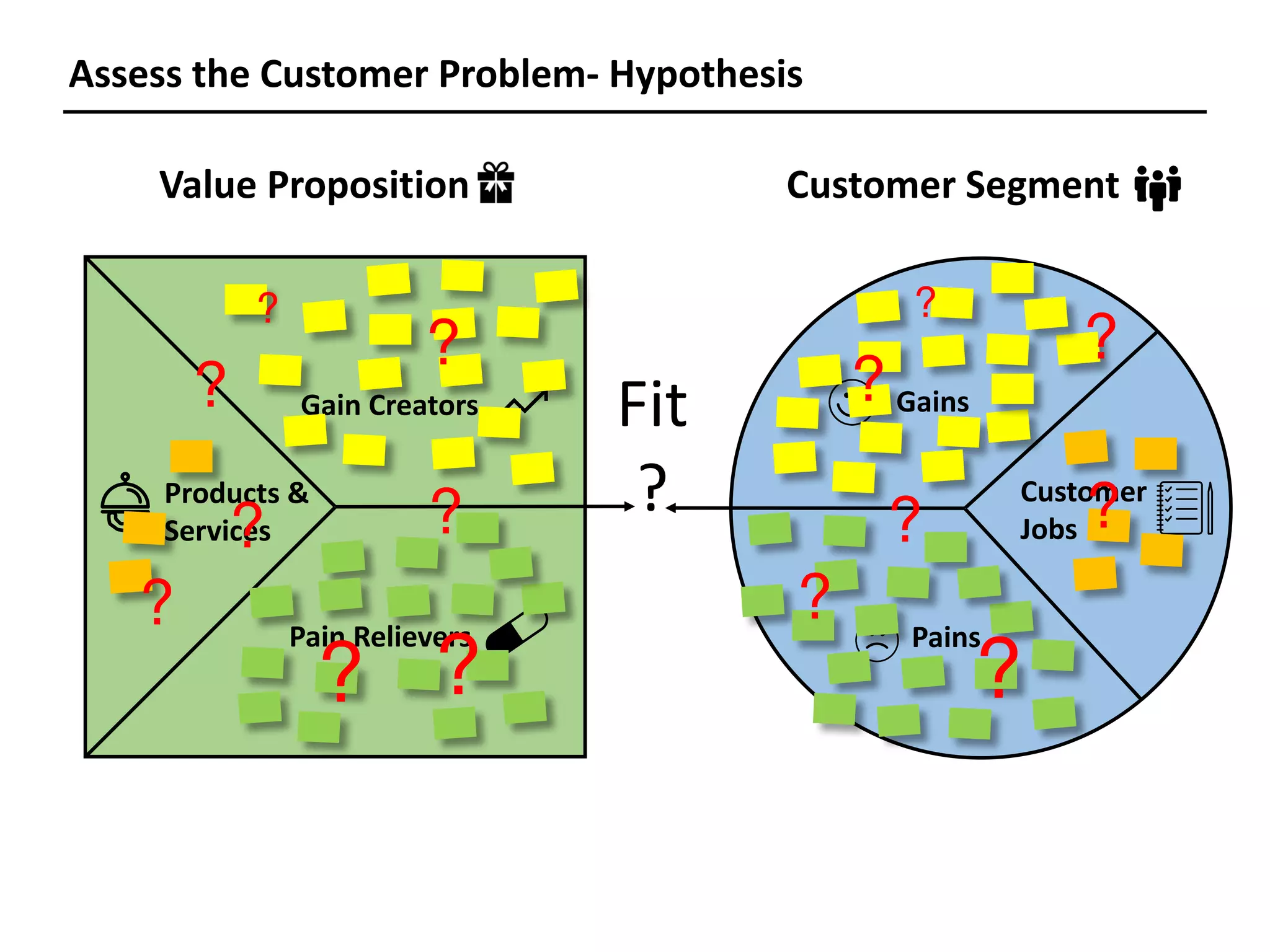
Assess	the	Customer	Problem- Hypothesis
Customer	Segment
Customer	
Jobs
Gains
Pains
?
?
?
?
?
?
?
Value	Proposition
Gain	Creators
Pain	Relievers
Products	&	
Services
?
?
?
?
?
?
?
?
Fit
?
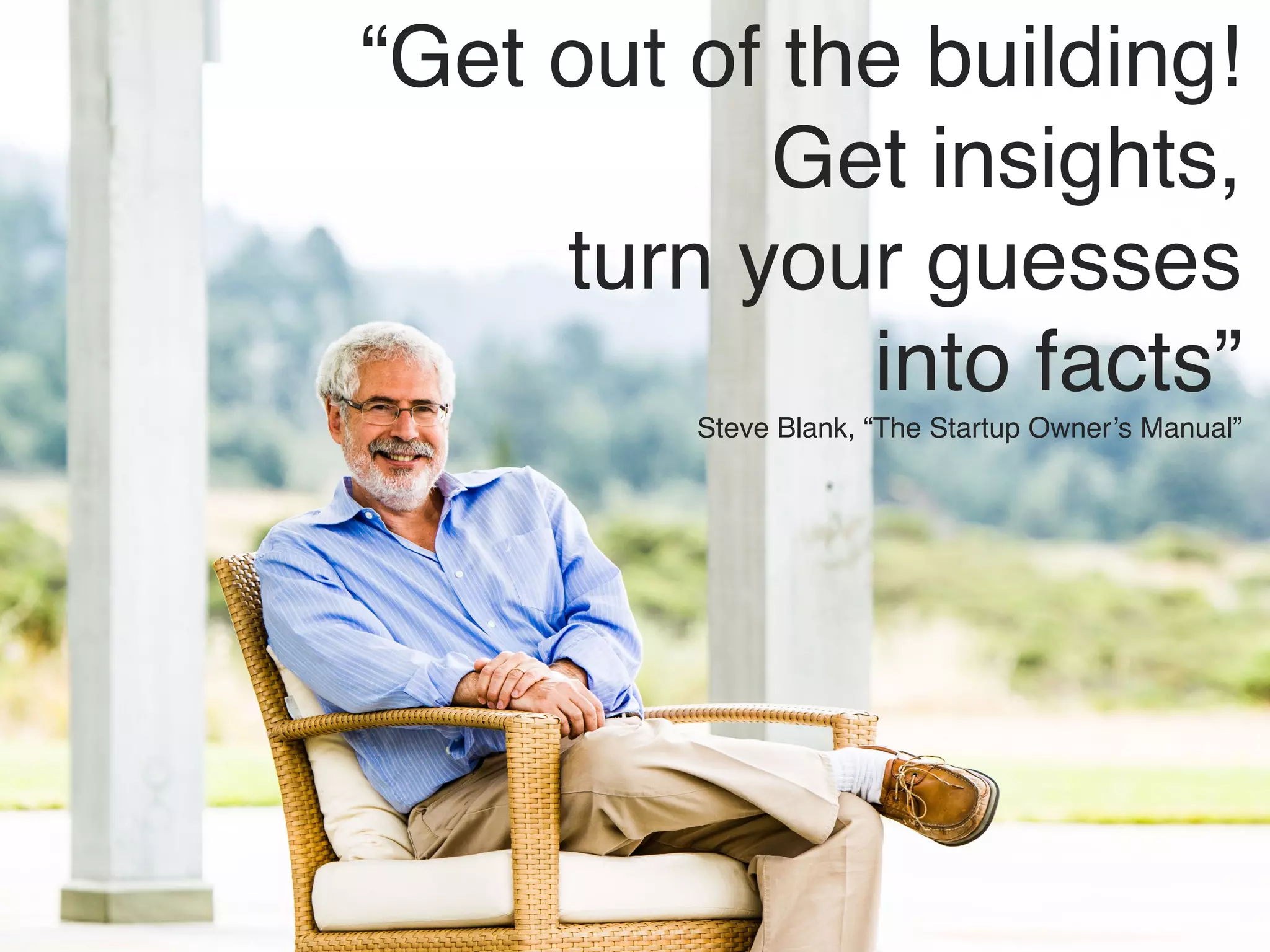
“Get out of the building!
Get insights,
turn your guesses
into facts”
Steve Blank, “The Startup Owner’s Manual”
Summary
• Business	Model	Canvas	and	Value	Proposition	Canvas
• Business	Model	makes	the	difference	and	not	the	product
• Any	business	model	will	fail	without	a	Market-Product	fit	
• Focus	on	one	major	idea=need	and	built	your	VP	around	it
• Get	out	of	the	building!	Get	insights,	turn	your	guesses	into	facts
Questions?

Introduction to Business Model Design