BUSINESS MODELS
AND BUSINESS DESIGN
IKHLAQ SIDHU
Founding Faculty Director
Sutardja Center for Entrepreneurship & Technology
IEOR Emerging Area Professor
Department of Industrial Engineering & Operations Research
UC Berkeley
Quick Review
Ready to execute?
1. Your High Concept 2. Your Target 3. Match with Your Team
A B
Observe
Environment
Skills and
Background of
Team
Stories
at work
Story/Pitch
Prototype
Validation
Execution: Work Backwards
Sell First/
Build Later
Market
Traction
Funding
Scale/
Goal
Business Model Forming
Learning the Sales Cycle
Business Model Clear
Sales Process Clear
Mindshare Awareness / PR Story / Brand
Now Lets Filter Out Common Mistakes
1 + 1 = 3
Market Size
Why should
you care?
Total Addressable:
TAM = No. of possible customers x purchase/year x price
Served Addressable:
SAM = TAM x fraction that would buy based on your primary
market research
Target Market:
Who can you afford to sell to this year (your plan)
For VCs: TAM > $1 Billion
Suppose 20% adopt and your market share is 10%
TAM = $50M ➡ Revenue = $1M (personal business with 5 employees)
TAM = $1B ➡ Revenue = $20M
What do you think of this business?
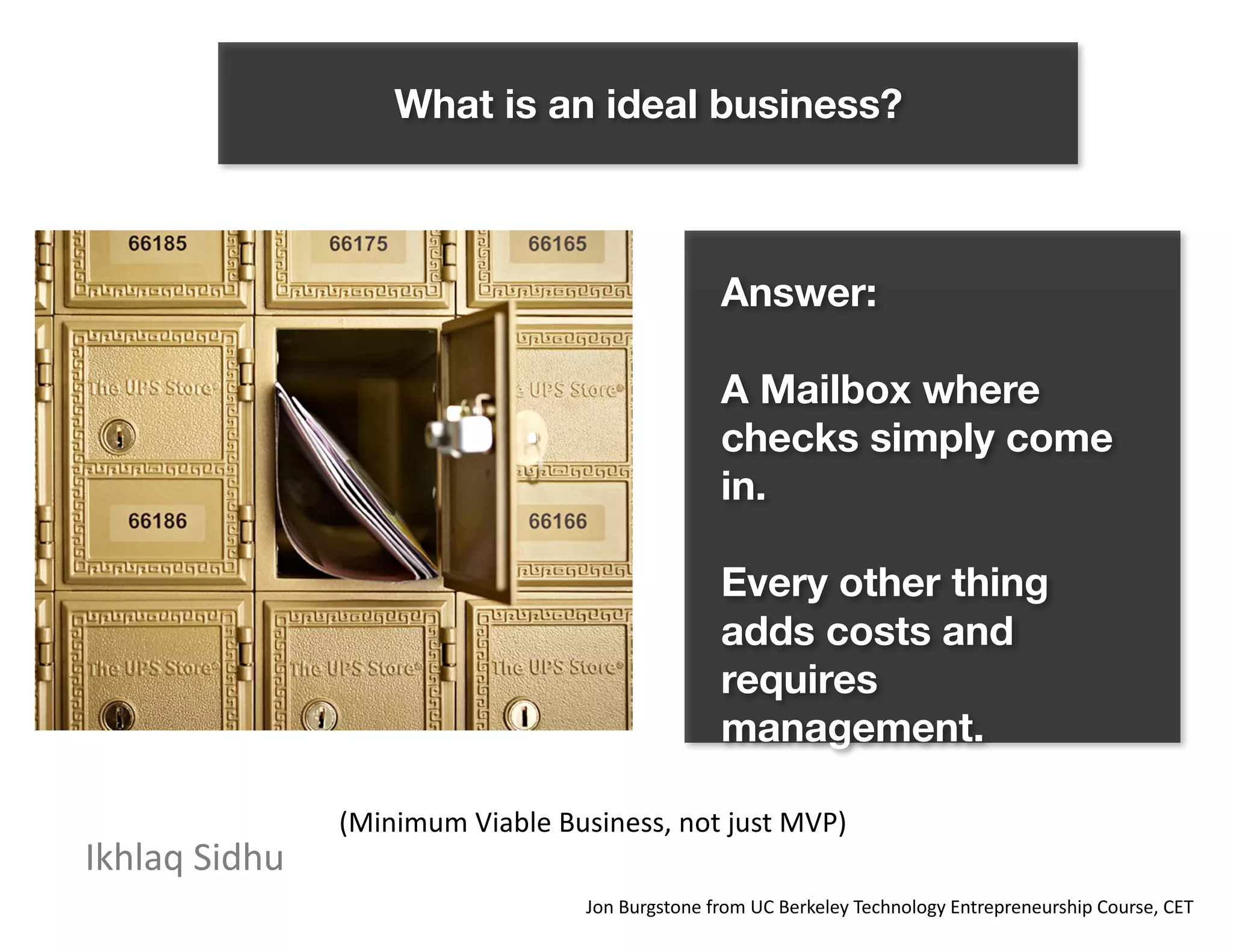
What is an ideal business?
Answer:
A mailbox where checks simply
come in.
Every other thing adds costs and
requires management.
(Minimum Visible Business, not just MVP)
Can you quantify the Value Proposition?
Value Proposition:
Cost to
Produce
per unit
Selling
Price
Next Best
Alternative
Value Captured
Value Created
• Quantitative (above)
• Qualitative: a few
words on why people
will buy/adopt
• Wider means more
room for error
Starbucks as a Business
Value Proposition for a cappucino:
Cost to Produce
per unit = $0.50
Selling Price
= $3.00
Next Best Alternative
= 5.00…?
Value Captured
= $2.50
Value Created
And if this is the
value proposition,
what is the
business model?
Needs served: coffee, quality, addiction,
convenience, social status…
Starbucks Business Model
Product and Value
Proposition
Segment 1 / Prod. Def
Segment 2 / Prod Def.
Customer Segment 1
Customer Segment 2
Supplier
Key
Activities
Cost Structures & Financial
Model, Payment Streams
Pricing Strategy &
Revenue Streams
Needed
Resources
Key
Partners
Customer
Relationships,
Communications
Channels,
Distribution,
Fulfilment
• Store / rent / furniture
• Bakery supplier
• Cups, coffee
• Free Wi-Fi
• Mobile application
• Advertising
1. Many costs that are not charged
2. How would you make money
3. Does it hold water?
4. Business model’s change
12 3
4
5
6
7
8
9
10
Business Model Canvas
Key
Partners
Key
Activities
Value
Proposition
Customer
Relationships
Customer
segments
Key
Resources
Channels
Cost Structure Revenue Streams
?
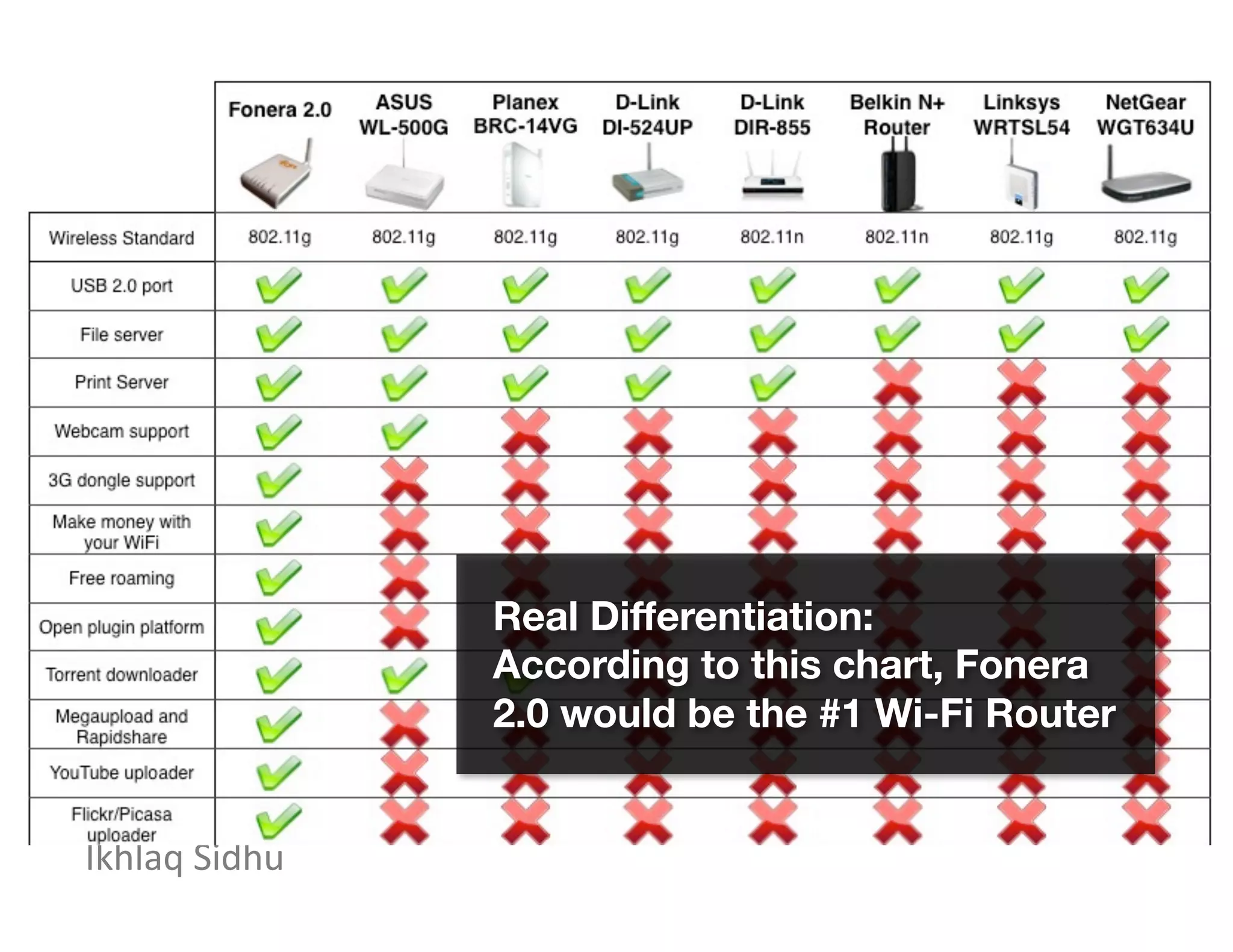
Real Differentiation:
According to this chart, Fonera
2.0 would be the #1 Wi-Fi Ruter
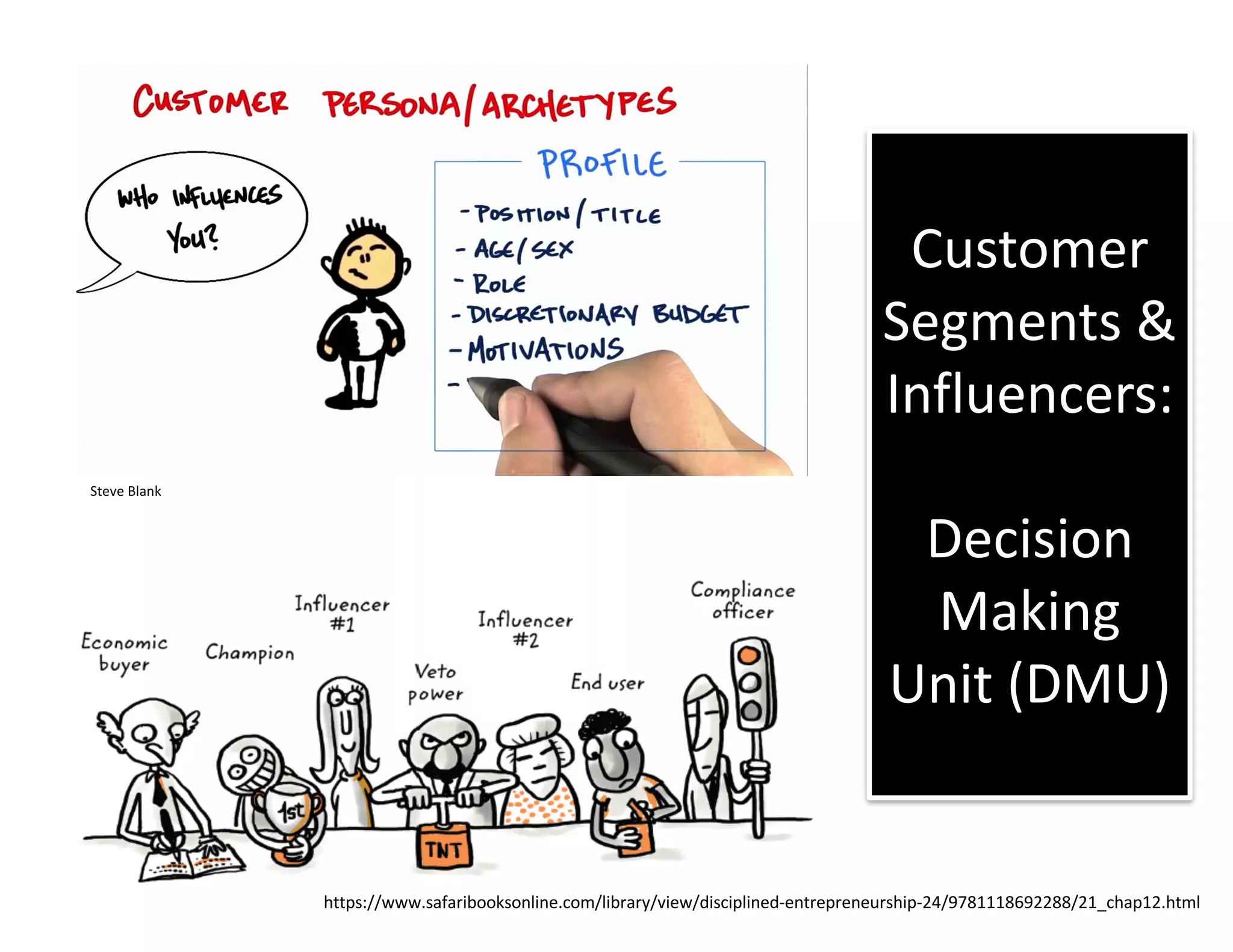
Customer
Segments &
Influencers:
Decision
Making Unit
(DMU)
Customer Acquisition Cost and
Life Time Customer Value
3 weeks
You
Possible
Customer
3 weeks 12 weeks
・・・
Google Ad to
10,000 people
$1000
Send 100 emails
with YouTube link
$1000
3 live meetings /
customer
$30,000
100 request more
information
10 request sales
call / trail
1 sale of
$50,000
Rev = $50,000
COGS = $20,000
CAC = $32,000
Loss = $2,000
Sales Cycle = 18 weeks
Building Your Revenue Model
CAC
GET
LTV KEEP GROW
Marketing
PR / News
Same Customers
New Products
(Up-sell, Cross-sell)
* Viral
* Loyalty Program
* Reference
Is your vision diverging from reality?
Imbalance: Focus of Will vs Reality
Successful entrepreneurs can balance their attention
between execution and observing the environment
Stories
at
work
Story/Pitch
Prototype
Validation
Information from industry news,
environment, context
Path of Execution
Summary:
How to Get a Working Business Model
• Are you trying to do too much - focus on core competence
• Poor value proposition
• Market too small
• You are not really listening
• No ability to differentiate and pull away
• Who can do it better, you or them
• Customers and DMUs
• Marketing and sales - it’s not magic
• Imbalance: focus of will vs reality
END OF SECTION

BMoE 3: Business Design and Business Models

  • 1.
    BUSINESS MODELS AND BUSINESSDESIGN IKHLAQ SIDHU Founding Faculty Director Sutardja Center for Entrepreneurship & Technology IEOR Emerging Area Professor Department of Industrial Engineering & Operations Research UC Berkeley
  • 2.
    Quick Review Ready toexecute? 1. Your High Concept 2. Your Target 3. Match with Your Team A B
  • 3.
    Observe Environment Skills and Background of Team Stories atwork Story/Pitch Prototype Validation Execution: Work Backwards Sell First/ Build Later Market Traction Funding Scale/ Goal Business Model Forming Learning the Sales Cycle Business Model Clear Sales Process Clear Mindshare Awareness / PR Story / Brand
  • 4.
    Now Lets FilterOut Common Mistakes 1 + 1 = 3
  • 5.
    Market Size Why should youcare? Total Addressable: TAM = No. of possible customers x purchase/year x price Served Addressable: SAM = TAM x fraction that would buy based on your primary market research Target Market: Who can you afford to sell to this year (your plan) For VCs: TAM > $1 Billion Suppose 20% adopt and your market share is 10% TAM = $50M ➡ Revenue = $1M (personal business with 5 employees) TAM = $1B ➡ Revenue = $20M
  • 6.
    What do youthink of this business?
  • 7.
    What is anideal business? Answer: A mailbox where checks simply come in. Every other thing adds costs and requires management. (Minimum Visible Business, not just MVP)
  • 8.
    Can you quantifythe Value Proposition? Value Proposition: Cost to Produce per unit Selling Price Next Best Alternative Value Captured Value Created • Quantitative (above) • Qualitative: a few words on why people will buy/adopt • Wider means more room for error
  • 9.
    Starbucks as aBusiness Value Proposition for a cappucino: Cost to Produce per unit = $0.50 Selling Price = $3.00 Next Best Alternative = 5.00…? Value Captured = $2.50 Value Created And if this is the value proposition, what is the business model? Needs served: coffee, quality, addiction, convenience, social status…
  • 10.
    Starbucks Business Model Productand Value Proposition Segment 1 / Prod. Def Segment 2 / Prod Def. Customer Segment 1 Customer Segment 2 Supplier Key Activities Cost Structures & Financial Model, Payment Streams Pricing Strategy & Revenue Streams Needed Resources Key Partners Customer Relationships, Communications Channels, Distribution, Fulfilment • Store / rent / furniture • Bakery supplier • Cups, coffee • Free Wi-Fi • Mobile application • Advertising 1. Many costs that are not charged 2. How would you make money 3. Does it hold water? 4. Business model’s change 12 3 4 5 6 7 8 9 10
  • 11.
  • 12.
    Real Differentiation: According tothis chart, Fonera 2.0 would be the #1 Wi-Fi Ruter
  • 13.
  • 14.
    Customer Acquisition Costand Life Time Customer Value 3 weeks You Possible Customer 3 weeks 12 weeks ・・・ Google Ad to 10,000 people $1000 Send 100 emails with YouTube link $1000 3 live meetings / customer $30,000 100 request more information 10 request sales call / trail 1 sale of $50,000 Rev = $50,000 COGS = $20,000 CAC = $32,000 Loss = $2,000 Sales Cycle = 18 weeks
  • 15.
    Building Your RevenueModel CAC GET LTV KEEP GROW Marketing PR / News Same Customers New Products (Up-sell, Cross-sell) * Viral * Loyalty Program * Reference
  • 16.
    Is your visiondiverging from reality? Imbalance: Focus of Will vs Reality Successful entrepreneurs can balance their attention between execution and observing the environment Stories at work Story/Pitch Prototype Validation Information from industry news, environment, context Path of Execution
  • 17.
    Summary: How to Geta Working Business Model • Are you trying to do too much - focus on core competence • Poor value proposition • Market too small • You are not really listening • No ability to differentiate and pull away • Who can do it better, you or them • Customers and DMUs • Marketing and sales - it’s not magic • Imbalance: focus of will vs reality
  • 18.