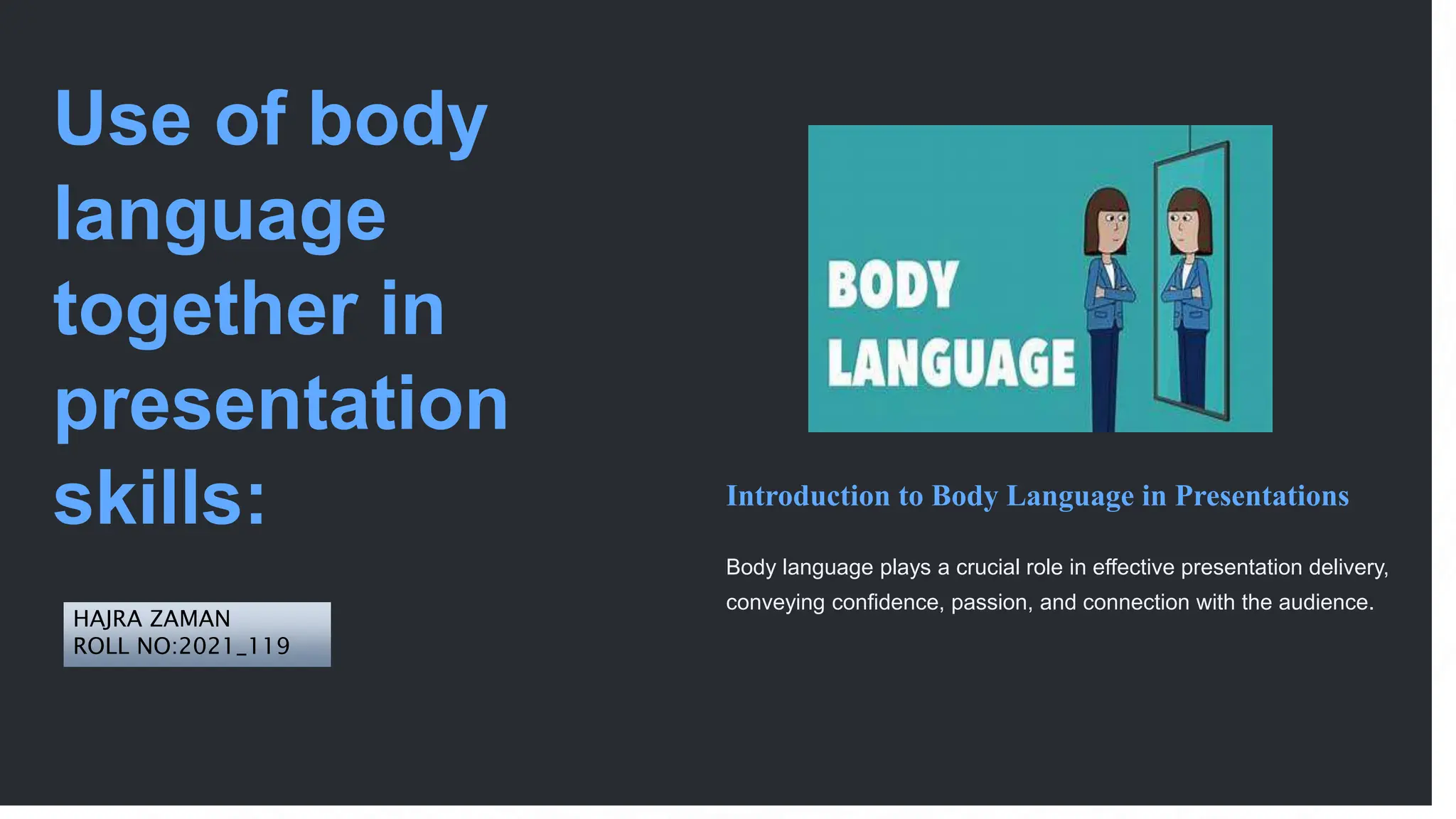
Use of body
language
together in
presentation
skills: Introduction to Body Language in Presentations
Body language plays a crucial role in effective presentation delivery,
conveying confidence, passion, and connection with the audience.
HAJRA ZAMAN
ROLL NO:2021_119
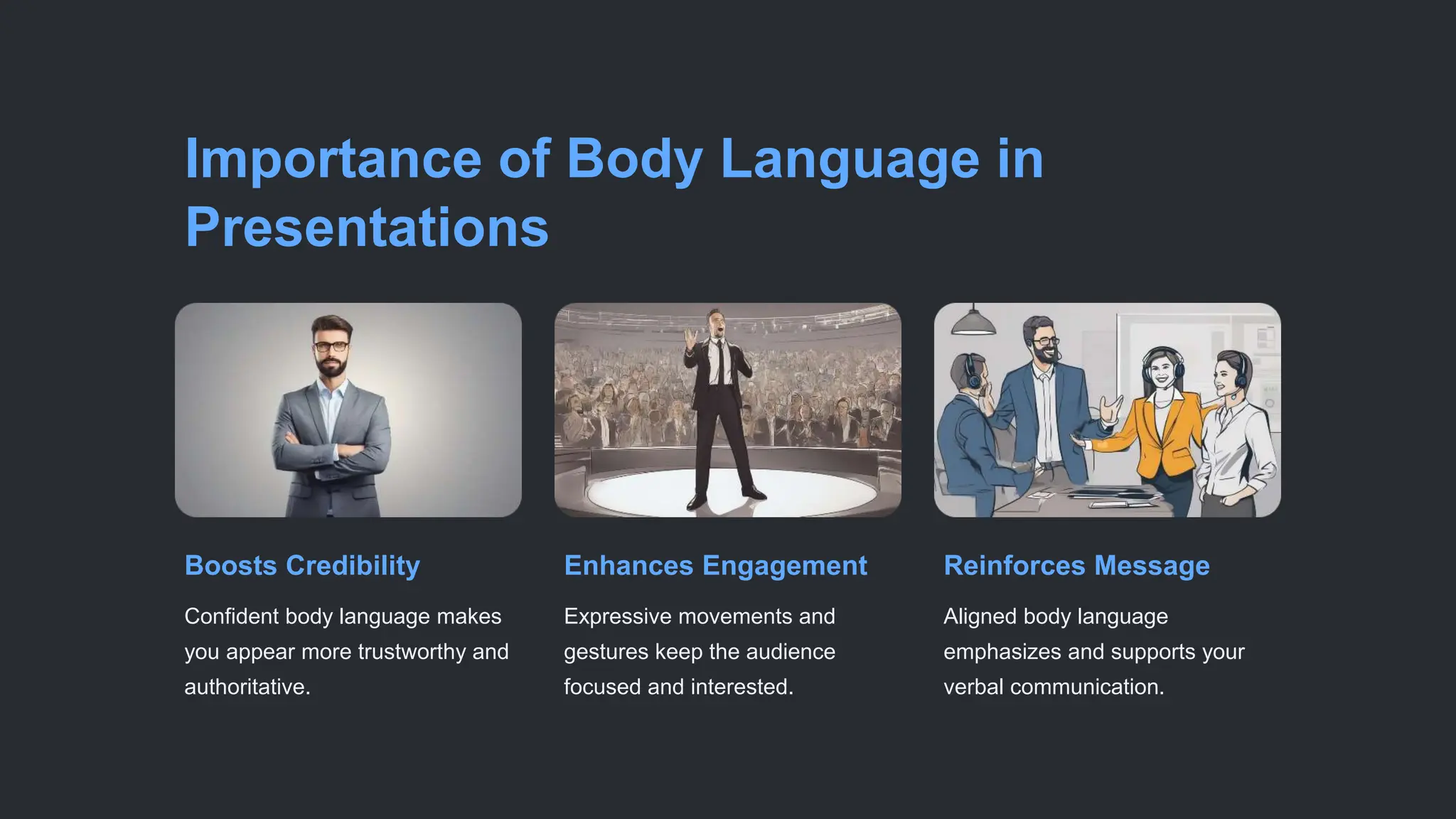
Importance of Body Language in
Presentations
Boosts Credibility
Confident body language makes
you appear more trustworthy and
authoritative.
Enhances Engagement
Expressive movements and
gestures keep the audience
focused and interested.
Reinforces Message
Aligned body language
emphasizes and supports your
verbal communication.
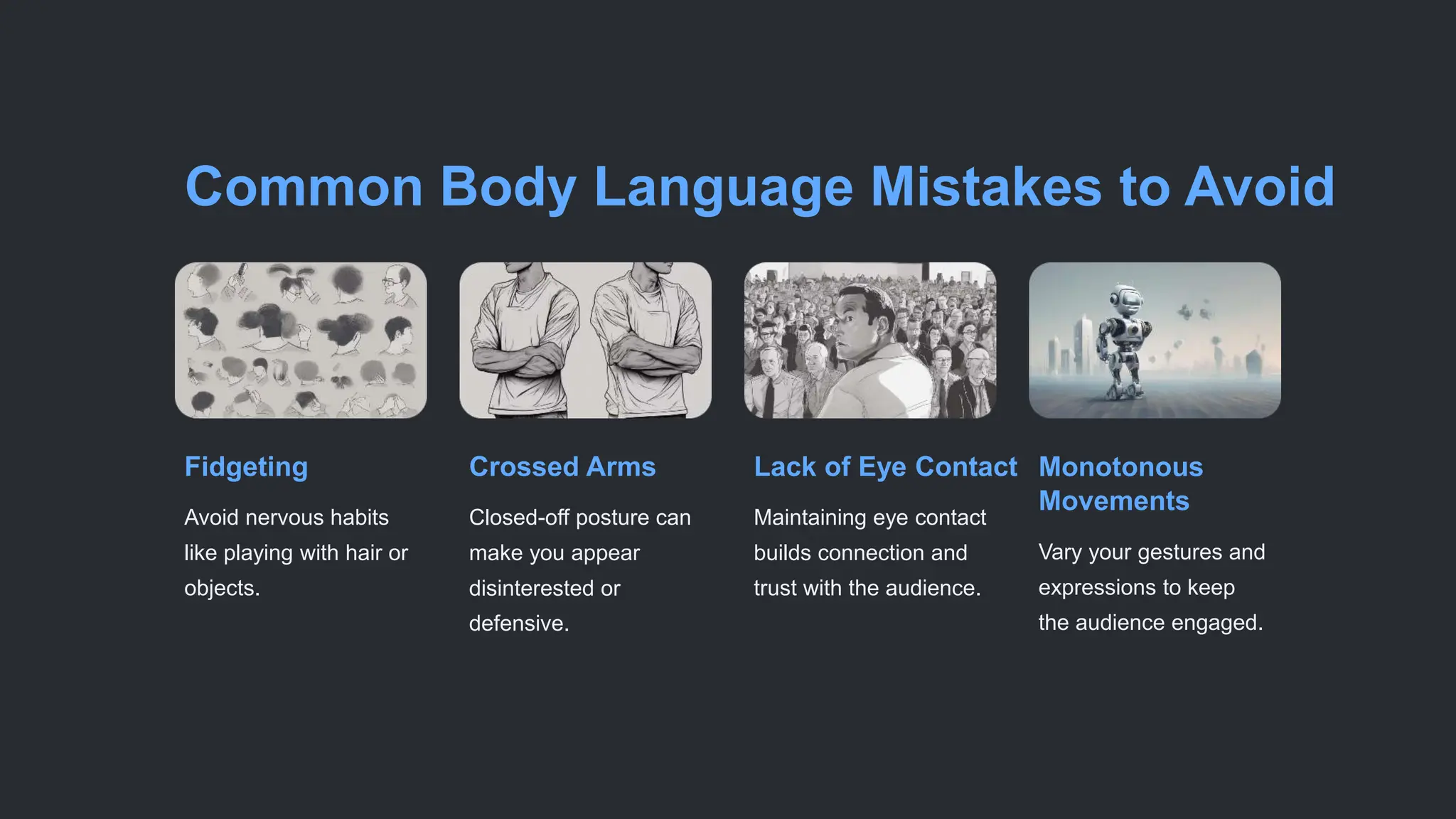
Common Body Language Mistakes to Avoid
Fidgeting
Avoid nervous habits
like playing with hair or
objects.
Crossed Arms
Closed-off posture can
make you appear
disinterested or
defensive.
Lack of Eye Contact
Maintaining eye contact
builds connection and
trust with the audience.
Monotonous
Movements
Vary your gestures and
expressions to keep
the audience engaged.
Positive Body Language Techniques
Open Posture
Stand tall with shoulders back to convey
confidence and approachability.
Expressive Gestures
Use hand movements to emphasize key points
and ideas.
Animated Facial Expressions
Let your face reflect the energy and passion of
your message.
Purposeful Movement
Move around the stage to create a dynamic and
engaging presence.
Using Body Language to Engage the
Audience
Eye Contact
Maintain regular eye
contact to connect with
individuals in the
audience.
Smiling
A warm, genuine smile
conveys enthusiasm
and approachability.
Nodding
Subtle nods show you
are engaged and
listening to the
audience.
Open Stance
An open, welcoming
stance encourages the
audience to engage.
Matching Body Language to
Presentation Content
Energetic
Use dynamic movements and
gestures for an upbeat,
engaging topic.
Thoughtful
Adopt a more contemplative
pose when discussing
complex ideas.
Authoritative
Stand tall and use
commanding gestures for an
authoritative presentation.
Practicing and Incorporating Body
Language
1 Record Yourself
Review video recordings to identify areas for improvement.
2 Seek Feedback
Ask colleagues or mentors for constructive feedback on your body language.
3 Rehearse Extensively
Practice your presentation while focusing on effective body language.
Conclusion and Key Takeaways
Confident Body Language Boosts Credibility and Engagement
Avoid Common Mistakes Fidgeting, Closed-Off Posture, Lack of Eye
Contact
Incorporate Positive Techniques Open Posture, Expressive Gestures, Animated
Facial Expressions
Match to Presentation Content Energetic, Thoughtful, or Authoritative Body
Language
Practice and Refine Record, Seek Feedback, Rehearse Extensively

Introduction-to-Body-Language-in-Presentations (3).pptx

  • 1.
    Use of body language togetherin presentation skills: Introduction to Body Language in Presentations Body language plays a crucial role in effective presentation delivery, conveying confidence, passion, and connection with the audience. HAJRA ZAMAN ROLL NO:2021_119
  • 2.
    Importance of BodyLanguage in Presentations Boosts Credibility Confident body language makes you appear more trustworthy and authoritative. Enhances Engagement Expressive movements and gestures keep the audience focused and interested. Reinforces Message Aligned body language emphasizes and supports your verbal communication.
  • 3.
    Common Body LanguageMistakes to Avoid Fidgeting Avoid nervous habits like playing with hair or objects. Crossed Arms Closed-off posture can make you appear disinterested or defensive. Lack of Eye Contact Maintaining eye contact builds connection and trust with the audience. Monotonous Movements Vary your gestures and expressions to keep the audience engaged.
  • 4.
    Positive Body LanguageTechniques Open Posture Stand tall with shoulders back to convey confidence and approachability. Expressive Gestures Use hand movements to emphasize key points and ideas. Animated Facial Expressions Let your face reflect the energy and passion of your message. Purposeful Movement Move around the stage to create a dynamic and engaging presence.
  • 5.
    Using Body Languageto Engage the Audience Eye Contact Maintain regular eye contact to connect with individuals in the audience. Smiling A warm, genuine smile conveys enthusiasm and approachability. Nodding Subtle nods show you are engaged and listening to the audience. Open Stance An open, welcoming stance encourages the audience to engage.
  • 6.
    Matching Body Languageto Presentation Content Energetic Use dynamic movements and gestures for an upbeat, engaging topic. Thoughtful Adopt a more contemplative pose when discussing complex ideas. Authoritative Stand tall and use commanding gestures for an authoritative presentation.
  • 7.
    Practicing and IncorporatingBody Language 1 Record Yourself Review video recordings to identify areas for improvement. 2 Seek Feedback Ask colleagues or mentors for constructive feedback on your body language. 3 Rehearse Extensively Practice your presentation while focusing on effective body language.
  • 8.
    Conclusion and KeyTakeaways Confident Body Language Boosts Credibility and Engagement Avoid Common Mistakes Fidgeting, Closed-Off Posture, Lack of Eye Contact Incorporate Positive Techniques Open Posture, Expressive Gestures, Animated Facial Expressions Match to Presentation Content Energetic, Thoughtful, or Authoritative Body Language Practice and Refine Record, Seek Feedback, Rehearse Extensively