
Introduction to Blockchain and
Cryptocurrencies
https://www.linkedin.com/in/nikhildprince/
History
• 1991- firstly blockchain described by Stuart Haber
• 1998 – Nick Szabo worked on mechanism for digital currency (bit
gold)
• 2000- Stefan Konst published a general theory on set of solutions for
implementation.
• 2008- Santoshi Nakamoto First conceptualized blockchain.
• 2009- Bitcoin network Begin
• 2013- Bitcoin rally took off
• 2016- ICICI Bank executes India's first transaction on blockchain.
Understanding Blockchain
• A blockchain is, an immutable time-stamped series record of data
that is distributed and managed by cluster of computers.
• Open as well as Closed
• Distributed
• Ledger
• P2P
• Permanent
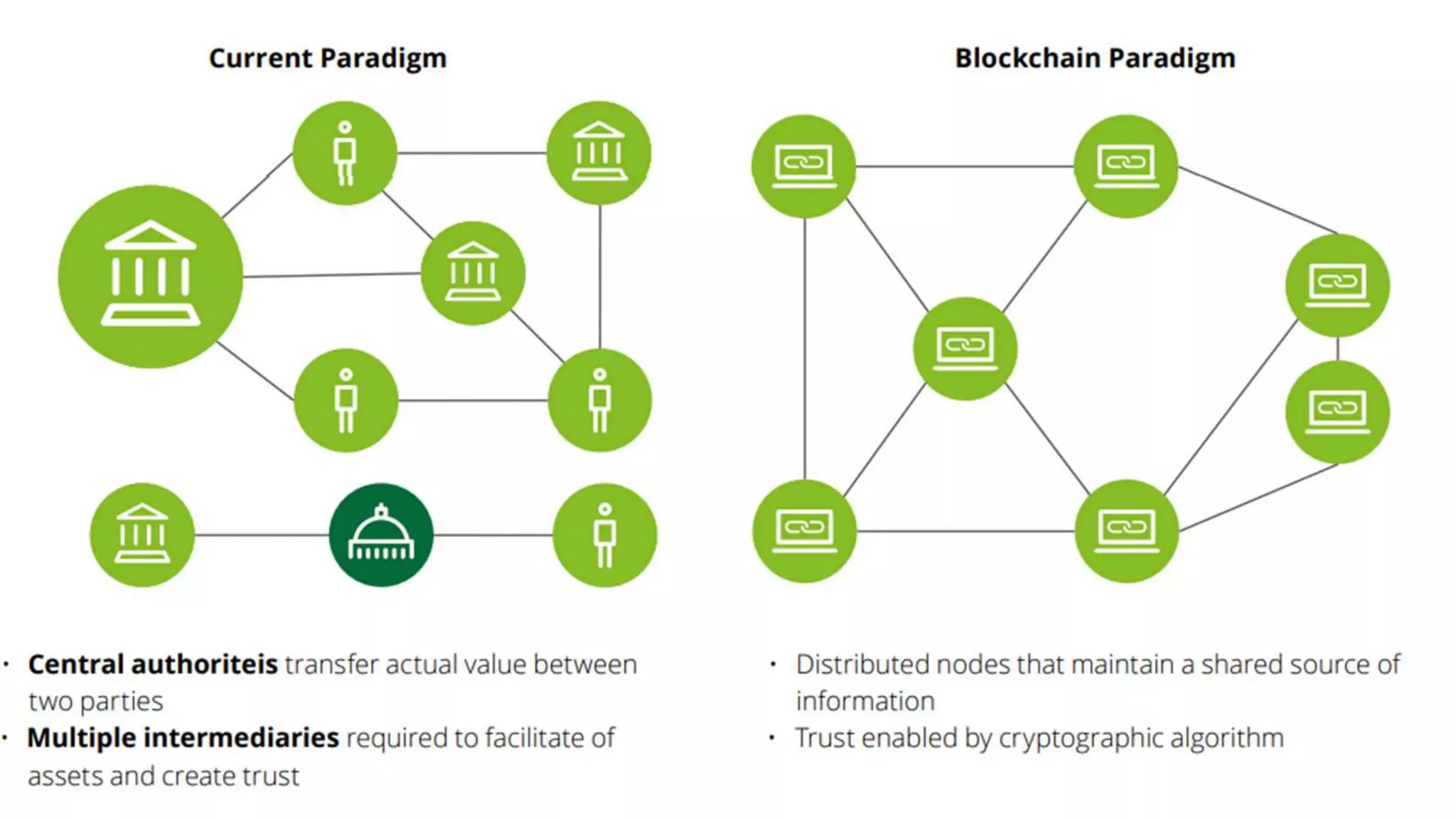
Centralized Vs Decentralized Vs Distributed Network
Types of Blockchain
Need Different types of blockchain
• One no longer need to rely upon huge servers.
• They are cost effective and fast.
• They reduce the need for more trusted parties because you can
implement smart contracts instead of them.
• Gives options for rights and access management.
• Reduces redundant work.
• Distributed consensus between interested parties becomes fast even
though you are geographically segregated.
Applications of Blockchain
• Payment processing and money transfers
• Monitor supply chains
• Digital IDs
• Real estate, land, and auto title transfers
• Tax regulation and compliance
• Medical recordkeeping
• Developing platforms
• Automating works….
Demerits of Blockchain
• Slow down on loads
• Self maintenance of wallet
• Continuous internet connectivity required
• Consume too much of energy
• Once data feed can not be changed
• Not 100% secure
Key points to Consider
• Wallet
• Wallets are the interface that most users will rely on to interact with a
cryptocurrency network.
• Private/Public keys
• Mining
• Hardware ASIC, Software -pools
• Mining rewards
• Halving
• Algorithms
• SHA 256
• PoW / PoS
• Soft Fork/ Hard Fork
Understanding Cryptocurrencies
• It is a Virtual Currency is a form of digital cash that enables
individuals to transmit value over Blockchain technology.
• OR A digital token exchanged on blockchain using cryptographic
algorithms to secure the p 2 p transaction
• E.g. Bitcoin (BTC)
• Why it is called Cryptocurrency
• Cryptography + Currency
• It makes extensive use of cryptographic techniques to secure transactions
between users.
Types of Cryptocurrencies
• Bitcoin
• First use case of Blockchain
• Altcoin
• All other Coins apart from Bitcoin
• E.g. ETH, LTC, WRX
• Tokens
• Tokens are not able to operate independently and are dependent on the
network of another blockchain.
• E.g. ERC-20 Tokens, TRX Tokens, NEO Tokens
DEMO
Q&A
Thank you for your kind Attention

Introduction to Blockchain and Cryptocurrencies

  • 1.
    Introduction to Blockchainand Cryptocurrencies https://www.linkedin.com/in/nikhildprince/
  • 2.
    History • 1991- firstlyblockchain described by Stuart Haber • 1998 – Nick Szabo worked on mechanism for digital currency (bit gold) • 2000- Stefan Konst published a general theory on set of solutions for implementation. • 2008- Santoshi Nakamoto First conceptualized blockchain. • 2009- Bitcoin network Begin • 2013- Bitcoin rally took off • 2016- ICICI Bank executes India's first transaction on blockchain.
  • 3.
    Understanding Blockchain • Ablockchain is, an immutable time-stamped series record of data that is distributed and managed by cluster of computers. • Open as well as Closed • Distributed • Ledger • P2P • Permanent
  • 4.
    Centralized Vs DecentralizedVs Distributed Network
  • 7.
  • 9.
    Need Different typesof blockchain • One no longer need to rely upon huge servers. • They are cost effective and fast. • They reduce the need for more trusted parties because you can implement smart contracts instead of them. • Gives options for rights and access management. • Reduces redundant work. • Distributed consensus between interested parties becomes fast even though you are geographically segregated.
  • 10.
    Applications of Blockchain •Payment processing and money transfers • Monitor supply chains • Digital IDs • Real estate, land, and auto title transfers • Tax regulation and compliance • Medical recordkeeping • Developing platforms • Automating works….
  • 12.
    Demerits of Blockchain •Slow down on loads • Self maintenance of wallet • Continuous internet connectivity required • Consume too much of energy • Once data feed can not be changed • Not 100% secure
  • 13.
    Key points toConsider • Wallet • Wallets are the interface that most users will rely on to interact with a cryptocurrency network. • Private/Public keys • Mining • Hardware ASIC, Software -pools • Mining rewards • Halving • Algorithms • SHA 256 • PoW / PoS • Soft Fork/ Hard Fork
  • 14.
    Understanding Cryptocurrencies • Itis a Virtual Currency is a form of digital cash that enables individuals to transmit value over Blockchain technology. • OR A digital token exchanged on blockchain using cryptographic algorithms to secure the p 2 p transaction • E.g. Bitcoin (BTC) • Why it is called Cryptocurrency • Cryptography + Currency • It makes extensive use of cryptographic techniques to secure transactions between users.
  • 15.
    Types of Cryptocurrencies •Bitcoin • First use case of Blockchain • Altcoin • All other Coins apart from Bitcoin • E.g. ETH, LTC, WRX • Tokens • Tokens are not able to operate independently and are dependent on the network of another blockchain. • E.g. ERC-20 Tokens, TRX Tokens, NEO Tokens
  • 16.
  • 17.
  • 18.
    Thank you foryour kind Attention