BIOETHICS
Name: Laveena
UID: 23MBA10524
Section: 106 (Group B)
MEANING:
• Bioethics is the study of ethical issues and dilemmas arising from
advancements in biology, medicine, and biotechnology. In simple words,
Bioethics is about understanding what's right and wrong when it comes to
biology, medicine, and technology. It includes the study of values relating to
primary care and other branches of medicine.
• It looks at questions like: What's the best way to treat people with new
medical techniques? How should we decide who gets medical help when
resources are limited? What are the rules for scientists and doctors?
4 PRINCIPLES
Autonomy Beneficence
Respecting individuals' right to make their own
decisions about their healthcare and lives.
Promoting the well-being and best interests of
patients and research participants.
Non- Malfesance Justice
The principle of avoiding harm. Involves fairness and equity in the
distribution of healthcare resources and
benefits.
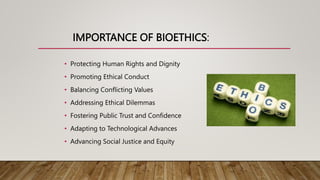
IMPORTANCE OF BIOETHICS:
• Protecting Human Rights and Dignity
• Promoting Ethical Conduct
• Balancing Conflicting Values
• Addressing Ethical Dilemmas
• Fostering Public Trust and Confidence
• Adapting to Technological Advances
• Advancing Social Justice and Equity
ISSUES:
• Informed Consent
• Genetic Testing and Screening
• Access to Healthcare
• Research Ethics
• Organ Transplantation and Allocation
• Environmental Ethics
• Healthcare Resource Allocation
• Reproductive Technologies
CONCLUSION:
• In conclusion, bioethics provides a framework for navigating the
complex ethical issues arising from advances in biology, medicine,
and healthcare. It emphasizes the importance of upholding ethical
principles and values to ensure the well-being and dignity of
individuals and communities in the face of scientific and
technological progress.
THANK YOU!

INTRODUCTION TO BIOTECHNOLOGY AND BIOETHICS

  • 1.
  • 2.
    MEANING: • Bioethics isthe study of ethical issues and dilemmas arising from advancements in biology, medicine, and biotechnology. In simple words, Bioethics is about understanding what's right and wrong when it comes to biology, medicine, and technology. It includes the study of values relating to primary care and other branches of medicine. • It looks at questions like: What's the best way to treat people with new medical techniques? How should we decide who gets medical help when resources are limited? What are the rules for scientists and doctors?
  • 3.
    4 PRINCIPLES Autonomy Beneficence Respectingindividuals' right to make their own decisions about their healthcare and lives. Promoting the well-being and best interests of patients and research participants. Non- Malfesance Justice The principle of avoiding harm. Involves fairness and equity in the distribution of healthcare resources and benefits.
  • 4.
    IMPORTANCE OF BIOETHICS: •Protecting Human Rights and Dignity • Promoting Ethical Conduct • Balancing Conflicting Values • Addressing Ethical Dilemmas • Fostering Public Trust and Confidence • Adapting to Technological Advances • Advancing Social Justice and Equity
  • 5.
    ISSUES: • Informed Consent •Genetic Testing and Screening • Access to Healthcare • Research Ethics • Organ Transplantation and Allocation • Environmental Ethics • Healthcare Resource Allocation • Reproductive Technologies
  • 6.
    CONCLUSION: • In conclusion,bioethics provides a framework for navigating the complex ethical issues arising from advances in biology, medicine, and healthcare. It emphasizes the importance of upholding ethical principles and values to ensure the well-being and dignity of individuals and communities in the face of scientific and technological progress.
  • 7.