Biology in the
21 Century
  st
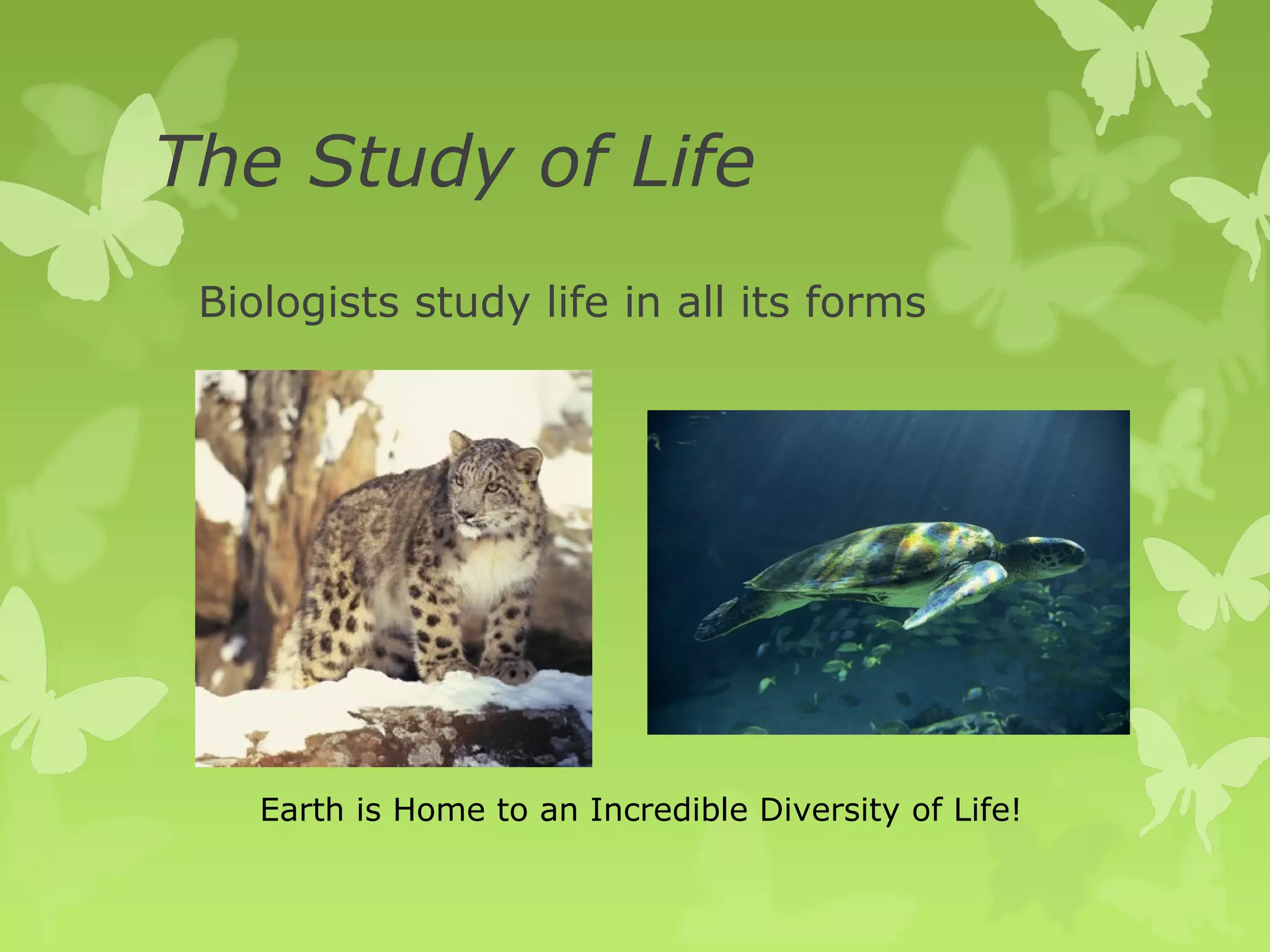
The Study of Life
 Biologists study life in all its forms


    Earth is Home to an Incredible Diversity of Life!
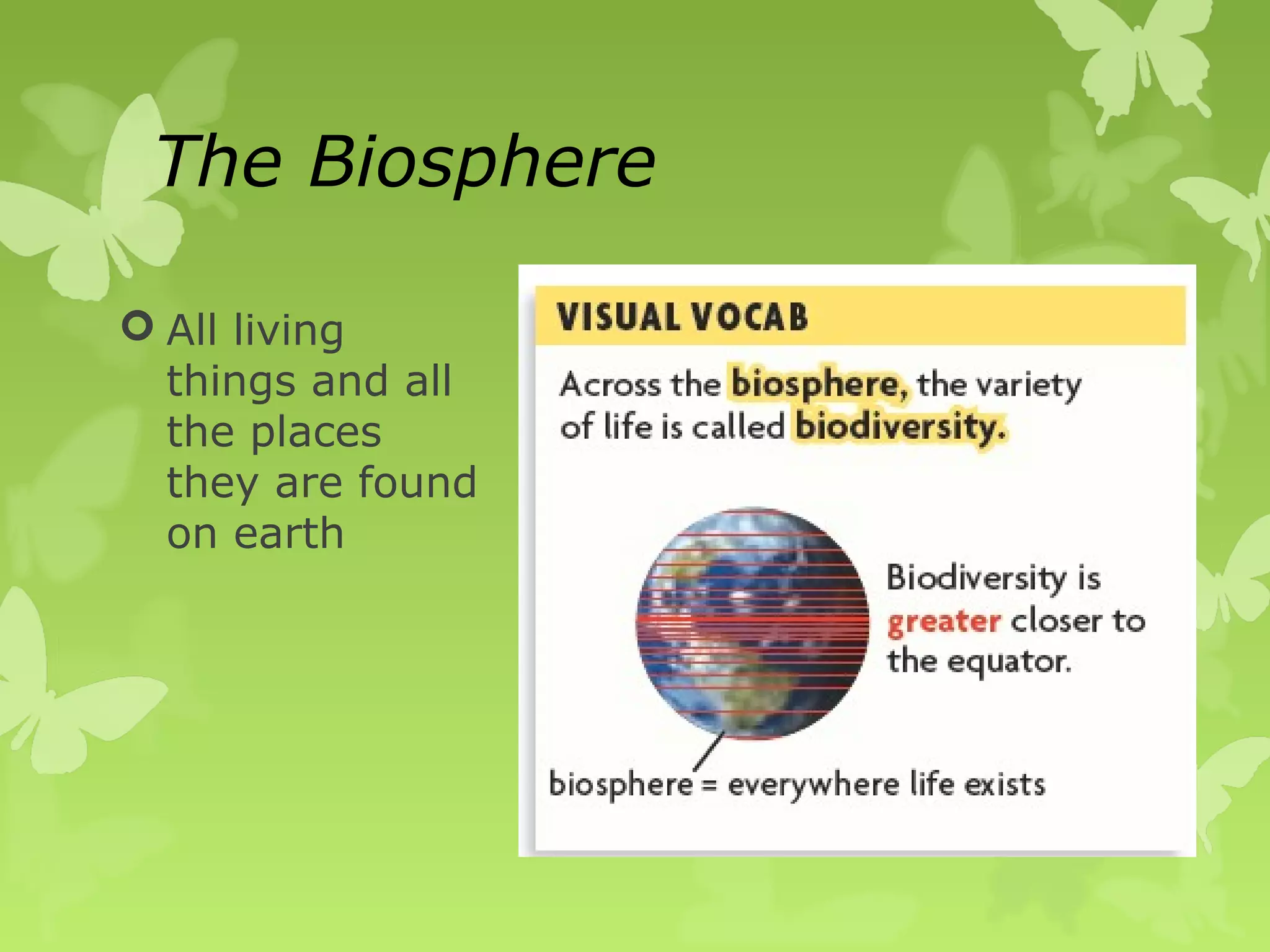
The Biosphere

ļ‚› All living
  things and all
  the places
  they are found
  on earth
Biodiversity

ļ‚› The variety of life


ļ‚› Why is biodiversity greater closer to the
  equator?
   ļ‚› More living things are able to survive in
     consistently warm temperatures than in areas
     that have changes in temperature
Species

ļ‚› A particular type of living things that can
  reproduce by interbreeding among
  themselves
   ļ‚› About 2 million species have been identified,
     but biologists estimate that over 10 million
     remain to be discovered
   ļ‚› Every year about 10,000 new species are
     identified!
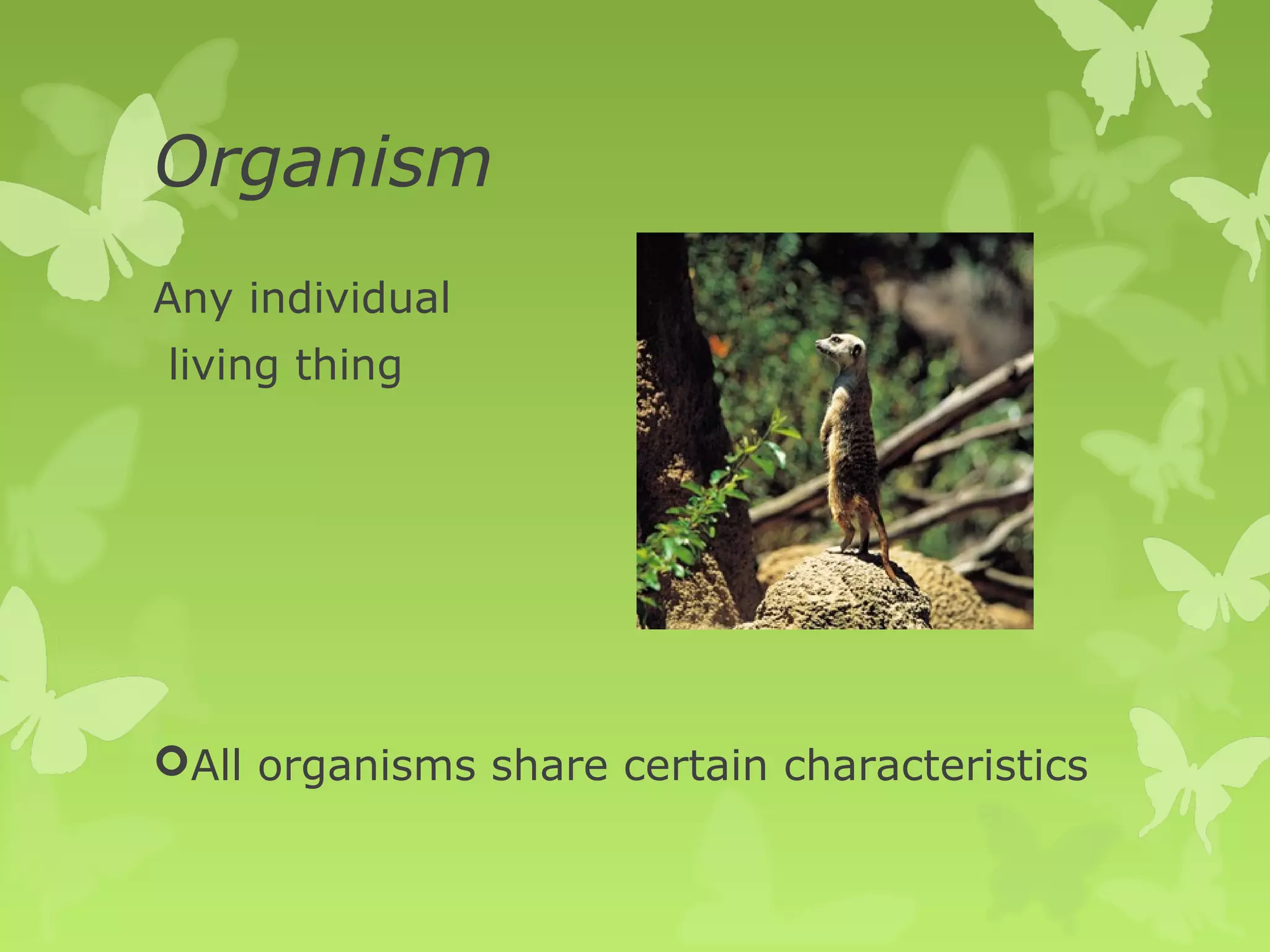
Organism
Any individual
living thing


ļ‚›All organisms share certain characteristics
Characteristics of Life

ļ‚› Cells
ļ‚› Need for energy
ļ‚› Response to environment
ļ‚› Reproduction and development
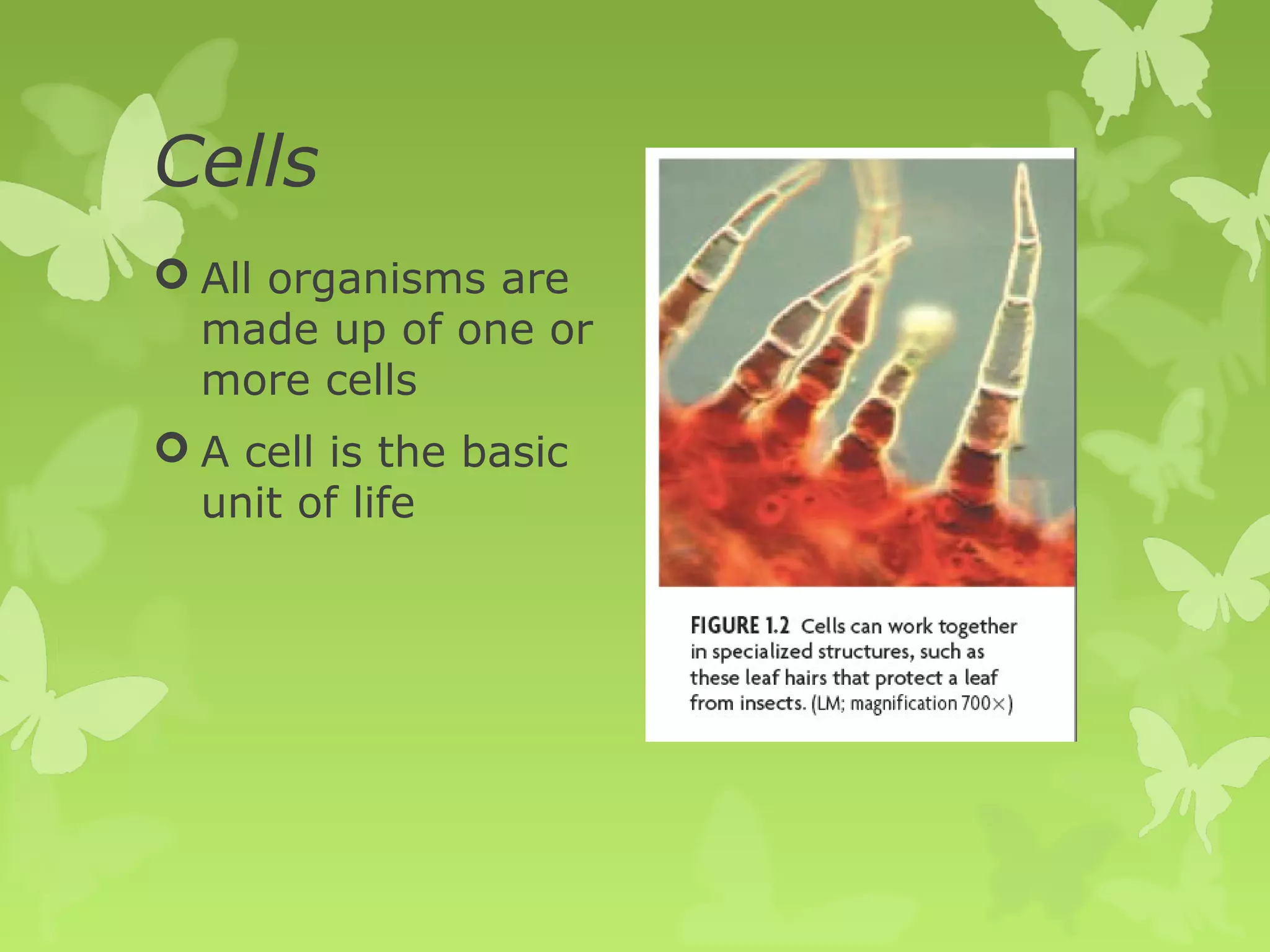
Cells
ļ‚› All organisms are
  made up of one or
  more cells
ļ‚› A cell is the basic
  unit of life
Need for Energy

ļ‚› Energy is the ability to cause a change or
  to do work
ļ‚› The form of energy used by all living
  things is chemical energy
ļ‚› Animals get their energy by eating other
  organisms
ļ‚› Metabolism – the chemical processes that
  build up or break down materials
Response to Environment


ļ‚› Light, temperature, and touch are just a
  few of the physical factors to which
  organisms must respond.
ļ‚› These factors are called stimuli
Reproduction & Development

ļ‚› Members of a species must have the
  ability to produce new individuals.
ļ‚› In all organisms, the genetic material is
  DNA
ļ‚› The process of development allows
  organisms to mature and gain the ability
  to reproduce
Unifying Themes of Biology
All Levels of Life Have
  Systems of Related Parts

ļ‚› A system is an organized group of related
  parts that interact to form a whole


ļ‚› Two organisms that interact can also be a
  system
Structure & Function are
Related in Biology

ļ‚› What something does (function) in an
  organism is directly related to its shape or
  form (structure)
ļ‚› Example: You bite with your sharp front
  teeth and chew with your molars
Organisms Must Maintain
Homeostasis to Survive in
Diverse Environments
ļ‚› While environmental conditions change,
  the conditions inside organisms usually
  stay stable
ļ‚› Homeostasis is usually maintained through
  negative feedback, a change in a system
  causes a response that tends to return
  that system to its original state
Evolution Explains the
Unity and Diversity of Life

ļ‚› Evolution is the change in the genetic
  makeup of a subgroup of a species over
  time
ļ‚› It occurs through natural selection of
  adaptations.
Science is a way of thinking,
questioning, and gathering evidence
There is no single ā€œscientific methodā€
but investigations tend to have
common stages:
 ļ‚› Collecting Observations
 ļ‚› Asking Questions
 ļ‚› Forming Hypotheses and Making Predictions
 ļ‚› Confirming Predictions
 ļ‚› Drawing Conclusions
 ļ‚› Viewing Conclusions in Context
Observation


ļ‚› the act of noting or perceiving objects or
  events using the senses
Forming a Hypothesis


ļ‚› HYPOTHESIS – an educated guess based
  on what is already known
ļ‚› Must be backed up by fact
ļ‚› PREDICTION – expected outcome of a
  test, assuming the hypothesis is correct
EXPERIMENT – a planned
procedure to test a hypothesis
 ļ‚› CONTROL GROUP – a group in an experiment
   that receives no experimental treatment
 ļ‚› EXPERIMENTAL GROUP – a group that receives
   experimental treatment


     Control and experimental groups are identical
                except for one variable!
Variables in an Experiment
INDEPENDENT          DEPENDENT
  VARIABLE – the      VARIABLE – the
  one factor that     variable that is
  is changed in an    measured as a
  experiment          result of the
                      change in the
                      independent
                      variable
Drawing Conclusions

• Once data are collected and analyzed, a
  conclusion is made as to whether the data
  support the hypothesis.
• The hypothesis may be supported or rejected.
• A hypothesis can be supported, but never
  proven because another experiment with new
  data and new information may alter the
  conclusion.
• Many experiments must be performed in order
  for a hypothesis to be proven correct.

Introduction to Biology

  • 1.
  • 2.
    The Study ofLife Biologists study life in all its forms Earth is Home to an Incredible Diversity of Life!
  • 3.
    The Biosphere ļ‚› Allliving things and all the places they are found on earth
  • 4.
    Biodiversity ļ‚› The varietyof life ļ‚› Why is biodiversity greater closer to the equator? ļ‚› More living things are able to survive in consistently warm temperatures than in areas that have changes in temperature
  • 5.
    Species ļ‚› A particulartype of living things that can reproduce by interbreeding among themselves ļ‚› About 2 million species have been identified, but biologists estimate that over 10 million remain to be discovered ļ‚› Every year about 10,000 new species are identified!
  • 6.
    Organism Any individual living thing ļ‚›Allorganisms share certain characteristics
  • 7.
    Characteristics of Life ļ‚›Cells ļ‚› Need for energy ļ‚› Response to environment ļ‚› Reproduction and development
  • 8.
    Cells ļ‚› All organismsare made up of one or more cells ļ‚› A cell is the basic unit of life
  • 9.
    Need for Energy ļ‚›Energy is the ability to cause a change or to do work ļ‚› The form of energy used by all living things is chemical energy ļ‚› Animals get their energy by eating other organisms ļ‚› Metabolism – the chemical processes that build up or break down materials
  • 10.
    Response to Environment ļ‚›Light, temperature, and touch are just a few of the physical factors to which organisms must respond. ļ‚› These factors are called stimuli
  • 11.
    Reproduction & Development ļ‚›Members of a species must have the ability to produce new individuals. ļ‚› In all organisms, the genetic material is DNA ļ‚› The process of development allows organisms to mature and gain the ability to reproduce
  • 12.
  • 13.
    All Levels ofLife Have Systems of Related Parts ļ‚› A system is an organized group of related parts that interact to form a whole ļ‚› Two organisms that interact can also be a system
  • 14.
    Structure & Functionare Related in Biology ļ‚› What something does (function) in an organism is directly related to its shape or form (structure) ļ‚› Example: You bite with your sharp front teeth and chew with your molars
  • 15.
    Organisms Must Maintain Homeostasisto Survive in Diverse Environments ļ‚› While environmental conditions change, the conditions inside organisms usually stay stable ļ‚› Homeostasis is usually maintained through negative feedback, a change in a system causes a response that tends to return that system to its original state
  • 16.
    Evolution Explains the Unityand Diversity of Life ļ‚› Evolution is the change in the genetic makeup of a subgroup of a species over time ļ‚› It occurs through natural selection of adaptations.
  • 17.
    Science is away of thinking, questioning, and gathering evidence
  • 18.
    There is nosingle ā€œscientific methodā€ but investigations tend to have common stages: ļ‚› Collecting Observations ļ‚› Asking Questions ļ‚› Forming Hypotheses and Making Predictions ļ‚› Confirming Predictions ļ‚› Drawing Conclusions ļ‚› Viewing Conclusions in Context
  • 19.
    Observation ļ‚› the actof noting or perceiving objects or events using the senses
  • 20.
    Forming a Hypothesis ļ‚›HYPOTHESIS – an educated guess based on what is already known ļ‚› Must be backed up by fact ļ‚› PREDICTION – expected outcome of a test, assuming the hypothesis is correct
  • 21.
    EXPERIMENT – aplanned procedure to test a hypothesis ļ‚› CONTROL GROUP – a group in an experiment that receives no experimental treatment ļ‚› EXPERIMENTAL GROUP – a group that receives experimental treatment Control and experimental groups are identical except for one variable!
  • 22.
    Variables in anExperiment INDEPENDENT DEPENDENT VARIABLE – the VARIABLE – the one factor that variable that is is changed in an measured as a experiment result of the change in the independent variable
  • 23.
    Drawing Conclusions • Oncedata are collected and analyzed, a conclusion is made as to whether the data support the hypothesis. • The hypothesis may be supported or rejected. • A hypothesis can be supported, but never proven because another experiment with new data and new information may alter the conclusion. • Many experiments must be performed in order for a hypothesis to be proven correct.