Energy Efficiency Indicators
   In the southern and Eastern
     Mediterranean countries
            Cairo, November 29, 2012
                   ------------

  Indicators: A vital approach for
monitoring energy and climate policy

                  Amel BIDA
  Regional Center for Renewable Energy and Energy
                      Efficiency
Content

 Introduction

 EE indicators project
         Objectives
         Approach
         Outcomes
         Major energy challenges

 Conclusion
Introduction

International oil market and price rises will raise major challenges in terms of
          competitiveness,
          pressure on public finances
          vulnerability of the most deprived communities.

Tensions in the international energy markets threaten
        the security of supply
        countries’ capacity to meet their basic energy needs

Global warming is to be stabilised at +2°C by 2100,
        a strong commitment is required from developing countries to
        reduce greenhouse gas emissions, alongside the efforts that
must    be made by developed countries.


                        ambitious medium- and long-term energy efficiency
                        and renewable energy development targets
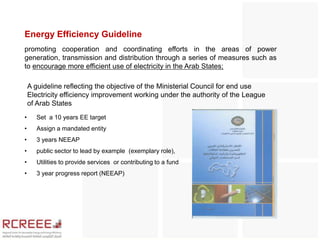
Energy Efficiency Guideline
promoting cooperation and coordinating efforts in the areas of power
generation, transmission and distribution through a series of measures such as
to encourage more efficient use of electricity in the Arab States;

    A guideline reflecting the objective of the Ministerial Council for end use
    Electricity efficiency improvement working under the authority of the League
    of Arab States
•     Set a 10 years EE target
•     Assign a mandated entity
•     3 years NEEAP
•     public sector to lead by example (exemplary role),
•     Utilities to provide services or contributing to a fund
•     3 year progress report (NEEAP)
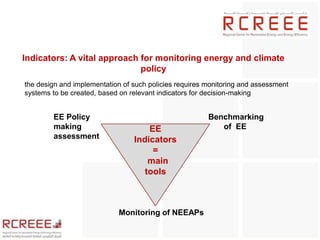
Indicators: A vital approach for monitoring energy and climate
                             policy
the design and implementation of such policies requires monitoring and assessment
systems to be created, based on relevant indicators for decision-making


        EE Policy                                       Benchmarking
        making                       EE                    of EE
        assessment               Indicators
                                      =
                                     main
                                    tools


                            Monitoring of NEEAPs
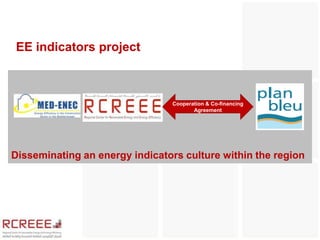
EE indicators project


                                Cooperation & Co-financing
                                       Agreement


Disseminating an energy indicators culture within the region
Objectives

•Capacity building among the relevant public- and private-
sector stakeholders for the calculation and the analysis of EE
indicators,

•Promoting the sharing of experience between countries in
the region, in order to develop a first set of indicators,

•Creating a network of regional experts to design, calculate
and analyse EE indicators, with the aim of assessing EE policies
in the region.
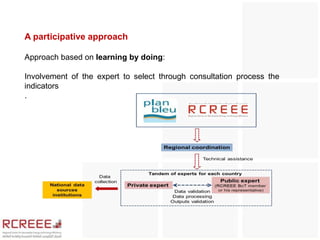
A participative approach

Approach based on learning by doing:

Involvement of the expert to select through consultation process the
indicators
.
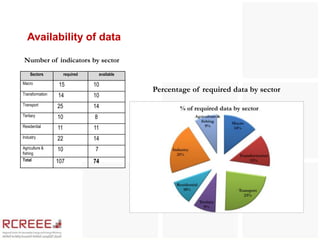
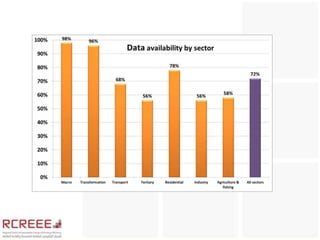
Availability of data

Number of indicators by sector
    Sectors           required       available

Macro            15              10
Transformation
                                                 Percentage of required data by sector
                 14              10
Transport        25              14
Tertiary         10              8
Residential      11              11
Industry         22              14
Agriculture &    10              7
fishing
Total            107             74
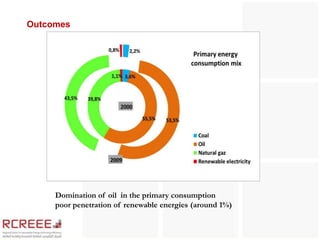
Outcomes


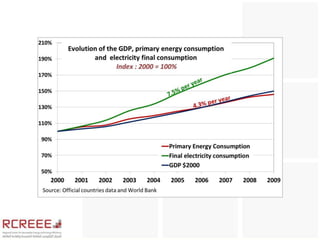
     Domination of oil in the primary consumption
     poor penetration of renewable energies (around 1%)
Major energy challenges highlighted by the project


Analysis of the indicators developed as part of the project leads to the following remarks:


Trend towards energy dependence,


Significant potential for improving energy efficiency in the region,
         PEI in the region: (0.460 toe/1000 $ 2000)
         OECD countries: (0.174 toe / 1000 $ 2000),


Fuel subsidies amounts to around as 12% of GDP (socio-economic vulnerability to
variations in international energy prices for most countries in the region).
Conclusion


Learning process is the first step of a longer path that should
be continued in the region
   • Disseminating a culture of indicators among the
     institutons in the region

   • Raising awareness of policy-makers about the
     importance of EE indicators

   • Creating a network of regional experts to develop EE
     indicators and analyse EE policies
Thanks for your attention

Amel BIDA
Regional Centre for Renewable Energy and Energy Efficiency (“RCREEE”)
Hydro Power Plants Execution Authority Ministry of Electricity and Energy
Block 11 - Piece 15, Melsa District - Ardh El Golf Nasr City - Cairo, Egypt
Tel: +20 2 24154691
Fax: +20 2 24154661

E-mail: amel.bida@rcreee.org
        amelbida@yahoo.fr

Website: www.rcreee.org

Introduction of the project

  • 1.
    Energy Efficiency Indicators In the southern and Eastern Mediterranean countries Cairo, November 29, 2012 ------------ Indicators: A vital approach for monitoring energy and climate policy Amel BIDA Regional Center for Renewable Energy and Energy Efficiency
  • 2.
    Content Introduction EEindicators project Objectives Approach Outcomes Major energy challenges Conclusion
  • 3.
    Introduction International oil marketand price rises will raise major challenges in terms of competitiveness, pressure on public finances vulnerability of the most deprived communities. Tensions in the international energy markets threaten the security of supply countries’ capacity to meet their basic energy needs Global warming is to be stabilised at +2°C by 2100, a strong commitment is required from developing countries to reduce greenhouse gas emissions, alongside the efforts that must be made by developed countries. ambitious medium- and long-term energy efficiency and renewable energy development targets
  • 4.
    Energy Efficiency Guideline promotingcooperation and coordinating efforts in the areas of power generation, transmission and distribution through a series of measures such as to encourage more efficient use of electricity in the Arab States; A guideline reflecting the objective of the Ministerial Council for end use Electricity efficiency improvement working under the authority of the League of Arab States • Set a 10 years EE target • Assign a mandated entity • 3 years NEEAP • public sector to lead by example (exemplary role), • Utilities to provide services or contributing to a fund • 3 year progress report (NEEAP)
  • 5.
    Indicators: A vitalapproach for monitoring energy and climate policy the design and implementation of such policies requires monitoring and assessment systems to be created, based on relevant indicators for decision-making EE Policy Benchmarking making EE of EE assessment Indicators = main tools Monitoring of NEEAPs
  • 6.
    EE indicators project Cooperation & Co-financing Agreement Disseminating an energy indicators culture within the region
  • 7.
    Objectives •Capacity building amongthe relevant public- and private- sector stakeholders for the calculation and the analysis of EE indicators, •Promoting the sharing of experience between countries in the region, in order to develop a first set of indicators, •Creating a network of regional experts to design, calculate and analyse EE indicators, with the aim of assessing EE policies in the region.
  • 8.
    A participative approach Approachbased on learning by doing: Involvement of the expert to select through consultation process the indicators .
  • 9.
    Availability of data Numberof indicators by sector Sectors required available Macro 15 10 Transformation Percentage of required data by sector 14 10 Transport 25 14 Tertiary 10 8 Residential 11 11 Industry 22 14 Agriculture & 10 7 fishing Total 107 74
  • 11.
    Outcomes Domination of oil in the primary consumption poor penetration of renewable energies (around 1%)
  • 13.
    Major energy challengeshighlighted by the project Analysis of the indicators developed as part of the project leads to the following remarks: Trend towards energy dependence, Significant potential for improving energy efficiency in the region, PEI in the region: (0.460 toe/1000 $ 2000) OECD countries: (0.174 toe / 1000 $ 2000), Fuel subsidies amounts to around as 12% of GDP (socio-economic vulnerability to variations in international energy prices for most countries in the region).
  • 14.
    Conclusion Learning process isthe first step of a longer path that should be continued in the region • Disseminating a culture of indicators among the institutons in the region • Raising awareness of policy-makers about the importance of EE indicators • Creating a network of regional experts to develop EE indicators and analyse EE policies
  • 15.
    Thanks for yourattention Amel BIDA Regional Centre for Renewable Energy and Energy Efficiency (“RCREEE”) Hydro Power Plants Execution Authority Ministry of Electricity and Energy Block 11 - Piece 15, Melsa District - Ardh El Golf Nasr City - Cairo, Egypt Tel: +20 2 24154691 Fax: +20 2 24154661 E-mail: amel.bida@rcreee.org amelbida@yahoo.fr Website: www.rcreee.org