Electronics
Lecture 1: Introduction
What is Electronics
?
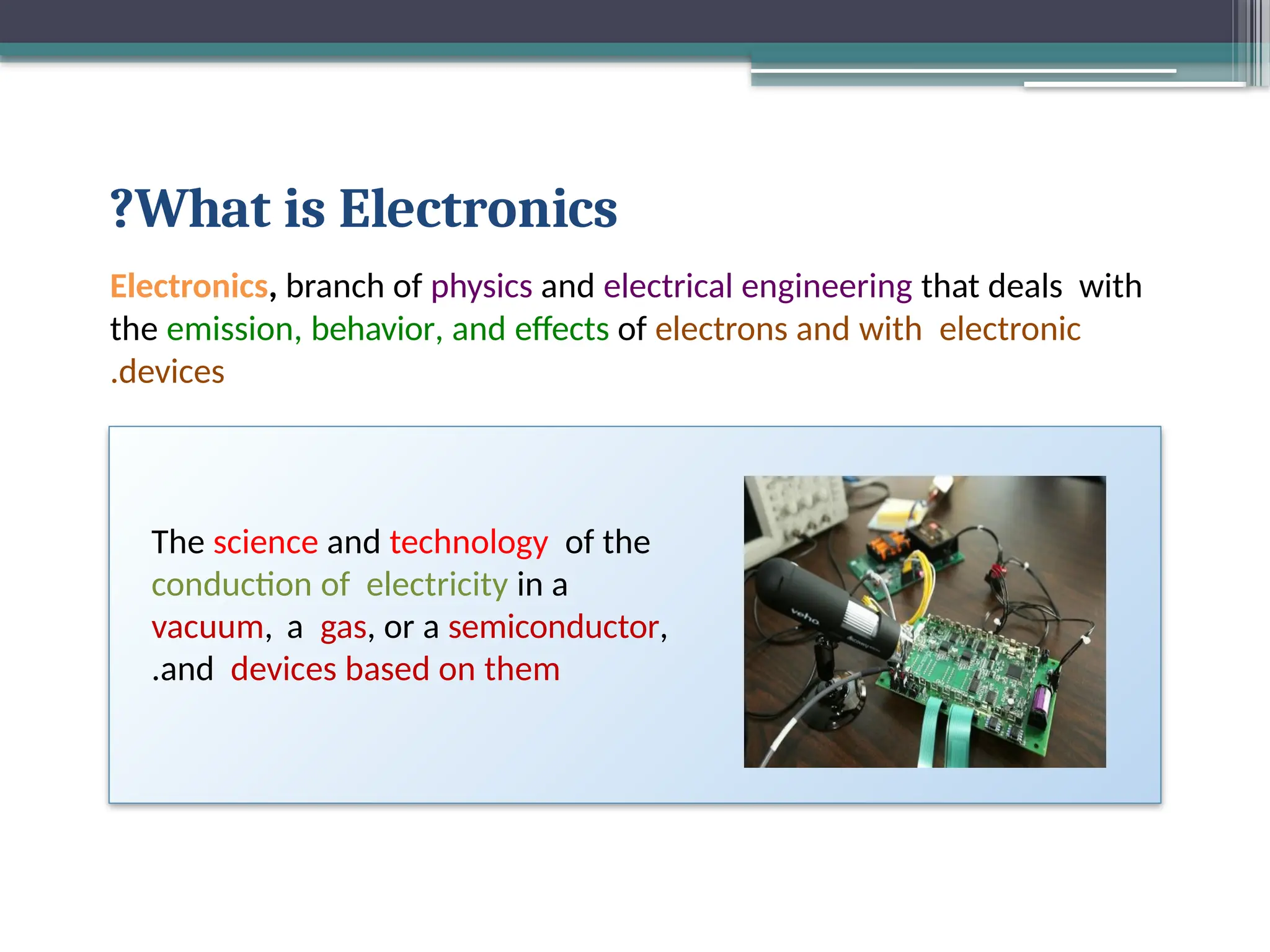
Electronics, branch of physics and electrical engineering that deals with
the emission, behavior, and effects of electrons and with electronic
devices
.
The science and technology of the
conduction of electricity in a
vacuum, a gas, or a semiconductor,
and devices based on them
.
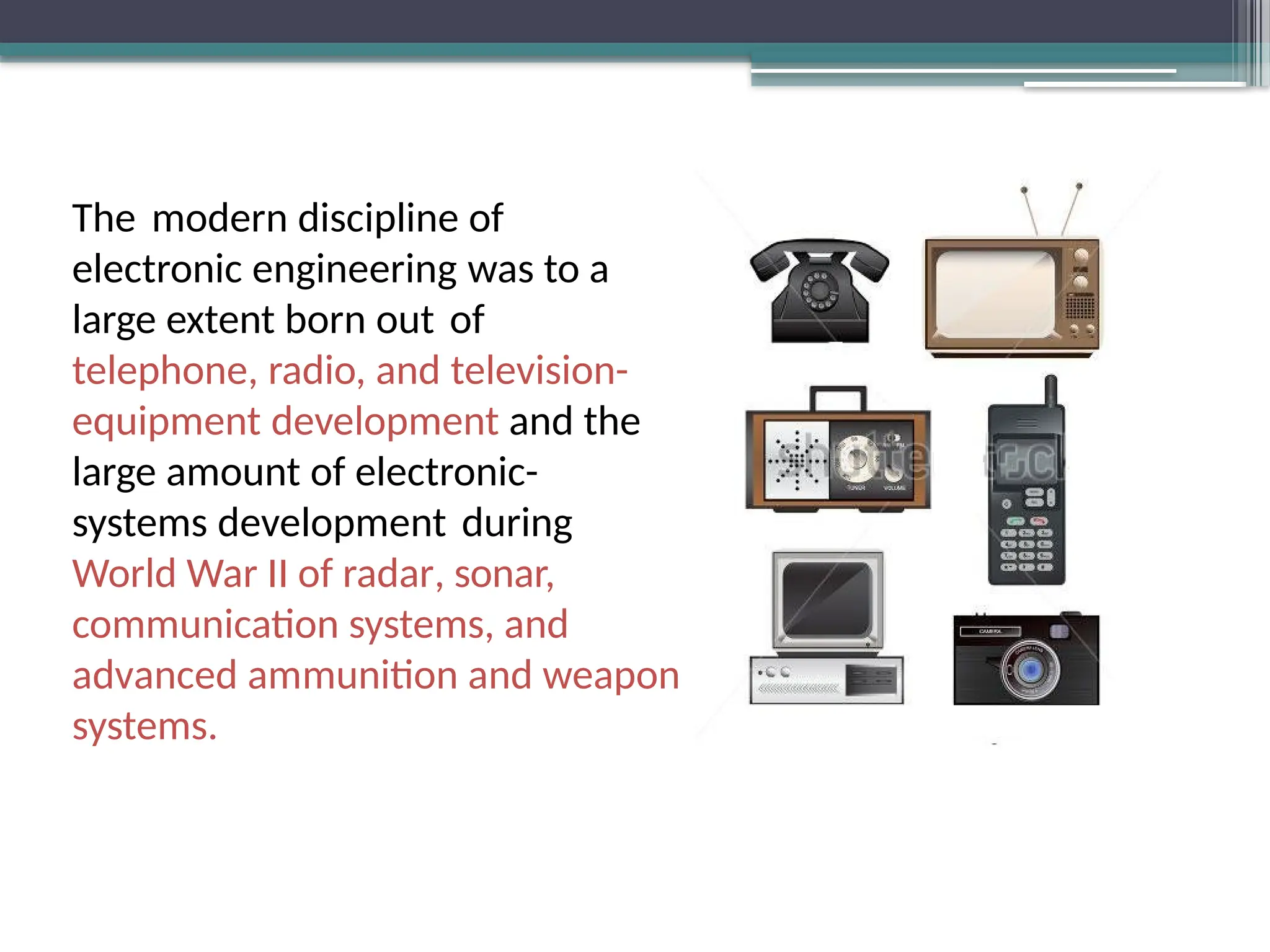
The modern discipline of
electronic engineering was to a
large extent born out of
telephone, radio, and television-
equipment development and the
large amount of electronic-
systems development during
World War II of radar, sonar,
communication systems, and
advanced ammunition and weapon
systems.
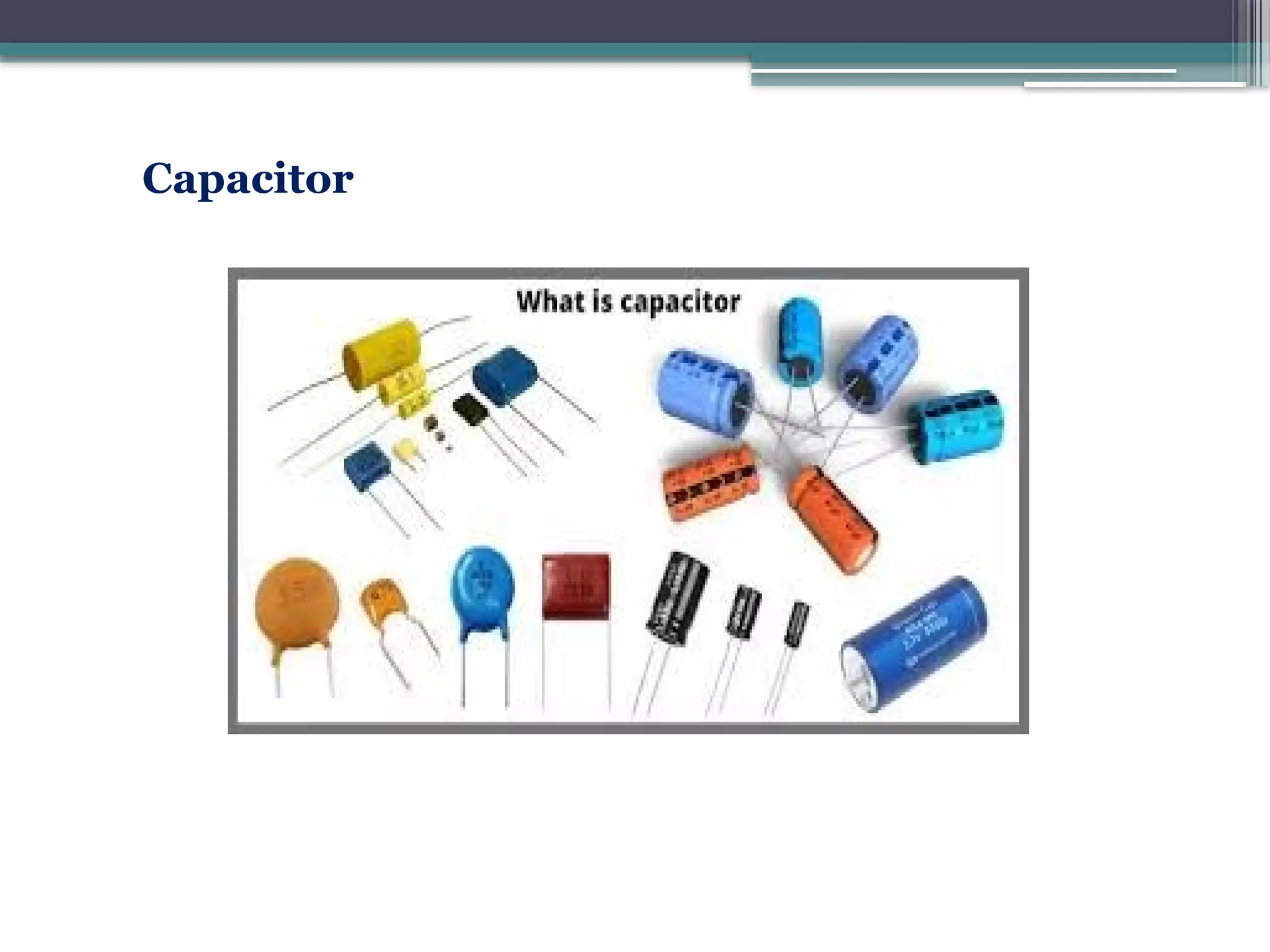
Capacitor
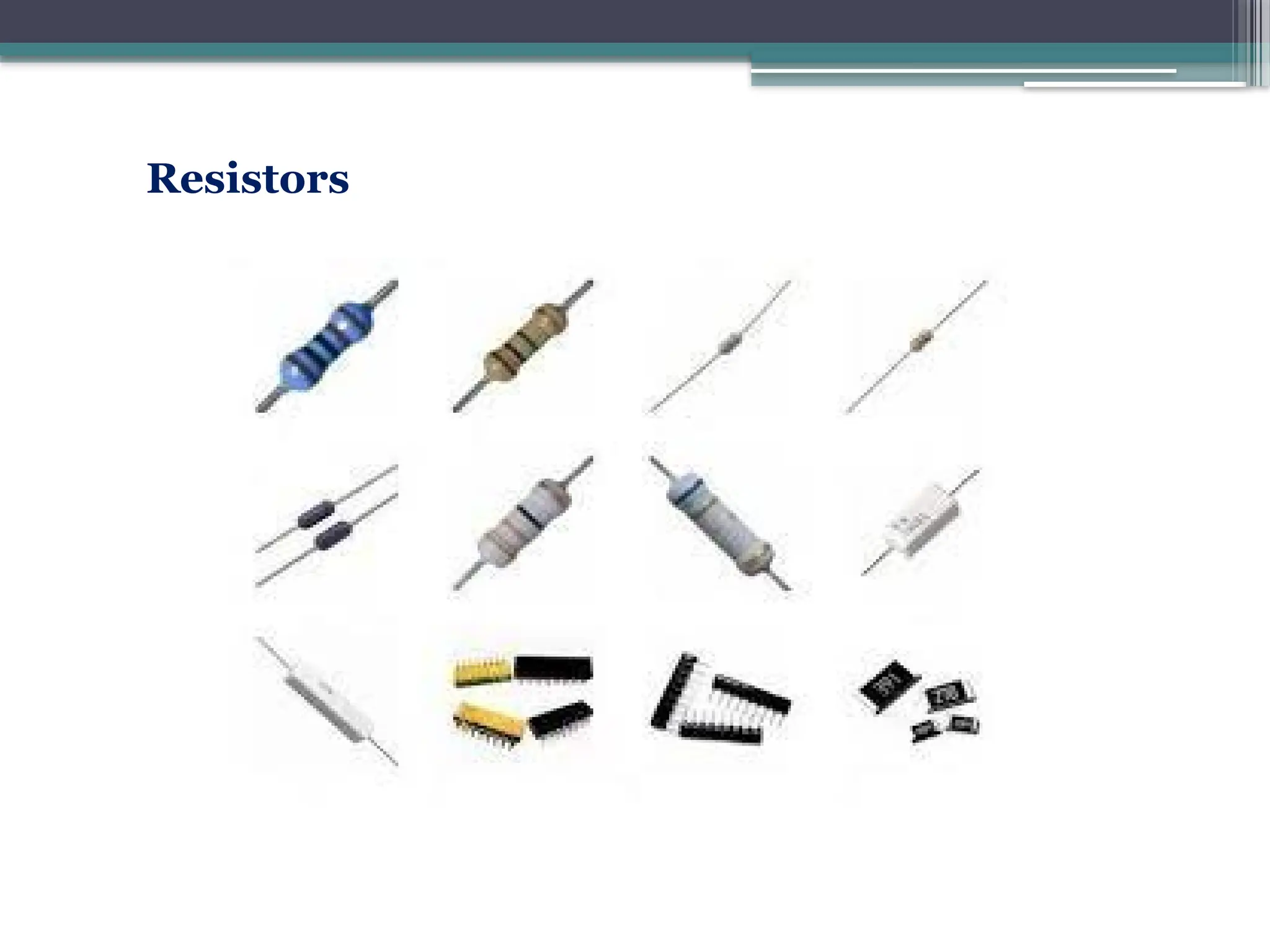
Resistors
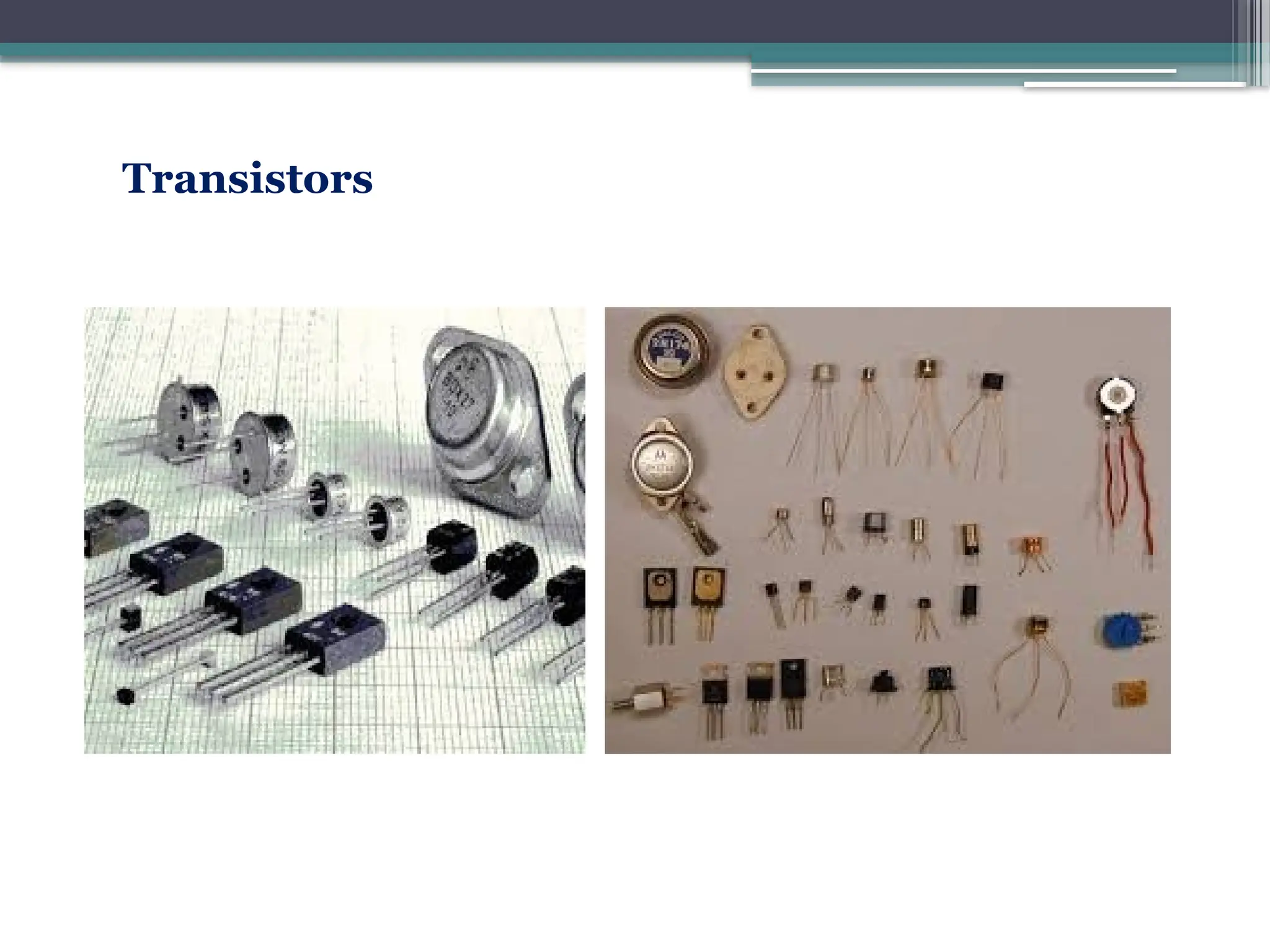
Transistors
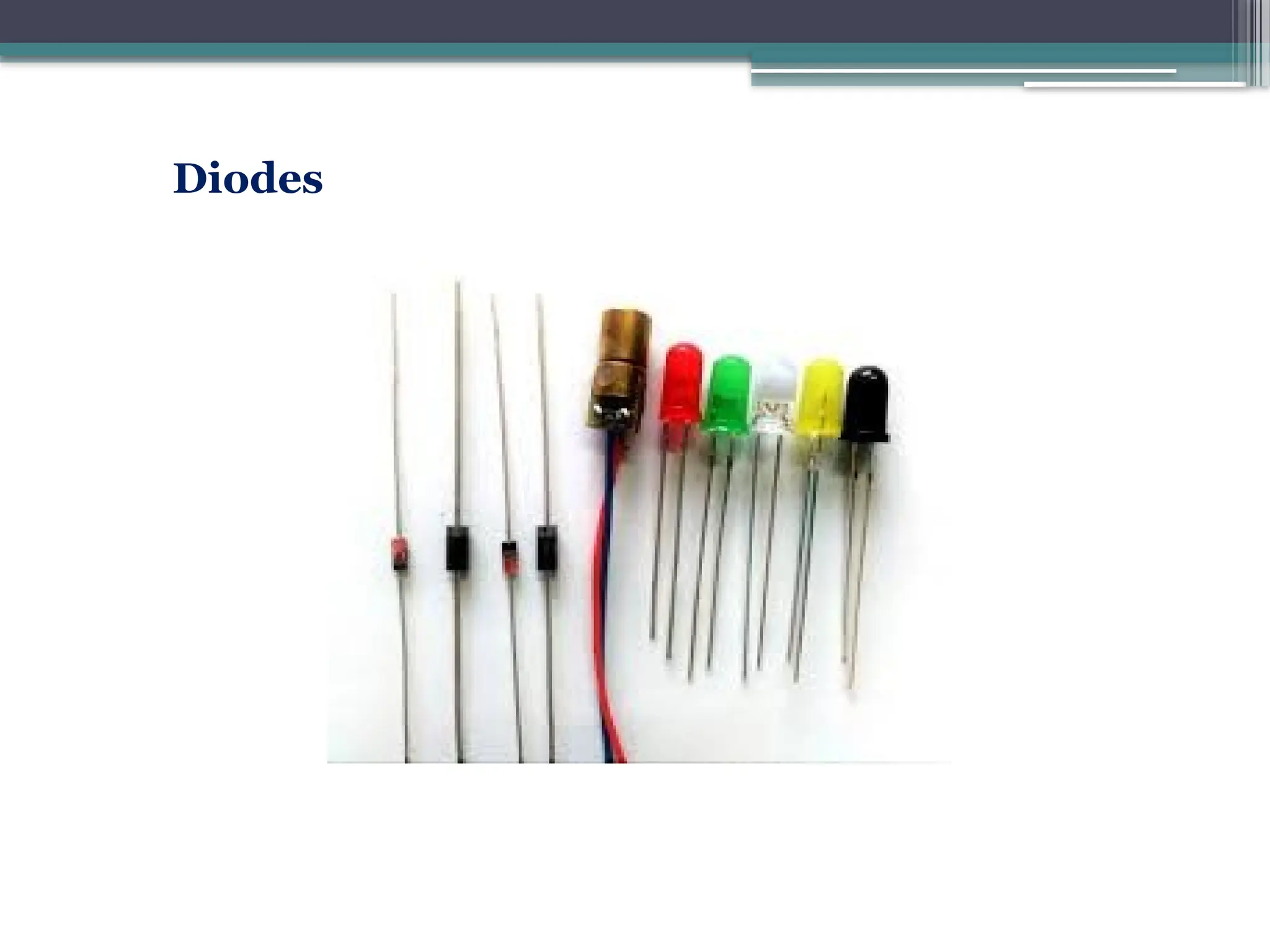
Diodes
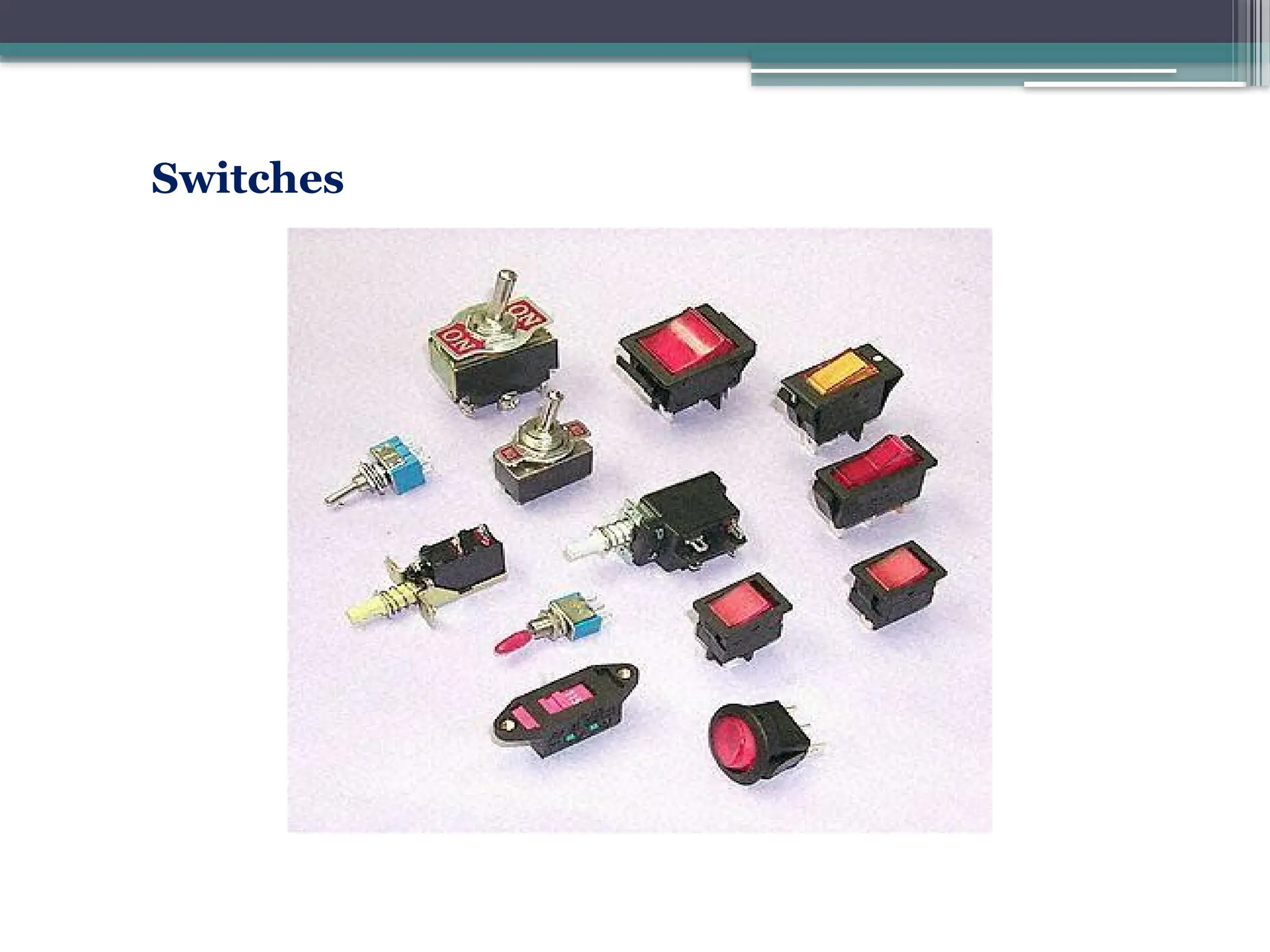
Switches
Power Supply
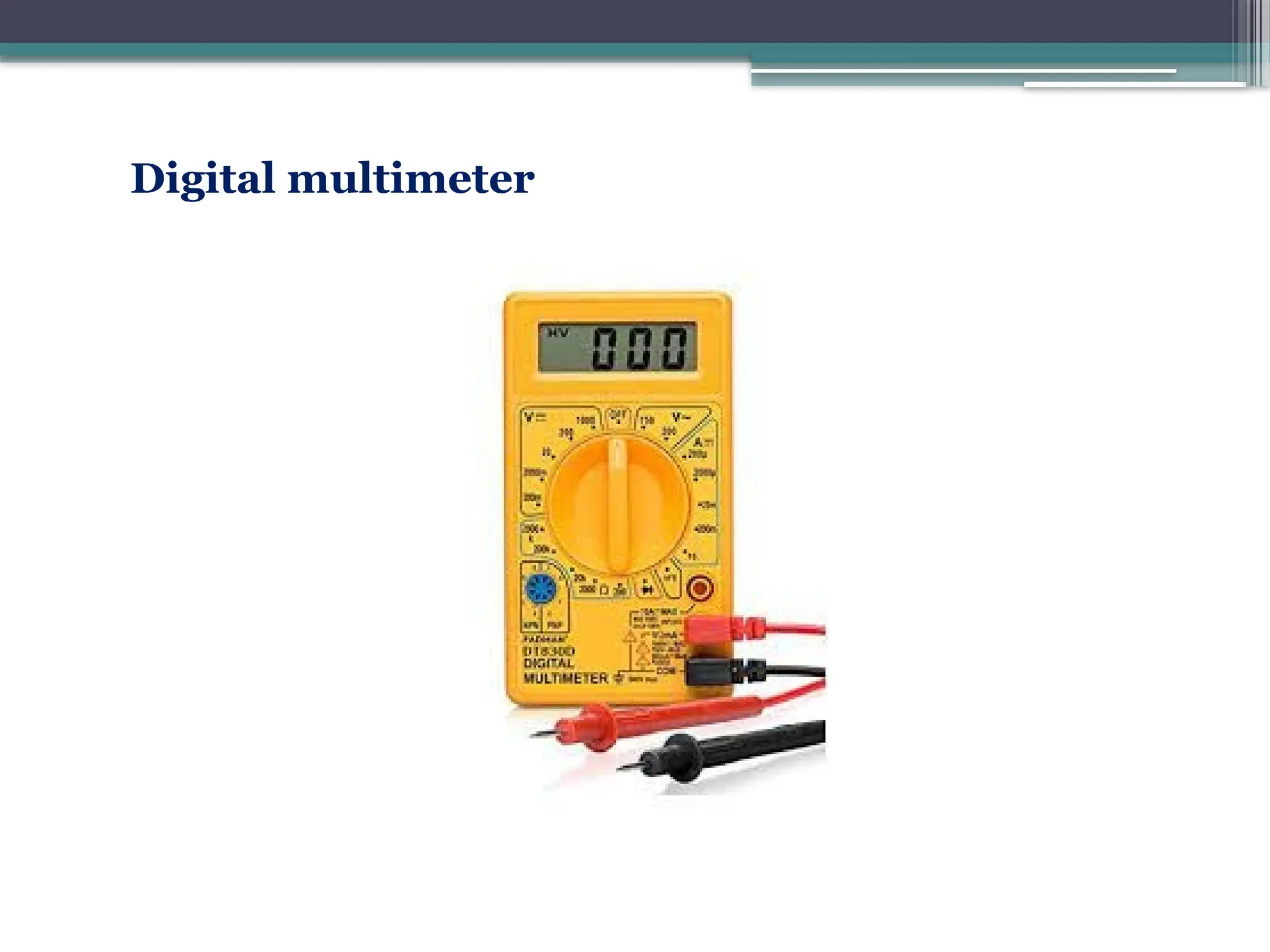
Digital multimeter
History of Electronics
• The history of electronics is a story of the twentieth
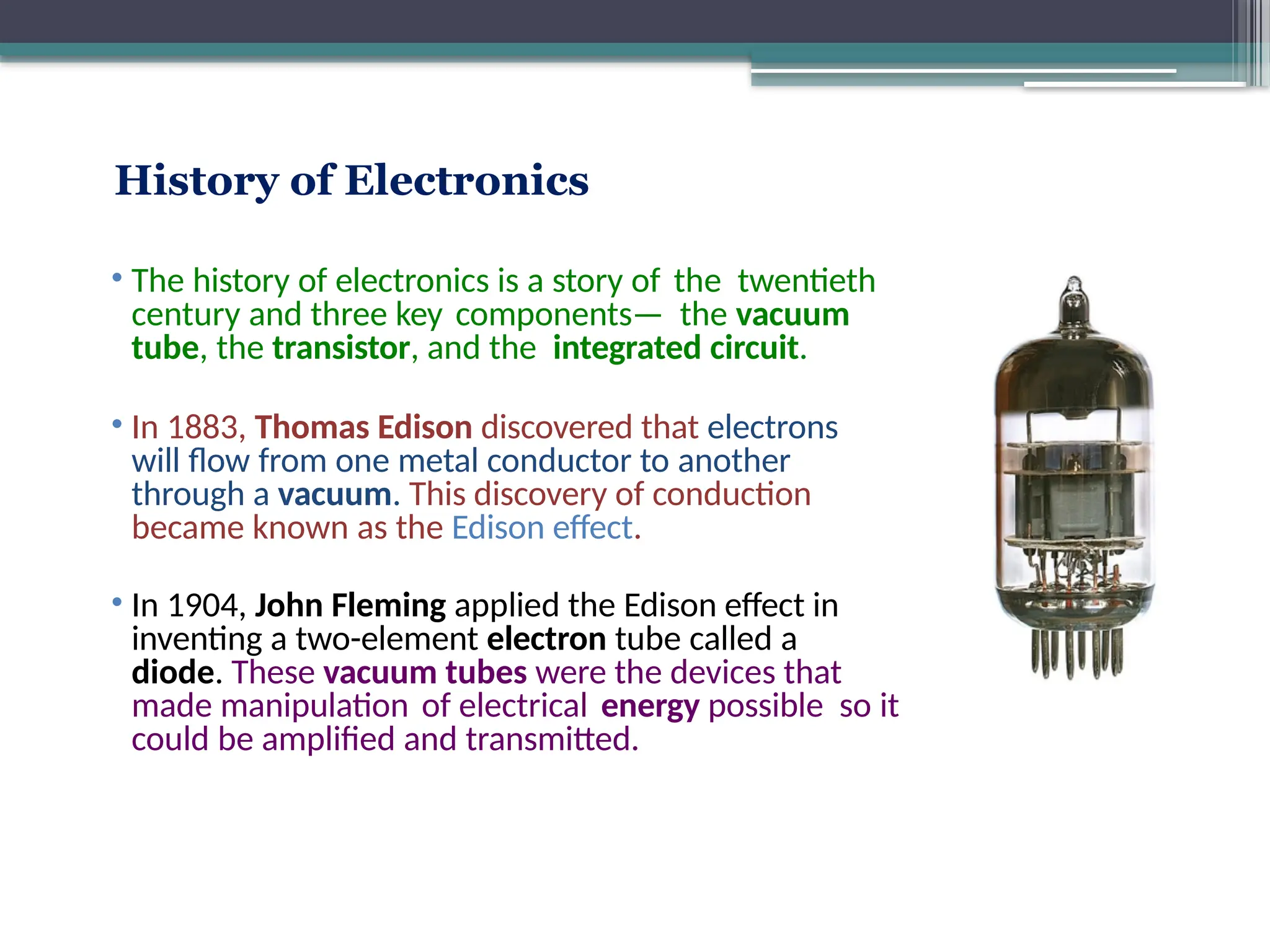
century and three key components— the vacuum
tube, the transistor, and the integrated circuit.
• In 1883, Thomas Edison discovered that electrons
will flow from one metal conductor to another
through a vacuum. This discovery of conduction
became known as the Edison effect.
• In 1904, John Fleming applied the Edison effect in
inventing a two-element electron tube called a
diode. These vacuum tubes were the devices that
made manipulation of electrical energy possible so it
could be amplified and transmitted.
Cont
..
• The first applications of electron tubes were in radio
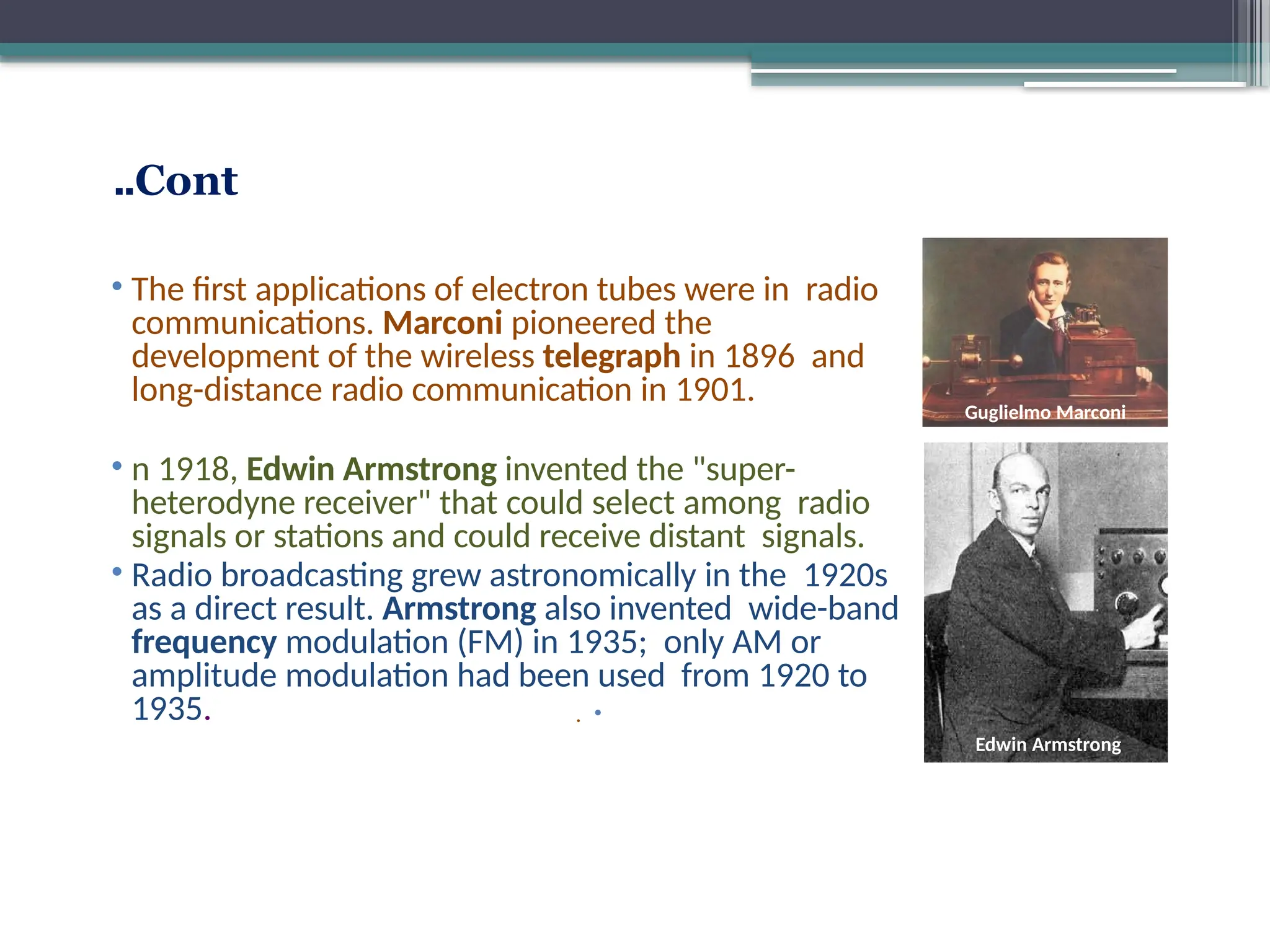
communications. Marconi pioneered the
development of the wireless telegraph in 1896 and
long-distance radio communication in 1901.
• n 1918, Edwin Armstrong invented the "super-
heterodyne receiver" that could select among radio
signals or stations and could receive distant signals.
• Radio broadcasting grew astronomically in the 1920s
as a direct result. Armstrong also invented wide-band
frequency modulation (FM) in 1935; only AM or
amplitude modulation had been used from 1920 to
1935. •
.
Guglielmo Marconi
Edwin Armstrong
Cont
..
•
.
Guglielmo Marconi
Edwin Armstrong
• Communications technology was able to make huge
advances before World War II as more specialized
tubes were made for many applications. Radio as
the primary form of education and entertainment
was soon challenged by television, which was
invented in the 1920s but didn't become widely
available until 1947.
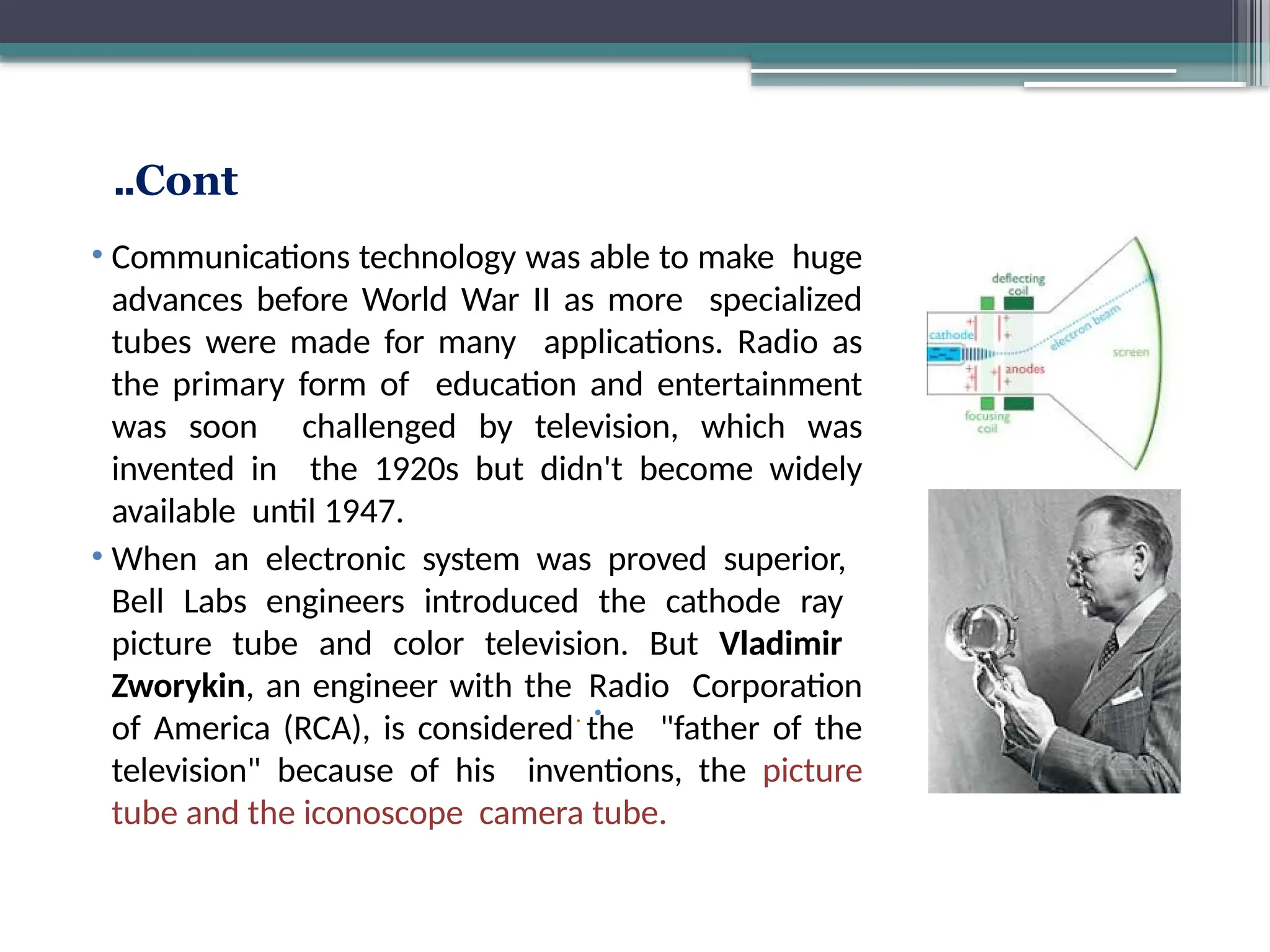
• When an electronic system was proved superior,
Bell Labs engineers introduced the cathode ray
picture tube and color television. But Vladimir
Zworykin, an engineer with the Radio Corporation
of America (RCA), is considered the "father of the
television" because of his inventions, the picture
tube and the iconoscope camera tube.
Cont
..
•
.
Guglielmo Marconi
Edwin Armstrong
• After the war, electron tubes were used to
develop the first computers, but they were
impractical because of the sizes of the
electronic components.
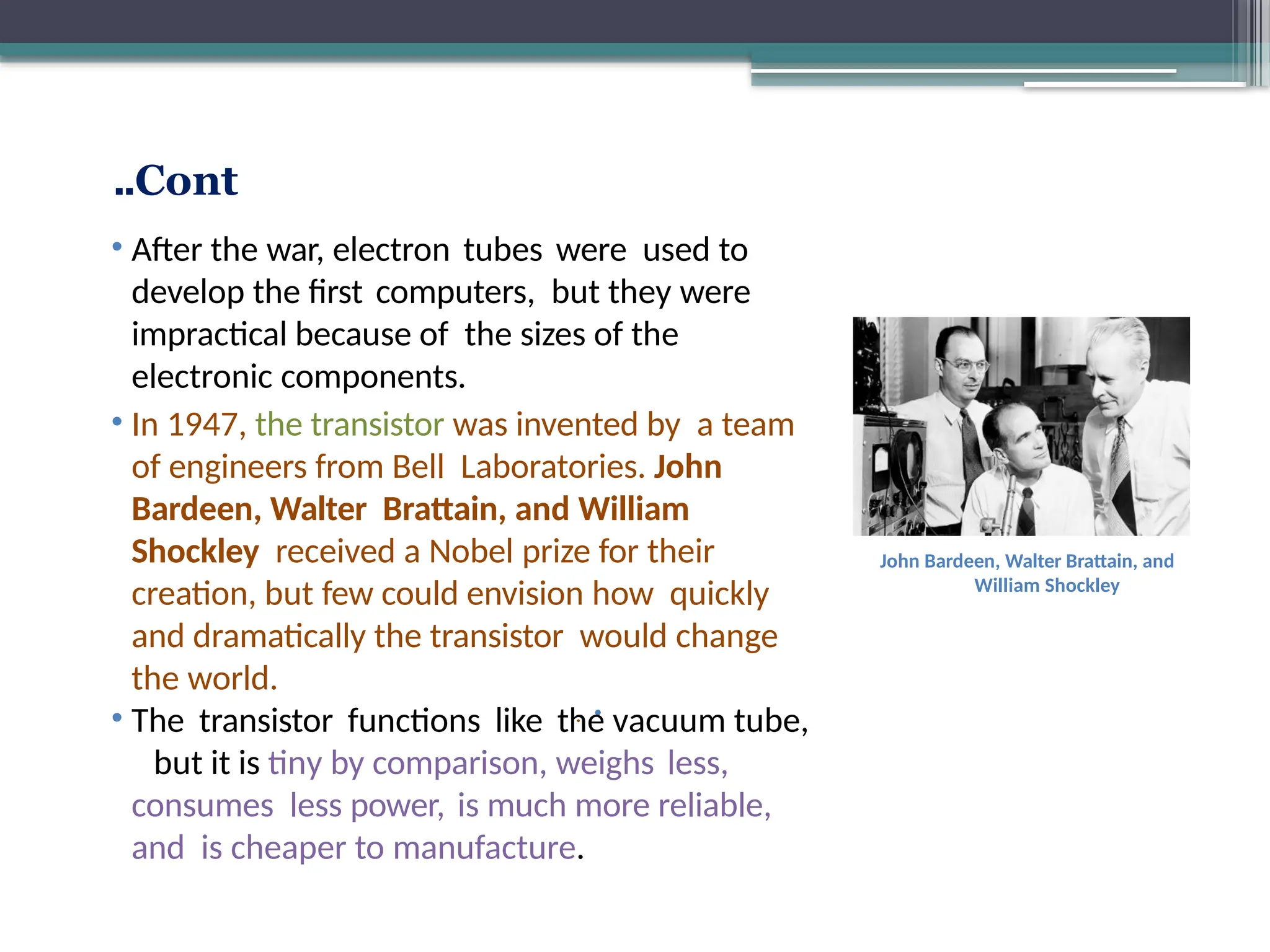
• In 1947, the transistor was invented by a team
of engineers from Bell Laboratories. John
Bardeen, Walter Brattain, and William
Shockley received a Nobel prize for their
creation, but few could envision how quickly
and dramatically the transistor would change
the world.
• The transistor functions like the vacuum tube,
but it is tiny by comparison, weighs less,
consumes less power, is much more reliable,
and is cheaper to manufacture.
John Bardeen, Walter Brattain, and
William Shockley
Cont
..
•
.
Guglielmo Marconi
Edwin Armstrong
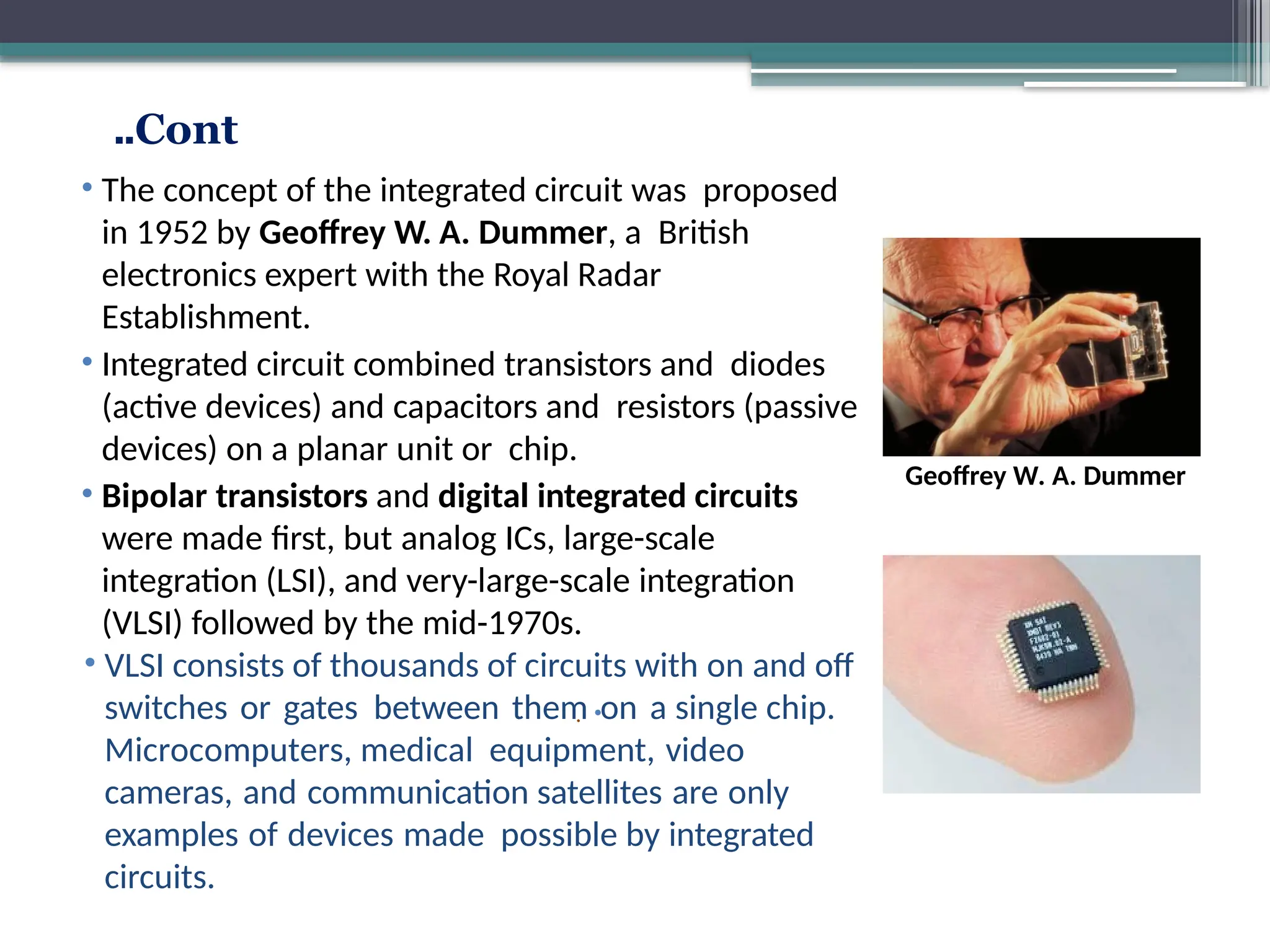
• The concept of the integrated circuit was proposed
in 1952 by Geoffrey W. A. Dummer, a British
electronics expert with the Royal Radar
Establishment.
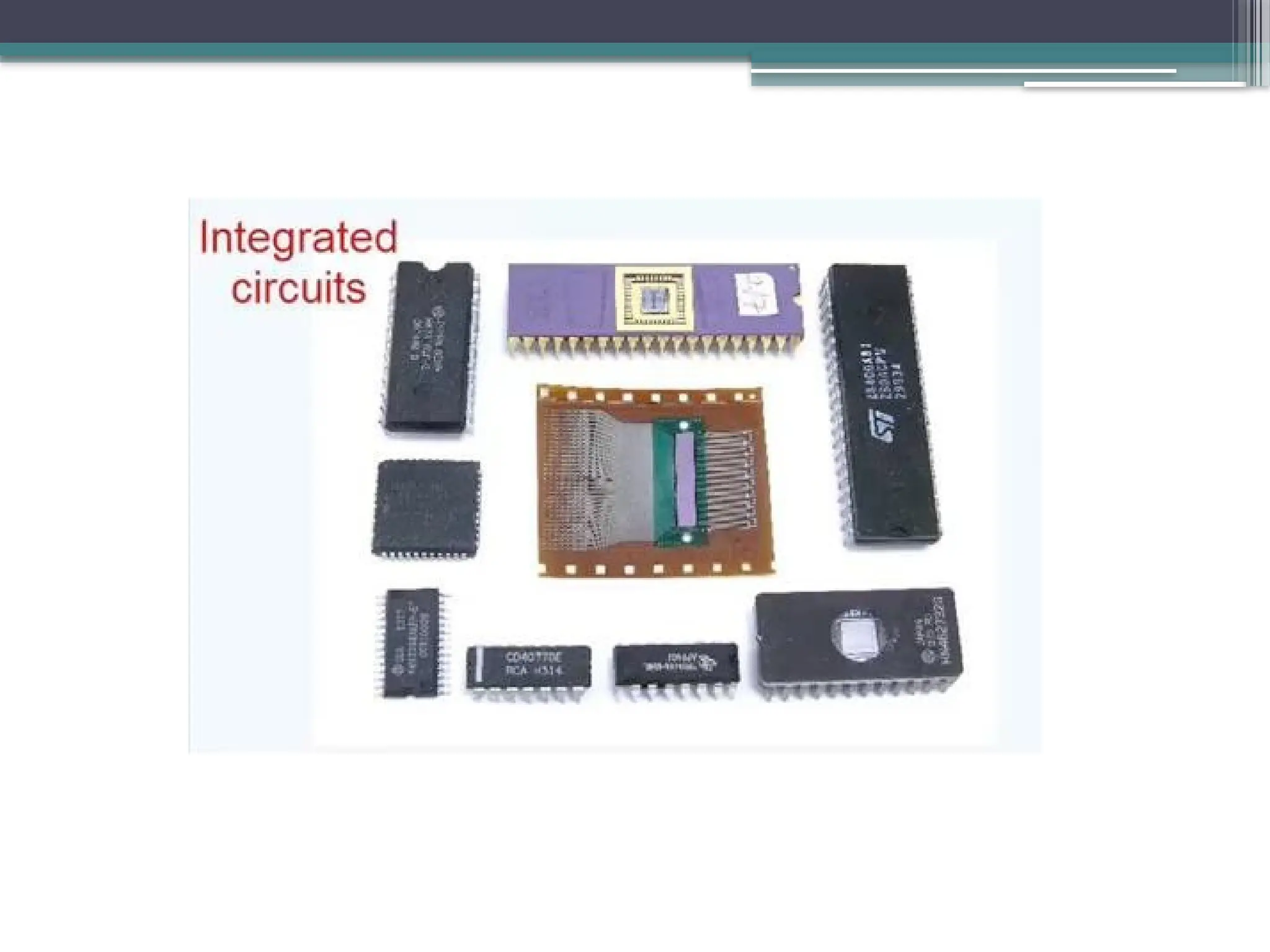
• Integrated circuit combined transistors and diodes
(active devices) and capacitors and resistors (passive
devices) on a planar unit or chip.
• Bipolar transistors and digital integrated circuits
were made first, but analog ICs, large-scale
integration (LSI), and very-large-scale integration
(VLSI) followed by the mid-1970s.
• VLSI consists of thousands of circuits with on and off
switches or gates between them on a single chip.
Microcomputers, medical equipment, video
cameras, and communication satellites are only
examples of devices made possible by integrated
circuits.
Geoffrey W. A. Dummer
Introduction of Electronics Lecture1.pptx

Introduction of Electronics Lecture1.pptx

  • 1.
  • 2.
    What is Electronics ? Electronics,branch of physics and electrical engineering that deals with the emission, behavior, and effects of electrons and with electronic devices . The science and technology of the conduction of electricity in a vacuum, a gas, or a semiconductor, and devices based on them .
  • 3.
    The modern disciplineof electronic engineering was to a large extent born out of telephone, radio, and television- equipment development and the large amount of electronic- systems development during World War II of radar, sonar, communication systems, and advanced ammunition and weapon systems.
  • 4.
  • 5.
  • 6.
  • 8.
  • 9.
  • 10.
  • 11.
  • 12.
    History of Electronics •The history of electronics is a story of the twentieth century and three key components— the vacuum tube, the transistor, and the integrated circuit. • In 1883, Thomas Edison discovered that electrons will flow from one metal conductor to another through a vacuum. This discovery of conduction became known as the Edison effect. • In 1904, John Fleming applied the Edison effect in inventing a two-element electron tube called a diode. These vacuum tubes were the devices that made manipulation of electrical energy possible so it could be amplified and transmitted.
  • 13.
    Cont .. • The firstapplications of electron tubes were in radio communications. Marconi pioneered the development of the wireless telegraph in 1896 and long-distance radio communication in 1901. • n 1918, Edwin Armstrong invented the "super- heterodyne receiver" that could select among radio signals or stations and could receive distant signals. • Radio broadcasting grew astronomically in the 1920s as a direct result. Armstrong also invented wide-band frequency modulation (FM) in 1935; only AM or amplitude modulation had been used from 1920 to 1935. • . Guglielmo Marconi Edwin Armstrong
  • 14.
    Cont .. • . Guglielmo Marconi Edwin Armstrong •Communications technology was able to make huge advances before World War II as more specialized tubes were made for many applications. Radio as the primary form of education and entertainment was soon challenged by television, which was invented in the 1920s but didn't become widely available until 1947. • When an electronic system was proved superior, Bell Labs engineers introduced the cathode ray picture tube and color television. But Vladimir Zworykin, an engineer with the Radio Corporation of America (RCA), is considered the "father of the television" because of his inventions, the picture tube and the iconoscope camera tube.
  • 15.
    Cont .. • . Guglielmo Marconi Edwin Armstrong •After the war, electron tubes were used to develop the first computers, but they were impractical because of the sizes of the electronic components. • In 1947, the transistor was invented by a team of engineers from Bell Laboratories. John Bardeen, Walter Brattain, and William Shockley received a Nobel prize for their creation, but few could envision how quickly and dramatically the transistor would change the world. • The transistor functions like the vacuum tube, but it is tiny by comparison, weighs less, consumes less power, is much more reliable, and is cheaper to manufacture. John Bardeen, Walter Brattain, and William Shockley
  • 16.
    Cont .. • . Guglielmo Marconi Edwin Armstrong •The concept of the integrated circuit was proposed in 1952 by Geoffrey W. A. Dummer, a British electronics expert with the Royal Radar Establishment. • Integrated circuit combined transistors and diodes (active devices) and capacitors and resistors (passive devices) on a planar unit or chip. • Bipolar transistors and digital integrated circuits were made first, but analog ICs, large-scale integration (LSI), and very-large-scale integration (VLSI) followed by the mid-1970s. • VLSI consists of thousands of circuits with on and off switches or gates between them on a single chip. Microcomputers, medical equipment, video cameras, and communication satellites are only examples of devices made possible by integrated circuits. Geoffrey W. A. Dummer