1933-1945
What was the Holocaust?
   The Holocaust refers to a specific
    genocidal event in twentieth-century
    history: the state sponsored, systematic
    persecution and annihilation of
    European Jewry by Nazi German and its
    collaborators between 1933 and 1945.
What does Holocaust
Mean?
 “Holocaust" is a word of Greek origin
  meaning "sacrifice by fire."
 The Nazis, who came to power in
  Germany in January 1933, believed that
  Germans were "racially superior" and
  that the Jews, deemed "inferior," were
  an alien threat to the so-called German
  racial community.
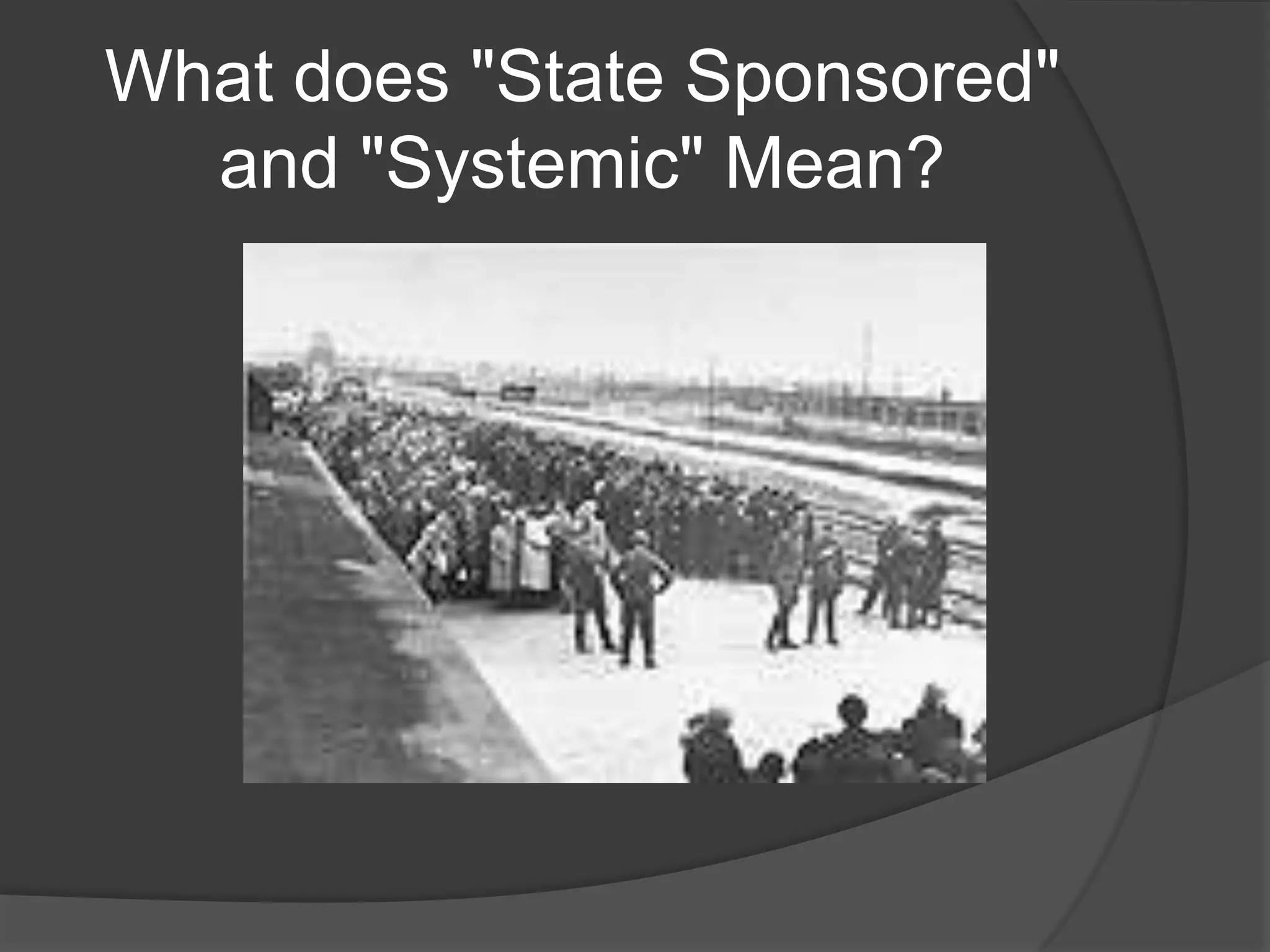
What does "State Sponsored"
  and "Systemic" Mean?
State Sponsored and Systemic
Mean…
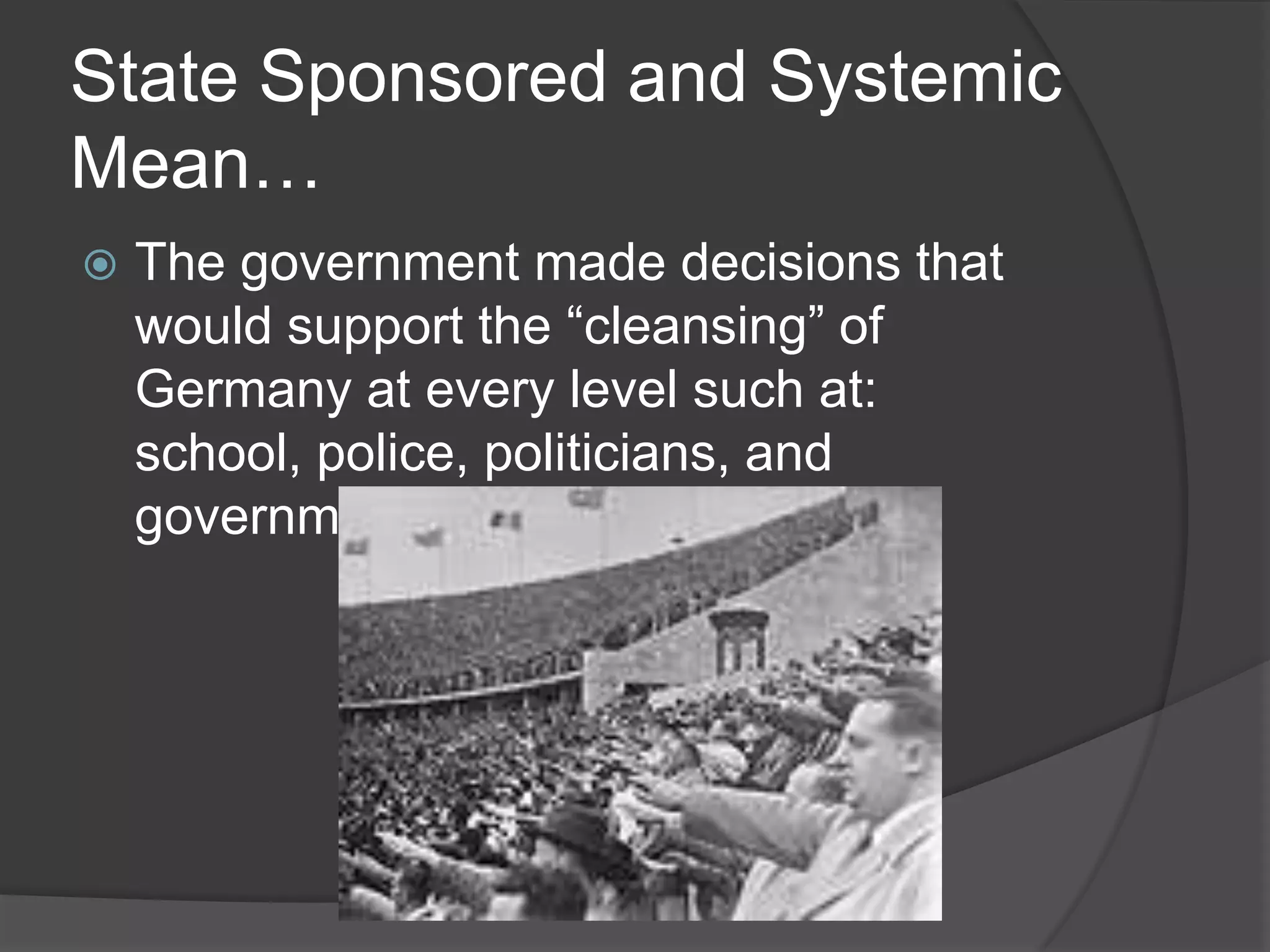
   The government made decisions that
    would support the “cleansing” of
    Germany at every level such at:
    school, police, politicians, and
    government officials.
The Introduction of Hitler to
           Government
   Following the appointment of Adolf Hitler
    as chancellor on January 30, 1933, the
    Nazi state (also referred to as the Third
    Reich) quickly became a regime in
    which Germans enjoyed no guaranteed
    basic rights. This applied TO ALL
    GERMANS!
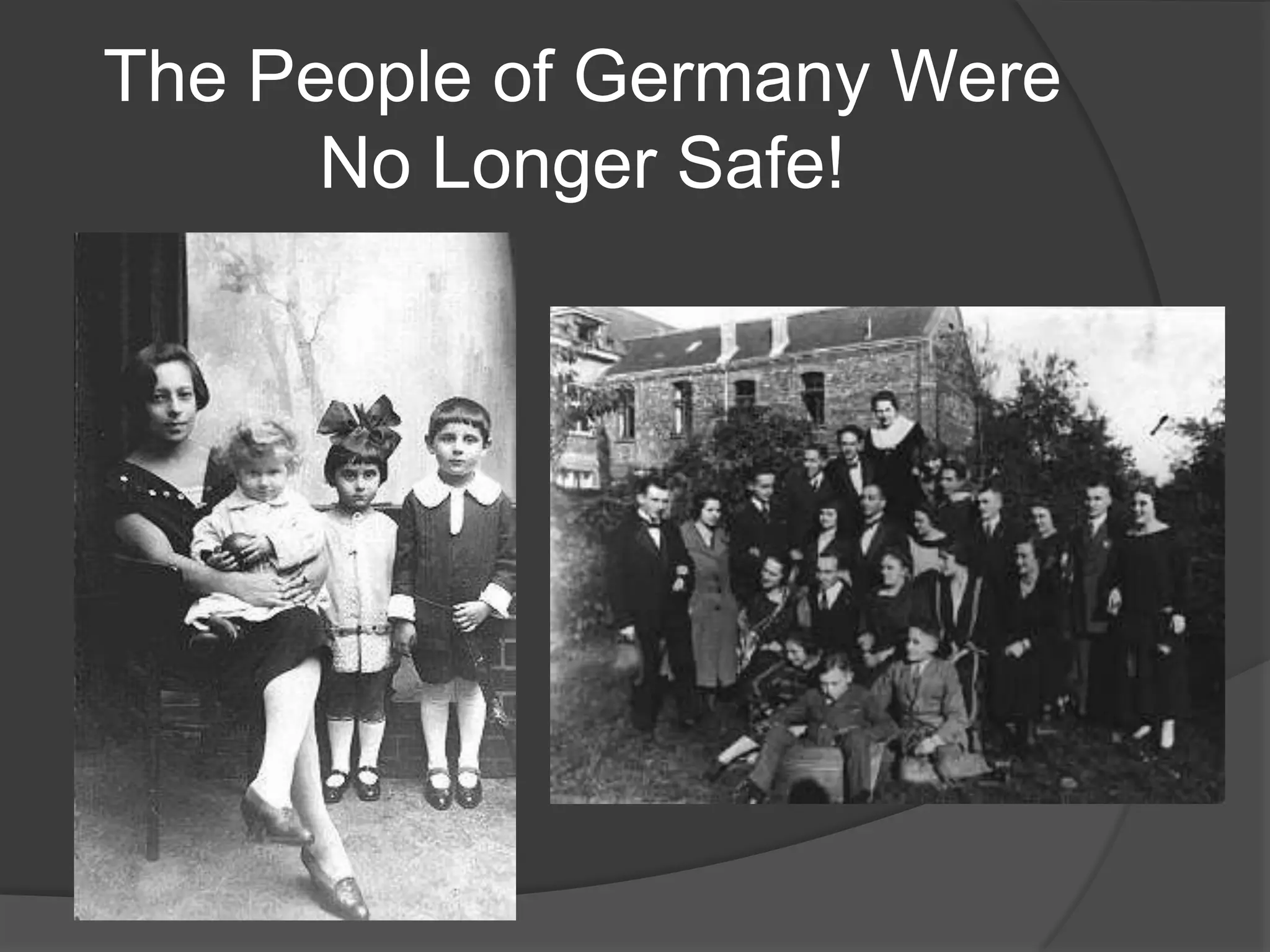
The People of Germany Were
      No Longer Safe!
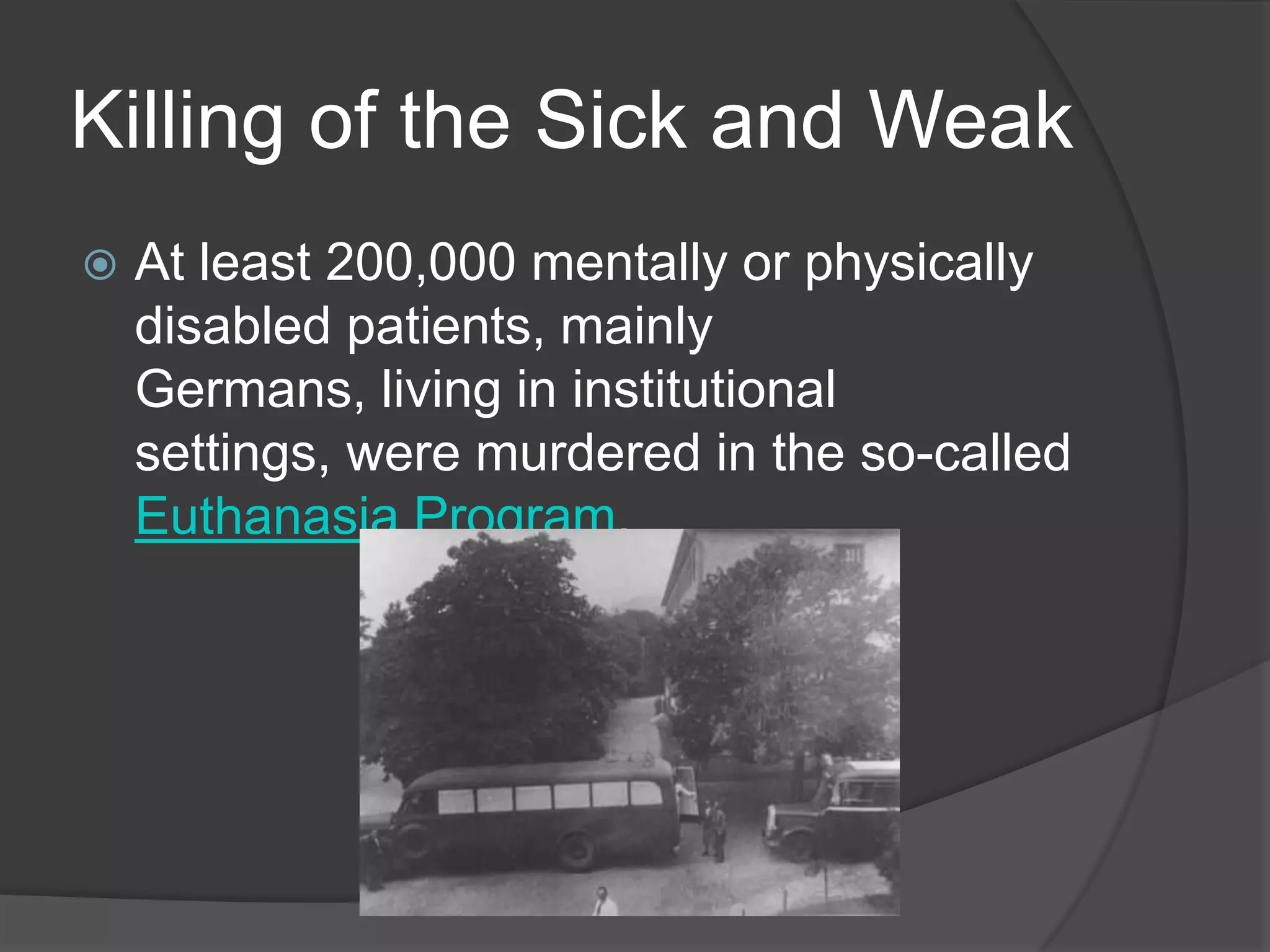
Killing of the Sick and Weak
   At least 200,000 mentally or physically
    disabled patients, mainly
    Germans, living in institutional
    settings, were murdered in the so-called
    Euthanasia Program.
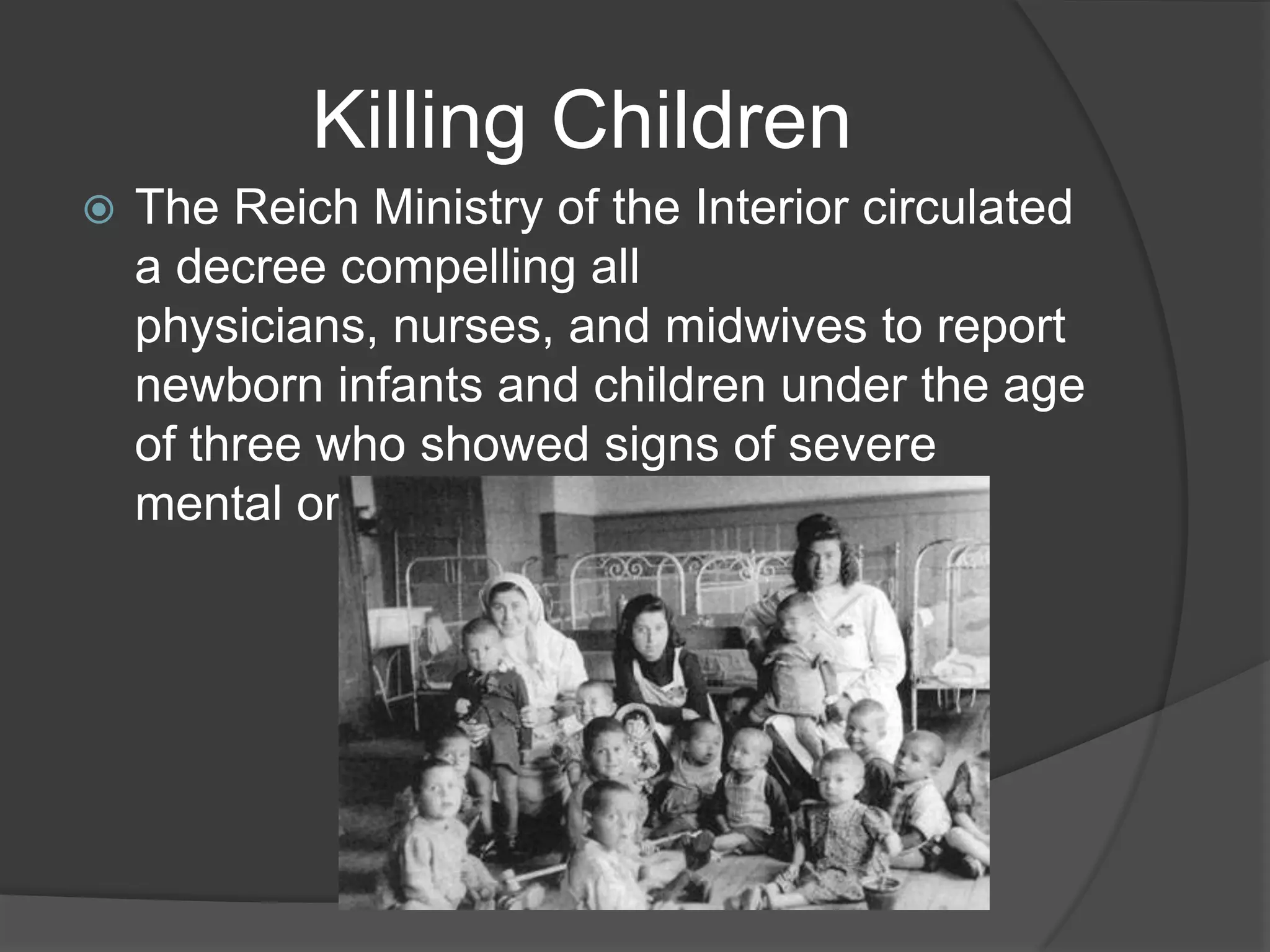
Killing Children
   The Reich Ministry of the Interior circulated
    a decree compelling all
    physicians, nurses, and midwives to report
    newborn infants and children under the age
    of three who showed signs of severe
    mental or physical disability.
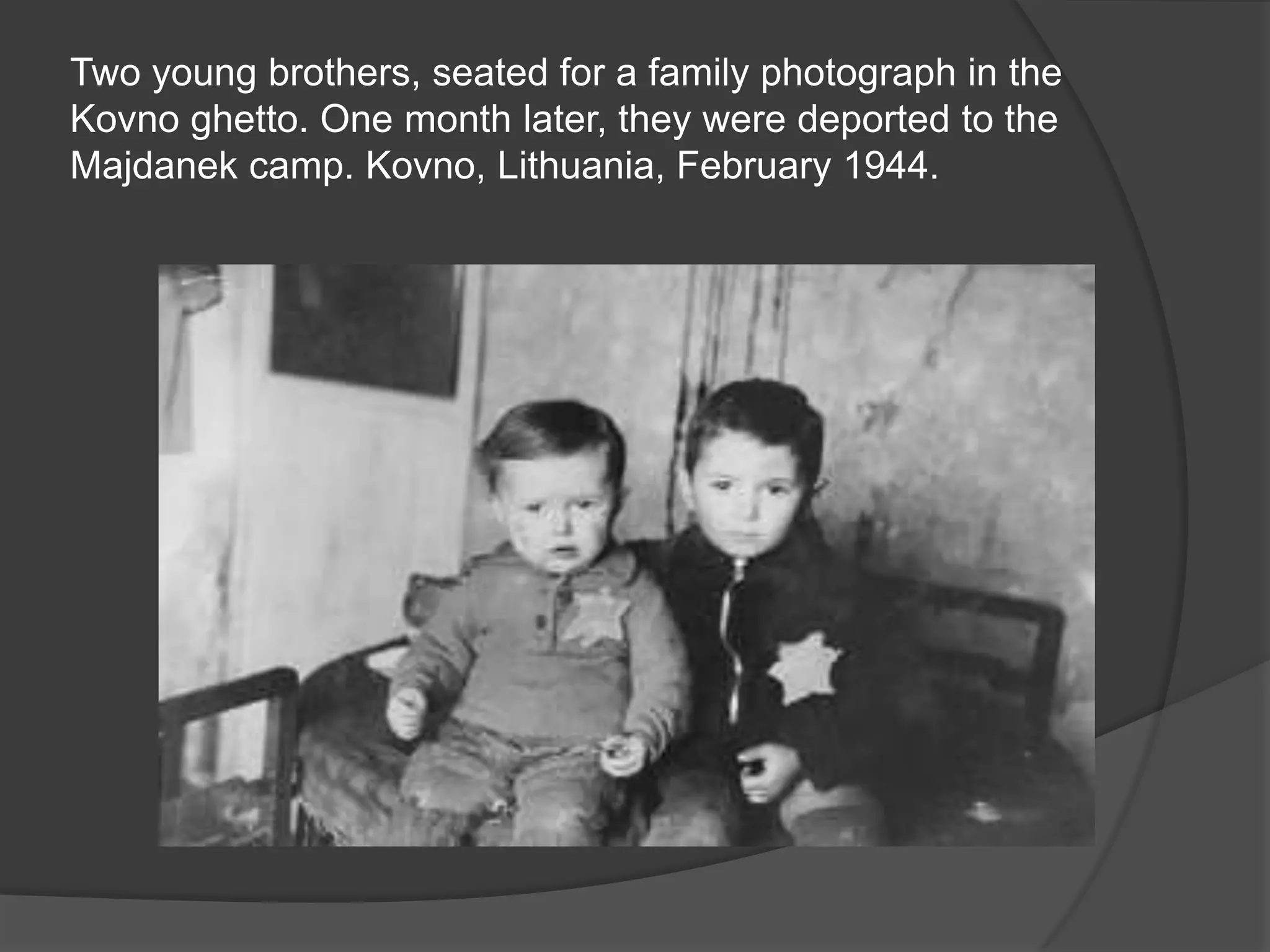
Two young brothers, seated for a family photograph in the
Kovno ghetto. One month later, they were deported to the
Majdanek camp. Kovno, Lithuania, February 1944.
Murder
   Public health authorities began to
    encourage parents of children with
    disabilities to admit their young children to
    one of a number of specially designated
    pediatric clinics throughout Germany and
    Austria. The clinics were in reality
    children's killing wards where specially
    recruited medical staff murdered their
    young charges by lethal overdoses of
    medication or by starvation.
The Germans and their collaborators killed
as many as 1.5 million children
   The fate of Jewish and non-Jewish children
    can be categorized in the following way: 1)
    children killed when they arrived in killing
    centers; 2) children killed immediately after
    birth or in institutions; 3) children born in
    ghettos and camps who survived because
    prisoners hid them; 4) children, usually
    over age 12, who were used as laborers
    and as subjects of medical experiments;
    and 5) those children killed during reprisal
    operations or so-called anti-partisan
    operations.
The Killing Spreads
   During the era of the Holocaust, German
    authorities also targeted other groups
    because of their perceived "racial
    inferiority": Roma (Gypsies), the
    disabled, and some of the Slavic peoples
    (Poles, Russians, and others). Other
    groups were persecuted on
    political, ideological, and behavioral
    grounds, among them
    Communists, Socialists, Jehovah's
    Witnesses, and homosexuals.
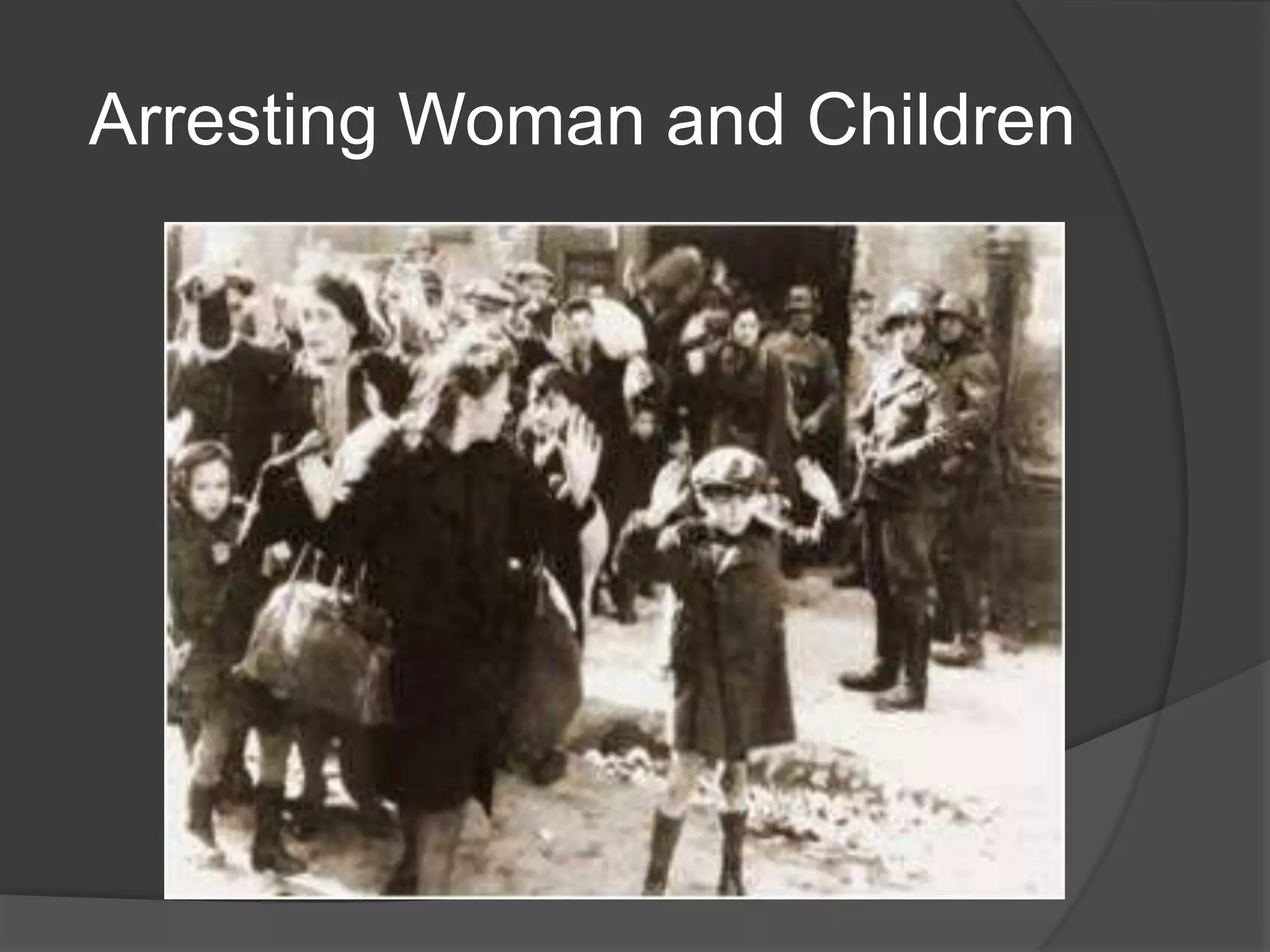
Arresting Woman and Children
The Ghettos
   During World War II, ghettos were city
    districts (often enclosed) in which the
    Germans concentrated the municipal
    and sometimes regional Jewish
    population and forced them to live under
    miserable conditions.
Ghettos and Escaping
 Poland
 St. Louis
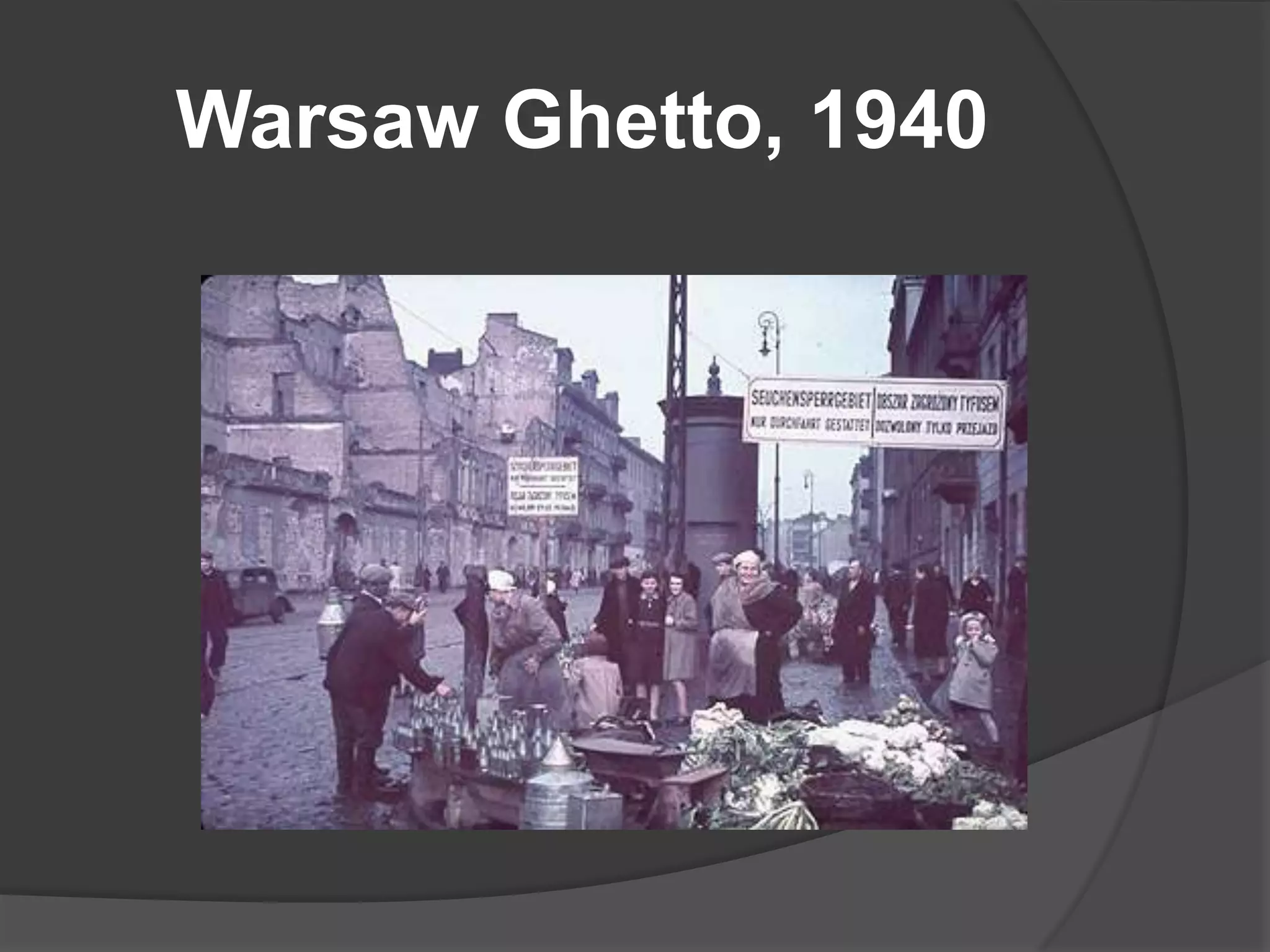
Warsaw Ghetto, 1940
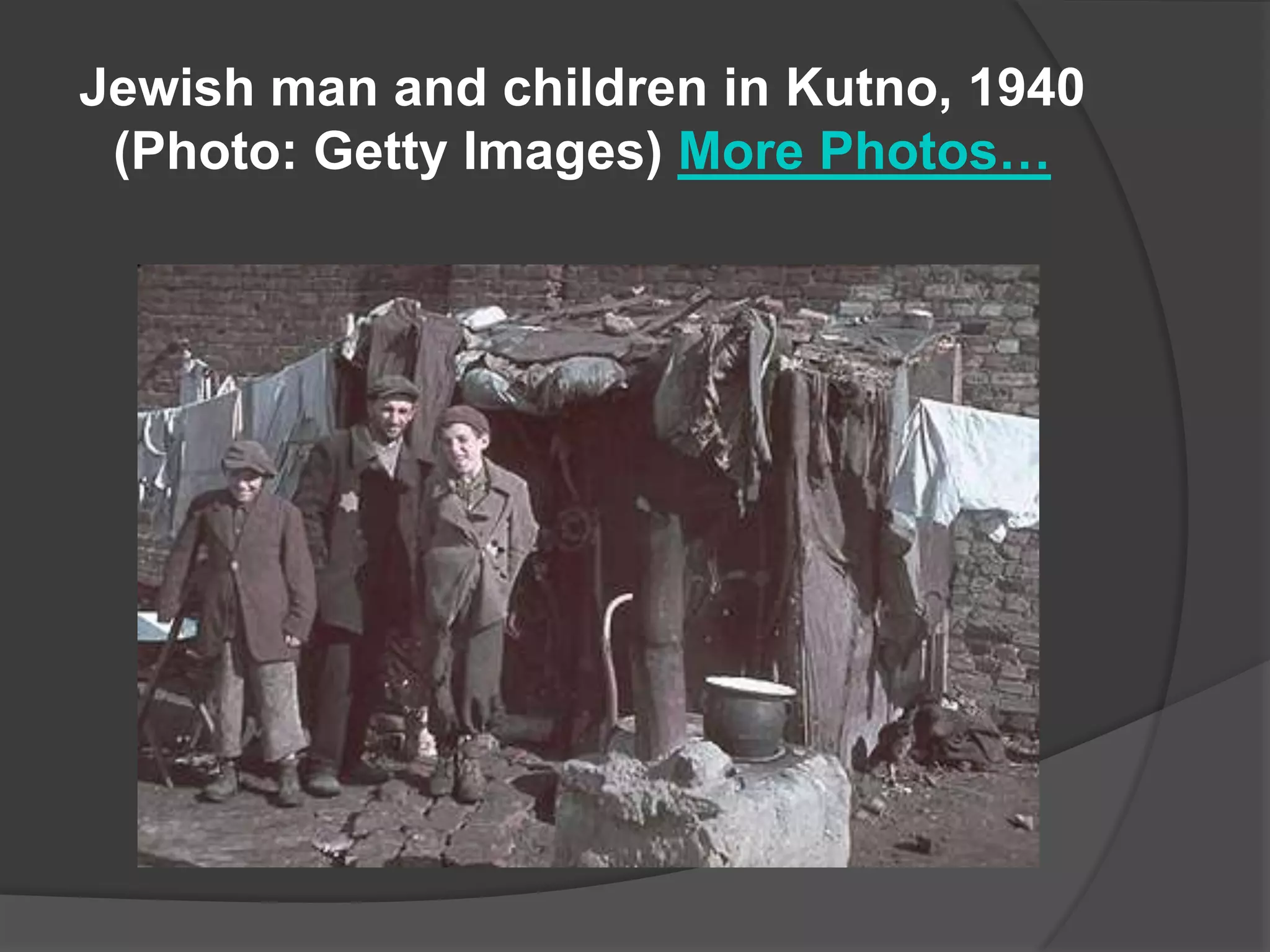
Jewish man and children in Kutno, 1940
 (Photo: Getty Images) More Photos…
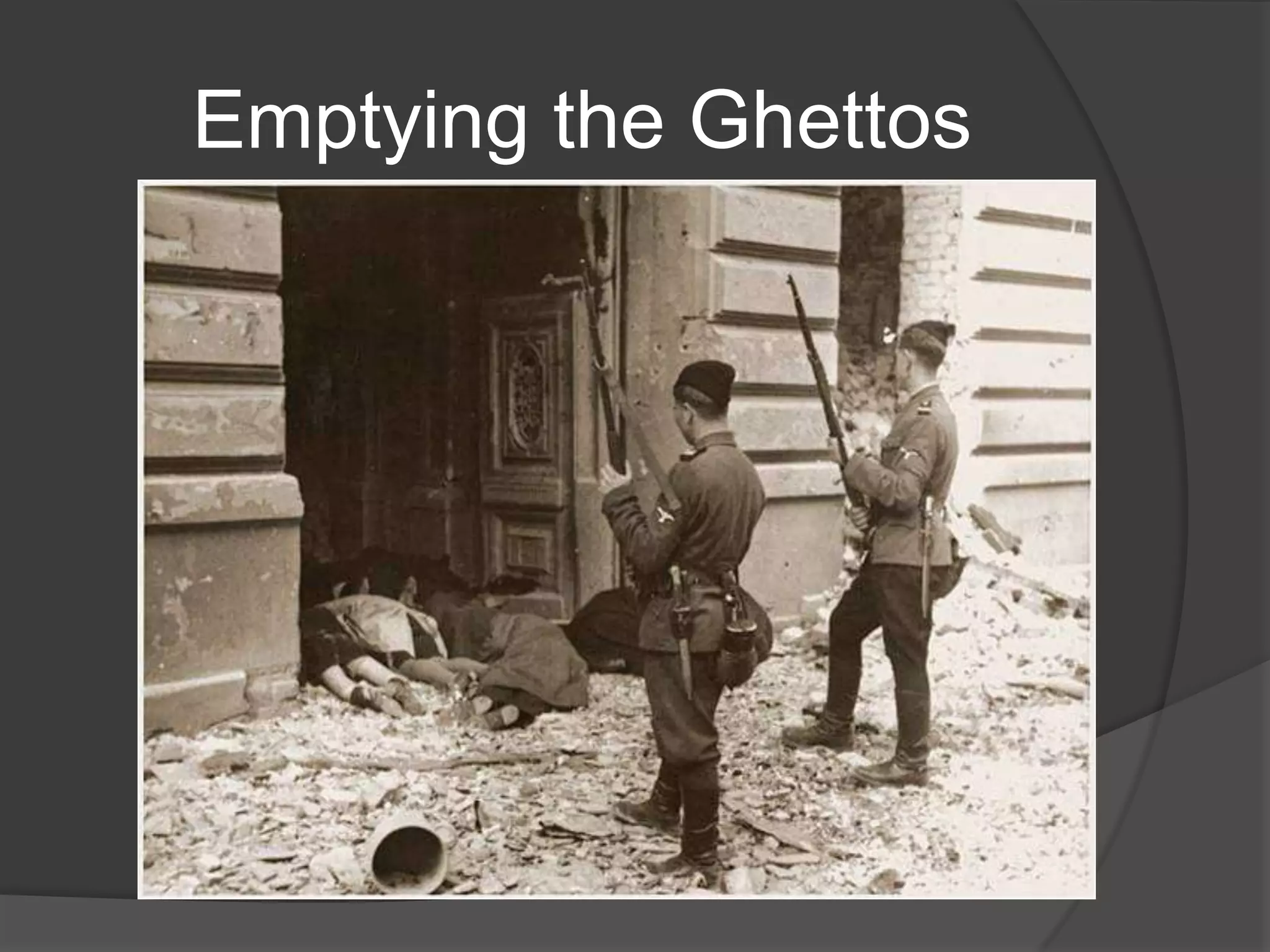
Emptying the Ghettos
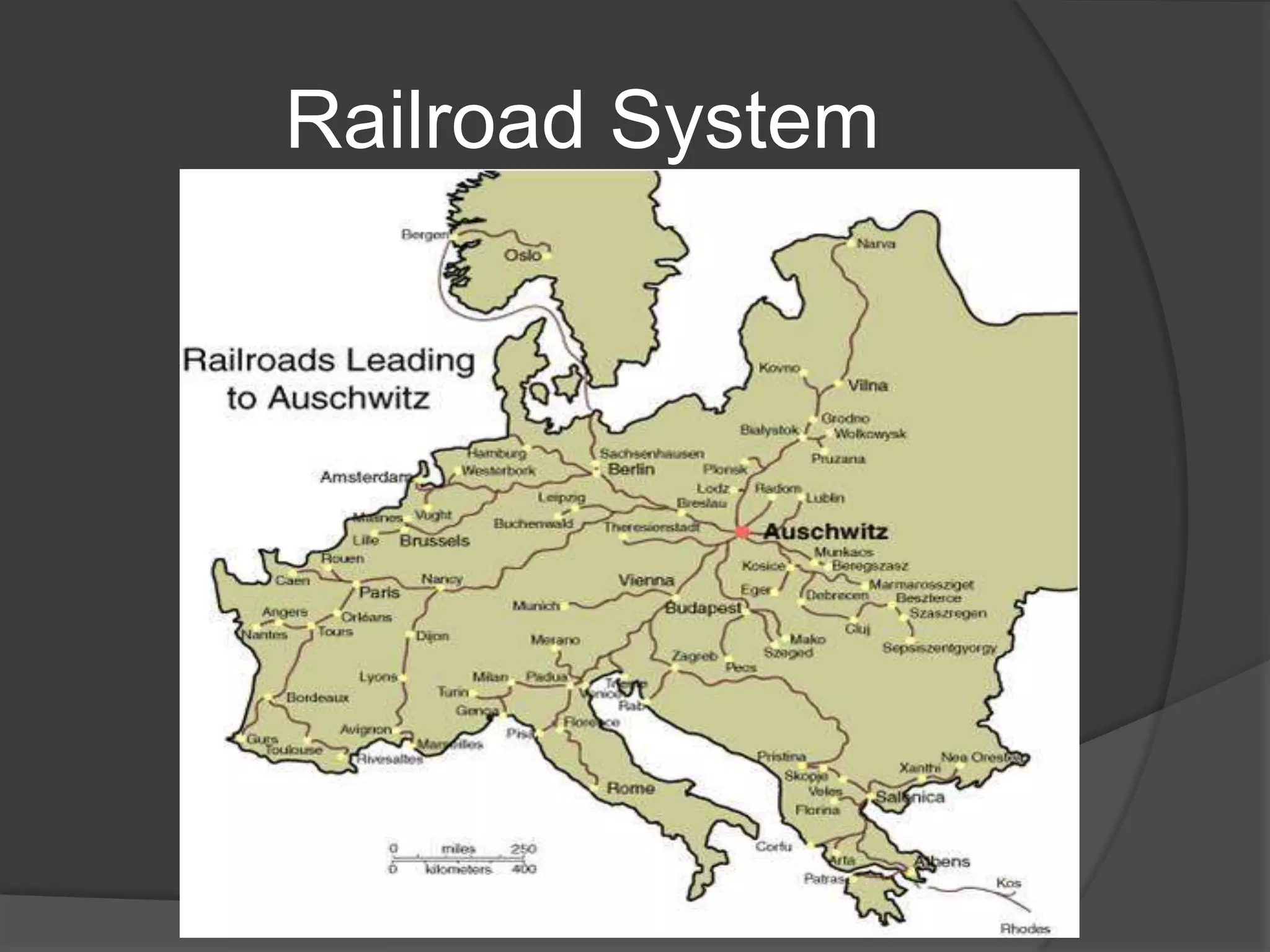
Railroad System
More Maps
 Introduction to Maps
 Auschwitz
 Dachau
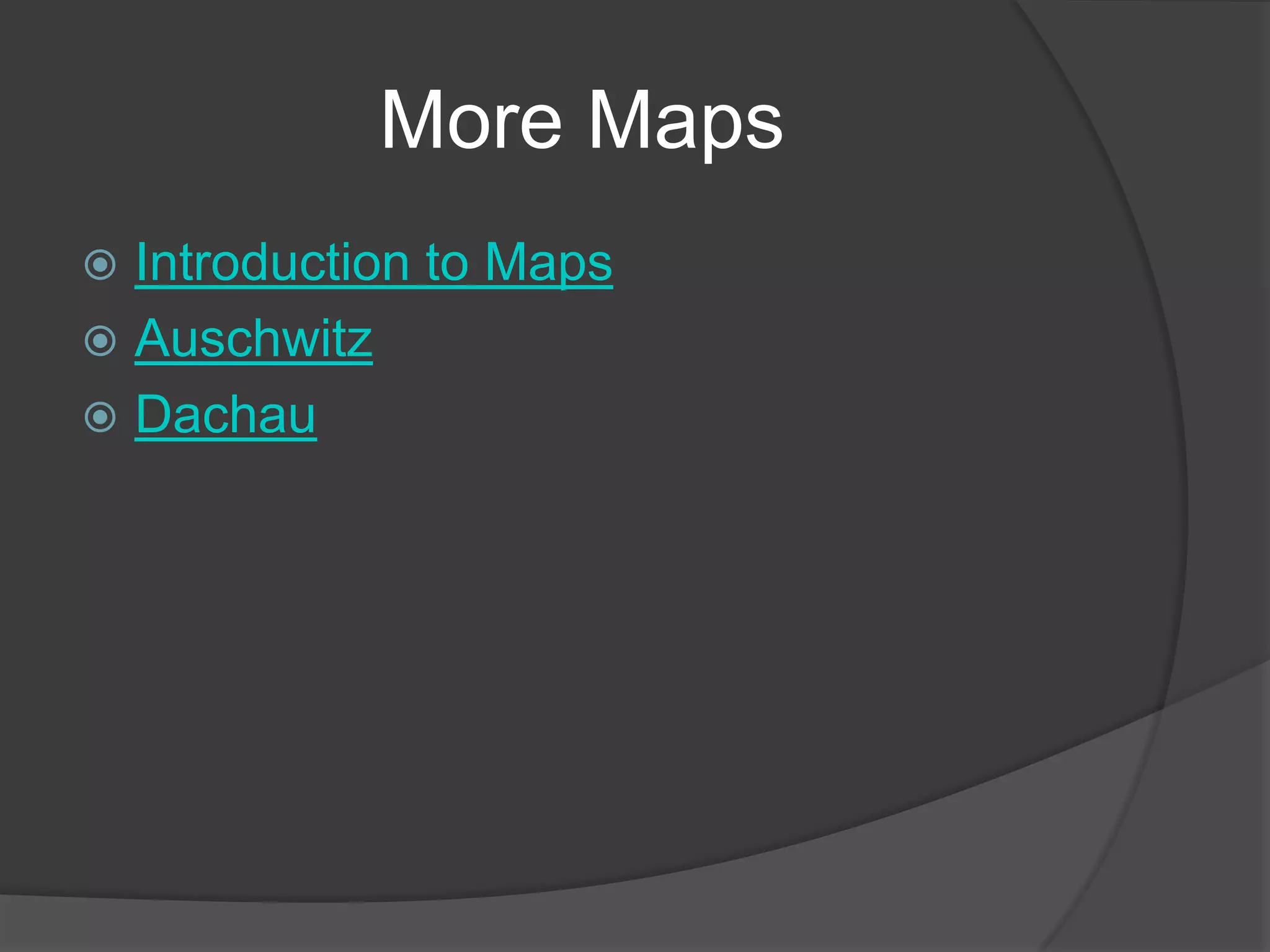
The Camps-Dachau
   In the early years of the Nazi regime, the
    National Socialist government established
    concentration camps to detain real and
    imagined political and ideological
    opponents.
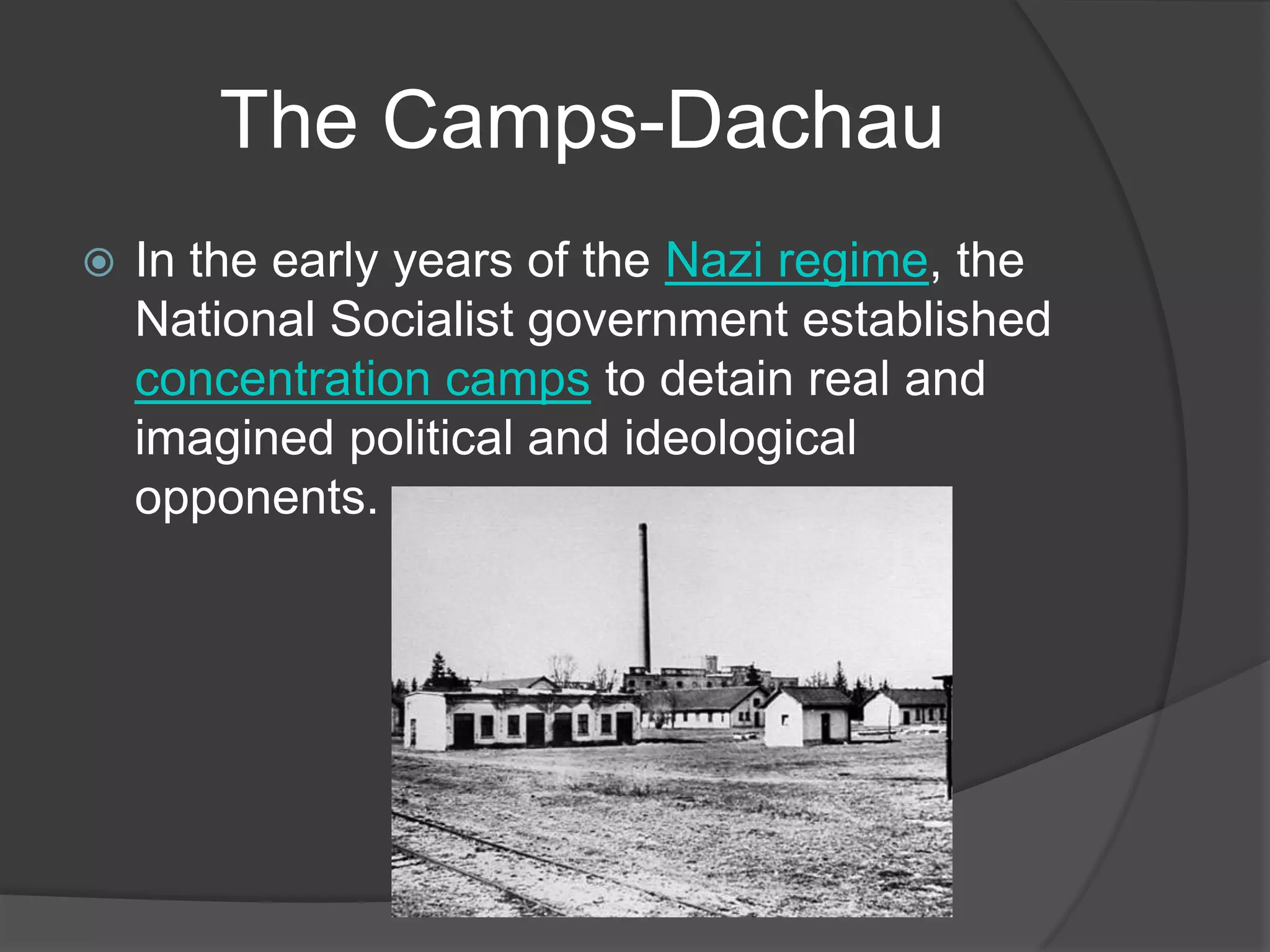
Barracks in the quarry camp of the Natzweiler-
        Struthof concentration camp.
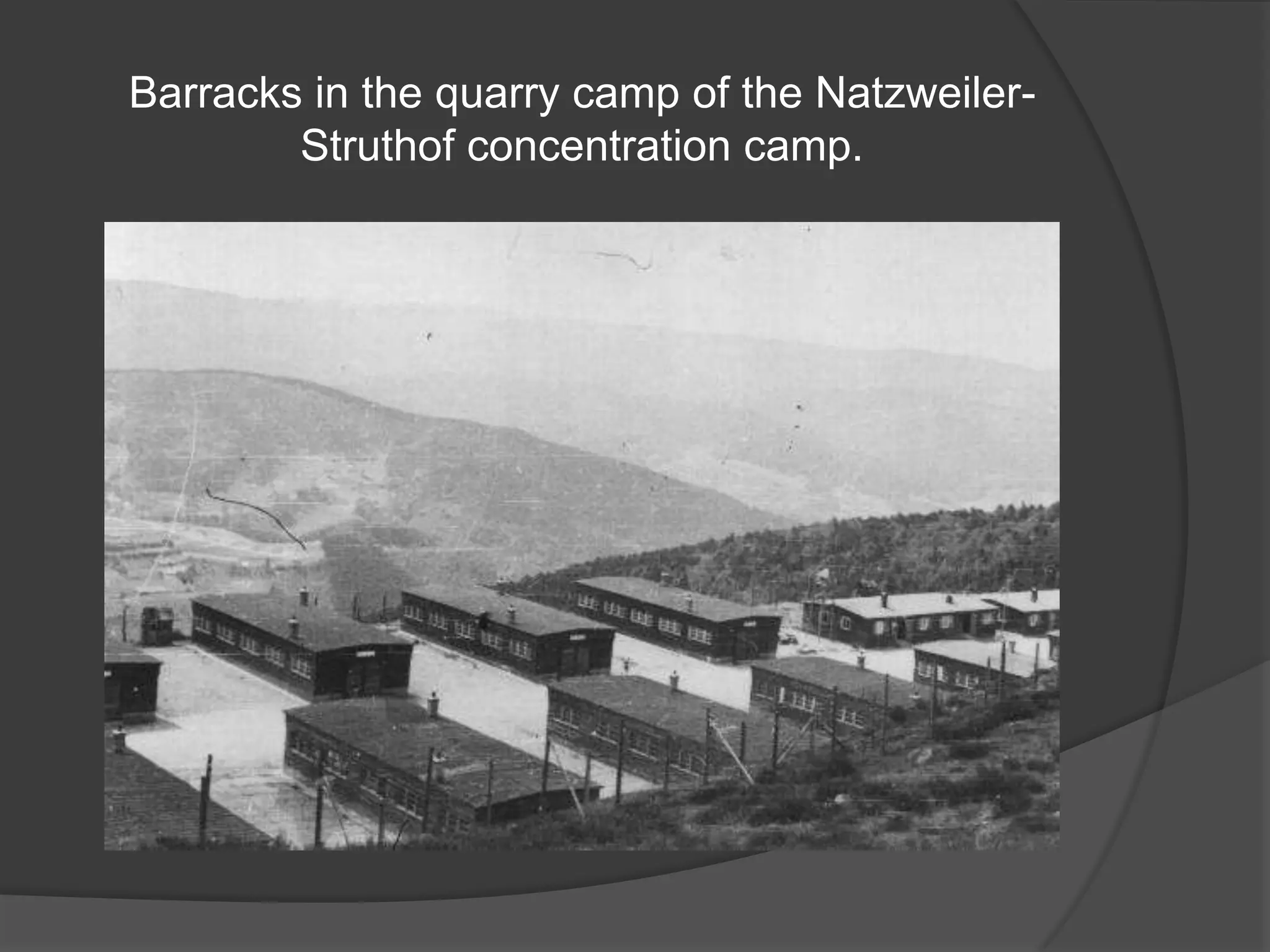
Aerial view of Neuengamme
    concentration camp.
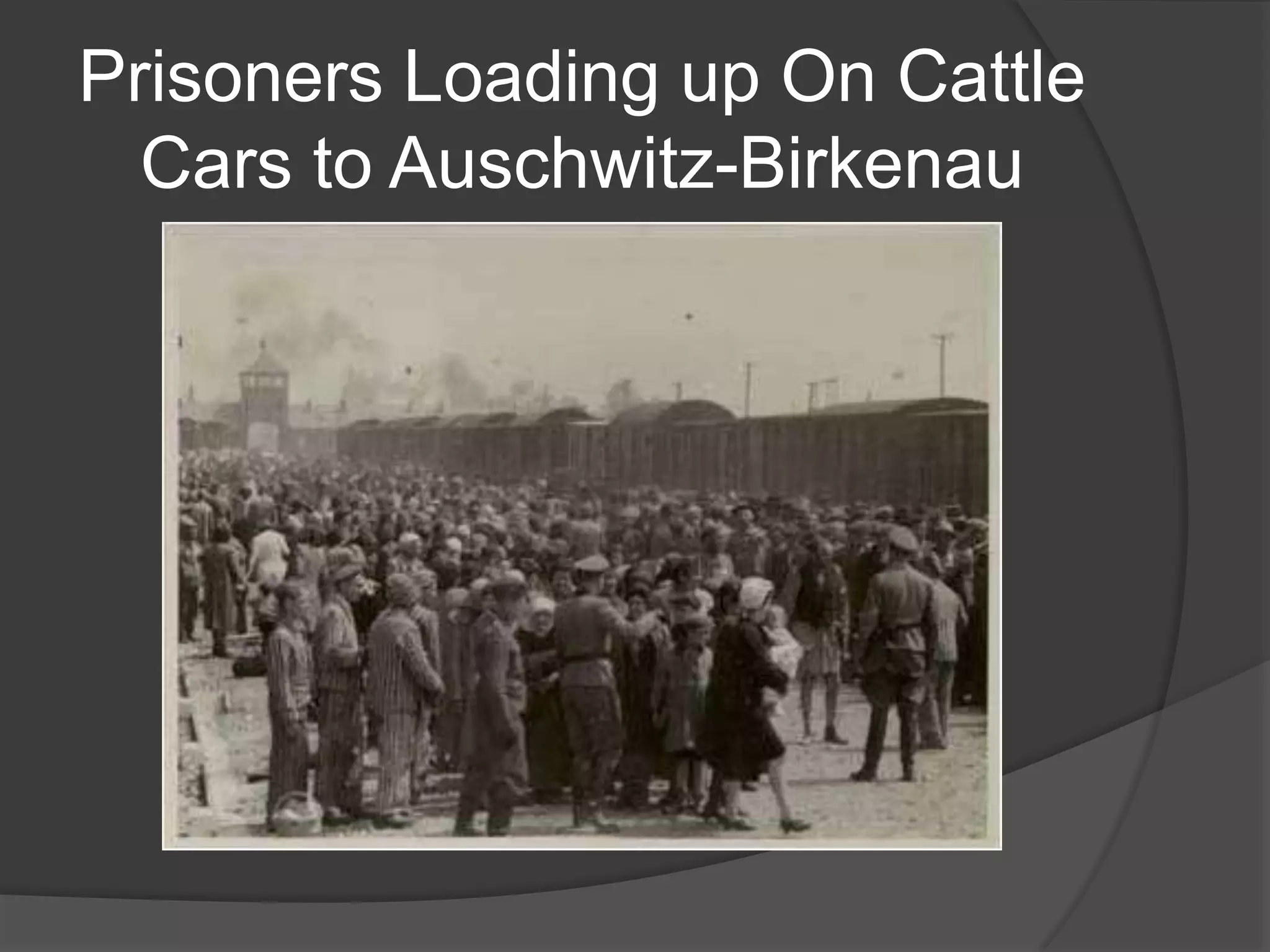
Prisoners Loading up On Cattle
  Cars to Auschwitz-Birkenau
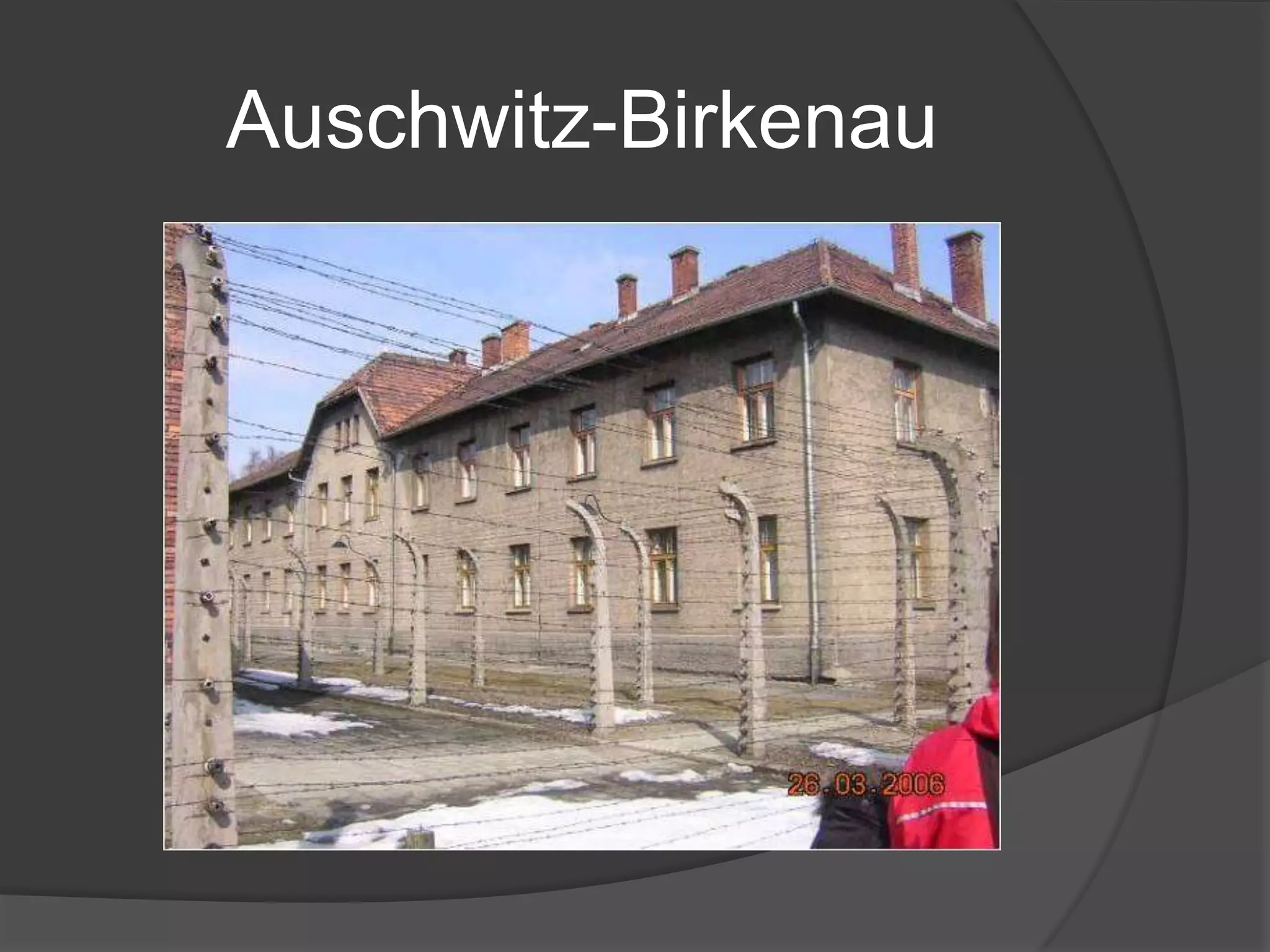
Auschwitz-Birkenau
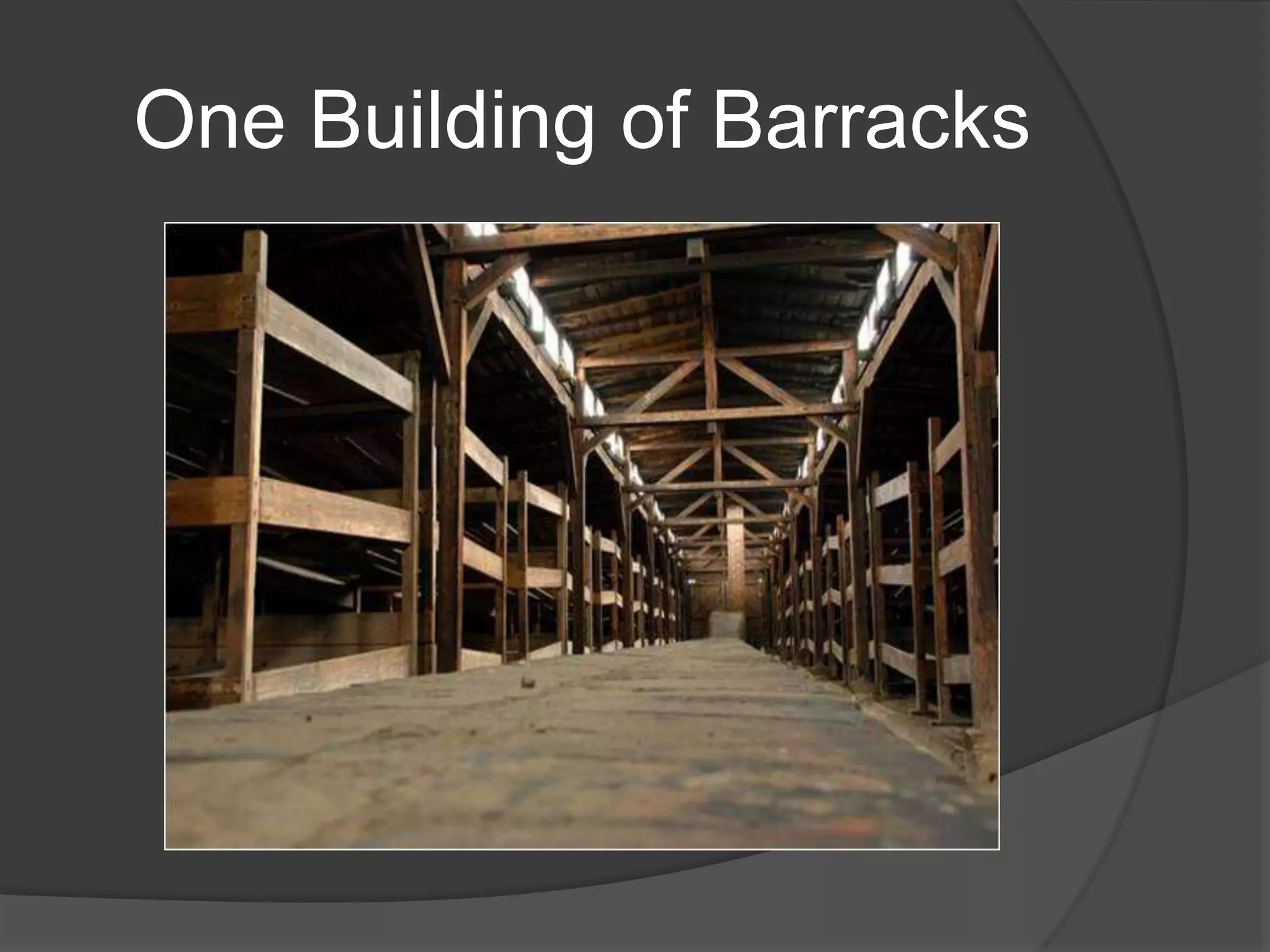
One Building of Barracks
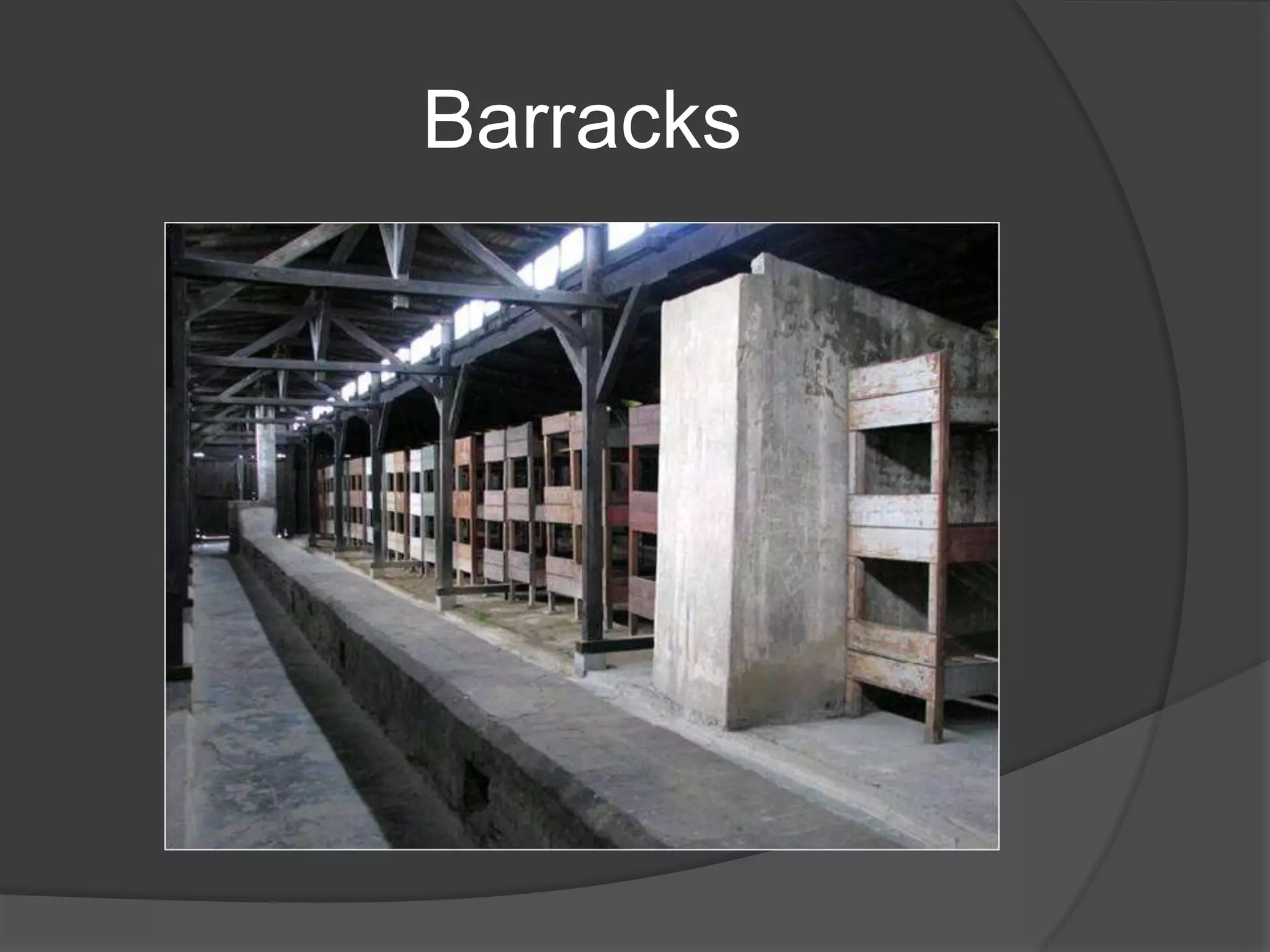
Barracks
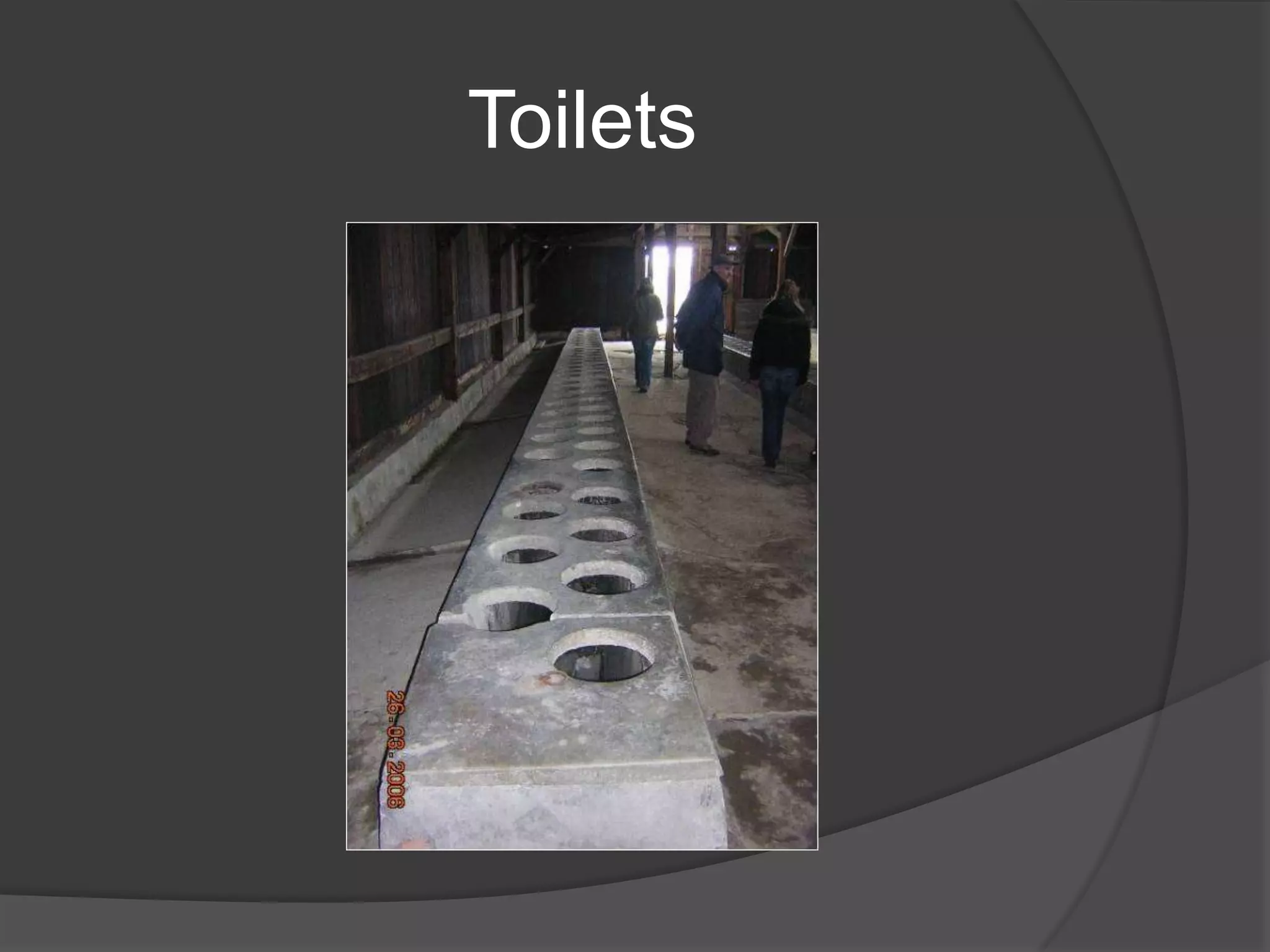
Toilets
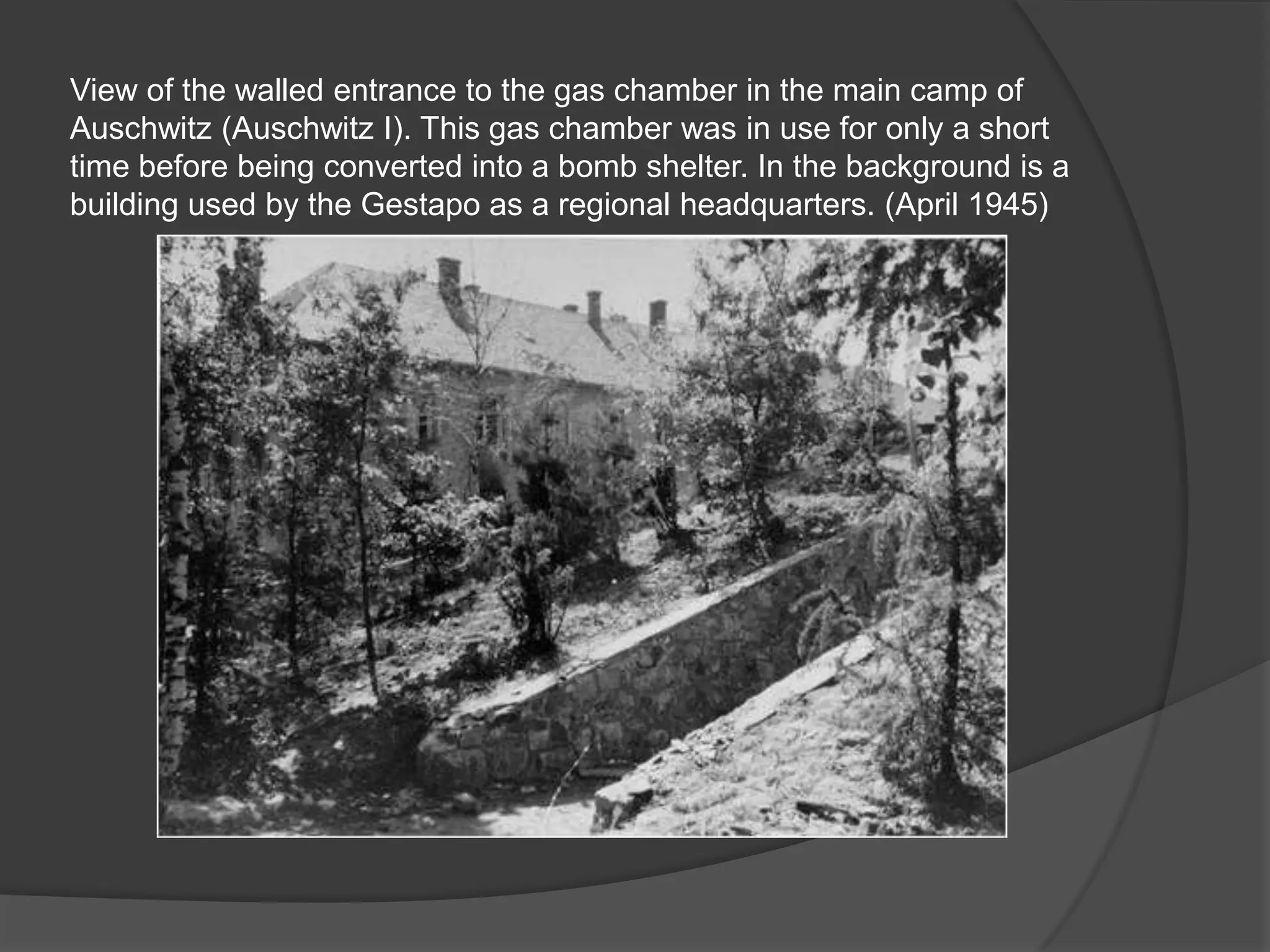
View of the walled entrance to the gas chamber in the main camp of
Auschwitz (Auschwitz I). This gas chamber was in use for only a short
time before being converted into a bomb shelter. In the background is a
building used by the Gestapo as a regional headquarters. (April 1945)
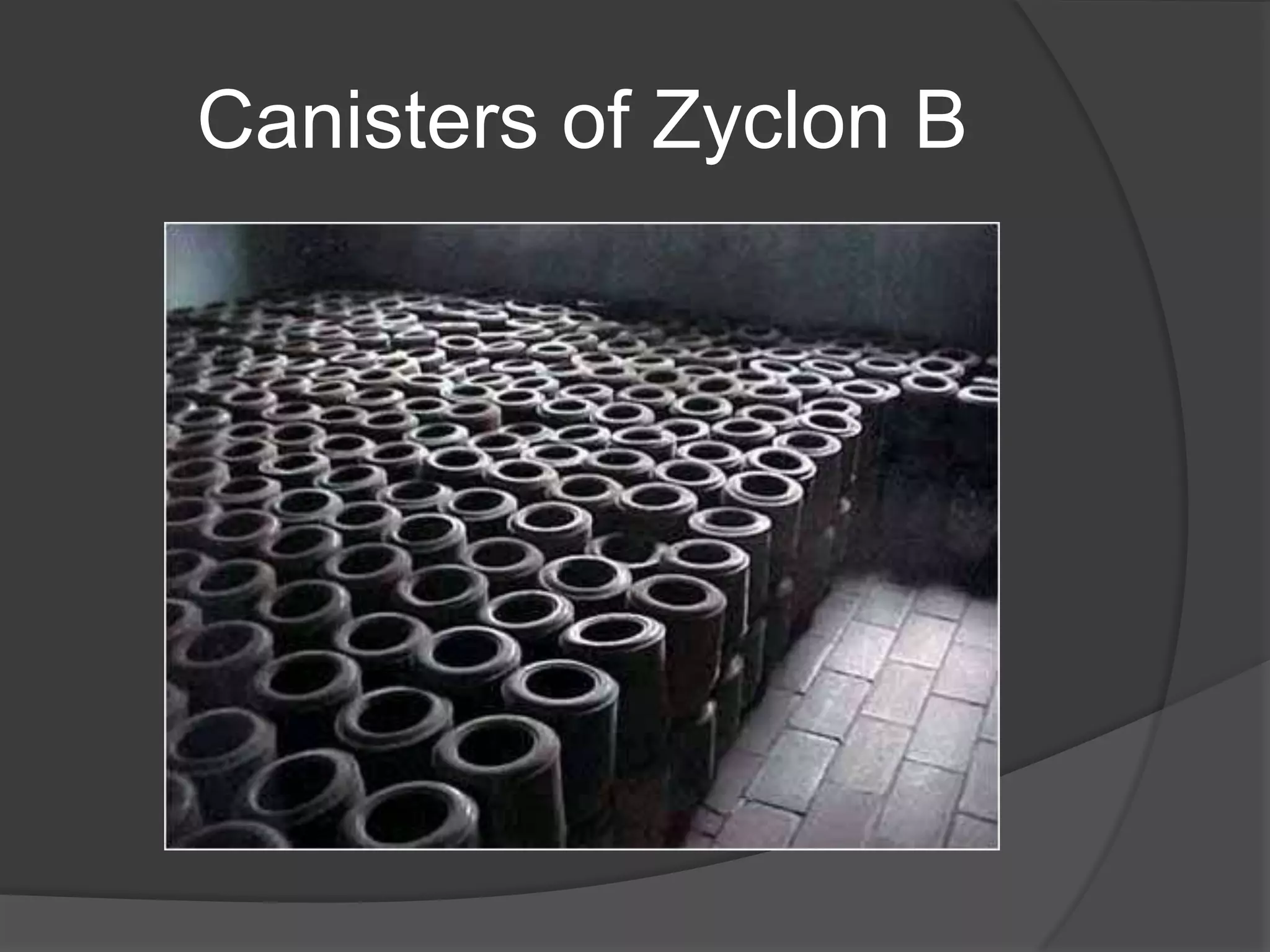
Canisters of Zyclon B
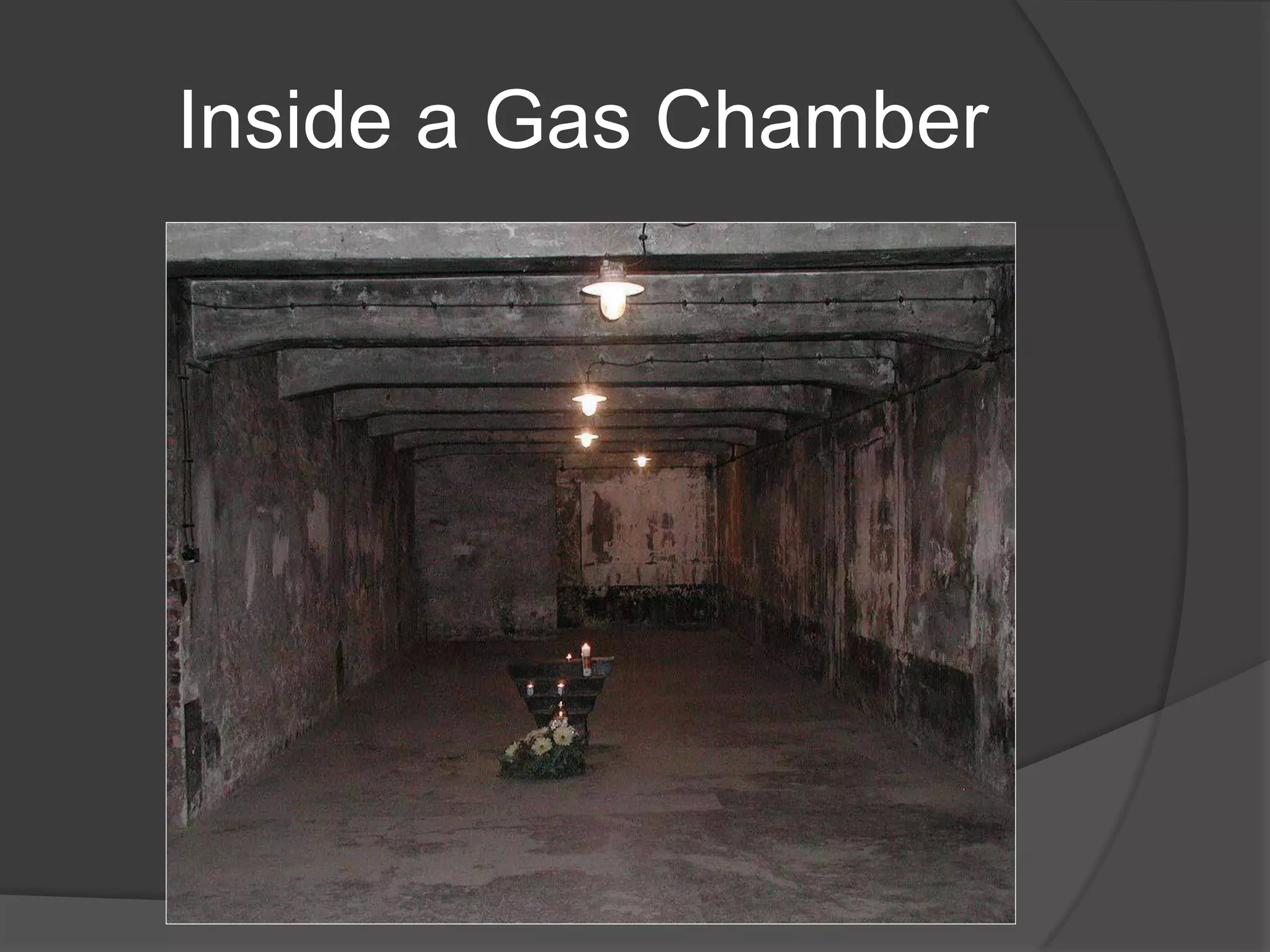
Inside a Gas Chamber
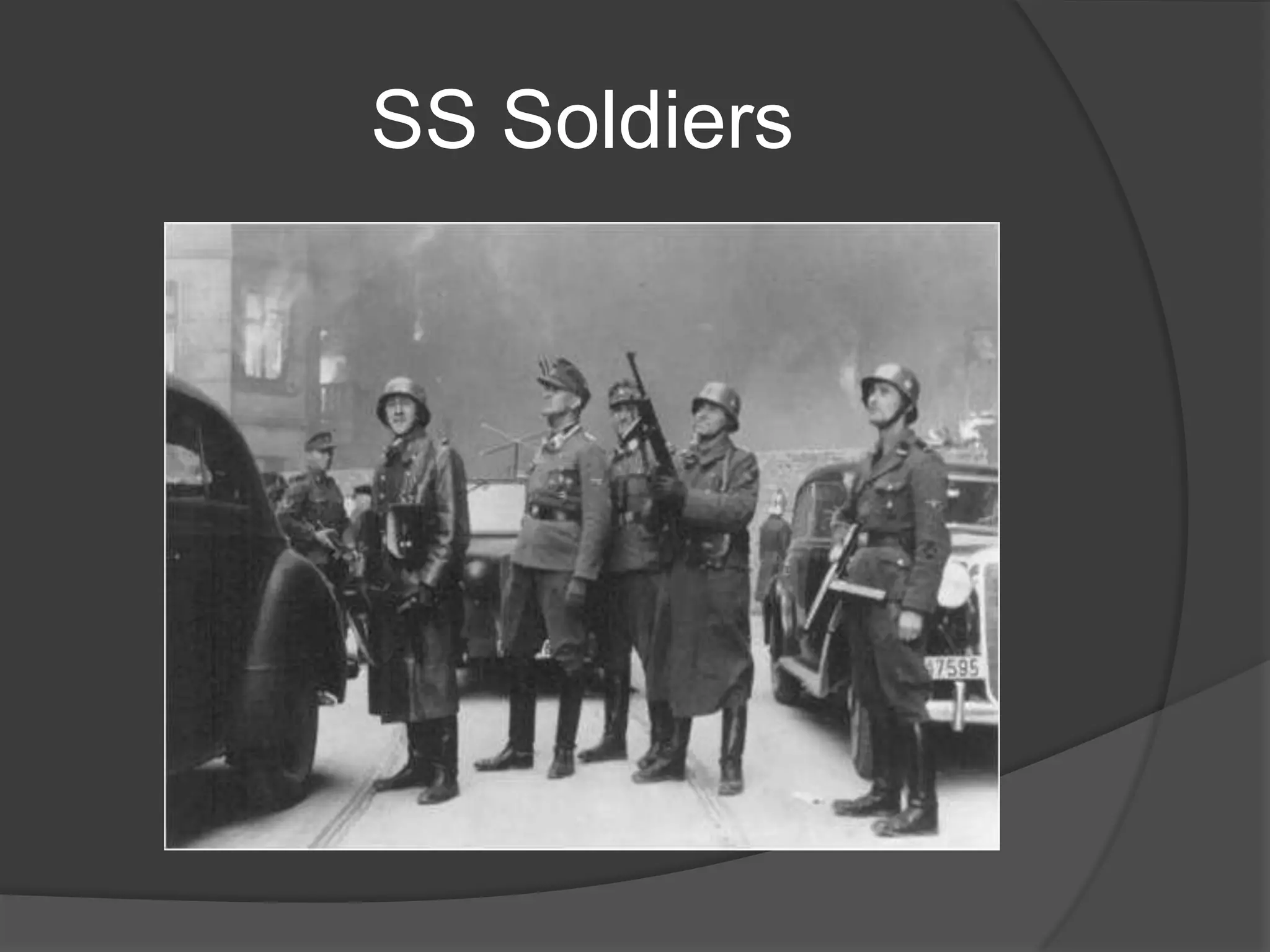
SS Soldiers
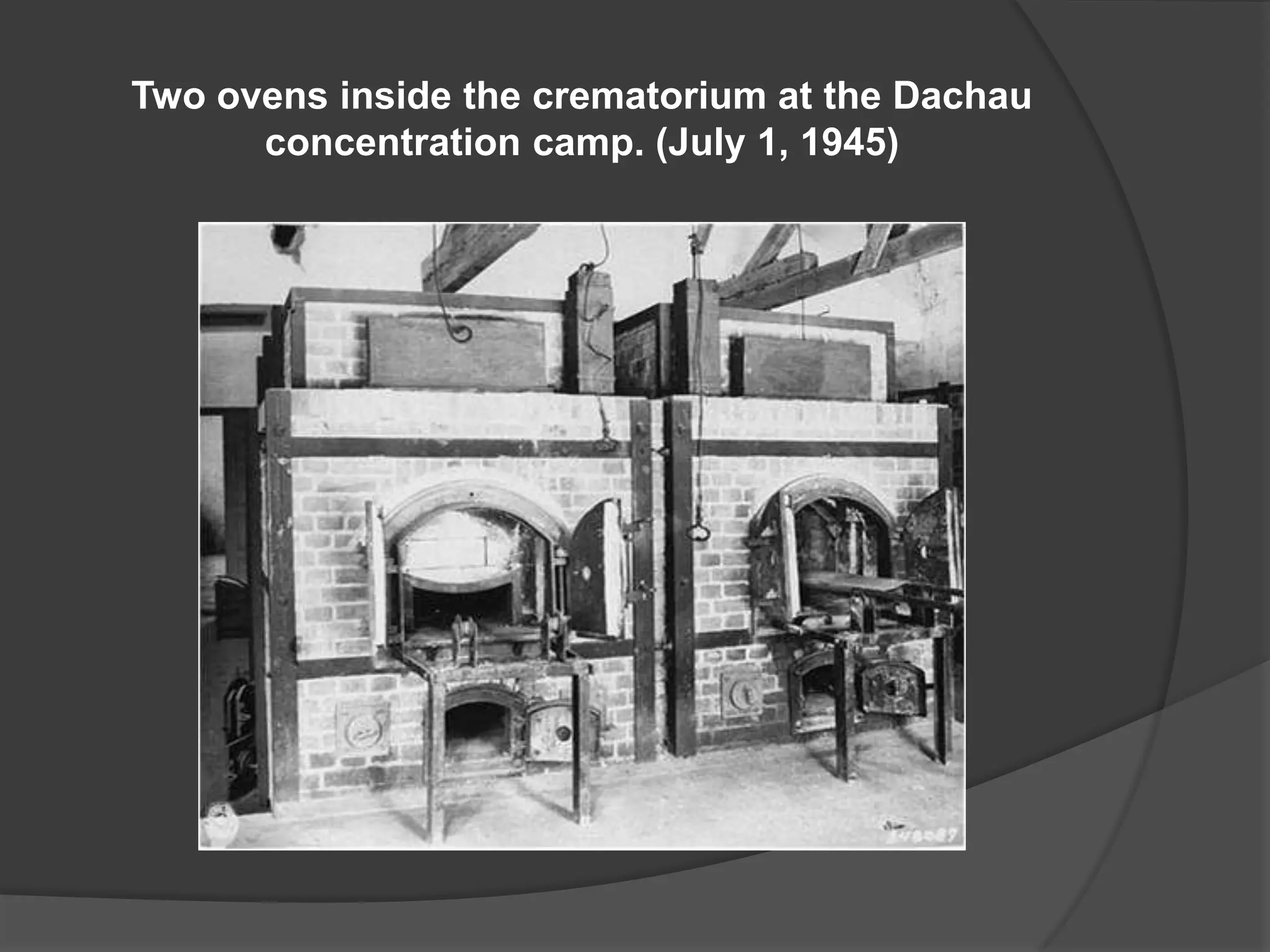
Two ovens inside the crematorium at the Dachau
      concentration camp. (July 1, 1945)
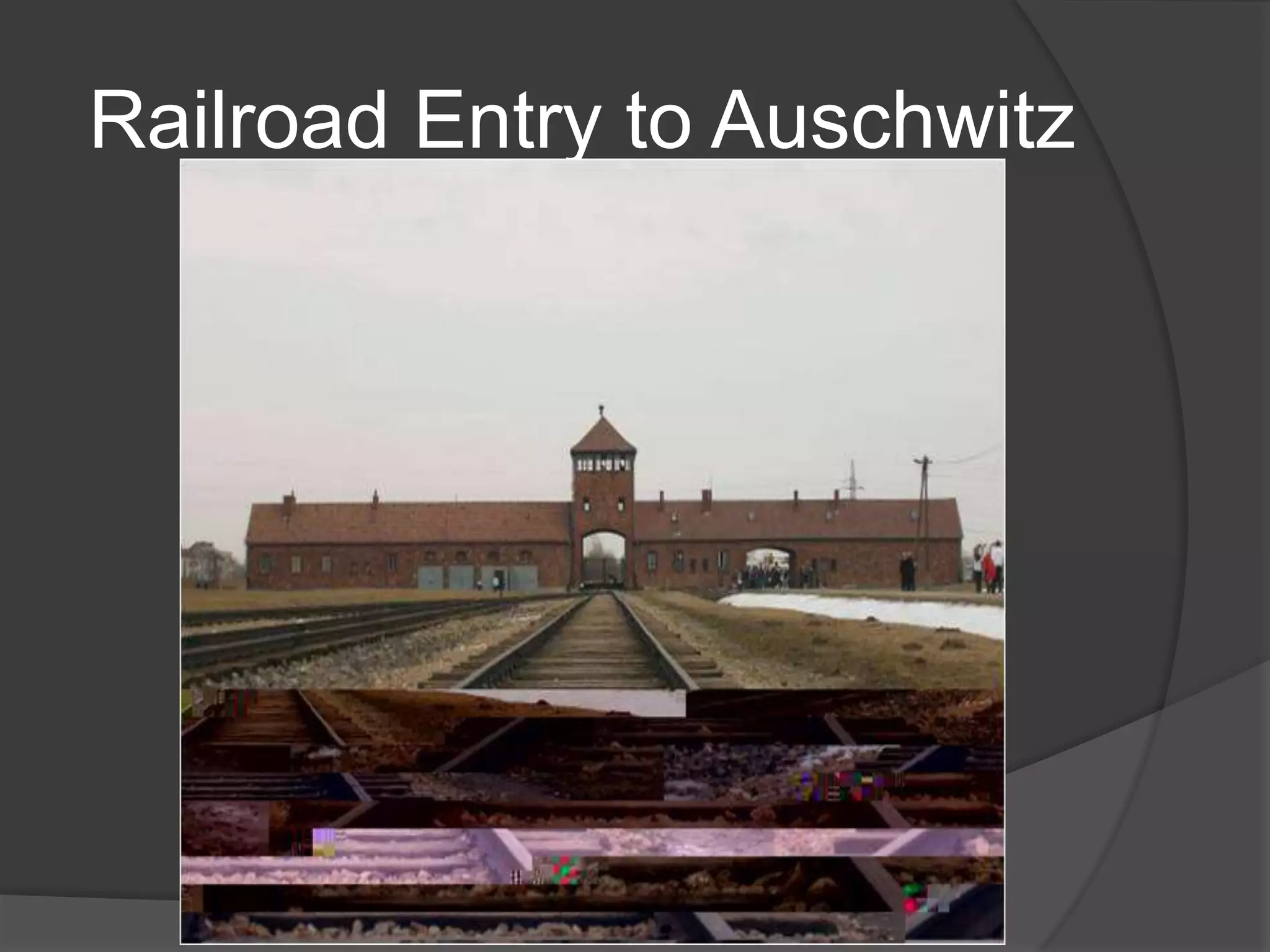
Railroad Entry to Auschwitz
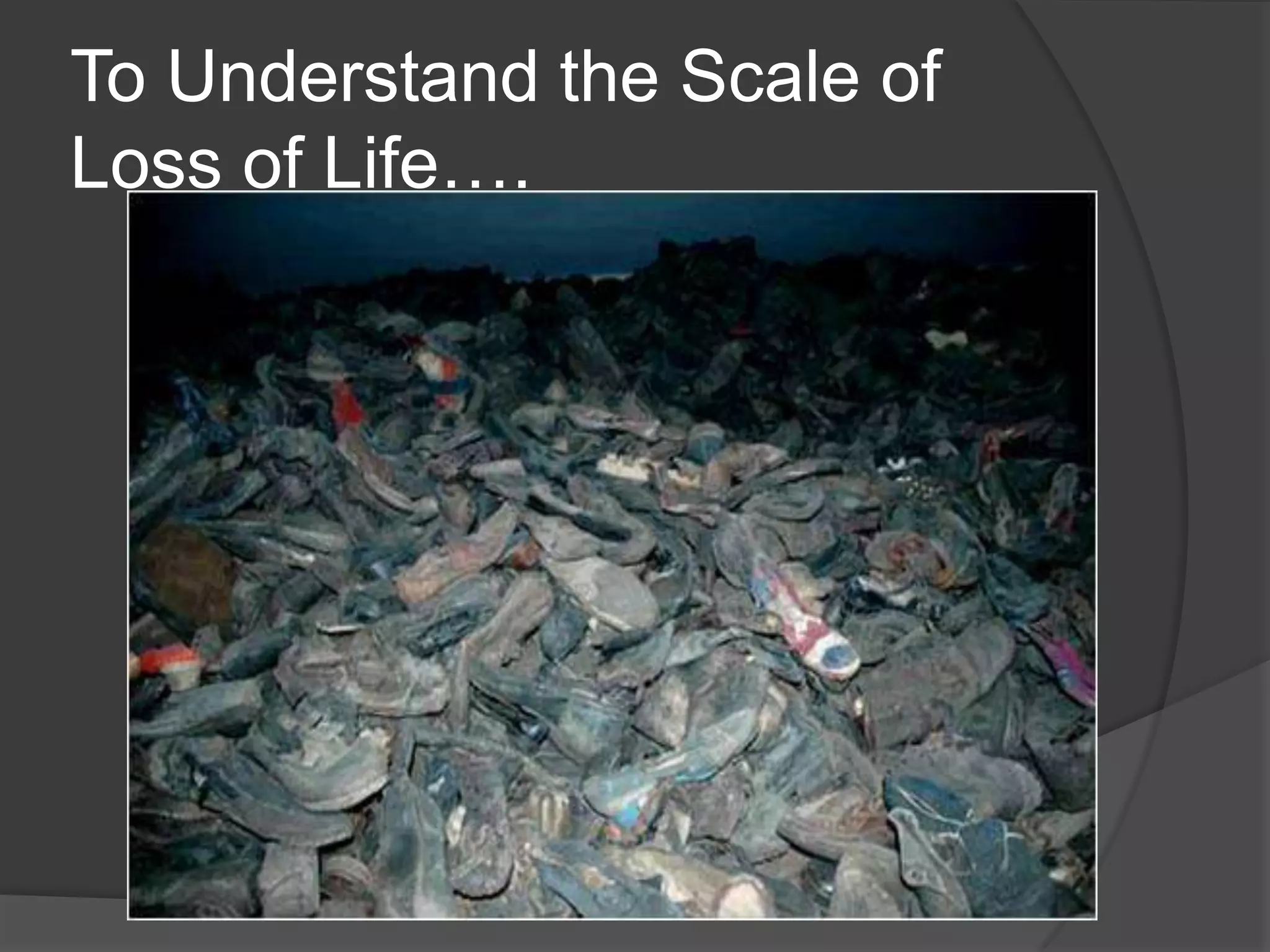
To Understand the Scale of
Loss of Life….
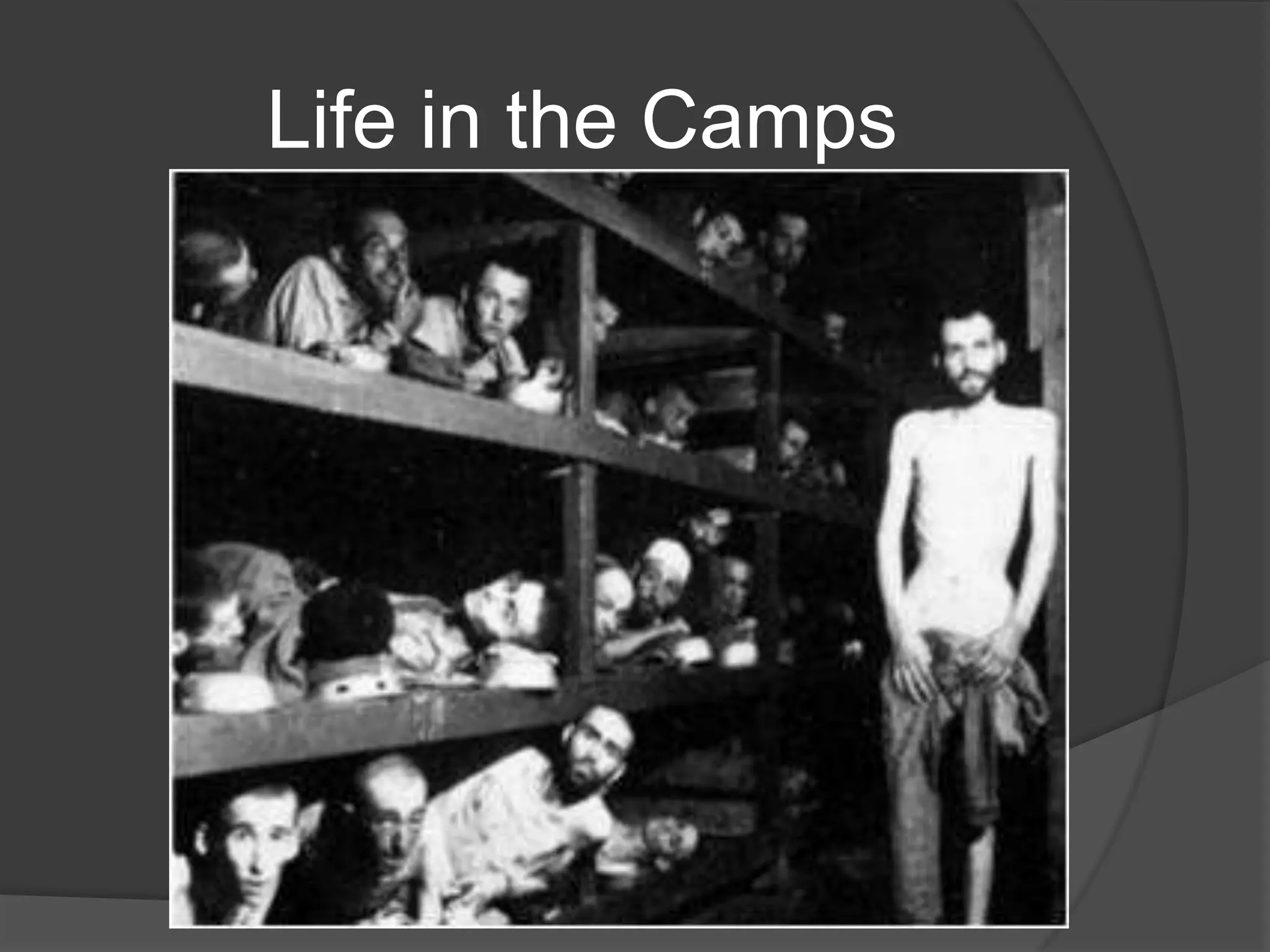
Life in the Camps
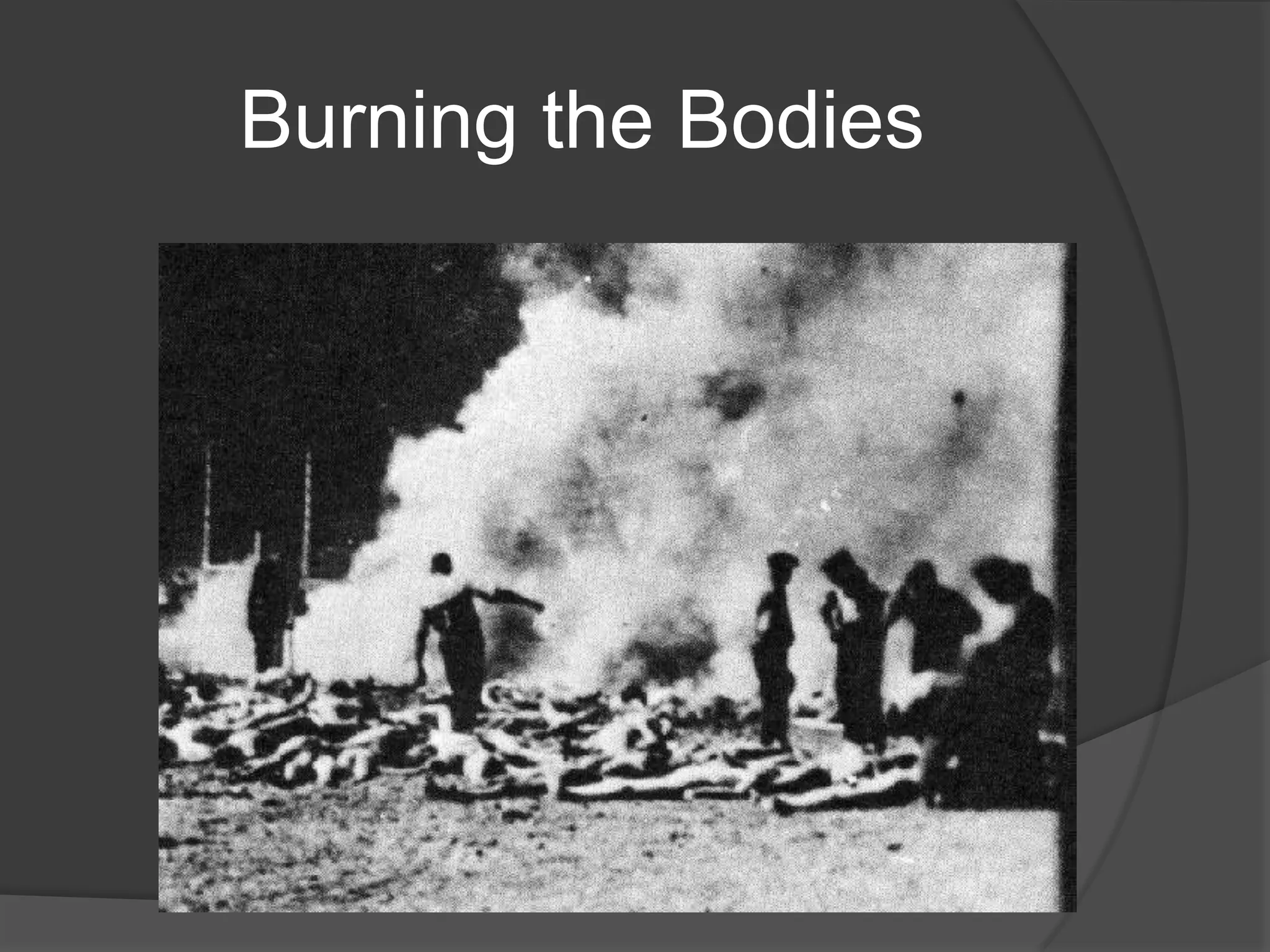
Burning Bodies
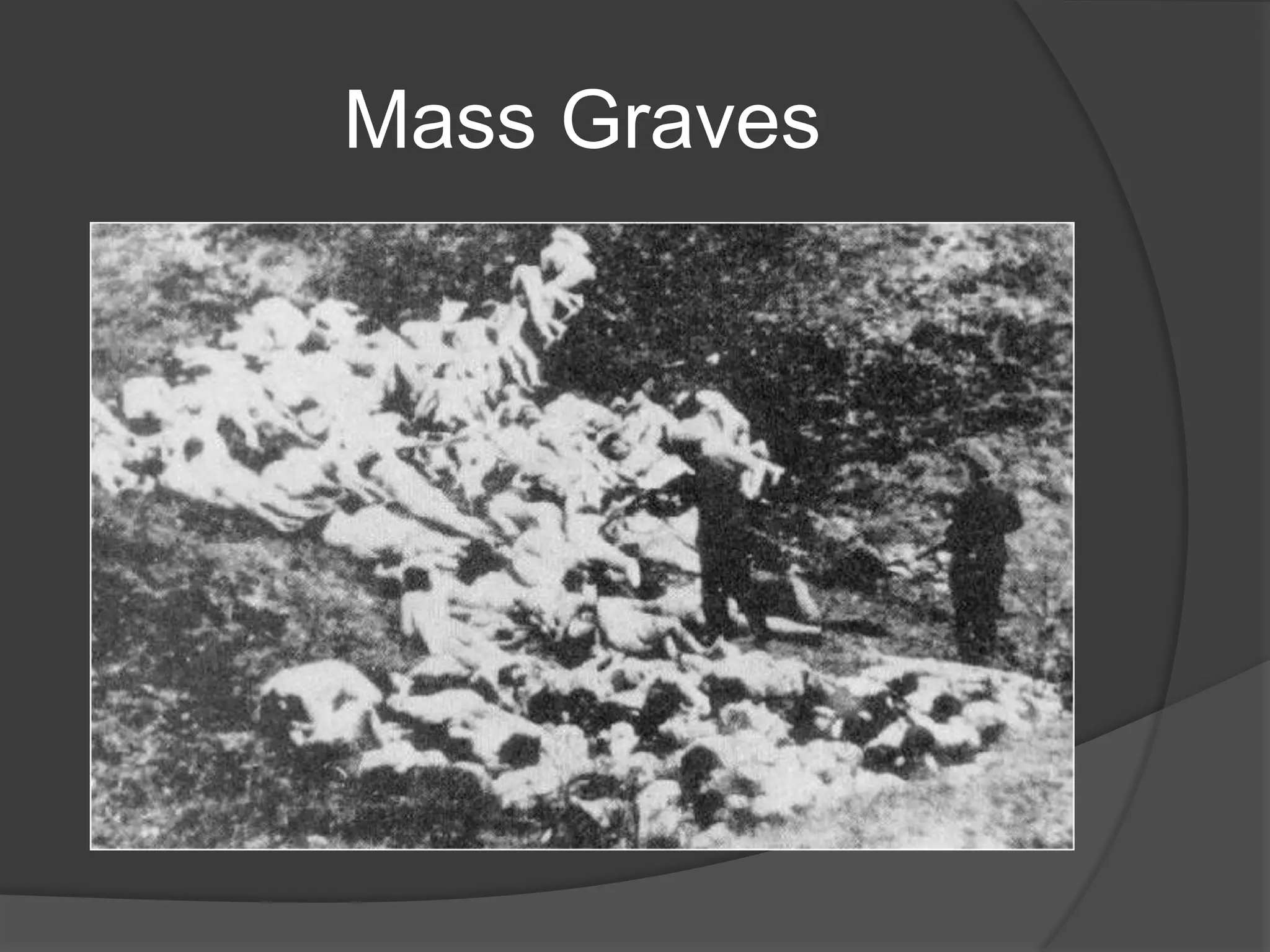
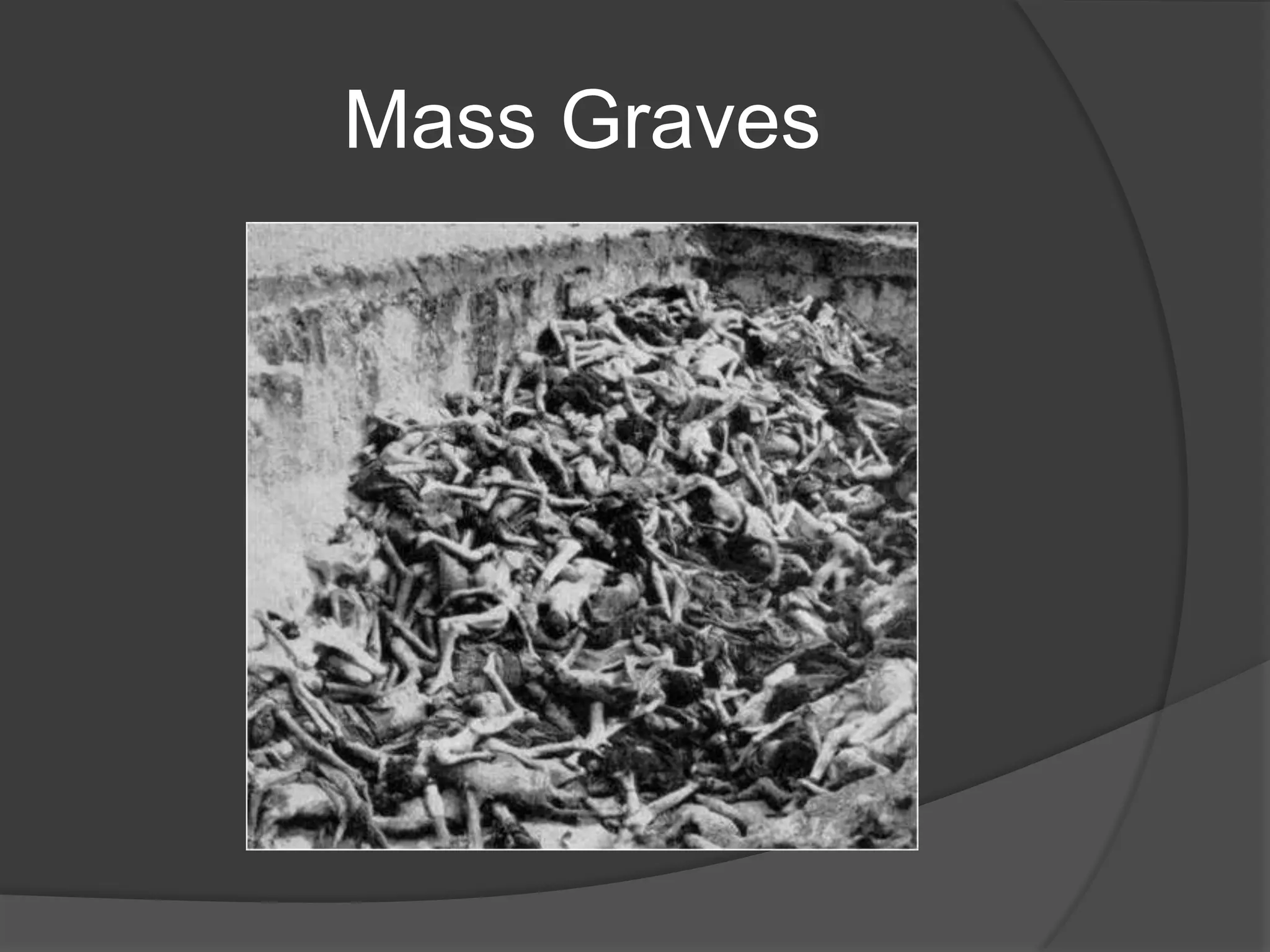
Mass Graves
Mass Graves
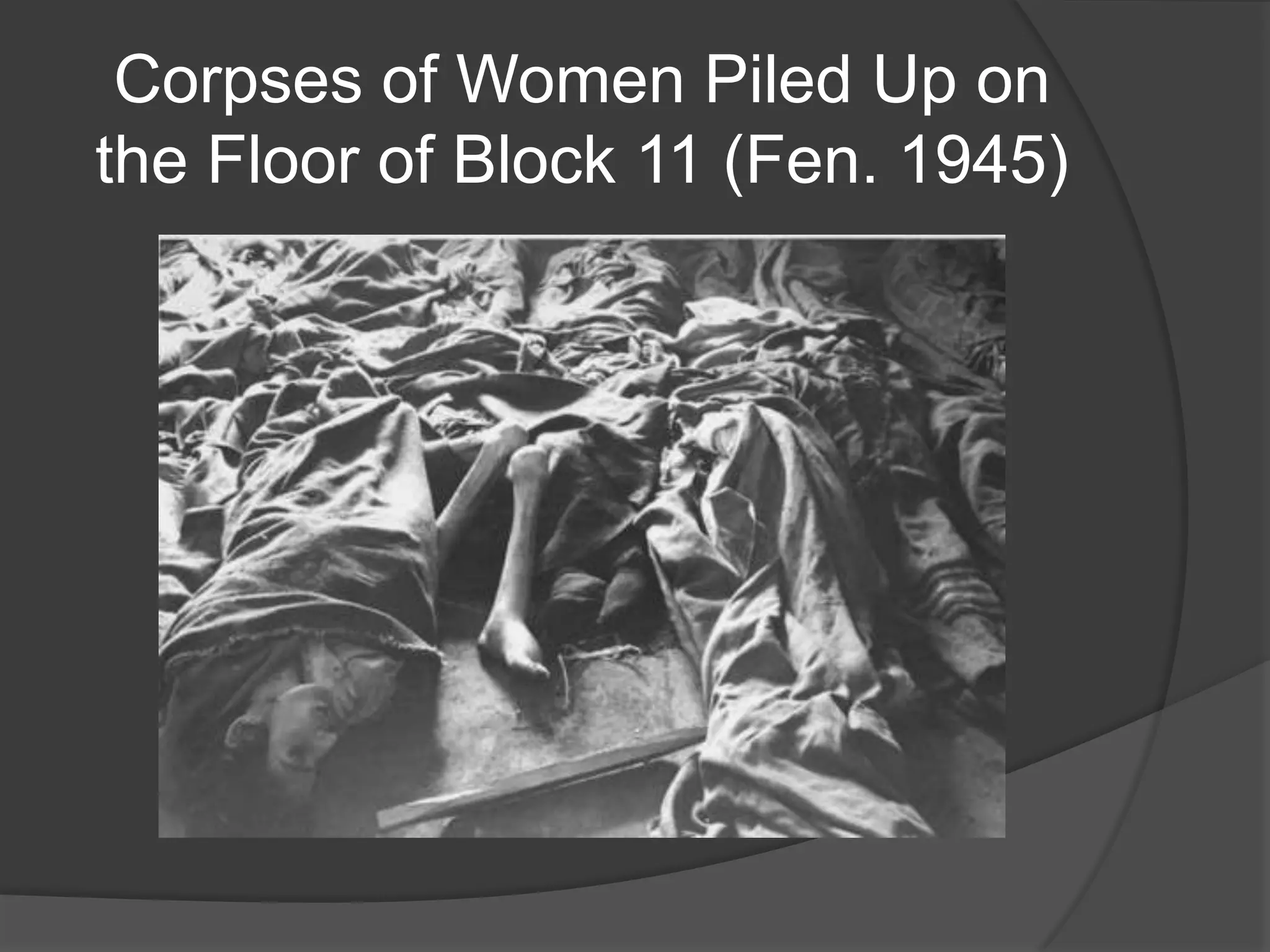
Corpses of Women Piled Up on
the Floor of Block 11 (Fen. 1945)
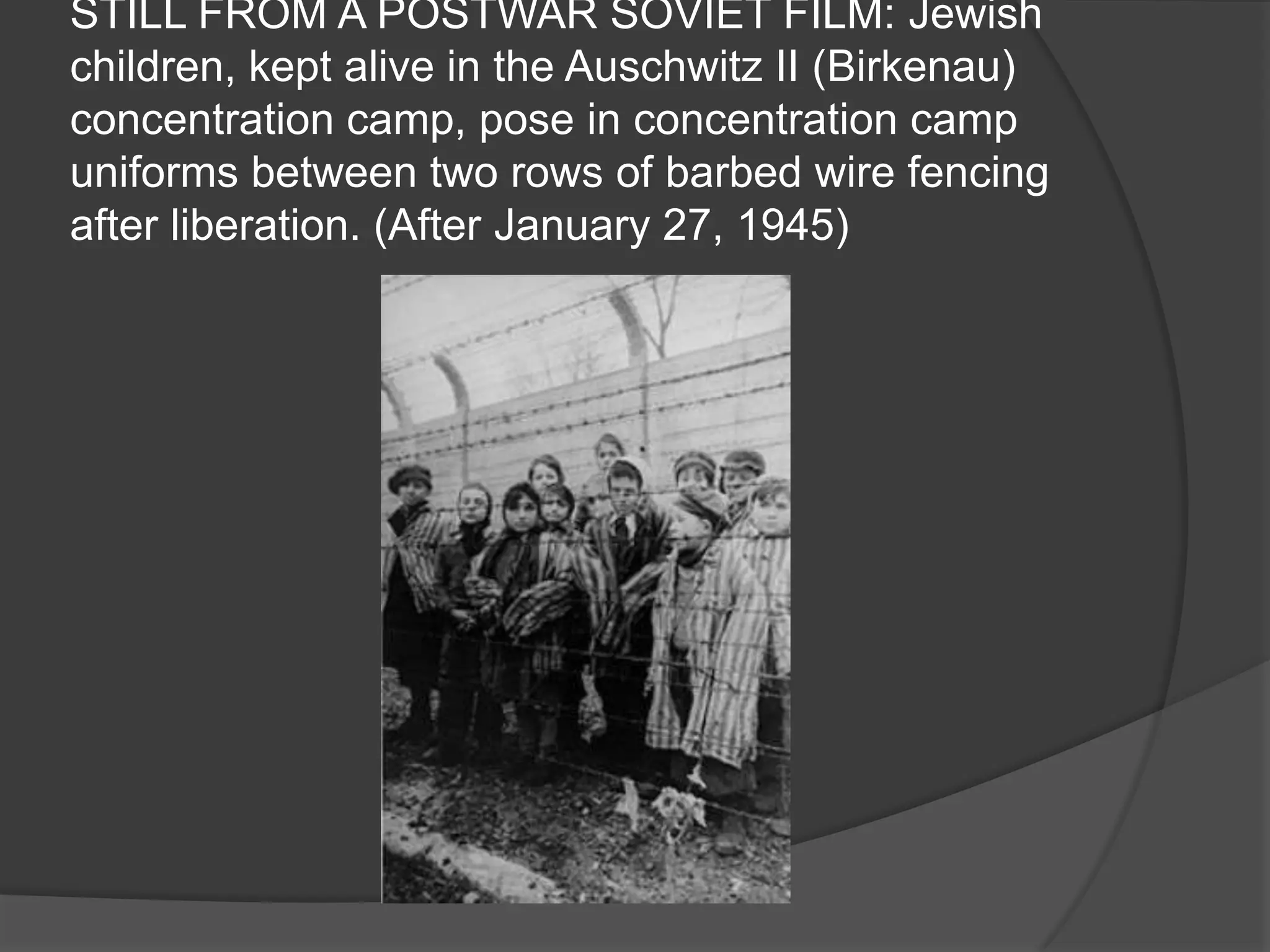
STILL FROM A POSTWAR SOVIET FILM: Jewish
children, kept alive in the Auschwitz II (Birkenau)
concentration camp, pose in concentration camp
uniforms between two rows of barbed wire fencing
after liberation. (After January 27, 1945)
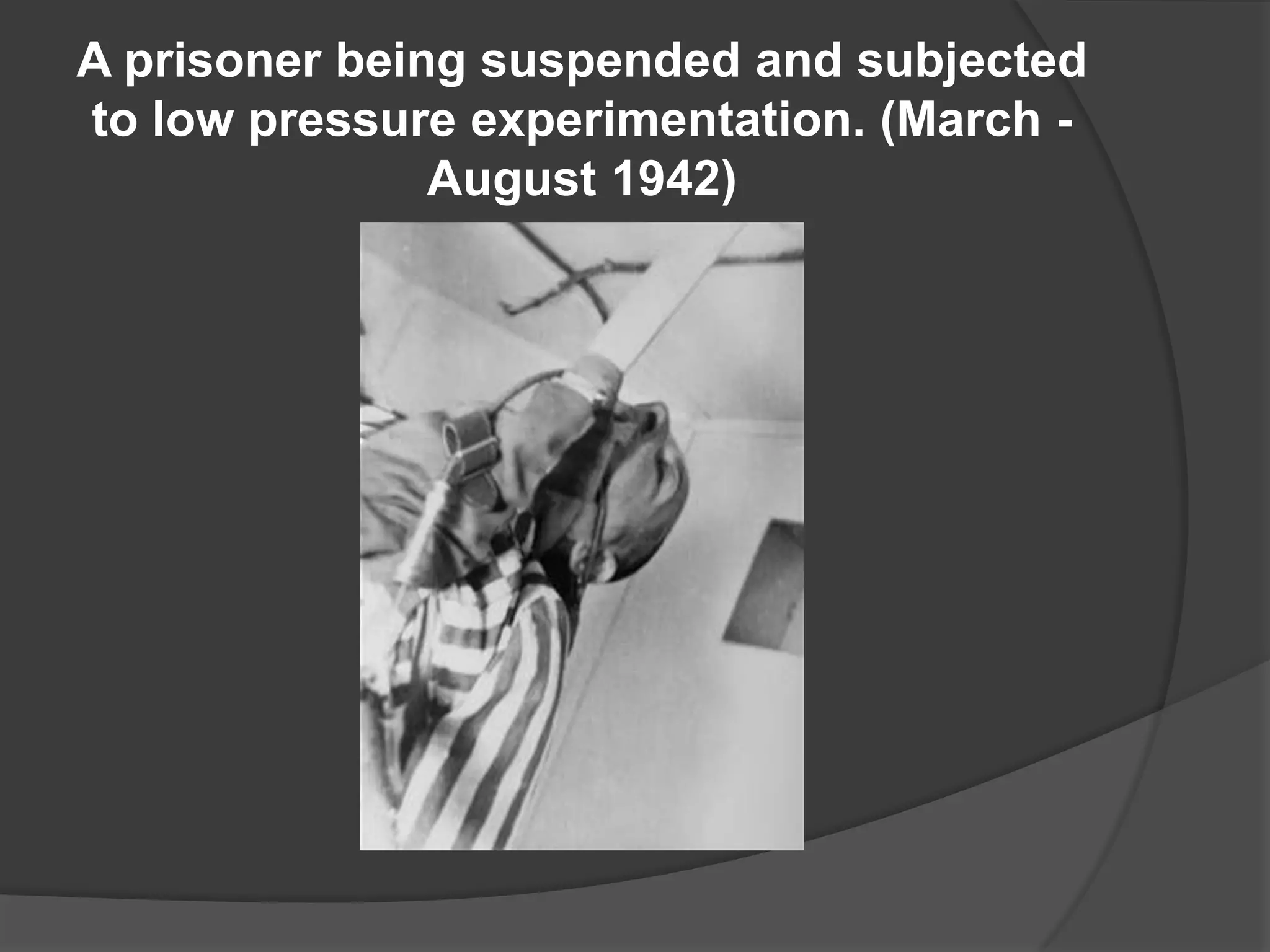
A prisoner being suspended and subjected
to low pressure experimentation. (March -
               August 1942)
Burning the Bodies

Intro the holocaust

  • 1.
  • 2.
    What was theHolocaust?  The Holocaust refers to a specific genocidal event in twentieth-century history: the state sponsored, systematic persecution and annihilation of European Jewry by Nazi German and its collaborators between 1933 and 1945.
  • 3.
    What does Holocaust Mean? “Holocaust" is a word of Greek origin meaning "sacrifice by fire."  The Nazis, who came to power in Germany in January 1933, believed that Germans were "racially superior" and that the Jews, deemed "inferior," were an alien threat to the so-called German racial community.
  • 4.
    What does "StateSponsored" and "Systemic" Mean?
  • 5.
    State Sponsored andSystemic Mean…  The government made decisions that would support the “cleansing” of Germany at every level such at: school, police, politicians, and government officials.
  • 6.
    The Introduction ofHitler to Government  Following the appointment of Adolf Hitler as chancellor on January 30, 1933, the Nazi state (also referred to as the Third Reich) quickly became a regime in which Germans enjoyed no guaranteed basic rights. This applied TO ALL GERMANS!
  • 7.
    The People ofGermany Were No Longer Safe!
  • 8.
    Killing of theSick and Weak  At least 200,000 mentally or physically disabled patients, mainly Germans, living in institutional settings, were murdered in the so-called Euthanasia Program.
  • 9.
    Killing Children  The Reich Ministry of the Interior circulated a decree compelling all physicians, nurses, and midwives to report newborn infants and children under the age of three who showed signs of severe mental or physical disability.
  • 10.
    Two young brothers,seated for a family photograph in the Kovno ghetto. One month later, they were deported to the Majdanek camp. Kovno, Lithuania, February 1944.
  • 11.
    Murder  Public health authorities began to encourage parents of children with disabilities to admit their young children to one of a number of specially designated pediatric clinics throughout Germany and Austria. The clinics were in reality children's killing wards where specially recruited medical staff murdered their young charges by lethal overdoses of medication or by starvation.
  • 12.
    The Germans andtheir collaborators killed as many as 1.5 million children  The fate of Jewish and non-Jewish children can be categorized in the following way: 1) children killed when they arrived in killing centers; 2) children killed immediately after birth or in institutions; 3) children born in ghettos and camps who survived because prisoners hid them; 4) children, usually over age 12, who were used as laborers and as subjects of medical experiments; and 5) those children killed during reprisal operations or so-called anti-partisan operations.
  • 13.
    The Killing Spreads  During the era of the Holocaust, German authorities also targeted other groups because of their perceived "racial inferiority": Roma (Gypsies), the disabled, and some of the Slavic peoples (Poles, Russians, and others). Other groups were persecuted on political, ideological, and behavioral grounds, among them Communists, Socialists, Jehovah's Witnesses, and homosexuals.
  • 14.
  • 15.
    The Ghettos  During World War II, ghettos were city districts (often enclosed) in which the Germans concentrated the municipal and sometimes regional Jewish population and forced them to live under miserable conditions.
  • 16.
    Ghettos and Escaping Poland  St. Louis
  • 17.
  • 18.
    Jewish man andchildren in Kutno, 1940 (Photo: Getty Images) More Photos…
  • 19.
  • 20.
  • 21.
    More Maps  Introductionto Maps  Auschwitz  Dachau
  • 22.
    The Camps-Dachau  In the early years of the Nazi regime, the National Socialist government established concentration camps to detain real and imagined political and ideological opponents.
  • 23.
    Barracks in thequarry camp of the Natzweiler- Struthof concentration camp.
  • 24.
    Aerial view ofNeuengamme concentration camp.
  • 25.
    Prisoners Loading upOn Cattle Cars to Auschwitz-Birkenau
  • 26.
  • 27.
  • 28.
  • 29.
  • 30.
    View of thewalled entrance to the gas chamber in the main camp of Auschwitz (Auschwitz I). This gas chamber was in use for only a short time before being converted into a bomb shelter. In the background is a building used by the Gestapo as a regional headquarters. (April 1945)
  • 31.
  • 32.
    Inside a GasChamber
  • 33.
  • 34.
    Two ovens insidethe crematorium at the Dachau concentration camp. (July 1, 1945)
  • 35.
  • 36.
    To Understand theScale of Loss of Life….
  • 37.
  • 38.
  • 39.
  • 40.
  • 41.
    Corpses of WomenPiled Up on the Floor of Block 11 (Fen. 1945)
  • 42.
    STILL FROM APOSTWAR SOVIET FILM: Jewish children, kept alive in the Auschwitz II (Birkenau) concentration camp, pose in concentration camp uniforms between two rows of barbed wire fencing after liberation. (After January 27, 1945)
  • 43.
    A prisoner beingsuspended and subjected to low pressure experimentation. (March - August 1942)
  • 44.