Asignacion:redes Informatica
Maestro :Lic.NahúnMartínez
Alumno :Brandon samuel A.R
Trabajo :díapositivode internetdelas
cosas
INTERNET EN LAS
COSAS
Iintelligence en las cosas
¿Desde cuendo el internet llego a
nuestra vida?R//:La historia de Internet se remonta al
desarrollo de las redes de comunicación. La idea de una red de
ordenadores creada para permitir la comunicación general entre
usuarios de varias computadoras sea tanto desarrollos tecnológicos
como la fusión de la infraestructura de la red ya existente y los
sistemas de telecomunicaciones. La primera descripción
documentada acerca de las interacciones sociales que podrían ser
propiciadas a través del networking (trabajo en red) está contenida
en una serie de memorandos escritos por J. C. R. Licklider, del
Instituto Tecnológico de Massachusetts, en agosto de 1962, en los
cuales Licklider discute sobre su concepto de Galactic Network (Red
Galáctica). Las versiones más antiguas de estas ideas aparecieron a
finales de los años cincuenta. Implementaciones prácticas de estos
conceptos empezaron a finales de los ochenta y a lo largo de los
noventa. En la década de 1990, tecnologías que reconoceríamos
como las bases de la moderna Internet, empezaron a expandirse por
todo el mundo. En los noventa se introdujo la World Wide Web
(WWW), que se hizo común.
¿QUE ES EL INTERNET
EN LAS COSAS ?
E L I N T E R N E T D E L A S C O S A S
( I D C ) D E S C R I B E O B J E T O S
F Í S I C O S ( O G R U P O S D E
E S T O S ) C O N S E N S O R E S ,
C A P A C I D A D D E
P R O C E S A M I E N T O , S O F T W A R E
Y O T R A S Q U E S E C O N E C T A N
E I N T E R C A M B I A N D A T O S C O N
O T R O S D I S P O S I T I V O S Y
S I S T E M A S A T R A V É S D E
I N T E R N E T U O T R A S R E D E S
D E C O M U N I C A C I Ó N . 1 ​ 2 ​ 3 ​ 4 ​ E L
I N T E R N E T D E L A S C O S A S S E
H A C O N S I D E R A D O U N
T É R M I N O E R R Ó N E O P O R Q U E
L O S D I S P O S I T I V O S N O
N E C E S I T A N E S T A R
C O N E C T A D O S A L A I N T E R N E T
P Ú B L I C A . S Ó L O N E C E S I T A N
E S T A R C O N E C T A D A S A U N A
R E D Y S E R D I R E C C I O N A B L E S
I N D I V I D U A L M E N T E . 5 ​ 6 ​
3
PRODUCTOS INTELIGENTES
1 ) T E R M O S T A T O I N T E L I G E N T E
2 ) C O M P U T A D O R A S
3 ) S M A R T P H O N E
4 ) S I R I
5 ) Y O T R O S
4
VENTAGAS DEL INTERNET DE LAS
COSAS
5
S E L E C T I N G
V I S U A L A I D S
E N H A N C I N G Y O U R P R E S E N TAT I O N
EFFECTIVE DELIVERY TECHNIQUES
This is a powerful tool in public
speaking. It involves varying pitch,
tone, and volume to convey emotion,
emphasize points, and maintain
interest.
• Pitch variation
• Tone inflection
• Volume control
Effective body language enhances
your message, making it more
impactful and memorable.
• Meaningful eye contact
• Purposeful gestures
• Maintain good posture
• Control your expressions
7
NAVIGATING Q&A SESSIONS
1. Know your material in advance
2. Anticipate common questions
3. Rehearse your responses
Maintaining composure during the Q&A session is essential
for projecting confidence and authority. Consider the
following tips for staying composed:
• Stay calm
• Actively listen
• Pause and reflect
• Maintain eye contact
8
SPEAKING IMPACT
Your ability to communicate effectively
will leave a lasting impact on your
audience
Effectively communicating involves not
only delivering a message but also
resonating with the experiences, values,
and emotions of those listening
9
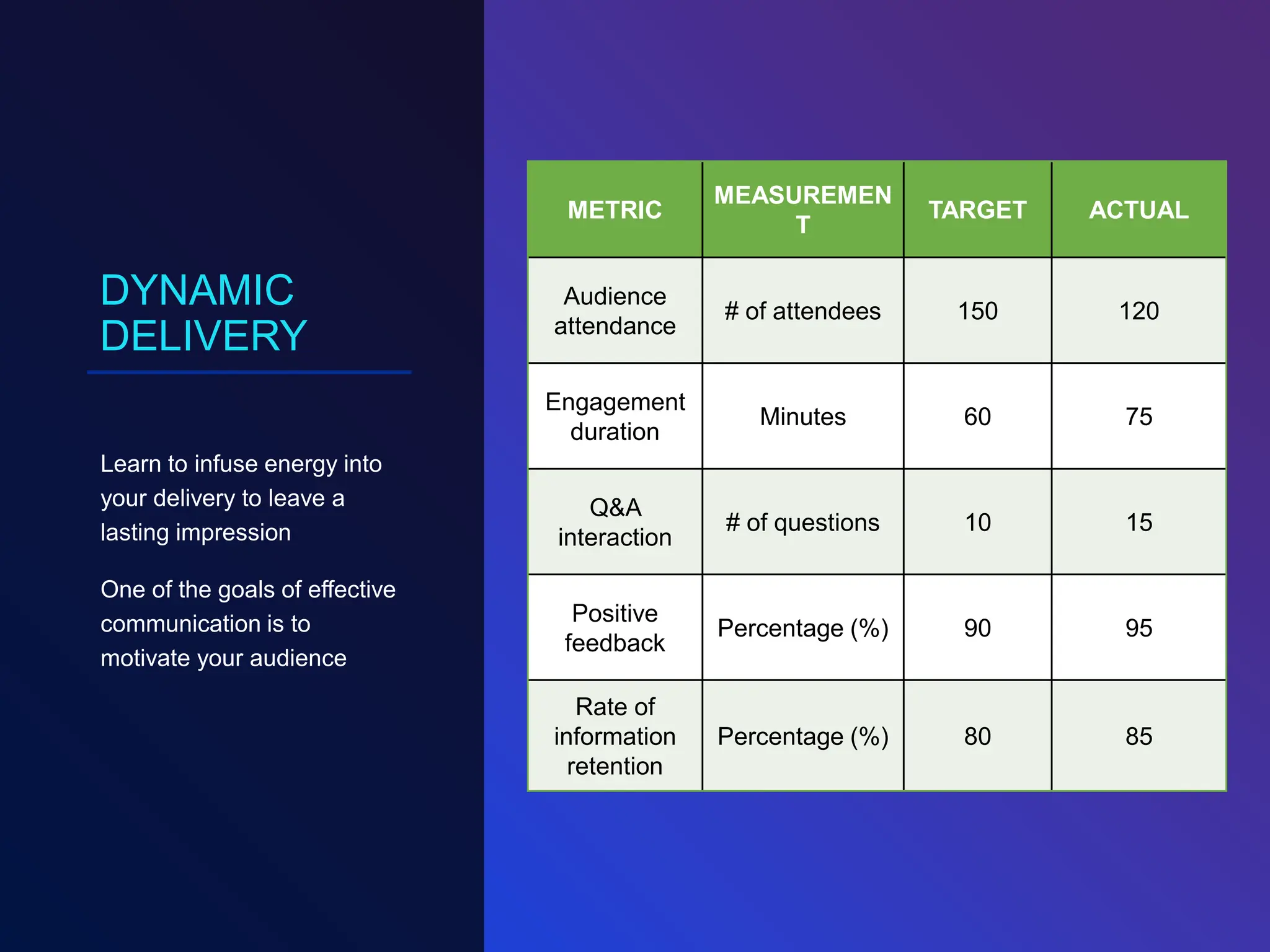
DYNAMIC
DELIVERY
Learn to infuse energy into
your delivery to leave a
lasting impression
One of the goals of effective
communication is to
motivate your audience
METRIC
MEASUREMEN
T
TARGET ACTUAL
Audience
attendance
# of attendees 150 120
Engagement
duration
Minutes 60 75
Q&A
interaction
# of questions 10 15
Positive
feedback
Percentage (%) 90 95
Rate of
information
retention
Percentage (%) 80 85
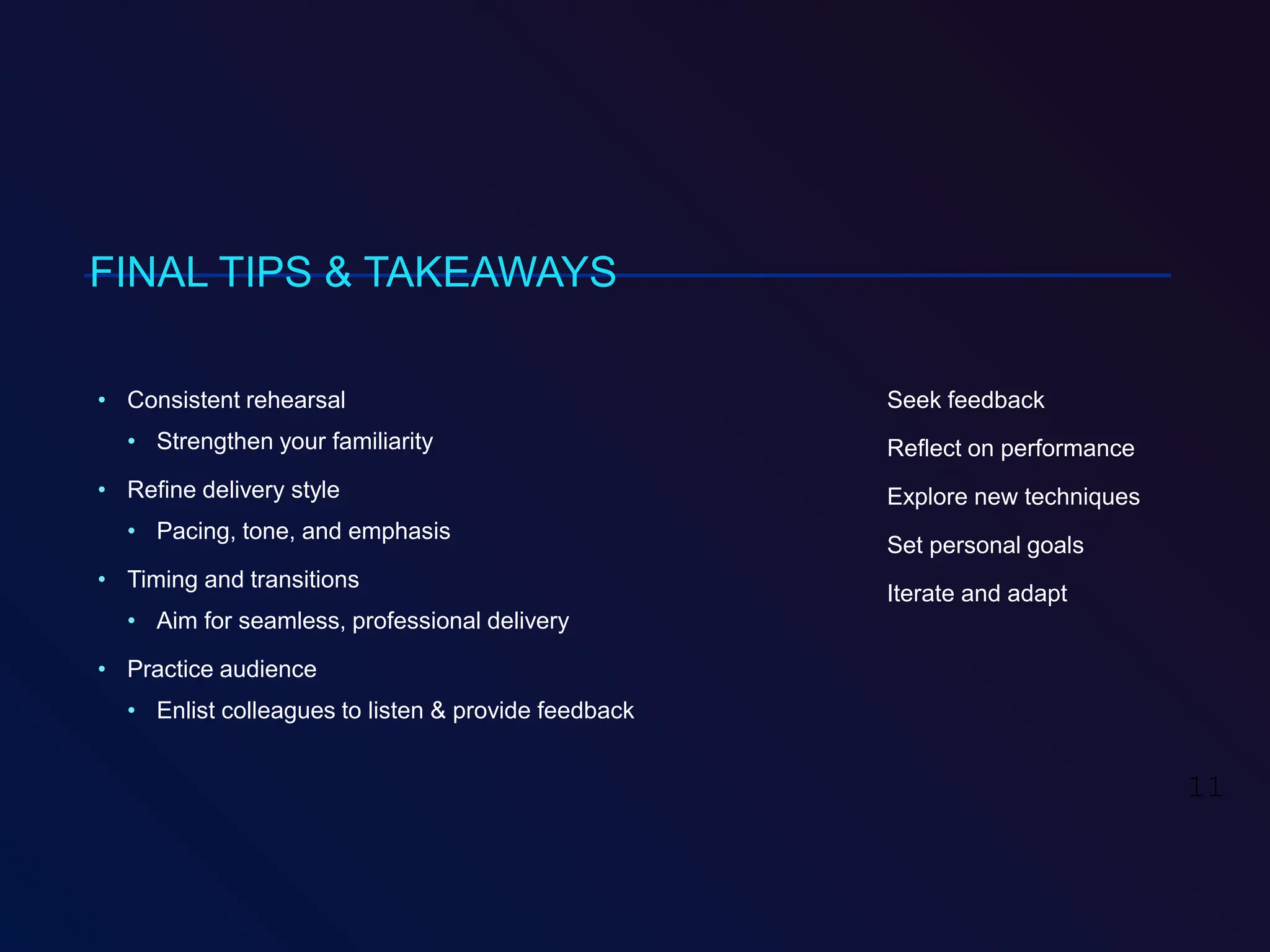
FINAL TIPS & TAKEAWAYS
• Consistent rehearsal
• Strengthen your familiarity
• Refine delivery style
• Pacing, tone, and emphasis
• Timing and transitions
• Aim for seamless, professional delivery
• Practice audience
• Enlist colleagues to listen & provide feedback
Seek feedback
Reflect on performance
Explore new techniques
Set personal goals
Iterate and adapt
11
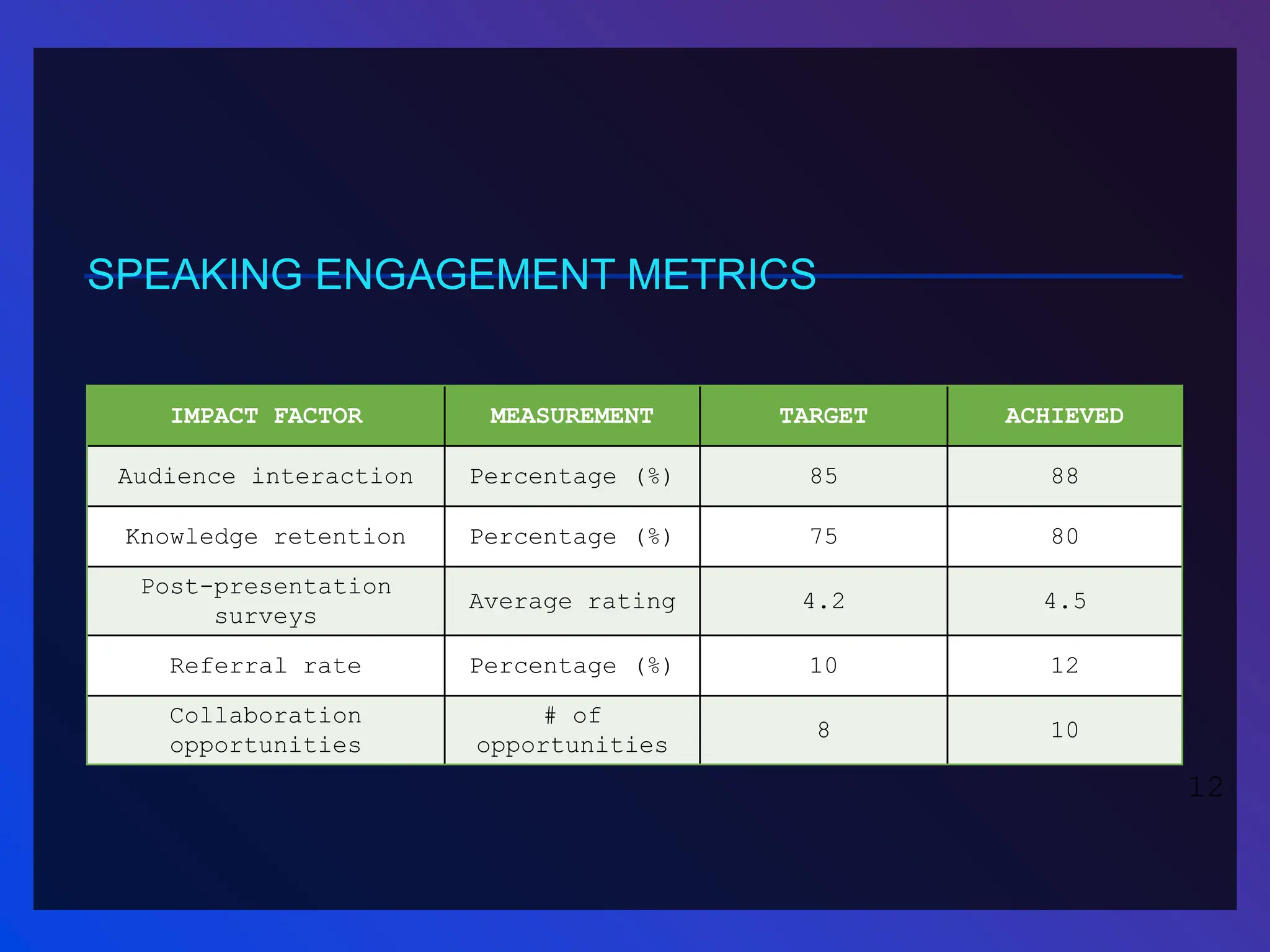
SPEAKING ENGAGEMENT METRICS
IMPACT FACTOR MEASUREMENT TARGET ACHIEVED
Audience interaction Percentage (%) 85 88
Knowledge retention Percentage (%) 75 80
Post-presentation
surveys
Average rating 4.2 4.5
Referral rate Percentage (%) 10 12
Collaboration
opportunities
# of
opportunities
8 10
12
THANK YOU
Mirjam Nilsson​
206-555-0146
mirjam@contoso.com
www.contoso.com

INTERNET DE LAS COSAS presentación final

  • 1.
    Asignacion:redes Informatica Maestro :Lic.NahúnMartínez Alumno:Brandon samuel A.R Trabajo :díapositivode internetdelas cosas
  • 2.
    INTERNET EN LAS COSAS Iintelligenceen las cosas ¿Desde cuendo el internet llego a nuestra vida?R//:La historia de Internet se remonta al desarrollo de las redes de comunicación. La idea de una red de ordenadores creada para permitir la comunicación general entre usuarios de varias computadoras sea tanto desarrollos tecnológicos como la fusión de la infraestructura de la red ya existente y los sistemas de telecomunicaciones. La primera descripción documentada acerca de las interacciones sociales que podrían ser propiciadas a través del networking (trabajo en red) está contenida en una serie de memorandos escritos por J. C. R. Licklider, del Instituto Tecnológico de Massachusetts, en agosto de 1962, en los cuales Licklider discute sobre su concepto de Galactic Network (Red Galáctica). Las versiones más antiguas de estas ideas aparecieron a finales de los años cincuenta. Implementaciones prácticas de estos conceptos empezaron a finales de los ochenta y a lo largo de los noventa. En la década de 1990, tecnologías que reconoceríamos como las bases de la moderna Internet, empezaron a expandirse por todo el mundo. En los noventa se introdujo la World Wide Web (WWW), que se hizo común.
  • 3.
    ¿QUE ES ELINTERNET EN LAS COSAS ? E L I N T E R N E T D E L A S C O S A S ( I D C ) D E S C R I B E O B J E T O S F Í S I C O S ( O G R U P O S D E E S T O S ) C O N S E N S O R E S , C A P A C I D A D D E P R O C E S A M I E N T O , S O F T W A R E Y O T R A S Q U E S E C O N E C T A N E I N T E R C A M B I A N D A T O S C O N O T R O S D I S P O S I T I V O S Y S I S T E M A S A T R A V É S D E I N T E R N E T U O T R A S R E D E S D E C O M U N I C A C I Ó N . 1 ​ 2 ​ 3 ​ 4 ​ E L I N T E R N E T D E L A S C O S A S S E H A C O N S I D E R A D O U N T É R M I N O E R R Ó N E O P O R Q U E L O S D I S P O S I T I V O S N O N E C E S I T A N E S T A R C O N E C T A D O S A L A I N T E R N E T P Ú B L I C A . S Ó L O N E C E S I T A N E S T A R C O N E C T A D A S A U N A R E D Y S E R D I R E C C I O N A B L E S I N D I V I D U A L M E N T E . 5 ​ 6 ​ 3
  • 4.
    PRODUCTOS INTELIGENTES 1 )T E R M O S T A T O I N T E L I G E N T E 2 ) C O M P U T A D O R A S 3 ) S M A R T P H O N E 4 ) S I R I 5 ) Y O T R O S 4
  • 5.
    VENTAGAS DEL INTERNETDE LAS COSAS 5
  • 6.
    S E LE C T I N G V I S U A L A I D S E N H A N C I N G Y O U R P R E S E N TAT I O N
  • 7.
    EFFECTIVE DELIVERY TECHNIQUES Thisis a powerful tool in public speaking. It involves varying pitch, tone, and volume to convey emotion, emphasize points, and maintain interest. • Pitch variation • Tone inflection • Volume control Effective body language enhances your message, making it more impactful and memorable. • Meaningful eye contact • Purposeful gestures • Maintain good posture • Control your expressions 7
  • 8.
    NAVIGATING Q&A SESSIONS 1.Know your material in advance 2. Anticipate common questions 3. Rehearse your responses Maintaining composure during the Q&A session is essential for projecting confidence and authority. Consider the following tips for staying composed: • Stay calm • Actively listen • Pause and reflect • Maintain eye contact 8
  • 9.
    SPEAKING IMPACT Your abilityto communicate effectively will leave a lasting impact on your audience Effectively communicating involves not only delivering a message but also resonating with the experiences, values, and emotions of those listening 9
  • 10.
    DYNAMIC DELIVERY Learn to infuseenergy into your delivery to leave a lasting impression One of the goals of effective communication is to motivate your audience METRIC MEASUREMEN T TARGET ACTUAL Audience attendance # of attendees 150 120 Engagement duration Minutes 60 75 Q&A interaction # of questions 10 15 Positive feedback Percentage (%) 90 95 Rate of information retention Percentage (%) 80 85
  • 11.
    FINAL TIPS &TAKEAWAYS • Consistent rehearsal • Strengthen your familiarity • Refine delivery style • Pacing, tone, and emphasis • Timing and transitions • Aim for seamless, professional delivery • Practice audience • Enlist colleagues to listen & provide feedback Seek feedback Reflect on performance Explore new techniques Set personal goals Iterate and adapt 11
  • 12.
    SPEAKING ENGAGEMENT METRICS IMPACTFACTOR MEASUREMENT TARGET ACHIEVED Audience interaction Percentage (%) 85 88 Knowledge retention Percentage (%) 75 80 Post-presentation surveys Average rating 4.2 4.5 Referral rate Percentage (%) 10 12 Collaboration opportunities # of opportunities 8 10 12
  • 13.