International Trade
      Silk Road
Presentation by Petras Zibolis
       VVEK TAK-10
Content
 What is Silk Road       Renewing the trade
 Cultural exchange       Present day
 Nature of the route     Restoration and
 Development of the      tourism
  route
 Best years
 Mongols
 Decline of the route
Silk Road
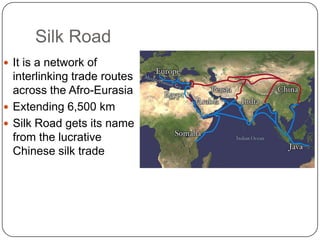
 It is a network of
  interlinking trade routes
  across the Afro-Eurasia
 Extending 6,500 km
 Silk Road gets its name
  from the lucrative
  Chinese silk trade
Cultural exchange
 Silk Road spread and
 intermixed ideas
 religions and cultures
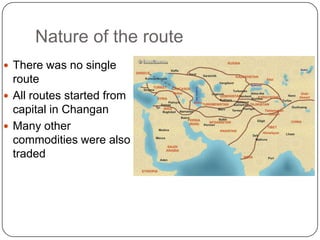
Nature of the route
 There was no single
  route
 All routes started from
  capital in Changan
 Many other
  commodities were also
  traded
Development of the route
 Policing the route was
  troublesome
 Built defensive forts
  and walls
 This way spread
  Christianity
Best Silk Roads years
 Changan developed
  into biggest and most
  cosmopolitan city of
  that time
 Many foreigners lived
  in the city
Mongols
 More symphatetic to
  religion
 Continued trading
  along the Silk Road
 Marco Polo travels
Decline of the Route
 Mongol empire
  fragmented
 Black death affected
  the routes and trades
 Mercantilism spread
  from the west
Renewing the trade
 After Mongols Silk
  Road dissapears
 Portugese look for a
  way to renew trade
  routes
 This resulted in first
  maritime trade post
  Europe China
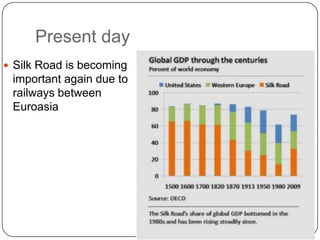
Present day
 Silk Road is becoming
 important again due to
 railways between
 Euroasia
Restoration and tourism
 Interest in this ancient
  trade route grows
 People are inspired by
  Marco Polo
 Archaeological
  excavations have
  been started
International trade "silk road"

International trade "silk road"

  • 1.
    International Trade Silk Road Presentation by Petras Zibolis VVEK TAK-10
  • 2.
    Content  What isSilk Road  Renewing the trade  Cultural exchange  Present day  Nature of the route  Restoration and  Development of the tourism route  Best years  Mongols  Decline of the route
  • 3.
    Silk Road  Itis a network of interlinking trade routes across the Afro-Eurasia  Extending 6,500 km  Silk Road gets its name from the lucrative Chinese silk trade
  • 4.
    Cultural exchange  SilkRoad spread and intermixed ideas religions and cultures
  • 5.
    Nature of theroute  There was no single route  All routes started from capital in Changan  Many other commodities were also traded
  • 6.
    Development of theroute  Policing the route was troublesome  Built defensive forts and walls  This way spread Christianity
  • 7.
    Best Silk Roadsyears  Changan developed into biggest and most cosmopolitan city of that time  Many foreigners lived in the city
  • 8.
    Mongols  More symphateticto religion  Continued trading along the Silk Road  Marco Polo travels
  • 9.
    Decline of theRoute  Mongol empire fragmented  Black death affected the routes and trades  Mercantilism spread from the west
  • 10.
    Renewing the trade After Mongols Silk Road dissapears  Portugese look for a way to renew trade routes  This resulted in first maritime trade post Europe China
  • 11.
    Present day  SilkRoad is becoming important again due to railways between Euroasia
  • 12.
    Restoration and tourism Interest in this ancient trade route grows  People are inspired by Marco Polo  Archaeological excavations have been started