International Financial Management, 9th Edition Eun
1.
International Financial Management,9th Edition
Eun install download
https://ebookmeta.com/product/international-financial-
management-9th-edition-eun/
Download more ebook from https://ebookmeta.com
2.
We believe theseproducts will be a great fit for you. Click
the link to download now, or visit ebookmeta.com
to discover even more!
International Financial Management, 14e Jeff Madura
https://ebookmeta.com/product/international-financial-
management-14e-jeff-madura/
International Financial Management, 6th Edition Jeff
Madura
https://ebookmeta.com/product/international-financial-
management-6th-edition-jeff-madura/
Financial and Managerial Accounting 9th Edition John
Wild
https://ebookmeta.com/product/financial-and-managerial-
accounting-9th-edition-john-wild/
Causal Artificial Intelligence: The Next Step in
Effective Business AI 1st Edition Judith S. Hurwitz
https://ebookmeta.com/product/causal-artificial-intelligence-the-
next-step-in-effective-business-ai-1st-edition-judith-s-hurwitz/
3.
We (Penguin Vitae)Zamyatin
https://ebookmeta.com/product/we-penguin-vitae-zamyatin/
Clash of Cultures The Romano British Period in the West
Midlands The Making of the West Midlands Book 3 Roger
White
https://ebookmeta.com/product/clash-of-cultures-the-romano-
british-period-in-the-west-midlands-the-making-of-the-west-
midlands-book-3-roger-white/
Homebuilding & Renovating • The Ultimate Guide to
Extending Your Home, 4th Edition [UK] Homebuilding &
Renovating
https://ebookmeta.com/product/homebuilding-renovating-the-
ultimate-guide-to-extending-your-home-4th-edition-uk-
homebuilding-renovating/
Elite Capture How the Powerful Took Over Identity
Politics And Everything Else 8th Edition Táíwò
https://ebookmeta.com/product/elite-capture-how-the-powerful-
took-over-identity-politics-and-everything-else-8th-edition-
taiwo/
Books of the Brave: Being an Account of Books and of
Men in the Spanish Conquest and Settlement of the
Sixteenth-Century New World Irving A. Leonard
https://ebookmeta.com/product/books-of-the-brave-being-an-
account-of-books-and-of-men-in-the-spanish-conquest-and-
settlement-of-the-sixteenth-century-new-world-irving-a-leonard/
page ii
The McGraw-HillEducation Series in Finance,
Insurance, and Real Estate
FINANCIAL MANAGEMENT
Block, Hirt, and Danielsen
Foundations of Financial Management
Seventeenth Edition
Brealey, Myers, and Allen
Principles of Corporate Finance
Thirteenth Edition
Brealey, Myers, and Allen
Principles of Corporate Finance, Concise
Second Edition
Brealey, Myers, and Marcus
Fundamentals of Corporate Finance
Tenth Edition
Brooks
FinGame Online 5.0
Bruner, Eades, and Schill
Case Studies in Finance: Managing for Corporate Value Creation
Eighth Edition
Cornett, Adair, and Nofsinger
Finance: Applications and Theory
Fifth Edition
Cornett, Adair, and Nofsinger
M: Finance
Fourth Edition
DeMello
Cases in Finance
Third Edition
Grinblatt (editor)
Stephen A. Ross, Mentor: Influence through Generations
8.
Grinblatt and Titman
FinancialMarkets and Corporate Strategy
Second Edition
Higgins
Analysis for Financial Management
Twelfth Edition
Ross, Westerfield, Jaffe, and Jordan
Corporate Finance
Twelfth Edition
Ross, Westerfield, Jaffe, and Jordan
Corporate Finance: Core Principles and Applications
Sixth Edition
Ross, Westerfield, and Jordan
Essentials of Corporate Finance
Tenth Edition
Ross, Westerfield, and Jordan
Fundamentals of Corporate Finance
Twelfth Edition
Shefrin
Behavioral Corporate Finance: Decisions That Create Value
Second Edition
INVESTMENTS
Bodie, Kane, and Marcus
Essentials of Investments
Eleventh Edition
Bodie, Kane, and Marcus
Investments
Twelfth Edition
Hirt and Block
Fundamentals of Investment Management
Tenth Edition
Jordan, Miller, and Dolvin
Fundamentals of Investments: Valuation and Management
Ninth Edition
Stewart, Piros, and Heisler
Running Money: Professional Portfolio Management
First Edition
9.
Sundaram and Das
Derivatives:Principles and Practice
Second Edition
FINANCIAL INSTITUTIONS AND MARKETS
Rose and Hudgins
Bank Management and Financial Services
Ninth Edition
Rose and Marquis
Financial Institutions and Markets
Eleventh Edition
Saunders and Cornett
Financial Institutions Management: A Risk Management Approach
Tenth Edition
Saunders and Cornett
Financial Markets and Institutions
Seventh Edition
INTERNATIONAL FINANCE
Eun, Resnick, and Chuluun
International Financial Management
Ninth Edition
REAL ESTATE
Brueggeman and Fisher
Real Estate Finance and Investments
Sixteenth Edition
Ling and Archer
Real Estate Principles: A Value Approach
Fifth Edition
FINANCIAL PLANNING AND INSURANCE
Allen, Melone, Rosenbloom, and Mahoney
Retirement Plans: 401(k)s, IRAs, and Other Deferred Compensation
Approaches
Twelfth Edition
Altfest
Personal Financial Planning
Second Edition
10.
Harrington and Niehaus
RiskManagement and Insurance
Second Edition
Kapoor, Dlabay, Hughes, and Hart
Focus on Personal Finance: An Active Approach to Help You Achieve
Financial Literacy
Sixth Edition
Kapoor, Dlabay, Hughes, and Hart
Personal Finance
Thirteenth Edition
Walker and Walker
Personal Finance: Building Your Future
Second Edition
All credits appearingon page or at the end of the book are considered to be an
extension of the copyright page.
The Internet addresses listed in the text were accurate at the time of publication.
The inclusion of a website does not indicate an endorsement by the authors or
McGraw Hill LLC, and McGraw Hill LLC does not guarantee the accuracy of the
information presented at these sites.
mheducation.com/highered
15.
page v
page vi
ToElizabeth
C.S.E.
To Donna
B.G.R.
To Arig and Amur
T.C.
16.
page vii
About theAuthors
Cheol S. Eun,
Georgia Institute of Technology
Cheol S. Eun (Ph.D., NYU) is the Thomas R. Williams Chair and
Professor of Finance at the Scheller
College of Business,
Georgia
Institute of Technology. Before joining
Georgia Tech, he taught at
the University of Minnesota and the University of Maryland. He also
taught at the
Wharton School of the University of Pennsylvania,
Korea Advanced Institute of Science and Technology (KAIST),
Singapore Management University, and the Esslingen University of
Technology (Germany) as a visiting professor. He has published
extensively on international finance issues in such major journals as
the Journal of Finance, Journal of Financial Economics, JFQA, Journal
of Banking and Finance, Journal of International Money and Finance,
Management Science, and Oxford Economic Papers. Also, he has
served on the editorial boards of the Journal of Banking and Finance,
Journal of Financial Research, Journal of International Business
Studies, and European Financial Management. His research is widely
quoted and referenced in various scholarly articles and textbooks in
the United States as well as abroad.
Dr. Eun is the founding chair of the Fortis/Georgia Tech
Conference on International Finance. The key objectives of the
conference are to promote research on international finance and
provide a forum for interactions among academics, practitioners, and
17.
page viii
regulators whoare interested in vital current issues of international
finance.
Dr. Eun has taught a variety of courses at the undergraduate,
graduate, and executive levels, and was the winner of the Krowe
Teaching Excellence Award at the University of Maryland. He also
has served as a consultant to many national and international
organizations, including the World Bank, Apex Capital, and the
Korean Development Institute, advising on issues relating to capital
market liberalization, global capital raising, international investment,
and exchange risk management. In addition, he has been a frequent
speaker at academic and professional meetings held throughout the
world.
Bruce G. Resnick,
Wake Forest University
Bruce G. Resnick is Professor Emeritus of Finance at the Wake Forest
University School of Business in Winston-Salem, North Carolina. Prior
to retiring, he was the Joseph M. Bryan Jr. Professor of Banking and
Finance. He has a D.B.A. in finance from Indiana University.
Additionally, he has an M.B.A. from the University of Colorado and a
B.B.A. from the University of Wisconsin-Oshkosh. Prior to coming to
Wake Forest, he taught at Indiana University for ten years,
the University of Minnesota for five years, and California
State University, Chico for two years. He has also taught as a visiting
professor at Bond University, Gold Coast, Queensland, Australia, and
at the Helsinki School of Economics and Business Administration in
Finland. Additionally, he served as the Indiana University resident
director at the Center for European Studies at Maastricht University,
the Netherlands. He also served as an external examiner to the
Business Administration Department of Singapore Polytechnic and as
the faculty advisor on Wake Forest University study trips to Japan,
China, and Hong Kong.
Dr. Resnick taught M.B.A. courses at Wake Forest University. He
specialized in the areas of investments, portfolio management, and
18.
international financial management.Dr. Resnick’s research interests
include market efficiency studies of options and financial futures
markets and empirical tests of asset pricing models. A major interest
has been the optimal design of internationally diversified portfolios
constructed to control for parameter uncertainty and exchange rate
risk. In recent years, he has focused on information transmission in
the world money markets and yield spread comparisons of domestic
and international bonds. His research articles have been published in
most of the major academic journals in finance. His research is
widely cited by other researchers and textbook authors. He served
as an associate editor for the Journal of Financial Research,
Emerging Markets Review, Journal of Economics and Business, and
the Journal of Multinational Financial Management.
Tuugi Chuluun,
Loyola University Maryland
Tuugi Chuluun is an Associate Professor of Finance at Sellinger
School of Business and Management at Loyola University Maryland.
Her research areas include international finance, corporate finance,
and behavioral finance. She has published in journals such as
Journal of Banking and Finance, Financial Management, Journal of
Corporate Finance, Journal of Economic Behavior and Organization,
and Small Business Economics. Her research has also been featured
in magazines such as The Economist and Forbes Mongolia and on
popular websites such as HBR.org and Inc.com. She holds a Ph.D. in
Finance from Georgia Institute of Technology, a master’s in Financial
Economics and a bachelor’s degree in Economics from Ohio
University. Dr. Chuluun has taught a variety of undergraduate and
graduate courses, including international finance, corporate finance,
investments, microeconomics, and macroeconomics at Loyola
University Maryland, Georgia Institute of Technology, and West
Virginia University–Parkersburg, often incorporating innovative
teaching practices. At Loyola University Maryland, she was selected
as the ELMBA Program Distinguished Professor of the Year and
19.
received the SellingerSchool STAR Award in Research. She has also
received the Financial Management Association’s Superior Faculty
Advisor award.
Dr. Chuluun holds the Chartered Financial Analyst (CFA)
designation. She is the former president of the CFA Society
Baltimore, Maryland’s largest membership organization for
investment professionals, and has served on the board of the society
since 2013. She was also the co-chair of the “Alpha and Gender
Diversity Baltimore Conference 2018” that was designed to offer
collaborative discussion on how gender diversity creates a
competitive advantage for investment professionals and the broader
finance industry. Dr. Chuluun was a Visiting Scholar at the Brookings
Institution and has international consulting experience.
20.
page ix
Preface
Our Reasonfor Writing this Textbook
We (Cheol and Bruce) have been teaching international financial
management to undergraduates and M.B.A. students at Georgia
Institute of Technology, Wake Forest University, and at other
universities we have visited for more than three decades. During this
time period, we conducted many research studies, published in
major finance and statistics journals, concerning the operation of
international financial markets. As one might imagine, in doing this
we put together an extensive set of teaching materials that we used
successfully in the classroom. As the years went by, we individually
relied more on our own teaching materials and notes and less on
any one of the major existing textbooks in international finance
(most of which we tried at some point). In this Ninth Edition, we
introduce Tuugi Chuluun from Loyola University Maryland, who joins
us as a co-author and will continue the tradition we have established
in offering up-to-date and timely coverage of the subject of
international financial management.
As you may be aware, the scope and content of international
finance have been fast evolving due to cycles of deregulations and
regulations of financial markets, product innovations, and
technological advancements. As capital markets of the world are
becoming more integrated, a solid understanding of international
finance has become essential for astute corporate decision making.
21.
page x
Reflecting thegrowing importance of international finance as a
discipline, we have seen a sharp increase in the demand for experts
in the area in both the corporate and academic worlds.
In writing International Financial Management, Ninth Edition, our
goal was to provide well-organized, comprehensive, and up-to-date
coverage of the topics that take advantage of our many years of
teaching and research in this area. We hope the text is challenging
to students. This does not mean that it lacks readability. The text
discussion is written so that a self-contained treatment of each
subject is presented in a user-friendly fashion. The text is intended
for use at both the advanced undergraduate and M.B.A. levels.
The Underlying Philosophy
International Financial Management, Ninth Edition, like the first eight
editions, is written based on two tenets: emphasis on the basics and
emphasis on a managerial perspective.
Emphasis on the Basics
We believe that any subject is better learned if one first is well
grounded in the basics. Consequently, we initially devote several
chapters to the fundamental concepts of international finance. After
these are learned, the remaining material flows easily from them.
We always bring the reader back, as the more advanced topics are
developed, to their relationship to the fundamentals. By doing this,
we believe students will be left with a framework for analysis that
will serve them well when they need to apply this material in their
careers in the years ahead.
We believe this approach has produced a successfuI textbook:
International Financial Management is used in many of the best
business schools in the world. Various editions of the
text have been translated into Chinese (in both
traditional and simplified forms), Spanish, and Indonesian. In
22.
addition, local co-authorshave assisted in preparing Malaysian, and
Indian adaptations.
Ninth Edition Organization
International Financial Management, Ninth Edition, has been
completely updated. All data tables and statistics are the most
current available when the text went to press. Additionally, the
chapters incorporate several new International Finance in Practice
boxes that contain real-world illustrations of chapter topics and
concepts. In the margins below, we highlight specific changes in the
Ninth Edition.
23.
page xi
A ManagerialPerspective
The text presentation never loses sight of the fact that it is teaching
students how to make managerial decisions. International Financial
Management, Ninth Edition, is founded in the belief that the
fundamental job of the financial manager is to maximize shareholder
24.
wealth. This beliefpermeates the decision-making process we
present from cover to cover. To reinforce the managerial perspective,
we provide numerous real-world examples whenever appropriate.
25.
page xii
Key Features
Examples—Theseare integrated throughout the text, providing
students with immediate application of the text concepts.
International Finance in Practice Boxes—Selected chapters
contain International Finance in Practice boxes. These real-
world illustrations offer students a practical look at the major
concepts presented in the chapter.
26.
In More Depth—Sometopics are by nature more complex than
others. The chapter sections that contain such material are
indicated by the section heading “In More Depth”’ and are in
colored text. These sections may be skipped without loss of
continuity, enabling the instructor to easily tailor the reading
assignments to the students. End-of-chapter Questions and
Problems relating to the In More Depth sections of the text are
also indicated by blue type.
27.
page xiii
Questions andProblems—Each chapter contains a set of
Questions and problems. This material can be used by
students on their own to test their understanding of the
material, or as homework exercises assigned by the instructor.
Questions and Problems relating to the in more depth sections
of the text are indicated by blue type.
28.
Questions with ExcelSoftware—An icon in the margin indicates
that the end-of-chapter question is linked to an Excel program
created by the authors. See the Ancillary Materials section for
more information on the software.
CFA Questions—Many chapters include problems from CFA
Program Curriculum study materials. These CFA problems,
indicated with the CFA logo, show students the relevancy of
what is expected of certified professional analysts.
29.
Case Applications—Case Applicationsare incorporated within
selected chapters throughout the text in order to enhance
specific topics and help students apply theories and concepts
to real-world situations.
Mini Cases—Almost every chapter includes a mini case for
student analysis of multiple concepts covered throughout the
chapter. These Mini Case problems are real world in nature to
show students how the theory and concepts in the textbook
relate to the everyday world.
31.
page xiv
FOR INSTRUCTORS
You’rein the driver’s seat.
Want to build your own course? No problem. Prefer to use our
turnkey, prebuilt course? Easy. Want to make changes throughout
the semester? Sure. And you’ll save time with Connect’s auto-
grading too.
65%
Less
Time
Grading
They’ll thank you for it.
Adaptive study resources like SmartBook® 2.0 help your students be
better prepared in less time. You can transform your class time from
dull definitions to dynamic debates. Find out more about the
powerful personalized learning experience available in SmartBook
2.0 at www.mheducation.com/highered/connect/smartbook
32.
Laptop: McGraw-Hill; Woman/dog:George Doyle/Getty Images
Make it simple, make it
affordable.
Connect makes it easy with seamless integration using any of
the major Learning Management Systems—Blackboard®,
Canvas, and D2L, among others—to let you organize your
course in one convenient location. Give your students access
to digital materials at a discount with our inclusive access
program. Ask your McGraw-Hill representative for more
information.
Padlock: Jobalou/Getty Images
33.
page xv
Solutions foryour challenges.
A product isn’t a solution. Real solutions are affordable,
reliable, and come with training and ongoing support when
you need it and how you want it. Our Customer Experience
Group can also help you troubleshoot tech problems—although
Connect’s 99% uptime means you might not need to call them.
See for yourself at status.mheducation.com
Checkmark: Jobalou/Getty Images
FOR STUDENTS
Effective, efficient studying.
Connect helps you be more productive with your study time and get
better grades using tools like SmartBook 2.0, which highlights key
34.
concepts and createsa personalized study plan. Connect sets you up
for success, so you walk into class with confidence and walk out with
better grades.
Study anytime, anywhere.
Download the free ReadAnywhere app and access your online eBook
or SmartBook 2.0 assignments when it’s convenient, even if you’re
offline. And since the app automatically syncs with your eBook and
SmartBook 2.0 assignments in Connect, all of your work is available
every time you open it. Find out more at
www.mheducation.com/readanywhere
“I really liked this app—it made it easy to
study when you don't have your textbook
in front of you.”
- Jordan Cunningham,
Eastern Washington University
No surprises.
The Connect Calendar and Reports tools keep you on track with the
work you need to get done and your assignment scores. Life gets
busy; Connect tools help you keep learning through it all.
Calendar: owattaphotos/Getty Images
35.
Learning for everyone.
McGraw-Hillworks directly with Accessibility Services Departments
and faculty to meet the learning needs of all students. Please
contact your Accessibility Services office and ask them to email
accessibility@mheducation.com, or visit
www.mheducation.com/about/accessibility for more
information.
Top: Jenner Images/Getty Images, Left: Hero Images/Getty Images, Right: Hero Images/Getty Images
36.
page xvi
Ancillary Materials
Toassist in course preparation, the following instructor ancillaries
are within the Instructor Library in Connect:
Solutions Manual—Includes detailed suggested answers and
solutions to the end-of-chapter questions and problems, written
by the authors.
Test Bank—True/false and multiple-choice test questions for
each chapter prepared by Leslie Rush, University of Hawaii–West
Oahu. Available as Word documents and assignable within
Connect.
PowerPoint Presentations—PowerPoint slides for each chapter
to use in classroom lecture settings, created by Courtney Baggett,
Troy University.
The resources also include the International Finance Software that
can be used with this book. This Excel software has four main
programs:
A currency options pricing program allows students to price put
and call options on foreign exchange.
A hedging program allows students to compare forward, money
market instruments, futures, and options for hedging exchange
risk.
A currency swap program allows students to calculate the cash
flows and notional values associated with swapping fixed-rate
debt from one currency into another.
A portfolio optimization program based on the Markowitz model
allows for examining the benefits of international portfolio
diversification.
37.
The four programscan be used to solve certain end-of-chapter
problems (marked with an Excel icon) or assignments the instructor
devises. A User’s Manual and sample projects are included in the
Instructor Resources.
Acknowledgments
We are indebted to the many colleagues who provided insight and
guidance throughout the development process. Their careful work
enabled us to create a text that is current, accurate, and modern in
its approach. Among all who helped in this endeavor for the Ninth
Edition:
Richard Ajayi
University of Central Florida
Lawrence A. Beer
Arizona State University
Nishant Dass
Georgia Institute of Technology
John Hund
Rice Univèrsity
Irina Khindanova
University of Denver
Gew-rae Kim
University of Bridgeport
Jaemin Kim
San Diego State University
Yong-Cheol Kim
University of Wisconsin, Milwaukee
38.
page xvii
Yen-Sheng Lee
BellevueUniversity
Charmen Loh
Rider University
Atsuyuki Naka
University of New Orleans
Richard L. Patterson
Indiana University, Bloomington
Adrian Shopp
Metropolitan State University of Denver
John Wald
University of Texas at San Antonio
H. Douglas Witte
Missouri State University
Many people assisted in the production of this textbook. At the
risk of
overlooking some individuals, we would like to acknowledge
Brian Conzachi for the
outstanding job he did proofreading the entire
manuscript. Additionally, we thank Yusri Zaro for his hard work
‐
checking the accuracy of the solutions manual. Marta Gaia Bras,
Ernest Jang, Rohan-Rao Ganduri, Kristen Seaver, Milind Shrikhande,
Jin-Gil Jeong, Sanjiv Sabherwal, Sandy Lai, Jinsoo Lee, Hyung Suk
Choi, Teng Zhang, Minho Wang, and Victor Huang provided useful
inputs into the text.
Professor Martin Glaum of the Giessen University
(Germany) also provided valuable comments.
We also wish to thank the many professionals at McGraw-Hill
Education for their time and patience with us. Charles Synovec,
39.
executive brand manager;Allison McCabe-Carroll, senior product
developer; and Jill Eccher, content project manager have done a
marvelous job guiding us through this edition.
Last, but not least, we would like to thank our families, Christine,
James, and Elizabeth Eun; Donna Resnick; and Puje Olkhanud, Maya
Chuluun, and Dolgormaa Tsegmed, for their tireless love and
support, without which this book would not have become a reality.
We hope that you enjoy using International Financial
Management, Ninth
Edition. In addition, we welcome your
comments for improvement. Please let us know either through
McGraw-Hill Education, c/o Editorial, or at our e-mail addresses
provided below.
Cheol S. Eun
cheol.eun@scheller.gatech.edu
Bruce G. Resnick
resnicbg@wfu.edu
Tuugi Chuluun
tchuluun@loyola.edu
40.
page xviii
Contents inBrief
PART ONE Foundations of International Financial
Management
1 Globalization and the Multinational Firm, 3
2 International Monetary System, 29
3 Balance of Payments, 65
4 Corporate Governance Around the World, 87
PART TWO The Foreign Exchange Market,
Exchange Rate Determination, and Currency
Derivatives
5 The Market for Foreign Exchange, 119
6 International Parity Relationships and
Forecasting Foreign Exchange Rates, 151
7 Futures and Options on Foreign Exchange,
185
PART THREE Foreign Exchange Exposure and
Management
8 Management of Transaction Exposure, 211
9 Management of Economic Exposure, 241
41.
10 Management ofTranslation Exposure, 261
PART FOUR World Financial Markets and
Institutions
11 International Banking and Money Market,
281
12 International Bond Market, 321
13 International Equity Markets, 339
14 Interest Rate and Currency Swaps, 365
15 International Portfolio Investment, 385
PART FIVE Financial Management of the
Multinational Firm
16 Foreign Direct Investment and Cross-Border
Acquisitions, 421
17 International Capital Structure and the Cost
of Capital, 449
18 International Capital Budgeting, 477
19 Multinational Cash Management, 497
20 International Trade Finance, 509
21 International Tax Environment and Transfer
Pricing, 521
Glossary, 543
Index, 550
42.
page xix
Contents
PART ONEFoundations of International
Financial Management
CHAPTER 1
Globalization and
the Multinational
Firm, 3
What’s Special about
International Finance?, 4
Foreign Exchange and
Political Risks, 4
Market Imperfections,
5
Expanded Opportunity
Set, 6
Goals for International
Financial Management, 7
Globalization of the World
Economy: Major Trends and
Developments, 9
Emergence of Globalized
Financial Markets, 9
Emergence of the Euro
as a Global Currency,
10
Europe’s Sovereign Debt
Crisis of 2010, 11
Trade
Liberalization and
Economic
Integration, 12
Privatization, 15
Global Financial
Crisis of 2008–
2009, 16
Brexit, 18
Multinational
Corporations, 19
Summary, 22
MINI CASE: Nike and
Sweatshop Labor, 24
APPENDIX 1A: Gain
from Trade: The
Theory of Comparative
Advantage, 26
CHAPTER 2
International
Monetary
System, 29
Evolution of the International
Monetary System, 29
Bimetallism: Before 1875,
30
Classical Gold Standard:
1875–1914, 30
INTERNATIONAL
FINANCE IN
PRACTICE: Mundell
Wins Nobel Prize in
Economics, 50
43.
page xx
Interwar Period:1915–
1944, 32
Bretton Woods System:
1945–1972, 33
The Flexible Exchange Rate
Regime: 1973–Present, 36
The Current Exchange Rate
Arrangements, 38
European Monetary
System, 43
The Euro and the European
Monetary Union, 45
A Brief History of
the Euro, 45
What Are the Benefits of
Monetary Union?, 47
Costs of Monetary
Union, 48
Prospects of the Euro:
Some Critical
Questions, 49
The Mexican Peso
Crisis, 52
The Asian Currency
Crisis, 53
Origins of the
Asian Currency
Crisis, 54
Lessons from the
Asian Currency
Crisis, 56
The Argentine Peso
Crisis, 57
The Rise of the
Chinese Renminbi, 58
Fixed versus Flexible
Exchange Rate
Regimes, 59
Summary, 61
MINI CASE: Grexit or
Not? 63
CHAPTER 3
Balance of
Payments, 65
Balance of Payments
Accounting, 65
Balance of Payments
Accounts, 67
The Current Account,
68
The Capital Account,
69
The Financial Account,
70
Statistical Discrepancy,
72
Official Reserve
Account, 72
The Balance of Payments
Identity, 76
Balance of Payments
Trends in Major
Countries, 76
INTERNATIONAL
FINANCE IN
PRACTICE: The
Dollar and the
Deficit, 78
Summary, 82
MINI CASE: Mexico’s
Balance of Payments
Problem, 84
APPENDIX 3A: The
Relationship between
Balance of Payments
and National Income
Accounting, 86
44.
CHAPTER 4
Corporate
Governance Around
theWorld, 87
Governance of the Public
Corporation: Key Issues, 88
The Agency Problem, 89
Remedies for the Agency
Problem, 91
Board of Directors, 92
Incentive Contracts, 92
INTERNATIONAL
FINANCE IN PRACTICE:
When Boards Are All in the
Family, 93
Concentrated
Ownership, 93
Accounting
Transparency, 95
Debt, 95
Shareholder Activism,
95
Overseas Stock
Listings, 96
Market for Corporate
Control, 97
Law and Corporate
Governance, 97
Consequences of
Law, 100
Ownership and
Control Pattern,
101
Private Benefits of
Control, 103
Capital Markets
and Valuation,
105
Corporate Governance
Reform, 105
Objectives of
Reform, 106
Political
Dynamics, 106
The Sarbanes-
Oxley Act, 107
The Cadbury Code
of Best Practice,
108
The Dodd-Frank
Act, 109
Summary, 110
MINI CASE:
Parmalat: Europe’s
Enron, 113
PART TWO The Foreign Exchange Market,
Exchange Rate Determination,
and Currency Derivatives
CHAPTER 5
The Market for
Foreign
Exchange, 119
Function and Structure of the
FX Market, 120
INTERNATIONAL
FINANCE IN PRACTICE:
Electronification of the
Foreign Exchange Market,
121
Triangular
Arbitrage, 135
Spot Foreign
Exchange Market
Microstructure,
138
The Forward Market,
139
45.
FX Market Participants,
123
CorrespondentBanking
Relationships, 125
INTERNATIONAL
FINANCE IN PRACTICE:
Chinese Yuan’s Road to
Internationalization, 126
The Spot Market, 127
Spot Rate Quotations,
128
Cross-Exchange Rate
Quotations, 130
The Bid-Ask Spread,
131
Spot FX Trading, 132
The Cross-Rate Trading
Desk, 133
Forward Rate
Quotations, 139
Long and Short
Forward
Positions, 140
Forward
Premium, 140
Forward Cross-
Exchange
Rates, 141
Non-Deliverable
Forward
Contracts, 142
Swap
Transactions,
143
Exchange-Traded
Currency Funds, 145
Summary, 146
MINI CASE:
Shrewsbury Herbal
Products Ltd., 149
CHAPTER 6
International Parity
Relationships and
Forecasting Foreign
Exchange Rates,
151
Interest Rate Parity, 151
Covered Interest
Arbitrage, 154
Interest Rate Parity and
Exchange Rate
Determination, 157
Currency Carry Trade,
158
Reasons for Deviations
from Interest Rate
Parity, 159
Purchasing Power Parity,
161
PPP Deviations and the
Real Exchange Rate,
163
Evidence on Purchasing
Power Parity, 163
INTERNATIONAL
FINANCE IN PRACTICE:
Fisher Effects, 168
Forecasting Exchange
Rates, 170
Efficient Market
Approach, 171
Fundamental
Approach, 172
Technical
Approach, 173
Performance of
the Forecasters,
175
Summary, 177
MINI CASE: Turkish
Lira and Purchasing
Power Parity, 182
APPENDIX 6A:
Purchasing Power
Parity and Exchange
46.
page xxi
The BigMac Index Shows
Currencies Are Very Cheap
against the Dollar, 164
Rate Determination,
184
CHAPTER 7
Futures and
Options on Foreign
Exchange, 185
Futures Contracts: Some
Preliminaries, 186
Currency Futures Markets,
188
Basic Currency Futures
Relationships, 189
Options Contracts: Some
Preliminaries, 193
Currency Options Markets,
193
Currency Futures Options,
194
Basic Option-Pricing
Relationships at Expiration,
194
American Option-
Pricing
Relationships, 197
European Option-
Pricing
Relationships, 199
Binomial Option-
Pricing Model, 201
European Option-
Pricing Formula, 203
Empirical Tests of
Currency Options,
205
Summary, 206
MINI CASE: The
Options Speculator,
208
PART THREE Foreign Exchange Exposure
and Management
CHAPTER 8
Management of
Transaction
Exposure, 211
Three Types of Exposure,
211
Should the Firm Hedge?,
212
Hedging Foreign Currency
Receivables, 214
Forward Market
Hedge, 214
Money Market Hedge,
217
Options Market Hedge,
218
Comparison of Hedging
Strategies, 220
Hedging Foreign Currency
Payables, 221
Cross-Hedging Minor
Currency Exposure,
223
Hedging Contingent
Exposure, 224
Hedging Recurrent
Exposure with Swap
Contracts, 225
Hedging through
Invoice Currency,
226
Hedging via Lead and
Lag, 226
Exposure Netting,
227
47.
Forward Market
Hedge, 221
MoneyMarket Hedge,
221
Options Market Hedge,
222
Comparison of Hedging
Strategies, 222
What Risk
Management Products
Do Firms Use?, 227
Summary, 229
MINI CASE: Airbus’
Dollar Exposure, 233
CASE
APPLICATION:
Richard May’s
Options, 233
CHAPTER 9
Management of
Economic
Exposure, 241
How to Measure Economic
Exposure, 243
Measuring Asset
Exposure, 243
Hedging Asset
Exposure, 245
Operating Exposure:
Definition, 246
Illustration of Operating
Exposure, 247
Determinants of Operating
Exposure, 249
Managing Operating
Exposure, 251
Selecting Low-Cost
Production Sites, 252
Flexible Sourcing
Policy, 252
Diversification of
the Market, 253
R&D Efforts and
Product
Differentiation,
253
Financial
Hedging, 254
CASE
APPLICATION:
Exchange Risk
Management at
Merck, 254
Summary, 256
MINI CASE:
Economic Exposure of
Albion Computers
PLC, 258
CHAPTER 10
Management of
Translation
Exposure, 261
Translation Methods, 261
Current/Noncurrent
Method, 261
Monetary/Nonmonetary
Method, 262
Temporal Method, 262
Current Rate Method,
262
Financial Accounting
Standards Board Statement
8, 263
Financial Accounting
Standards Board Statement
CASE
APPLICATION:
Consolidation of
Accounts According to
FASB 52: The Centralia
Corporation, 268
Management of
Translation
Exposure, 271
Translation
Exposure versus
Transaction
Exposure, 271
48.
page xxii
52, 263
TheMechanics of the
FASB 52 Translation
Process, 266
Highly Inflationary
Economies, 267
International Accounting
Standards, 267
Hedging
Translation
Exposure, 272
Balance Sheet
Hedge, 272
Derivatives
Hedge, 273
Translation
Exposure versus
Operating
Exposure, 274
Empirical Analysis of
the Change from FASB
8 to FASB 52, 274
Summary, 275
MINI CASE:
Sundance Sporting
Goods Inc., 277
PART FOUR World Financial Markets and
Institutions
CHAPTER 11
International
Banking and Money
Market, 281
International Banking
Services, 281
The World’s Largest
Banks, 282
Reasons for International
Banking, 283
Types of International
Banking Offices, 283
Correspondent Bank,
284
Representative Offices,
284
Foreign Branches, 284
Subsidiary and Affiliate
Banks, 285
Edge Act Banks, 285
INTERNATIONAL
FINANCE IN
PRACTICE: The
Rotten Heart of
Finance, 294
Euronotes, 296
Eurocommercial
Paper, 296
Eurodollar Interest
Rate Futures
Contracts, 296
International Debt
Crisis, 298
History, 298
Debt-for-Equity
Swaps, 299
49.
Offshore Banking
Centers, 285
InternationalBanking
Facilities, 286
Capital Adequacy
Standards, 286
International Money
Market, 289
Eurocurrency Market,
289
ICE LIBOR, 291
Eurocredits, 292
Forward Rate
Agreements, 293
The Solution:
Brady Bonds,
301
The Asian Crisis, 301
Global Financial
Crisis, 302
The Credit
Crunch, 302
Impact of the
Financial Crisis,
306
Economic
Stimulus, 308
The Aftermath,
309
Summary, 311
MINI CASE: Detroit
Motors’ Latin American
Expansion, 316
APPENDIX 11A:
Eurocurrency
Creation, 318
CHAPTER 12
International Bond
Market, 321
The World’s Bond Markets: A
Statistical Perspective, 321
Foreign Bonds and
Eurobonds, 321
Bearer Bonds and
Registered Bonds, 322
National Security
Regulations, 322
INTERNATIONAL
FINANCE IN PRACTICE:
Saudi Arabia Debuts on the
International Bond Market,
323
Security Regulations
That Ease Bond
Issuance, 324
Global Bonds, 324
Types of Instruments, 325
Equity-Related
Bonds, 326
Dual-Currency
Bonds, 326
Currency Distribution,
Nationality, and Type
of Issuer, 327
International Bond
Market Credit
Ratings, 327
Eurobond Market
Structure and
Practices, 331
Primary Market,
331
Secondary
Market, 332
Clearing
Procedures, 333
This ebook isfor the use of anyone anywhere in the United
States and most other parts of the world at no cost and with
almost no restrictions whatsoever. You may copy it, give it away
or re-use it under the terms of the Project Gutenberg License
included with this ebook or online at www.gutenberg.org. If you
are not located in the United States, you will have to check the
laws of the country where you are located before using this
eBook.
Title: The Lost Fruits of Waterloo
Author: John Spencer Bassett
Release date: April 26, 2016 [eBook #51865]
Most recently updated: October 23, 2024
Language: English
Credits: E-text prepared by Chris Curnow, Charlie Howard, and
the Online Distributed Proofreading Team
(http://www.pgdp.net) from page images generously
made available by Internet Archive
(https://archive.org)
*** START OF THE PROJECT GUTENBERG EBOOK THE LOST
FRUITS OF WATERLOO ***
56.
The Project GutenbergeBook, The Lost Fruits of Waterloo, by
John Spencer Bassett
Note:Images of the original pages are available through
Internet Archive. See
https://archive.org/details/lostfruitsofwate00bassrich
THE LOST FRUITS OF
WATERLOO
57.
THE MACMILLAN COMPANY
NEWYORK · BOSTON · CHICAGO · DALLAS
ATLANTA · SAN FRANCISCO
MACMILLAN & CO., Limited
LONDON · BOMBAY · CALCUTTA
MELBOURNE
THE MACMILLAN CO. OF CANADA, Ltd.
TORONTO
The
Lost Fruits of Waterloo
BY
JOHN SPENCER BASSETT, Ph.D., LL.D.
Author of “Life of Andrew Jackson,” “A Short History
of the United States,” “The Middle Group
of American Historians,” “The
Federalist System,” etc.
58.
New York
THE MACMILLANCOMPANY
1918
All rights reserved
Copyright, 1918
By THE MACMILLAN COMPANY
Set up and printed. Published April, 1918
59.
PREFACE
This book wasbegun under the influence of the enthusiasm
aroused by President Wilson’s address to Congress on January 22,
1917. It was then that he first gave definite utterance of his plan for
a league, or federation, of nations to establish a permanent peace.
The idea had long been before the world, but it was generally
dismissed as too impracticable for the support of serious minded
men. By taking it up the President brought it into the realm of the
possible. In the presence of the great world catastrophe that hung
over us it seemed well to dare much in order that we might avoid a
repetition of existing evils. And if the idea was worth trying, it was
certainly worth a careful examination in the light of history. It was
with the hope of making such a careful examination that I set to
work on the line of thought that has led to this book.
As my work has progressed the great drama has been unfolding
itself with terrible realism. New characters have come upon the
stage, characters not contemplated in the original cast of the play. At
the same time some of the old parts have undergone such changes
that they appear in new relations. I am not unmindful of the fact
that events now unforeseen may make other and radical changes in
the dramatis personæ before this book is placed in the hand of the
reader. But always the great problem must be the same, the
prevention of a return to the present state of world madness. That
end we must ever keep in mind as we consider the arguments here
advanced, and any inconsistency discovered between the argument
and the actual state of events will, I hope, be treated with as much
leniency as the transitions of the situation seem to warrant.
60.
As I write,many things indicate that the great conflict is
approaching dissolution. The exhaustion of the nations, the
awakening voices of the masses, the evident failure of militarism to
lead Germany to world empire, the rising spectre of the international
solidarity of the laborers, and many other portents seem to show
that the world will soon have to say “yes” or “no” to the plain
question: “Shall we, or shall we not, have a union of nations to
promote permanent peace?”
The warning that they must answer the question is shouted to
many classes. Bankers are threatened with the repudiation of the
securities of the greatest nations, manufacturers may soon see their
vast gains swallowed up in the destruction of the forms of credit
which hitherto have seemed most substantial, churches and every
form of intellectual life that should promote civilization may have
their dearest ideals swept away in a rush toward radicalism, and
even the German autocracy is fighting for its life against an
infuriated and despairing proletariat. Are not these dangers enough
to make us ask if the old menace shall continue?
It is not my purpose to answer all the questions I ask. It is
sufficient to unfold the situation and show how it has arisen out of
the past. If the reader finds that mistakes were once made, he will
have to consider the means of correcting them. No pleader can
compel the opinions of intelligent men and women. It is enough if he
lays the case before clear and conscientious minds in an impersonal
way. More than this he should not try to do: as much as this I have
sought to do. If the world really lost the fruits of its victory over a
world conqueror at Waterloo, it is for the citizen of today to say in
what way the lost fruits can be recovered.
Many friends have aided me in my efforts to present my views to
the public, and among them Dr. Frederick P. Keppel, Dean of
Columbia University, deserves special acknowledgment. I am also
under obligation to Dean Ada C. Comstock, of Smith College, for
very careful proofreading. But for the opinions here expressed and
the errors which may be discovered I alone am responsible.
INTRODUCTION
The nations ofEurope fought a great war to a finish a hundred
and two years ago, defeating a master leader of men and ending the
ambitions of a brilliantly organized nation. They were so well
satisfied with their achievement that they imagined that peace, won
after many years of suffering, was a sufficient reward for their
sacrifices. To escape impending subjugation seemed enough good
fortune for the moment. They forgot that it was a principle and not
merely a man they had been contending against, and when they had
made sure that Napoleon was beyond the possibility of a return to
power, they thought the future was secure. But the principle lived
and has come to life again. It was the inherent tendency to
unification in government, a principle that appeals to the national
pride of most peoples when they find themselves in a position to
make it operate to the supposed advantage of their own country. It
has been seized upon by the Germans in our own generation, to
whom it has been as glittering a prize as it was to the Frenchmen of
the early nineteenth century. To conquer the world and win a place
in the sun is no mean ideal; and if the efforts of the Entente allies
succeed in defeating it in its present form, it is reasonably certain
that it will appear again to distress the future inhabitants of the
earth, unless sufficient steps are taken to bind it down by bonds
which cannot be broken.
This conviction has led to the suggestion that when Germany is
beaten, as she must be beaten, steps should be taken, not only to
insure that she shall not again disturb the earth, but that no other
power coming after her shall lay the foundations and form the
ambition which will again put the world to the necessity of fighting
63.
the present warover again. When the North broke the bonds of
slavery in the South in 1865 it was filled with a firm determination
that slavery should stay broken. In the same way, when the nations
shall have put down the menace of world domination now rampant
in Europe, they should make it their first concern to devise a means
by which the menace shall stay broken.
To kill a principle demands a principle equally strong and
inclusive. No one nation can keep down war and subjugation; for it
must be so strong to carry out that purpose that it becomes itself a
conqueror. It would be as intolerable to Germany, for example, to be
ruled by the United States as it would be to the United States if they
were ruled by Germany. The only restraint that will satisfy all the
nations will be exercised by some organ of power in which all have
fair representation and in which no nation is able to do things which
stimulate jealousy and give grounds for the belief that some are
being exploited by others. This suggestion does not demand a well
integrated federal government for all the functions of the state but
merely the adoption of a system of coöperation with authority over
the outbreak of international war and strong enough to make its will
obeyed. It is federation for only one purpose and such a purpose as
will never be brought into vital action as long as the federated will is
maintained at such a point of strength and exercised with such a
degree of fairness that individual states will not question that will.
This principle of federated action for a specific purpose was
adopted by the United States in 1789, and though hailed by the
practical statesmen of Europe as an experiment, it has proved the
happiest form of government that has yet been established over a
vast territory in which are divergent economic and social interests.
In it is much more integration than would exist in a federated
system to prevent war, where the action of the central authority
would be limited to one main object. If it could be formed and put
into operation by the present generation, who know so well what it
costs to beat back the spectre of world conquest it might pass
through the preliminary critical stages of its existence successfully.
At any rate, the world is full of the feeling that such things may be
64.
possible, and itwould be unwise to dismiss the suggestion without
giving it fair and full consideration.
The discussion brings up what seems to be a law of human
activities, that as the ages run and as men develop their minds they
combine in larger and larger units for carrying on the particular thing
they are interested in. And they make these combinations by force
or through mutual agreement. We have before us the consideration
of the most important form of this unifying process, the unification
of nations, which has generally come through force, but sometimes
has come through agreement.
In recent industrial history is a parallel process so well illustrating
the point at issue that I can not refrain from mentioning it. In his
book, My Four Years in Germany, Mr. James W. Gerard contrasts
great industrial combinations in the United States and Germany. In
one country are trusts, in the other great companies known as
cartels. The development of the trust we know well. It came out of a
process of competitive war. Some large manufacturer who possessed
ability for war, formed an initial group of manufacturers with the
prospect of controlling a large part of the market. He was careful to
see that his own group had the best possible organization, central
control, and a loyal body of subordinates. Then he opened his attack
on his smaller rivals, and in most cases they were driven into
surrender or bankruptcy. It was a hard process, but it led to
industrial unity with its many advantages.
The cartel began with co-operation. All the persons or
companies manufacturing a given article were asked to unite in its
creation. They pooled their resources, adopted common buying and
selling agencies, and shared the returns amicably. They proved very
profitable for the shareholders, and they strengthened the national
industry in its competition against foreigners. In the United States
the trust has been unpopular, despite its many economic
advantages. The reason is the battle-like methods by which it
destroyed its rivals. The result was the enactment of laws to restrain
its development, laws so contrary to the trend of the times that they
65.
have been verytardily enforced. The cartel, established with the co-
operation of the whole group of manufacturers, aroused no
antagonism and obtained the approval of the laws. It is not
necessary to say which is the better of these two methods of
arriving at the same object.
Turning to the subject with which we are here chiefly concerned,
it is interesting to note that Germany has undertaken in the last
years to carry forward her world expansion by methods that are
entirely different. While she has federated in industrial life she
appears in her foreign relations as a true representative of the spirit
that built up the trusts. She means to unify her competitor states,
not as she has united her industries, but as the American trusts
secured the whole field of operations. First she forms a small group
with herself at the head. In the group are Germany, Austria, Turkey,
and, later on, Bulgaria. At this stage of her progress she has gone as
far as the Standard Oil Company had gone when Mr. Rockefeller had
perfected the idea of the “trust” in 1882. Her next step was to attack
her rivals. France she would crush at a blow, first lulling Great Britain
to inactivity by feigned friendship and the promise of gains in the
Near East. Then she would do what she would with Russia. With
these two nations disposed of, Britain, the unready, could be easily
brought to terms, and the United States would then be at her mercy.
The mass of German people had not, perhaps, reasoned the process
out in this way; but it was so easily seen that it could not have
escaped the minds of the leaders of the German military party. No
trust builder ever made fairer plans for the upbuilding of his
enterprise than these gentlemen made for putting through their
combination, before which they saw in their minds the states of the
world toppling. So well were the plans made and so efficient were
the strokes that the utmost efforts of the rest of the world have
become necessary to defeat the German hopes.
The United States have approached the problem of world
relations in another spirit. Rejecting the spirit of the trust magnate,
which Germany accepted, we have turned to coöperation as the
means of avoiding international competition and distrust. President
66.
Wilson’s repeated suggestionsof a federated peace are couched in
the exact spirit of the cartel. He asks that war may be replaced by
coöperation, pointing out the tremendous advantage to all if the
machinery of competition can be discarded.
Viewed in its largest aspects, therefore, the present struggle has
resolved itself into a debate over the amount of unity that shall in
the future exist between states. It does not seem possible that
Austria will ever be a thoroughly sovereign state again, nor that
Turkey will escape from the snare in which her feet are caught. What
degree of unity this will engender between France and Great Britain,
if the old system of international relations continues, it is not hard to
guess. And as for the small states of Europe, their future is very
perplexing.
This much rests on the assumption that Germany and her allied
neighbours are going to make peace without defeat and without
victory. If they should be able to carry off a triumph, which now
seems impossible, it would not be hard to tell in what manner
unification would come. However the result, the separateness of
European states will probably be diminished, and their
interdependence, either in two large groupings or in some more or
less strong general grouping, will be increased.
No wise man will undertake to say which form of
interdependence will be the result. But it seems certain that we
stand today with two roads before us, each leading to the same end,
a stronger degree of unity. One goes by way of German domination,
the other by way of equal and mutual agreement. I do not need to
say which will be pleasanter to those who travel. We cannot stand at
the crossing forever: some day we shall pass down one of the roads.
It is said that the world is not yet ready to choose the second road,
and that it must go on in the old way, fighting off attempts at
domination, until it learns the advantages of co-operation. It may be
so; but meanwhile it is a glorious privilege to strike a blow, however
weak, in behalf of reason.
68.
CONTENTS
PAGE
Introduction ix
CHAPTER
I TheQuestion of Permanent Peace 1
II Early Advocates of Universal Peace 23
III Problems of the Napoleonic Wars 43
IV Europe Under the Concert of the Powers 65
V The Later Phases of the Concert of Europe 83
VI The Balkan States 103
VII German Ideals and Organization 132
VIII The Failure of the Old European System 154
IX If the Submarines Fail 184
X Obstacles to an Enduring Peace 205
XI Arguments for a Federation of States 229
XII A Federation of Nations 254
CHAPTER I
THE QUESTIONOF PERMANENT PEACE
When war broke over the world three years ago many ministers
and other people declared that Armageddon had come. They had in
mind a tradition founded on a part of the sixteenth chapter of
Revelations, in which the prophet was supposed to describe a vision
of the end of the world. In that awful day seven angels appeared
with seven vials of wrath, and the contents of each when poured out
wiped away something that was dear to the men of the earth. The
sixth angel poured out on the waters of the river Euphrates, and
they were dried up; and then unclean spirits issued from the mouths
of the dragons and of other beasts and from the mouth of the false
prophet, and they went into the kings of the earth, then the political
rulers of mankind, and induced them to bring the people together
“to the battle of that great day of God Almighty.” And the armies met
at Armageddon and fought there the last battle of time. This striking
figure made a deep impression on the early Christians, and out of it
arose the belief that some day would come a great and final war, in
which the nations of the earth would unite for their mutual
destruction, after which the spirit of righteousness would establish a
millennial reign of peace. And so when most of the nations of the
world came together in war in 1914, many persons pronounced the
struggle the long expected Armageddon.
It was easy to say in those days of excitement that this war was
going to be the last. Madness it certainly was, and surely a mad
world would come back to reasonableness after a season of brutal
destruction. Common sense, humanity, and the all powerful force of
72.
economic interest wouldbring the struggle to an end, and then by
agreement steps would be taken to make a recurrence of the
situation impossible.
It was in the days when we still had confidence in civilization.
Humanity, we said, had developed to such an extent that it could not
return to the chaos that an age of war would imply. International law
was still considered a binding body of morality, if not of actual law.
International public opinion was believed to have power to punish
national wrong-doers. We who teach said as much to our classes
many times in those days of innocence. In all sincerity we felt that a
nation could not do this or that thing because public opinion would
not tolerate it. How far distant seem now the days of early summer
in 1914!
We had adopted many specific rules to restrain needless
barbarity in war. For example, we would not use dum-dum bullets,
nor drop bombs on non-combatants, nor shell the homes of innocent
dwellers on the seashore. It was considered an achievement of the
civilized spirit that an army occupying enemy territory would respect
the rights of the non-combatant inhabitants, set guards over private
property, protect women and children from injury, and permit
civilians to go about their business as long as they did not
intermeddle with military matters. In three and a half horrible years
we have drifted a long way from these protestations. Those of us
who once studied the elements of international law may well study
them again when the war is over, if, indeed, international law is still
thought worth studying.
In the vision the angel poured out his vial on the great river, to
the early men of Mesapotamia the symbol of the great waters. In
our own day we have seen strange engines of wrath placed in the
great waters, foul spirits that destroy men and ships in disregard of
the rules of fair fighting. And out of the mouths of dragons and
other loathsome beasts, and of false prophets as well, evil spirits
have issued in these sad days. They have taken their places in the
hearts and minds of self-willed men and made beasts of them; so
73.
that the restof humanity have had to fight against them and suffer
themselves to be killed by them, in order that the wicked shall not
triumph over the whole earth.
The war has been gruesome beyond the imagination of man. No
other recorded experience has told us of so much killing, and of so
many different ways of killing. Men have been slain with swords,
cannon, great howitzers, rifles, machine guns, tanks, liquid fire,
electrified wires, and finally with the germs of disease deliberately
planted. Nothing that science could invent for destroying human life
has been omitted, except, possibly, dum-dum bullets; and in view of
the use of much more cruel means we may well ask, “Why not dum-
dums also?”
We must admit that if the author of the Book of Revelations had
prophetic insight and foresaw the world struggle that now is, he did
not overpaint its terrors. And so, asks the man of faith, if the first
part of the vision comes true, why may not the second part likewise
come true? If the seer could foresee the war and its horrors, may he
not also have spoken truly when he foretold that after Armageddon
wars would be no more; for God would wipe away the desire for
them from the hearts of men?
To this question I answer: If a man is left in the world when this
conflict is ended who glories in deliberate war, he is too bad to live in
civilized society. Certain it is that the vast majority of men and
women are already convinced that the desire for war, henceforth and
forever, is wiped out of their hearts. In the stress of actual battle or
in the preparations to sustain those who fight they may forget the
fundamental folly of the whole thing for the time; but it is always at
the bottom of their hearts. What is the human power of reasoning
worth, if it is not able to devise some way to escape from this
obsession of self-slaughter?
Do not be deceived by the strut of Mars. His Day has come with
a vengeance. He has shot up rapidly, like a jimson-weed, and
blossomed like a cactus. We may have laughed at him in the days of
peace, but we now look to him for protection. We cannot decry the
74.
men who aredying for us, dying in the best sportsmanslike manner.
But we do not like their business as a business, and we wish at the
bottom of our hearts that it were abolished as a peril to humanity.
And we believe that of all who hate war, none hate it more than
those who are actually fighting in this struggle. Let us give Mars his
Day and all the glory that belongs to it, but let us not forget peace
while we serve war.
Nor should we be deceived by the pallid pacifist. He has his
counterpart in every struggle; and in general he serves some good
purpose in a multitude of opinions. But the day of stress and world
crisis is not his Day; and the practical world loses little time in
putting him in his place. The pacifist does not represent the peace
movement in its freest and most significant form. The advocates of
peace today who are best serving its promotion are those who are
out in the armies bent on putting down that nation who is the most
dangerous enemy of peace.
These men are not mere pieces of machinery in a great driving
process. They are thinking men with political power in their hands,
either actually or potentially. War is a great schoolteacher. It has
lasted in our own time nearly as long as a course in college. The
soldiers who survive from the beginning of this conflict may now be
considered as more than half through their senior year. They know
what war is and what it means, and they know something about the
necessary form of coöperation that must exist in any society before
the will of the people can be carried into effect. They knew little
about war four years ago: they now know all the professors know.
Behind the lines and here in our homes one never sees man nor
woman who does not admit that it would be a blessing to make war
impossible; but few of us have any idea how to go about getting it
made impossible. Many of us think we shall never get people to act
together in such a cause. But it seems unreasonable to expect that
men who have raided through “No Man’s Land,” captured trenches
and defeated great armies through organization and initiative should
quail before the inertia of opinion, perhaps the chief obstacle
confronting those who labor for a coöperative peace.
75.
The example ofthe Russians is a useful point in this connection.
At the beginning of the war their armies were as machine-like as any
armies could be. The privates were generally peasants who did not
know why they fought, and who certainly had nothing to say about
the origin of the war. They were typical “cannon-fodder,” and as
unthinking as any modern soldier can be. They have learned much
from less than three years of war. They slowly acquired purpose, a
sense of organization, and leaders whom they follow. Having made
this progress they overthrew the imperial government, drove away
the great nobles, put an ensign in the place of a former grand duke
and two exiles in the seats of the highest officials, and stripped the
highest born army officers of their titles and insignia.
At the present writing they are holding out against all attempts
to overthrow them, they are playing the diplomatic game with
Germany without discredit,
1
and they are reported to be shaking the
foundations of autocracy in Austria. At any rate, it must be
confessed that a small group of the Russian “cannon-fodder” have
made commendable progress in the process of education during the
last ten months. The process seems to have been under the
direction of the socialists, a small but well organized group of
intelligent persons who do not lack initiative. It is they who are
educating the Russian peasants into political self-expression.
1
Since the above was written events have
occurred in Russia which seem to discredit the
diplomacy of the revolutionists; but the general
situation is so unsettled that no conclusions can be
drawn at this time, February 27, 1918.
The possible results of this incident are tremendous. Nowhere
else in the world have the agricultural classes fallen into one party
with vigorous and trained leaders. If Russia is now embarking on an
era of representative government, as seems probable, she is passing
76.
through a stagein which political parties are being crystallized. So
far, it does not appear that any considerable party is organized in the
vast empire on what we should call a conservative basis. It will be
an interesting experiment in political history if Russia has a great
peasant party in control of the administration.
The party that now controls Russia is committed to the idea of a
peace through the coöperation of the nations. It is true that
internationalism goes further than mere federation of nations; for it
also implies the socialization of industry, the equal distribution of
property. In short, it is the internationalism and unification of the
industrial classes in all nations for a combined opposition to capital.
With these aims we shall, probably, not be pleased. But they imply
the destruction of war; and it now seems possible that Russia will
stand before the world, at least until the radical elements fall before
conservatives, as the most prominent champion of coöperative
peace.
As to the socialistic purpose of the internationalists, it stands
apart logically from that feature of their doctrine that relates to the
mere coöperation of nations. They would say, probably, that
coöperation is but incidental to their main desire, the unification of
the workers of the world. But it is right to expect that they would
support coöperation among the nations to obtain the destruction of
war, since it would make it easier for the world to accept their other
ideals. On the other hand the man who opposes internationalism as
such, could accept the aid of a radical Russia in obtaining federated
peace, without feeling that in doing so he was necessarily
contributing to the promotion of the socialistic features of
internationalism.
This remarkable shifting of power in Russia has had its
counterpart on a less impressive scale in other countries. Whether it
comes to the point of explosion or not, there is in the minds of all—
the thoughtful people, the working-men, and all intermediate classes
—a growing belief that a new idea should rule the relations of
nations among themselves. From an age of international competition
77.
they are turningto the hope of an era of international agreement;
and it does not appear that their influence will be unheeded when
men come to face steadily the problems the war is sure to leave
behind it.
Most notable influence of all in behalf of a federated peace is the
position taken by President Wilson. In the beginning of this conflict
he had the scholar’s horror of warfare, and he has taken more than
one opportunity to suggest the formation of a league of nations to
prevent the outbreak of future wars. His address to Congress on
January 22, 1917, was a notable presentation of the idea to the
world. Enthusiastic hearers pronounced the occasion a turning-point
in history. Whether a league of nations is established or not,
according to the president’s desires, his support of the idea has
given it a great push forward. He has taken it out of the realm of the
ideal and made it a practical thing, to be discussed gravely in the
cabinets of rulers.
A year after the question has been brought forward, it should be
possible to form an opinion of the attitude of European nations in
regard to the suggestion. From all of them, including Germany and
Austria, have come courteous allusions to the idea of the president;
and the pope has given it his support. But it is not clear that all are
sincerely in favor of a logically constituted league that will have
power to do what it is expected to do. That President Wilson will
continue to urge steps in this direction is to be taken as certain. The
measure of his success will be the amount of hearty and substantial
support he has from that large class of people who still ask: “Can’t
something be done to stop war forever?”
When this page is being written the newspapers are full of a
discussion of the two speeches that came from the central powers
on January 25, 1918, one from Chancellor von Hertling of Germany,
and the other from Count Czernin, of Austria. In the former is the
following utterance:
78.
“I am sympatheticallydisposed, as my political activity
shows, toward every idea which eliminates for the future a
possibility or a probability of war, and will promote a peaceful
and harmonious collaboration of nations. If the idea of a bond
of nations, as suggested by President Wilson, proves on
closer examination really to be conceived in a spirit of
complete justice and complete impartiality toward all, then
the imperial government is gladly ready, when all other
pending questions have been settled, to begin the
examination of the basis of such a bond of nations.”
This very guarded utterance means much or little, as the
German rulers may hereafter determine. By offering impossible
conditions of what they may pronounce “complete justice and
complete impartiality to all” they may be able to nullify whatever
promise may be incorporated in it. On the other hand, the
sentiment, if accepted in a fair spirit and without exaggerated
demands, may be a real step toward realizing President Wilson’s
desires. If, for example, Germany should insist, as a condition for the
formation of a “bond of nations,” that Great Britain give up her navy,
or dismantle Gibraltar, while she herself retained her immense Krupp
works and her power to assemble her army at a moment’s notice, it
is hardly likely the demand would be granted. We can best know
what Germany will do in this matter when we see to what extent she
is willing to acknowledge that her war is a failure and that her
military policy is a vast and expensive affair that profits nothing.
Moreover, there is a slight sneer in the chancellor’s words, as though
he does not consider the president’s idea entirely within the range of
the diplomacy of experienced statesmen; and this is not very
promising for the outcome—unless, indeed, the logic of future
events opens his eyes to the meaning of the new spirit that the war
has aroused.
Among our own allies the suggestion of our president has found
a kinder reception. Mr. Lloyd George has announced his general
support of the proposition, and Lord Bryce and others have given it


![We (Penguin Vitae) Zamyatin
https://ebookmeta.com/product/we-penguin-vitae-zamyatin/
Clash of Cultures The Romano British Period in the West
Midlands The Making of the West Midlands Book 3 Roger
White
https://ebookmeta.com/product/clash-of-cultures-the-romano-
british-period-in-the-west-midlands-the-making-of-the-west-
midlands-book-3-roger-white/
Homebuilding & Renovating • The Ultimate Guide to
Extending Your Home, 4th Edition [UK] Homebuilding &
Renovating
https://ebookmeta.com/product/homebuilding-renovating-the-
ultimate-guide-to-extending-your-home-4th-edition-uk-
homebuilding-renovating/
Elite Capture How the Powerful Took Over Identity
Politics And Everything Else 8th Edition Táíwò
https://ebookmeta.com/product/elite-capture-how-the-powerful-
took-over-identity-politics-and-everything-else-8th-edition-
taiwo/
Books of the Brave: Being an Account of Books and of
Men in the Spanish Conquest and Settlement of the
Sixteenth-Century New World Irving A. Leonard
https://ebookmeta.com/product/books-of-the-brave-being-an-
account-of-books-and-of-men-in-the-spanish-conquest-and-
settlement-of-the-sixteenth-century-new-world-irving-a-leonard/](https://image.slidesharecdn.com/28093-250523205908-d2124392/85/International-Financial-Management-9th-Edition-Eun-3-320.jpg)

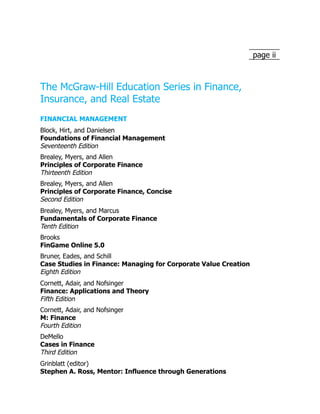



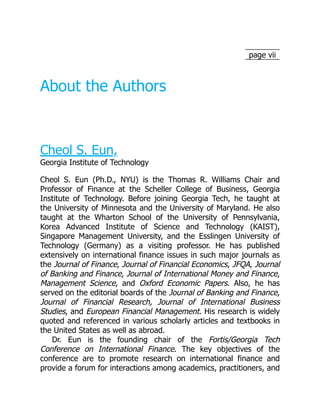
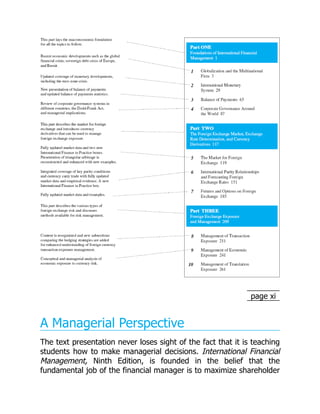
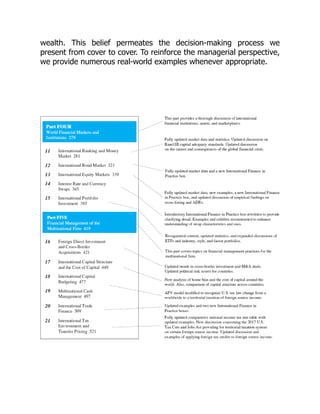
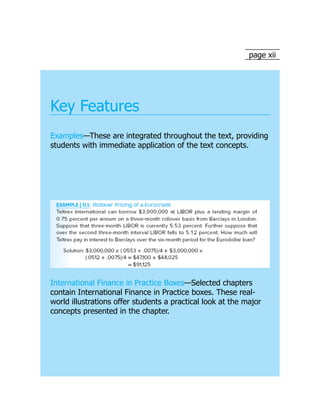
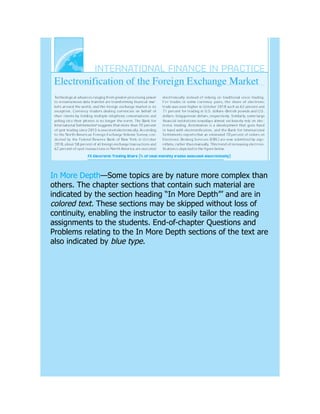
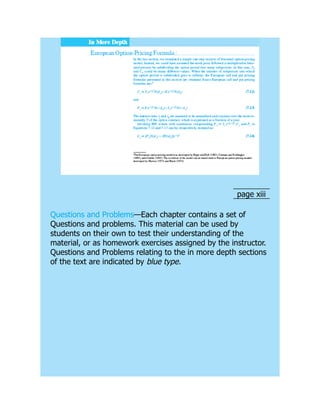
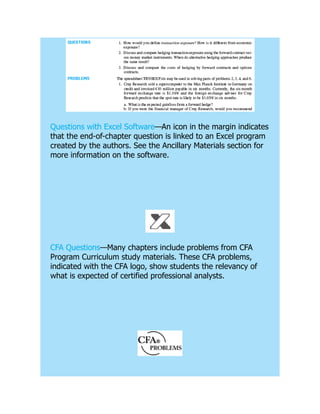
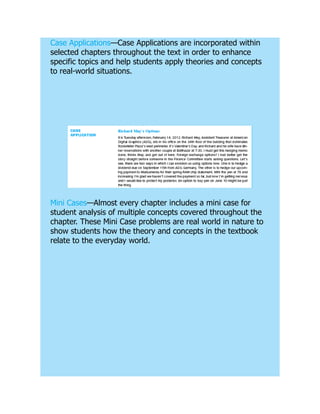
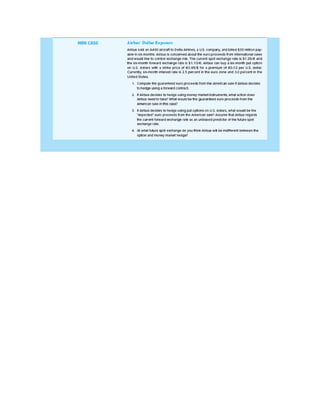



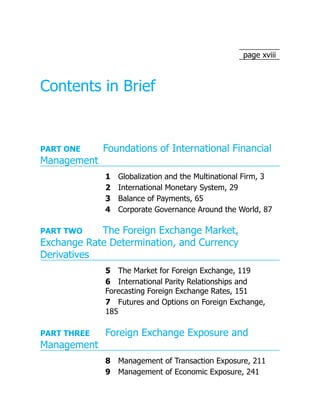
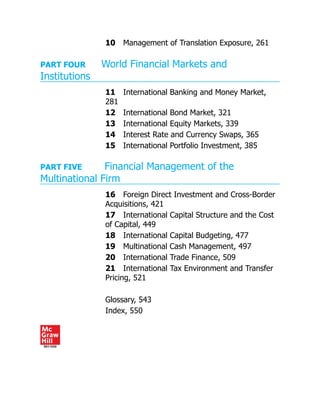
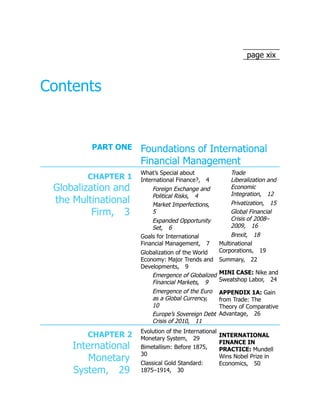
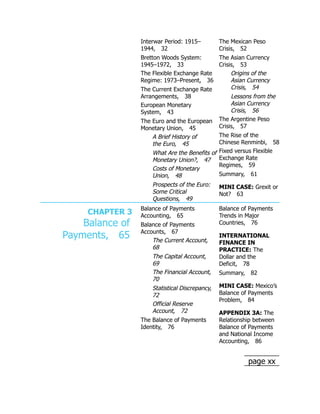
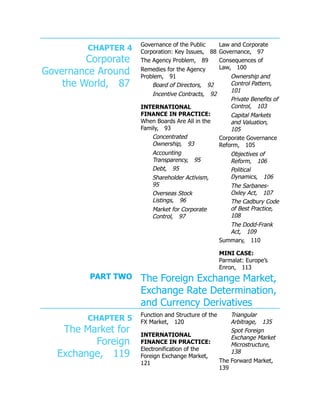
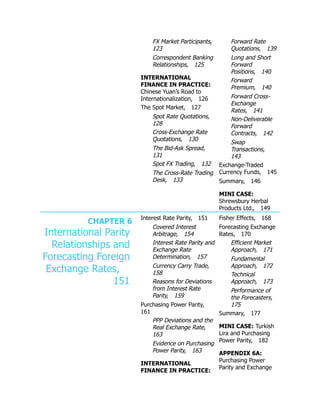
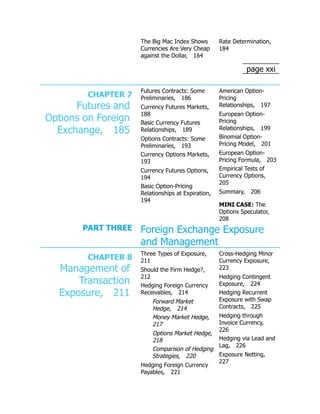
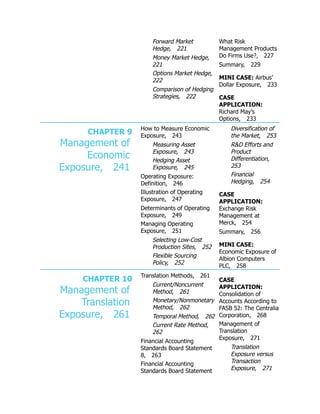
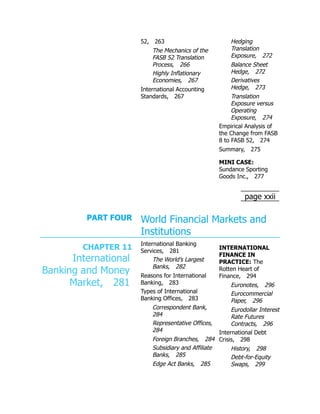
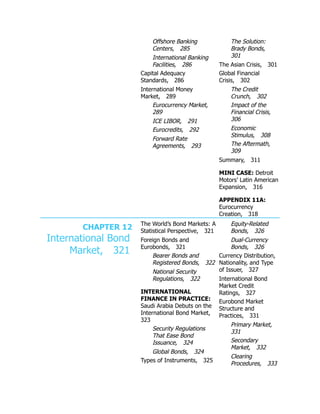




![This ebook is for the use of anyone anywhere in the United
States and most other parts of the world at no cost and with
almost no restrictions whatsoever. You may copy it, give it away
or re-use it under the terms of the Project Gutenberg License
included with this ebook or online at www.gutenberg.org. If you
are not located in the United States, you will have to check the
laws of the country where you are located before using this
eBook.
Title: The Lost Fruits of Waterloo
Author: John Spencer Bassett
Release date: April 26, 2016 [eBook #51865]
Most recently updated: October 23, 2024
Language: English
Credits: E-text prepared by Chris Curnow, Charlie Howard, and
the Online Distributed Proofreading Team
(http://www.pgdp.net) from page images generously
made available by Internet Archive
(https://archive.org)
*** START OF THE PROJECT GUTENBERG EBOOK THE LOST
FRUITS OF WATERLOO ***](https://image.slidesharecdn.com/28093-250523205908-d2124392/85/International-Financial-Management-9th-Edition-Eun-55-320.jpg)