

Intelligence & Organizational Reconnaissance
IAFIE 2014
Mercyhurst University – Erie Pennsylvania
Tuesday 15 July 2014
Arik Johnson
Managing Director, Center for Organizational Reconnaissance
Founder & Chairman, Aurora WDC
JP Ratajczak
Senior Manager – Intelligence Systems, Aurora WDC
U.S. Intelligence Community
Failed to Evolve
Unexpected new threats
from non-traditional enemies
like al Qaeda emerged on the
geopolitical stage in the
vacuum of America's return
to international economic,
political and cultural
hegemony after the end of
the Cold War.
Strategy should be a
Response to Intelligence
Not the other way around…
5
STOCHASM
The difference between
what you think you know and
what you actually know.
Intelligence lives in this chasm, creating new knowledge
AND
disputing false assumptions.
Three Key Business Trends Driving Business Evolution
Human Capital & Enterprise Collaboration
Everyone in the Firm becomes a Virtual Member of the
Intelligence Apparatus, Better Engagement by Rank &
File, Shared Visibility of Issues & Actions
Corporate Governance & Risk Oversight
Board-level Priority Ensuring Reliability of Management’s
Earnings Forecast & Assessing Risks to Status Quo
Business Model Disruption & Value Innovation
Predicting the Outcome of Competitive Battles by
Anticipating Changes in Product/Strategy Dynamics
Porter’s Five Forces
Guerrilla
Small Players
• Finding market small
enough to defend
• Prepared to bug out at
moment’s notice
Flanking
New Players
• Moving into
uncontested area
• Element of surprise
Offensive
No 2 or No 3
• Avoiding leader’s
strengths
• Attacking leader’s
weaknesses
Defensive
Market Leaders
• Attacking themselves
with new ideas
• Blocking competitive
moves
Marketing WarfareMarketing Warfare
Managers caught in this kind of competition almost
universally say they dislike it and wish they could find
a better alternative. They often know instinctively
that innovation is the only way they can break free
from the pack. But they simply don’t know where to
begin.
Chan Kim and Renee Mauborgne
Competing head-to-head can be cutthroat
especially when markets are flat or growing
slowly.
Knowing Why They Buy
“Companies may know a
good deal about their
customers. They know
nothing, as a rule, about their
non-customers -- the people
who should be their
customers but buy from
someone else. Why do they
do that? And yet it is the non-
customer where important
changes always start first.”
Look Beyond the Current Business
Disruptive Technology
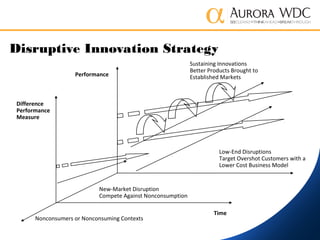
Disruptive Innovation Strategy
Sustaining Innovations
Better Products Brought to
Established Markets
Low-End Disruptions
Target Overshot Customers with a
Lower Cost Business Model
New-Market Disruption
Compete Against Nonconsumption
Difference
Performance
Measure
Time
Nonconsumers or Nonconsuming Contexts
Performance
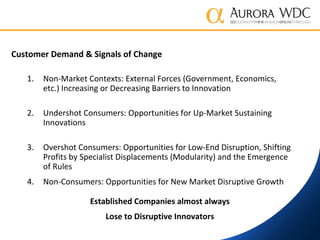
Customer Demand & Signals of Change
1. Non-Market Contexts: External Forces (Government, Economics,
etc.) Increasing or Decreasing Barriers to Innovation
2. Undershot Consumers: Opportunities for Up-Market Sustaining
Innovations
3. Overshot Consumers: Opportunities for Low-End Disruption, Shifting
Profits by Specialist Displacements (Modularity) and the Emergence
of Rules
4. Non-Consumers: Opportunities for New Market Disruptive Growth
Established Companies almost always
Lose to Disruptive Innovators
Era of Asymmetric Interpretation [Reconnaissance]
Asymmetric Interpretation Depends on Both Decisive & Incisive Sensing
Incisive
Scanning for Trends, there may be
no Decision made
Historical Patterns & Anomalies
Implications for the Reader
Bottom-Up Exposition
Driven by Trends
Product is Observation/Commentary
Emergent & Skeptical
Open Source
Decisive
Frame of Reference is the
Decision
Compares Options & Outcomes
Recommendations & Trust
Top-Down Imposition
Driven by Issues
Product is Decision/Action
Factual & Hypothetical
Confidential & Proprietary
17
Dr. Craig S. Fleisher
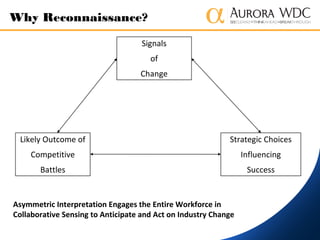
Asymmetric Interpretation Engages the Entire Workforce in
Collaborative Sensing to Anticipate and Act on Industry Change
Signals
of
Change
Strategic Choices
Influencing
Success
Likely Outcome of
Competitive
Battles
Why Reconnaissance?
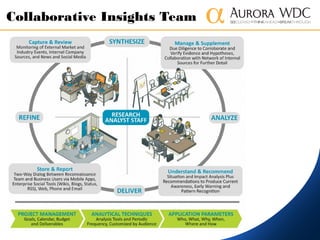
Collaborative Insights Team
20
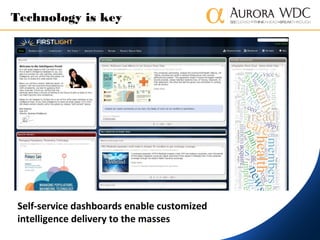
Technology is key
Self-service dashboards enable customized
intelligence delivery to the masses
Advances in automated processing enable better
retrieval
Deeper Search Granularity Options
22
Clients need the flexibility
to subscribe to KITs based
on their personal
intelligence requirements.
Push Compliments Pull Delivery
Making the Complex Simple
23
Visualizing select
perspectives from the
vast corpus of data
available yields
asymmetric insight.
Feel free to ask for help:
 Email:
Arik.Johnson@AuroraWDC.com
JP.Ratajczak@AuroraWDC.com
 Phone:
+1 (608) 630-4242
+1 (913) 424-9494
 Twitter:
@ArikJohnson
@JPofMercy
 Web: http://AuroraWDC.com
What’s Next?
Leadership to Act is
Based on Confidence
Intelligence Combats the Paralysis that
Accompanies Uncertainty
Reconnaissance Transforms Your Workforce
into a Force to be Reckoned With

Intelligence & Organizational Reconnaissance

  • 1.
    Intelligence & OrganizationalReconnaissance IAFIE 2014 Mercyhurst University – Erie Pennsylvania Tuesday 15 July 2014 Arik Johnson Managing Director, Center for Organizational Reconnaissance Founder & Chairman, Aurora WDC JP Ratajczak Senior Manager – Intelligence Systems, Aurora WDC
  • 2.
    U.S. Intelligence Community Failedto Evolve Unexpected new threats from non-traditional enemies like al Qaeda emerged on the geopolitical stage in the vacuum of America's return to international economic, political and cultural hegemony after the end of the Cold War.
  • 4.
    Strategy should bea Response to Intelligence Not the other way around…
  • 5.
    5 STOCHASM The difference between whatyou think you know and what you actually know. Intelligence lives in this chasm, creating new knowledge AND disputing false assumptions.
  • 6.
    Three Key BusinessTrends Driving Business Evolution Human Capital & Enterprise Collaboration Everyone in the Firm becomes a Virtual Member of the Intelligence Apparatus, Better Engagement by Rank & File, Shared Visibility of Issues & Actions Corporate Governance & Risk Oversight Board-level Priority Ensuring Reliability of Management’s Earnings Forecast & Assessing Risks to Status Quo Business Model Disruption & Value Innovation Predicting the Outcome of Competitive Battles by Anticipating Changes in Product/Strategy Dynamics
  • 7.
  • 8.
    Guerrilla Small Players • Findingmarket small enough to defend • Prepared to bug out at moment’s notice Flanking New Players • Moving into uncontested area • Element of surprise Offensive No 2 or No 3 • Avoiding leader’s strengths • Attacking leader’s weaknesses Defensive Market Leaders • Attacking themselves with new ideas • Blocking competitive moves Marketing WarfareMarketing Warfare
  • 9.
    Managers caught inthis kind of competition almost universally say they dislike it and wish they could find a better alternative. They often know instinctively that innovation is the only way they can break free from the pack. But they simply don’t know where to begin. Chan Kim and Renee Mauborgne Competing head-to-head can be cutthroat especially when markets are flat or growing slowly.
  • 12.
    Knowing Why TheyBuy “Companies may know a good deal about their customers. They know nothing, as a rule, about their non-customers -- the people who should be their customers but buy from someone else. Why do they do that? And yet it is the non- customer where important changes always start first.” Look Beyond the Current Business
  • 13.
  • 14.
    Disruptive Innovation Strategy SustainingInnovations Better Products Brought to Established Markets Low-End Disruptions Target Overshot Customers with a Lower Cost Business Model New-Market Disruption Compete Against Nonconsumption Difference Performance Measure Time Nonconsumers or Nonconsuming Contexts Performance
  • 15.
    Customer Demand &Signals of Change 1. Non-Market Contexts: External Forces (Government, Economics, etc.) Increasing or Decreasing Barriers to Innovation 2. Undershot Consumers: Opportunities for Up-Market Sustaining Innovations 3. Overshot Consumers: Opportunities for Low-End Disruption, Shifting Profits by Specialist Displacements (Modularity) and the Emergence of Rules 4. Non-Consumers: Opportunities for New Market Disruptive Growth Established Companies almost always Lose to Disruptive Innovators
  • 16.
    Era of AsymmetricInterpretation [Reconnaissance] Asymmetric Interpretation Depends on Both Decisive & Incisive Sensing Incisive Scanning for Trends, there may be no Decision made Historical Patterns & Anomalies Implications for the Reader Bottom-Up Exposition Driven by Trends Product is Observation/Commentary Emergent & Skeptical Open Source Decisive Frame of Reference is the Decision Compares Options & Outcomes Recommendations & Trust Top-Down Imposition Driven by Issues Product is Decision/Action Factual & Hypothetical Confidential & Proprietary
  • 17.
  • 18.
    Asymmetric Interpretation Engagesthe Entire Workforce in Collaborative Sensing to Anticipate and Act on Industry Change Signals of Change Strategic Choices Influencing Success Likely Outcome of Competitive Battles Why Reconnaissance?
  • 19.
  • 20.
    20 Technology is key Self-servicedashboards enable customized intelligence delivery to the masses
  • 21.
    Advances in automatedprocessing enable better retrieval Deeper Search Granularity Options
  • 22.
    22 Clients need theflexibility to subscribe to KITs based on their personal intelligence requirements. Push Compliments Pull Delivery
  • 23.
    Making the ComplexSimple 23 Visualizing select perspectives from the vast corpus of data available yields asymmetric insight.
  • 24.
    Feel free toask for help:  Email: Arik.Johnson@AuroraWDC.com JP.Ratajczak@AuroraWDC.com  Phone: +1 (608) 630-4242 +1 (913) 424-9494  Twitter: @ArikJohnson @JPofMercy  Web: http://AuroraWDC.com What’s Next? Leadership to Act is Based on Confidence Intelligence Combats the Paralysis that Accompanies Uncertainty Reconnaissance Transforms Your Workforce into a Force to be Reckoned With

Editor's Notes

  • #9 A classic example of a well-executed defensive block using Competitive Intelligence was that of Johnson & Johnson when Bristol-Meyers decided to launch Datril to compete directly with Johnson & Johnson's successful Tylenol brand. Datril was to be priced 35% lower than Tylenol.Johnson & Johnson learned of Datril before its launch, and informed Bristol-Meyers that it was cutting the price of Tylenol to match that of Datril. Johnson & Johnson even extended credits to its distribution channels to make the price cut effective immediately. This move was intended to prevent Bristol-Meyers from advertising Datril as a lower-priced alternative to Tylenol. However, Bristol-Meyers responded by accelerating the launch of the television advertising campaign. Finally, Johnson & Johnson countered by convincing the television networks not to run the Datril ads since they no longer could truthfully claim that Datril was priced lower than Tylenol. Johnson & Johnson's efforts were successful and Datril achieved less than a 1% market share. Tylenol sales soared on the publicity and lower prices.
  • #21 Tempo is such that personalized intelligence can’t be delivered by just an analyst.
  • #22 Broad spectrum intelligence is not relevant to the individual. The more specific the better. The ability for the consumer to ignore the vast majority of intel that’s produced.
  • #23 That added tailoring allowed by more advanced processing allows for your familiar delivery formats to have a greater increased signal to noise ratio
  • #24 Having the best tool can cut through the same information to reveal more relevant intelligence (emerging trends, clusters of change) Organizations must transform broad spectrum company-wide intelligence output into individual decision-making needs to discover nonconsumption opportunities and drive new market disruptive innovation, aka the Blue Ocean.