Charles
Darwin
Intellectual Revolutions That Defined Society
was born in England on February
12, 1809.
His family was educated
and well to do (his grandfather
was the maker of Wedgwood
china).
Darwin studied medicine at
Edinburgh University but later
switched to divinity at Cambridge.
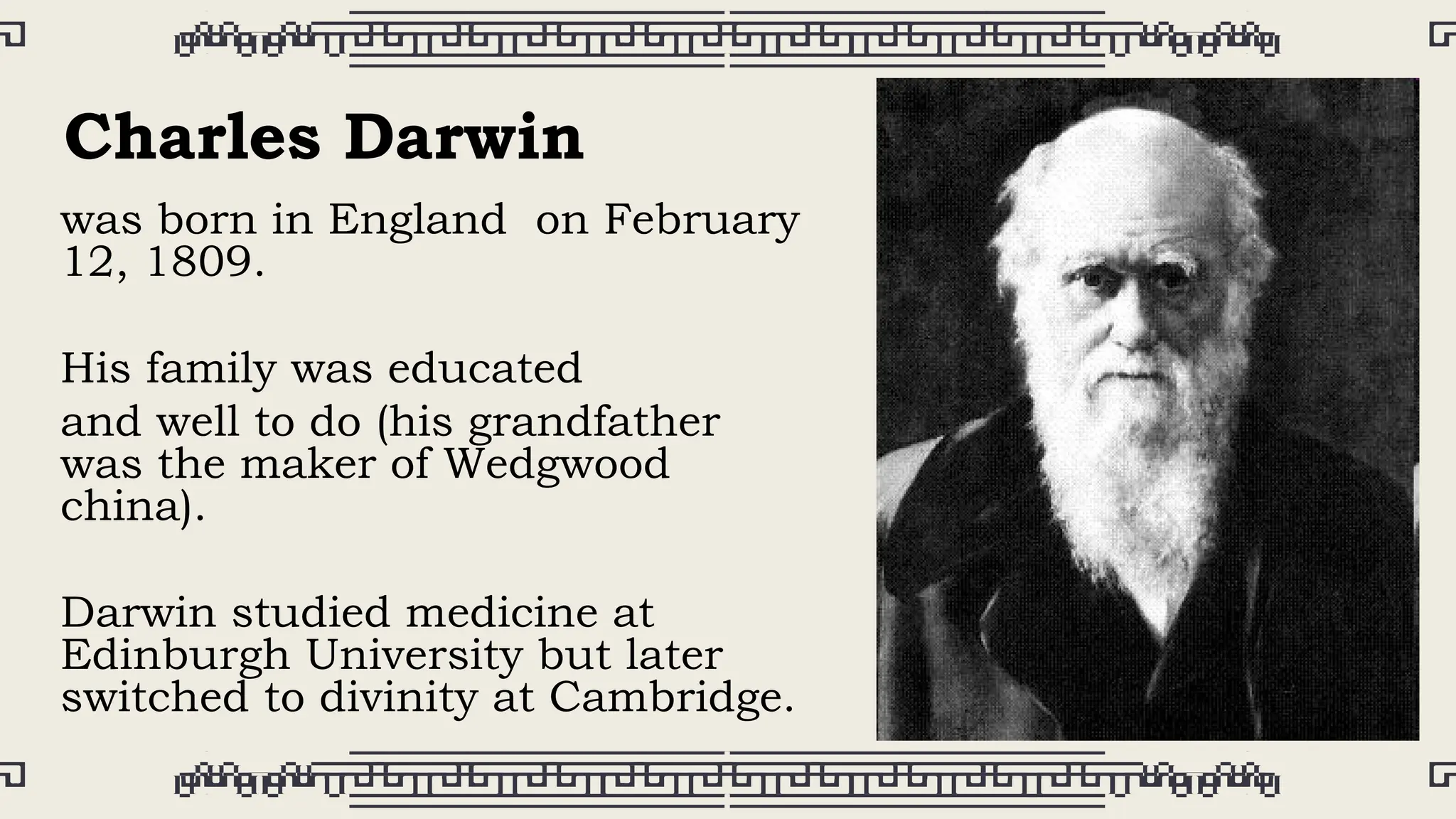
Charles Darwin
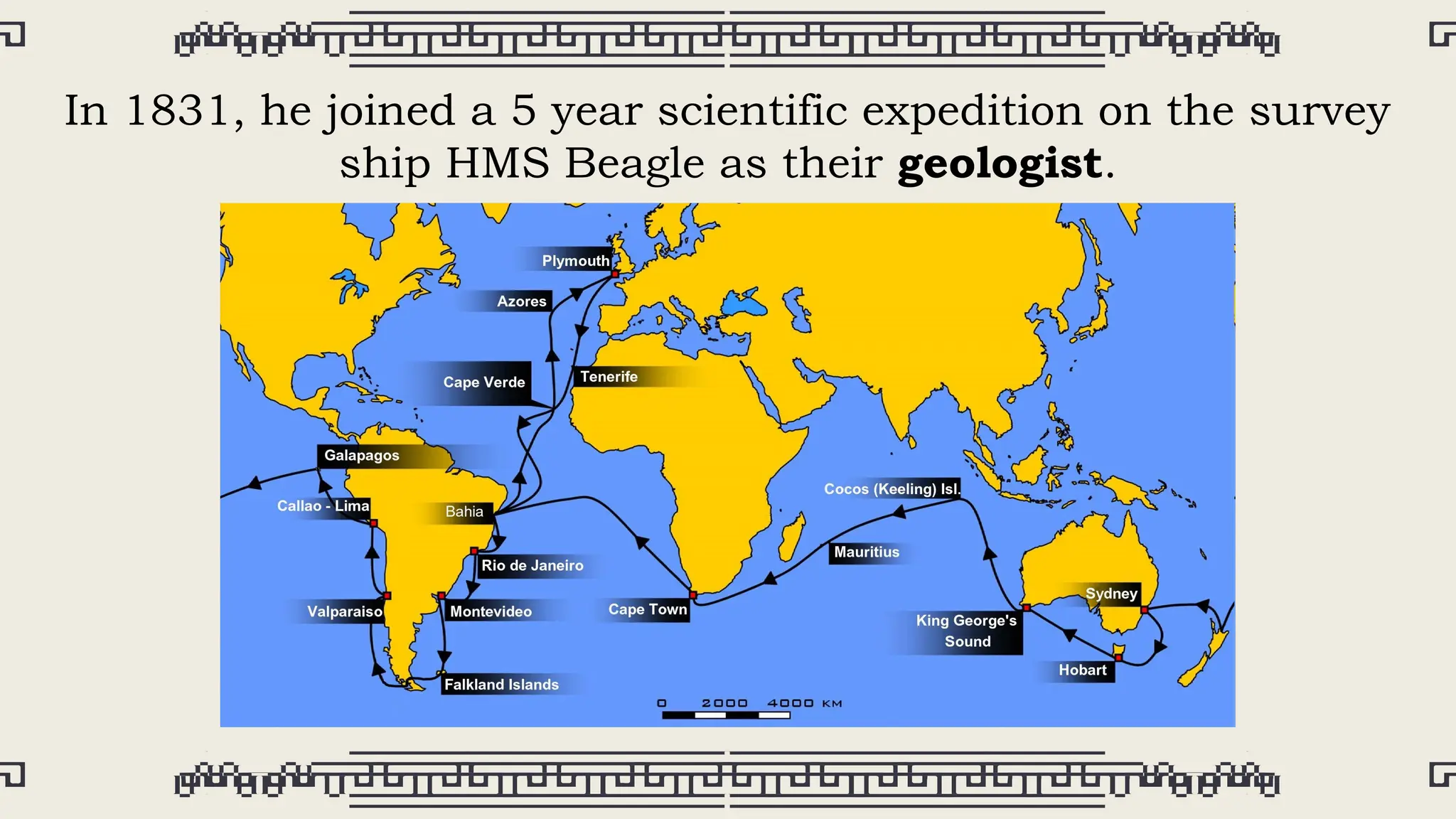
In 1831, he joined a 5 year scientific expedition on the survey
ship HMS Beagle as their geologist.
The idea of evolution had been around for a long time (even
before Darwin) and most people (including Darwin)
dismissed it due to several reasons:
•The lack of a real need (was such a theory really needed?)
•insufficient time to accomplish significant change (given
the supposed 6000 years of Earth history, based on theological
interpretations)
•lack of any real mechanism that might drive evolutionary
change
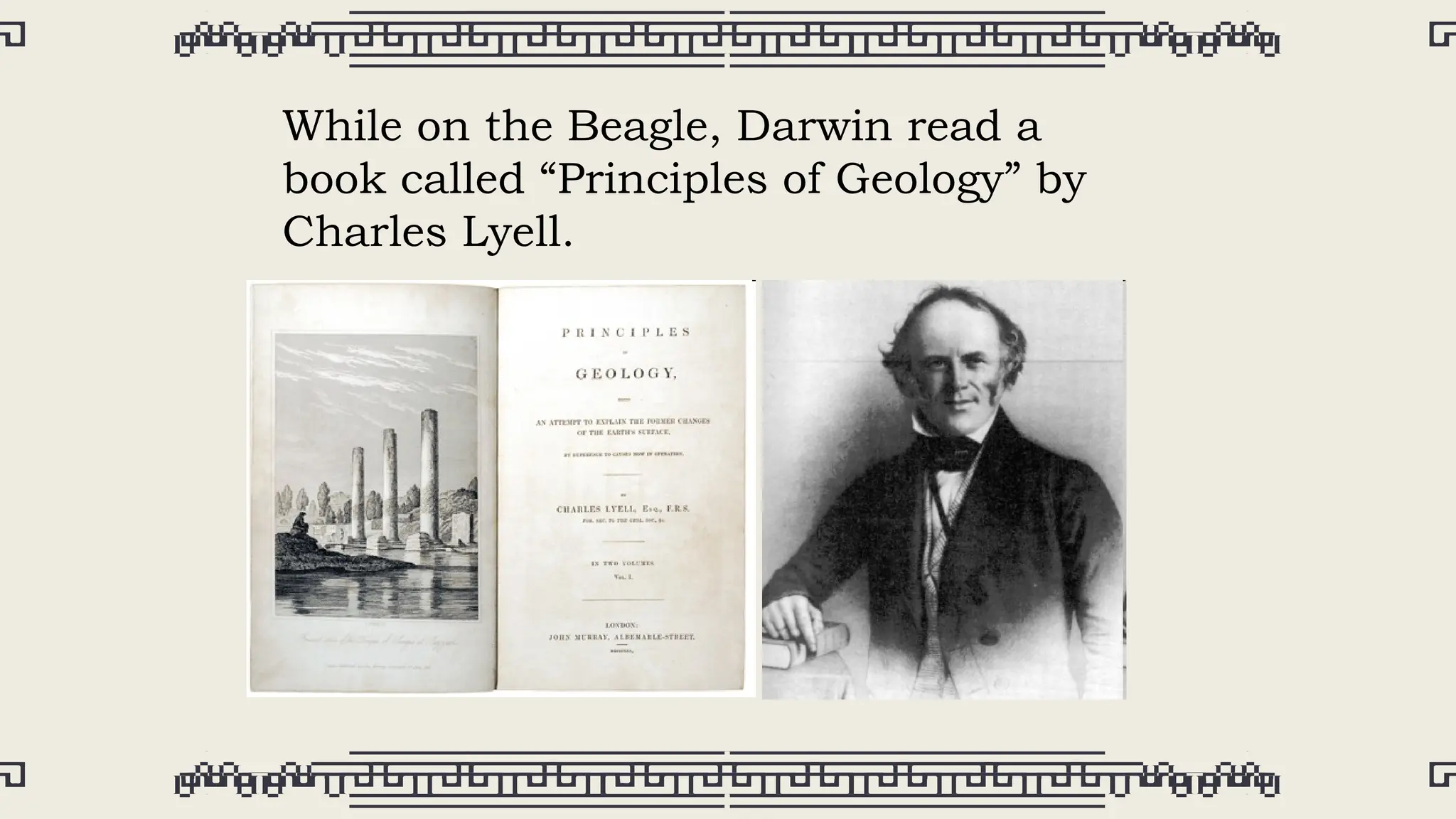
While on the Beagle, Darwin read a
book called “Principles of Geology” by
Charles Lyell.
Lyell suggested that the fossils found in
rocks were actually evidence of animals
that had lived many thousands or
millions of years ago.
Lyell's argument was reinforced in
Darwin's own mind by the rich variety
of animal life and the geological
features he saw during his voyage.
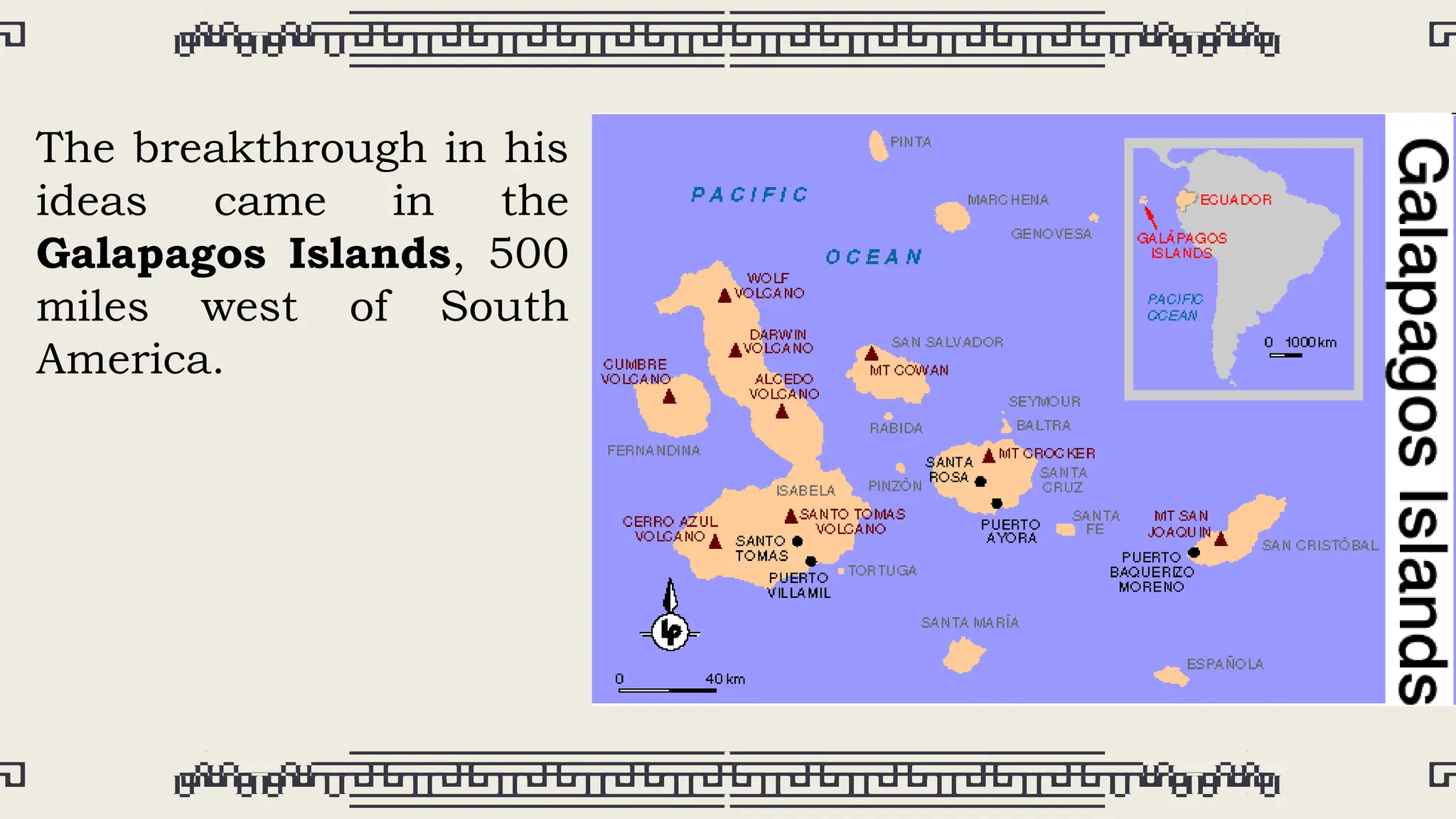
The breakthrough in his
ideas came in the
Galapagos Islands, 500
miles west of South
America.
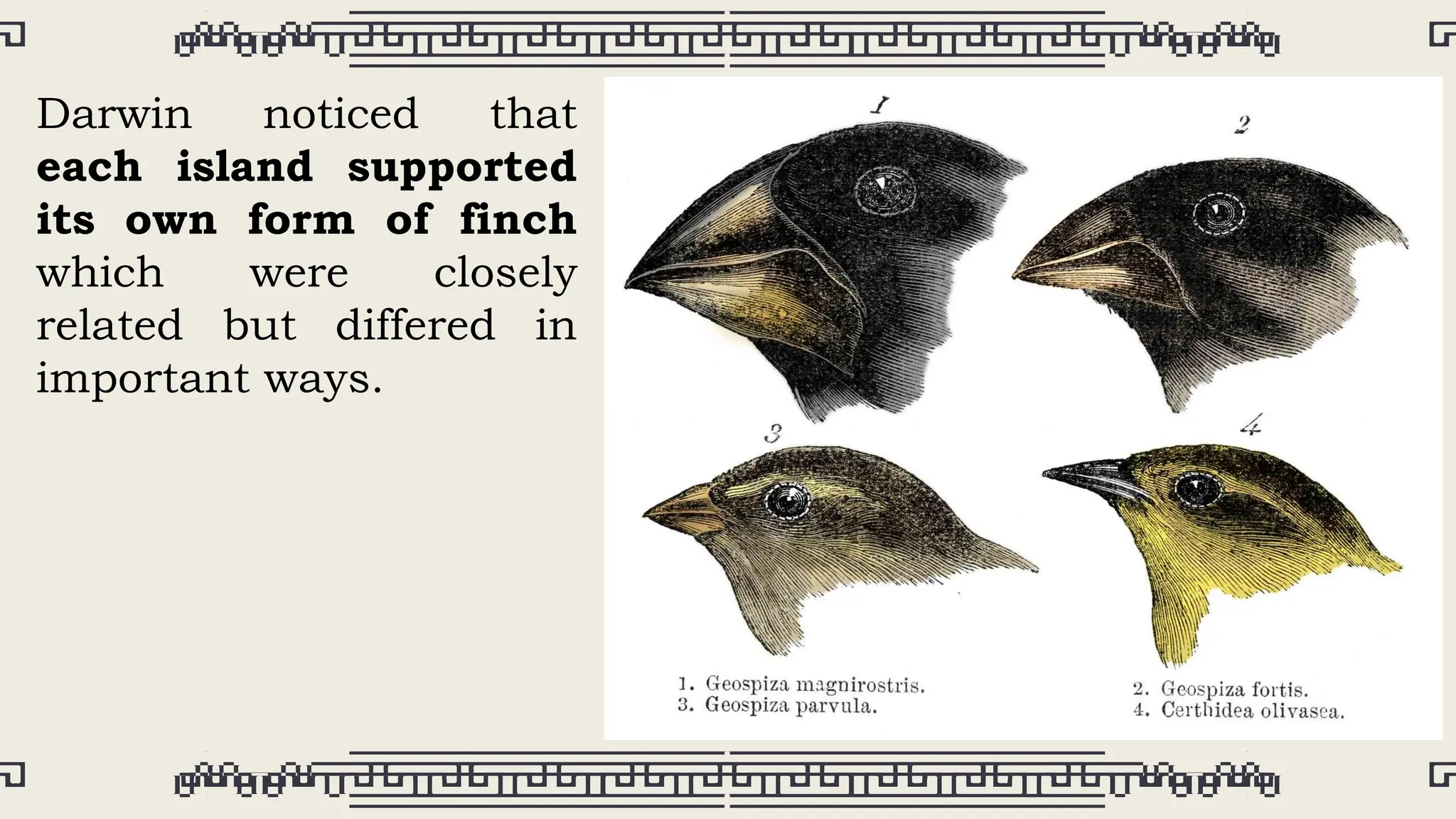
Darwin noticed that
each island supported
its own form of finch
which were closely
related but differed in
important ways.
On his return to England in 1836,
Darwin tried to solve the riddles of
these observations and the puzzle of
how species could evolve.
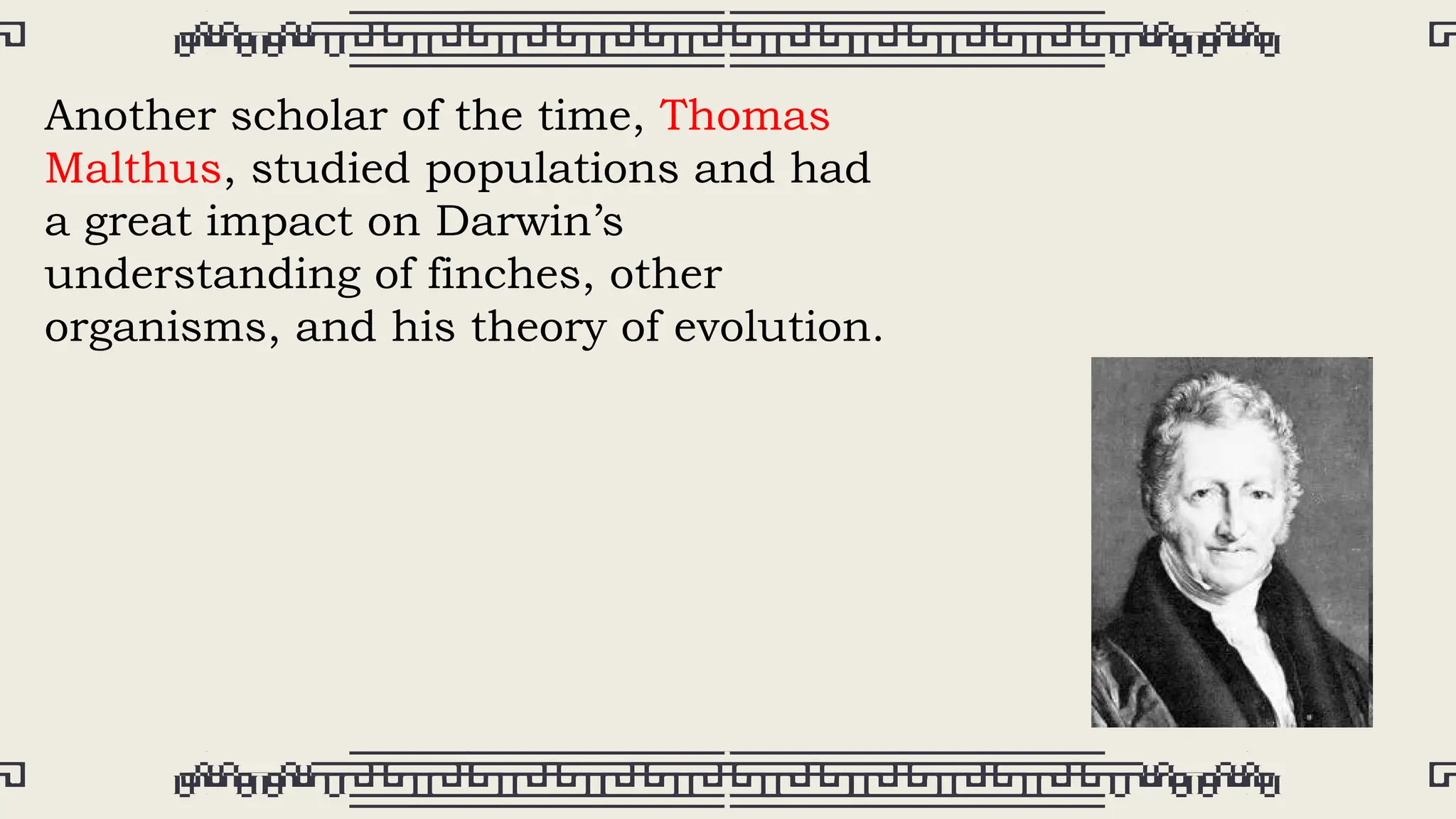
Another scholar of the time, Thomas
Malthus, studied populations and had
a great impact on Darwin’s
understanding of finches, other
organisms, and his theory of evolution.
Malthus believed that given unlimited
resources, a population would grow
exponentially.
Under normal conditions, a natural
population would be limited by food,
water, habitat, etc. resulting in a
balancing of population numbers.
Influenced by the ideas of Malthus,
Darwin proposed a theory of evolution
occurring by the process of natural
selection.
The animals (or plants) best suited to
their environment are more likely to
survive and reproduce, passing on the
characteristics which helped them
survive to their offspring.
Gradually, the species changes over
time.
Darwin worked on his theory for 20
years.
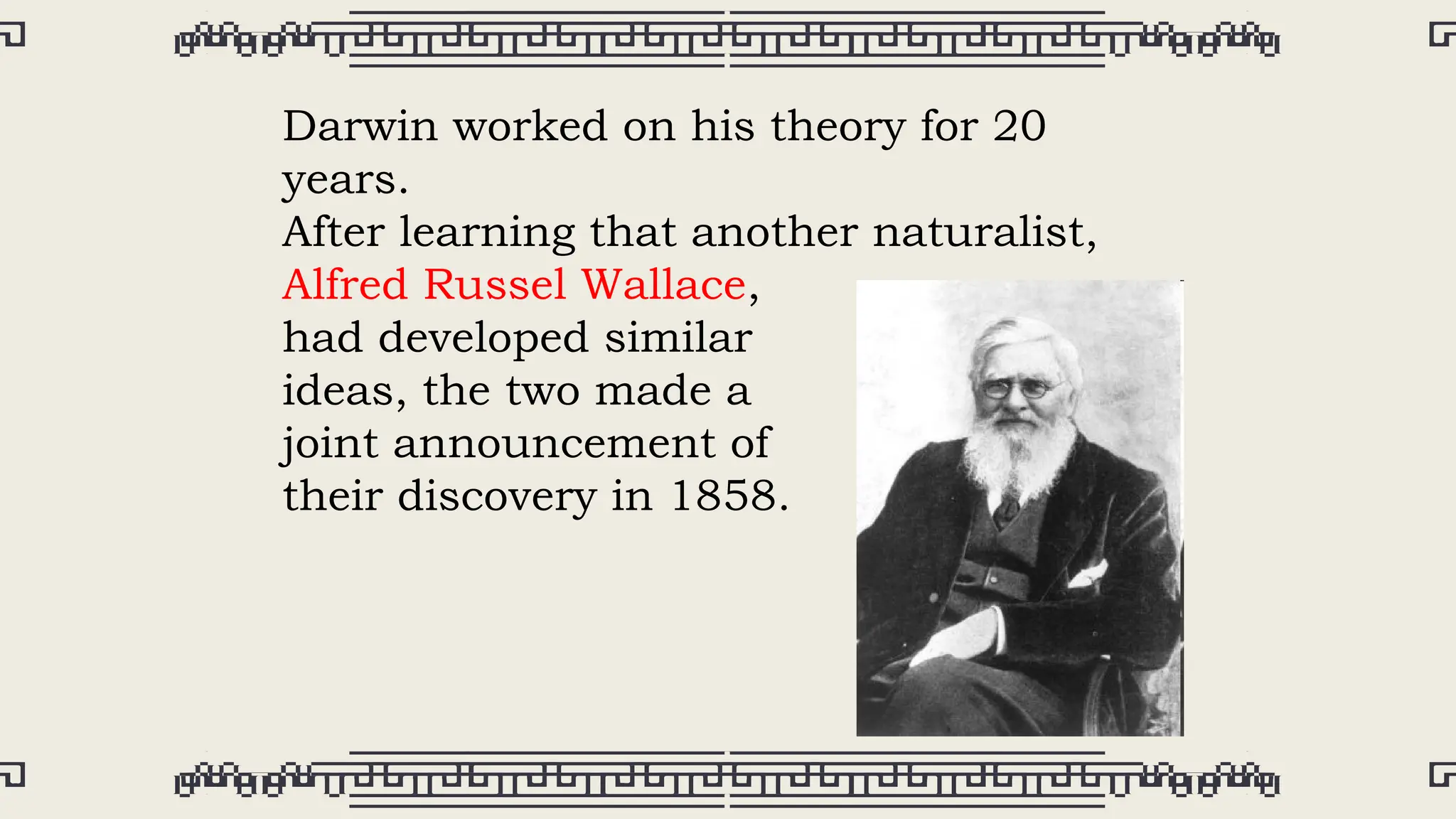
After learning that another naturalist,
Alfred Russel Wallace,
had developed similar
ideas, the two made a
joint announcement of
their discovery in 1858.
In 1859 Darwin published
'On the Origin of Species
by Means of Natural Selection'.
The book was extremely controversial,
because the logical extension of
Darwin's theory was that Homo sapiens
was simply another form of animal.
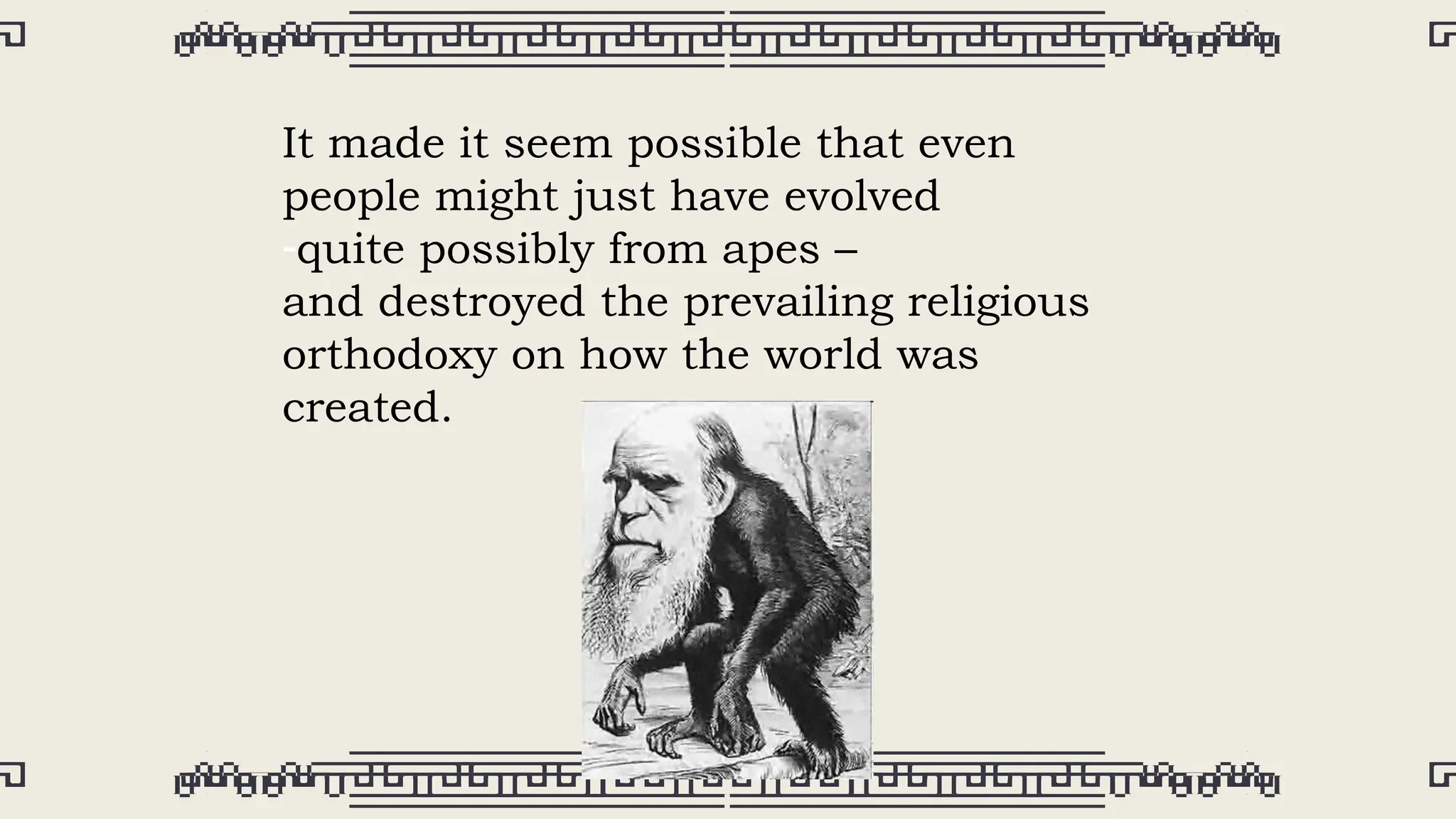
It made it seem possible that even
people might just have evolved
-quite possibly from apes –
and destroyed the prevailing religious
orthodoxy on how the world was
created.
He published numerous other books.
He examined human evolution and
sexual selection in
The Descent of Man,
and
Selection in Relation to Sex,
followed by
The Expression of the Emotions in Man
and Animals.
His research on plants was published
in a series of books, and in his final
book, he examined earthworms and
their effect on soil.
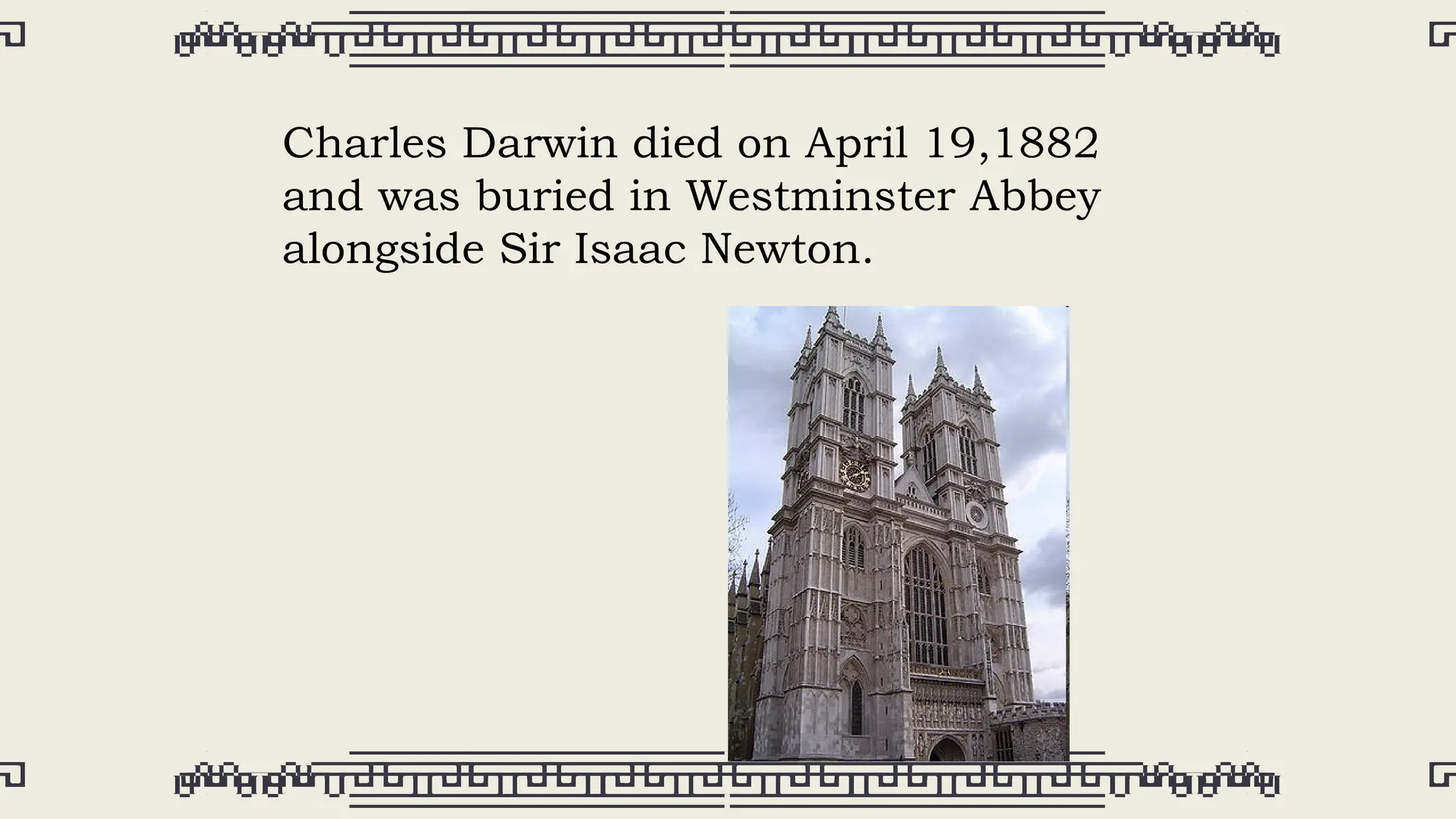
Charles Darwin died on April 19,1882
and was buried in Westminster Abbey
alongside Sir Isaac Newton.
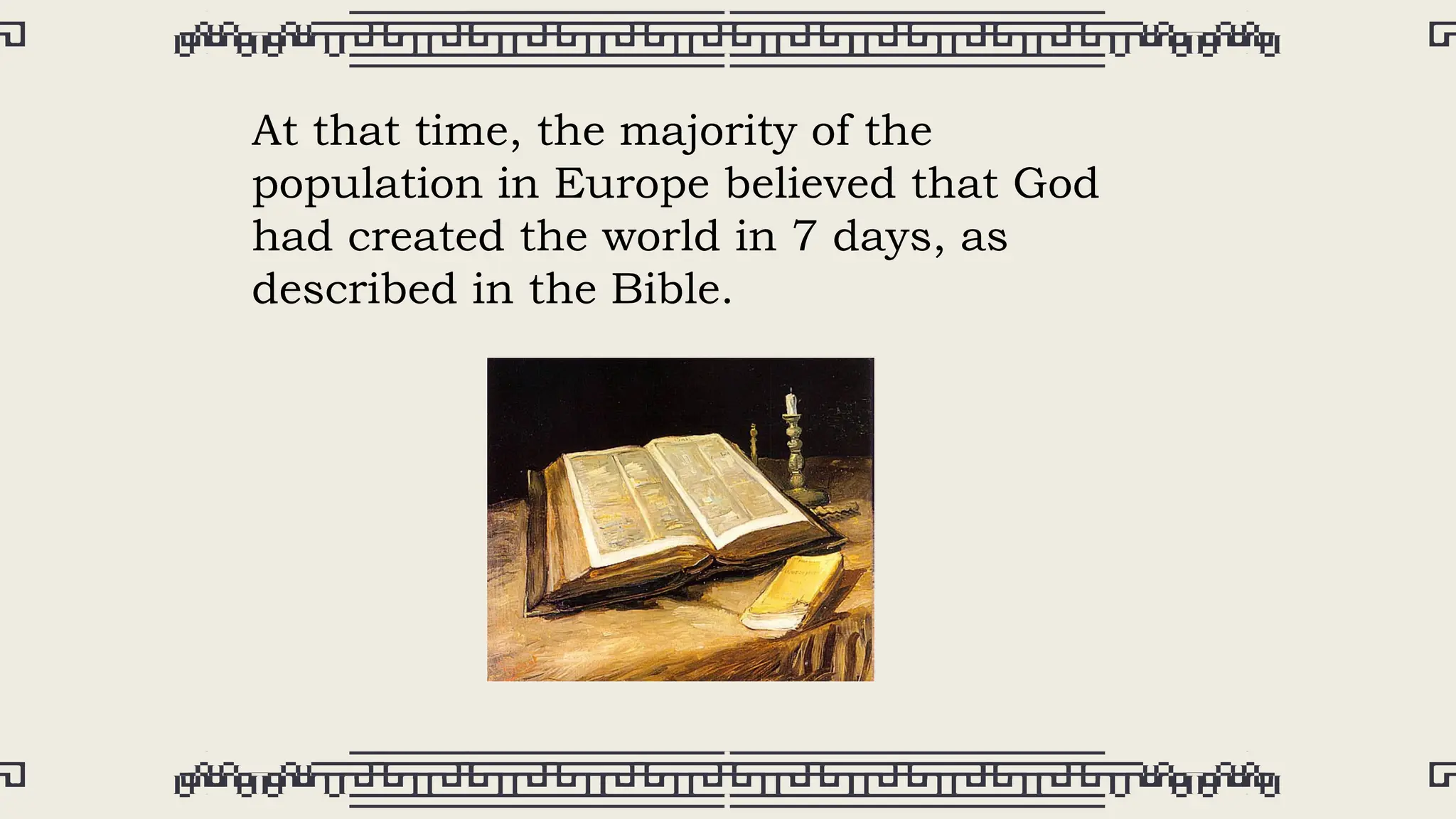
At that time, the majority of the
population in Europe believed that God
had created the world in 7 days, as
described in the Bible.

Intellectual Revolution That Defined Society Charles Darwin

  • 1.
  • 2.
    was born inEngland on February 12, 1809. His family was educated and well to do (his grandfather was the maker of Wedgwood china). Darwin studied medicine at Edinburgh University but later switched to divinity at Cambridge. Charles Darwin
  • 3.
    In 1831, hejoined a 5 year scientific expedition on the survey ship HMS Beagle as their geologist.
  • 4.
    The idea ofevolution had been around for a long time (even before Darwin) and most people (including Darwin) dismissed it due to several reasons: •The lack of a real need (was such a theory really needed?) •insufficient time to accomplish significant change (given the supposed 6000 years of Earth history, based on theological interpretations) •lack of any real mechanism that might drive evolutionary change
  • 5.
    While on theBeagle, Darwin read a book called “Principles of Geology” by Charles Lyell.
  • 6.
    Lyell suggested thatthe fossils found in rocks were actually evidence of animals that had lived many thousands or millions of years ago. Lyell's argument was reinforced in Darwin's own mind by the rich variety of animal life and the geological features he saw during his voyage.
  • 7.
    The breakthrough inhis ideas came in the Galapagos Islands, 500 miles west of South America.
  • 8.
    Darwin noticed that eachisland supported its own form of finch which were closely related but differed in important ways.
  • 9.
    On his returnto England in 1836, Darwin tried to solve the riddles of these observations and the puzzle of how species could evolve.
  • 10.
    Another scholar ofthe time, Thomas Malthus, studied populations and had a great impact on Darwin’s understanding of finches, other organisms, and his theory of evolution.
  • 11.
    Malthus believed thatgiven unlimited resources, a population would grow exponentially. Under normal conditions, a natural population would be limited by food, water, habitat, etc. resulting in a balancing of population numbers.
  • 12.
    Influenced by theideas of Malthus, Darwin proposed a theory of evolution occurring by the process of natural selection.
  • 13.
    The animals (orplants) best suited to their environment are more likely to survive and reproduce, passing on the characteristics which helped them survive to their offspring. Gradually, the species changes over time.
  • 14.
    Darwin worked onhis theory for 20 years. After learning that another naturalist, Alfred Russel Wallace, had developed similar ideas, the two made a joint announcement of their discovery in 1858.
  • 15.
    In 1859 Darwinpublished 'On the Origin of Species by Means of Natural Selection'.
  • 16.
    The book wasextremely controversial, because the logical extension of Darwin's theory was that Homo sapiens was simply another form of animal.
  • 17.
    It made itseem possible that even people might just have evolved -quite possibly from apes – and destroyed the prevailing religious orthodoxy on how the world was created.
  • 18.
    He published numerousother books. He examined human evolution and sexual selection in The Descent of Man, and Selection in Relation to Sex, followed by The Expression of the Emotions in Man and Animals.
  • 19.
    His research onplants was published in a series of books, and in his final book, he examined earthworms and their effect on soil.
  • 20.
    Charles Darwin diedon April 19,1882 and was buried in Westminster Abbey alongside Sir Isaac Newton.
  • 21.
    At that time,the majority of the population in Europe believed that God had created the world in 7 days, as described in the Bible.